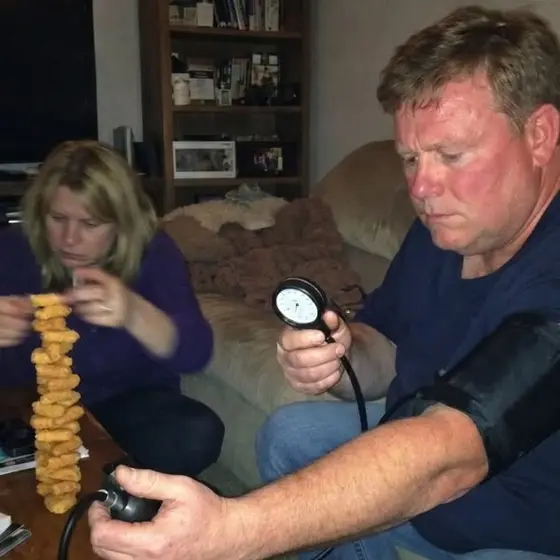
He started using a CPAP machine at 59. Within three months, I didn't recognize the man I married. He'd fall asleep in his chair at 7pm every night, sometimes with his dinner plate still in his lap. He couldn't finish a conversation without losing his train of thought mid-sentence. I'd ask him about his day and he'd stare at me like he was trying to remember who I was. He had zero interest in intimacy. Not just physically — he didn't want to hold hands anymore. Didn't laugh at my jokes. Didn't seem present when we were in the same room. It was like living with a ghost of the man I loved. At first, I thought maybe he was depressed. Or going through some kind of midlife crisis. Or that after 34 years of marriage, he'd just... given up on us. I'd try to talk to him about it, and he'd say, "I'm fine. Just tired." But it wasn't normal tired. It was like someone had turned down the dimmer switch on his entire personality. The man who used to wake up at 5am to go fishing. Who'd stay up late talking about everything and nothing. Who had more energy than me most days. Gone. Replaced by someone who shuffled through the house like he was moving through mud. And here was the thing that made it so confusing — he was on treatment. He'd been diagnosed with moderate to severe sleep apnea fourteen months earlier, prescribed a CPAP machine, and had been using it most nights ever since. His specialist said the numbers looked great. Compliance data was excellent. AHI under control. But the man sleeping next to that machine every night was disappearing in front of my eyes. **The Doctor Visit That Made Me Furious** I finally convinced him to let me come to his next specialist appointment. I wasn't going to let him brush this off as "just tired" anymore. When the nurse called us back, I spoke up before he could. "Something's wrong," I said. "He's exhausted all the time. He can't think straight. He doesn't seem like himself. This isn't normal." The specialist, the same one who'd been seeing my husband for over a year, barely looked up from his computer screen. "How's the compliance data been?" he asked my husband. "Good. I'm using it most nights." The doctor nodded. "That's what matters. Your numbers are stable. AHI is well controlled." I cut in. "But what about everything else? The fatigue? The brain fog? The fact that he's barely functional despite sleeping eight hours every night?" The doctor finally looked at me. "That's just part of adjusting to treatment," he said. "The machine is keeping his breathing events under control. We need to keep him on it to protect his cardiovascular system." I felt my face get hot. "So he's supposed to feel like this for the rest of his life?" "Would you rather he stop breathing fifty times an hour?" I didn't have an answer for that. We left with a reminder to replace his humidifier chamber and a pamphlet on "CPAP adjustment tips." I cried in the car on the way home. My husband squeezed my hand and said, "It's okay. I'm fine." But he wasn't fine. And I refused to accept that this was just "part of treatment." **What CPAP Actually Does to Your Body — And Why Specialists Don't Tell You** That night, I couldn't sleep. I sat up in bed with my phone and started searching: "why does CPAP make you more tired," "CPAP not helping exhaustion," "is there an alternative to CPAP for sleep apnea." What I found made me furious. CPAP works by forcing pressurized air through your collapsed airway. Every time your throat closes during sleep, the machine detects the blockage and pushes pressurized air through it. Hard enough to blast the passage back open. That's how it keeps your oxygen numbers stable. But here's what the specialist never explained: The CPAP doesn't stop the airway from collapsing. Every single collapse still happens. The jaw still slides backward. The soft tissue still folds inward. The airway still seals. And then the machine pushes through it. And every single time that happens — every single one of those thirty, forty, fifty collapses per hour — your body still registers the event. Still floods with adrenaline. Still surges with cortisol. Still places your heart under emergency strain. The oxygen number recovers. The machine reports another "treated" event. The specialist says compliance looks great. But your husband's body has been in an emergency state all night long. That's why men on CPAP still feel: Constantly exhausted. Your body was never actually resting. It was fighting — all night — while a machine tried to keep up with the damage. Mentally foggy. The adrenaline and cortisol flooding your system every night interferes with the deep sleep stages where cognitive repair actually happens. You spend hours in bed but never get the restorative sleep your brain needs. Emotionally flat and disconnected. When your body runs a stress response dozens of times per hour every night for months, it affects your mood, your motivation, your presence. Everything feels harder. Nothing feels exciting. Depleted of energy. Your cardiovascular system has been absorbing emergency strain every single night. By morning, before the day has even started, your body is already exhausted from the night it just survived. The specialist said this was "just adjustment." But my husband was 59. Not 89. And he'd been "adjusting" for over a year. And I couldn't accept that the rest of his life — OUR life together — had to look like this. **The Night I Found the Real Problem** I kept digging. I found research that explained something his specialist had never mentioned: Sleep apnea isn't just a breathing problem. It's a mechanical problem with one specific cause. Think about it like a garden hose. If the hose is wide open and unobstructed, air flows through easily. No snoring. No collapse. No problem. If the hose is kinked in the middle, nothing gets through. You have to force it. Your airway works the same way. And what causes the kink? The jaw sliding backward during sleep. When you fall asleep, every muscle in your body relaxes — including the muscles that hold your jaw in position. Your lower jaw slides backward. Your tongue follows. The soft tissue at the back of your throat has nowhere to go but inward. The airway folds shut. That's the kink in the hose. And here's the part that made me want to throw my phone across the room: The CPAP doesn't stop the jaw from sliding backward. It just forces enough pressurized air through the kinked hose to keep the oxygen numbers acceptable. The jaw still slides. The airway still collapses. The body still panics. Every single night. The compliance data looks great. But the underlying problem — the jaw sliding backward and sealing the airway — continues unchanged. And your entire body suffers from the nightly emergency response it was never meant to sustain. The research went on to explain that actually stopping the jaw from sliding backward is the key to truly fixing sleep apnea. Not managing it. Not compensating for it. Stopping it. Hold the jaw slightly forward throughout the night and the airway physically cannot collapse. The soft tissue has nothing pulling it inward. The passage stays open. Oxygen flows freely. The body never detects a crisis. No adrenaline. No cortisol. No emergency response. No cardiovascular strain. Not managed. Prevented. But the CPAP doesn't do that. It never did. **The Research That Gave Me Hope** I kept reading. Clinical studies on mandibular advancement devices — small mouthpieces that hold the jaw in a forward position during sleep — showed results I couldn't believe. No machine. No pressurized air. No mask. No hose. Just a jaw held in the correct position all night. After eight weeks: Apnea events reduced to near zero. Participants reported significantly better energy levels — not just "managed" sleep, but actual restorative rest. Mental clarity improved dramatically. Mood improved. Participants described feeling present and engaged for the first time in years. Partners reported sleeping through the night without once being woken by snoring or gasping. No adrenaline flooding. No cortisol surging. No emergency response. Because the collapse never happened. This wasn't fringe science. This was peer-reviewed research, published in sleep medicine journals, cited by cardiovascular specialists. So why didn't my husband's specialist tell him about it? Because there's no machine to sell. No replacement parts. No humidifier chambers, no mask cushions, no filter subscriptions. Just a jaw held in the right position. And a body that finally gets to rest. I woke my husband up at 2am. "I found something," I said. **What Happened When He Tried It** I showed him the research. He was skeptical. "If this actually worked, my specialist would have told me about it." "Would he?" I said. "There's nothing to bill for." My husband stared at the screen for a long time. Then he said, "What do we have to lose?" The next morning, I started researching mandibular advancement devices. Here's what I learned fast: most of them are garbage. They use a boil-and-bite fitting process that requires you to submerge the device in boiling water, bite into soft plastic while it's still hot, and hope the mold sets in exactly the right position. If the mold sets wrong — even slightly — the jaw doesn't advance to the correct position. The airway still collapses. You've spent forty dollars and potentially given yourself jaw pain and bite problems. Forums were full of horror stories. People who'd ended up with shifted teeth. Misaligned bites. Dental bills that cost more than a CPAP machine. And an airway that kept collapsing anyway because the mold never held the jaw far enough forward. They're dosed wrong too. The jaw needs to advance to a specific clinical position to actually keep the airway open. Generic boil-and-bite devices advance the jaw by whatever amount your impression happened to create — which is almost never enough, and almost never precise. I found one device that did it right: No boiling. No molding. No kitchen procedure where one wrong variable ruins everything. Medical-grade hypoallergenic silicone with the advancement precision-engineered directly into the device — not created by an imprecise DIY impression but built to the clinically correct position from the start. Adjustable settings so you can calibrate the exact jaw position for your individual anatomy — without any process that can go wrong. Ready to use the first night. Straight from the box. That device was Velarux. I ordered it. My husband started using it that same night. **Week One: "I Slept Better Last Night"** The first few days, nothing dramatic. Then on day four, my husband said something at breakfast. "I slept really well last night." I didn't think much of it. But that night, he stayed awake past 7pm. We watched a movie together. He didn't fall asleep halfway through. The next morning, he was up at 6am. Not shuffling around like usual. Actually awake. "How do you feel?" I asked. "I don't know," he said. "Maybe a little better?" **Week Two: "I Feel Like I Can Think Again"** By the end of the second week, the change was undeniable. He wasn't losing his train of thought mid-conversation anymore. He remembered things. Little details I'd mentioned in passing days earlier. He made a joke at dinner — an actual joke, with timing and a punchline. I almost cried. "Your hands aren't cold," I said, holding them. He looked down. "Huh. You're right." I asked him about the device. Was it uncomfortable? "You stop noticing it within about thirty seconds," he said. "Then it's just... nothing. You go to sleep." And crucially: no machine humming on the nightstand. No mask lines on his face in the morning. No hose tangled around his arm at 3am. No alarm going off when the seal broke. No dry mouth. No bloating. Just quiet. Just him, actually sleeping. **Week Four: "I Feel Like Myself Again"** A month in, my husband woke me up early one Saturday morning. "Let's go somewhere," he said. "I feel like driving up the coast." We hadn't done that in over a year. We spent the whole day together. Talking, laughing, holding hands while we walked on the beach. That night, lying in bed, he turned to me and said something I'll never forget: "I feel like myself again." He paused. "I didn't realize how far gone I was until I started coming back." I didn't say anything. I just held him. **Week Six: The Specialist Appointment** My husband had a routine follow-up with his sleep specialist. I made him promise to let me come with him. When the nurse ran his overnight oxygen data from the previous month, she looked at the readings twice. Stable. Flat. Not a single meaningful desaturation event. The specialist came in and reviewed the chart. "Your numbers look excellent. The treatment is working well." "Actually," my husband said, "I've been using something else." The specialist looked confused. My husband explained what we'd been doing. The mandibular advancement device. No machine. No mask. Just the jaw held forward. The specialist frowned and looked back at the data. "Well," he said slowly, "your readings are actually more consistent than they were on the CPAP." He paused. "The CPAP data always showed some residual fluctuations. This is cleaner." My husband asked the question I'd been hoping he'd ask: "Can I come off the CPAP entirely?" The specialist looked at the numbers for a long time. Finally, he said, "If you're maintaining these readings consistently, I don't see a clinical reason to insist on the machine. Monitor it at home. If anything changes, we revisit." **Two Months Later: The CPAP Is Under the Bed** My husband went back for another check. Overnight oxygen readings: stable. Flat. Clean. No events. No desaturations. No residual apnea. The specialist agreed: no CPAP required as long as the results held. And I had my husband back. The man who wakes up early. Who tells jokes. Who's present when we talk. Who reaches for my hand without me having to ask. The man I married. **Why Most Mandibular Devices Don't Work — And How to Avoid Wasting Your Money** After we got results, I told everyone I knew. My neighbor's husband was on CPAP. My sister's partner. Several women from my book club whose husbands were in the same boat. They all tried mandibular advancement devices. Two of them came back to me a month later and said, "It didn't work." I asked what they'd bought. Both had ordered cheap boil-and-bite kits from Amazon. Here's the problem: Most of these devices are completely inadequate. They rely on a DIY molding process where you heat the device, bite into soft plastic, and hope the impression creates the right jaw advancement. If it doesn't set correctly — and it usually doesn't — you end up with something that either doesn't advance the jaw enough to open the airway, or creates uneven pressure that causes jaw pain, or shifts over time and stops working after a few weeks. They're not engineered to the clinically correct advancement position. They advance the jaw by whatever your bite impression happened to create that night in your kitchen. They're made from low-grade materials that degrade quickly. Many people find they stop working within weeks because the material has compressed and lost its shape. They're not adjustable. If the standard advancement isn't right for your anatomy, there's no way to calibrate it. You use them for a month. See no results. And assume "these things don't work." But it's not the concept. It's the garbage product. The one we used — Velarux — does it right: No boiling. No molding. No kitchen procedure. Medical-grade hypoallergenic silicone with the advancement precision-engineered directly into the device. Adjustable settings to calibrate the exact position for individual anatomy — without any process that can go wrong. Ready from the first night, straight from the box. It's not the cheapest option out there. But it actually works. And compared to a lifetime of CPAP machines, replacement parts, humidifier chambers, mask cushions, filter subscriptions, and living with a husband who's too exhausted to be present — it's a bargain. **If Your Husband Is on CPAP or Has Untreated Snoring, Please Read This** I want you to ask yourself a few questions. Is he exhausted all the time, even after what should have been a full night's sleep? Does he seem mentally slower than he used to be? Has he lost interest in things that used to excite him? Does he seem emotionally flat or disconnected? If you answered yes to even one of those — it's not just aging. It's what happens when your body runs a full stress response dozens of times per hour, every single night, for years. The CPAP manages the oxygen numbers by pushing through each collapse after it happens. But the collapse still happens. The adrenaline still fires. The cortisol still floods. Your husband pays the price in energy, mental clarity, presence, and quality of life. There's another option. One that works with the body instead of against it. One that prevents the collapse before it starts — not compensating for it after the fact. One that doesn't leave your husband exhausted and present in body only. **Here's What You Can Do Right Now** The device we used is called Velarux. No boiling. No molding. No machine. No mask. No hose. No humidifier. No replacement parts. Just a jaw held in the correct position all night — and a body that finally gets to rest. And here's what makes this an easy decision. Velarux comes with a full 60-day money-back guarantee. No questions asked. If it doesn't work, you're out nothing. But if it does work — if your husband starts feeling like himself again, if his energy comes back, if he's present and engaged and actually there again — you'll wish you'd tried this years ago. I know how it feels to watch the person you love disappear. To have doctors tell you "that's just part of treatment" when you know something is wrong. To feel helpless. The CPAP kept my husband breathing. But it didn't give him back his life. And I refuse to believe that was the only option.
VelaruxOfficial Facebook and Instagram ad
VelaruxOfficial ran this image ad since Jun 25, 2026, 1 days so far, targeting United Kingdom.
Ad copy
He started using a CPAP machine at 59. Within three months, I didn't recognize the man I married. He'd fall asleep in his chair at 7pm every night, sometimes with his dinner plate still in his lap. He couldn't finish a conversation without losing his train of thought mid-sentence. I'd ask him about his day and he'd stare at me like he was trying to remember who I was. He had zero interest in intimacy. Not just physically — he didn't want to hold hands anymore. Didn't laugh at my jokes. Didn't seem present when we were in the same room. It was like living with a ghost of the man I loved. At first, I thought maybe he was depressed. Or going through some kind of midlife crisis. Or that after 34 years of marriage, he'd just... given up on us. I'd try to talk to him about it, and he'd say, "I'm fine. Just tired." But it wasn't normal tired. It was like someone had turned down the dimmer switch on his entire personality. The man who used to wake up at 5am to go fishing. Who'd stay up late talking about everything and nothing. Who had more energy than me most days. Gone. Replaced by someone who shuffled through the house like he was moving through mud. And here was the thing that made it so confusing — he was on treatment. He'd been diagnosed with moderate to severe sleep apnea fourteen months earlier, prescribed a CPAP machine, and had been using it most nights ever since. His specialist said the numbers looked great. Compliance data was excellent. AHI under control. But the man sleeping next to that machine every night was disappearing in front of my eyes. **The Doctor Visit That Made Me Furious** I finally convinced him to let me come to his next specialist appointment. I wasn't going to let him brush this off as "just tired" anymore. When the nurse called us back, I spoke up before he could. "Something's wrong," I said. "He's exhausted all the time. He can't think straight. He doesn't seem like himself. This isn't normal." The specialist, the same one who'd been seeing my husband for over a year, barely looked up from his computer screen. "How's the compliance data been?" he asked my husband. "Good. I'm using it most nights." The doctor nodded. "That's what matters. Your numbers are stable. AHI is well controlled." I cut in. "But what about everything else? The fatigue? The brain fog? The fact that he's barely functional despite sleeping eight hours every night?" The doctor finally looked at me. "That's just part of adjusting to treatment," he said. "The machine is keeping his breathing events under control. We need to keep him on it to protect his cardiovascular system." I felt my face get hot. "So he's supposed to feel like this for the rest of his life?" "Would you rather he stop breathing fifty times an hour?" I didn't have an answer for that. We left with a reminder to replace his humidifier chamber and a pamphlet on "CPAP adjustment tips." I cried in the car on the way home. My husband squeezed my hand and said, "It's okay. I'm fine." But he wasn't fine. And I refused to accept that this was just "part of treatment." **What CPAP Actually Does to Your Body — And Why Specialists Don't Tell You** That night, I couldn't sleep. I sat up in bed with my phone and started searching: "why does CPAP make you more tired," "CPAP not helping exhaustion," "is there an alternative to CPAP for sleep apnea." What I found made me furious. CPAP works by forcing pressurized air through your collapsed airway. Every time your throat closes during sleep, the machine detects the blockage and pushes pressurized air through it. Hard enough to blast the passage back open. That's how it keeps your oxygen numbers stable. But here's what the specialist never explained: The CPAP doesn't stop the airway from collapsing. Every single collapse still happens. The jaw still slides backward. The soft tissue still folds inward. The airway still seals. And then the machine pushes through it. And every single time that happens — every single one of those thirty, forty, fifty collapses per hour — your body still registers the event. Still floods with adrenaline. Still surges with cortisol. Still places your heart under emergency strain. The oxygen number recovers. The machine reports another "treated" event. The specialist says compliance looks great. But your husband's body has been in an emergency state all night long. That's why men on CPAP still feel: Constantly exhausted. Your body was never actually resting. It was fighting — all night — while a machine tried to keep up with the damage. Mentally foggy. The adrenaline and cortisol flooding your system every night interferes with the deep sleep stages where cognitive repair actually happens. You spend hours in bed but never get the restorative sleep your brain needs. Emotionally flat and disconnected. When your body runs a stress response dozens of times per hour every night for months, it affects your mood, your motivation, your presence. Everything feels harder. Nothing feels exciting. Depleted of energy. Your cardiovascular system has been absorbing emergency strain every single night. By morning, before the day has even started, your body is already exhausted from the night it just survived. The specialist said this was "just adjustment." But my husband was 59. Not 89. And he'd been "adjusting" for over a year. And I couldn't accept that the rest of his life — OUR life together — had to look like this. **The Night I Found the Real Problem** I kept digging. I found research that explained something his specialist had never mentioned: Sleep apnea isn't just a breathing problem. It's a mechanical problem with one specific cause. Think about it like a garden hose. If the hose is wide open and unobstructed, air flows through easily. No snoring. No collapse. No problem. If the hose is kinked in the middle, nothing gets through. You have to force it. Your airway works the same way. And what causes the kink? The jaw sliding backward during sleep. When you fall asleep, every muscle in your body relaxes — including the muscles that hold your jaw in position. Your lower jaw slides backward. Your tongue follows. The soft tissue at the back of your throat has nowhere to go but inward. The airway folds shut. That's the kink in the hose. And here's the part that made me want to throw my phone across the room: The CPAP doesn't stop the jaw from sliding backward. It just forces enough pressurized air through the kinked hose to keep the oxygen numbers acceptable. The jaw still slides. The airway still collapses. The body still panics. Every single night. The compliance data looks great. But the underlying problem — the jaw sliding backward and sealing the airway — continues unchanged. And your entire body suffers from the nightly emergency response it was never meant to sustain. The research went on to explain that actually stopping the jaw from sliding backward is the key to truly fixing sleep apnea. Not managing it. Not compensating for it. Stopping it. Hold the jaw slightly forward throughout the night and the airway physically cannot collapse. The soft tissue has nothing pulling it inward. The passage stays open. Oxygen flows freely. The body never detects a crisis. No adrenaline. No cortisol. No emergency response. No cardiovascular strain. Not managed. Prevented. But the CPAP doesn't do that. It never did. **The Research That Gave Me Hope** I kept reading. Clinical studies on mandibular advancement devices — small mouthpieces that hold the jaw in a forward position during sleep — showed results I couldn't believe. No machine. No pressurized air. No mask. No hose. Just a jaw held in the correct position all night. After eight weeks: Apnea events reduced to near zero. Participants reported significantly better energy levels — not just "managed" sleep, but actual restorative rest. Mental clarity improved dramatically. Mood improved. Participants described feeling present and engaged for the first time in years. Partners reported sleeping through the night without once being woken by snoring or gasping. No adrenaline flooding. No cortisol surging. No emergency response. Because the collapse never happened. This wasn't fringe science. This was peer-reviewed research, published in sleep medicine journals, cited by cardiovascular specialists. So why didn't my husband's specialist tell him about it? Because there's no machine to sell. No replacement parts. No humidifier chambers, no mask cushions, no filter subscriptions. Just a jaw held in the right position. And a body that finally gets to rest. I woke my husband up at 2am. "I found something," I said. **What Happened When He Tried It** I showed him the research. He was skeptical. "If this actually worked, my specialist would have told me about it." "Would he?" I said. "There's nothing to bill for." My husband stared at the screen for a long time. Then he said, "What do we have to lose?" The next morning, I started researching mandibular advancement devices. Here's what I learned fast: most of them are garbage. They use a boil-and-bite fitting process that requires you to submerge the device in boiling water, bite into soft plastic while it's still hot, and hope the mold sets in exactly the right position. If the mold sets wrong — even slightly — the jaw doesn't advance to the correct position. The airway still collapses. You've spent forty dollars and potentially given yourself jaw pain and bite problems. Forums were full of horror stories. People who'd ended up with shifted teeth. Misaligned bites. Dental bills that cost more than a CPAP machine. And an airway that kept collapsing anyway because the mold never held the jaw far enough forward. They're dosed wrong too. The jaw needs to advance to a specific clinical position to actually keep the airway open. Generic boil-and-bite devices advance the jaw by whatever amount your impression happened to create — which is almost never enough, and almost never precise. I found one device that did it right: No boiling. No molding. No kitchen procedure where one wrong variable ruins everything. Medical-grade hypoallergenic silicone with the advancement precision-engineered directly into the device — not created by an imprecise DIY impression but built to the clinically correct position from the start. Adjustable settings so you can calibrate the exact jaw position for your individual anatomy — without any process that can go wrong. Ready to use the first night. Straight from the box. That device was Velarux. I ordered it. My husband started using it that same night. **Week One: "I Slept Better Last Night"** The first few days, nothing dramatic. Then on day four, my husband said something at breakfast. "I slept really well last night." I didn't think much of it. But that night, he stayed awake past 7pm. We watched a movie together. He didn't fall asleep halfway through. The next morning, he was up at 6am. Not shuffling around like usual. Actually awake. "How do you feel?" I asked. "I don't know," he said. "Maybe a little better?" **Week Two: "I Feel Like I Can Think Again"** By the end of the second week, the change was undeniable. He wasn't losing his train of thought mid-conversation anymore. He remembered things. Little details I'd mentioned in passing days earlier. He made a joke at dinner — an actual joke, with timing and a punchline. I almost cried. "Your hands aren't cold," I said, holding them. He looked down. "Huh. You're right." I asked him about the device. Was it uncomfortable? "You stop noticing it within about thirty seconds," he said. "Then it's just... nothing. You go to sleep." And crucially: no machine humming on the nightstand. No mask lines on his face in the morning. No hose tangled around his arm at 3am. No alarm going off when the seal broke. No dry mouth. No bloating. Just quiet. Just him, actually sleeping. **Week Four: "I Feel Like Myself Again"** A month in, my husband woke me up early one Saturday morning. "Let's go somewhere," he said. "I feel like driving up the coast." We hadn't done that in over a year. We spent the whole day together. Talking, laughing, holding hands while we walked on the beach. That night, lying in bed, he turned to me and said something I'll never forget: "I feel like myself again." He paused. "I didn't realize how far gone I was until I started coming back." I didn't say anything. I just held him. **Week Six: The Specialist Appointment** My husband had a routine follow-up with his sleep specialist. I made him promise to let me come with him. When the nurse ran his overnight oxygen data from the previous month, she looked at the readings twice. Stable. Flat. Not a single meaningful desaturation event. The specialist came in and reviewed the chart. "Your numbers look excellent. The treatment is working well." "Actually," my husband said, "I've been using something else." The specialist looked confused. My husband explained what we'd been doing. The mandibular advancement device. No machine. No mask. Just the jaw held forward. The specialist frowned and looked back at the data. "Well," he said slowly, "your readings are actually more consistent than they were on the CPAP." He paused. "The CPAP data always showed some residual fluctuations. This is cleaner." My husband asked the question I'd been hoping he'd ask: "Can I come off the CPAP entirely?" The specialist looked at the numbers for a long time. Finally, he said, "If you're maintaining these readings consistently, I don't see a clinical reason to insist on the machine. Monitor it at home. If anything changes, we revisit." **Two Months Later: The CPAP Is Under the Bed** My husband went back for another check. Overnight oxygen readings: stable. Flat. Clean. No events. No desaturations. No residual apnea. The specialist agreed: no CPAP required as long as the results held. And I had my husband back. The man who wakes up early. Who tells jokes. Who's present when we talk. Who reaches for my hand without me having to ask. The man I married. **Why Most Mandibular Devices Don't Work — And How to Avoid Wasting Your Money** After we got results, I told everyone I knew. My neighbor's husband was on CPAP. My sister's partner. Several women from my book club whose husbands were in the same boat. They all tried mandibular advancement devices. Two of them came back to me a month later and said, "It didn't work." I asked what they'd bought. Both had ordered cheap boil-and-bite kits from Amazon. Here's the problem: Most of these devices are completely inadequate. They rely on a DIY molding process where you heat the device, bite into soft plastic, and hope the impression creates the right jaw advancement. If it doesn't set correctly — and it usually doesn't — you end up with something that either doesn't advance the jaw enough to open the airway, or creates uneven pressure that causes jaw pain, or shifts over time and stops working after a few weeks. They're not engineered to the clinically correct advancement position. They advance the jaw by whatever your bite impression happened to create that night in your kitchen. They're made from low-grade materials that degrade quickly. Many people find they stop working within weeks because the material has compressed and lost its shape. They're not adjustable. If the standard advancement isn't right for your anatomy, there's no way to calibrate it. You use them for a month. See no results. And assume "these things don't work." But it's not the concept. It's the garbage product. The one we used — Velarux — does it right: No boiling. No molding. No kitchen procedure. Medical-grade hypoallergenic silicone with the advancement precision-engineered directly into the device. Adjustable settings to calibrate the exact position for individual anatomy — without any process that can go wrong. Ready from the first night, straight from the box. It's not the cheapest option out there. But it actually works. And compared to a lifetime of CPAP machines, replacement parts, humidifier chambers, mask cushions, filter subscriptions, and living with a husband who's too exhausted to be present — it's a bargain. **If Your Husband Is on CPAP or Has Untreated Snoring, Please Read This** I want you to ask yourself a few questions. Is he exhausted all the time, even after what should have been a full night's sleep? Does he seem mentally slower than he used to be? Has he lost interest in things that used to excite him? Does he seem emotionally flat or disconnected? If you answered yes to even one of those — it's not just aging. It's what happens when your body runs a full stress response dozens of times per hour, every single night, for years. The CPAP manages the oxygen numbers by pushing through each collapse after it happens. But the collapse still happens. The adrenaline still fires. The cortisol still floods. Your husband pays the price in energy, mental clarity, presence, and quality of life. There's another option. One that works with the body instead of against it. One that prevents the collapse before it starts — not compensating for it after the fact. One that doesn't leave your husband exhausted and present in body only. **Here's What You Can Do Right Now** The device we used is called Velarux. No boiling. No molding. No machine. No mask. No hose. No humidifier. No replacement parts. Just a jaw held in the correct position all night — and a body that finally gets to rest. And here's what makes this an easy decision. Velarux comes with a full 60-day money-back guarantee. No questions asked. If it doesn't work, you're out nothing. But if it does work — if your husband starts feeling like himself again, if his energy comes back, if he's present and engaged and actually there again — you'll wish you'd tried this years ago. I know how it feels to watch the person you love disappear. To have doctors tell you "that's just part of treatment" when you know something is wrong. To feel helpless. The CPAP kept my husband breathing. But it didn't give him back his life. And I refuse to believe that was the only option.
Placements and targeting
More ads from VelaruxOfficial
If you're on a CPAP machine and your marriage has gone cold, your bedroom feels clinical, and your partner still isn't sleeping — there's a reason. And it's not your snoring. Because what I'm about to tell you is going to make you furious. Here's what's happening right now: One — The treatment that's "fixing your sleep apnea" is quietly destroying something else entirely. Two — When you bring it up to your doctor, they're going to offer you a DIFFERENT mask on top of the first one. And three — There's a reason nobody told you this would happen. And a reason they're not telling you how to actually fix it. Let me tell you about my father. For nine years, he was on a CPAP machine. Started with a full face mask. Then a nasal mask when the skin irritation got too bad. Then nasal pillows when the claustrophobia became unbearable. I watched him deal with the side effects everyone talks about. The dry mouth. The bloated stomach from swallowed air. The mornings where he woke up looking like he hadn't slept at all despite the machine running all night. But there was one side effect nobody talked about. I didn't fully understand it at the time. I was in my early thirties. Didn't think about it. But looking back, I can see exactly when things changed between my parents. About a year after the CPAP arrived, my mother started sleeping in the guest room. "He sleeps better without me moving around," she said. There was a distance between them that grew wider every year after that. They stayed married. They ate breakfast together. Sat in the same room most evenings. But something was gone from the bedroom that never came back. And I remember my mother saying once, quietly, after my father had gone outside: "The machine changed things between us. It's not the same anymore." I thought she meant the noise. The disruption. The mechanical presence of something that didn't belong in a marriage bed. I didn't understand what she actually meant until it happened in my own marriage. --- Three years ago, my doctor prescribed me a CPAP. Sleep study came back with an AHI of 31. She didn't hesitate. "This is the gold standard for obstructive sleep apnea. You'll adjust to the mask. Most people do within a few weeks." Within two months, my event count was down on the readout. But something else was happening. My wife Sarah had moved to the other side of the bed. Not the guest room — not yet — but as far from the machine as the mattress would allow. The hose got in the way. The motor sound kept her in shallow sleep all night. The seal leaked occasionally and blew air directly into her face at 2 AM. She never complained. She's not that kind of person. But I could feel the distance forming. The same distance I had watched grow between my parents for nine years and never fully understood. The bedroom had become somewhere I received treatment. Not somewhere we shared a life. And my compliance was perfect. Every night. Every readout clean. So I did what you're supposed to do. I went back to my doctor and told her what was happening. And you know what she said? "The mask adjustment period can be difficult. Let's try a different style — maybe a nasal pillow design would feel less intrusive. And there are machines now that are quieter. We can look at upgrading your unit." She pulled up a catalogue. Started talking about heated humidifier attachments and auto-adjusting pressure algorithms. And I sat there staring at the screen thinking: Are you serious? You prescribed me a machine that put my wife on the other side of the bed, and your solution is a quieter version of the same machine? So now I'm supposed to spend another six months adjusting to a different mask while my marriage quietly absorbs the cost? That's not a solution. That's brand loyalty to a treatment that's failing the actual patient. I asked her: "Is there something that addresses the snoring without the machine? Without the mask and the hose and the motor running all night beside us?" She looked at me the way doctors look at patients who are asking the wrong questions. "The CPAP is the clinical standard. There are oral appliances, but they're less effective for your AHI level. I'd recommend staying the course and working on mask tolerance." Mask tolerance. Not fixing the problem. Tolerating the treatment that was creating a different one. I left that office and drove home in silence. Because I had realized something I couldn't unrealize. The system was not trying to give me my bedroom back. It was trying to keep my event count acceptable. Those are not the same objective. And nobody in that office seemed to know the difference. --- So I started researching. Not how to tolerate the mask better. Not which humidifier attachment reduced morning dry mouth most effectively. I wanted to understand the actual mechanism of what was happening in my throat every night — and whether there was a way to address it that didn't involve a machine that was costing me my marriage one night at a time. Here is what I found. Obstructive sleep apnea happens because of one specific mechanical event during sleep. The jaw slides backward. When sleep arrives and the muscles lose their waking tone, the lower jaw retreats. The tongue follows it into the throat. Together they compress the airway from the inside — like a garden hose someone has stepped on and folded shut. Oxygen drops. The body floods itself with adrenaline to force the airway back open. Heart rate surges. The cycle repeats dozens of times an hour all night long. That is the entire mechanism. One movement. Everything else — the oxygen drops, the adrenaline surges, the cardiovascular strain, the fragmented sleep — follows from that one movement. The CPAP's answer is to overpower the consequences of that movement with pressurized air. Enough pressure to hold the passage open despite the jaw being in the wrong position. It addresses the outcome without addressing the cause. Every night the jaw still slides backward. Every night the tissue still collapses. Every night the machine has to run to compensate. That is why the machine never goes away. Because the cause is still there every single night underneath it. But here's what nobody in that doctor's office told me. If the jaw simply doesn't slide backward, the entire cascade never starts. No collapse. No oxygen drop. No adrenaline surge. No cardiovascular strain. No event on the readout. No sound. Not because a machine is compensating. Because the structural cause has been removed before it can happen. I kept reading. The clinical approach to achieving this is a mandibular advancement device — a mouthpiece worn during sleep that holds the lower jaw in a slightly forward position. The jaw cannot retreat. The tongue has nowhere to go. The airway stays physically open all night through correct positioning rather than forced pressure. The research behind this approach is consistent and substantial. For a significant proportion of sleep apnea patients, properly fitted mandibular advancement produces results comparable to CPAP — without the machine, the mask, the hose, the motor, or the nightly presence of something that had turned our bedroom into a treatment room. I nearly stopped reading there. Because I had heard of these. The boil-and-bite mouthguards. The DIY kits you submerge in boiling water and bite into and hope the mold sets correctly. The ones people try and abandon because the jaw pain becomes unbearable, or the mold goes wrong, or the teeth start shifting in ways that cost thousands at the dentist to correct. Then I found a comment that changed everything. "The concept is correct. The boil-and-bite execution is what keeps failing people. You're creating a custom dental mold in your kitchen at 10 PM with a piece of softened plastic and your own bite pressure. The margin for error is enormous. Get it wrong and the jaw doesn't advance enough. The airway still collapses. The device fails. And the person concludes the concept doesn't work — when the concept is fine and the kitchen mold is what failed." The commenter had found a device that required no molding at all. Medical-grade silicone. Precision advancement engineered directly into the device. No boiling, no biting, no fitting procedure with a margin for expensive error. Adjustable settings to find the correct jaw position for individual anatomy. Velarux. Ready the first night. Straight from the box. I ordered it that evening. --- Week one: I put it in the first night and lay down next to Sarah for the first time in months without the machine running between us. I woke the next morning and she was looking at me from her side of the bed — her actual side, the side she'd been on when we first got married, not the far edge she'd retreated to. "You didn't make any sound," she said. "Not once. I kept waking up to check." Week two: The morning fog that I had attributed to age, to stress, to just being someone who didn't sleep well — was lifting. I felt sharp in a way that had become unfamiliar. Present. Sarah said one evening: "You seem lighter." She was right. Something that had been pressing on every day was getting lighter. Week three: Sarah slept through the night without waking once. She told me in the morning with the particular careful tone of someone who doesn't want to jinx something real. "I didn't wake up at all. I didn't hear anything. I didn't feel the need to check on you." I didn't speak for a moment. I thought about my mother. The distance that had grown between my parents year after year. The thing she had tried to name and couldn't quite. Week five: My doctor ran reassessments. Every marker she checked was better than the previous visit. She looked at the chart and then at me. "Whatever you've changed, it's working. We can look at adjusting your monitoring schedule." Then she asked if I'd started the CPAP again. "No," I said. "I found something else." She asked what. I told her. Jaw advancement. No machine. No mask. No fitting process. Medical-grade silicone that holds the jaw forward from the first night. She typed it in. Read for a moment. "Continue what you're doing. Come back in eight weeks." --- That was fourteen months ago. The machine is in the garage. Sarah is on her side of the bed. The bedroom is ours again. Here is what I need you to understand. If you're on a CPAP and the machine is working on the readout but failing in your actual life — if your partner is on the far side of the bed, or in a different room, or tolerating something with a patience that has a limit you can feel approaching — it is not a mask tolerance problem. It is a mechanism problem. The CPAP compensates for a collapsing airway. Every night. Indefinitely. With a machine that has to run between you and the person you married for the rest of your life. Velarux prevents the collapse. No machine. No mask. No hose. No motor. No compliance monitoring. No treatment room where your bedroom used to be. Just a jaw held in the correct position. Quietly. All night long. The same result. Without everything that was costing you the things the result was supposed to protect. You don't have to choose between managing your airway and having your bedroom back. You can have both. Go get it. P.S. — Sarah noticed the silence on night one. By week two she was sleeping through the night. By week five my doctor was seeing improvement across every marker she checked. My father wore a CPAP for nine years and my mother never quite got her bedroom back. I found what he was never offered. Don't wait fourteen months to try it. P.P.S. — Every night the machine runs is another night the distance has a reason to stay. Another night the bedroom is somewhere you receive treatment. Another night the cause goes unaddressed while the readout looks acceptable. The jaw is still sliding backward. Velarux holds it forward. Order now.
He started using a CPAP machine at 59. Within three months, I didn't recognize the man I married. He'd fall asleep in his chair at 7pm every night, sometimes with his dinner plate still in his lap. He couldn't finish a conversation without losing his train of thought mid-sentence. I'd ask him about his day and he'd stare at me like he was trying to remember who I was. He had zero interest in intimacy. Not just physically — he didn't want to hold hands anymore. Didn't laugh at my jokes. Didn't seem present when we were in the same room. It was like living with a ghost of the man I loved. At first, I thought maybe he was depressed. Or going through some kind of midlife crisis. Or that after 34 years of marriage, he'd just... given up on us. I'd try to talk to him about it, and he'd say, "I'm fine. Just tired." But it wasn't normal tired. It was like someone had turned down the dimmer switch on his entire personality. The man who used to wake up at 5am to go fishing. Who'd stay up late talking about everything and nothing. Who had more energy than me most days. Gone. Replaced by someone who shuffled through the house like he was moving through mud. And here was the thing that made it so confusing — he was on treatment. He'd been diagnosed with moderate to severe sleep apnea fourteen months earlier, prescribed a CPAP machine, and had been using it most nights ever since. His specialist said the numbers looked great. Compliance data was excellent. AHI under control. But the man sleeping next to that machine every night was disappearing in front of my eyes. **The Doctor Visit That Made Me Furious** I finally convinced him to let me come to his next specialist appointment. I wasn't going to let him brush this off as "just tired" anymore. When the nurse called us back, I spoke up before he could. "Something's wrong," I said. "He's exhausted all the time. He can't think straight. He doesn't seem like himself. This isn't normal." The specialist, the same one who'd been seeing my husband for over a year, barely looked up from his computer screen. "How's the compliance data been?" he asked my husband. "Good. I'm using it most nights." The doctor nodded. "That's what matters. Your numbers are stable. AHI is well controlled." I cut in. "But what about everything else? The fatigue? The brain fog? The fact that he's barely functional despite sleeping eight hours every night?" The doctor finally looked at me. "That's just part of adjusting to treatment," he said. "The machine is keeping his breathing events under control. We need to keep him on it to protect his cardiovascular system." I felt my face get hot. "So he's supposed to feel like this for the rest of his life?" "Would you rather he stop breathing fifty times an hour?" I didn't have an answer for that. We left with a reminder to replace his humidifier chamber and a pamphlet on "CPAP adjustment tips." I cried in the car on the way home. My husband squeezed my hand and said, "It's okay. I'm fine." But he wasn't fine. And I refused to accept that this was just "part of treatment." **What CPAP Actually Does to Your Body — And Why Specialists Don't Tell You** That night, I couldn't sleep. I sat up in bed with my phone and started searching: "why does CPAP make you more tired," "CPAP not helping exhaustion," "is there an alternative to CPAP for sleep apnea." What I found made me furious. CPAP works by forcing pressurized air through your collapsed airway. Every time your throat closes during sleep, the machine detects the blockage and pushes pressurized air through it. Hard enough to blast the passage back open. That's how it keeps your oxygen numbers stable. But here's what the specialist never explained: The CPAP doesn't stop the airway from collapsing. Every single collapse still happens. The jaw still slides backward. The soft tissue still folds inward. The airway still seals. And then the machine pushes through it. And every single time that happens — every single one of those thirty, forty, fifty collapses per hour — your body still registers the event. Still floods with adrenaline. Still surges with cortisol. Still places your heart under emergency strain. The oxygen number recovers. The machine reports another "treated" event. The specialist says compliance looks great. But your husband's body has been in an emergency state all night long. That's why men on CPAP still feel: Constantly exhausted. Your body was never actually resting. It was fighting — all night — while a machine tried to keep up with the damage. Mentally foggy. The adrenaline and cortisol flooding your system every night interferes with the deep sleep stages where cognitive repair actually happens. You spend hours in bed but never get the restorative sleep your brain needs. Emotionally flat and disconnected. When your body runs a stress response dozens of times per hour every night for months, it affects your mood, your motivation, your presence. Everything feels harder. Nothing feels exciting. Depleted of energy. Your cardiovascular system has been absorbing emergency strain every single night. By morning, before the day has even started, your body is already exhausted from the night it just survived. The specialist said this was "just adjustment." But my husband was 59. Not 89. And he'd been "adjusting" for over a year. And I couldn't accept that the rest of his life — OUR life together — had to look like this. **The Night I Found the Real Problem** I kept digging. I found research that explained something his specialist had never mentioned: Sleep apnea isn't just a breathing problem. It's a mechanical problem with one specific cause. Think about it like a garden hose. If the hose is wide open and unobstructed, air flows through easily. No snoring. No collapse. No problem. If the hose is kinked in the middle, nothing gets through. You have to force it. Your airway works the same way. And what causes the kink? The jaw sliding backward during sleep. When you fall asleep, every muscle in your body relaxes — including the muscles that hold your jaw in position. Your lower jaw slides backward. Your tongue follows. The soft tissue at the back of your throat has nowhere to go but inward. The airway folds shut. That's the kink in the hose. And here's the part that made me want to throw my phone across the room: The CPAP doesn't stop the jaw from sliding backward. It just forces enough pressurized air through the kinked hose to keep the oxygen numbers acceptable. The jaw still slides. The airway still collapses. The body still panics. Every single night. The compliance data looks great. But the underlying problem — the jaw sliding backward and sealing the airway — continues unchanged. And your entire body suffers from the nightly emergency response it was never meant to sustain. The research went on to explain that actually stopping the jaw from sliding backward is the key to truly fixing sleep apnea. Not managing it. Not compensating for it. Stopping it. Hold the jaw slightly forward throughout the night and the airway physically cannot collapse. The soft tissue has nothing pulling it inward. The passage stays open. Oxygen flows freely. The body never detects a crisis. No adrenaline. No cortisol. No emergency response. No cardiovascular strain. Not managed. Prevented. But the CPAP doesn't do that. It never did. **The Research That Gave Me Hope** I kept reading. Clinical studies on mandibular advancement devices — small mouthpieces that hold the jaw in a forward position during sleep — showed results I couldn't believe. No machine. No pressurized air. No mask. No hose. Just a jaw held in the correct position all night. After eight weeks: Apnea events reduced to near zero. Participants reported significantly better energy levels — not just "managed" sleep, but actual restorative rest. Mental clarity improved dramatically. Mood improved. Participants described feeling present and engaged for the first time in years. Partners reported sleeping through the night without once being woken by snoring or gasping. No adrenaline flooding. No cortisol surging. No emergency response. Because the collapse never happened. This wasn't fringe science. This was peer-reviewed research, published in sleep medicine journals, cited by cardiovascular specialists. So why didn't my husband's specialist tell him about it? Because there's no machine to sell. No replacement parts. No humidifier chambers, no mask cushions, no filter subscriptions. Just a jaw held in the right position. And a body that finally gets to rest. I woke my husband up at 2am. "I found something," I said. **What Happened When He Tried It** I showed him the research. He was skeptical. "If this actually worked, my specialist would have told me about it." "Would he?" I said. "There's nothing to bill for." My husband stared at the screen for a long time. Then he said, "What do we have to lose?" The next morning, I started researching mandibular advancement devices. Here's what I learned fast: most of them are garbage. They use a boil-and-bite fitting process that requires you to submerge the device in boiling water, bite into soft plastic while it's still hot, and hope the mold sets in exactly the right position. If the mold sets wrong — even slightly — the jaw doesn't advance to the correct position. The airway still collapses. You've spent forty dollars and potentially given yourself jaw pain and bite problems. Forums were full of horror stories. People who'd ended up with shifted teeth. Misaligned bites. Dental bills that cost more than a CPAP machine. And an airway that kept collapsing anyway because the mold never held the jaw far enough forward. They're dosed wrong too. The jaw needs to advance to a specific clinical position to actually keep the airway open. Generic boil-and-bite devices advance the jaw by whatever amount your impression happened to create — which is almost never enough, and almost never precise. I found one device that did it right: No boiling. No molding. No kitchen procedure where one wrong variable ruins everything. Medical-grade hypoallergenic silicone with the advancement precision-engineered directly into the device — not created by an imprecise DIY impression but built to the clinically correct position from the start. Adjustable settings so you can calibrate the exact jaw position for your individual anatomy — without any process that can go wrong. Ready to use the first night. Straight from the box. That device was Velarux. I ordered it. My husband started using it that same night. **Week One: "I Slept Better Last Night"** The first few days, nothing dramatic. Then on day four, my husband said something at breakfast. "I slept really well last night." I didn't think much of it. But that night, he stayed awake past 7pm. We watched a movie together. He didn't fall asleep halfway through. The next morning, he was up at 6am. Not shuffling around like usual. Actually awake. "How do you feel?" I asked. "I don't know," he said. "Maybe a little better?" **Week Two: "I Feel Like I Can Think Again"** By the end of the second week, the change was undeniable. He wasn't losing his train of thought mid-conversation anymore. He remembered things. Little details I'd mentioned in passing days earlier. He made a joke at dinner — an actual joke, with timing and a punchline. I almost cried. "Your hands aren't cold," I said, holding them. He looked down. "Huh. You're right." I asked him about the device. Was it uncomfortable? "You stop noticing it within about thirty seconds," he said. "Then it's just... nothing. You go to sleep." And crucially: no machine humming on the nightstand. No mask lines on his face in the morning. No hose tangled around his arm at 3am. No alarm going off when the seal broke. No dry mouth. No bloating. Just quiet. Just him, actually sleeping. **Week Four: "I Feel Like Myself Again"** A month in, my husband woke me up early one Saturday morning. "Let's go somewhere," he said. "I feel like driving up the coast." We hadn't done that in over a year. We spent the whole day together. Talking, laughing, holding hands while we walked on the beach. That night, lying in bed, he turned to me and said something I'll never forget: "I feel like myself again." He paused. "I didn't realize how far gone I was until I started coming back." I didn't say anything. I just held him. **Week Six: The Specialist Appointment** My husband had a routine follow-up with his sleep specialist. I made him promise to let me come with him. When the nurse ran his overnight oxygen data from the previous month, she looked at the readings twice. Stable. Flat. Not a single meaningful desaturation event. The specialist came in and reviewed the chart. "Your numbers look excellent. The treatment is working well." "Actually," my husband said, "I've been using something else." The specialist looked confused. My husband explained what we'd been doing. The mandibular advancement device. No machine. No mask. Just the jaw held forward. The specialist frowned and looked back at the data. "Well," he said slowly, "your readings are actually more consistent than they were on the CPAP." He paused. "The CPAP data always showed some residual fluctuations. This is cleaner." My husband asked the question I'd been hoping he'd ask: "Can I come off the CPAP entirely?" The specialist looked at the numbers for a long time. Finally, he said, "If you're maintaining these readings consistently, I don't see a clinical reason to insist on the machine. Monitor it at home. If anything changes, we revisit." **Two Months Later: The CPAP Is Under the Bed** My husband went back for another check. Overnight oxygen readings: stable. Flat. Clean. No events. No desaturations. No residual apnea. The specialist agreed: no CPAP required as long as the results held. And I had my husband back. The man who wakes up early. Who tells jokes. Who's present when we talk. Who reaches for my hand without me having to ask. The man I married. **Why Most Mandibular Devices Don't Work — And How to Avoid Wasting Your Money** After we got results, I told everyone I knew. My neighbor's husband was on CPAP. My sister's partner. Several women from my book club whose husbands were in the same boat. They all tried mandibular advancement devices. Two of them came back to me a month later and said, "It didn't work." I asked what they'd bought. Both had ordered cheap boil-and-bite kits from Amazon. Here's the problem: Most of these devices are completely inadequate. They rely on a DIY molding process where you heat the device, bite into soft plastic, and hope the impression creates the right jaw advancement. If it doesn't set correctly — and it usually doesn't — you end up with something that either doesn't advance the jaw enough to open the airway, or creates uneven pressure that causes jaw pain, or shifts over time and stops working after a few weeks. They're not engineered to the clinically correct advancement position. They advance the jaw by whatever your bite impression happened to create that night in your kitchen. They're made from low-grade materials that degrade quickly. Many people find they stop working within weeks because the material has compressed and lost its shape. They're not adjustable. If the standard advancement isn't right for your anatomy, there's no way to calibrate it. You use them for a month. See no results. And assume "these things don't work." But it's not the concept. It's the garbage product. The one we used — Velarux — does it right: No boiling. No molding. No kitchen procedure. Medical-grade hypoallergenic silicone with the advancement precision-engineered directly into the device. Adjustable settings to calibrate the exact position for individual anatomy — without any process that can go wrong. Ready from the first night, straight from the box. It's not the cheapest option out there. But it actually works. And compared to a lifetime of CPAP machines, replacement parts, humidifier chambers, mask cushions, filter subscriptions, and living with a husband who's too exhausted to be present — it's a bargain. **If Your Husband Is on CPAP or Has Untreated Snoring, Please Read This** I want you to ask yourself a few questions. Is he exhausted all the time, even after what should have been a full night's sleep? Does he seem mentally slower than he used to be? Has he lost interest in things that used to excite him? Does he seem emotionally flat or disconnected? If you answered yes to even one of those — it's not just aging. It's what happens when your body runs a full stress response dozens of times per hour, every single night, for years. The CPAP manages the oxygen numbers by pushing through each collapse after it happens. But the collapse still happens. The adrenaline still fires. The cortisol still floods. Your husband pays the price in energy, mental clarity, presence, and quality of life. There's another option. One that works with the body instead of against it. One that prevents the collapse before it starts — not compensating for it after the fact. One that doesn't leave your husband exhausted and present in body only. **Here's What You Can Do Right Now** The device we used is called Velarux. No boiling. No molding. No machine. No mask. No hose. No humidifier. No replacement parts. Just a jaw held in the correct position all night — and a body that finally gets to rest. And here's what makes this an easy decision. Velarux comes with a full 60-day money-back guarantee. No questions asked. If it doesn't work, you're out nothing. But if it does work — if your husband starts feeling like himself again, if his energy comes back, if he's present and engaged and actually there again — you'll wish you'd tried this years ago. I know how it feels to watch the person you love disappear. To have doctors tell you "that's just part of treatment" when you know something is wrong. To feel helpless. The CPAP kept my husband breathing. But it didn't give him back his life. And I refuse to believe that was the only option.
My sleep study came back at an AHI of 38. Dr. Harmon didn't ask if I wanted a CPAP. She told me. "We're starting treatment today. Your previous doctor should have put you on this machine three years ago." Dr. Ellis's retirement letter came on a Wednesday. Standard form letter. "After 31 years of practice, I'm stepping away effective November 1st. Your care will be transferred to Dr. Rachel Harmon." I sat at the kitchen table staring at it. Twenty-two years. I'd been seeing Dr. Ellis for twenty-two years. He knew my history. My resistance to anything that felt medicalized. My stubbornness about anything that altered how I lived at night. He'd always worked with me. "Let's keep monitoring it, Jim. The snoring isn't dangerous yet. We'll watch it." Now he was gone. My first appointment with Dr. Harmon was November 12th. Routine physical. Transfer of records. Meet the new doctor. I sat in the exam room. Same room I'd been in for two decades. Same posters about sleep health and cardiovascular risk. Different doctor. Dr. Harmon walked in. Young. Maybe 40. Tablet in hand. "Mr. Calloway." Firm handshake. All business. "I've been going through your file." She sat down. Pulled up my records. Scrolled. Her expression changed. "Your snoring history. Your oxygen saturation logs. Your partner's reported observations." She turned the screen toward me. "2021: reported heavy snoring, mild daytime fatigue. 2022: observed breath- holding episodes, increasing fatigue. 2023: referred for sleep study, never completed. 2024: same referral, still not completed. Today's study: AHI of 38. Severe obstructive sleep apnea." She looked at me. "Three years of documented symptoms. No treatment. No completed study. Nothing." "Dr. Ellis and I had an understanding. I was monitoring my symptoms. Making adjustments. He felt—" "For three years?" Her voice was sharp. "Mr. Calloway, you have severe obstructive sleep apnea. Your airway is collapsing more than thirty-eight times an hour during sleep. I don't know what your previous doctor was thinking, but this should have been treated aggressively years ago." My stomach dropped. "Dr. Ellis knew my situation. I travel constantly for work. I live alone half the month. A machine is not—" "Your lifestyle doesn't change your AHI. 38 events per hour. Every one of them is your body triggering an emergency adrenaline response. Cardiovascular strain. Stroke risk. Cognitive decline." She was already typing. "We're fitting you with a CPAP. Full face mask, given your results." "I'd rather—" "This isn't a discussion. Your apnea is severe. If you refuse treatment, I'm required to document it in your chart as non-compliance against medical advice." The printer hummed. She handed me the referral. "Follow up in six weeks. We'll review your compliance data and adjust the pressure if needed." She stood. Left the room. The whole appointment took eleven minutes. I sat there holding the referral. Hands slightly unsteady. Against medical advice. Non-compliance. In the parking lot, I called my wife Sandra. "How was the new doctor?" "She says Dr. Ellis should have treated me years ago. Wants me on a CPAP immediately." Silence. "What?" "She said three years without treatment was irresponsible." "But Dr. Ellis always said you were borderline, that the lifestyle changes were—" "I know what he said. She doesn't care. I either take the machine or it goes in my record that I refused." That night I couldn't sleep. Lay in bed staring at the ceiling. Sandra's breathing steady next to me. Dr. Ellis had respected my concerns. We'd worked together for more than two decades. Changes to sleep position. Weight management. Alcohol reduction before bed. Regular check-ins every six months. My symptoms had progressed, yes. But gradually. No sudden emergencies. No hospitalizations. Was he wrong to be patient? Was I walking around deteriorating and didn't even know it? At 3am I went downstairs. Sat at the kitchen table with my laptop. is AHI of 38 dangerous without treatment severe sleep apnea risks untreated stroke risk sleep apnea men 50s Every article said the same thing. Cardiovascular damage. Cognitive decline. Heart attack risk. Stroke. Shortened lifespan. Maybe Dr. Harmon is right. Maybe I've been reckless. But then I searched: CPAP problems long term users Claustrophobia. Chronic dry throat. Persistent skin breakdown from mask pressure. Aerophagia — painful bloating from swallowed air. Machine noise disrupting the partner you were trying to protect. Compliance rates collapsing after the first year because people simply could not sustain it. And my brother-in-law's face flashed in my mind. He'd been on a CPAP for eight years. Started with a nasal mask — the same style sitting on this referral right now. The skin breakdown came within three months. Raw patches on the bridge of his nose that he treated with cream every morning. Marks on his cheeks and temples that took until noon to fade. They switched him to a full face mask. The skin improved. But the claustrophobia worsened. He described getting into bed every night as something he had started to dread. The machine noise kept his wife awake in a different way than the snoring had. She moved to the guest room. He stayed in the bedroom alone with the machine. And the compliance collapse. That was the thing nobody talked about. This was a man who had followed every instruction. Cleaned the equipment daily. Attended every follow-up. Done everything correctly. By year four he was wearing it three nights a week. By year six it was two. By year seven it was collecting dust on the nightstand while he slept beside it without it on and told himself he was getting better air than before and knew he wasn't. His doctor's compliance reports showed declining usage. His doctor adjusted the pressure. Added a humidifier. Recommended a different mask style. Nothing changed. He is 62 now. Still not consistently using it. His cardiovascular markers have not improved. His sleep has not improved. His relationship with his wife has not recovered the bedroom they stopped sharing in year two. Eight years of equipment on the nightstand. Eight years of a machine that was supposed to fix the problem. It didn't fix it. I closed the laptop. Rubbed my face. What do I do? The referral sat on the counter. Waiting. I didn't make the fitting appointment. One week passed. Then two. Dr. Harmon's office called. "Mr. Calloway, our records show you haven't scheduled your CPAP fitting. Dr. Harmon wants to confirm you're moving forward with treatment as directed." "I need more time to look into this." "Sir, Dr. Harmon noted this as urgent. She strongly recommends—" "I said I need more time." I hung up. Sandra found me in the study that evening. "Jim. Talk to me." "I'm looking for options." "Options? The doctor said your apnea is severe." "She said Dr. Ellis was wrong for not treating me. But Dr. Ellis knew me for twenty-two years. He knew how I lived. He knew what I could and couldn't sustain. He was being realistic with me." "But what if she's right? What if you—" Her voice broke. "I can't keep lying next to you not knowing if you're going to keep breathing." "You won't have to. I just need to find another way." "What other way?" I didn't have an answer. Yet. That weekend I searched everything. Alternatives to CPAP. Clinical research. Peer-reviewed studies. Published outcomes on different treatment modalities. Mandibular advancement devices kept coming up. The mechanics of airway collapse. Jaw repositioning. Real studies from major sleep research institutions showing meaningful AHI reduction — without a machine, without a mask, without pressurized air. Not fringe websites. Not pseudoscience. Peer-reviewed research. Here is what I learned. Obstructive sleep apnea is caused by one mechanical event. The jaw relaxes backward during sleep. When it slides back, the soft tissue at the back of the throat follows it inward. The airway — the passage oxygen needs to travel through all night — collapses. Like a garden hose someone has stepped on and folded shut. The body detects the oxygen drop and triggers an adrenaline surge to force itself awake enough to reopen the passage. Breathing resumes. A few minutes later the jaw slides backward again and the cycle repeats. The CPAP's answer is to blast pressurized air through the collapse with enough force to hold it open. It works while it runs. But it requires a machine on the nightstand, a mask on the face, a seal that has to hold all night, straps that have to be tight enough to prevent leaks, and a daily cleaning ritual that most people eventually find impossible to sustain indefinitely. A mandibular advancement device solves the same problem differently. It holds the jaw slightly forward during sleep. Not with pressure from outside the airway. By repositioning the jaw so the airway never collapses in the first place. The soft tissue cannot fold inward because the jaw has not retreated. The emergency response never fires. The oxygen flows freely all night. No machine required. So I started trying mandibular advancement devices. First: the highest-rated boil-and-bite mouthguard on Amazon. Thousands of reviews. Took it home. Followed the molding instructions exactly. The mold set unevenly on the left side. The device created pressure on two back teeth that woke me twice the first night. By the third night the jaw pain was significant enough that I stopped. Next: a different brand. Better reviews for comfort. Same boil-and-bite process. I tried twice. The second mold was better. Wore it for two weeks. Jaw soreness every morning. Took it out at 3am on four separate nights because the discomfort was keeping me awake. Nothing. The process was the problem. Not the concept. The concept was sound. The execution was the issue. My follow-up appointment with Dr. Harmon was four weeks away. I tried a third brand — marketed as professional grade. Most expensive one I could find in the boil-and-bite category. The mold went wrong on the first attempt. I followed the instructions exactly and ended up with a device that sat higher on the right than the left. Wore it twice. Both nights I woke at 4am with my jaw aching in a way that took until noon to resolve. Three weeks until my appointment. I was going to have to call Dr. Harmon's office. Two weeks before the appointment I was at a pharmacy picking up something for Sandra. Found myself standing in the health aisle. Staring at the anti-snoring products. Strips. Sprays. Mouthguards in blister packs. All of them making promises I now knew most of them could not keep. A man was reading labels next to me. Late 60s. Healthy looking. Calm in a way that suggested someone who had resolved something that used to bother him. "Save your money," he said without looking up. I turned. "What?" "The mouthguards." He gestured at the shelf. "Most of these don't work. And the ones that might work, you can't get them to fit correctly." "I've tried three brands. Two of them caused jaw pain. One I couldn't mold properly." He looked at me. "Sleep apnea?" "Severe. New doctor wants me on a CPAP immediately." He nodded slowly. "My wife. Same situation. Spent over a year trying every device on this shelf. None of them fit right. She ended up with jaw pain that her dentist said would take months to resolve." "Did she end up on the machine?" "Almost. Then I started looking into why the fitting process was the failure point." He picked up a boil-and-bite box from the shelf. Flipped it around. "The whole problem is the molding." I looked at him. "What do you mean?" "Boil-and-bite. You submerge it, you bite down, you hope the mold sets correctly across your entire jaw at once. If it sets unevenly — even slightly — the device creates unequal pressure. Different forces on different teeth. Jaw fatigue. Pain. You take it out at 3am. Eventually you stop using it entirely. The concept works. The DIY process fails." "So all of these—" "Most of them. You need a device that holds the jaw forward without requiring you to get a perfect mold on the first try. Without any molding at all. Medical-grade material that adapts to your mouth without boiling, without biting, without a process that has a significant margin for error." He pulled out his phone. "There's one device my wife found that actually does it right. Velarux. Medical-grade hypoallergenic material. Adapts to the jaw without any molding process. Holds the jaw forward precisely from the very first night. No boiling. No biting. Ready directly from the box." He showed me the site. Medical-grade certified. No DIY fitting process. Ingredient list for the mechanism: correct jaw position. That is it. Nothing else. And a sixty-day money-back guarantee. "My wife's been using it nine months. AHI dropped from 31 to within normal range on her follow-up study. No CPAP. No machine. No mask." "Her doctor allowed this?" "Her new doctor, yes. The first one pushed CPAP immediately — same as yours. She got a second opinion from a sleep specialist who actually reviews the research on mandibular advancement devices. Said if the follow-up study holds, no machine necessary. Quarterly monitoring." "And it's held?" "Nine months. Follow-up study confirmed it. Her doctor checks her every three months. No machine. No mask. No compliance data. No nightly setup." I ordered it on my phone standing in that aisle. The package arrived two days later. I took it out of the box. No boiling. No molding instructions. No process. I put it in and it sat — correctly, comfortably, holding my jaw in a position that felt supportive rather than forced. Checked my sleep quality the next morning. Throat not raw. No jaw pain. Sandra said she had not been woken once. Too early to call it. I wasn't trusting results yet. Week one — I tracked every morning. Sandra's sleep undisturbed all seven nights. My own mornings consistently clearer than they had been in years. No morning headache. No fog behind the eyes. Small signs. Could be coincidence. I wasn't celebrating. Week two — Sandra said something at breakfast that I had not heard her say in a long time. She said she had slept through every single night without waking once. Not from my sounds. Not from the half-waking vigilance she had developed over years of lying next to me and not being sure about the pauses. She said: "I just slept." I sat across from her and thought about what it had cost her to adapt to those years of not just sleeping. Now I was paying attention. Sandra noticed I wasn't dragging through evenings anymore. Started suggesting walks after dinner again. "You seem different," she said one night. "Like something has lifted." Week three — I called to schedule the follow-up sleep study. The earliest available was three weeks out. I booked it and kept tracking. Sandra continued sleeping through every night. My own energy by mid-morning was a quality I had genuinely forgotten was available to me. The mid-afternoon heaviness that I had attributed to age and workload was gone. All of it. Gone. Week four — the day before my follow-up appointment with Dr. Harmon. I did not have blood pressure numbers in the way the original story did. What I had was a wife who had slept through twenty-eight consecutive nights. A body that woke up rested instead of depleted. A jaw that felt normal every morning instead of aching. And a follow-up sleep study booked that I was no longer dreading. At the appointment, the nurse ran the initial assessment. Oxygen saturation normal. Resting heart rate down. Blood pressure — which had been creeping up alongside my apnea for years — lower than my last reading. Dr. Harmon walked in. Pulled up my chart. Looked at my assessment results. Stopped. "These markers have improved since your last visit." "Yes." She looked at the previous visit data. Then at today's. "You started the CPAP?" "No." Her head came up. "No?" "I found something else. A mandibular advancement device. Medical-grade. No boiling. No molding. Holds the jaw forward so the airway cannot collapse. No machine. No mask. No pressure. Just correct jaw positioning." Her jaw tightened slightly. "Mr. Calloway, over-the-counter devices aren't—" "My wife has slept through every night for four consecutive weeks. My cardiovascular markers have improved. That is on your screen right now." She stared at me. Then at the chart. Then back at me. Long silence. "What's it called?" "Velarux." She typed it in. Read the mechanism description. Looked at the clinical basis. Read the outcome data. Looked at the material specification. Another silence. "I want you to complete the follow-up sleep study as scheduled. Come back with those results. If your AHI has reduced meaningfully, we will discuss this approach as a viable alternative to CPAP. Quarterly monitoring." If your AHI has reduced meaningfully, we will discuss this as a viable alternative. I walked out of that office. Sat in my car. Called Sandra. "She's willing to consider it as an alternative. Wants the follow-up study. But she's not pushing the machine." Sandra exhaled. Long and slow. "Jim." "I know." "She's not pushing the machine." "Not if the study confirms what the last four weeks suggest." That was four months ago. My follow-up sleep study came back with an AHI of 6. Down from 38. Within normal range. My sleep specialist looked at the result and then looked at me and said one word. "Remarkable." No machine. No mask. No hose. No straps. No nightly assembly. No compliance data. No skin breakdown. No aerophagia. No dread before bed. Just a jaw held in the correct position. Just an airway that stays open because it is never allowed to collapse. Just sleep. Dr. Harmon moved me to quarterly monitoring immediately. No CPAP prescription. No compliance requirement. No six-week check-ins. Quarterly. With results she said she had not expected from a non-CPAP approach. Last month Sandra and I took a long weekend we had been putting off for two years. Drove six hours. Stayed in an unfamiliar bed. I packed one overnight bag. No machine case. No travel adapter. No distilled water for the humidifier chamber. No pre-trip anxiety about whether the room would have an outlet on my side. Just a bag. With Velarux in the front pocket. She took a photo of us at dinner the second night. I looked like myself. She said I looked like the version of me she had married. Because I proved Dr. Harmon's first instinct wrong. Not by refusing treatment. Not by being reckless. Not by ignoring my health. By finding treatment that actually works. --- If you are reading this, you are in the same position I was. Your doctor is pushing a CPAP. Hard. Maybe threatening documentation. Maybe questioning your previous doctor's judgment. Maybe making you feel like wanting an alternative is the same as not taking your health seriously. You are scared. Cornered. Aware that the problem is real but unable to see yourself sustaining the solution you have been handed. Here is what you need to know. Dr. Harmon made me feel reckless for not scheduling the fitting immediately. Made me feel like every day without the machine was a day closer to a cardiac event. But the machine is not the only mechanism. I found a device that actually works — because it addresses the actual cause of the collapse rather than overpowering its consequences every night. Not a boil-and-bite kit that requires a perfect mold. Not a DIY process with a significant failure rate. Medical-grade material that holds the jaw forward from the very first night. No fitting. No process. No margin for error. My AHI dropped from 38 to 6. Dr. Harmon monitors me quarterly now. No machine. No threats. No compliance data required. Just results. If your doctor is pushing hard — if you feel cornered, pressured, handed a solution you cannot see yourself sustaining — you have another option. Try something that addresses the mechanism directly. Track your sleep honestly. Give it sixty days with zero risk. Then bring your results to your doctor. Results don't lie. — Jim Calloway --- I tried three boil-and-bite mouthguards before Velarux. None of them worked because the fitting process is the failure point. Here is why Velarux is different. 1. No Molding. No Boiling. No Process That Can Go Wrong. Most mandibular advancement devices require submerging in boiling water, biting down into soft material, and hoping the mold sets correctly across your entire jaw simultaneously. The error rate is significant. Uneven molds create uneven pressure. Jaw pain. Tooth discomfort. 3am removal. Eventual abandonment. Velarux requires none of that. Medical-grade hypoallergenic material that adapts to the contours of your mouth from the first night. No boiling. No biting. No margin for a costly fitting mistake. 2. Ready Directly from the Box (What the Label Says Is What You Get) With boil-and-bite devices, what you get depends entirely on how the mold sets. With Velarux, what you get is the same thing every person gets — a precisely engineered device that holds the jaw in the forward position that prevents airway collapse. First night. Every night. 3. Medical-Grade Hypoallergenic Material Not cheap thermoplastic that degrades in months. Not material with a list of binding agents and processing chemicals. Medical-grade. Hypoallergenic. Designed to sit in contact with soft tissue every night without causing breakdown or sensitivity. 4. 60-Day Money-Back Guarantee (You Risk Nothing) Try Velarux for sixty nights. Track your sleep quality. Notice whether your partner starts sleeping through the night. Notice whether the morning fog lifts. Notice whether you wake up feeling rested rather than depleted. If you do not feel the difference — if you are not satisfied for any reason — full refund. No questions asked. You risk nothing. --- You are being pressured. Your doctor wants you on a machine. Maybe immediately. Maybe with the tone that says compliance is not optional. You have two choices. One path: schedule the fitting. Set up the machine. Accept that this is the permanent shape of your nights. Hope the compliance holds. Hope the mask fits without skin breakdown. Hope your partner can sleep through the machine noise. Hope you are still using it in year three. Another path: try a device that addresses the reason the airway collapses rather than compensating for the collapse every night. Track your sleep honestly for sixty days. Bring the results to your doctor. I chose the second path. My doctor now monitors me quarterly because I brought her a follow-up study she could not argue with. Four months ago I felt cornered by a doctor who had made her decision in eleven minutes. She said my previous care was negligent. Said I needed a machine immediately or she would document my refusal. I felt trapped. Scared. Certain the problem was real and equally certain I could not sustain the solution I had been handed. But I found another way. A device that works because it prevents the collapse — not rice flour in a capsule pretending to be treatment, not pressurized air overpowering a structural problem every night. Just a jaw held in the position that keeps the airway open. My AHI dropped from 38 to 6. My doctor monitors me quarterly. No machine. No compliance threats. No lectures. Just respect for results. If your doctor is pushing hard — if you feel cornered — try this. Track your sleep. Then show your doctor the proof. Results change everything. — Jim Calloway P.S. — Sandra noticed the difference by night four. My own energy improved measurably by week two. My cardiovascular markers had improved by week four. My follow-up sleep study confirmed an AHI of 6 by week ten. Dr. Harmon moved immediately to quarterly monitoring. Your results may vary — but the sixty-day guarantee means you risk nothing finding out. P.P.S. — Every night you spend with a collapsing airway is another night of adrenaline surges and cardiovascular strain that your body was never designed to absorb forty times an hour. Stop feeling cornered by the only option you have been offered. Start finding out whether there is a better one. Order now.
Similar home and garden ads
Tem dificuldade com a decoração do interior? Descubra como o NestAI cria espaços em poucos minutos.
Keep exploring
Find more ads like this
Search millions of real ads by keyword, niche and format, and save the winners to your swipe file.
