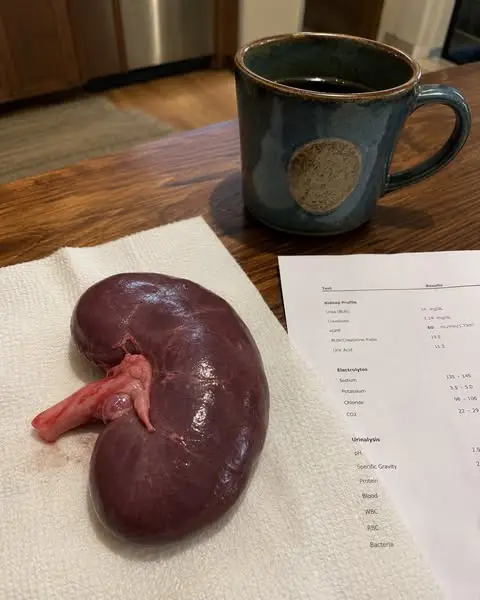
Tiffany Windrow Facebook ad creative
adoriabrand.com
"Stable" Is the Most Dangerous Word Your Kidney Doctor Can Say
Learn more

Tiffany Windrow Facebook and Instagram ad

Tiffany Windrow ran this image ad since Jun 26, 2026, 134 days so far.

First seen
Jun 26, 2026
Running for
134 days
Format
Image
Call to action
Learn more
Niche
Food and drink
Countries
Not disclosed
Page likes
74

Ad copy

My Kidney Doctor told me my labs were stable. Six months later I learned stable was the most dangerous word she could have used. By the time you finish reading this you are going to understand exactly why. Because right now three things are happening. One — you have Stage 3 chronic kidney disease and your labs have been holding steady, and you have quietly let yourself believe that means you are safe. Two — stage 3 is statistically the point where the highest percentage of kidney patients eventually drop off a cliff into rapid, irreversible decline, and almost nobody explains that to you while your numbers still look fine. Three — there are three specific cellular mechanisms running underneath your "stable" labs right now, and standard monitoring does nothing to address any of them. Let me tell you how I found this out. I was 61. Stage 3 CKD for two years. My eGFR had dropped from 58 to 52, then held at 52 for three checkups in a row. My nephrologist seemed pleased. "Your numbers are stable," she said. "Keep doing what you're doing." I believed her. I watched my protein intake. I watched my salt. I came back every six months and the number stayed roughly the same, and I told myself I had this managed. What I didn't know is that stable is exactly the stage where people get caught off guard hardest. Because everyone is watching their salt and protein, and nobody is thinking about what's actually happening at the cellular level while the number on the page holds steady. I found out the hard way. At my next appointment, eighteen months after that first reassurance, my eGFR had dropped to 39. Not gradually. It had held at 52 for over a year and then fallen off a cliff. "This happens sometimes," my nephrologist said. "Stage 3 can progress quickly once it starts moving." I sat in my car in the parking lot for a long time. I asked her directly: "If the damage was building the whole time, why did my labs look fine for eighteen months?" She paused. "Kidneys compensate well. The remaining healthy nephrons take on extra load to keep the numbers looking normal. It can mask decline until the compensating structures themselves start failing." I asked what had actually been happening during those eighteen months of "stable." She talked about managing blood pressure and reducing dietary protein. She did not have an answer for what, specifically, had been destroying my filtration capacity while my labs looked fine. I went home and started researching the way I do when I refuse to accept an answer that doesn't actually answer anything. It was past midnight when I found what I needed. Your kidneys filter 200 liters of blood every single day through your glomeruli — filtration units finer than a human hair. That constant filtration load drives three specific mechanisms that run continuously, whether your eGFR looks stable or not. The first is the TLR4/NF-kB inflammatory cascade — the primary pathway destroying the glomerular filtration threads, driven by uremic toxins circulating in the blood. It does not pause because your last lab result was fine. It runs constantly, and it accelerates the moment your remaining healthy filtration structures start to strain under increased compensatory load. The second is mitochondrial oxidative stress in the kidney cells doing that filtration work. Standard medication does not specifically protect those cells. The damage compounds year after year, invisible on a standard panel until the compensating nephrons can no longer absorb it. The third is fibrosis — scar tissue permanently replacing filtration capacity. A 2025 study in Frontiers in Pharmacology confirmed specific anti-fibrotic pathways that can be activated or left dormant. In stage 3, with remaining healthy nephrons compensating hard, fibrosis can accumulate for a long time before the compensating structures themselves give out — which is exactly why the cliff can look sudden when it isn't. None of this is news to nephrology. What surprised me was that nobody had explained it to me directly, in those terms, while my labs still looked fine. I kept reading and found a published randomized controlled trial — 98 patients with Stage 3 and 4 CKD, three months, eGFR improving from 31.8 to 45.6, creatinine down 18.3%, urinary protein down 36.7%. A meta-analysis covering fifteen studies and over 1,300 patients confirmed the effect. The compound was Cordyceps militaris fruiting body extract, and the mechanism was cordycepin directly suppressing the TLR4/NF-kB cascade — the same pathway my nephrologist had never mentioned by name. I also found the population data behind it. Herding communities on the Tibetan plateau, living above 3,500 metres, consuming Cordyceps sinensis every morning for fifteen centuries. Researchers had spent years trying to explain why their kidney function in their seventies and eighties looked decades younger than expected. They ruled out genetics, altitude alone, activity level, protein intake. What remained was the Cordyceps, consumed daily, addressing the inflammatory cascade, the oxidative stress, and the fibrosis simultaneously, every single morning, for generations. They weren't managing decline. They were addressing the three mechanisms before the cliff ever started. Then I found the processing problem. Most Cordyceps products on the market use mycelium grown on grain, not the actual fruiting body the trial used. One analysis found fruiting body extract contains up to ninety times more cordycepin than mycelium on grain. Most products on the shelf are selling the name of the mechanism without the compound that delivers it. I built a list of four questions before I would consider anything. Is it fruiting body extract, not mycelium on grain? Is it hot-water extracted for bioavailability? Is it third-party tested with a published Certificate of Analysis showing actual cordycepin content? Is it standardized to cordycepin content batch to batch? Most products I checked failed at least two of these. Several companies didn't even know what I was asking when I called. Then I found Adoria. Fruiting body extract at 3,000mg, the clinical dose from the trial. Hot-water extracted. Third-party tested with cordycepin content published on the Certificate of Analysis. Astaxanthin and alpha-lipoic acid addressing the oxidative stress mechanism alongside it. I asked my doctor for a baseline UACR before I started — the urinary albumin-to-creatinine ratio, which catches changes in filtration health faster than eGFR alone. Mine came back at 211 mg/g. One scoop in my morning coffee. I gave it six weeks before retesting anything. Week one through three, nothing I could feel. I kept going anyway, because I'd already learned the hard way that feeling fine doesn't mean anything in this disease. Week six, my UACR came back at 134 mg/g. Down 37%. My nephrologist ordered a repeat to confirm it. 129 mg/g. She looked at the result for a long moment. "The Cordyceps research is real," she said. "I can't write you a prescription for it, but I can't argue with a 37% reduction in six weeks either. Keep doing it." At month four, my eGFR came back at 44. Up from 39. The first time in two years that number had moved in the right direction. I'm still stage 3. I'm not pretending this reversed everything. But for the first time since my diagnosis, I'm not just watching a number that looks fine until it suddenly isn't. I'm tracking a marker that tells me, every six weeks, whether the three mechanisms underneath are actually calming down. If you are stage 3 and your labs have been holding steady, I need you to hear this the way I wish someone had told me eighteen months before my own cliff. Stable does not mean safe. It means your remaining healthy nephrons are compensating, and that compensation has a limit you cannot see coming on a standard panel. The TLR4/NF-kB cascade, the oxidative stress, and the fibrosis do not pause because your eGFR looks fine this year. Ask your doctor for a baseline UACR, not just an eGFR, at your next appointment. Standard test, any lab. Retest at six weeks. Let the number tell you what's actually happening underneath the surface, before the cliff, not after it. Not a feeling. A number. Adoria offers a 60-day money-back guarantee. I used to think stable labs meant I was safe. Now I know better, and I'm not waiting for the cliff to find out the hard way again. Link in comments.

Placements and targeting

FacebookInstagramAudience NetworkMessengerThreads

More ads from Tiffany Windrow

Full Tiffany Windrow profile
Tiffany Windrow
Tiffany Windrow
+1
Inactive134 days
adoriabrand.com
Monitoring Your Kidneys Isn't Saving Them
Learn more

The best way to protect your kidneys is NOT drinking more water, NOT cutting protein, and definitely NOT waiting for dialysis. If your doctor has mentioned protein in your urine, rising creatinine, or declining kidney function — you need to hear this. Most doctors tell you the same thing: "Your kidneys are declining. Cut protein. Reduce salt. We'll monitor your function every 6 months." What they don't tell you is what comes next. The slow, irreversible slide toward dialysis. Year after year, your kidney function drops. 10%. Then 20%. Then 50%. Until one day your doctor says the words you've been dreading: "You need dialysis. Three times a week. Four hours per session. For the rest of your life." The exhaustion that comes with declining kidney function. Not normal tiredness. The kind where you can barely lift your head off the pillow. The swelling in your legs, ankles, and face. Fluid your kidneys can't remove the way they used to. The dietary restrictions that make eating miserable. Less potassium. Less phosphorus. Less salt. Everything you enjoy starts to feel restricted. And the waiting list, if it comes to that. Years. Sometimes a decade. Praying for a transplant that might never come. Here's what nobody tells you: managing kidney disease doesn't save your kidneys. It just slows the decline while the underlying damage keeps building. And if you don't do anything? Your kidney function keeps dropping. You're not stable. You're declining. So you're stuck choosing between two paths that both lead to the same place. Path one: follow doctor's orders. Cut protein. Monitor labs. Watch your kidney function drop year after year anyway. Path two: do nothing. Leave the damage unchecked. Feel your body getting worse every day. Because here's what declining kidney function actually feels like — before you even reach dialysis: The crushing fatigue that won't go away no matter how much you rest. The protein in your urine your doctor flagged at your last visit. The swelling in your ankles that makes your shoes too tight by afternoon. That's your kidneys struggling under a process most people never get explained to them. Most people over the age of 50 tragically ignore these symptoms until one day they realize it's too late. But there's a third path your doctor will rarely explain in detail. Your kidneys filter 200 liters of blood every single day through your glomeruli — the microscopic filtration units inside your kidneys, finer than a human hair. That constant filtration load generates oxidative stress in the cells doing the work, year after year. At the same time, a specific inflammatory pathway — the TLR4/NF-kB cascade — runs in the background, triggered by uremic toxins circulating in your blood, slowly destroying the delicate filtration threads inside your glomeruli. Your ACE inhibitor or ARB reduces pressure on those filtration vessels. That's a real and important mechanism. But it does not suppress the TLR4/NF-kB cascade. It does not protect the kidney cells from accumulating oxidative damage. And it does not stop fibrosis — the third mechanism, where scar tissue permanently replaces filtration capacity that does not come back. Without addressing those three mechanisms directly, your filtration structures keep deteriorating. Protein keeps leaking through the damaged glomerular walls. Fluid backs up in your legs and ankles. Waste builds up in your blood because your kidneys can't clear it the way they used to. Most people don't realize it's these three mechanisms — not just "aging kidneys" — causing the protein in their urine AND the declining eGFR AND the exhaustion. Your doctor will tell you to reduce protein intake and come back in 6 months — without necessarily walking you through the published research on directly addressing the inflammatory and oxidative mechanisms driving the decline. But there's a natural compound I've come to recommend for years to the people who come to me at 50, 60, and even 70 years old whose kidney function is declining, who are terrified of dialysis, and who refuse to accept that organ failure is inevitable. And weeks later, some of them come back genuinely relieved because their numbers have stabilized or improved. Many of them have shown their doctors their new labs and heard words they never thought possible: "Your kidney function looks better. Keep doing whatever you're doing." This natural solution is Cordyceps militaris fruiting body extract — but not the weak, underdosed, wrong-form products you've seen on Amazon or health food store shelves. And every time I mention it, I get the look. Wide eyes. Raised eyebrows. That "You mean... the mushroom? How does that help kidneys?" face. And honestly? I get it. Most people have never heard of cordycepin, the active compound in Cordyceps militaris. And the ones who have tried a Cordyceps supplement didn't see results — because they were taking mycelium grown on grain, which contains a fraction of the actual compound that matters. There's a real reason most people who try Cordyceps supplements don't see their kidney numbers move. A published randomized controlled trial on 98 patients with Stage 3 and 4 chronic kidney disease showed eGFR improving from 31.8 to 45.6 over three months, with creatinine down 18.3% and urinary protein down 36.7%, using fruiting body extract at a specific clinical dose. A meta-analysis covering fifteen studies and over 1,300 patients confirmed the effect across multiple trial designs. A 2025 paper in Frontiers in Pharmacology confirmed the anti-fibrotic pathways involved. But most commercial Cordyceps products use mycelium grown cheaply on grain substrate instead of the actual fruiting body. One analysis found fruiting body extract contains up to ninety times more cordycepin — the bioactive compound that suppresses the TLR4/NF-kB cascade — than mycelium-on-grain products. You weren't taking Cordyceps for kidney support. You were taking grain starch with a mushroom name on the label. I've recommended properly sourced fruiting body extract for years now. Why? Because cordycepin directly suppresses the TLR4/NF-kB inflammatory cascade — the pathway destroying your glomerular filtration threads. Alongside it, astaxanthin protects kidney cell mitochondria from the oxidative damage that accumulates from 200 liters of daily filtration. And specific anti-fibrotic pathways can be activated rather than left dormant. When that cascade calms, those filtration threads stop fraying as fast. Protein stops leaking through as much. Fluid clears more normally. Waste gets filtered the way it's supposed to. No dialysis. No transplant waiting list. No accepted timeline of decline. Just one scoop every morning could help you: Reduce protein leakage as the inflammatory cascade calms Support stabilizing or improving eGFR over time Reduce the fatigue that comes with declining filtration Reduce swelling as fluid clearance improves Protect remaining kidney function from further cellular damage Give your kidneys an actual fighting chance against three mechanisms standard treatment doesn't directly reach It's a whole-food-derived compound with published clinical research behind it. No prescription required for the supplement itself. No replacing your existing medication without your doctor's involvement. But before you go buy any Cordyceps product, there are two things you need to know. First, you might be thinking: "What about cutting protein?" or "I've been drinking more water" or "My doctor put me on an ACE inhibitor." And yes, they can help — to a degree. But here's the problem. Cutting protein reduces kidney workload — but it doesn't suppress the inflammatory cascade already damaging your glomeruli. Drinking more water helps with hydration — but it doesn't touch the TLR4/NF-kB pathway running in the background. Reducing salt helps with blood pressure — but it doesn't protect your kidney cell mitochondria from oxidative damage. And your ACE inhibitor? It reduces pressure inside your kidney's blood vessels, slowing damage — but it doesn't suppress the cascade or activate the anti-fibrotic pathways. Your function still declines, just more slowly. The three mechanisms stay exactly where they are. They're all addressing pieces of the puzzle — but missing the mechanisms actually driving the decline. That's why properly sourced Cordyceps addresses something the standard protocol doesn't, rather than just slowing the same progression. Second, not all Cordyceps supplements are created equal. Most Cordyceps supplements? Not helpful for this. Wrong form. Wrong dose. Cordycepin content never disclosed. Here's what the supplement industry doesn't always make clear: standard manufacturing uses mycelium grown on grain — cheap and fast. But mycelium contains only trace cordycepin at best. You end up with something that says Cordyceps militaris on the label, but the actual compound the research used is barely present. And even when fruiting body extract is used, the clinical research used a specific dose, hot-water extracted for bioavailability, and standardized to actual cordycepin content. To make sure you're getting real Cordyceps that can actually address the three mechanisms, it must be: Fruiting body extract — not mycelium on grain Hot-water extracted — so the cordycepin is bioavailable, not locked inside cell walls your body can't break down Third-party tested for actual cordycepin content — not just purity, but verified potency with a published Certificate of Analysis Combined with astaxanthin and alpha-lipoic acid — to address the oxidative stress mechanism alongside the inflammatory one No fillers, no proprietary blends hiding the actual dose The brand that meets every one of those standards is Adoria. Other brands sell Cordyceps for kidney support using mycelium on grain that delivers a fraction of the active compound — or don't disclose their cordycepin content at all. Adoria's formula contains: 3,000mg Cordyceps militaris fruiting body extract — the clinical dose used in the published randomized controlled trial Hot-water extraction — so the cordycepin actually reaches your bloodstream Third-party lab testing for actual cordycepin content — Certificate of Analysis published Astaxanthin and alpha-lipoic acid — addressing the oxidative stress mechanism from two angles No fillers, no proprietary blends — just the compounds at the doses the research used One scoop. Every morning. In your coffee. If you read the results people are seeing, you'll understand why people with declining kidney function and rising creatinine keep coming back to this brand. UACR dropping. eGFR stabilizing or improving. Energy returning. Swelling going down. This formula has helped stabilize kidney markers for people who had been declining for years on standard management alone. 60-day money-back guarantee. Track your UACR every 6 weeks and your eGFR at your next scheduled labs. If you don't see stabilization or improvement, if you don't feel the energy returning, if you don't believe this is helping protect your kidneys — contact them for a full refund. No questions asked. You risk nothing. So if you want a research-backed way to address the three mechanisms standard treatment doesn't directly reach, reduce protein leakage, support stabilizing your kidney function, and give yourself a real shot at avoiding the path your father or grandfather may have walked — 👉 adoriabrand.com/pages/5reasons

Tiffany Windrow
Tiffany Windrow
+1
Inactive135 days
adoriabrand.com
If Your eGFR Is Dropping, Your Kidney Filter May Be Under Stress
Learn more

The organ that filters your entire blood supply 400 times a day needs a filter change. And nobody in the wellness industry is talking about it. I spent three years doing everything right. Gut health protocol. Liver cleanse every spring. Digestive enzymes with every meal. Probiotics morning and night. I tracked my inflammation markers, optimised my sleep, took my magnesium and my B vitamins and my omega-3s. I felt like I was covering everything. What I was not covering was the organ working harder than all of them combined. Your gut has a trillion dollar supplement market. Your liver has cleanses, milk thistle, NAC, TUDCA — an entire industry built around supporting it. Your digestive system has enzymes, binders, probiotics, every intervention imaginable. Your kidneys have nothing. Until you are sitting in a doctor's office being handed a prescription. I was that person eighteen months ago. My eGFR came back at 44 at a routine blood test. My GP said we would monitor it. Come back in six months. I had been taking care of every other system in my body for three years. Gut sorted. Liver supported. Inflammation tracked. I had never once thought about my kidneys. Never once asked whether the filter was being maintained the same way I was maintaining everything else. Because nobody had ever told me to. I drove home and sat with that for a long time. The first thing I did was what most people do. I went to Amazon. I typed in kidney support and spent an hour reading labels. The products I found all looked roughly the same. Cranberry extract. D-mannose. Uva ursi. Juniper berry. Chanca piedra. Parsley leaf. The same ingredients cycling through different brand names and different packaging — some with waterfalls on them, some with kidneys rendered in soft medical blue, all of them promising support and cleansing and health. I ordered three of them. Took them for six weeks each. Nothing changed. Not the lower back heaviness that had been sitting behind my kidneys for months. Not the two nighttime bathroom trips I had decided were just age. Not the mild ankle puffiness I had been attributing to standing too long. Not the eGFR number my GP was watching. I went back and read the ingredients more carefully. Cranberry and D-mannose are urinary tract supplements. They reduce bacterial adhesion in the urinary tract. They are designed for UTI prevention. They are not designed for the filtration structures inside the kidneys. They do not reach the mechanisms driving filtration decline. They never did. They were solving a different problem in a different organ and nobody on the label had mentioned that. The herbal kidney cleanse products were the same story. Dandelion root. Nettle leaf. Hydrangea root. Things that increase urine output. Things that might reduce the load on a kidney that is already functioning well. Things that do nothing for a kidney where the filtration structures themselves are under pressure. I had been trying to clean a filter that needed a different kind of attention entirely. I went back to the beginning and I started asking a different question. Not what supports kidney health. The question underneath that one. What is actually driving the filtration decline — and has anyone found something that addresses it directly at the cellular level. I went to the primary literature. Not wellness content. Not supplement blogs. PubMed. Published research. Peer reviewed journals. The actual science. It was past midnight when I found what I had been looking for. But first I found something else. A study from researchers who had spent years trying to understand why a specific population of people in the world had kidney function that defied every model of age-related decline. The Tibetan plateau. Herding communities living at elevations above 3,500 metres. Extreme cold. Low oxygen. Intense UV radiation. Every environmental condition that should accelerate kidney decline faster than at sea level. But their eGFR values in their seventies and eighties were inconsistent with expected age-related decline. Creatinine levels stable across age ranges that should have shown significant elevation. Filtration function that the researchers described as belonging to people twenty years younger. The researchers spent years eliminating explanations. It was not genetics — they controlled for that rigorously across multiple population studies. It was not altitude alone — other high-altitude populations without the same dietary pattern did not show the same kidney function profile. It was not activity level, not protein restriction, not any of the standard variables the researchers tested first. It was something these communities had been consuming every single morning for fifteen centuries. Something so embedded in the daily rhythm of plateau life that it barely registered as a dietary choice. Cordyceps sinensis. A fungus that grows specifically in the frozen grasslands of the Tibetan plateau. Consumed every morning. For generations. Wild Cordyceps sinensis now sells for up to twenty thousand dollars per kilogram because the plateau communities that discovered it understood something about it that took modern researchers centuries to catch up with. I kept reading. The researchers identified the mechanism. Your kidneys filter 200 litres of blood every single day. The cells doing that work accumulate oxidative damage from the constant filtration load. Year after year the damage builds. But underneath that oxidative stress three specific mechanisms drive the filtration decline that standard wellness protocols have never addressed. The first is the TLR4/NF-kB inflammatory cascade. The primary pathway destroying the glomeruli — the microscopic filtration units inside your kidneys. Think of your glomeruli as the finest mesh net your body produces. So fine that a human hair looks like a rope compared to the threads it is made of. That net separates what your body needs from what it needs to eliminate. When the TLR4/NF-kB cascade runs unchecked — driven by uremic toxins circulating in the blood — it destroys those threads one by one. The net frays. The filter fails. The cranberry supplements and herbal cleanses I had been taking for six weeks were not touching this pathway. They were never designed to. The second is mitochondrial oxidative stress. The cells doing the filtration work accumulate damage from the constant load year after year. The filtration efficiency drops. Nobody in the wellness industry is protecting kidney cell mitochondria the same way they protect liver mitochondria or gut barrier integrity. Because nobody in the wellness industry is talking about the kidneys at all. The third is fibrosis — scar tissue accumulating permanently inside kidney tissue, replacing filtration capacity that cannot come back. A 2025 study in Frontiers in Pharmacology confirmed specific anti-fibrotic pathways that can be activated or left dormant depending on what you give your body. Most people are leaving them dormant. Three mechanisms. Running simultaneously. Silently. With no symptoms until the filter has already been failing for years. Your gut protocol does not address them. Your liver cleanse does not address them. Your cranberry supplements and herbal kidney cleanses do not address them. Nothing in the standard wellness stack was designed for the organ filtering your entire blood supply 400 times a day. The Tibetan plateau communities had been addressing all three mechanisms every single morning for fifteen centuries. Not through a supplement protocol. Through a food that contained the specific bioactive compound — cordycepin — that directly suppresses the TLR4/NF-kB cascade, protects kidney cell mitochondria from oxidative damage, and activates the anti-fibrotic pathways that keep filtration capacity intact. They were not doing anything special. They were eating breakfast. And their kidneys at eighty looked like the kidneys of someone twenty years younger. The published research behind this is not a wellness blog. It is a randomised controlled trial — 98 patients with declining kidney function, three months of Cordyceps supplementation, eGFR from 31.8 to 45.6, creatinine down 18.3%, urinary protein down 36.7%. A meta-analysis reviewing fifteen independent studies and 1,310 patients confirming significant therapeutic effect across multiple trial designs. The Cochrane review. The 2025 Frontiers in Pharmacology paper on the anti-fibrotic pathways. The filter had a cleaning protocol. It just was not in any wellness stack anyone had ever sold me. Four questions before I would spend money on anything. Is it fruiting body extract — the actual organism, not a cheaper substitute? Is it hot-water extracted for bioavailability — because without extraction the active compounds cannot be absorbed? Is it third-party tested with a published Certificate of Analysis showing actual active compound content? Is it standardised to active compound content batch to batch? Most kidney products on the market — including the popular ones, including the ones with thousands of Amazon reviews — fail at least two of these questions. Many fail all four. They are selling the name of an ingredient without the form that delivers the mechanism. Then I found Adoria. Through a forum thread — a kidney health community I had been reading for weeks. Someone had posted a UACR result that had moved in a direction she had been told was no longer possible. I went to the website and skipped the marketing entirely. Went straight to the ingredient panel and the Certificate of Analysis. Cordyceps militaris fruiting body extract. 2,500mg — the clinical dose from the published randomised controlled trial. Hot-water extracted. Confirmed. Third-party tested. Actual cordycepin content verified by an independent laboratory. Standardised batch to batch. Astaxanthin at 10mg — addressing the mitochondrial oxidative stress mechanism from a second angle. One of the most potent natural antioxidants specifically studied for kidney cell protection. The ingredient the rest of the wellness stack had never included because nobody was thinking about the kidneys. Cordyceps sinensis CS-4 at 500mg — the traditional Himalayan species the plateau communities had been consuming for fifteen centuries alongside the clinically studied militaris strain. Three mechanisms. One scoop. One product. I requested a UACR baseline from my GP before I started. The urinary albumin-to-creatinine ratio — it measures protein leaking through damaged glomeruli in real time. Weeks not months. The smoke detector that goes off before the eGFR tells the full story. Standard test. Any lab. I asked my GP to order it. She asked why I wanted it. I told her I had found something in the research and I wanted a number to track before I started. My baseline UACR: 198 mg/g. The filter was fraying. The cascade was running. Three years of covering every other base and this number had never been touched because nothing I was taking was designed to touch it. I mixed the first scoop into my morning coffee on a Monday. First week — nothing changed. I tracked the lower back heaviness that had been sitting behind my kidneys for months, the nighttime bathroom frequency, the afternoon energy dip I had been attributing to everything except the organ filtering my blood supply 400 times a day. Everything the same. Second week — still nothing. I kept going. Day twenty-four — I stood up from the desk after two hours and the familiar lower back pressure did not arrive the way it always had. I straightened fully. The weight was lighter. Like something had shifted without announcing itself. I noted it. Did not trust it yet. Day forty — three nights in a row sleeping through without the 2am bathroom trip that had been waking me for over a year. Day fifty-two — the puffiness in my ankles that I had blamed on standing too long was gone by evening. For the first time I could remember. Week six I retested the UACR. Logged into the portal when the results came through. UACR: 127 mg/g. Down from 198. A 36% reduction in six weeks. I called my GP. She ordered a repeat to confirm. 124 mg/g at retest. A 37% reduction. She looked at the results at my next appointment. "The Cordyceps research is documented," she said. "The TLR4/NF-kB mechanism is real. I cannot recommend it formally. There is no clinical protocol." She looked at the numbers. "But I cannot argue with a 37% UACR reduction in six weeks. Whatever you found — keep taking it." At month five my eGFR retested. Up from 44. The first upward movement since we started watching it. She looked at the result for a long time. "The Tibetan plateau research is real," she said. "These communities were addressing kidney filtration decline through diet for centuries before we had the language to describe the mechanism. We do not go there in clinical practice because there is no prescription I can write for a food. So we default to what fits the system." She looked at me. "You found what fits the biology." If you are where I was — health conscious, gut sorted, liver supported, covering every base you know about, and completely unaware that the organ filtering your blood supply 400 times a day had been left out of the entire conversation — you need to know what I found when I finally asked the right question. The cranberry supplements are for urinary tract health. The herbal kidney cleanses increase urine output. The gut protocols and liver cleanses and digestive enzymes are doing exactly what they were designed to do — for every organ except the one that matters most. The three mechanisms destroying your kidney filtration have no equivalent in your current wellness stack. Not your probiotic. Not your liver cleanse. Not your cranberry capsules with the waterfall on the label. None of them were designed for this organ. None of them reach these pathways. Ask your GP for a baseline UACR before you start. Standard test. Any lab. Retest at six weeks. Let the number tell you what three years of covering every other base never showed you. Not a feeling. A number. Adoria offers a 60-day money back guarantee. Two months to give the organ nobody told you about the attention it has needed all along. The organ that filters your entire blood supply 400 times a day needs a filter change. Everything else in your routine has a protocol. Now this one does too. Link in comments.

Similar food and drink ads

Self-Growth through Reading
+2
Inactive2 days
growme-ai.onelink.me
No Hours to Read? No. Just No Right App🔥📖
Download

🌅 Morning coffee? That‘s 15 minutes. 🚇 Daily commute? That’s 15 minutes. 🥗 Lunch break? That‘s 15 minutes. 🚶‍♂️ After-dinner walk? That’s another 15 minutes. GrowMe turns any 15-minute pocket of your day into a book-powered upgrade. 📖💥 Not a single extra minute taken from your life—just the ones you’re already living. 🎧✨ Bestseller insights, served fresh. While you sip ☕, ride 🚗, or unwind 🛋️. Your day is full of 15-minutes. Stop wasting them. Start growing through them. 🌱📲 Download GrowMe. Your 15-minute moment is right now. ⏰🔥 #GrowMeApp #AnyTimeAnyWhere #15MinuteMoments #BookSummaries #DailyUpgrade #LearnWhileYouLive #PocketSizedGrowth

Self-Growth through Reading
+1
Inactive1 day
growme-ai.onelink.me
No Hours to Read? No. Just No Right App🔥📖
Download

🌅 Morning coffee? That‘s 15 minutes. 🚇 Daily commute? That’s 15 minutes. 🥗 Lunch break? That‘s 15 minutes. 🚶‍♂️ After-dinner walk? That’s another 15 minutes. GrowMe turns any 15-minute pocket of your day into a book-powered upgrade. 📖💥 Not a single extra minute taken from your life—just the ones you’re already living. 🎧✨ Bestseller insights, served fresh. While you sip ☕, ride 🚗, or unwind 🛋️. Your day is full of 15-minutes. Stop wasting them. Start growing through them. 🌱📲 Download GrowMe. Your 15-minute moment is right now. ⏰🔥 #GrowMeApp #AnyTimeAnyWhere #15MinuteMoments #BookSummaries #DailyUpgrade #LearnWhileYouLive #PocketSizedGrowth

Self-Growth through Reading
+2
Inactive3 days
growme-ai.onelink.me
No Hours to Read? No. Just No Right App🔥📖
Download

🌅 Morning coffee? That‘s 15 minutes. 🚇 Daily commute? That’s 15 minutes. 🥗 Lunch break? That‘s 15 minutes. 🚶‍♂️ After-dinner walk? That’s another 15 minutes. GrowMe turns any 15-minute pocket of your day into a book-powered upgrade. 📖💥 Not a single extra minute taken from your life—just the ones you’re already living. 🎧✨ Bestseller insights, served fresh. While you sip ☕, ride 🚗, or unwind 🛋️. Your day is full of 15-minutes. Stop wasting them. Start growing through them. 🌱📲 Download GrowMe. Your 15-minute moment is right now. ⏰🔥 #GrowMeApp #AnyTimeAnyWhere #15MinuteMoments #BookSummaries #DailyUpgrade #LearnWhileYouLive #PocketSizedGrowth

Self-Growth through Reading
+1
Inactive4 days
growme-ai.onelink.me
No Hours to Read? No. Just No Right App🔥📖
Download

🌅 Morning coffee? That‘s 15 minutes. 🚇 Daily commute? That’s 15 minutes. 🥗 Lunch break? That‘s 15 minutes. 🚶‍♂️ After-dinner walk? That’s another 15 minutes. GrowMe turns any 15-minute pocket of your day into a book-powered upgrade. 📖💥 Not a single extra minute taken from your life—just the ones you’re already living. 🎧✨ Bestseller insights, served fresh. While you sip ☕, ride 🚗, or unwind 🛋️. Your day is full of 15-minutes. Stop wasting them. Start growing through them. 🌱📲 Download GrowMe. Your 15-minute moment is right now. ⏰🔥 #GrowMeApp #AnyTimeAnyWhere #15MinuteMoments #BookSummaries #DailyUpgrade #LearnWhileYouLive #PocketSizedGrowth

See all ads

Create a free account to unlock every creative, video and landing page.

Sign up free

Keep exploring

Free plan, no card needed

Find more ads like this

Search millions of real ads by keyword, niche and format, and save the winners to your swipe file.

Start free