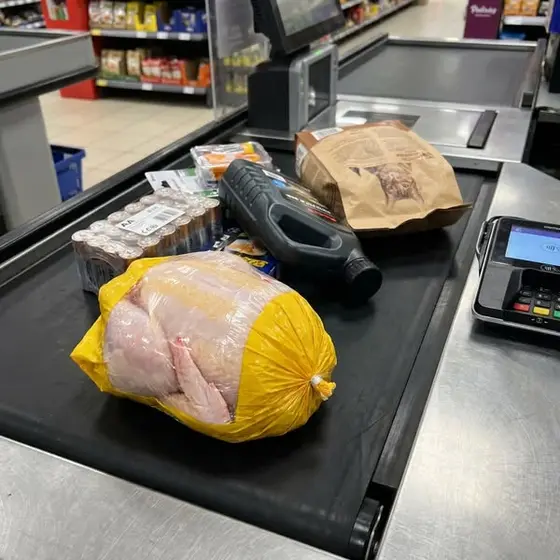
The Wellness Report Facebook ad creative
trygutty.com
A stranger in a supermarket queue changed my life.
Learn more

The Wellness Report Facebook and Instagram ad

The Wellness Report ran this image ad since Jun 27, 2026, 133 days so far.

First seen
Jun 27, 2026
Running for
133 days
Format
Image
Call to action
Learn more
Niche
Health and supplements
Countries
Not disclosed
Page likes
0

Ad copy

I found something at my local supermarket last Tuesday that changed my life. I wasn’t looking for it. I went in for cat litter and a hot roast chicken from the deli counter. I came out with a bag of cat litter, a roast chicken, and a piece of paper that a stranger handed me in the queue. A folded receipt with three words written on the back in blue ballpoint pen. I still have it. It’s on my fridge, under the magnet from my granddaughter’s dance recital. I look at it every morning when I make coffee. Three words. I’ll tell you what they were in a minute. But first I have to back up, because if I just tell you what was on the paper without telling you what came before it, you won’t understand why a folded receipt from a stranger made me sit in my car in the car park and cry for fifteen minutes before I could drive home. My name is Jessica. I’m 57 years old. I live in a small town outside York called Stamford Bridge, which I promise you is real. Look it up. We have a B&M, two churches, a local pub, and that’s about it. I’ve been married to my husband Wendell for 34 years. He’s 61. He drove a delivery route for the same bakery company for 28 years, retired three years ago, and has been quietly disappearing ever since. That’s the only word I have for it. Disappearing. Not all at once. Not in a way you’d notice from the outside. But when you’ve slept next to a man for 34 years, you know the shape of him. You know what his footsteps sound like in the kitchen at 6:15 in the morning. You know how loud he laughs at the same old comedy reruns we’ve been watching since the kids were little. You know which side of the bed he sleeps on and how heavy his arm feels when he reaches over in his sleep. And one day you start to notice that all of those things have gotten quieter. Lighter. Fainter. The footsteps got slower. The laugh got shorter. The arm stopped reaching over. I told myself it was retirement. I told myself it was 61. I told myself it was the weather, the news, the hip he’d been complaining about, the fact that our son moved to Leeds two years ago and we don’t see the grandkids as much as we used to. But I knew. I think wives always know. Something was wrong with my husband and I didn’t know what it was. The cholesterol thing started about four years ago. His regular GP, a man named Dr Pace who has been seeing Wendell since before our youngest was born, sat us down after a routine physical and slid a printout across the desk. "Your numbers are getting away from you, Wendell." Total cholesterol over 6.7 mmol/L (260 mg/dL). LDL was the one he was worried about. I don’t remember the exact number anymore, I just remember Dr Pace circling it twice with a red pen and saying the word "atherosclerosis" out loud, which is one of those words that sounds worse the second time you hear it. He put Wendell on a statin. 20 milligrams. Once a day, with dinner. We did everything they told us to do. I cleared the pantry out. Threw away the white bread, the boxed mac and cheese, the breakfast sausage Wendell had eaten every Saturday morning of his adult life. I bought oat milk. I bought the kind of margarine the box says is good for your heart. I started buying salmon at Marks & Spencer even though Wendell hates salmon and would push it around his plate like a child. I made him walk. We walked the loop around our village every evening after dinner, even when his hip was bothering him, even when it was raining, even when neither of us wanted to. 22 minutes a loop. We did it 5 days a week for almost two years. His next bloodwork came back and the LDL had barely moved. Dr Pace doubled the dose. That was the year Wendell stopped going out to the workshop. He had this little detached workshop in our back garden, built it himself in 1998 from a kit, used to spend every Saturday out there refinishing furniture for our daughter or building birdhouses or just puttering around with the radio on and the door open. He stopped going. Not all at once. Just less. Then less. Then not at all. The workshop sat there with the door closed. Spiders started building webs across the doorframe. I noticed because I’d walk past it on my way to take out the wheelie bin and the webs got bigger every week. I asked him about it once. He shrugged. "Just don’t have it in me anymore." That’s a thing a 61-year-old man should not be saying about a hobby he’s had since 1998. But I let it go. Because what was I going to do? Argue with him? Drag him out there? The next bloodwork came back and his numbers had finally started to come down a little. Dr Pace was happy. Wendell wasn’t happy. Wendell wasn’t anything. He was just there. In the armchair. Watching reruns. Going to bed at 8:30. He’d lost weight too, but in the wrong way. The way older men lose weight. Not from his belly. From his arms and his face. His wedding ring started spinning loose on his finger. I asked Dr Pace about it at our next visit. I sat there in the little plastic chair across from his desk and I said, "Doc, my husband is fading. I don’t know how else to put it. He’s fading." Dr Pace was kind. He’s always been kind. He took his glasses off and he said, "Jessica, this is what 60 looks like for a lot of men. The numbers are improving. That’s what we’re focused on. The rest of it is just, you know. Life." Just life. I drove home that day and I cried in the driveway before I went inside. Because if this was just life, I didn’t want to watch the rest of it. Now I’m going to fast forward because if I tell you about every month of the next two years, this is going to take all day. Just know that things kept getting quieter. Wendell’s birthday came and went and he didn’t want a cake. Christmas came and went and he sat in the armchair while the grandkids opened presents and he smiled at the right times but he wasn’t really there. Our anniversary came and went and he forgot. He’s never forgotten our anniversary. I made an appointment with Dr Pace by myself. Without Wendell. I asked if maybe the medication was doing something to him. The fog. The fatigue. The way his hands had started to shake a little when he held a mug of tea. Dr Pace looked at the chart and said the medication was working as intended. The numbers were trending in the right direction. He said maybe we should think about an antidepressant. An antidepressant. I drove home and I sat in the driveway again and I thought, my husband doesn’t need an antidepressant. My husband needs his life back. That brings me to last Tuesday. I was at the local supermarket picking up cat litter and a hot roast chicken because Wendell had been wanting the roast chicken from there for some reason, said it was the only one he liked anymore, and I’d given up trying to make him eat the things on the heart-healthy list. If he wanted supermarket chicken, he was going to get supermarket chicken. At this point I’d have wheeled in a chip van if it would have made him say two sentences in a row. I was in the checkout queue. The self-scan was broken, half the regular lanes were closed, and I ended up in line behind a woman who had to be in her late 60s. Tall. Skinny. Grey hair pulled back in a loose ponytail. Walking trousers and a windbreaker. The kind of woman who looks like she gardens and walks dogs for the neighbours. She had a basket. I had a trolley. She turned around to let me put the cat litter on the belt because the bag was heavy and I was clearly struggling with it. That’s how it started. A bag of cat litter and a stranger being polite. She said, "You got grandkids?" I said yes. Two. A boy and a girl. The girl was the one in the dance recital photo on my keychain that I was holding in my hand. She said, "I got four. The youngest one’s in Edinburgh. We just got back from seeing her last weekend." We? She gestured behind her, and that’s when I noticed the man. He was at the end of the conveyor belt, packing her bags. Tall like her. Maybe a little stooped. White hair. He had a flat cap in his back pocket and he was moving with the kind of brisk efficiency that I hadn’t seen in my own husband in years. He looked up and waved at me. "Hey there." That’s it. Just a hey there. Two words. But it was the way he said it. Bright. Easy. Like he was actually present in his own body. Like he was glad to be at the supermarket on a Tuesday afternoon packing bags for his wife. I don't know what came over me. I really don't. But I leaned a little closer to the woman and I said, kind of quiet, "Can I ask you something kind of weird?" She smiled. "I’m a kind of weird person, so go ahead." I said, "How old is your husband?" She blinked. Then laughed. "67. Why?" "My husband is 61 and he won't get out of his armchair." I don't know why I said it. I’d never said it out loud to anyone. Not my sister. Not my best friend Donna who I’ve known since school. Not Dr Pace. I said it to a stranger in a supermarket checkout queue because something about her husband’s voice cracked something open in me. She didn't laugh. She put her hand on my arm. Right there in the queue. Light. Just for a second. She said, "Is he on a statin?" I stared at her. "Yes." She nodded. Like she’d already known the answer. She said, "My Donald was on one for nine years. He’s not on it now." The cashier was scanning her items. The line was moving. There were people behind us. This was not the time or the place to have this conversation. I knew that. But I couldn't move. I said, "What happened?" She said, "The same thing that’s happening to your husband. He went away. He was right next to me and he went away. The doctor kept saying everything was fine because the numbers looked fine. And I kept watching my husband disappear." I felt my throat close up right there next to the mints and the magazines. She said, "We didn't take him off the medication. He’s still managing his cholesterol. But we added something. And the part of him that had gone quiet, it came back. Slowly. Over a few months. But it came back." The cashier was waiting for her to pay. She paid. Cash. I remember because she counted it out. Twenties and pound coins. She picked up her receipt. She turned it over in her hands. She looked at me. She said, "You got a pen?" I dug one out of my handbag. She wrote three words on the back of her receipt and she handed it to me. She said, "Look this up. Tonight. When your husband’s asleep. Don't take my word for any of it. Just look it up. Read the research. Decide for yourself." Her husband Donald came around with the bags in one hand and a smile in the other and he said, "Ready, sweetheart?" and she said yes and they walked out into the car park and I watched them go. Then I paid for my cat litter and my roast chicken and I sat in my car and I cried for fifteen minutes. Because of the way he said sweetheart. Because Wendell hadn't called me sweetheart in over a year. Because I’d been so used to my husband being a ghost that I’d forgotten what it looked like for a 67-year-old man to walk through a car park like he had somewhere to be. I drove home. I made dinner. I gave Wendell his roast chicken. He thanked me and ate it in the armchair with the TV on. He went to bed at 8:30. At 9:15 I sat down at the kitchen table with my laptop and the receipt. The three words on the back were: Amla. Oxidised cholesterol. That’s it. That’s all she wrote. I typed them into Google. And I sat there for the next four hours. What I learned that night, sitting at my kitchen table with my reading glasses on and a cup of decaf going cold next to me, was something nobody had told me in four years of doctor’s visits. Your cholesterol number isn't really the problem. I had to read it three different ways before it sank in. Because for four years I had been treating that number like a verdict. The number on Wendell’s blood panel was the score. High score bad. Low score good. That was the whole game. But here’s what the research kept saying. Cholesterol on its own, just floating through your bloodstream doing its job, doesn't do anything bad. Your body needs it. It builds cell walls. It makes hormones. It’s not the villain. What hurts your arteries is when cholesterol gets damaged on its way through your bloodstream. There’s a process called oxidation. It’s the same kind of thing that happens when you cut an apple in half and leave it on the counter and it turns brown. The cholesterol gets oxidised. And oxidised cholesterol is sticky. That’s the kind that ends up parked in your artery walls. That’s the kind your body has trouble clearing out. That’s the kind that builds up. And the thing that nobody had told me, the thing that hit me sideways at my kitchen table at 11 at night, was this: If you only push the number down without addressing the oxidation, you’re treating the smoke and ignoring the fire. The body keeps making more cholesterol to replace what got stuck. The number goes up. The medication pushes it back down. The number goes up. The medication pushes it back down. The cycle keeps spinning. And underneath it, the oxidation is still happening. That was the part nobody at the surgery had ever explained to me. Then I started reading about Amla. Amla is a fruit. It grows in India. They call it the Indian gooseberry. It’s been used in traditional medicine over there for, I don't know, a thousand years. Maybe longer. I’m not a historian. But what caught my attention was that researchers had been looking at Amla for years because of compounds it contains called emblicanins. And what emblicanins seem to do, based on the studies I read that night, is help protect cholesterol from oxidation. Not push your number down by force. Help protect your cholesterol from getting damaged in the first place. When cholesterol is better protected, less of it ends up in the sticky oxidised form. When less of it is getting stuck to artery walls, the body’s frantic replacement cycle can start to ease. And when the cycle eases, the number can start to come down for a different reason than statins push it down. It can come down because your body isn't fighting an uphill battle anymore. I sat there with that for a long time. Because I’m not a doctor. I’m a 57-year-old woman who used to substitute teach at the primary school. But I understood that. I understood it in a way I had never understood the cholesterol conversation before. For four years I’d watched my husband swallow a pill that pushed a number around. For four years that pill had been doing nothing about the underlying problem. For four years the part of him I loved had been getting quieter while the number on the page got better. The medication was doing its job. The job just wasn't the right job. I went down a deeper rabbit hole. There were more recent studies. A trial out of India that ran for 12 weeks where they gave a standardised Amla extract to people with high cholesterol and tracked their numbers. Total cholesterol came down. LDL came down. The protective HDL number came up. And the thing the researchers kept noting, almost as a side effect, was that the people in the studies described feeling different. Not just looking different on a blood panel. Feeling different. I closed the laptop at 1:30 in the morning. I went into the bedroom. Wendell was asleep on his back, mouth open, breathing slow. I stood in the doorway and looked at him for a while. I thought about Donald in the supermarket car park. I thought about my husband at 35, in the front garden, lifting our daughter onto his shoulders so she could see the parade. I thought about the workshop with the spiderwebs across the door. I went back to the kitchen. I ordered a bottle of Gutty Amla from www.trygutty.com. It was just past 2 in the morning. I almost didn't do it. My finger hovered over the button for a long time. Because I’d tried things before. Fish oil. Red yeast rice. A green powder Donna had recommended that tasted like a swamp. But this felt different. Because for the first time, the explanation had matched what I was watching happen in my house. The mechanism made sense. Protect the cholesterol from oxidation. Let the body’s own systems do what they were designed to do. The bottle came four days later. A small bottle. 60 capsules. Two a day. I gave Wendell the first one with his coffee on a Saturday morning. I told him what it was. I told him about the woman in the supermarket line. I told him I’d read until 1:30 in the morning. He looked at me over the top of his glasses and he said, "Jessica, I’d swallow gravel if you asked me to." That was the most words he’d said to me in a week. I’m not going to tell you that something miraculous happened the next day. It didn't. He took two capsules a day with breakfast and dinner and life kept going. But here’s what happened in week two. Wendell was sitting in the armchair watching the news. I walked through the living room with a basket of laundry. He looked up and he said, "You need help with that?" I said no, I had it. He said, "I can take the basket up the stairs." I almost dropped the basket. He hadn't offered to carry anything up the stairs in over a year. I let him take it. Just to see. He went up the stairs at the same speed I would have. He came back down and sat in the armchair and went back to the news. I went into the bathroom and I sat on the edge of the bath and I tried not to read into it. Week three. I came home from the shops on a Wednesday afternoon and the workshop door was open. I just stood there in the driveway with the bags in my hands. Wendell came out of the workshop with a piece of sandpaper in his hand and dust on his shirt and he saw me standing there and he said, "There’s a chair in here that I started for Caitlin a few years ago. I think I’m going to finish it." Caitlin is our granddaughter. She turned 6 last month. I cried in the driveway again. For the second time in a month. Different reason this time. Week five. He started going to bed at 9:30 instead of 8:30. Then 10. He started talking through dinner instead of eating in front of the TV. One night he reached across the bed and put his arm over me the way he used to. I don't think he even thought about it. It was just muscle memory, after all those years, finding its way back. Week seven. His doctor wanted bloodwork. We hadn't told Dr Pace about the Amla. I’d told Wendell I wanted to wait and see what the numbers looked like first. We went in. Got the labs. Came home. Waited. The call came two days later from the surgery. "Wendell, your numbers look great. Whatever you're doing, keep doing it." Total cholesterol had come down. LDL had come down further than it had on doubled medication alone. HDL, the protective one, had come up for the first time in four years. Dr Pace asked what we were doing differently. Wendell told him. About the Amla. About the research. About the woman in the supermarket line. Dr Pace was quiet for a long time and then he said, "I’m going to look into that. Keep doing what you're doing. We'll check again in 90 days." That was last week. Last night Wendell finished the chair for Caitlin. It’s a small wooden chair with a heart cut into the back. He’s bringing it to her on Saturday. He’s been smiling about it for two days. He called me sweetheart yesterday. Standing in the kitchen, drinking coffee, looking out at the workshop. He said, "Sweetheart, what do you want to do this weekend?" I had to leave the room. Not because I was sad. Because I was full. I’m telling you all this because I keep thinking about that woman in the supermarket line. I don't know her name. I never asked. She handed me a folded receipt with three words on it and she changed my life and I never even asked her name. So I’m doing what she did. If you’re reading this and you’ve watched someone you love get quieter over the last few years. If you’ve sat in a doctor’s surgery and been told the numbers are improving while the person you married is fading in front of you. If you’ve started to wonder if "this is just what 60 looks like" is something you should accept or something you should fight. I want you to know there’s another way to look at this whole thing. The number on the page is not the whole story. The cholesterol itself is not the villain. The damage happens when cholesterol gets oxidised, and once you understand that, the conversation changes. Gutty Amla is what we use. It comes with a 90-day money-back guarantee, which meant if it didn't do anything for Wendell I could send it back and get my money back. I didn't have to send it back. But it mattered to me that I could have. Two capsules a day. That’s it. With food. Wendell takes one with breakfast and one with dinner. If you want to read what I read that night at my kitchen table, you can. You don't have to take my word for any of it. The woman in the supermarket line told me the same thing. Look it up. Read the research. Decide for yourself. 👉 www.trygutty.com P.S. The 90-day money-back guarantee is real. I asked. You order it, you try it for 90 days, and if it doesn't do anything for the person you love, you send it back and they refund you. I’d never had a supplement company offer me that. Most of them want a credit card on file and a subscription you have to call to cancel. Gutty just sells you a bottle. You either keep buying it because it works for you or you don't. That’s the whole transaction. That meant something to me. P.P.S. I went back to that supermarket three weeks later. I stood in the same checkout queue at the same time of day, hoping I’d see her. I wanted to tell her about Wendell. I wanted to tell her about the chair for Caitlin. I wanted to ask her name. She wasn’t there. I went back the next Tuesday too. Still wasn’t there. I think about that a lot, that the only thing I have of her is three words on the back of a receipt and the sound of her husband saying "Ready, sweetheart?" in a car park. Sometimes the people who change your life are people you only meet once. P.P.P.S. If you do this, please write a note one day. I won’t see it but somebody will. Tell them about the workshop door opening. Tell them about the chair. Tell them about the moment your person came back to themselves. Pay it forward the way that woman paid it forward to me. That’s the only thing I’m asking. Don't wait on it. The version of your life where you didn't try is not a version you want to live in. I know because I almost lived it. 👉 www.trygutty.com

Placements and targeting

FacebookInstagramAudience NetworkMessengerThreads

More ads from The Wellness Report

Full The Wellness Report profile
The Wellness Report
The Wellness Report
+1
Inactive133 days
trygutty.com
I couldn't make a fist for my grandson.
Learn more

I pulled my hand off the padel racket on a Tuesday night in October and couldn't make a fist. Not "it was sore." Not "it ached." I couldn't close my fingers around the handle of my own car door 20 minutes later in the church car park. I had to use my left hand to open it. And my left hand has never opened a car door in 62 years of my life. My grandson was in the passenger seat. Eli. He's 11. He saw me do it. He didn't say anything. He just looked at me the way kids look at you when they've seen something they aren't supposed to see. That's the moment that started everything. Let me back up. My name is Wade. I'm 62 years old, retired three years from Royal Mail after 34 years walking a delivery route in Harrogate, North Yorkshire. Same route the last 19 of those years. Outer Harrogate, up around the hills, the houses with the gates and the dogs that knew me by smell. I delivered post in the rain, in the snow, in the August heat that bakes the tarmac soft. My knees took a beating. My back took a beating. But my hands. My hands were the one thing that always worked. You don't think about your hands until they stop working. A postman's hands sort 600 letters before sunrise. They flick rubber bands. They tuck magazines into letterboxes the right way so they don't get wet. They scratch behind the ears of every dog on the route because that's how you don't get bit. My hands were tools. I was proud of them the way some men are proud of their cars. My wife Linda used to say I had "piano hands." I never played a note in my life. But she'd hold my hand in church and trace the veins on the back of it with her thumb. We've been married 38 years this past June. So when I retired, I figured I'd finally do all the things my hands had been waiting to do. Build a garden swing. Re-finish the dining table her mother left us. Teach Eli how to tie a knot on a fishing line. Instead I sat in the armchair. For three years. It snuck up on me. That's how it does. You take a week off because your back's tight. Then a month because the weather's been bad. Then you realize it's October and you haven't been outside for more than to get the post in six weeks. And the letters you're collecting are the ones somebody else delivered. Linda noticed before I did. She didn't nag. She just started saying little things at dinner. "Pastor Mike's wife saw you at Marks & Spencer. She said you look tired." "Your son called. He wanted to know if you were okay." "Eli asked me why Grandad never wants to do anything anymore." That last one is the one that stuck. Eli is my daughter Sarah's boy. Sarah lives 14 minutes away in Knaresborough. Eli's been spending Saturdays at our house since he could walk. He used to come over and we'd build things in the shed. Birdhouses. A wooden train. One time a catapult that Linda confiscated within 4 hours. The last 18 months, when he came over, I'd be in the chair. I'd ask him about school. He'd say "good." I'd ask him about football. He'd say "good." Then he'd go in the kitchen and help Linda make biscuits, and I'd hear them laughing through the wall, and I'd think, that used to be me. So when our church started a Wednesday night padel league at the local leisure centre, and Pastor Mike's wife sent the email, and Linda forwarded it to me with no message, just the email, I knew what she was doing. I signed up. I signed Eli up too. Grandparent-grandchild doubles. 6:30 PM Wednesdays. 8 weeks. Eli was so excited he called me twice the day I told him. The first Wednesday was September 24th. I remember because Linda wrote it on the kitchen calendar with a little smiley face next to it like I was a 6-year-old going to his first day of school. We won our first match. Eli was a natural. Quick feet. Knew where to be. And I, somehow, found a rhythm I hadn't felt in years. The racket was light. The ball was slow enough that even my creaky shoulders could keep up. We laughed. I high-fived him so hard his cap fell off. Pastor Mike's wife took a picture of us on the court. Linda had it on the fridge by Thursday morning. I went to bed that night feeling something I hadn't felt in three years. I felt like a grandfather. Then I woke up Thursday and my hands were swollen. Not a little. Both of them. The knuckles on my right hand were so puffy I couldn't get my wedding ring past the second joint. I could see the indentation where it had been the night before. Linda saw it at the breakfast table and didn't say anything. She just slid me the tea with the handle turned the right way. Tuesday came around again. I'd been telling myself for 6 days that I'd play. By Tuesday morning I was telling myself that I'd play if it didn't rain. By Tuesday afternoon I was telling myself I'd play if my hands felt better. By Tuesday evening I was sitting in the armchair googling "tendonitis recovery time." I called Eli at 8:14 PM. I told him my hands weren't up to it this week. I told him next Wednesday, maybe. There was a long pause. He said, "It's okay Grandad. I'll just play with Mum." He didn't say it in a mean way. He said it the way an 11-year-old says something when he's already learned not to expect things. That was the part that wrecked me. Because I realized he'd already learned. He was 11 and he'd already learned that Grandad says he'll do things and then doesn't. He'd learned it from me. I taught him that. I sat in the armchair after Linda went to bed. I stared at my hands. The right one was still swollen. The left one was starting to. I made a fist as hard as I could and felt the joints grind like there was sand in there. I'd worn these hands for 62 years. Walked 19 years of one route. Caught a cricket ball in my prime. Built a cot for my daughter. Held my wife's hand at her father's funeral. Tied a makeshift bandage on my buddy Doc in 1981 when a piece of steel let go off the loading dock and opened his thigh up to the bone. And now I couldn't pick up a padel racket for an 11-year-old boy. I cried in that armchair. I won't lie to you. A grown 62-year-old man cried in a brown armchair at 11:47 on a Tuesday night because his hands didn't work the way he needed them to. The next morning, I went to the local clinic for my regular checkup. I'd been putting it off for 4 months. That's where I met Doc again. Not my Doc from 1981. A different Doc. Same nickname. He was in the waiting room two chairs down, reading a country magazine from 2022. Wade Garrison, 64, ex-Army, lived three streets over from me growing up in West Harrogate. We hadn't seen each other in maybe 7 years. Last time I'd seen Doc, he was using a walking stick. This time he wasn't. I noticed it before he saw me. He was sitting there with his legs crossed, ankle on his knee like a teenager, and he flipped through that magazine using both hands like a man who'd never thought about his hands in his life. He saw me, slapped the magazine on the chair next to him, stood up, and crossed the room in 4 steps to shake my hand. His grip was firm. Mine wasn't. He noticed. "Wade. You're gripping like a wet sock." I laughed. Then I told him. Right there in the clinic waiting room. About the padel. About Eli. About the armchair. Doc listened. Then he said the thing that started everything. "Wade, my hands were worse than yours a year ago. I dropped my car keys 14 times in one week. Counted them. My daughter-in-law thought I was having mini-strokes. Now look." He held both hands up and wiggled all 10 fingers like he was waving at a baby. "What'd you do?" I asked. "Steroid jabs?" He shook his head. "Tried it. Three rounds. The relief lasted maybe 8 days each time and the doctor said I couldn't keep getting them or my cartilage would dissolve." "Glucosamine?" "Took it for two years. Nothing. My wife took it too. Nothing for her either." "Then what?" "My sister sent me an article. About an Indian fruit. Amla. It's a gooseberry. They've been using it in India for 2,000 years for the kind of stuff we just call aging." I looked at him sideways. Because here's the truth. I'm 62 years old, retired postman, lifelong churchgoer, grew up in a house where my mother put vinegar on a wasp sting and called it medicine. I am not a man who reads articles about Indian fruits. But Doc was standing in front of me holding a magazine with both hands. He told me his daughter-in-law had ordered him a bottle. He said the brand was called Gutty. He said he took it for three weeks before he noticed anything. Then he said one morning he reached for the kettle and just lifted it, the way he used to, and didn't realize until he was pouring it that he'd lifted it without thinking about whether his hand would let him. He said it wasn't a thunderbolt. He said it was more like the volume getting turned back up on something he hadn't realized had gone quiet. He pulled out his phone and showed me the website. Green label. Said they had a 90-day money-back guarantee, which Doc, being an old soldier, said was the only reason he tried it in the first place. "If it didn't work, I'd send it back and call them every name in the book until they refunded me. They refunded me before I had to call them anything. Because it worked." I wrote the name down on the back of my appointment slip. I didn't order it that day. I went home. I told Linda. She listened the way Linda listens, which is with her whole face, and then she said "Wade, you've been in that chair for three years. What do you have to lose?" So I ordered it that night. From a website. trygutty.com. The bottle came in 4 days. Green. Same as Doc's. 60 capsules. 30 servings. Take 2 a day with food. Now here's where I want to slow down. Because if you're like me, you've been burned before. You've bought the magnesium. You've bought the turmeric. You've bought the green powder that tasted like a lawn and did nothing. You've stood in Holland & Barrett and let some 24-year-old explain joint health to you and walked out £80 lighter and no different in your hands. So I went home and I did what 62-year-old retired postmen do when they want to feel smart about a decision. I sat at the kitchen table with my laptop and I read. I read about amla for two nights. Here's what I figured out, in language a postman can understand. The cells in your joints, the ones that keep your cartilage healthy and your fingers moving, need energy to do their job. Not the kind of energy that comes from a cup of coffee. The kind of energy that gets made inside every cell in your body, by these little things called mitochondria. Mitochondria are basically the power stations in your cells. When they're young and humming, your joints get the fuel they need to maintain themselves. When they get worn down, by decades of stress, processed food, all the things modern life does to a body, your joint cells start running on fumes. That's when joints break down. Not because of "aging" as a vague thing. Because the cells maintaining them don't have the power they need. And here's the kicker. Most of what people take for joints, glucosamine, chondroitin, the rest, doesn't touch the mitochondria. It tries to deliver building blocks to a construction site that has no electricity. The materials show up but nothing gets built. Amla works differently. It supports a pathway in your body called AMPK. Think of AMPK as the site manager that tells your mitochondria to get back to work. When AMPK is active, your mitochondria can start producing cellular energy more efficiently, the way they did when you were younger. That energy flows back to the cells in your joints. And when those cells have power, they can do what they were designed to do. Maintain cartilage. Manage inflammation. Keep things moving. On top of that, amla has one of the highest antioxidant profiles ever measured in a food. Higher than blueberries. Higher than acai. Higher than any of the stuff they put on the front of expensive smoothie bottles. Those antioxidants help protect your mitochondria from the oxidative stress that wore them down in the first place. That made sense to me. That was the first thing I'd read in three years of looking that actually made sense. A postman can understand a power station. A postman can understand a site manager. A postman cannot understand "proprietary blend of joint actives" with a sticker on the bottle. I started taking it October 12th. A Sunday. Two capsules with my eggs. The first week, I felt nothing. I want to be honest about that. I read online that some people feel something fast. I didn't. I almost emailed the company on day 6 to ask if I'd gotten a bad bottle. Day 9 I went to take the wheelie bin out and noticed I'd grabbed the handle with my right hand without wincing. I'd been using my left for 4 months. Day 12 I unscrewed the lid on a marmalade jar. Linda watched me do it from across the kitchen. She didn't say anything. She just set down her tea. Day 16 I picked up my mug by the handle instead of cradling it. Day 21 I called Eli and asked him if he wanted to come over Saturday and finish the garden swing we'd started in 2022 and abandoned. He said yes so fast he tripped over the word. He came over that Saturday. We worked in the shed from 9 in the morning until 1 in the afternoon. I used a screwdriver. A drill. A hammer. I held boards while he sanded. My hands were tired at the end of the day. But the kind of tired hands are supposed to be after work. Not the kind of tired they'd been for three years, which was the tired of nothing. We finished the garden swing on November 8th. It's hanging on the back patio right now. Linda sits in it every morning with her tea. I sit in it every afternoon. The next Wednesday, October 29th, I went back to padel. Eli didn't know I was coming. Linda had been driving him. I walked in carrying my racket and his face... I can't describe his face to you. You'd have to have a grandkid to know. We played. We lost. I didn't care. I high-fived him so hard his cap fell off, same as the first night. Pastor Mike's wife took another picture. It's on the fridge next to the first one. Two pictures, taken 5 weeks apart, of the same man and the same boy. But the man in the second picture looks 10 years younger than the man in the first. That's not me being dramatic. Linda said it. She said it last Tuesday, looking at the fridge with a mug of tea in her hand. "Wade. You look 10 years younger than you did last month." I've been on Gutty Amla for 7 months now. I keep two bottles in the medicine cabinet. Linda started taking it too around Christmas, after her hands started bothering her with the cold weather. Her sister in Newcastle started taking it after Linda told her about it on Thanksgiving. Doc and his wife both take it. Last week at church, Pastor Mike pulled me aside in the car park and asked me the name of "that stuff Linda's been telling people about." I wrote it down on the back of the newsletter. I'm not saying it's a miracle. I'm not a doctor. I'm a retired postman from Harrogate. I'm saying my hands work again. I'm saying I built a garden swing with my grandson. I'm saying when Eli calls and says "Grandad, can we go to the river on Saturday and try for trout," I say yes, and I mean it, and I tie his fishing knots for him with hands that close around 8-pound line like they remember how. If you're sitting in an armchair right now reading this and you've been telling yourself it's just age, I want you to think about who's waiting on the other side of that chair. A grandkid. A wife. A garden swing you started in 2022 and never finished. A padel league at the leisure centre on Wednesdays at 6:30. Somebody. You don't get those years back. But you don't have to lose any more of them either. Gutty has a 90-day money-back guarantee, same one Doc told me about in the waiting room. You take it for 90 days. If your hands don't start feeling like your hands again, you send the bottle back and they refund you. Every penny. No phone call where they try to talk you out of it. No fine print. Just a refund. Think about that for a second. The steroid shots I got didn't come with a money-back guarantee. The glucosamine I took for 18 months didn't come with a money-back guarantee. The armchair I sat in for three years sure didn't come with a refund on the time it took from me. This one does. P.S. You'll know it's working before you can prove it. For me it was the marmalade jar on day 12. For Doc it was the kettle. For Linda it was a button on her cardigan she'd been asking me to do for her for two years and one morning she just buttoned it herself and stood in the kitchen staring at her own hand. It's not a thunderbolt. It's the volume turning back up. You won't realize how quiet things had gotten until you hear them again. P.P.S. About that guarantee. 90 days is longer than most companies will give you. Most "money-back guarantees" are 30 days, which is barely long enough to know if something's working for a body that's been running on empty for a decade. Gutty gives you 90. That's three full bottles. That's enough time to know for sure. The only reason a company offers a guarantee like that is because they already know what you're going to find out. P.P.P.S. Gutty is a smaller company and they sell out fast. I learned this in February when Linda's sister tried to reorder and there was a 6-day wait. I keep two bottles in the cabinet now. One for me, one for Linda. If your hands have been talking to you lately, if you've been gripping the car door with your left hand or asking your wife to open the jar, don't wait until the chair becomes the place you live. Eli is 11. He's going to be 12 in February. I lost three of his years to that armchair. I'm not losing another one. 👉 www.trygutty.com

The Wellness Report
The Wellness Report
+1
Inactive133 days
trygutty.com
I almost ruined my daughter’s wedding dress. Not on purpose.
Learn more

I almost ruined my daughter's wedding dress. Not on purpose. Not by spilling something. Not by tripping over the train when she was twirling in front of the mirror at the bridal boutique on a Saturday afternoon in March. I almost ruined it by sitting down too hard on the little velvet bench in the changing room and breathing the way I'd been breathing for the last 4 years which is to say, like a woman who needed to lie down even though she'd only just walked from the car park to the front door. The seamstress noticed. She didn't say anything. She just put down the pincushion she was holding, walked over to me, and said very softly - the way you'd say it to a child who was about to cry in public: "Ma'am, why don't I find you a chair that's a better height for you? The benches in here can be tricky." A better height. I want to tell you what those 4 words did to me. I want to tell you what happened in the next 11 weeks because of those 4 words. And I want to tell you about a fruit I'd never heard of until a 71-year-old woman in a yoga class I almost didn't go to told me about it in a Marks & Spencer car park in May. The Backstory My name is Lorrie. I'm 54 years old. I live in Cheshire, in a house my husband Ron and I bought in 2007 with a garden we don't use enough and a couple of apple trees that drop fruit all over the patio in autumn. Ron's a project manager for a commercial roofing firm. He's 56. We've been married 29 years this June. We have two kids: Jenna, who's 27 and just got engaged, and Tyler, who's 23, lives in Manchester, and is, in his own words, "still figuring it out." I work part-time at a dental surgery. I'm the one who rings you the day before your check-up to remind you to come in. I've worked there 14 years. I know everyone's kids' names. I know whose grandfather just had a stroke. I know which patients are lovely to the hygienists and which ones aren't. I have—or I had—a problem I could not name out loud. It wasn't one single thing. That was the trouble. If it had been one thing, I could've taken it to my GP and pointed at it. But it was a thousand small things, all sliding down a hill at the same time, all dismissed as "you're just getting older, Lorrie" by every doctor who'd looked at me since I turned 50. My energy was completely gone. Not "tired after a long day" gone. The kind where I'd wake up at 6:45 AM having slept 8 hours and feel like I'd been awake all night. I'd make it through my shift, come home, and sit in the driver's seat of my car in the driveway for 10 minutes before I could even gather the strength to walk inside. My joints ached. Not in any predictable pattern. My right knee on Mondays. My left hip on Thursdays. Both wrists when the weather turned damp. My mind was foggy. Names of patients I'd known for a decade would slide right out of my head while I was looking straight at their charts. I put my cup of tea in the freezer one morning and found it 3 days later, frozen solid, and I just stood there in front of the open freezer trying to remember a single thing I had done correctly that week. My body had changed. I had put on nearly two stone since I turned 50, which I can tell you with absolute precision because I weighed myself in 2020 to make a pre-op chart for a patient and I weighed myself again 2 weeks before Jenna's dress fitting. And I felt, more than anything else, like the woman in the mirror wasn't me anymore. I want you to understand: I wasn't technically sick. I had no diagnosis. My bloodwork was, every doctor told me, "normal for your age." My blood pressure was a little elevated. My cholesterol was a little high. None of it bad enough to put me on medication. All of it bad enough that I knew, the way you know when you walk into a house you used to live in and someone else lives there now, that something was deeply wrong. I told Ron about it in 2022. We were sitting out back. I told him I felt like I was disappearing. He said the kindest thing he knew how to say: "Lorrie, you look beautiful to me. You're just tired because we work too hard. We'll book a holiday." We took a holiday to Spain. I came back feeling exactly the same. I told my GP about it in 2023. She nodded, ran the same basic blood panel, and gave me the same speech: "Your numbers are fine. Try walking 30 minutes a day. Try cutting back on sugar." I told my sister Donna about it in 2024. She lives in Leeds and she's 4 years younger than me. She said, "Love, this is just what 50 feels like. It's not fair but it's true. You've got to learn to slow down." Slow down. That word started to feel like a prison sentence somebody had passed on me without telling me why. The Turning Point So when Jenna got engaged that December, and we made the appointment for her first dress fitting at a boutique for a Saturday in March, I had a quiet, nagging feeling for 3 months that I was going to ruin something. I just didn't know what. The morning of the fitting, I put on the only outfit I owned that still fit comfortably—a black wrap dress. I drove to the boutique, parked in the multi-storey, and walked the two blocks to the shop. I was so winded by the time I got to the door that I stood outside in the cold for a full minute pretending to look at my phone before I went in. Jenna was already inside with her bridesmaids. Three of them. Beautiful girls, 26 and 27, all of them in jeans and white t-shirts, holding iced coffees. Jenna saw me and her whole face lit up; she ran across the shop and hugged me, and I held onto her for an extra second because I genuinely needed the support. The shop owner walked us back to a fitting room that was bigger than my first flat. There was a raised platform with three full-length mirrors. There were two velvet benches against the wall. There was a tray of tea and lemon water in the corner. Jenna went into the changing area with the seamstress, the bridesmaids sat on one of the velvet benches, and I sat on the other. I sat down way too hard. I felt it in my hips, my lower back, and my knees all at the same time. The bench was much lower than it looked. I leaned back against the wall and let out a breath that was far too loud for the room. The seamstress came back out a few minutes later holding a pincushion and a tape measure. She glanced at me on her way past. She stopped. She looked at me for a second longer than was polite. Then she set down the pincushion, walked over to me, crouched down slightly so we were at eye level, and said quietly, just to me: "Ma'am, why don't I find you a chair that's a better height for you? The benches in here can be tricky." I want you to understand what hit me in that moment. She was being kind. So kind that her kindness has stayed with me 11 months later. She wasn't making fun of me. She had looked at me and seen, in 4 seconds, what every doctor I'd seen in 4 years had refused to see. She saw that I was struggling. She saw that I was hiding it. And she quietly, professionally, gave me an out before my struggle became visible to my daughter and her friends. I said, "Thank you. That would be lovely." She brought me a sturdy wooden chair from the back room with a cushion on it. The seat was about 4 inches higher than the bench. I sat in it, watched my daughter come out of the dressing room in a gorgeous white gown with 1,000 little buttons down the back, and I burst into tears the way every mother is supposed to. Jenna thought I was crying because she looked beautiful. I was crying because she did look beautiful, and because I was sitting in a chair the seamstress had to fetch me because I couldn't get up off a bench. I knew then that I had to do something. I just didn't know what. Finding a Solution The next morning, I did three things: I signed up for a beginner's yoga class at a local studio. I had never done yoga in my life. I poured the bottle of wine I'd been opening every night right down the sink. I was using it to fall asleep, and it was making me feel ten times worse the next day. I started writing everything down. What I ate, how I felt, when I woke up. Like I was a science experiment. I went to that yoga class on Tuesday. I want to tell you it was transformational, but it wasn't. I couldn't get into half the poses, my joints throbbed, and I left early feeling defeated. But I went back the next week. And the next. There was a woman in the class who was 71 years old named Marguerite. She had silver hair she wore in a long braid down her back, and she was in better shape than any of the 30-year-olds in the room. She did headstands, she did splits, she did things I couldn't dream of attempting. The fifth week, in May, she happened to park next to me at a Marks & Spencer Foodhall. We recognized each other from class and started chatting. I don't know what made me say what I said. Maybe it was just that I had been holding it in for so long that any kind face was going to crack me open. I told her, standing there by the boots of our cars, that I was 54 and felt like I was 80, and that I needed to know her secret because I couldn't go on living like this. Marguerite put down her shopping bags, leaned against her car, and said: "Lorrie, I'm going to tell you about a few things. The yoga is one of them. But there's something else, and I want you to take it seriously because I almost didn't, and it's the thing that made the biggest difference." She told me about a fruit called Amla. She wrote it on the back of my M&S receipt. She’d been introduced to it by her son-in-law, who was originally from Mumbai. His mother had given it to him his whole life. When Marguerite hit her late 60s and started feeling that slow, heavy decline, her son-in-law sent her a standardized extract. She told me, "It's not a miracle. There are no miracles. I'm telling you it raised the floor of how I feel. The bottom of how bad my bad days are got higher. And then over time, the average got higher. Until one day I was 70 years old doing advanced poses in a yoga studio." The brand she used was Gutty Amla. The Science Underneath I sat at my kitchen table that night and read medical papers about Amla for 4 hours. Here is what I came to understand, explained plainly: What I had been experiencing for the last 4 years—the zero energy, the aching joints, the brain fog, the stubborn weight—wasn't eight different problems. It was one single problem with eight faces. It was happening at the cellular level. It was about oxidative stress and chronic low-grade inflammation that doesn't show up on a standard NHS blood test. It was about the slow decline in mitochondrial function—the little engines inside every cell of your body that produce energy. When those engines slow down, everything slows down. Your joints, your brain, your metabolism, your sleep, your mood. My doctors had no answers because standard bloodwork measures the surface. The real issue was happening underneath, in the soil, not in the leaves. Amla is fascinating because the clinical research shows it works directly on that soil. It's packed with a class of powerful antioxidants called polyphenols and tannins that are concentrated in high-quality standardized extracts. Studies have associated it with reductions in systemic inflammatory markers (like hs-CRP) and linked it to support for healthy cellular energy, lipid profiles, and blood vessel wall health. It isn't aimed at hiding a single symptom; it supports the cellular environment all of those symptoms grow out of. I ordered a bottle of Gutty Amla that night. I took my first two capsules with breakfast on a Thursday in late May. The Transformation Week 1: I felt nothing. I told Ron I'd probably wasted my money. He smiled and said, "Lorrie, you spend £40 a month on fancy candles. Just take the vitamins." Week 2: I noticed I was sleeping all the way through the night. I hadn't done that since 2019. Week 3: My mind cleared. No more misplaced mugs, no more lost trains of thought at work. Week 4: I went to yoga and did a full routine without my wrists or knees screaming at me. Week 6: I'd lost half a stone without even trying. The constant 3 PM energy crash that used to send me looking for biscuits or a sugary coffee was just gone. Week 9: I picked up a huge 15-kilo bag of compost at the garden centre and walked it to my car boot without setting it down once. I stood in the car park and cried—but it was the opposite kind of crying from the bridal shop. It was the kind where your body suddenly remembers what it's capable of. The Wedding Day Jenna got married on a beautiful Saturday in June at a rustic barn venue in the countryside. I wore a long, fitted blue dress—a real dress, the kind I would have laughed at a saleswoman for suggesting months ago. I walked down the aisle behind the bridesmaids, sat in the front row, and stood through the service without once thinking about my lower back or my knees. And then, I danced. I danced to three songs in a row at the reception. A slow dance with Ron, a fast one with Jenna, and an even faster one with Tyler, who spun me around like I was 25 years old. I danced with my husband and both of my children, and my legs didn't give out. At one point, around 9:45 PM, I went to the ladies' room. There was an older woman in the lounge area sitting on a very low, plush sofa, clearly struggling to get back up on her feet. I watched her try twice, looking exhausted. I walked over, crouched down slightly so we were eye level, held out my hand, and said very quietly to her: "Let me help you up. These sofas can be incredibly tricky." She looked at me with the exact same expression of profound gratitude I had given that seamstress months before. She took my hand, and I pulled her up smoothly. No grunting, no straining, no putting my hand on my hip afterward. I'm 9 months in now, and I'm telling you this because Gutty Amla was the floor. The bottom of how bad I felt got higher, and from that higher floor, I finally had the energy, the clarity, and the lift to start living my life again. It's 2 capsules a day with breakfast. They have a 90-day money-back guarantee, which means you take it for 3 months, and if you feel absolutely no difference, you send the bottle back and get a full refund. No hoops, no arguments. If you've been told your exhaustion is "just your age," if you've been told your numbers are fine but you feel terrible, or if you've sat in your car because you couldn't face walking into your own house—please look into this. You don't have to slowly disappear in your 50s. 👉 www.trygutty.com P.S. The seamstress's name was Carmen. I went back to that boutique a few weeks ago to thank her properly with a bouquet of tulips. I told her what had happened, and she actually cried. She told me she’d said that line about the chair to a hundred women in her career, and I was the first one who ever came back to tell her it changed their life. P.P.S. I told my sister Donna about it in August. She scoffed and said it sounded like an internet fad. In September, she came over for Sunday roast and watched me lift a heavy iron casserole dish out of the oven with ease. She ordered a bottle the next morning. She’s on month 4 now and just messaged me saying she walked 5 miles with her dog this weekend without her hips aching. P.P.P.S. The 90-day guarantee is what made me click buy. I’d spent so much money on things that didn't work. The guarantee takes away the gamble. The only real gamble is spending the next 25 years feeling the way I used to feel. Don't take that risk. 👉 www.trygutty.com

The Wellness Report
The Wellness Report
+1
Inactive133 days
trygutty.com
I couldn't lift my foot to step into my mother-of-the-bride dress.
Learn more

I pulled my mother-of-the-bride dress out of the garment bag on a Tuesday afternoon in March and the world stopped making sense for about ten minutes. It was navy. Beaded at the shoulders. The kind of dress you buy when your only daughter is getting married and you want to look like the woman she remembers, not the woman she’s become. I bought it 4 months before the wedding. Tried it on in the shop. Cried a little in the changing room because it fit. Because I looked like myself in it. The tailor took it in half an inch at the waist and that was that. The wedding was 18 days away. I stood in my bedroom in Leeds with the dress laid out on the bed and I tried to step into it the way I’d stepped into a thousand dresses over 62 years. Right foot first. Pull up to the waist. Arms through. Reach back for the zip. My right knee wouldn’t bend. Not all the way. Not enough to lift my foot over the hem of the dress. I stood there in my underwear holding navy fabric in both hands and I tried again. And again. The third time I sat down on the edge of the bed and I cried the way you cry when you finally admit something to yourself you’ve been refusing to admit for 2 years. My body had been quitting on me. And the wedding was 18 days away. I’m going to tell you the rest of this story because I’m 62 years old and I never thought I’d be the kind of person who writes a thing like this on Facebook. But what happened in the next 18 days reorganised something in me, and if there’s one other woman out there sitting on the edge of her bed wondering how she’s going to make it through her daughter’s wedding, this is for her. My name is Linda. I’m a retired primary school teacher. I taught Year 4 at the same school in North Leeds for 31 years before I hung it up in 2022. My husband Ray is a retired Royal Mail delivery driver. We’ve been married 38 years. We have one daughter, Caroline, who teaches secondary school English in Harrogate and was, that Tuesday in March, eighteen days away from marrying a man named Mason who restores timber-frame barns for a living and calls me "ma'am" in a way that doesn't feel forced. The knee thing started in 2023. Or maybe earlier. Truthfully I think it started earlier and I just told myself I was tired. I’d come home from the school after a day on my feet and I’d take a hot bath and the bath would help. Then the bath stopped helping. Then I noticed I was using the banister to get up the stairs to bed. Then I noticed I was using both hands. Then I noticed Ray would offer me his arm in the car park of the Marks & Spencer and I’d take it without thinking about it. I went to my GP in the spring of 2024. Sat in the surgery. Told him my knees hurt when I bent them and my hips felt stiff in the morning and my hands were starting to ache when the weather changed. He looked at me over his glasses and said, "Linda, you’re 60 years old. This is what 60 feels like. Stay active. Lose half a stone. Take Nurofen when you need it." I drove home in my Golf and I didn’t cry but I wanted to. Because I’d been a teacher for 31 years and I knew what it sounded like when somebody was telling me to be quiet. So I did the thing women my age do. I bought the cushioned shoes. I bought the topical gel. I bought the pillow that goes between your knees at night. I tried glucosamine. I tried turmeric. I tried collagen powder in my morning coffee even though it made the coffee taste like wet cardboard. Some of it helped a little. None of it helped enough. And the calendar kept moving toward Caroline’s wedding. She’d asked me to walk her down the aisle with Ray. Both of us. One on each side. She said she wanted both her parents because Ray’s the one who taught her to ride a bike and I’m the one who taught her to read. She said it on FaceTime in October when they got engaged and I cried into my hand and told her of course, of course, of course. That was October. By March I was sitting on the edge of my bed in my underwear and I couldn’t lift my foot high enough to step into a dress. I called Ray from the bedroom. He was downstairs watching the football. He came up. Saw me sitting there. Saw the dress on the bed. Didn’t say anything for a minute. Then he said, "Honey, we’ll figure it out." That’s a thing he says. We’ll figure it out. He’s said it our entire marriage. When the cellar flooded in 1998. When Caroline got glandular fever her upper sixth year and missed a month of school. When my mother died in 2019 and I couldn’t stop crying for three weeks. We’ll figure it out. But that night, lying in bed next to him in the dark, I didn’t see how we were going to figure it out. Because the wedding wasn’t going to wait. And my knees weren’t getting better. And the dress was hanging on the back of the wardrobe door like a navy ghost reminding me of what I used to be able to do. I called Caroline the next morning and didn’t tell her. I asked her about the seating chart instead. She talked for 20 minutes. I made the right sounds in the right places. Then I called the alterations woman who’d done the dress. Told her I might need to come back in for some adjustments. She said sure, bring it by, but I could hear the question in her voice. The dress had fit 4 months ago. What kind of adjustments? The kind where my body had changed shape because I couldn't bend. I drove the dress over to her shop in Roundhay the next afternoon. Her name is Marlene. She’s been altering wedding dresses for 30 years. I’d known her since Caroline was in school because she did the alterations on Caroline’s prom dresses too. I walked into the back room of her boutique. Hung the dress up. Started to step into it. Got my left foot in. Couldn’t get my right foot in. Had to sit down on the little upholstered stool and breathe. And then I started crying. Right there in Marlene’s back room with the navy dress on the floor at my feet and the smell of the steam press in the air. I cried the kind of crying where you can’t catch your breath. Where your shoulders shake. Where you’re 62 years old and you’ve held it together your whole life and you don't have the energy to hold it together anymore. Marlene didn’t say a word for about 90 seconds. She closed the door to the back room. Sat down on the stool across from me. Handed me a tissue from a box on her sewing table. And she waited. When I could finally talk I told her. About the knees. About the GP. About 31 years on my feet teaching Year 4s. About Caroline. About the aisle. About 18 days. Marlene let me finish. Then she said something I wasn’t expecting. She said, "Linda, my mother-in-law had the exact same thing. And I’m going to tell you what she told me." Her mother-in-law was named Rosa. 78 years old. Lived in a little cottage in Ilkley with her husband and a garden full of tomato plants. Marlene said Rosa had been having trouble with her hands and her knees for years. The kind of trouble where you can’t grip a mug of tea before noon. The kind where stairs become a calculation. Rosa had been to four different doctors over four different years. Every one of them said the same thing. It’s age. Take Nurofen. Stay active. Lose a few pounds. And then Rosa’s sister came to visit from Scotland. Saw what was happening to Rosa. Sat at her kitchen table and told her about something she’d been taking for the last 6 months that her own daughter, who’s a nurse, had told her about. It was Amla. I had never heard of it. I want you to understand that. I’d been raised in Yorkshire, taught primary school for 31 years, eaten the same breakfast for the last 20 years, and I had never once in my life heard the word Amla. Marlene said Rosa started taking it in the autumn and by Christmas she was bringing plant pots up from the greenhouse on her own. Marlene said Rosa called her on the phone one Saturday morning and said, "Marley, I unscrewed the lid on the pickle jar." That was the line that got me. The pickle jar. Because that morning, before I drove to Marlene’s shop, I’d been standing at my kitchen counter trying to open a jar of strawberry jam and Ray had come in and taken it from me without saying anything and opened it and handed it back. And I’d felt something flicker in my chest that I hadn’t been able to name until Marlene said the word pickle jar. It was shame. The quiet, daily shame of needing your husband to open a jar. Marlene wrote the word Amla on the back of a receipt and handed it to me. She said, "Linda, I’m not a doctor. But I’ve watched my mother-in-law go from a woman who couldn’t button her own blouse to a woman who’s making sauce out of fresh tomatoes again. And it didn’t cost her much. And it didn’t hurt her. So I’m telling you what I would tell my own sister." I took the receipt. Folded it into my handbag. Drove home. That night, after Ray went to bed, I sat at the kitchen table with my laptop and I went down a research rabbit hole that lasted until 1:47 AM. Here’s what I learned. And I’m going to do my best to explain it the way I understood it, because I’m a teacher and I think in simple language and that’s the only way it sticks. Amla is a fruit. It grows on a tree in India and parts of Southeast Asia. They’ve been using it as food and medicine over there for something like 3,000 years. The English name for it is Indian gooseberry but it doesn’t taste like a normal gooseberry. People who’ve actually eaten one say it’s sour and bitter and chalky and you only eat one if you’re being told to. But the fruit itself is loaded with stuff. Vitamin C. Polyphenols. Tannins. Compounds with names I can’t pronounce. The thing that interested me, the thing I kept reading about, was what those compounds seem to do inside the body when it comes to inflammation. Here’s the simple version, the way I understood it after about 4 hours of reading. Inside our joints there are tissues that take a beating over time. Decades of standing, walking, kneeling on classroom carpets to tie shoelaces. The cushioning between the bones gets thinner. The tissue around the bones gets irritated. And when that tissue is irritated, your body sends inflammatory signals to the area, kind of like sending firefighters to a small kitchen fire. The problem is, when the firefighters keep showing up year after year and the fire never quite goes out, the firefighters themselves start causing damage. That’s what chronic inflammation does. It’s protective in the short term and corrosive in the long term. What Amla seems to do, based on the research I was reading, is help the body manage that inflammatory load. The compounds in the fruit are associated with lower markers of inflammation in human studies. They’re linked to better antioxidant activity in the body, which matters because oxidative stress and inflammation feed each other in a cycle that gets worse over time. In plain English. The fruit has been studied in people. The people who took it had lower levels of the chemical messengers that drive inflammation. And lower inflammation, particularly the slow chronic kind, is associated with how your joints feel when you wake up in the morning. How your hands feel when you try to open a jar. How your knees feel when you try to step into a dress. I’m not telling you Amla cures anything. I’m not a doctor and I’m not making that claim. What I’m telling you is what I read at 1:30 in the morning on a Wednesday in March, and what I decided to try, and what happened next. I ordered a bottle of Gutty Amla on Wednesday morning. It came on Friday. I want to tell you about Gutty for a minute because the reason I picked it over the other options I’d been looking at matters. There’s a lot of cheap Amla powder out there. I’d seen the kind you scoop into a smoothie. The kind that comes in giant bags from places I’d never heard of. I didn’t want that. I wanted something I could trust, something with the right form of the fruit, something I could take with my morning coffee and not think about. Gutty Amla comes in a capsule. The bottle is compact. The dose is what the research uses. They have a 90-day money-back guarantee, which mattered to me because if I was going to spend 18 days hoping a fruit was going to help me walk my daughter down the aisle, I wanted to know I could send it back if nothing happened. I took my first capsule on Friday morning at 7:15 AM, standing in my kitchen, in my dressing gown, with a cup of coffee. Nothing happened on Friday. Nothing happened on Saturday. Sunday I went to church and walked from the car park to the pews and noticed I wasn’t gripping Ray’s arm as hard as I had been the week before. But I told myself I was imagining it. Day 6 was the first morning I noticed I’d gotten out of bed without thinking about it. That’s a strange thing to write. But for 2 years I’d been waking up and the first thing I’d do, before I opened my eyes, was take inventory. How bad are my knees today. How bad are my hands. How long is it going to take me to get from the bed to the bathroom. That morning I just got up. Walked to the bathroom. Halfway there I realized I hadn’t done the inventory. Day 9 was the morning I opened the strawberry jam myself. Day 11 was the morning Caroline called me about the rehearsal dinner seating chart and I walked around the kitchen the whole time we were on the phone instead of sitting down at the table like I’d been doing for months. Day 14 I drove back to Marlene’s shop with the dress. I walked into the back room. Took the dress off the hanger. Stepped into it. Both feet. Pulled it up to my waist. Reached behind my back. Got the zip most of the way up and Marlene zipped the rest. Marlene didn’t say anything. She looked at me in the mirror with her hands on the back of the zip and her eyes were wet. I stood there in navy with the beaded shoulders and I looked at myself and I saw the woman my daughter remembered. Day 18 was the wedding. We stood at the back of the church, Caroline between us, Ray in his good suit with his eyes already wet and Caroline in her dress that her grandmother would have wept over. The doors opened. The music started. And I walked my daughter down the aisle on knees that had decided, for that day at least, to remember what they used to do. I’m not going to tell you my knees are perfect now. They’re not. I’m 62 years old and I taught primary school for 31 years and the body keeps a record. What I’ll tell you is that I’ve been taking Gutty Amla every morning since that Friday in March and I’m a different person than I was sitting on the edge of the bed crying into a navy dress. I take the stairs without the banister. I open jars. I knelt down in the garden last weekend to plant tomatoes and got back up without thinking about it. Ray said something a few weeks ago that I keep coming back to. He said, "You sound like yourself again." I didn’t know I’d stopped sounding like myself. If you’re sitting where I was, on the edge of a bed somewhere, with a dress or a fishing rod or a pair of garden gloves you don’t think you can use anymore, I want to tell you what Marlene told me. There’s a fruit. It’s been around for 3,000 years. It’s not magic and it’s not a miracle and I’m not promising you anything. But it helped my mother-in-law open a pickle jar. It helped me walk my daughter down the aisle. And the company that makes Gutty Amla will give you your money back for 90 days if it doesn’t help you the way it helped me. That’s a fair deal. It was a fair deal for me and it’ll be a fair deal for you. If you want to try it, here’s where I got it. 👉 trygutty.com P.S. The dress is hanging in the wardrobe now. I keep meaning to put it back in the garment bag and I keep not doing it because every time I see it I remember what it felt like to zip it up. I don't think I'm going to put it away for a while. P.P.S. The 90-day money-back guarantee is the thing that finally got me to click the button. I want to say that out loud. I’d been burned before by supplements that did nothing and cost a fortune and sat in the cupboard for a year. With Gutty, if it doesn't work for you, you send it back. That’s it. That’s the whole arrangement. They believe in their product enough to put their money where their mouth is, and I respect a company that does that. P.P.P.S. Caroline doesn’t know I take it. I’m going to tell her at Mothering Sunday lunch. She’s going to ask why and I’m going to tell her about the dress and the bed and the jar of jam and the receipt in my handbag with one word written on the back of it. 👉 trygutty.com

The Wellness Report
The Wellness Report
+1
Inactive133 days
trygutty.com
Don't let the armchair become the place you live.
Learn more

I almost didn't make it through my son's rehearsal dinner. Not because of nerves. Not because of cold feet, his or mine. Not because of the open bar or the speech I'd been writing in my head for 6 weeks on every long drive between Birmingham and the job sites my crew was working over in Coventry. I almost didn't make it because at 2:47 PM that Friday afternoon, 4 hours and 13 minutes before I was supposed to walk into the venue in downtown Birmingham and stand up in front of 60 people and toast my only son's marriage, my back went out so hard. It happened in the car park of the big Tesco on the bypass (just like the one you see in the photo named Screenshot 2026-06-27 at 10.26.08 am.jpg). I had to crawl, and I mean crawl, on my hands and knees from the back of my pickup to the driver's side door while a woman pushing a trolley full of shopping bags pretended not to see me. I want to tell you what happened that night. Because what happened at the dinner that night, and the conversation I had at 11:30 PM with a woman I'd never met before the mother of the girl my son was about to marry is the reason I can sit here at my kitchen table at 6:08 in the morning and write this with both hands working and a back that doesn't feel like it's full of broken glass. The Grinding Decades My name is Curt. I'm 62 years old. I've lived in the same little town outside Birmingham my whole life, a place called Solihull, which is just far enough out to feel peaceful but close enough that I can be at a job site city centre in 35 minutes if traffic is decent, which it never is. I run a small timber framing and roofing crew. Have for 31 years. We do residential extensions and custom builds, mostly up around the wealthier areas of Sutton Coldfield. 4 guys including me. We've been the same 4 guys for 14 years now, with one rotation when my old foreman Hank retired and his nephew Bobby took his spot. We've worked on maybe 700 houses in 3 decades. I can walk through any of them, even ones I haven't seen since 1998, and tell you exactly where the load-bearing walls are. I have one son. His name is Rhett. He's 28. He's an architect, of all things, which still cracks me up because I spent his whole childhood telling him to put down the Legos and come help me carry plasterboard, and he'd just stare at me with the same look his mother used to give me when she was disappointed and go back to his blocks. He went to Nottingham University. Got his degree. Now he draws the houses I would have built, except he's working at a firm in London and I'm slowing down, and the blueprints he draws are getting handled by guys 25 years younger than me. He was getting married to a girl named Ainsley. Sweet girl. From Edgbaston, which if you don't know Birmingham is one of the more affluent areas. Her father was a cardiologist. Her mother, Patty, ran a small interior design firm out of the front rooms of the house they'd lived in for 30 years. The pre-wedding dinner was at a lovely spot downtown. 7:00 PM that Friday. I had a navy blazer pressed and hanging on the back of my wardrobe door. I had a speech printed on three index cards in 14-point font because my reading glasses were getting harder to deal with. I had a pair of dress shoes I'd bought at John Lewis in 2009 that I'd polished the night before with a tin of Kiwi polish I found under the bathroom sink. I had everything ready. What I did not have ready was my back. The Reality of "Wear and Tear" My back had been a problem for 6 years. Started right around the time I turned 56. Lower back, mostly, but it would creep up between my shoulder blades on bad days and one time it went all the way down into my left leg and I lost feeling in my big toe for almost a week. The kind of back that makes you sit on the edge of the bed for 20 minutes in the morning before you can even think about standing up. The kind that makes you decline a pint with the guys at the pub because the stools are too low and you can't get off them without putting both hands on the table and grunting like an old man. My GP had run an MRI on it back in 2022. Showed me pictures of my own spine on a screen. Said the words "degenerative disc" and "facet arthropathy" and "consistent with your age and the kind of heavy trade work you've done for 30 years." Gave me a prescription for strong painkillers I didn't take because they made me too foggy to operate a chop saw. Gave me a referral to a physio I went to twice and quit. Gave me the most useless advice I've ever heard out of a doctor's mouth, which was, and I'm quoting her: "Curt, at your age and in your line of work, this is just how it's gonna be. Manage it." Manage it. I'd been managing it for 6 years. I'd been managing it with ibuprofen at the level where my pharmacist had quietly mentioned my kidneys to me twice. I'd been managing it with a deep heat pad I plugged in next to the sofa and forgot about so often my wife Karen kept hiding it in a drawer. I'd been managing it by paying my lads an extra £4 an hour so they'd handle the heavy lifting I used to do. I'd been managing it by becoming smaller. By saying no to things. By skipping my niece's wedding 2 years ago because the thought of a 4-hour sit-down reception in a plastic folding chair made me feel physically sick. By not picking up my granddaughter—Rhett's daughter—who is 5 and whom I have not lifted off the ground in 18 months. So that Friday afternoon, 4 hours before the dinner, I went to the supermarket to pick up a bouquet of flowers for Patty. Karen had told me twice. Yellow roses. Patty's favourite. I had it on a sticky note on the dashboard. I went into the store. Picked out the flowers. Paid. Walked back to my pickup. Opened the back door to set the flowers on the seat. And as I leaned in, something in my lower back popped. I want to be clear about what kind of pop. This wasn't a twinge. This wasn't the usual morning stiffness. This was the kind of pop that sounds like a dry tree branch snapping inside your body. I went down. Right there, in the wet tarmac of the car park. I was on the ground for I don't know how long. Could have been 30 seconds. Could have been 5 minutes. The flowers had landed on the floor next to me and a yellow petal blew under the chassis. A woman with a trolley full of shopping bags walked past about 10 feet away. Slowed down. Looked at me. I made eye contact with her. She looked away and kept pushing her trolley. I'll never forget that. I don't blame her. People don't know what to do anymore. I crawled. On my hands and knees, around the back of the vehicle, to the driver's side door. Pulled myself up using the door handle. Got in. Sat in the driver's seat sweating through my shirt. Looked at the clock. 2:47 PM. I drove home. I will not tell you how I drove home because I don't want to think about it. Karen took one look at me coming through the door and said, "Curt, what happened?" I told her. She said, "We're calling Patty. We'll have to send Rhett alone." I said no. I said, "Get me the heat pad, the ibuprofen, and a glass of whisky. I'm going to that dinner if I have to be carried in." She started crying. I wasn't expecting that. Karen doesn't cry. She's a retired ICU nurse, 35 years at the Queen Elizabeth Hospital, she's seen things you wouldn't sleep again if you knew about. She doesn't cry. But she stood there in the kitchen and she said, "I'm so tired of watching you disappear, Curt." That stopped me. The Turning Point At 5:30 PM I stood up. It took 4 minutes. I put on the navy blazer. The dress shoes. I took 4 ibuprofen and one of the strong prescription pills I'd been hoarding for emergencies. I drank a finger of whisky from the bottle Karen kept above the fridge. I made it through the dinner. I will not pretend I made it gracefully. I gripped the back of my chair through the entire toast like it was the railing on a boat in rough seas. My voice was steady but my legs were not. I sweated through the blazer. I made eye contact with my son, read the words off my index cards, and sat down before my legs gave out. The room clapped. Rhett came over and hugged me and I tried not to flinch. After dinner, Karen helped me out to the back terrace of the venue. There's a little stone wall there where people go for fresh air, and I just needed to sit on something solid and not move. It was 11:30 at night. Late October. Patty came out about 10 minutes later. Sat down on the wall next to me. Karen had quietly gone back inside. Patty was 64. She had grey hair she didn't dye, cut short, and a warm energy about her. She'd spent the whole evening floating around her own party making everyone feel welcome. She sat down. She didn't say anything for a long time. Then she said, "Curt, can I ask you a question that's gonna sound a bit nosy?" I said, "Sure." She said, "How long has your back been like this?" I told her. The truth, not the polite version. 6 years. The MRI. The doctor. The "manage it." The crawling in the supermarket car park at 2:47 that afternoon. She nodded slowly. Looked at her hands. "My husband, Tom, was a specialist for 38 years," she said. "He retired last year. And the last 5 years of his career, he was in agony every single day. His shoulders and back, mostly. From standing over patients during long procedures. He was on the exact same path you're on. The pills, the 'just manage it.' I watched the man I married disappear into an armchair." She turned and looked at me. "I want to tell you what happened. I'm not selling anything. I'm a 64-year-old woman whose husband got his life back, and I notice when somebody else is on the same road we were on. I'm gonna tell you about it whether you want to hear it or not." I said, "Tell me." The Science of the Soil She told me about a friend of hers, a woman named Beverly, who'd been a research librarian at the university. Beverly had a younger sister who'd married into an Indian family, and the family kept introducing her to this fruit Beverly had never heard of. After a few years the sister, who had been a frail, stiff kind of person her whole life, started showing up to family events looking completely different. Moving faster. Sleeping better. It was a fruit called amla. The Indian gooseberry. They'd been using it in Ayurvedic traditions for thousands of years. Beverly, being a researcher, did what researchers do. She spent 6 months reading the actual clinical trials. The real ones, not the marketing copy. What she found was that amla wasn't a magic temporary fix. It wasn't a numbing painkiller. What it was, was a fruit that seemed to do something quietly vital at the cellular level for the kind of slow, grinding, low-grade inflammation that builds up in a body over decades of hard work and stress. Patty had started giving it to Tom about 18 months before that night. "He's 67 now," she said. "He woke up this morning at 5:45 and went for a three-mile walk before the rehearsal. 18 months ago, he was a man I was watching turn into a piece of furniture." She texted me the link to the website they used: trygutty.com. Working on the Wound, Not the Band-Aid The next morning, the morning of the wedding, I sat up and read about amla for 2 hours. Here is what I came to understand, and I want to explain it the way I'd explain framing a roof to a new apprentice, because that's how my brain works: When you've got chronic pain like I had, what's actually happening inside you is a long, slow story about inflammation. Not the sudden kind, like when you smash your thumb with a hammer and it swells up. The slow, quiet kind. The kind where your body's inflammatory signals never quite turn off. They stay on at a low level. Year after year. That low-level inflammation does genuine damage to your joints, your tendons, the soft tissue in your spine, and the cellular engines inside your cells called mitochondria. When those engines get sluggish, you don't just feel pain. You feel old. You feel like you're moving through wet cement. Most things you're handed for joint and back pain go after the symptom. Painkillers numb the signal. Muscle relaxers loosen the spasm. Amla is entirely different because the research suggests it works on the environment itself. Inflammatory Markers: It has been associated with reductions in systemic inflammatory markers like hs-CRP. Mitochondrial Support: It contains massive levels of natural antioxidants, unique polyphenols, and tannins that support cellular energy. The Bottom Line: It doesn't numb the pain. It works on the soil the pain is growing in. I ordered a bottle from trygutty.com that morning before we left for the church. My Results Week 1: I felt absolutely nothing. I knew it wasn't a quick fix, so I kept at it. Week 2: I noticed I was getting out of bed in the morning in 6 minutes instead of 20. The morning "rust" was clearing faster. Week 3: I picked up my granddaughter. She came running across the kitchen at me, full speed, and I caught her under the arms and lifted her right up onto my hip. I didn't even think about it until she wrapped her arms around my neck. Karen was watching from the sink and had to turn away so I wouldn't see her crying. Week 6: I was carrying timber on the job site again. Not the way I had at 35, but I was lifting 2x6s myself instead of just pointing at them. Week 9: I called Patty just to say thank you. I hadn't touched a single ibuprofen in 17 days. I'm 9 months in now. I'm not entirely pain-free—I'm 62 and I've been swinging hammers for three decades—but the floor of my pain has completely shifted. The bottom isn't where it used to be. The man crawling in the supermarket car park? That's not who I am anymore. If you've been told "it's just your age," or if your partner is tired of watching you disappear into the armchair, you don't have to just accept it. The product is called Gutty Amla. It's 2 capsules a day with breakfast. They have a 90-day money-back guarantee. You take it for 3 months. If you feel absolutely nothing, you return the bottles and get your money back. No fine print. The most expensive thing chronic pain takes from you isn't your money. It's the moments. The wedding you almost missed. The grandkid you stopped picking up. Don't let the chair become the place you live. 👉 trygutty.com P.S. For any bloke reading this and rolling his eyes: I did too. I rolled them so hard at the words "herbal supplement" that Karen told me off. The 90-day guarantee is the only reason I tried it. The guarantee doesn't care if you're skeptical; it just refunds you if it doesn't work. P.P.S. Patty called me last week. Tom just had his regular check-up and his inflammatory markers were the lowest they’ve been in a decade. She wasn't bragging. Just one family passing it on to another. 👉 trygutty.com

See all 6 ads

Create a free account to unlock every creative, video and landing page.

Sign up free

Similar health and supplements ads

28-Day Fun Weight Loss Challenge
+2
Inactive1 day
easy-quiz.dancefit.me
7 MIN HOME DANCE PLAN FOR BEGINNERS
Learn more

NO GYM, NO STRESS JUST DANCING! BOOST YOUR MOOD QUICKLY BURN CALORIES Take a quiz and get your dance plan in DanceFitMe

28-Day Fun Weight Loss Challenge
+2
Inactive7 days
easy-quiz.dancefit.me
7 MIN HOME DANCE PLAN FOR BEGINNERS
Learn more

NO GYM, NO STRESS JUST DANCING! BOOST YOUR MOOD QUICKLY BURN CALORIES Take a quiz and get your dance plan in DanceFitMe

28-Day Fun Weight Loss Challenge
+2
Inactive8 days
easy-quiz.dancefit.me
7 MIN HOME DANCE PLAN FOR BEGINNERS
Learn more

NO GYM, NO STRESS JUST DANCING! BOOST YOUR MOOD QUICKLY BURN CALORIES Take a quiz and get your dance plan in DanceFitMe

28-Day Fun Weight Loss Challenge
+2
Inactive4 days
easy-quiz.dancefit.me
7 MIN HOME DANCE PLAN FOR BEGINNERS
Learn more

NO GYM, NO STRESS JUST DANCING! BOOST YOUR MOOD QUICKLY BURN CALORIES Take a quiz and get your dance plan in DanceFitMe

See all ads

Create a free account to unlock every creative, video and landing page.

Sign up free

Keep exploring

Free plan, no card needed

Find more ads like this

Search millions of real ads by keyword, niche and format, and save the winners to your swipe file.

Start free