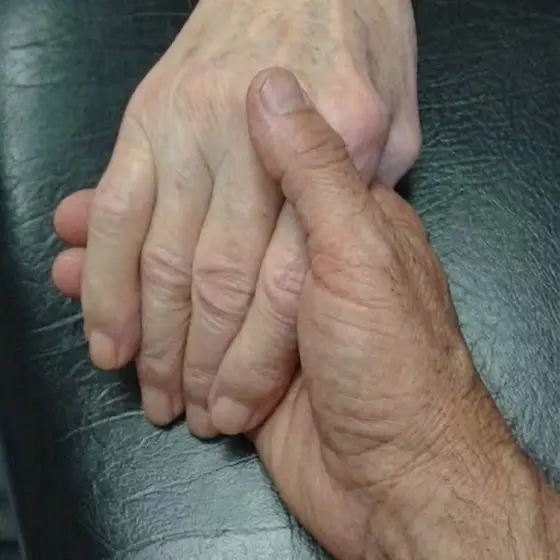
The Health Community Facebook ad creative
primus-health.com
Carrying Two People Quietly.
Learn more

The Health Community Facebook and Instagram ad

The Health Community ran this image ad since Jun 17, 2026, 2 days so far, targeting Ireland, United Kingdom.

First seen
Jun 17, 2026
Running for
2 days
Format
Image
Call to action
Learn more
Niche
Health and supplements
Countries
2 targeted
Page likes
832

Ad copy

A woman I had been nodding at for almost a year at my mother's assisted living facility sat down at my table in the visitors' lounge last October. She said one sentence to me that day that has been with me every day since. Two hours later, when she stood up to leave, she had said one sentence to me that has been with me every day since. I am writing this letter because I had been carrying two people quietly for the eighteen months before that Sunday. My eighty-five-year-old mother, in her assisted living room forty minutes from my house. And my sixty-seven-year-old husband, in our living room. That woman gave me back one of them. My name is Diane. I live in the small town where my husband and I have lived for thirty years. I have been married to Bill for thirty-six years. Bill was an insurance broker for thirty-nine years. He retired three years ago. We have one son and one daughter, both in their thirties, both living within an hour of us. I retired four years ago after thirty-two years as a librarian at our town's small public library. We were, on paper, supposed to be entering the easiest years of our life. My mother, Helen, is eighty-five. She fell in her own kitchen eighteen months ago. She broke her hip and recovered the way an eighty-five-year-old recovers from a broken hip, which is mostly but not all the way. She has been living at a small assisted living facility called Willowbrook since then. My sister lives several hours away and comes when she can. I visit on Sundays. Sometimes Wednesdays, when I can. I bring her a small bag of clementines because she has loved clementines since I was a little girl. She remembers some things and forgets others. She is still my mother and she is mostly herself and the gap between mostly and entirely is the gap I have been quietly grieving for eighteen months. My husband, Bill, is sixty-seven. He has no medical diagnosis I could name for you. He is not on any prescription medications. His doctor, Dr. Mitchell, a careful man we have been seeing for twenty-one years, had been mentioning, at Bill's last three annual physicals, that his blood pressure had been creeping. He had been telling Bill that we were getting close to the point where he was going to want to put him on something small. Bill had been telling Dr. Mitchell that he wanted six more months to work on it on his own. Dr. Mitchell had been giving him six more months. That was the clinical version of where Bill was. The version I had been living with was harder to put into words. It looked like this. It looked like the small workshop in the corner of our garage, where Bill had built small wooden things for our grandchildren for fifteen years, sitting untouched since the spring before last, with a half-finished birdhouse on the workbench he had been making for our grandson. It looked like the back porch, where Bill had read the entire morning newspaper with his coffee every morning for thirty-five years, where he had been reading only the front page and going back inside for the better part of a year. It looked like our lawn, which Bill had mowed himself every Saturday morning for thirty-eight years, which we had been paying a man from down the road to do since the summer before. It looked like our evening walk, a mile and a half around the neighborhood, every night for twenty-five years, shrinking to four blocks and then three blocks and then around the block, with Bill waving from the porch when I went the rest of the way alone. It looked like Bill, at sixty-seven, declining quietly in our living room at the same time that I was driving to Willowbrook on Sundays to visit my mother declining quietly in hers. I had been telling myself it was retirement. I had been telling myself it was sixty-seven. I had been telling myself it was the year my mother fell. I had been telling myself a lot of things. October last year, on a Sunday afternoon, I was sitting at a small round table in the visitors' lounge at Willowbrook. The lounge is called the Garden Room because it has windows on three sides. My mother had been moved to the medical wing that morning. She had a small infection. Nothing serious. They were keeping her on antibiotics for a few days. I was sitting in the Garden Room waiting for the nurse to come tell me when I could go back and see her. I was on my third paper cup of bad coffee. I was not in a good way. A woman I had been nodding at in the hallway at Willowbrook for almost a year sat down at the table next to mine. She was about my age. Silver hair, cut short. A canvas tote bag with a paperback book in it. She set the bag down and put her elbows on the table and her face in her hands for a moment. Then she looked up at me and said: I can't do another Sunday by myself in this room. Is it alright if I sit at your table? I said yes. She moved her coffee over. She told me her name was Karen. She told me she had been visiting her father at Willowbrook for three years. I told her I had been visiting my mother for eighteen months. We sat at that table for two hours. I am not going to give you the whole conversation. It is the conversation two women in their late fifties or early sixties have when they have been quietly doing the same thing alone for too long and finally find someone else who is also quietly doing it. We talked about our parents. We talked about the gap between mostly and entirely. We talked about the moment you realize your mother is not coming back to where she was. We talked about siblings who are far away. We talked about the way Sunday afternoons in the Garden Room are very long. About an hour and a half in, Karen said something offhand about her husband. She said: I am tired in a way that has me worried, because my husband, Walter, is tired the same way. He is sixty-eight. He has been quietly slowing down for years. I cannot afford to be slowing down at the same time he is, because there is no one else for either of these two old people but me. I told her about Bill. I told her about the workshop and the half-finished birdhouse on the bench. I told her about the newspaper that had shrunk to the front page. I told her about the lawn we were paying a man to mow. I told her about the four blocks shrinking to around the block. Karen listened. She nodded. When I was finished, she sat with it for a minute. Then she said something I have been thinking about every day since. She said: About two years ago I added one small thing to Walter's mornings. I read for almost a month before I added it. I talked to his doctor and to his pharmacist before I added it. I want to be very careful with you about what I say next, because Walter is one man and you are looking at one man and bodies are different. But Walter has been more himself, for the last two years, than he was for the four years before that. He has been present at our kitchen table. He has been doing the small Saturday things he had stopped doing. He has been a man I recognize again. She paused. I did not give him anything in particular. I added one small additional thing to a long list of things he was already doing. I kept everything else exactly the same. I would not want you to think I am telling you a fireworks story. I am telling you what happened in our house, alongside everything else we did. I asked her what she had added. She said it was an aged garlic capsule. She said the brand was called Primus. She said she had picked it because the small company that made it aged the garlic for twenty-four full months rather than the six months most companies do, and because Walter's doctor had specifically said that how the supplement was processed mattered for what would make it from the field into the capsule. She said it the way a woman who has been carrying a load alone tells another woman who has been carrying a load alone what she has been doing. She wasn't selling me anything. She was just telling me. The nurse came in about half an hour later to say I could go back and see my mother. I sat with her for an hour. I drove home thinking about Karen. I drove the rest of that week thinking about Karen. By the weekend, I was thinking about what I was going to do. I went home and I started reading. I read for almost three weeks. I am, by temperament, a careful person. A librarian for thirty-two years is, almost by definition, a careful person. I do not add things to my body or to my husband's body without understanding what I am adding. I read about aged garlic. I read about the compound that only forms when garlic is aged slowly over twenty to twenty-four months. It is called S-allylcysteine. It is a small, stable, water-soluble molecule. It is also, according to a long and patient body of research the cardiovascular community has been quietly building for decades, a compound the body uses in the context of supporting healthy circulation. I read about the long, slowly built relationship the careful structure-function research has had with this compound. In the context of supporting healthy circulation. Supporting cardiovascular wellness. Supporting the body's own ability to regulate. In people whose numbers are already in the range their doctors are watching. None of what I read was a fireworks story. It was the opposite of one. It was a compound that has been quietly studied for a long time by careful people who were not making outlandish claims. The language being used in the careful, structure-function corner of the conversation was the language I had been quietly hoping to find. Supports healthy circulation. Supports cardiovascular wellness. Supports the body's own ability to regulate. Not lowers blood pressure. Not fixes anything. Not replaces what Dr. Mitchell had been wanting to put Bill on. That was the right shape. I read about the twenty-four-month aging, too. The chemistry is straightforward. The compound only forms during a slow, twenty-four-month aging process. If you age garlic the standard way, for six months, the compound has barely started to form. Primus ages for the full twenty-four months because they want as much of the compound as possible to make it from the field into the capsule. That is a slower way to make a supplement. It costs them more. At sixty, after watching my mother lose her independence in eighteen months and my husband lose his Saturday rituals over the same eighteen months, I have come to pay close attention to the small decisions companies make when no one is watching. Those decisions tell you everything. The other thing I liked was the simplicity. Two capsules in the morning with a glass of water. I have a mother forty minutes away. I have a husband on the couch. I have a small life I am trying to hold together. I am not interested in a protocol that requires its own shelf. Now I need to tell you the most important part of this letter. Before I added it to anything Bill was already doing, I called our pharmacist. His name is Mark. He is the pharmacist at the small independent pharmacy in our town. I have been filling things there for over twenty years. I called him for a specific reason. Bill is on no prescription medications. He takes a multivitamin and a vitamin D in the winter. I called Mark anyway. I called because I am a careful person and because I wanted somebody who knew what was on Bill's chart to confirm that adding an aged garlic capsule to a multivitamin was the right thing to do at his age. Mark pulled up Bill's profile. He confirmed there were no concerns at the dosage on the label. He told me Bill could take it in the morning with his coffee the way the bottle suggested. He told me to call him back if Dr. Mitchell ever started Bill on any prescription medication in the future, because the conversation would be different at that point. He told me, before he got off the phone, that he wished more of his patients made the call I had just made. I also called Dr. Mitchell's office that week. I told the nurse what I was thinking about adding for Bill. I told her the brand and the dosage. She talked to Dr. Mitchell and called me back the next day. She told me Dr. Mitchell had said it was a sensible thing to add. No concerns at the dosage on the label, nothing to interact with anything Bill was taking, and to let him know how Bill was doing at his next appointment. I want to say something now, plainly, to every reader of this letter. If your husband, or your wife, or your father, or your mother, or the person you are caring for, or you yourself, is on any prescription medication, especially anything cardiovascular, please make the call before you add anything new. I called Mark, and I called Dr. Mitchell's office, and Bill was on nothing. I would have called twice as fast if Bill had been on a cardiovascular prescription. So should you. The people who know the chart will tell you in two minutes whether the supplement is safe to add, given what is already being taken. The two minutes the call takes is the most important two minutes of your engagement with any supplement you might consider adding. I told Bill that night. I told him about Karen. I told him about the reading. I told him about Mark and Dr. Mitchell. I told him I wanted him to try it for me. He looked at the bottle. He looked at me. We have been married thirty-six years. He knows when I am asking something that matters. Dr. Mitchell said it was alright? He said it was a sensible thing to add. He nodded once. Alright. For you. In the morning I set two capsules on a saucer next to his coffee. He took them with his first sip. I did not say anything more about it. He started on a Monday. The first two weeks he felt nothing in particular. I had read enough alongside what Karen had told me to know that bodies are different. Some people notice something within the first week or two. Some take much longer. Some don't notice much at all. I was prepared to land in any of those camps. I was prepared to be honest with myself about the result. What I noticed, I noticed slowly. The first thing I noticed, around week six, was the workshop. It was a Saturday morning. I was at the kitchen window with my coffee. The lights were on in the garage. I went out the back door and across the small stretch of grass to the side door. Bill was at his workbench. He had finished the birdhouse for our grandson and was starting on something new. I asked him what it was. He said he was making a small shelf for our granddaughter's bedroom. He had not been out to the workshop in fourteen months. I did not say anything about it. I did not want to make a thing of it. I had read enough not to make a thing of one observation. I went back inside. He came in around noon with sawdust on his shirt and asked me what I wanted for lunch. I made him a sandwich. The second thing I noticed, around week ten, was the long loop. We had been doing the short loop, around the block, four hundred yards, with Bill waving from the porch when I went the rest of the way alone, for almost a year. One evening in early March, I came out the back door with my walking shoes on and Bill was already on the sidewalk in his own. He said: let's do the long one tonight. We did the long one. A mile and a half. He did not stop. We finished at our porch and we sat on it for half an hour, the way we used to sit on it after the long loop, and we watched the sky go from purple to dark. He went to bed at ten that night. The next evening we did the long loop again. The evening after that, again. The third thing I noticed was at Willowbrook. About four months in, Bill asked me on a Sunday morning whether I would mind if he came with me to visit my mother. He had been coming with me, before, every other Sunday. He had stopped coming about a year ago. He had stopped because the visits exhausted him, and because the drive back was hard on his back, and because he could not, on top of everything else, sit in the Garden Room for two hours and be present. He asked me on a Sunday morning if he could come. I told him yes. We drove to Willowbrook together. He sat with my mother for an hour. He helped her with her water glass at lunch. He told her a story about our daughter that she had not heard before. She brightened at it. She held his hand at the end of lunch and she said: William, you are a good man. She has called him William since the first time he had Sunday dinner at my parents' house, when he was twenty-four years old and she did not yet know whether she trusted him with me. She said it the same way that day. He squeezed her hand. I sat across the table and I watched the man I had been married to for thirty-six years be present for an entire Sunday afternoon at my mother's assisted living facility. I had not had him present for that, in any meaningful way, for fourteen months. I made a quiet note. I did not want to make a thing of it. I want to be careful with what I am telling you. I am writing this to people I do not know. I am not telling you Primus did any of those things on its own. Bill had been resting more. He had been doing the lifestyle work he had been telling Dr. Mitchell he wanted to do. I had been quietly leaving his walking shoes by the back door for two months before the long loop happened. I had been making the kinds of small dinners that someone with his numbers should be eating. Something had unlocked in him, the day I came home from Willowbrook the Sunday I met Karen, that had nothing to do with a capsule on a saucer. There were several things changing at once, the way there are when a woman finally finds someone to carry the load with. All I am telling you is that he added one small thing to a long list of small things he was newly doing. He kept everything else exactly the same. And a stretch of months followed that was qualitatively different from the eighteen months that had preceded it. That is the honest version. I would not give you a cleaner one. Bill went to Dr. Mitchell for his annual physical about seven months after he started. Bloodwork the week before. Dr. Mitchell studied the results. He looked at Bill. He said: your numbers are in better shape than they have been in three years. Keep doing what you are doing. Bill told him about the walking. About the aged garlic. About starting to come to Willowbrook with me. Dr. Mitchell nodded. He said: that is a sensible thing to add. There is good research on the cardiovascular support side. Keep doing what you are doing and let's see where you are in another six months. He did not bring up medication. He had not brought it up in two appointments now. Bill called me from the parking lot. He didn't say anything at first. Then he said: Diane. I think I might be alright. I was standing in our kitchen. I sat down at the table. I cried the way a woman cries when something she thought was leaving comes back to her instead. Karen and I still see each other most Sundays at Willowbrook. We have a small ritual now. We meet in the Garden Room at noon on the Sundays when both of us are there. We have coffee for fifteen minutes. We tell each other small things about our parents and our husbands. Then she goes to her father and I go to my mother. Bill has come with me on three of the last six Sundays. Twice he sat in the Garden Room with Karen's husband, Walter, after our visits ended, while Karen and I finished our coffee. Two old men who, eighteen months ago, would not have made the drive to Willowbrook on a Sunday. Sitting in the Garden Room with their wives. I am telling you this because I think you might be where I was that Sunday in October. Carrying two people quietly. Watching the small things that used to be easy slowly stop being easy in someone you love. Watching their doctor smile at numbers that look fine on a chart while the person attached to the numbers slowly dims. If you have been carrying a quiet question for a year or two, alongside everything else you are already carrying, about whether there is one small additive thing that might support what is already working in his body, I want to say a few things to you carefully. I do not know you. I do not know your husband, your bloodwork, your situation, or what his doctor has said. Bodies are different. Some people notice something within the first week or two of adding something like this. Some people take much longer. Some people don't notice much at all. That is the honest version. Anyone offering you a cleaner one is selling you harder than I am. Here is how I think about Primus now, in the words I would actually use. It is something the body uses. The research community talks about it in the context of supporting healthy circulation, cardiovascular wellness, and the body's own ability to regulate. In people whose numbers are already in the range their doctors are watching. It is not a fix for anything. It is not a substitute for anything his doctor has him on. It is not a treatment for the burden you are carrying or the load on your shoulders or any of it. It is one small thing you add to the long list of things he is already doing for himself, alongside everything else. Please call his pharmacist or his doctor's office before you add it. If he is on any blood pressure medication, or cholesterol medication, or anything cardiovascular at all, this is non-negotiable. I called Mark. I called Dr. Mitchell's office. I would not have added anything to a prescription without those calls. Neither should you. The people who know his chart will tell you in two minutes whether the supplement is safe to add given what he is already taking. I am a sixty-year-old retired librarian in a small town with a mother in assisted living and a husband I am trying to keep present at our kitchen table. I am not the person to ask. His pharmacist or his doctor is. The company has a sixty-day satisfaction guarantee. If you are not satisfied, for any reason at all, including just changing your mind, they refund you. It is not tied to bloodwork. It is not tied to anything you have to prove to anybody. If you are not satisfied, you are not satisfied. That is the whole policy. That is all I have. Thank you for reading this far. I hope something here was useful to you. I hope, somewhere today, your own Karen is sitting at a small round table in a sunlit room, waiting for you to sit down across from her. — Diane 👉 https://primus-health.com/products/aged-garlic-extract-odorless-premed P.S. I want to come back to the twenty-four-month aging for a second. The compound, S-allylcysteine, the small stable molecule the research community keeps circling back to, only forms during a long, slow aging process. That is the chemistry of how it gets made. Age garlic the standard way, for six months, and the compound has barely started to form. Primus chose the slow way. Twenty-four months. The full process. It costs them money. It costs them time. They made the choice anyway. At sixty, after watching what eighteen months can do to two of the people I love most in the world, I have come to pay attention to the small decisions companies make when no one is watching. Those decisions tell you everything. P.P.S. Two capsules. In the morning. With a glass of water. That is the entire protocol. No powder to mix. No afternoon dose to remember. No schedule taped to the inside of the cupboard. Bill keeps the bottle on the kitchen counter next to the coffee maker. He takes the capsules with his first sip. I make the coffee. That has been the rhythm of our morning for almost ten months. We have earned a simple one at our age. P.P.P.S. I am going to say it one more time, because I have to. Please. Call his pharmacist or his doctor's office before you add anything new to what he is already taking. Especially if he is on a blood pressure medication, a cholesterol medication, or anything cardiovascular. They have his whole picture in front of them. I have written you a letter. There is a difference, and the difference matters. The two minutes it takes to ask are the most important two minutes of your engagement with any supplement. P.P.P.P.S. The guarantee, again, in case you skimmed. Sixty days. Any reason at all. You do not have to prove a single thing, not to them, not about his numbers, not about how he feels. If he tried it and you are not satisfied, you are not satisfied. They send the money back. That is the whole policy. A small-company policy. The kind of thing companies used to do when companies still answered the phone. P.P.P.P.P.S. The thing Karen said to me at the small round table in the Garden Room, I cannot afford to be slowing down at the same time he is, because there is no one else for either of these two old people but me, is the sentence that has stayed with me longest. I had been thinking those exact words about my own situation for fourteen months. I had never said them out loud to anyone. I had not realized, until Karen said them, how heavy they had become. If you are a woman carrying two people quietly the way I was, an aging parent on one side, a husband dimming on the other, I want you to know that you are not the only one. You are not imagining the dimming. You are not being dramatic. You have been watching something real. His doctor has been watching the chart. You have been watching the man. I hope you find your Karen. I hope, if you have one already, you let yourself sit down at her table. I hope you read carefully. I hope you make the call before you add anything. I hope, in a year from now, you are standing at your kitchen window on a Saturday morning, watching the lights on in the workshop in your garage, and the man you love at the workbench finishing something he set down a long time ago. I hope that for you. That is the whole reason I wrote this. — D. 👉 https://primus-health.com/products/aged-garlic-extract-odorless-premed DISCLAIMER Individual experiences vary. These statements have not been evaluated by the FDA. This product is not intended to diagnose, treat, cure, or prevent any disease.

Placements and targeting

FacebookInstagramAudience NetworkMessengerThreads🇮🇪 Ireland🇬🇧 United Kingdom

More ads from The Health Community

Full The Health Community profile
The Health Community
+1
Inactive3 days
primus-health.com
Carrying Two People Quietly.
Learn more

A woman I had been nodding at for almost a year at my mother's assisted living facility sat down at my table in the visitors' lounge last October. She said one sentence to me that day that has been with me every day since. Two hours later, when she stood up to leave, she had said one sentence to me that has been with me every day since. I am writing this letter because I had been carrying two people quietly for the eighteen months before that Sunday. My eighty-five-year-old mother, in her assisted living room forty minutes from my house. And my sixty-seven-year-old husband, in our living room. That woman gave me back one of them. My name is Diane. I live in the small town where my husband and I have lived for thirty years. I have been married to Bill for thirty-six years. Bill was an insurance broker for thirty-nine years. He retired three years ago. We have one son and one daughter, both in their thirties, both living within an hour of us. I retired four years ago after thirty-two years as a librarian at our town's small public library. We were, on paper, supposed to be entering the easiest years of our life. My mother, Helen, is eighty-five. She fell in her own kitchen eighteen months ago. She broke her hip and recovered the way an eighty-five-year-old recovers from a broken hip, which is mostly but not all the way. She has been living at a small assisted living facility called Willowbrook since then. My sister lives several hours away and comes when she can. I visit on Sundays. Sometimes Wednesdays, when I can. I bring her a small bag of clementines because she has loved clementines since I was a little girl. She remembers some things and forgets others. She is still my mother and she is mostly herself and the gap between mostly and entirely is the gap I have been quietly grieving for eighteen months. My husband, Bill, is sixty-seven. He has no medical diagnosis I could name for you. He is not on any prescription medications. His doctor, Dr. Mitchell, a careful man we have been seeing for twenty-one years, had been mentioning, at Bill's last three annual physicals, that his blood pressure had been creeping. He had been telling Bill that we were getting close to the point where he was going to want to put him on something small. Bill had been telling Dr. Mitchell that he wanted six more months to work on it on his own. Dr. Mitchell had been giving him six more months. That was the clinical version of where Bill was. The version I had been living with was harder to put into words. It looked like this. It looked like the small workshop in the corner of our garage, where Bill had built small wooden things for our grandchildren for fifteen years, sitting untouched since the spring before last, with a half-finished birdhouse on the workbench he had been making for our grandson. It looked like the back porch, where Bill had read the entire morning newspaper with his coffee every morning for thirty-five years, where he had been reading only the front page and going back inside for the better part of a year. It looked like our lawn, which Bill had mowed himself every Saturday morning for thirty-eight years, which we had been paying a man from down the road to do since the summer before. It looked like our evening walk, a mile and a half around the neighborhood, every night for twenty-five years, shrinking to four blocks and then three blocks and then around the block, with Bill waving from the porch when I went the rest of the way alone. It looked like Bill, at sixty-seven, declining quietly in our living room at the same time that I was driving to Willowbrook on Sundays to visit my mother declining quietly in hers. I had been telling myself it was retirement. I had been telling myself it was sixty-seven. I had been telling myself it was the year my mother fell. I had been telling myself a lot of things. October last year, on a Sunday afternoon, I was sitting at a small round table in the visitors' lounge at Willowbrook. The lounge is called the Garden Room because it has windows on three sides. My mother had been moved to the medical wing that morning. She had a small infection. Nothing serious. They were keeping her on antibiotics for a few days. I was sitting in the Garden Room waiting for the nurse to come tell me when I could go back and see her. I was on my third paper cup of bad coffee. I was not in a good way. A woman I had been nodding at in the hallway at Willowbrook for almost a year sat down at the table next to mine. She was about my age. Silver hair, cut short. A canvas tote bag with a paperback book in it. She set the bag down and put her elbows on the table and her face in her hands for a moment. Then she looked up at me and said: I can't do another Sunday by myself in this room. Is it alright if I sit at your table? I said yes. She moved her coffee over. She told me her name was Karen. She told me she had been visiting her father at Willowbrook for three years. I told her I had been visiting my mother for eighteen months. We sat at that table for two hours. I am not going to give you the whole conversation. It is the conversation two women in their late fifties or early sixties have when they have been quietly doing the same thing alone for too long and finally find someone else who is also quietly doing it. We talked about our parents. We talked about the gap between mostly and entirely. We talked about the moment you realize your mother is not coming back to where she was. We talked about siblings who are far away. We talked about the way Sunday afternoons in the Garden Room are very long. About an hour and a half in, Karen said something offhand about her husband. She said: I am tired in a way that has me worried, because my husband, Walter, is tired the same way. He is sixty-eight. He has been quietly slowing down for years. I cannot afford to be slowing down at the same time he is, because there is no one else for either of these two old people but me. I told her about Bill. I told her about the workshop and the half-finished birdhouse on the bench. I told her about the newspaper that had shrunk to the front page. I told her about the lawn we were paying a man to mow. I told her about the four blocks shrinking to around the block. Karen listened. She nodded. When I was finished, she sat with it for a minute. Then she said something I have been thinking about every day since. She said: About two years ago I added one small thing to Walter's mornings. I read for almost a month before I added it. I talked to his doctor and to his pharmacist before I added it. I want to be very careful with you about what I say next, because Walter is one man and you are looking at one man and bodies are different. But Walter has been more himself, for the last two years, than he was for the four years before that. He has been present at our kitchen table. He has been doing the small Saturday things he had stopped doing. He has been a man I recognize again. She paused. I did not give him anything in particular. I added one small additional thing to a long list of things he was already doing. I kept everything else exactly the same. I would not want you to think I am telling you a fireworks story. I am telling you what happened in our house, alongside everything else we did. I asked her what she had added. She said it was an aged garlic capsule. She said the brand was called Primus. She said she had picked it because the small company that made it aged the garlic for twenty-four full months rather than the six months most companies do, and because Walter's doctor had specifically said that how the supplement was processed mattered for what would make it from the field into the capsule. She said it the way a woman who has been carrying a load alone tells another woman who has been carrying a load alone what she has been doing. She wasn't selling me anything. She was just telling me. The nurse came in about half an hour later to say I could go back and see my mother. I sat with her for an hour. I drove home thinking about Karen. I drove the rest of that week thinking about Karen. By the weekend, I was thinking about what I was going to do. I went home and I started reading. I read for almost three weeks. I am, by temperament, a careful person. A librarian for thirty-two years is, almost by definition, a careful person. I do not add things to my body or to my husband's body without understanding what I am adding. I read about aged garlic. I read about the compound that only forms when garlic is aged slowly over twenty to twenty-four months. It is called S-allylcysteine. It is a small, stable, water-soluble molecule. It is also, according to a long and patient body of research the cardiovascular community has been quietly building for decades, a compound the body uses in the context of supporting healthy circulation. I read about the long, slowly built relationship the careful structure-function research has had with this compound. In the context of supporting healthy circulation. Supporting cardiovascular wellness. Supporting the body's own ability to regulate. In people whose numbers are already in the range their doctors are watching. None of what I read was a fireworks story. It was the opposite of one. It was a compound that has been quietly studied for a long time by careful people who were not making outlandish claims. The language being used in the careful, structure-function corner of the conversation was the language I had been quietly hoping to find. Supports healthy circulation. Supports cardiovascular wellness. Supports the body's own ability to regulate. Not lowers blood pressure. Not fixes anything. Not replaces what Dr. Mitchell had been wanting to put Bill on. That was the right shape. I read about the twenty-four-month aging, too. The chemistry is straightforward. The compound only forms during a slow, twenty-four-month aging process. If you age garlic the standard way, for six months, the compound has barely started to form. Primus ages for the full twenty-four months because they want as much of the compound as possible to make it from the field into the capsule. That is a slower way to make a supplement. It costs them more. At sixty, after watching my mother lose her independence in eighteen months and my husband lose his Saturday rituals over the same eighteen months, I have come to pay close attention to the small decisions companies make when no one is watching. Those decisions tell you everything. The other thing I liked was the simplicity. Two capsules in the morning with a glass of water. I have a mother forty minutes away. I have a husband on the couch. I have a small life I am trying to hold together. I am not interested in a protocol that requires its own shelf. Now I need to tell you the most important part of this letter. Before I added it to anything Bill was already doing, I called our pharmacist. His name is Mark. He is the pharmacist at the small independent pharmacy in our town. I have been filling things there for over twenty years. I called him for a specific reason. Bill is on no prescription medications. He takes a multivitamin and a vitamin D in the winter. I called Mark anyway. I called because I am a careful person and because I wanted somebody who knew what was on Bill's chart to confirm that adding an aged garlic capsule to a multivitamin was the right thing to do at his age. Mark pulled up Bill's profile. He confirmed there were no concerns at the dosage on the label. He told me Bill could take it in the morning with his coffee the way the bottle suggested. He told me to call him back if Dr. Mitchell ever started Bill on any prescription medication in the future, because the conversation would be different at that point. He told me, before he got off the phone, that he wished more of his patients made the call I had just made. I also called Dr. Mitchell's office that week. I told the nurse what I was thinking about adding for Bill. I told her the brand and the dosage. She talked to Dr. Mitchell and called me back the next day. She told me Dr. Mitchell had said it was a sensible thing to add. No concerns at the dosage on the label, nothing to interact with anything Bill was taking, and to let him know how Bill was doing at his next appointment. I want to say something now, plainly, to every reader of this letter. If your husband, or your wife, or your father, or your mother, or the person you are caring for, or you yourself, is on any prescription medication, especially anything cardiovascular, please make the call before you add anything new. I called Mark, and I called Dr. Mitchell's office, and Bill was on nothing. I would have called twice as fast if Bill had been on a cardiovascular prescription. So should you. The people who know the chart will tell you in two minutes whether the supplement is safe to add, given what is already being taken. The two minutes the call takes is the most important two minutes of your engagement with any supplement you might consider adding. I told Bill that night. I told him about Karen. I told him about the reading. I told him about Mark and Dr. Mitchell. I told him I wanted him to try it for me. He looked at the bottle. He looked at me. We have been married thirty-six years. He knows when I am asking something that matters. Dr. Mitchell said it was alright? He said it was a sensible thing to add. He nodded once. Alright. For you. In the morning I set two capsules on a saucer next to his coffee. He took them with his first sip. I did not say anything more about it. He started on a Monday. The first two weeks he felt nothing in particular. I had read enough alongside what Karen had told me to know that bodies are different. Some people notice something within the first week or two. Some take much longer. Some don't notice much at all. I was prepared to land in any of those camps. I was prepared to be honest with myself about the result. What I noticed, I noticed slowly. The first thing I noticed, around week six, was the workshop. It was a Saturday morning. I was at the kitchen window with my coffee. The lights were on in the garage. I went out the back door and across the small stretch of grass to the side door. Bill was at his workbench. He had finished the birdhouse for our grandson and was starting on something new. I asked him what it was. He said he was making a small shelf for our granddaughter's bedroom. He had not been out to the workshop in fourteen months. I did not say anything about it. I did not want to make a thing of it. I had read enough not to make a thing of one observation. I went back inside. He came in around noon with sawdust on his shirt and asked me what I wanted for lunch. I made him a sandwich. The second thing I noticed, around week ten, was the long loop. We had been doing the short loop, around the block, four hundred yards, with Bill waving from the porch when I went the rest of the way alone, for almost a year. One evening in early March, I came out the back door with my walking shoes on and Bill was already on the sidewalk in his own. He said: let's do the long one tonight. We did the long one. A mile and a half. He did not stop. We finished at our porch and we sat on it for half an hour, the way we used to sit on it after the long loop, and we watched the sky go from purple to dark. He went to bed at ten that night. The next evening we did the long loop again. The evening after that, again. The third thing I noticed was at Willowbrook. About four months in, Bill asked me on a Sunday morning whether I would mind if he came with me to visit my mother. He had been coming with me, before, every other Sunday. He had stopped coming about a year ago. He had stopped because the visits exhausted him, and because the drive back was hard on his back, and because he could not, on top of everything else, sit in the Garden Room for two hours and be present. He asked me on a Sunday morning if he could come. I told him yes. We drove to Willowbrook together. He sat with my mother for an hour. He helped her with her water glass at lunch. He told her a story about our daughter that she had not heard before. She brightened at it. She held his hand at the end of lunch and she said: William, you are a good man. She has called him William since the first time he had Sunday dinner at my parents' house, when he was twenty-four years old and she did not yet know whether she trusted him with me. She said it the same way that day. He squeezed her hand. I sat across the table and I watched the man I had been married to for thirty-six years be present for an entire Sunday afternoon at my mother's assisted living facility. I had not had him present for that, in any meaningful way, for fourteen months. I made a quiet note. I did not want to make a thing of it. I want to be careful with what I am telling you. I am writing this to people I do not know. I am not telling you Primus did any of those things on its own. Bill had been resting more. He had been doing the lifestyle work he had been telling Dr. Mitchell he wanted to do. I had been quietly leaving his walking shoes by the back door for two months before the long loop happened. I had been making the kinds of small dinners that someone with his numbers should be eating. Something had unlocked in him, the day I came home from Willowbrook the Sunday I met Karen, that had nothing to do with a capsule on a saucer. There were several things changing at once, the way there are when a woman finally finds someone to carry the load with. All I am telling you is that he added one small thing to a long list of small things he was newly doing. He kept everything else exactly the same. And a stretch of months followed that was qualitatively different from the eighteen months that had preceded it. That is the honest version. I would not give you a cleaner one. Bill went to Dr. Mitchell for his annual physical about seven months after he started. Bloodwork the week before. Dr. Mitchell studied the results. He looked at Bill. He said: your numbers are in better shape than they have been in three years. Keep doing what you are doing. Bill told him about the walking. About the aged garlic. About starting to come to Willowbrook with me. Dr. Mitchell nodded. He said: that is a sensible thing to add. There is good research on the cardiovascular support side. Keep doing what you are doing and let's see where you are in another six months. He did not bring up medication. He had not brought it up in two appointments now. Bill called me from the parking lot. He didn't say anything at first. Then he said: Diane. I think I might be alright. I was standing in our kitchen. I sat down at the table. I cried the way a woman cries when something she thought was leaving comes back to her instead. Karen and I still see each other most Sundays at Willowbrook. We have a small ritual now. We meet in the Garden Room at noon on the Sundays when both of us are there. We have coffee for fifteen minutes. We tell each other small things about our parents and our husbands. Then she goes to her father and I go to my mother. Bill has come with me on three of the last six Sundays. Twice he sat in the Garden Room with Karen's husband, Walter, after our visits ended, while Karen and I finished our coffee. Two old men who, eighteen months ago, would not have made the drive to Willowbrook on a Sunday. Sitting in the Garden Room with their wives. I am telling you this because I think you might be where I was that Sunday in October. Carrying two people quietly. Watching the small things that used to be easy slowly stop being easy in someone you love. Watching their doctor smile at numbers that look fine on a chart while the person attached to the numbers slowly dims. If you have been carrying a quiet question for a year or two, alongside everything else you are already carrying, about whether there is one small additive thing that might support what is already working in his body, I want to say a few things to you carefully. I do not know you. I do not know your husband, your bloodwork, your situation, or what his doctor has said. Bodies are different. Some people notice something within the first week or two of adding something like this. Some people take much longer. Some people don't notice much at all. That is the honest version. Anyone offering you a cleaner one is selling you harder than I am. Here is how I think about Primus now, in the words I would actually use. It is something the body uses. The research community talks about it in the context of supporting healthy circulation, cardiovascular wellness, and the body's own ability to regulate. In people whose numbers are already in the range their doctors are watching. It is not a fix for anything. It is not a substitute for anything his doctor has him on. It is not a treatment for the burden you are carrying or the load on your shoulders or any of it. It is one small thing you add to the long list of things he is already doing for himself, alongside everything else. Please call his pharmacist or his doctor's office before you add it. If he is on any blood pressure medication, or cholesterol medication, or anything cardiovascular at all, this is non-negotiable. I called Mark. I called Dr. Mitchell's office. I would not have added anything to a prescription without those calls. Neither should you. The people who know his chart will tell you in two minutes whether the supplement is safe to add given what he is already taking. I am a sixty-year-old retired librarian in a small town with a mother in assisted living and a husband I am trying to keep present at our kitchen table. I am not the person to ask. His pharmacist or his doctor is. The company has a sixty-day satisfaction guarantee. If you are not satisfied, for any reason at all, including just changing your mind, they refund you. It is not tied to bloodwork. It is not tied to anything you have to prove to anybody. If you are not satisfied, you are not satisfied. That is the whole policy. That is all I have. Thank you for reading this far. I hope something here was useful to you. I hope, somewhere today, your own Karen is sitting at a small round table in a sunlit room, waiting for you to sit down across from her. — Diane 👉 https://primus-health.com/products/aged-garlic-extract-odorless-premed P.S. I want to come back to the twenty-four-month aging for a second. The compound, S-allylcysteine, the small stable molecule the research community keeps circling back to, only forms during a long, slow aging process. That is the chemistry of how it gets made. Age garlic the standard way, for six months, and the compound has barely started to form. Primus chose the slow way. Twenty-four months. The full process. It costs them money. It costs them time. They made the choice anyway. At sixty, after watching what eighteen months can do to two of the people I love most in the world, I have come to pay attention to the small decisions companies make when no one is watching. Those decisions tell you everything. P.P.S. Two capsules. In the morning. With a glass of water. That is the entire protocol. No powder to mix. No afternoon dose to remember. No schedule taped to the inside of the cupboard. Bill keeps the bottle on the kitchen counter next to the coffee maker. He takes the capsules with his first sip. I make the coffee. That has been the rhythm of our morning for almost ten months. We have earned a simple one at our age. P.P.P.S. I am going to say it one more time, because I have to. Please. Call his pharmacist or his doctor's office before you add anything new to what he is already taking. Especially if he is on a blood pressure medication, a cholesterol medication, or anything cardiovascular. They have his whole picture in front of them. I have written you a letter. There is a difference, and the difference matters. The two minutes it takes to ask are the most important two minutes of your engagement with any supplement. P.P.P.P.S. The guarantee, again, in case you skimmed. Sixty days. Any reason at all. You do not have to prove a single thing, not to them, not about his numbers, not about how he feels. If he tried it and you are not satisfied, you are not satisfied. They send the money back. That is the whole policy. A small-company policy. The kind of thing companies used to do when companies still answered the phone. P.P.P.P.P.S. The thing Karen said to me at the small round table in the Garden Room, I cannot afford to be slowing down at the same time he is, because there is no one else for either of these two old people but me, is the sentence that has stayed with me longest. I had been thinking those exact words about my own situation for fourteen months. I had never said them out loud to anyone. I had not realized, until Karen said them, how heavy they had become. If you are a woman carrying two people quietly the way I was, an aging parent on one side, a husband dimming on the other, I want you to know that you are not the only one. You are not imagining the dimming. You are not being dramatic. You have been watching something real. His doctor has been watching the chart. You have been watching the man. I hope you find your Karen. I hope, if you have one already, you let yourself sit down at her table. I hope you read carefully. I hope you make the call before you add anything. I hope, in a year from now, you are standing at your kitchen window on a Saturday morning, watching the lights on in the workshop in your garage, and the man you love at the workbench finishing something he set down a long time ago. I hope that for you. That is the whole reason I wrote this. — D. 👉 https://primus-health.com/products/aged-garlic-extract-odorless-premed DISCLAIMER Individual experiences vary. These statements have not been evaluated by the FDA. This product is not intended to diagnose, treat, cure, or prevent any disease.

The Health Community
+1
Inactive144 days
primus-health.com
His Numbers For Two Winters.
Learn more

My husband's blood pressure had been creeping up for two winters. Then it wasn't. My name is Margaret. People have called me Maggie since I was a girl. I am sixty-three. I live in a small house with my husband, Tom. Tom is sixty-five. He was a carpenter for thirty-eight years, mostly on house frames and small renovations in our town and the towns around it. He retired three years ago. He retired the year his shoulder finally told him it was retired, which was about ten years after his shoulder had started telling him it was retired. We have two grown sons. One is in the city. One lives in the next town over with his family. I retired four years ago, after thirty-one years as a high school English teacher. We were, on paper, where two careful people in their sixties hope to be. I want to tell you something about Tom that I want you to hold while you read this. Tom's blood pressure has been on the higher side of normal for as long as I have known him. His doctor has been watching it for thirty years. It came with the man. I am telling you that because what follows is not a story about a man whose numbers were always low and that suddenly were not. It is a story about numbers that have been a certain way for thirty years and that, somewhere in the last two winters, started creeping higher than they had been. About a man whose blood pressure was always something we both noticed a little, and that we had both started to notice a little more. About a man who, in the last two winters, became a quieter version of himself. I am going to tell you what I mean. It looked like this. It looked like the morning walk. Tom had walked every morning before breakfast for twenty-three years. He had started after he turned forty-two and his doctor had first mentioned the higher end of the range. Twenty-three years of walking. Same loop. Two and a half miles. Back before the coffee was ready. For the last two winters, he had been skipping most mornings. He had said it was the cold. He had said it was his shoulder. He had said he would get back to it in the spring. I had pretended not to notice the spring coming and the walks not coming back. It looked like the kitchen table after dinner. For the entire thirty-eight years we have been married, Tom has sat at the kitchen table for an hour after dinner with a book. He drinks his coffee. He reads. He talks to me while I clean up. It is the part of the day I have looked forward to since I was twenty-three years old. For the last two winters, he had been going from the dinner table to his chair in the living room within ten minutes of finishing his plate. He took the book with him. He did not read it. He fell asleep with it on his chest. I had been cleaning up alone for two winters and pretending it was fine. It looked like the mailbox. Our mailbox is at the end of the driveway. About three hundred feet from the house. Tom had walked down to it every afternoon at four o'clock for as long as we have lived here. For the last two winters, he had been driving the truck down when it was cold. The truck did not need to be driven for three hundred feet. He drove it anyway. I had pretended not to see him from the kitchen window. It looked like the home monitor. We have a home blood pressure monitor on the kitchen counter next to the coffee maker. Tom has been taking his pressure every Sunday morning over coffee for thirty years. He writes the number on the calendar. It used to read between 124 and 132 over 78 and 84. For the last two winters, it had been creeping up. 136 over 86. 138 over 88. Then one Sunday in November it read 144 over 92. Tom looked at the number. He did not say anything. He wrote it on the calendar. I had been pretending not to see the numbers go up either. None of it was alarming. Tom had been to Dr. Reeves, a careful man we have both been seeing for sixteen years, for his annual physical the previous spring. Bloodwork in the ranges Dr. Reeves wanted them in. Cholesterol fine. Kidney function fine. The blood pressure on the higher end. Not at the line where a prescription gets written. Dr. Reeves had said: we are watching this. Keep doing what you are doing. Come back in a year. Tom was, by every measure anyone could see on his chart, a sixty-five-year-old man in fine shape who had retired three years earlier after a long career on his feet. But the man I had been married to for thirty-eight years had been a quieter version of himself in his own house for two winters. I knew it. He knew it. We had not said it to each other. I started going to our town farmers market on Saturday mornings about five years ago. It is a small market. Fifteen booths in summer. Eight or nine in winter. Cheese, eggs, vegetables in season, bread from a woman who bakes her sourdough in a wood-fired oven, honey, jam, and a man who smokes his own bacon. I go for the bread mostly. I had been nodding for the better part of two years at the woman who runs the bread booth. Her name is Eleanor. I knew that from the chalkboard sign above her loaves. She was a few years older than me, I would guess. We had said hello at the start of every Saturday and goodbye at the end of every Saturday and we had not really talked. That kind of friendship is its own thing. You can have it with another woman for two years at a farmers market without ever knowing very much about her. The Saturday in January was a Saturday like every other Saturday, except colder than most. It was well below freezing. I had come down for the bread. The bread had not finished baking on time. Eleanor's husband had been sick the night before and Eleanor had started the oven late. She would have the bread out by ten-thirty. I had thirty minutes to wait. I was standing under the small canvas awning Eleanor had set up over her booth, stamping my feet to keep warm. She had two loaves on the table that had come out of the oven first. A baguette and a small round. The rest were still rising. She had seen me stamping my feet for ten minutes. She turned to me and she said: Margaret, would you like some coffee? I have a thermos. I will not have time to drink it before the morning is over. I said yes. She poured me a paper cup of hot black coffee. I held it with both hands. We talked. We talked about the cold. We talked about her husband's sore throat. We talked about the bread and the wood oven and the routine of getting up at four in the morning to start it. We talked about my sons. She told me about her husband. She said his name was George. She told me George was sixty-eight. She told me he had done electrical work for forty-two years and had quit when his eyes started going. She told me they had started the bakery together six years ago, mostly because George needed something to do with his hands that did not require him to read fine print on schematics anymore. I listened. I sipped the coffee. Then she said something I have been thinking about every day since. She said: Margaret, I have been wanting to ask you for a few months. Is Tom all right? I have noticed he stopped coming down to the market with you about a year ago. I am not asking to pry. I am asking because I have been there. I sat with that for a moment. I looked at the cup in my hands. I said: he is not unwell. His doctor is happy with him. His numbers are in the range. But he has been a quieter man for two winters. He has been slower. He has been a man whose chair has the same shape as he does. I do not know how to say it any plainer than that. Eleanor was quiet for a long minute. Then she said: I had been telling myself George was just getting older. For three winters. It turned out it was something quieter than that. She told me about George. She told me that for three winters after George turned sixty-three, he had quietly become a man whose chair she could not get him out of. She told me she had stopped trying somewhere in there because the trying was harder on her than the chair was on him. She told me she had been telling herself it was the work he had done. She told me she had been telling herself it was the eyes. She told me she had been telling herself a great many things for three years. Then she said: about four years ago, I added one small thing to George's mornings. I read for a month before I added it. I talked to his doctor and to his pharmacist before I added it. I want to be careful with you about what I say next, because George is one man and you are looking at one man and bodies are different. But George has been more himself for the last four years than he was for the three years before that. He has been doing the small daily things he had quietly stopped doing. He has been a man whose chair I do not avoid looking at anymore. She said it without performance. She said it the way a woman says something at a farmers market in January in below-freezing weather to another woman who is standing under her awning with a paper cup of coffee. She wasn't selling me anything. She was just telling me. I asked her what she had added. She said it was an aged garlic capsule. She said the brand was called Primus. She said she had picked it because the small company that made it aged the garlic for twenty-four full months rather than the six months most companies do, and because George's doctor had specifically said that how the supplement was processed mattered for what made it from the field into the capsule. The first batch of bread came out of the oven at ten-twenty-five. I thanked Eleanor for the coffee. She put her hand on my arm before I left. She said: please call Tom's pharmacist before you add anything. That is the only thing I am going to be insistent about. Promise me. I promised her. I bought my bread. I drove home thinking about Eleanor. I drove the rest of that week thinking about Eleanor. By the weekend, I was thinking about what I was going to do. I am, by temperament, a careful person. A high school English teacher for thirty-one years is, almost by definition, a careful person. I do not add things to my body or to my husband's body without understanding what I am adding. I went home and I started reading. I read for almost three weeks. I read about aged garlic. I read about the compound that only forms when garlic is aged slowly over twenty to twenty-four months. It is called S-allylcysteine. It is a small, stable, water-soluble molecule. It is also, according to a long and patient body of research the cardiovascular community has been quietly building for decades, a compound the body uses in the context of supporting healthy circulation. I read about the long, slowly built relationship the structure-function research has had with this compound. In the context of supporting healthy circulation. Supporting cardiovascular wellness. Supporting the body's own ability to regulate. In people whose numbers are at the higher end of the range their doctors are watching. None of what I read was a fireworks story. It was the opposite of one. It was a compound that has been quietly studied for a long time by careful people who were not making outlandish claims. The language being used in the careful, structure-function corner of the conversation was the language I had been quietly looking for. Supports healthy circulation. Not improves circulation. Not fixes anything. Not treats anything. Just supports. In people whose numbers are already in the range their doctors are watching. That was the shape of the language I had been hoping to find. I read about the twenty-four-month aging, too. The chemistry is straightforward. The compound only forms during a slow, twenty-four-month aging process. If you age garlic the standard way, for six months, the compound has barely started to form. Primus ages for the full twenty-four months because they want as much of the compound as possible to make it from the field into the capsule. That is a slower way to make a supplement. It costs them more. At sixty-three, after almost three decades of paying attention to small operations in our town, small publishers, small booksellers, small libraries, I have come to pay close attention to the small decisions companies make when no one is watching. Those decisions tell you everything. The other thing I liked was the simplicity. Two capsules in the morning with a glass of water. I have a husband. I have a small house. I have a Saturday farmers market. I am not interested in a protocol that requires its own shelf. Now I need to tell you the most important part of this letter. I made Eleanor a promise at the market. I kept it. Before I added anything to what Tom was already taking, I called his pharmacist. His name is Daniel. He has been the pharmacist at the small pharmacy in our town for seventeen years. I have been filling our prescriptions there for the entire seventeen years. I called him for a specific reason. Tom is on no prescription medications. He takes a multivitamin and a vitamin D. I called Daniel anyway. I called because I am a careful person and because I wanted somebody who knew what was on Tom's record to confirm that adding an aged garlic capsule to a multivitamin was the right thing to do at his age. Daniel pulled up Tom's profile. He confirmed there were no concerns at the dosage on the label. He told me Tom could take it in the morning with his coffee the way the bottle suggested. He told me to call him back if Dr. Reeves ever started Tom on any prescription medication in the future, because the conversation would be different at that point. He told me, before he got off the phone, that he wished more of his patients made the call I had just made. I also called Dr. Reeves's office that week. I left a message with his nurse, with the same information. She called me back the next day to tell me Dr. Reeves had no concerns about Tom adding it at the dosage on the label. I want to say something now, plainly, to every reader of this letter. If your husband, or your wife, or you yourself, is on any prescription medication, especially anything cardiovascular, please make the call before you add anything new. I made two calls. Tom was on nothing. I would have made three if he had been on a blood pressure medication. So should you. The two minutes the call takes is the most important two minutes of your engagement with any supplement. I told Tom that night. I told him about the market. About Eleanor. About the coffee. About Daniel and Dr. Reeves's office. I told him I wanted him to try it for me. He looked at the bottle. He looked at me. We have been married thirty-eight years. He knows when I am asking something that matters. Daniel said it was alright? He said it was a sensible thing to add at my dose, which is no dose of anything else. And Dr. Reeves? The same. He nodded once. Alright. For you. In the morning I set two capsules on a saucer next to his coffee. He took them with his first sip. I did not say anything more about it. He started on a Monday. The first two weeks he felt nothing in particular. I had read enough alongside what Eleanor had told me to know that bodies are different. Some people notice something within the first week or two. Some take much longer. Some don't notice much at all. I was prepared to land in any of those camps. I was prepared to be honest with myself about the result. What I noticed, I noticed slowly. The first thing I noticed, around week six, was the morning walk. It was a Tuesday morning in February. It was a sharp cold morning. I was at the kitchen window with my coffee. Tom came in from the porch at six-forty. He had his walking shoes on. He was breathing the way you breathe when you have been outside for forty minutes. He set his hat on the kitchen counter. He poured himself a cup of coffee. He sat down at the table. He did not say where he had been. He did not need to. I did not say anything about it. I did not want to make a thing of it. I had read enough not to make a thing of one observation. The second thing I noticed, around week nine, was the kitchen table. It was a Tuesday night in early March. We had finished dinner. I was washing dishes. Tom was at the kitchen table with his book. He was not on his way to the chair. He had not been on his way to the chair the night before either. I had not realized until that night. I curled the dish towel in my hands and I leaned against the sink for a moment. I had been cleaning up alone for two winters. That night Tom asked me what I was reading. I told him about a novel I had been keeping company with for a week. He asked me to tell him about the main character. I told him. He listened. That was the entire conversation. It was the first conversation we had had at the kitchen table after dinner in two winters. I did not say anything about it. The third thing I noticed was the garden. We have a small vegetable garden along the south fence behind the house. Tomatoes, beans, a few peppers. Tom used to plant it every May. He had not planted it for two summers. It was a Saturday morning in May, around month four. I came downstairs at seven. The kitchen door was open. Tom was in the garden with a hand spade and a flat of tomato seedlings. He had been a carpenter for thirty-eight years. He knew his way around a plot of dirt. He worked in the garden for three hours. At ten he came inside and asked if I wanted to come look at what he had done. I went out with him. He had set in twelve tomato plants in three neat rows the way he had done every spring for the eighteen years before that. He stood at the edge of the row and looked at the plants. He said: I think these will come in by August. I want to be careful with what I am telling you. I am not telling you Primus did any of those things on its own. Tom had been walking down to the mailbox a little more deliberately in the weeks after the market. He had started, on his own, after that Saturday in January, to come with me to the bread booth most weekends. He had been moving more deliberately for several weeks before the morning walk and the kitchen table and the garden. Something had unlocked in him the night I told him about Eleanor that had nothing to do with a capsule on a saucer. There were several things changing at once, the way there are when a wife finally tells her husband what she had been pretending not to see for two winters. All I am telling you is that he added one small thing to a long list of small things he was newly doing. He kept everything else exactly the same. And a stretch of months followed that was qualitatively different from the two winters that had preceded it. That is the honest version. I would not give you a cleaner one. I noticed something else around month five. The home monitor on the kitchen counter. The number had been creeping up to 144 over 92 last November. I had not been writing it on the calendar because I had not wanted to see it written down. In April I noticed Tom had been writing the number on the calendar again on Sunday mornings. I looked at the calendar. 132 over 84. Then 130 over 82. Then 128 over 80. Then a Sunday in May: 124 over 78. I did not say anything to Tom about the calendar. I did not need to. He had been writing them down. Tom went into Dr. Reeves's office for his annual physical about seven months after he started. Bloodwork the week before. Dr. Reeves studied the results. He looked at Tom. He said: whatever you are doing, your numbers are in better shape than they have been since you retired. Keep doing it. Tom told him about the morning walks. About the garden. About the aged garlic. Dr. Reeves nodded. He said: that is a sensible thing to add at your age. There is good research on the cardiovascular support side. Keep doing what you are doing, and come back at the usual time. Tom called me from the parking lot. He didn't say anything at first. Then he said: Margaret. I think I might be alright. I was standing in our kitchen. I sat down at the table. I cried the way a woman cries when something she thought was leaving comes back to her instead. I see Eleanor most Saturdays at the market. She has a small ritual now. We meet at her booth around eight-thirty. She pours me coffee from her thermos if she has it. I tell her small things about Tom and she tells me small things about George and the morning moves the way Saturday mornings move. I owe her one for the rest of my life. She does not act like I do. I am telling you all of this because I think you might be where I was last January. Watching someone you love quietly become a smaller version of himself in his own house. Watching the small things he used to do quietly stop being things he does. Watching his doctor look at his chart, and smile at his numbers, and tell you everything is fine. If you have been telling yourself it is the winter, or the sixties, or just aging, maybe it is worth asking whether there is one small additive thing that might support what his body is already trying to do. Not as a replacement for anything his doctor has him on. Just as a question. A thing to add. A conversation to have at his next appointment. Here is how I think about Primus now, in the words I would actually use. It is something the body uses. The research community talks about it in the context of supporting healthy circulation, supporting cardiovascular wellness, and supporting the body's own ability to regulate. In people whose numbers are at the higher end of the range their doctors are watching. It is not a fix for anything. It is not a substitute for a medication. It is not a treatment for high blood pressure. It is not a treatment for any cardiovascular condition. It is one small thing you add to the long list of things he is already doing for himself, alongside everything else. Please call his pharmacist or his doctor's office before you add it. If he is on any blood pressure medication, cholesterol medication, or anything cardiovascular at all, this is non-negotiable. I called Daniel. I called Dr. Reeves's office. I would not have added anything to a prescription without those calls. Neither should you. The people who know his chart will tell you in two minutes whether the supplement is safe to add given what he is already taking. I am a sixty-three-year-old retired English teacher in a small town. I am not the person to ask. His pharmacist or his doctor is. The company has a sixty-day satisfaction guarantee. If you are not satisfied, for any reason at all, including just changing your mind, they refund you. It is not tied to anything you have to prove. If you are not satisfied, you are not satisfied. That is the whole policy. That is all I have. Thank you for reading this far. I hope something here was useful to you. I hope, somewhere today, your own Eleanor is standing under a small canvas awning at a market in your town, waiting for you to come stamp your feet in front of her booth. — Margaret 👉 https://primus-health.com/products/aged-garlic-extract-odorless-premed P.S. I want to come back to the twenty-four-month aging for a second. The compound, S-allylcysteine, the small stable molecule the research community keeps circling back to, only forms during a long, slow aging process. That is the chemistry of how it gets made. Age garlic the standard way, for six months, and the compound has barely started to form. Primus chose the slow way. Twenty-four months. The full process. It costs them money. It costs them time. They made the choice anyway. At sixty-three, after a lifetime of paying attention to how careful people do careful work, I have come to believe that the small decisions companies make when no one is watching tell you everything. P.P.S. Two capsules. In the morning. With a glass of water. That is the entire protocol. No powder to mix. No afternoon dose to remember. No schedule taped to the inside of the cupboard. Tom keeps the bottle on the counter next to the coffee maker. He takes the capsules with his first sip. He makes the coffee now. That has been the rhythm of our morning for almost a year. We have earned a simple morning. P.P.P.S. I am going to say it one more time, because I have to. Please. Call his pharmacist or his doctor's office before you add anything new to what he is already taking. Especially if he is on a blood pressure medication, a cholesterol medication, or anything cardiovascular. They have his whole picture in front of them. I have written you a letter. There is a difference, and the difference matters. The two minutes it takes to ask are the most important two minutes of your engagement with any supplement. P.P.P.P.S. The guarantee, again, in case you skimmed. Sixty days. Any reason at all. You do not have to prove a single thing, not to them, not about his numbers, not about how he feels. If he tried it and you are not satisfied, you are not satisfied. They send the money back. That is the whole policy. A small-company policy. The kind of thing companies used to do when companies still answered the phone. P.P.P.P.P.S. The sentence Eleanor said to me under her canvas awning at the market, I had been telling myself George was just getting older, for three winters, it turned out it was something quieter than that, has been with me every day for almost a year. I had been doing that exact thing about Tom for two winters. I had not realized, until Eleanor said it, what I had been doing. I had been telling myself it was the winter. I had been telling myself it was the sixties. I had been telling myself it was the work he had done for thirty-eight years. I had been telling myself a lot of things, the way wives do, to keep from saying out loud the small quiet thing that is happening to a man who has gotten quieter. If you are a woman standing in your kitchen on a winter morning, watching the man you love drive the truck three hundred feet to the mailbox because the walk down has gotten longer than it used to be, you are not imagining the dimming. You are not being dramatic. You are reading the man. I hope you find your own Eleanor under her own canvas awning at your own market. I hope you accept the coffee she offers you. I hope you read carefully. I hope you make the call before you add anything. I hope, in a year from now, you are standing at your kitchen window on a Saturday morning, watching the man you love come back from the garden with dirt on his hands and a flat of tomato seedlings finally in the ground. I hope that for you. That is the whole reason I wrote this. — M.W 👉 https://primus-health.com/products/aged-garlic-extract-odorless-premed DISCLAIMER Individual experiences vary. These statements have not been evaluated by the FDA. This product is not intended to diagnose, treat, cure, or prevent any disease.

Similar health and supplements ads

28-Day Fun Weight Loss Challenge
+2
Inactive1 day
easy-quiz.dancefit.me
7 MIN HOME DANCE PLAN FOR BEGINNERS
Learn more

NO GYM, NO STRESS JUST DANCING! BOOST YOUR MOOD QUICKLY BURN CALORIES Take a quiz and get your dance plan in DanceFitMe

28-Day Fun Weight Loss Challenge
+2
Inactive7 days
easy-quiz.dancefit.me
7 MIN HOME DANCE PLAN FOR BEGINNERS
Learn more

NO GYM, NO STRESS JUST DANCING! BOOST YOUR MOOD QUICKLY BURN CALORIES Take a quiz and get your dance plan in DanceFitMe

28-Day Fun Weight Loss Challenge
+2
Inactive8 days
easy-quiz.dancefit.me
7 MIN HOME DANCE PLAN FOR BEGINNERS
Learn more

NO GYM, NO STRESS JUST DANCING! BOOST YOUR MOOD QUICKLY BURN CALORIES Take a quiz and get your dance plan in DanceFitMe

28-Day Fun Weight Loss Challenge
+2
Inactive4 days
easy-quiz.dancefit.me
7 MIN HOME DANCE PLAN FOR BEGINNERS
Learn more

NO GYM, NO STRESS JUST DANCING! BOOST YOUR MOOD QUICKLY BURN CALORIES Take a quiz and get your dance plan in DanceFitMe

See all ads

Create a free account to unlock every creative, video and landing page.

Sign up free

Keep exploring

Free plan, no card needed

Find more ads like this

Search millions of real ads by keyword, niche and format, and save the winners to your swipe file.

Start free