I got a postcard from Florida last October that just said "I'm sorry I haven't called. I've been scared." That was the whole message. Six words. Signed with a single curly K. K is my older sister Karen. She lives in Sarasota with her second husband Bill, who used to sell boats and now mostly fishes off a pier and complains about the snowbirds even though they are themselves snowbirds. Karen and I have not gotten along since 1987 over something I don't even remember anymore. We send Christmas cards. We call on birthdays. That's the whole relationship. So a postcard out of season, with that message on it, in her handwriting that wasn't her handwriting because it was shakier than I'd ever seen it, sat me down at my kitchen table for 40 minutes. I'm Diane. I'm 61. I live in Erie, Pennsylvania, in the same brick two-bedroom my husband Dennis and I bought in 1992. Dennis passed in 2021. Pancreatic. Six weeks from diagnosis to the funeral. I haven't moved his recliner. I haven't moved his coffee mug from the shelf above the sink. Some women clear things out. Some women don't. I'm a don't. I read the postcard three times. Then I read it a fourth time. Then I went and got my reading glasses and read it a fifth time even though I'd had them on for the first four. I'm sorry I haven't called. I've been scared. Karen doesn't say things like that. Karen is the older sister. Karen is the one who, when our father died in 1998, called all 14 of his cousins herself instead of letting our mother do it. Karen is the one who got divorced at 41 and threw a divorce party. Karen does not write postcards that say I've been scared. I called her that night. It rang 8 times and went to voicemail. I called her the next morning. Same thing. I called Bill's cell phone, which I'd had for an emergency years ago. He picked up on the second ring and his voice was the kind of tired that doesn't come from a bad night's sleep, it comes from a bad year. He said, "Diane. I was wondering when you'd call." I said, "Bill, what is going on with my sister." He was quiet for a long time. Then he said, "I think you better come down." I told him I'd be there Friday. He said, "Diane, don't tell her you're coming." I'm going to back up here because I want you to understand what kind of person my sister Karen is. Karen was the kind of girl who, at 12 years old, taught herself to play the piano because our parents wouldn't pay for lessons. She taught herself by ear. She got good enough that by 16 she was playing weddings for $40 a wedding, which in 1979 was real money. She put herself through Penn State on piano money and a partial scholarship and a job at a diner in State College that she worked 5 nights a week for 4 years. She married her first husband Joel at 24 and had two kids by 28. Joel was a contractor who drank. Karen left him on a Tuesday in 1995 with two kids in the back of a Honda Accord and $1,400 in a savings account and she did not look back. She raised those kids alone for 11 years before she met Bill at a church fish fry in 2006. They got married 14 months later. Bill is a good man. He's not Joel. Karen was the strong one. Karen was always the strong one. So when Bill told me on the phone not to tell her I was coming, I understood what he was telling me. He was telling me she would say no. He was telling me she would say she was fine. He was telling me she would put on a voice and tell me I didn't need to make the trip. And he was telling me to come anyway. I drove down on a Friday in late October. 22 hours from Erie to Sarasota with one night in a Hampton Inn outside of Knoxville. I packed a small suitcase. I left a note for my neighbor to get the mail. I want to tell you what I saw when I walked through their front door. Bill answered. He looked thinner than the last time I'd seen him. He held the door open and just nodded at me like he'd been waiting for a long time. The house was the same. The same beige carpet, the same little tiled entry, the same kitchen with the pass-through to the dining room. Karen had decorated this house herself in 2009 and it had looked the same for 15 years. She was at the kitchen table. She was wearing a robe at 2:30 in the afternoon. Her hair, which Karen has dyed every 5 weeks for 30 years to keep the grey out, had grey roots an inch and a half deep. There was a blood pressure cuff on the table next to a glass of water and a notepad. The cuff was plugged in. She'd been using it. She looked up when I walked in. She looked at me for a long second and her face did the thing faces do when they can't decide whether to be angry or to cry. Then she said, very quietly, "You weren't supposed to come." Bill said, "Karen." She said, "Bill." Then she put her face in her hands and started crying. Not loud. Just shoulders. The kind of crying where the person doesn't make any noise because they've been doing it for so long they've learned how not to. I sat down across from her. I picked up the notepad. It had her blood pressure readings written down in her handwriting. Three a day. Sometimes four. Going back, I flipped through the pages, going back to early 2023. The numbers on the most recent pages were 198 over 112. 204 over 115. 196 over 109. 211 over 118. I'm not a nurse. But I'd watched my mother spend her last 8 years on blood pressure medication and I knew what those numbers meant. Those numbers meant stroke. Those numbers meant heart attack. Those numbers meant my sister had been sitting at this kitchen table for 2 years watching the cuff inflate and deflate, writing the readings down in a notepad, telling no one. I said, "Karen. Honey. Why are you not in a hospital." She didn't look up. She said, "Diane. I've been to 7 doctors." That sentence cracked open the whole story. She told me everything over the next 4 hours. We moved from the kitchen to the screened porch. Bill made coffee. The Florida light went from sharp afternoon to soft gold to something pink and slow over the canal behind their house. Her blood pressure had started creeping up in 2018. She'd been on her first medication by 2019. It hadn't worked, so they'd added a second. By 2020 she was on three. By 2022 she was on four. By 2023, none of them were working. Her readings were climbing into territory the doctors couldn't explain. She'd seen a cardiologist in Sarasota. He'd added a fifth pill. It made her cough so badly she couldn't sleep. He took it off and added a different one. That one made her ankles swell to the size of small grapefruits. He told her she had "treatment-resistant hypertension," which is doctor-speak for we don't know what to do with you, and that she should just keep trying combinations. She'd flown to Tampa to see a specialist. He'd ordered three rounds of bloodwork, an MRI of her adrenal glands, a 24-hour urine collection, and a sleep study. Everything came back normal. He told her some people are just like this. He told her to come back in 6 months. She'd flown to Atlanta to see a doctor a friend had recommended. He'd put her on a 7th medication. It dropped her pressure to 90 over 60 for 4 days and then it climbed back up to 195 over 110 and stayed there. By the spring of 2024 she'd stopped going to the doctor. She told me she'd stopped going because she couldn't stand the conversation anymore. Walk in. Get the cuff put on. Watch the nurse's face change. Watch the doctor come in with a clipboard. Watch them shake their head. Watch them add a pill. Watch the pill not work. Drive home. She said, "Diane, I started thinking about it as a death sentence." She said it just like that. She said she'd started writing letters. To Bill. To her kids. To me. She had a folder in her dresser drawer with 9 letters in it. She hadn't told anyone because she didn't want anyone to talk her out of being afraid. She wanted to be afraid. She wanted to be ready. Because she knew, in the way the body knows, that one of these mornings the cuff was going to read something that wasn't going to be a number anymore, it was going to be the end. I cried with her on that porch. I had not cried like that since Dennis. After she went to bed I sat with Bill in the kitchen. I asked him what he'd done. He said, "Diane. I have begged her. I have driven her to 7 doctors. I have gone with her into the appointments. I have done everything a man can do for his wife when the medical system has thrown its hands up." He said, "I have been losing her in slow motion for two years. And I didn't know who else to tell." I stayed in Sarasota for 11 days. The first 4 days I just watched. I watched Karen take her cuff out three times a day. I watched her write the numbers down. I watched her face when the numbers were bad, which they were every time. I watched Bill's face when he saw her face. I watched the way they moved around each other like two people trying not to wake up a baby that was already awake. On day 5 I called my niece Sarah, Karen's daughter, who lives in Chicago and is a physical therapist. I told her everything. She cried. Then she said something that stopped me cold. She said, "Aunt Diane. There's something I want to tell you. I've been treating an older man at the clinic for 9 months for hip pain. He's 64. He came in two weeks ago and his physical therapist, that's me, told him his blood pressure looked better than it had since he started coming. He told me he hadn't done anything different except start taking some berry from India that his daughter in law had pushed him to try." I said, what's it called. She said, "Aunt Diane. I wrote it down because I was curious. Hold on." She put me on hold. She came back. She said, "It's called Amla. A-M-L-A. The brand he was taking was Alevia. Alevia Amla." I want to slow down here because the next part of the story is the part where I'd usually feel skeptical. If somebody told me on the phone that a berry from India had brought down a 64-year-old man's blood pressure when 7 medications hadn't, I would not believe them. I would think they were trying to sell me something. I would think the patient was confused. But I was sitting in my sister's guest bedroom in Sarasota, Florida, with a notepad full of readings in my hand, after I'd watched her cry on a screened porch and tell me she'd written 9 letters to her family because she thought she was about to die. When you are at that point, you do not have the luxury of skepticism. You have research. I spent the next two nights on my laptop in that guest bedroom. Here's what I learned, in the plainest language I can put it. The inside of your blood vessels has a living inner wall. It's called the endothelium. It's one cell thick. It is the most important layer of your vascular system and most people, including me, have never heard of it. That wall has a job. Its job is to tell your blood vessels when to relax and open up so blood can flow through easily. It does that job by producing a tiny molecule called nitric oxide. When the wall makes plenty of nitric oxide, your vessels relax, your blood flows freely, and your pressure stays normal. When the wall is worn down, it can't make enough nitric oxide. The vessels stay tight. Blood has to force its way through. The harder it forces, the more it stresses the already-worn wall. The wall gets worse. The pressure goes up. The cycle feeds itself. That is what high blood pressure actually is, at the level where it lives. Now here is the part that sat me down on the bed and made me say a word my mother would not approve of out loud. The pills my sister was on, all 7 of them she'd tried over 6 years, do not touch the wall. They force the vessels open from the outside. They are doing the wall's job for it. Which means while the pill is working, the wall is still worn down. The wall is still not making nitric oxide. The wall keeps deteriorating. And eventually you reach a point where the pills can't force enough opening to overcome the deterioration. That's the moment doctors call "treatment-resistant." Karen wasn't unusual. Karen wasn't a freak case. Karen was a woman whose wall had been deteriorating for 20 years and nothing in her medical chart had ever once been aimed at the wall. Amla, I read, contains compounds called emblicanins. Emblicanins have been studied for what they do to that inner wall. When the wall is supported, it can start producing more of its own nitric oxide, the way it did when she was younger. The vessels can relax more naturally. The pressure on the wall eases. When the pressure eases, the wall isn't getting beaten up anymore. The cycle that has been feeding itself can start to slow down. Pressure can come down. Not because something forced it. Because the wall has been given a chance to do its own job again. I read that and I closed the laptop and I sat on the edge of the guest bed and I thought, dear Lord. She has been treated for the symptom for 6 years. Nobody ever treated the wall. The next morning I came out to the kitchen and Karen was at the table with the cuff. I sat down. I said, "Karen. I want you to try one thing. One. If it doesn't help, I will fly down here every two weeks and sit with you until I die too. I will not leave you alone in this. But I want you to try one thing." She looked at me. I told her about Sarah's patient. I told her about the wall. I told her about the nitric oxide. I told her what I'd read. She didn't say anything for a long time. Then she said, "Diane. I have tried 7 medications. I have flown to Tampa and Atlanta. I have spent $4,400 out of pocket on specialists. Why on God's green earth would I think a berry is going to do anything." I said, "Because nobody has touched the wall yet." She looked at me. Then she looked at Bill. Bill nodded. We ordered it that afternoon from her kitchen table. I want to tell you what happened over the next 11 weeks, because I went home to Erie after day 11 and I called Karen every single morning at 9:15, and I want to tell you what she told me on those calls. Week 1, nothing. The numbers were still 198 over 110, 201 over 112. She was discouraged. I told her to stay on it. Week 2, the morning readings started coming down first. 184 over 105. 179 over 102. Still high. But moving. Week 3, she slept through the night for the first time in 18 months. Bill told me that on the phone. He said, "Diane. She slept until 6:40 in the morning. She used to wake up at 2 with her heart pounding and stay up. She slept." Week 5, her morning reading hit 152 over 89. We both cried on the phone. Week 7, she went to her cardiologist for a routine appointment. She did not tell him she was taking anything. He took her reading himself. 148 over 86. He looked at the chart. He looked at her. He looked at the chart again. He said, "Karen. What did you change?" She told him. He wrote it down. Not the brand. Just the word Amla. He said, "I'm going to look into this." Week 9, her cardiologist took her off two of her medications because her pressure was steady in the 140s over 80s and he didn't want her dropping too low. Two pills. Off. After 6 years of only adding. Week 11, I flew down to Sarasota again. I walked in the front door. Karen met me at it. She was wearing real clothes. Her hair was dyed. She had on lipstick. She hugged me and she said, "Diane. I dyed my hair. I went to the salon. I sat in the chair for 90 minutes. I read a magazine. I drank a coffee. And I did not think about my blood pressure once." She said, "I didn't realize how much of my brain it had been taking until it gave it back." We went to dinner that night at a restaurant on the water. She ordered fish. She ate it. She had a glass of wine. She laughed at something Bill said and she put her hand on his hand and she left it there for the rest of dinner. I watched my sister come back to life over plates of grouper. The letters in her dresser drawer are gone now. I asked her what she did with them. She said she'd shredded them in May. She said she didn't want them sitting there anymore because they were a version of her she was no longer planning to be. I started taking Alevia Amla too, about 4 months ago. My pressure has never been bad, but I'm 61 and I watched my husband die in six weeks and I figured if there's something that supports the wall, I'd rather support it now than treat it later. I am not a doctor. I have already told you everything I know. But if you are a woman sitting somewhere in America with a notepad and a cuff and a husband who doesn't know what to do anymore, or you are a husband with a wife whose readings have gotten quietly worse for years while the medications added up to nothing, or you are anyone in that house where the conversation has gotten too tired to have, I want you to know what my sister knows now. Your medications are doing one job. They are forcing your vessels open. They are not touching the wall. The wall is what's worn out. The wall is why nothing has worked. And the wall has not, in 6 years and 7 medications and $4,400 in specialists, been the target of a single thing my sister was given. Alevia Amla supports the wall. That is the whole sentence. The wall is what's been worn down. Support the wall, and your body can do what it already knows how to do, which is run your blood pressure the way it ran it when you were younger. Alevia is a small company. They ship out of the United States. The capsules are made here too. You take two a day with breakfast. There's no powder, no tea, no protocol. Two capsules. A glass of water. That's it. It comes with a 90-day money-back guarantee. You send the bottle back, full refund, no paperwork, no arguing. You have 3 months to find out whether your wall can come back online. If it can't, you've lost nothing but the postage. My sister wrote me a postcard last October that said I'm sorry I haven't called, I've been scared. I am writing this in February, 4 months later, because she is not scared anymore. She has not been scared since week 5. If somebody in your life has gone quiet on you the way my sister went quiet on me, please don't wait for the next postcard. Please don't wait for the next reading. Please don't wait for the cardiologist to throw up his hands. The wall is the thing. Nobody told us. Now you know. 👉 alevia.com/amla/33 P.S. I want to say one more thing about Karen. The night before I flew home from my second trip, she said something I have not been able to stop thinking about. She said, "Diane. The worst part wasn't the numbers. The worst part was being treated like a difficult patient. Every doctor's office in 6 years. Every cardiologist. Every specialist. I started feeling like the problem was me. Like there was something wrong with me as a person, not just as a body. Like I was a failure at being a patient." She said, "I didn't even know how much I was carrying that until it lifted." If you are a person who has been told you are treatment-resistant, please understand that you are not the problem. The pills were not aimed at the right thing. That's not your fault. P.P.S. You'll know it's working before your cuff confirms it. The sleep changes first. Then the mornings. Then the headache that has been there for so long you forgot it was there starts to go. Then the cuff confirms what your body already told you. Don't quit at week 2. Week 2 is the wall starting to come back online. Weeks 3 through 6 are when the pressure starts to follow. P.P.P.S. Alevia Amla has that 90-day money-back guarantee I mentioned. Just send the bottle back. Full refund. No arguing. Think about what that tells you about a company. Seven medications did not come with a money-back guarantee for my sister. Seven specialists did not refund her for the appointments that didn't help. The pharmaceutical industry doesn't do refunds. Alevia does. That tells you who's confident in what they sell. P.P.P.P.S. Alevia is small. They run out. I learned that last month when I tried to order Karen's third bottle and they were 6 days behind shipping. I keep two bottles in the kitchen drawer now, one open and one waiting. If this story has felt like somebody finally describing what's been going on in your house, please do not put off ordering for another month. Karen lost 6 years to specialists who couldn't help her. She wrote 9 letters to her family from her dresser drawer. She drove herself to a place where she was preparing to die. You can save the months she lost by ordering a bottle tonight and taking two with your coffee tomorrow. P.P.P.P.P.S. Don't forget about the 90-day money-back guarantee. You are risking nothing. Karen was risking everything. 👉 alevia.com/amla/33
The Blood Pressure Journal Facebook and Instagram ad
The Blood Pressure Journal ran this image ad since Jun 26, 2026, 11 days so far.
Ad copy
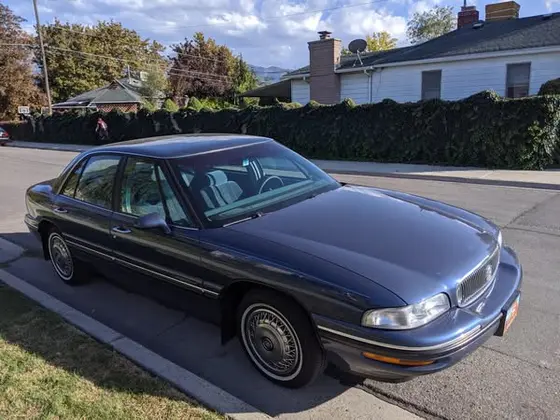
I found a man slumped over the steering wheel of an idling Buick at the end of my driveway last Tuesday morning, and I almost called the coroner before I called 911. I want to tell you that whole story. Because what I learned from it ended up being the most important thing anyone's said to me about my own husband in 14 years of marriage, and I'd be a coward if I kept it to myself. My name is Loretta. I'm 58 years old, I live on a dead end street in Erie, Pennsylvania, and I drove a city bus for 31 years before my back finally told me it was done. I retired in March. My husband Dale retired the year before. We thought we were going to have these long slow mornings together with coffee and the crossword and maybe a dog finally. Instead I spent that first summer watching him sit in his recliner with the blinds half closed, and I started to understand that retirement wasn't the gift everybody told us it would be. Dale is 61. He worked at the GE plant in Erie for 38 years, the locomotive division, the one they kept saying was going to close any minute and then somehow never did. He came home every night smelling like metal and diesel and that particular kind of factory sweat that doesn't wash out of a t shirt no matter what you do. He was strong his whole life. The kind of strong where he could carry both grandkids on his shoulders at the same time and not break stride. But somewhere around 56, something started to slip. It wasn't dramatic. It was the kind of slow that you don't notice until you're already on the other side of it. He stopped wanting to go fishing on Saturdays. He stopped going down to the basement to work on his model trains, and he had hundreds of dollars worth of unpainted boxcars sitting on that workbench gathering dust. His doctor told him his blood pressure was creeping up. Then it wasn't creeping anymore, it was just up. They put him on one pill. Then a second pill. Then they added a third one for water retention, and his ankles still puffed up by 4 PM every day like little loaves of bread. I'd watch him sit on the edge of the bed in the morning trying to find the energy to put his socks on, and I'd pretend I wasn't watching. That's the part that nobody tells you about long marriages. You learn to look away from the things that scare you, because looking at them too directly makes them real. Anyway. Last Tuesday morning I was making coffee and I looked out the kitchen window and I saw a car at the end of our driveway. Just sitting there. Engine running. Exhaust coming out the back in those little gray puffs because the morning was cold. It was a maroon Buick LeSabre, the kind my dad used to drive, and I knew it belonged to Walter from two doors down. Walter is 67. He's a retired electrician. His wife Diane passed two years ago from pancreatic, and ever since then he's been one of those men who waves but doesn't really stop walking. I figured he'd pulled in to drop off a card or a casserole dish or something. So I waited. I made my coffee. I sliced a banana for Dale. Five minutes went by. Walter didn't come up. I went out on the porch in my robe and slippers, and I called his name, and he didn't move. I walked down the driveway and I saw him through the windshield, slumped sideways against the door, his face this awful gray color I had only ever seen on one other person in my entire life and that was my mother in her hospital bed the morning she died. I started screaming his name and pounding on the window. He didn't open his eyes. But his hand twitched. I ran back to the house, I called 911, I told the dispatcher I had a neighbor having a stroke or a heart attack in his car and I couldn't get the door open because he had locked it from the inside. Dale came out in his socks. We both stood there banging on that window while the dispatcher talked in my ear. The ambulance got there in 11 minutes. The fire department got there first and they used some kind of tool to pop the lock, and they pulled Walter out and laid him on the asphalt of my driveway and worked on him for what felt like an hour but was probably 4 minutes. They got him stable. They loaded him in the ambulance. One of the paramedics, a young guy with a red beard, told me his pressure had been so high they were honestly surprised he was still talking. He said, ma'am, this happens way more than you'd think with men this age. They feel it coming on, they get in the car to drive themselves to the hospital because they don't want to make a fuss, and they don't make it. He said it real plain, like he'd said it a hundred times before. Like it was just a fact about the world. Walter is okay. He's home now. They kept him for 4 days and they sent him home with two new prescriptions and a sheet of paper about salt. But I haven't slept right since that morning. Because I know my husband. And I know that if Dale felt his heart pounding through his chest at 6 in the morning, he wouldn't wake me up. He wouldn't call 911. He would put his pants on and get in his truck and try to drive himself to the hospital because he wouldn't want to be a burden. And if I'd been in the shower that morning, or out walking, or asleep, I might have lost Walter. I might lose Dale the same way. That's the thought that's been sitting in my chest for the last 9 days like a stone I can't swallow. So I started reading. I'm not a researcher. I drove a bus. But I know how to use a library card and I know how to ask my niece, who is a nurse practitioner in Pittsburgh, the questions I should be asking. I called her that Wednesday morning. I told her about Walter. I told her about Dale's three pills and his puffy ankles and the way he sits on the edge of the bed in the morning like he's bracing for something. She was quiet for a long time on the phone. Then she said something that knocked the wind out of me. She said, Aunt Loretta, those pills don't fix anything. They just push the numbers down. The thing that's actually broken is the wall inside his blood vessels, and nobody is doing anything about that wall. I said what wall. She said the lining. The inner wall of every blood vessel in his body. It's a living tissue. It's supposed to make a molecule called nitric oxide that tells the vessels to relax, the way a tense shoulder finally drops when you take a hot shower. When that wall is healthy, it makes plenty of that molecule, and the vessels stay loose, and the blood flows easy. She said when you're in your 30s and 40s, the wall is mostly fine. But years of stress and processed food and the kind of slow inflammation everybody has and nobody talks about, all of that wears the wall down. Year by year. Layer by layer. And once the wall can't make enough of that relaxing molecule, the vessels stay tight. The blood has to push harder to get through. The heart has to work harder. And every beat puts more pressure on the wall, which wears it down faster. She said that's the cycle. That's why blood pressure tends to get worse and worse no matter how many pills they pile on. I asked her, well what do you do for the wall. And she said, that's the thing nobody talks about, Aunt Loretta. The pills don't go anywhere near the wall. Beetroot helps a little because it adds some nitric oxide from the outside, but the body already knows how to make its own. The issue isn't supply. It's that the factory is rundown. Then she said, there is something I've been telling some of my older patients about. It's not a drug. It's a fruit from India. It's been used for thousands of years over there. There's research now that it supports the inner wall of the blood vessels in a way nothing else really does. She said the name. Amla. I wrote it down on the back of an envelope. A M L A. I asked her to spell it again. She told me there are compounds in it called emblicanins. They aren't fancy. They've been in this fruit forever. But what the research is starting to show is that they support the cells in that inner vessel wall, and when those cells are functioning better, they can start making more of their own nitric oxide again. The way they did when you were younger. She said it's not a magic bullet. It's not a replacement for his medication. But it's the only thing she's seen that works on the wall itself instead of just pushing the numbers down from the outside. And she said something that I've been thinking about every day since. She said, Aunt Loretta, the pills are like putting a clamp on a leaky pipe. Amla is more like fixing the pipe. I sat there at my kitchen table holding that envelope and I started crying. Because for 9 years I've watched Dale shrink. I've watched him stop fishing and stop painting his train cars and stop going to his nephew's birthday parties because the drive felt like too much. I've watched the doctor add pill after pill and never once tell us about any wall. I felt like somebody had finally given me a map. She told me about a brand called Alevia. She said it's the one she trusts because it's a clean amla extract, no fillers, third party tested, and she said she'd been telling her own father in law about it. I ordered a bottle of Alevia Amla that same afternoon. It came in 4 days. A little blue bottle. Nothing flashy. Two capsules in the morning with breakfast. I didn't tell Dale at first. I just put it on the counter next to the coffee maker and I said babe, my niece told me to start taking these, my pressure has been creeping up too, want to take them with me. He said sure. He's a sweet man. He said sure. The first week, nothing happened that I could put a finger on. The second week, he started waking up before me. That hadn't happened in maybe 4 years. I'd come downstairs and the coffee would already be made and he'd be standing at the kitchen window looking at the bird feeder. I didn't say anything. I didn't want to jinx it. The third week, he went down to the basement on a Saturday. He was down there for 3 hours. I crept halfway down the stairs and I saw him sitting at his workbench with a tiny paintbrush, painting a black stripe on a little orange boxcar. He looked up at me and he kind of smiled, and he said, I forgot how much I liked this. I had to go back upstairs because I was about to lose it. By the end of the second month, the puffiness in his ankles had eased up. Not gone, but eased. His doctor saw him for a regular check and said his numbers had moved in the right direction and asked what he was doing different. Dale said, my wife's making me take some kind of berry. The doctor laughed. Then he wrote it down. I'm not going to tell you Alevia Amla is a miracle and I'm not going to tell you it cured anything, because it isn't and it didn't. What I'm going to tell you is what I see with my own eyes. I see my husband putting his socks on without sitting down halfway through. I see him walking out to the mailbox without that little hitch in his stride. I see him answering the phone when his brother calls instead of letting it go to voicemail. I see a man who is starting to come back from somewhere far away. And every time I look out the kitchen window at the end of my driveway, I think about Walter slumped against that door, and I thank God it wasn't Dale, and I thank my niece for telling me about the wall. I want to say a few things directly, in case you're still reading. If your husband is on three blood pressure pills and his ankles still swell, the pills aren't fixing the wall. If you've been told this is just aging, ask yourself why some 70 year olds run marathons and some 55 year olds can't carry the groceries. If you've tried beetroot and garlic and magnesium and fish oil and you're still where you started, it's because none of those things support the inner wall directly. They're working on the wrong layer. Amla works on the layer everything else misses. Alevia is the company my niece pointed me to. They make a clean amla extract. One bottle is a month. They have a 90 day money back guarantee, which means if you take it for 3 months and you don't notice anything, you can send the empty bottle back and they refund you. No paperwork. No phone tree. I'm not affiliated with them. I'm a retired bus driver in Erie. I'm just a woman who almost lost her neighbor and is trying not to lose her husband. If you want to look at it, the link is below. Take it for 90 days. That's what my niece told me. Give the wall time to do what it's supposed to do. P.S. Walter came over yesterday with a tin of cookies his daughter made. He sat at our kitchen table for an hour. He's started taking Alevia Amla too. His daughter asked me where I got the name from. P.P.S. I keep that envelope with A M L A written on the back of it in the kitchen drawer with the coupons. Some days when Dale is down in the basement painting his train cars I take it out and I look at it. It's just a word on an envelope. But it's the word that gave me my husband back. P.P.P.S. The 90 day guarantee is the only reason I tried it. If I'd been asked to risk $50 with no way out, I wouldn't have. The fact that you can return it if it doesn't do anything for you is what made me say yes. It's also what made me feel okay telling you about it. 👉 https://alevia.com/amla/33
Placements and targeting
More ads from The Blood Pressure Journal
I listened to my dead husband's voicemail for the 47th time this morning while I sat in my car in the Kroger parking lot with the engine off. "Hey Janie, it's me, traffic's a mess on 64, I'm gonna be late, don't hold dinner, love you, bye." 11 seconds long. 11 seconds. I have it memorized down to the breath he takes between "love you" and "bye." There's a tiny pause there, like he was about to say something else and didn't. I've spent two years wondering what he was about to say. Frank died on October 11th, 2023. Massive heart attack at his desk at the Charleston Gazette-Mail, where he'd been a sports editor for 31 years. He was 61. He'd left me that voicemail on April 3rd of that same year. Six months and 8 days before. I save it. I move it from one phone to the next. The Verizon guy who set up my new iPhone last December asked me if I needed help transferring anything and I said yes, my voicemails, all of them, and he looked at me funny because nobody saves voicemails anymore, but he did it, and I gave him a $20 tip because he didn't ask why. My name is Janet. Everyone calls me Janie. I'm 58 years old. I live in a brick split-level on the south end of Charleston, West Virginia, the kind of street where the dogwoods come in pink along both curbs in April and where everyone knows whose Subaru is whose. Frank and I bought the house in 1997 when our son Eli was 4. Eli is 33 now, lives in Pittsburgh, calls me every Sunday at 6:30 PM whether I pick up or not. I haven't checked my blood pressure since the funeral. I have one of those little arm cuffs in the linen closet, on the second shelf, behind the towels Frank's mother gave us in 1995. It still has the receipt taped to the side because Frank refused to throw away the receipt on anything that cost more than $40. The cuff was $52 from CVS. He bought it after his cardiologist Dr. Marsh told him he needed to start tracking his numbers at home, and Frank, being Frank, came home with one for each of us, because he said if we were going to do something we were going to do it together. He took his every morning at 6:14 AM, sitting at the kitchen table in his blue plaid robe, before the coffee was even done. He wrote the numbers in a yellow legal pad with the date and a little notation if he'd slept bad or eaten something salty. The legal pad is still in the kitchen drawer. I haven't opened it. I can't. I haven't taken mine since the morning of October 12th, 2023. Which was the morning after Frank died. I sat at the table by myself and put the cuff on and watched the number come up and then I took the whole machine and put it in the linen closet behind the towels and I haven't touched it since. The number was 168 over 102, if you're wondering. I am not stupid. I know what 168 over 102 means. I worked as the office manager at a pediatric practice for 24 years before I retired in 2022. I sat across the desk from Dr. Rinaldi for nearly a quarter century, and I know what a blood pressure reading is supposed to look like, and I know what one looks like when it isn't. But I also know what grief is. And grief, the kind that comes for a woman who lost her husband suddenly at 61 with no warning, is the kind that says: I will deal with my body later. I will get through Thanksgiving first. I will get through Christmas. I will get through his birthday. I will get through our anniversary. I will get through the one year mark. I will get through the two year mark. And the years go by and you don't deal with it. And every morning you wake up and your head feels heavy and your face feels hot when you stand up too fast and you tell yourself it's because you didn't sleep well, or because you're dehydrated, or because the weather changed, or because you had two glasses of wine with Carol on Thursday night. You tell yourself anything except the thing. The thing is, my husband died of his heart at 61. And I am a 58-year-old woman whose blood pressure was 168 over 102 the morning after he died and who has not checked it in two years and three months. Carol Whitfield has been my best friend since 1996. She lives 4 streets over on Ridgeway Drive in a yellow Cape Cod with a flagstone path. She and her husband Dr. Marsh, the same Dr. Marsh who'd been Frank's cardiologist, used to come over for cards every other Friday. Dr. Marsh is 64 now, retired in 2024 from his practice but still consults two days a week at CAMC. He was the one who pronounced Frank at the hospital. He drove me home in his own car. He sat at my kitchen table at 9:47 PM that night and didn't say anything for 23 minutes, just sat there with his hand on my hand, and then he said, "Janie, the man loved you to pieces. He talked about you like a boy." I haven't been able to look him in the eye since. Not because of anything he did. Because of what he knows. He knows Frank's numbers. He has them in a file somewhere. He knows what Frank's blood pressure was running in those last 6 months. He knows what mine was the only time I let him take it, at Carol's 55th birthday party in 2022, when he had one of those wrist cuffs out and was making people guess theirs as a joke. Mine was 154 over 96 with a glass of pinot grigio in my hand. He'd raised an eyebrow at me. Said, "Janie, when are you coming in?" I'd laughed and walked into the kitchen for more cheese. A year and a half later he was driving me home from the hospital where my husband had died. He has tried to talk to me three times in the last two years. At Frank's memorial. At Eli's wedding in May of 2024. Standing in line at the deli counter at Capitol Market last September. Each time I have made my voice bright and said "I am doing fine, doctor, you take care now," and walked away. Last Thursday he showed up at my front door at 4:47 PM with a Pyrex casserole dish covered in tinfoil. Carol was at her sister's in Roanoke. He was alone. He had the casserole in both hands and a folder under his arm. I stared at him through the storm door for a long second. "Carol made too much lasagna," he said. "She said you'd take the leftovers off our hands if I begged." That is a lie. Carol does not over-make lasagna. Carol portions everything in advance because she ran the church food pantry for 11 years. Dr. Marsh knew I knew it was a lie. He held the casserole up a little higher and said, "Can I come in, Janie." I let him in. He set the lasagna on the kitchen counter, on the exact spot where Frank used to set the mail on Tuesdays. Then he sat down at the kitchen table without being asked, in Frank's chair, and put his hands flat on the placemat, and looked at me, and said: "Janie, you haven't been in to see anyone in two years. I know because I have a friend at every cardiology practice in Charleston and I asked. I'm not here as your doctor. I'm here as Frank's friend. And I cannot watch this happen twice." I didn't say anything. He opened the folder. In it was a single piece of paper. A photocopy of Frank's last in-office blood pressure reading from August 14th, 2023. 8 weeks before he died. 158 over 96. With a little note in Dr. Marsh's handwriting in the margin: "FU 3 mo. discuss adjustment." He never made it to the follow-up. Dr. Marsh slid the paper across the table toward me. Then he said, very quietly: "Janie, what's yours running." And I started to cry. Not the polite cry I'd done at the funeral. The other kind. The kind that comes up out of your stomach. I cried in Frank's kitchen for what felt like an hour but was probably 4 minutes. Dr. Marsh didn't move. He didn't reach for me. He just sat there and let me do it. When I stopped, he said: "Go get the cuff." I got the cuff. I took it out of the linen closet behind the towels. The receipt was still taped to the side, faded now. I brought it to the kitchen and I sat down across from him at the table and he wrapped it around my arm himself, gently, the way he must have wrapped it around hundreds of women's arms over 34 years of practice, and he pushed the button. The number came up. 171 over 104. We sat there looking at it. He didn't tell me what to do. He didn't lecture me. He didn't write a prescription. He said, "Janie, I want to tell you something I've been telling a handful of people the last 14 months. I would have told Frank if I'd known then what I know now. Will you let me say it." I nodded. He sat back in Frank's chair. He told me he'd retired in part because he'd gotten tired of telling 60-year-old men what their wives were going to find when they came home from the hospital that night, and he'd started reading. Reading on his own time. About what actually happens inside a blood vessel when the pressure stays high for years. He said the inside of your blood vessels has a thin living wall. Just one cell layer thick. He called it the endothelium but he said I could just think of it as the inside lining. He said that lining is the part that decides whether your blood vessels open up or stay tight. It produces a molecule called nitric oxide, and the nitric oxide is what tells the vessel walls to relax. He said years of inflammation and stress and processed food and grief and not sleeping right wear that lining down. He said when the lining isn't healthy, it can't produce as much nitric oxide. The vessels stay tight. The blood forces its way through. The pressure goes up. And the higher the pressure goes, the more it punishes the lining, which produces even less nitric oxide. A cycle that feeds itself. He said the medications he'd prescribed Frank, and the ones he would have prescribed me if I'd come in, work by forcing the vessels open. He said they do not touch the lining. He said the lining keeps deteriorating underneath, and the dose goes up over time, and that's why people end up on three medications instead of one, and four instead of three. He said that was the conversation he'd been about to have with Frank at the follow-up Frank never made. He said he'd been looking for something that helped support the lining itself. He said his daughter, who is a nutritionist in Asheville, sent him an article about a fruit called amla. He said the article was good. He said he read the original studies. He said the science is real, and the mechanism makes sense, and the studies aren't perfect, but he's been taking it himself for 11 months. He said he'd brought a bottle with him. In the folder, under the photocopy. It was a small bottle with a green label. Said Alevia on it. He didn't push it across the table. He just left it next to the photocopy of Frank's last reading and said: "I'm not selling you anything. I don't get a cent. I'm telling you what I'm taking and why." Then he said the thing that broke me a second time. He said: "Frank would have taken it, Janie. If he'd known. He was that kind of man. He would have read the same articles I read and he would have ordered a bottle for both of you. You both would have been on it for two years by now." I looked at the bottle on the table next to the paper that said 158 over 96. I think you can guess what I did. I want to slow down here and tell you what I learned in the next 4 days, because I think it matters. I am not a woman who buys things from Facebook. I am not a woman who falls for things. I worked the front desk at a pediatric practice for 24 years and I have heard every miracle pitch you can imagine from every essential-oil-pyramid-scheme cousin in the state of West Virginia. I am suspicious by trade. So I read for 4 days before I took the first capsule. Here's what I figured out, as a 58-year-old woman with no medical degree but a quarter century of sitting next to a doctor at lunch. Your blood pressure is not a separate problem from the rest of your body. It is a downstream signal of what is happening on the inside of your blood vessels. The inside lining. The endothelium. When that lining is functioning the way it did when you were 30, it produces nitric oxide. Your vessels relax. Your blood flows easily. Your pressure stays where it should. When the lining is worn down, the lining produces less nitric oxide. Your vessels stay tight. Your heart has to push harder. The number on the cuff goes up. Pills can lower the number. Pills cannot heal the lining. What amla appears to do is different. It contains compounds called emblicanins that help support that inner lining. When the lining is supported, it can start producing more of its own nitric oxide, the way it did when you were younger. Vessels can relax more naturally. Blood flows more freely. The pressure on the walls can ease. And when the pressure eases, the lining isn't under the same constant beating anymore. The cycle can start to break. Pressure can come down. Not because something forced it. Because the body is doing what it already knew how to do. The lining just had to be supported first. That sentence sat in my kitchen with me for a long time the night I read it. The lining just had to be supported first. Frank had been on losartan for 6 years. The dose had been raised twice. Two months before he died, Dr. Marsh had wanted to add a second medication. Frank had pushed back. He'd said he wanted to try diet first. He'd been doing the DASH diet for 11 weeks. He'd lost 9 pounds. His pressure had not budged. Because the diet wasn't reaching the lining. And the pill wasn't reaching the lining. Nothing he had ever taken or eaten in 6 years had reached the lining. I ordered a bottle that Thursday night. From the website Dr. Marsh wrote down on the back of the photocopy. alevia.com/amla/33. He told me to use that link because it had something to do with their guarantee. 90 days. If it doesn't work, you send the bottle back and they refund you. Every penny. I want to say something about that guarantee. Because I'm 58 and I have been around long enough to know that a real money-back guarantee is rare. The losartan Frank took for 6 years did not come with one. The DASH diet book on his nightstand did not come with one. The wrist cuff at Carol's birthday party did not come with one. Nothing about his hypertension treatment, in 6 years of treatment, came with a refund if it failed. It failed. Nobody offered Frank his time back. Nobody offered me my husband back. Alevia offers you 90 days. You take it for 90 days. If your pressure doesn't move, you send the bottle back and they refund you. That is more than fair to a woman who has been burned before. The bottle arrived on Tuesday. I took the first two capsules with my eggs Wednesday morning. November 27th. The morning before Thanksgiving. Eli came home for Thanksgiving. He noticed I'd cried. He didn't ask why. He hugged me longer than usual at the door and said, "Mom, you look tired." I said, "I know." I started taking the cuff out of the linen closet every morning at 6:14 AM. Frank's time. I sat at the kitchen table in his blue plaid robe, which I'd been wearing since the second week after he died. I wrote the numbers in the yellow legal pad. In the same column where Frank had stopped writing. I started a new page so the handwriting wouldn't confuse me. Week one: 168/103. 171/104. 169/102. 166/101. 170/103. 165/100. 167/102. I cried looking at those numbers. Because they were almost identical to the morning after he died. Week two: 162/99. 164/100. 159/97. 161/98. 158/97. 160/98. 156/96. Week three: 152/93. 154/94. 149/91. 151/92. 148/90. 150/92. 147/89. I called Dr. Marsh on the morning of December 18th when the cuff said 144/87 because I thought it might be broken. He laughed for the first time I'd heard him laugh in two years. He said, "Janie, it's not broken." I am sitting in my kitchen right now, on a Tuesday morning in May, writing this. I took my pressure 47 minutes ago. 128/81. I have not seen a number that low since 2019. I want to tell you about the other things, because the numbers don't tell the whole story. I sleep again. I don't mean I sleep more hours. I mean I sleep through the night without waking up at 3:14 AM with my heart in my ears. That had been happening for 17 months. I'd been telling myself it was grief. The headaches I'd been having since the funeral are gone. I thought those were grief too. They weren't grief. They were 168 over 102 for two years. I can walk to the end of my driveway and back without my face getting hot. I'd stopped getting the mail myself in October of 2024. I have a neighbor's grandson who'd been doing it for $5 a week. I called him last Saturday and told him he was fired but I'd still pay him through June. My son called me last Sunday and said, "Mom, you sound like yourself again." He didn't know I'd ever stopped sounding like myself. I haven't listened to the voicemail in 6 weeks. I still have it. I'll always have it. But I don't need to listen to it every morning to remember Frank, because for the first time in two years I'm not punishing myself for surviving him. If you're reading this and you have a number you've been hiding from, a cuff in a linen closet, a yellow legal pad you can't open, a voicemail you've memorized down to the breath, I want you to hear me. Frank ran out of time because nobody told him there was anything to do besides the pill. I do not want you to run out of time. Alevia has a 90 day money-back guarantee. If your numbers don't move, you send the bottle back and they refund you. No phone call. No fight. They refund you. The losartan didn't come with that. Neither did the diet book. Neither did the six years of three-month follow-ups. This does. P.S. You'll know it's working before the cuff confirms it. For me it was the headaches. Mine had become so constant I'd stopped noticing them, the way you stop noticing a fan running in another room until somebody turns it off. Week two the room got quiet. I sat at the kitchen table with my coffee and realized I didn't have a headache, and I started crying because I hadn't remembered what it felt like to not have one. If you've been telling yourself the headache is grief, or the heaviness in your chest is grief, or the way your face gets hot when you stand up is grief, please consider that some of it is grief and some of it might be the lining, and there's something you can do about the lining. P.P.S. About the guarantee. 90 days is unusual. Most companies give you 30. 30 days is barely long enough to know if something's working for a body that has been running on a damaged lining for a decade. Alevia gives you 90. That is three full bottles. That is enough time to see your numbers move on a cuff you've been hiding from. The only reason a company offers a guarantee that long is because they already know what you're going to find out. P.P.P.S. Dr. Marsh told me Alevia is a small company and they sometimes sell out. He'd had to wait 8 days for his second bottle in February. I keep two in the kitchen drawer now, where Frank's legal pad used to live. One open, one sealed. Because I am not going back to 171 over 104. Not for one morning. Not for one week. Not for anyone. P.P.P.P.S. If you're a widow, or a wife whose husband won't go to the doctor, or a daughter watching your mother slide the cuff back into the linen closet, please send her this. I am writing it because no one wrote it for me when I needed it. I am writing it because the casserole Dr. Marsh brought over wasn't a casserole, it was a chance, and I almost didn't open the door. Open the door. Open the linen closet. Open the bottle. Frank would have wanted you to. 👉 alevia.com/amla/33
My dad's blood pressure cuff broke on a Tuesday morning at 7:15 AM and I was the one who heard it happen. I was in the kitchen making coffee. He was in the den, in the same spot he'd been sitting in every morning since my mom died 4 years ago, the same brown leather recliner with the same plaid blanket folded over the arm and the same little side table with the lamp my mom had bought at a yard sale in 1994. He was doing what he did every morning. Rolling the cuff onto his arm. Pressing the start button on the little machine that sat next to the lamp. Waiting for it to inflate. Except this time it didn't. I heard a small wheezing sound, the kind of sound a balloon makes when it has a slow leak. Then I heard him say, in a voice that was quieter than I think he meant it to be, "Karleen. It's not working." I want to tell you what happened over the next 4 hours. Because what happened in the parking lot of a CVS on Tunnel Road in Asheville, North Carolina at 11:42 AM that Tuesday morning, and what happened in my own kitchen at 4:30 that same afternoon when my father said something to me he had not said in 40 years, is the reason I'm sitting here at my own kitchen table writing this for any other daughter who is watching her father get smaller. My name is Karleen. I'm 57 years old. I live with my dad in the house I grew up in, on a curving street in west Asheville with a sycamore tree in the front yard that drops its leaves in big yellow handfuls every November. I moved back in with him in February of 2021, 8 months after my mom died, after he called me on a Sunday afternoon and asked me, in the gentlest voice you've ever heard a 79 year old man use, if I could come stay for a couple weeks because the house felt too big. I was supposed to stay 2 weeks. I have stayed 4 years and 3 months. I'm divorced. No kids. I work remotely doing medical billing for a clinic in Hendersonville, which is the kind of job nobody dreams about as a child but the kind that lets you take care of an aging father without quitting your career. My ex husband and I sold our house in 2019 in a way that gave me enough cash to be okay for a long time if I was careful. I have been careful. My father is named Wendell. Everybody calls him Wendy, which he hates and tolerates the way men of his generation tolerate everything. He's 83 now. He was an English teacher at Asheville High for 36 years. He coached the chess club. He directed the spring play 17 years in a row. He has a library in our house that takes up an entire wall of the den, three bookshelves deep in some places, and he can still tell you which shelf any book is on if you give him 10 seconds to think about it. He has high blood pressure. He has had high blood pressure since 1987. He was 45 years old. His doctor put him on a medication called atenolol and he took it every single morning for 35 years. In 2022, after my mom passed, his numbers started climbing in a way they never had before. His doctor added a second pill. Then a third. By the time I'm telling you about, the Tuesday morning the cuff broke, he was on three medications and his pressure was still running higher than anyone wanted it to. He took his readings every morning. Religiously. He wrote them down on a yellow legal pad next to the recliner. He brought the pad to every doctor appointment. The doctor would look at the numbers and adjust the medication and send him home and the next month it would be the same conversation. I had watched my dad for 4 years be a man who measured his health by a number on a screen and who never moved that number no matter what he did. So when the cuff stopped working that Tuesday morning, what I heard in his voice wasn't frustration about a broken machine. It was something deeper. It was the voice of a man who had been clinging to a routine that wasn't working and had just lost the routine. I came into the den. He was sitting in the chair holding the cuff in his hand. The little Velcro strap was open. The tube that connected the cuff to the machine had a small split in it, right where it joined. I could see daylight through the rubber. He looked up at me. "Honey, this thing has been with me for 11 years." I sat down on the ottoman across from him. I held my coffee cup with both hands. "Dad. We can get a new one today. We'll just go to CVS." He nodded. He didn't say anything for a long time. He turned the cuff over in his hands. Then he said, "Karleen. I don't want to go to CVS." I waited. "I'm tired." That was all he said. Three words. He didn't elaborate. He didn't need to. I had been living with this man for 4 years and I knew, the way you know the weather is about to change, that those three words were a door opening to a much bigger conversation. I drank my coffee. I waited. He went on. "I have been measuring this thing every single morning for 11 years. I have been on three pills for 18 months. The number on the screen is still too high. The doctor still tells me, with a kind face, that we will keep adjusting. I am 83 years old. I have been doing what I am told to do for 35 years and the number is still wrong." He looked down at the cuff in his hands. "I am tired of measuring. I am tired of writing it down. I am tired of being a number." I want you to understand. My dad doesn't talk like this. My dad is the kind of man who, when his wife of 51 years died, told me he was "doing fine" for 8 weeks before he called me at 2 PM on a Sunday and admitted that the house was too big. He doesn't say what he's feeling. He almost never has. Hearing him say "I am tired" out loud, in his own voice, in the chair my mother used to read in next to him, was like watching a wall come down. I put my coffee cup on the side table. I got up. I sat down on the floor in front of his chair the way I used to sit when I was 8 years old and he read to me out of his big leather Robert Frost. I said, "Dad. We are going to CVS. We are going to get you a new cuff. And then we are going to figure out what is actually going on. Together." He nodded. He reached out. He put his hand on the top of my head the way he used to when I was little. We sat like that for a minute and a half. Then we got in my car and we drove to CVS. The CVS on Tunnel Road in Asheville is in a strip mall next to a Publix and a Cook Out. I parked in a spot by the front door because my dad's hip has been bothering him for the last 18 months and the walk from the back of the lot is too much for him on bad days. We went in. We walked past the seasonal aisle, which still had Easter candy out in mid May, and we found the home health section. There were three full shelves of blood pressure monitors. I want to tell you what those three shelves looked like to me. There was an Omron at $79.99. A different Omron at $59.99. A Withings that connected to your phone for $99.99. There was a Walgreens brand for $39.99. There was an arm cuff and a wrist cuff and a thing that looked like a smart watch. There were 22 different products. I counted. My dad stood there. He looked at the shelves. He didn't reach for any of them. A woman came down the aisle behind us. She was probably my age. Maybe a little older. Mid to late 50s. She was pushing a small cart with a few items in it. She had grey hair pulled back in a low ponytail and she was wearing a denim jacket over a dark green dress. She stopped at the same shelves. She picked up an Omron. Looked at the box. Put it back. Picked up the Withings. Looked at the box. Put it back. I caught her eye. The way you catch the eye of another mother in a grocery store when both of your kids are having meltdowns at the same time. A small flicker of recognition. She gave me a small smile. She said, quietly, "These shelves are awful, aren't they." I laughed, a small laugh, just enough. She looked at my dad. He was still staring at the shelves and not picking anything up. She looked back at me. She said, "Is it for him, or for somebody back home?" I said, "It's for him. His old one broke this morning." She nodded slowly. Then she said something I have repeated to myself probably 100 times since. She said, "I bought my mom one of these cuffs every 11 months for 6 years. I have had this exact conversation with myself in this exact aisle. The cuffs aren't the problem. The numbers aren't the problem. The problem is what you do after you read the number. Can I tell you what changed for us?" My dad turned and looked at her. She introduced herself. Her name was Renata. She was a librarian at the Pack Memorial public library in downtown Asheville. Her mother was 81 and lived with her and her husband. Her mother had been on three blood pressure medications for years and her numbers had still been a problem. Renata told us about her cousin in Charlotte who had married a man whose family was originally from Kerala in southern India. Renata had gone to Charlotte for Easter dinner two years before. Her cousin's mother in law, an 84 year old woman who walked everywhere and did her own grocery shopping and gardened in the backyard, had been the most alive 84 year old Renata had ever met. Renata had asked, the way you ask, what her secret was. The mother in law had told her about a fruit they grew back home. A small green fruit called amla. Indian gooseberry. They had been eating it for thousands of years. It was, the mother in law said, "the fruit you give your husband when he won't take care of himself." Renata had laughed. Then she had asked more questions. Then she had spent the next three months reading about it. She had started giving her mother a standardized extract from a brand she had eventually settled on. She told us, standing right there in the home health aisle of a CVS, that 11 months in, her mother's numbers had come down enough that her mother's doctor had reduced one of her medications. She said, "I am not telling you this fruit is a miracle. I am telling you that for the first time in 6 years, the conversation in our house was not about the number. It was about how my mother felt. And how she felt was different. Better. More like herself." My dad was looking at her with the same focused attention he used to give a student who was about to crack open a poem in class. He said, "What's it called?" She wrote it down for us. She had a pen in her purse. She wrote "Alevia Amla" on the back of an old grocery receipt and handed it to my dad. My dad folded the receipt. Put it in the breast pocket of his shirt. Tapped it twice. Renata smiled at me. She said, "I hope it helps. Even if it doesn't, I hope something else does." She picked up an Omron from the shelf, the $59.99 one, and handed it to my dad. "This is the one we use. It's reliable. The cuff lasts longer than the more expensive ones, in our experience." We bought it. We drove home. My dad put the new cuff on the side table next to his chair and he laid down on the couch and he slept for an hour and a half, which my dad does not do. I sat at my own kitchen table that afternoon and I did what Renata had done. I read. I read for 4 hours. Here is what I came to understand about amla and about high blood pressure and about why my father, after 35 years of doing exactly what he was told to do, was still a man whose numbers were too high. When you have high blood pressure, what's actually happening inside you is more complicated than the numbers suggest. The number on the screen is the result. The cause is a much longer story. It's a story about the inside of your blood vessels, the layer called the endothelium, which is supposed to be smooth and flexible and responsive. Over decades, that layer can become stiff, inflamed, less able to dilate the way it should. It's a story about oxidative stress, the cellular wear and tear that builds up year after year. It's a story about chronic low grade inflammation that doesn't show up on standard bloodwork but quietly damages the tissues that regulate pressure. Most blood pressure medications are aimed at the outcome. They lower the number. They don't necessarily address the underlying biology of why the number was high in the first place. That's why people end up on two medications, then three, then four. The number is a signal, not the source. Amla is interesting because the research on it suggests it works on the source. It's been associated with support for healthy endothelial function, which is the responsiveness of those vessel walls. It's a powerful antioxidant, partly because of its naturally high vitamin C content but also because of compounds called polyphenols and tannins that show up in good standardized extracts. It's been linked to reductions in inflammatory markers like hs-CRP. It's been studied for its effects on healthy lipid profiles, which matters because cholesterol and blood pressure are part of the same vascular story. In plain English: it doesn't push the number down by force. It works on the cellular environment that determines what the number wants to be. That made sense to me in a way 35 years of pharmacology had not made sense. I want to be careful here. I am not telling you my father stopped taking his medications. He did not stop taking his medications. He did not stop taking them at week 4, or week 8, or week 12. He took them every single morning the way he had taken them for 35 years. What I am telling you is what happened after he started taking 2 capsules of Alevia Amla every morning with his coffee, in addition to the medications he was already on. He started on a Friday in late May. I had ordered the bottle the night Renata talked to us. It came on Thursday. He took his first 2 capsules on Friday morning. Week 1, nothing changed. The numbers on the new cuff were the same as the numbers on the old cuff. Week 3, he slept through the night. I want to be precise about that. My father had been waking up at 2:30 AM almost every night for the last 4 years to use the bathroom and then would lie awake until 5 or 6. The night between Thursday May 30 and Friday May 31, he slept from 10:15 PM until 6:45 AM. He came down to the kitchen the next morning and he said, "Karleen. Something is different. I don't know what it is." Week 5, his hands. I had not realized, until they stopped, how often my father had been rubbing his hands together while he was reading. It was a small movement. Almost a tic. He had done it for years. I think it was a circulation thing. His hands were always cold, even in summer. One Saturday in mid June I was sitting across from him in the den and he was reading and I noticed his hands were just resting on the book. Not moving. Not rubbing. Warm. Week 8, the morning routine. He still measured his blood pressure every morning. He still wrote it down on the yellow legal pad. The number had come down. Not dramatically. Not in a way that would make a doctor pick up a phone. But consistently. The 7 day rolling average he had been tracking for years had dropped by a meaningful amount. Enough that I noticed it on the page when I glanced at it one morning while making coffee. Week 12, the doctor's appointment. I drove him to it. We had a 2:00 PM appointment with Dr. Halliday, who has been my father's primary care doctor for 22 years. She is a careful, warm, smart woman who takes her time. She measured his pressure in the office. She looked at the legal pad. She looked at my dad over her reading glasses. She said, "Wendy. Your numbers are the best they've been since 2021. What have you been doing?" My father told her. The whole thing. The cuff. The CVS. Renata. The amla. The 12 weeks. Dr. Halliday listened carefully. She took notes. She said, "I want you to keep taking everything you're taking. Don't change anything. Let's see where you are in 3 months." 3 months later, in October, she reduced one of his medications. I want to tell you the conversation I had with my dad that afternoon, the day the cuff broke, that I haven't told you about yet. The one I started telling you about at the beginning of this story. We came home from CVS at around 12:30. He took his nap. I sat at my kitchen table and I read until about 4:00. At 4:30, he came into the kitchen. He had the receipt with Renata's handwriting in his hand. He sat down across from me. He said, "Karleen. I want to say something I should have said a long time ago." I waited. He said, "Thank you for staying with me. I know you came here to be with your mother in the last weeks. I know you stayed because of me. I know I've never said it. I want you to know I know." I started crying. I couldn't help it. He reached across the table. Took my hand. He said, "I don't want to be a number anymore. I want to be your father again. The man who reads to you. I want to figure out how to do that. I'm 83 years old and I'd like to stop disappearing." I got up. I went around the table. I hugged him. That was 14 months ago. We are still here. We are still in this house. He still measures his pressure every morning. The number is still better than it was. But the most important thing that has changed in the last 14 months isn't the number. It's the man. He started reading out loud again, the way he used to in the spring play. He drove himself to the library two weeks ago, which he had not done since 2022. He has color in his face I had not seen in 4 years. He laughed at a joke at dinner last Sunday so hard that his eyes watered. If you've been watching your father become a number, I see you. If you've been buying blood pressure cuffs every 11 months, I see you. If your dad has said "I am tired" to you in a way that meant something deeper than sleep, I see you. If you have stayed in a house that was too big, with a parent who needed you, longer than you thought you would, I see you. There is a fruit on the other side of the world. It's called amla. The brand my father takes, that we settled on after 4 hours of reading at this kitchen table, is called Alevia. The product is Alevia Amla. It's made in the United States. It's 2 capsules a day with breakfast. They have a 90 day money back guarantee, which means if your father takes it for 3 months and nothing changes, you mail the bottle back and they refund you the money. There's no paperwork. There's no fight. I want to be clear about something. I am not telling you to take your father off his medications. I am not telling you anything about anyone's medications. I am telling you that there is a quiet, well researched fruit that has been used in India for 3,000 years that has a way of supporting the body's own systems in a way that medication does not, and that, alongside what your father is already doing, it might be the thing that changes the conversation in your house from being about the number to being about the man. P.S. Renata and I are friends now. I emailed her in July through the library's contact form. I told her my dad's numbers had come down and I told her about the conversation we had at the kitchen table that afternoon. She wrote back the next day. She told me her own mother was now on a single blood pressure medication, down from three. We have had coffee at the Battery Park Book Exchange three times since then. She is a wonderful person. Some encounters at a CVS turn into something that matters. P.P.S. The 90 day guarantee is the only reason my father agreed to try it at all. He is the kind of man who will read a journal article before he takes an aspirin. The fact that there was a real, no questions asked refund policy is what got him over the threshold. If you're talking to a parent who is stubborn the way my father is stubborn, the guarantee is the part to lead with. It costs them nothing to try. P.P.P.S. The new blood pressure cuff is still working. 14 months later. Renata was right about that too. P.P.P.P.S. My dad read the manuscript of this post before I finished writing it. He read it sitting in his recliner with the same lamp my mother bought at the yard sale in 1994 turned on next to him. He took off his reading glasses when he was done. He said, "Karleen. Send it. There's some other 57 year old daughter out there in a CVS aisle right now. Tell her about Renata." So I'm telling you. 👉 https://alevia.com/amla/33
I was sitting in a Cracker Barrel parking lot in Bowling Green, Kentucky at 7:14 in the morning when my phone rang and my sister told me she was alive but she didn't know how. That's the sentence I keep coming back to. She didn't say I'm in the hospital. She didn't say I had a heart attack. She said I'm alive but I don't know how, and the way she said it, with this thin reedy quality I'd never heard come out of her before, is the reason I'm writing this 11 months later instead of going about my Tuesday. My name is Lorraine. I'm 61 years old. I live in Elizabethtown, Kentucky, which is about 45 minutes south of Louisville and not somewhere most people have ever heard of unless they had a relative stationed at Fort Knox. I taught third grade for 32 years at the same elementary school. I retired in May. My husband Phil drives a route truck for a uniform company and is gone 4 days a week. We have 1 daughter who lives in Lexington with her husband and our 2 grandbabies. My sister Brenda is 4 years younger than me. She lives outside Indianapolis with her husband Dean. She works as an office manager for a dental practice. She's the kind of person who keeps the family birthdays in a paper book even though she has a phone. She's the one who organizes Thanksgiving and remembers what kind of pie our father liked and calls me on Sunday afternoons just to talk about nothing. She was 57 the morning she called me from that hospital bed. And I want to be clear about something before I go any further. Brenda is not a person who has ever taken her health for granted. She walks. She doesn't smoke. She gave up sweet tea in 2013. She does the things you're supposed to do. What she had was high blood pressure. That's all. She had been managing it with a pill her doctor prescribed when she was 51. That was the whole story. She had been to the ER once before, the year prior, for what they called a "spell." Lightheaded. Pressure was through the roof when they took it. They adjusted her medication, sent her home, told her to monitor it. She did monitor it. She bought one of those little arm cuffs from CVS and she'd take her reading every morning before her coffee and write it down in a spiral notebook. The numbers were never quite where they should be. She'd tell me sometimes on those Sunday calls. She'd say, "It was 158 over 94 this morning, Reenie." She had been calling me Reenie since she could talk. I'd say, "Are you taking your pill?" She'd say, "Of course I'm taking my pill." And we'd talk about the grandbabies. The morning she called me from the hospital was a Tuesday in March. I had gotten in the car early to meet a friend named Patty for breakfast on her way through town. We were going to eat at the Cracker Barrel off the interstate because that's where you eat breakfast when you're 61 and your friend is driving from Nashville to Cincinnati to see her son. I was sitting in the parking lot with my engine off, watching the sun come up over the gas station next door, waiting for Patty's truck to pull in. My phone rang. The caller was Brenda's husband Dean, which was wrong, because Dean does not call me. Dean is one of those men who lets his wife handle all the relationships. If Dean was calling me at 7:14 on a Tuesday morning, something had happened. I answered and Dean said, "She's okay, Lorraine. She's okay, but I'm putting her on." Then Brenda was on the phone, and her voice did that thin reedy thing, and she said the sentence. She said she had been getting ready for work. She said she felt the room tip. She said the next thing she remembered was being on the bathroom floor with Dean kneeling over her, and Dean said she had been out for almost a minute. They drove to the ER. The pressure reading they took when she walked in was 198 over 116. A nurse who took the reading said the words "you got lucky" out loud. Brenda said it through the phone twice. "I got lucky, Reenie. I got lucky." I sat in that Cracker Barrel parking lot and I watched the sun come over the gas station and I felt something shift in my body that I had been ignoring for probably 4 years. Because here's the thing nobody knew until I sat in that parking lot. I was Brenda. I was Brenda in slow motion. I had been Brenda for years. My pressure had been creeping up since I was 55. My doctor had me on a low dose of something called amlodipine and told me to watch my salt and gave me a pamphlet. The same kind of pamphlet they gave Brenda. I had been taking the pill. I had been watching my salt. My morning numbers were not where they were supposed to be either, and I had been doing what people do when they're afraid, which is just not looking at the numbers very hard. I had a cuff from CVS too. Same brand as Brenda's. I'd take a reading and if it was bad I'd take another reading 5 minutes later and tell myself the second one was the real one. I had been telling myself things. I had been telling myself that the headaches behind my eyes in the afternoons were because I was looking at screens too much. I had been telling myself the buzzing in my ears at night was just what 61 sounded like. I had been telling myself my heart pounding when I bent over to tie my shoes was normal because I was, and I want to use the polite word here, a soft 61 year old woman who needed to lose some weight. None of those things are normal. I knew none of those things were normal. I just didn't want to be Brenda. And then Brenda was on the phone telling me she had been on the bathroom floor. I drove home that morning instead of having breakfast with Patty. I texted Patty in the parking lot and told her family emergency. I drove the 16 miles back to my house and I walked in the front door and I sat at my kitchen table and I did not move for almost an hour. Then I got up and I called my doctor's office and I asked them what else there was. The receptionist put me through to a nurse practitioner named Sheila who I had been seeing for years. Sheila and I had a long history. She had walked me through perimenopause and she had walked me through my mother's diagnosis and she was the kind of medical person who actually talked to you like a human being. I told her what had happened to Brenda and I told her my numbers had been bad too and I told her I needed to know what else there was beyond what I was already doing. Sheila said something I didn't expect. She said, "Lorraine, the medication you're on, it's a tool. It's not the whole story. The reason your numbers haven't moved is because we're treating the pressure but we haven't been talking about the wall." I said, what wall. She said, "The wall of your blood vessels. The inside lining." And then she explained something to me at the kitchen table over the phone for about 20 minutes that I had never had explained to me by any doctor in my entire life. The inside of your blood vessels has a living lining called the endothelium. It's a single layer of cells that runs through every vessel in your body. That lining is responsible for producing a molecule called nitric oxide that tells your vessels when to relax. When the lining is healthy, it's producing the nitric oxide your vessels need, and your vessels stay flexible and open the way they're supposed to. The problem, Sheila said, is that the lining takes damage over the years. From inflammation. From oxidative stress. From processed food. From all the same garbage that ages every other part of you. And when that lining is worn down, it can't produce nitric oxide the way it used to. So your vessels stay tight. Blood has to push harder to get through. The pressure goes up. The blood pressure pill, she said, forces the vessels to relax through a different mechanism. It bypasses the lining. It makes the vessels open up using a different door. Which is fine. It works. It moves your numbers. But it doesn't do anything to support the lining itself. Which means underneath the medication, the wall is still wearing down. The cycle is still feeding itself. And that's why so many people on blood pressure medication have to keep adjusting their dose upward as the years go on. Not because the medication stops working. Because the wall keeps deteriorating. She said this very plainly and not in a sales way and in fact she said she wasn't recommending I stop my medication, just that I should be thinking about the wall too. I said, what supports the wall. And she said, well, that's where it gets interesting. She told me about a fruit. I'm going to admit something. When she said the words "Indian gooseberry" on the phone that morning, I almost laughed. Not because I thought she was lying. Because I had spent 4 years on a prescription medication for high blood pressure and the most basic conversation about the actual mechanism of my disease was happening with a nurse practitioner because of a phone call from a hospital bed in Indianapolis. I almost laughed and then I almost cried. Sheila said the fruit was called amla. She said there were compounds in it called emblicanins that had been studied for their effect on the vascular lining. She said the research suggested those compounds appeared to support the endothelial lining's ability to produce nitric oxide. Which meant, in plain English, that they could potentially help the wall do its job again, instead of bypassing the wall like the medication did. She said she had several patients on it. She said she'd been taking it herself for about 8 months. She said her own pressure had come down 14 points and her energy had come back and her doctor at her own physical had asked what she was doing differently. I asked her what she took specifically. She told me she took Alevia Amla, that she'd tried 2 other brands first and not noticed much, and that this one had been different for her. I wrote the name down on the back of a grocery receipt that was sitting on my kitchen table. I still have that receipt. I keep it in the drawer with my batteries because I don't know where else to put it. I'd love to tell you I ordered it that day. I didn't. I sat with the information for about 6 days. I went and saw Brenda the following weekend. I drove up to Indianapolis on Friday afternoon and I sat with her in her living room and I held her hand and we cried a little and then we did what sisters do, which is talk about everything except the thing we'd just cried about. She told me a lot of things that weekend. She told me she had been afraid to call me sometimes because she didn't want to worry me. She told me she had been having headaches like mine. She told me she had also been ignoring the buzzing in her ears. She told me she had a moment, the second before she went down on the bathroom floor, where she thought, oh, this is what it feels like. She said it just like that. She said, "I thought, oh, this is what it feels like." I drove home Sunday night down 65 with that sentence in my head the entire way and I pulled into my driveway around 11 and I sat in my car and I ordered Alevia Amla on my phone in the dark before I even went inside. It came on Wednesday. I started taking 2 capsules every morning with my coffee. Phil noticed the bottle on the counter and asked what it was. I told him. He said, "Whatever you say, Reenie." Phil is not a curious man about supplements. Phil is curious about lawnmower engines and the Cincinnati Reds and that's about it. He let me do my thing. The first 10 days, my numbers didn't really move. I want to be honest about that. My morning reading was still high. I want to say this because I think the dishonest version of these stories is when somebody says they tried something for 3 days and everything was perfect. That's not what happened. What happened in the first 10 days was something smaller. The buzzing in my ears at night got quieter. Not gone. Quieter. I noticed it the third night. I was lying in bed waiting to fall asleep and I realized I'd been listening for it and it wasn't there the way it usually was. I rolled over and went to sleep without thinking too hard about it. By day 14, the buzzing was gone. Just gone. I noticed because I noticed its absence. By day 21, my morning reading was 142 over 88. Which is still not where it's supposed to be, but it was the lowest morning reading I had taken in over 2 years. I took it twice to be sure. Both readings were the same. By day 30, the headaches behind my eyes had stopped. By day 45, my morning reading was 134 over 84. By day 60, I was walking faster on my morning loop around the cul-de-sac without my heart pounding when I got back. I had been adding distance without realizing it. Phil came home that Friday and asked if I'd lost weight and I said no, and he said, "Well something's different." By day 75, I called Brenda and I told her everything I'd been doing. I told her about Sheila. I told her about the wall. I told her about the lining and the nitric oxide and the emblicanins and the bottle on my counter. I told her if she wanted to try it, I'd send her one. She said send it. She had been doing some reading too. Her doctor in Indianapolis hadn't said anything about a wall. She had been on her phone late at night looking up things she didn't understand. I sent it that afternoon. By day 90, when I went in for my follow up with Sheila, my pressure in the office was 128 over 80. Sheila looked at the screen and looked at me and she didn't say anything for a second. Then she said, "Tell me what you've been doing." I told her. She wrote in my chart and we talked about the next 90 days. I drove home crying with my hands on the wheel and the radio off. I want to address some things directly because I know what you're thinking when you read something like this. You're thinking, this lady doesn't know if it was the amla or the placebo effect or just paying more attention to her health. I'd say, you might be right. I'm not a doctor. I'm a retired third grade teacher. I cannot prove to you in a rigorous way that the capsules in the bottle on my counter are the reason my buzzing stopped or the reason my morning numbers dropped 24 points. What I can tell you is that I am 61 years old and I have lived in this body for the entire time and I know the difference between what I usually feel like and what I have felt like for the last 9 months, and the difference is not subtle and it is not in my head. You're also thinking, if this works the way I'm describing, your doctor would have told you about it. I'd say, my doctor didn't tell me. A nurse practitioner who I have known for 17 years told me. And she only told me because I called her in a moment of fear after my sister almost died and I said I needed to know what else there was. None of the doctors I have seen in my life ever opened a conversation about the wall of my blood vessels. They opened conversations about a number on a chart and a pill that moves the number. That's what they're trained to do and I don't think most of them are bad people. I just think the conversation has been narrow for a very long time, and the people having broader conversations are not always the ones with MD after their name. You're thinking, a berry. How could a berry do anything. I'd say, I had the same thought. The first time Sheila said the words Indian gooseberry I almost laughed. Then I read the actual research, and the actual research is not about the berry. It's about specific compounds that have been studied in real clinical trials with real protocols. The berry is the delivery vehicle. The compounds are the thing. You're thinking, why hasn't anybody else heard about this. I'd say, people are starting to. Sheila told me she has 30 something patients on it now. The reason it doesn't get talked about loudly is because it doesn't have a pharmaceutical company behind it and there's no advertising budget. It just spreads quietly through people like me telling people like you what happened. Brenda has been on Alevia Amla for 7 months now. Her last reading was 138 over 86 and her doctor in Indianapolis has reduced her medication by half, on his recommendation, and is talking about reducing it further. She walks 2 miles every morning. She told me last Sunday she feels like she did in her 40s. We talk every Sunday. She still calls me Reenie. I think about that morning in the Cracker Barrel parking lot a lot. I think about what it would have been if Dean hadn't been home. I think about what would have been if my sister had gone down on the bathroom floor by herself and stayed there. I think about how the wall of her blood vessels was wearing down for years and nobody had ever said the word wall to her. I think about how close it got. If you have been quietly watching your own numbers creep up year after year, or you've been watching it happen to someone you love, and the only conversation you've ever had about it is the one about the medication and the salt and the pamphlet, I would say what Sheila said to me. The pill is a tool. It is not the whole story. There is a wall, and the wall takes care can be supported, and the body is not as broken as it looks from the outside. Alevia Amla is what I take. It comes in a 30 day bottle. The company offers a 90 day money back guarantee, which is the same window of time that mattered for me. If you try it for 90 days and nothing changes, you call them and they refund you and you're out nothing except a phone call. That's the part that mattered to me when I was deciding. There was no risk. There was just a chance. I'm 61 years old. I took the chance. I haven't had a buzzing in my ears in 9 months. 👉 https://alevia.com/amla/33 P.S. Brenda asked me to mention that her doctor in Indianapolis, the one reducing her medication, did not know what she was taking when he reduced it. He just looked at her numbers. She told him after. He didn't say much. She thinks he was a little annoyed. She doesn't care. P.P.S. The 90 day guarantee is what made me try it. I want to say that plainly. I am a careful person with my money. I do not buy things off the internet on faith. The fact that I could try it for 3 months and send it back if nothing happened is the reason I clicked the button in my driveway that Sunday night. If the company didn't stand behind it, I wouldn't have. They do, so I did. P.P.P.S. Sheila is still my nurse practitioner. She still takes the amla every morning. She has 32 patients on it now, by her last count. None of them are on Facebook writing about it. I'm the first one she knows of. She told me to be honest and not to oversell anything, which is why I have tried not to oversell anything in this post. The capsules are not magic. They are something that, in my body and in my sister's body and in 30 something other bodies in Sheila's practice, appears to be doing something the medication couldn't. That's all. I hope this helps somebody. 👉 alevia.com/amla/33
Similar health and supplements ads
NO GYM, NO STRESS JUST DANCING! BOOST YOUR MOOD QUICKLY BURN CALORIES Take a quiz and get your dance plan in DanceFitMe
Keep exploring
Find more ads like this
Search millions of real ads by keyword, niche and format, and save the winners to your swipe file.
