I need to tell you where this ends, if nothing changes. Because nobody in a 15-minute office visit is going to say it to you plainly. So I will. ⠀ I've spent 16 years as a vascular surgeon. And I have watched too many women who are on their feet all day walk this exact road, one pair of shoes at a time, to keep quiet about it. ⠀ I'm done being quiet. ⠀ You know the feeling. You're a nurse, a teacher, a cafeteria manager, a cashier — someone whose whole day happens standing up. And by evening your feet and ankles are so swollen your shoes feel two sizes too small. You loosen the laces. You slip
Senior Health Guide Facebook and Instagram ad
Senior Health Guide is running this image ad since Nov 17, 2026, 11 days so far, targeting Worldwide.
Ad copy
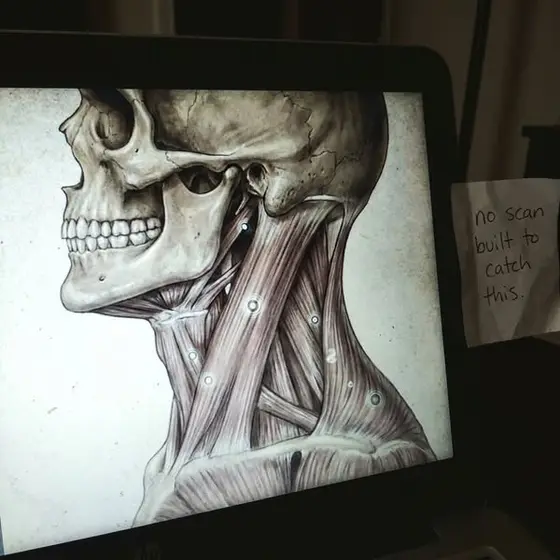
I have been a neurologist for 22 years. In that time I have personally examined more than 8,000 patients for vertigo and balance disorders, and reviewed the workups that came with them — the ear tests, the balance tests, the brain scans. ⠀ I have sat across from them, most between 50 and 70, and pointed at a stack of results that all came back normal and said some version of the same sentence I was taught to say. ⠀ Everything checks out. We'll manage the symptoms. ⠀ I want to tell you about the patient who made me stop trusting that sentence. ⠀ I'll call him Eugene, because his real name doesn't matter and I owe him that much. He was 66. Retired, active, walked his dog every morning. ⠀ He'd been dizzy on and off for years — not the violent, spinning kind, just a persistent unsteadiness, a sense that the ground wasn't quite reliable. He came in on time, every time, and did everything asked of him. ⠀ Every test he ever took came back clean. His inner ear checked out. His balance tests were unremarkable. His brain scan was clear. By every standard my training told me to apply, Eugene was fine. I told him he was fine. I remember the note: "reassuring workup, symptomatic management." ⠀ Four months later, he missed a step coming down from his porch — a wave of dizziness caught him mid-stride — and he went down hard. A fractured hip. Surgery. Months of rehab. At 66, the kind of fall that changes the shape of the rest of a life. ⠀ I pulled Eugene's file afterward. I read it the way you read the flight recorder after a plane goes down. Ear: normal. Balance battery: normal. Imaging: clear. All within the ranges I'd been trained to accept. ⠀ And then it hit me — the thing I had never once checked, never once written a note about, in years of seeing him. ⠀ His neck. ⠀ I want to spend some time on why that is the point of this entire letter. ⠀ Because the story of how the neck got quietly written out of dizziness care — and what the research actually says we should be doing about it — is the most important thing I've learned in two decades. And almost none of my patients have ever heard it. ⠀ Let me start with what actually keeps you balanced, because most people believe it's the inner ear alone, and it isn't. ⠀ Your balance runs on three inputs your brain compares every second — sometimes called the balance triad. Your eyes, for what you see. Your inner ears, for motion and position. And the position sensors packed into the muscles of your neck, reporting where your head sits on your shoulders. ⠀ When the three agree, you feel steady. When one sends a signal that contradicts the others, your brain reads the mismatch as motion — the unsteadiness, the swaying, the sense that the floor isn't solid. ⠀ Now think about what happens when two of those three are working perfectly and the third is quietly wrong. Your ears are fine. Your eyes are fine. But the sensors in a tense, guarded neck are sending faulty information. ⠀ Your brain gets two good reports and one bad one — and it's the conflict itself that makes you dizzy. This is what was happening to Eugene for years before he fell. ⠀ This is why testing only the ear and the brain can miss the problem entirely. A person can have a flawless inner ear, a clear scan, and a neck that's driving their dizziness the whole time. The tests come back clean because the tests were never built to look at the neck. ⠀ There's a name for dizziness driven by the neck. Cervicogenic dizziness. It is in the literature. It is well documented. It is just not what most workups are built to find in a busy clinic. ⠀ I want to explain why it gets missed, because I owe you that honesty. ⠀ When I trained, we spent weeks on the inner ear. We learned every vestibular test, every maneuver, the anatomy of the labyrinth in detail. We spent, I'd estimate, an afternoon on the cervical contribution to balance. ⠀ The message was clear. The ear is what we test, because the ear is what we have tools and procedures for. The neck is harder to assess, there's no clean scan for it, and — this was said out loud — there's not much standard protocol for it, so don't spend too long there. ⠀ We optimized for what we could test and treat, and we quietly stopped looking at what we couldn't. We have tests for the ear. We have maneuvers for the ear. We have medications aimed at the ear. So we work up the ear. We don't have a simple test for the neck's contribution. So it falls off the list. ⠀ That is exactly how a neck that's been feeding the problem for years goes unexamined — not because anyone failed, but because the one contributor most likely to be missed is the one with no test to catch it. ⠀ Now — I want to be completely honest about what I am and am not telling you. ⠀ I am not telling you the neck is behind every case of dizziness. It isn't. For many people the inner ear genuinely is the problem, and it should be tested and treated properly. ⠀ I am not telling you to skip an evaluation or stop anything your own doctor
Placements and targeting
More ads from Senior Health Guide
I'm a board-certified vascular surgeon, and I'm tired of watching my patients spend money on things that don't work. But that's not actually why I'm writing this. I'm writing this because of my mother. ⠀ My name is Dr. Sarah Chen. Board-certified vascular surgeon, Fellow of the American College of Surgeons, 16 years in practice. Over 4,000 patients with chronic venous insufficiency and swelling of the legs and feet. ⠀ My mother wore copper-infused compression stockings for nine years, right up until she passed. ⠀ She bought her first pair at a health expo when I was in medical school, from a b
I've read too many vascular ultrasounds to not share this with you. If you're dealing with swollen legs right now, I need to tell you something your doctor isn't seeing. I've read 3,800+ venous doppler studies in 16 years as a vascular surgeon. And when a woman walks into her primary care doctor's office complaining of swollen legs, I already know what her venous imaging will show 4-6 years before she ever develops venous ulcers. Advanced venous valve incompetence. The same inflammation causing her swelling is destroying her circulation right now. I'm Dr. Sarah Chen. I'm a vascular surgeon
I need to tell you where this ends, if nothing changes. Because nobody in a 15-minute office visit is going to say it to you plainly. So I will. ⠀ I've spent 16 years as a vascular surgeon. And I have watched too many women who are on their feet all day walk this exact road, one pair of shoes at a time, to keep quiet about it. ⠀ I'm done being quiet. ⠀ You know the feeling. You're a nurse, a teacher, a cafeteria manager, a cashier — someone whose whole day happens standing up. And by evening your feet and ankles are so swollen your shoes feel two sizes too small. You loosen the laces. You slip
Create a free account to unlock every creative, video and landing page.
Sign up freeSimilar pets ads
TL;DR: My puffy morning face made the captain divert a full plane to Omaha. Last spring I slept face down on a crew hotel pillow, then worked the early flight to Denver. My eyes were barely open. My cheeks looked pumped up with a bike pump. I iced them with frozen peas I took from the first class galley. Nothing. Halfway there I leaned over row 14 with the coffee pot. A woman looked up at me and screamed. "Her face is swelling! She's having a reaction! Does anyone have an EpiPen?" The man in 15C had one. Before I could say a word, he stabbed it into my thigh. Half the plane filmed it. T
🎾🐾 Votre animal s'ennuie et s'attaque aux meubles ? Trop occupé(e) pour jouer avec lui toute la journée ? Cette balle intelligente, électrique et rebondissante incite chiens et chats à courir, bondir et rester actifs — le tout automatiquement. Ses mouvements imprévisibles, déclenchés par le moindre déplacement, stimulent leur instinct de chasse naturel et leur permettent de se dépenser, même en votre absence. ✅ Activation automatique par le mouvement ✅ Trajectoires et rebonds imprévisibles pour stimuler l'animal ✅ Silicone résistant aux morsures : sûr et durable ✅ Rechargeable via port USB-C
Keep exploring
Find more ads like this
Search millions of real ads by keyword, niche and format, and save the winners to your swipe file.
