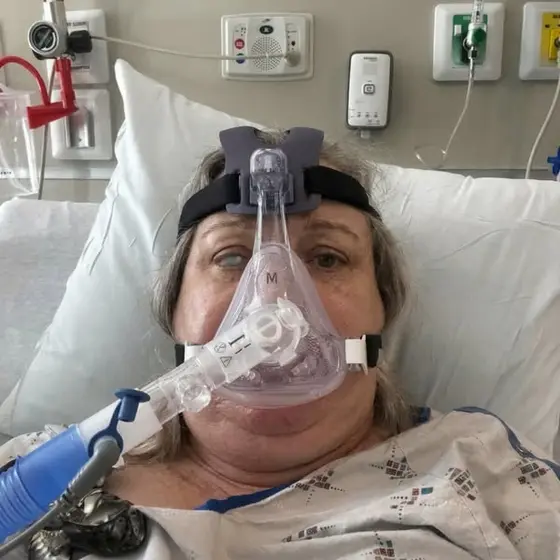
Sandra Keller, RN Facebook ad creative
metabolae.com
Ceylon Cinnamon 7200mg Equivalent with MCT Oil
Learn more

Sandra Keller, RN Facebook and Instagram ad

Sandra Keller, RN ran this image ad since Jun 28, 2026, 132 days so far.

First seen
Jun 28, 2026
Running for
132 days
Format
Image
Call to action
Learn more
Niche
Home and garden
Countries
Not disclosed
Page likes
41,062

Ad copy

This just might save your life. I can't stand these doctors who see the warning signs of pre-diabetes and do nothing but hand you a prescription slip like your body isn't already screaming. I'm Sandra. I've been an ICU nurse for 38 years. I've watched what comes after pre-diabetes. I've watched the complications arrive one by one. I've watched people lose their lives to this. But let me tell you about a moment that changed everything I thought I understood. A patient came to my office six months ago. He had been trying everything. He cut carbs. He walked every morning. He'd lost fifteen pounds. He was doing everything right. And yet. Waking up five times a night to urinate. The constant, relentless urge even after he'd just gone. His feet tingling. His energy completely gone by mid-afternoon. And something he was too embarrassed to mention at first: his bedroom had gone quiet. His wife thought he didn't want her anymore. He thought something was broken inside him. His doctor ran labs. "Your fasting glucose is 118," she said. "Your A1C is 5.9. You're doing great. Keep doing what you're doing." He left her office confused. Because none of his symptoms had improved. Everything he was doing was supposed to fix this. Everything he was trying was supposed to make him feel better. Yet he was more exhausted, more frustrated, and more afraid than ever. He looked at me and asked: "So what am I doing wrong?" And I realized something that night that I should have understood years earlier. He wasn't doing anything wrong. He was trying to solve the wrong problem. Here is what your doctor is not seeing. Your A1C measures one thing: the percentage of your red blood cells coated in glucose. It's a rolling 90-day average of how much sugar is floating in your blood. That is all it measures. It does not measure what that sugar is doing while it circulates. It does not see the constant urging in your bladder. It does not see the tingling traveling up your feet. It does not see the exhaustion that won't lift no matter how much you sleep. It does not see what's happening in your bedroom. It sees the level of the flood. Not where the flood is going. And here's the thing that stopped me. A 5.9 can look good on a lab report while your body is simultaneously screaming that something is wrong. Both things are completely true at the same time. Because the A1C is tracking the water level. Your body is paying the price of what's underneath. Your cells have stopped listening to insulin. This is called insulin resistance. It's not that you don't have enough insulin. It's that your cells have stopped responding to the insulin signal. Imagine your body sending a message that's supposed to tell your cells to grab glucose from the blood. The cells don't hear it. The message keeps getting ignored. So your pancreas sends more insulin. Still nothing. The glucose has nowhere to go. So it stays in your blood. It keeps circulating. Hour after hour. Day after day. Year after year. And here is what happens to your kidneys when glucose stays elevated in your blood. Your kidneys are designed to filter glucose out of your bloodstream and reabsorb it back into your body. That's normal. But when glucose levels stay high, your kidneys cannot reabsorb all of it. The glucose that stays in your urine pulls water with it through osmotic pressure. Your body compensates by pulling fluid from your tissues into your bloodstream to dilute the remaining glucose. This excess fluid has to be excreted. Especially at night, when you're lying down and gravity is no longer helping distribute fluid, your kidneys work overtime to remove this excess water. That is why you wake up five times a night. It is not random urination. It is your kidneys working overtime to handle glucose your cells refused to take. Now imagine this for years. The glucose keeps circulating. It keeps passing through every small blood vessel in your body, hour after hour, day after day, year after year. And it grinds. Think of it like fine sand moving through a water pipe. It doesn't crack the pipe in one event. It makes no sound. It just grinds the interior walls thinner, grain by grain, hour by hour. The kidney's filtration system wears down. The tiny nerves in your feet get damaged. The blood vessels in your eyes narrow. Your energy crashes because your cells are starving while your blood is flooded. That is not failure. That is the biological cost of glucose that cannot get into the cells where it belongs. Now, what your doctor prescribed you. If your doctor gave you medication, it probably works on the input side of this equation. It tells your liver to make less glucose. It reduces the flood. That is real and useful and your doctor is not wrong. But it does not touch the doors. The cellular doors that stopped responding to insulin are still not responding. The glucose that remains in your blood, even at levels that look good on paper, keeps circulating. Keeps grinding. Keeps urging your bladder five times a night. Keeps tingling in your feet. Keeps exhausting you. Keeps eroding your desire. Because the medication that reduced the flood did not reopen the drain. And here is what I realized at midnight, reading research I should have studied years earlier: The mechanism to reopen those doors exists. It has been published. Peer-reviewed. Cited in the ADA's own journals. Sitting in databases that a 15-minute appointment leaves no time to read. There is a specific compound that speaks directly to your cells. It bypasses the broken insulin signal entirely. It goes to the cell and wakes the doors back up. And in 38 years of ICU nursing, in hundreds of conversations with pre-diabetic patients watching their bodies deteriorate despite their effort, not once had I mentioned it. Not because I was hiding it. Because the gap between published research and clinical practice is not malice. It's time. It's money. It's a system that funds what it can patent and leaves everything else sitting in journals. You cannot patent a bark compound. So no pharmaceutical company funds the trials that would land it on a sales representative's desk. No sales rep walks it into my office. The studies stay in databases. The patients keep coming in with urges and tingling and exhaustion and shame. That is not your fault. You cut the carbs. You exercised. You lost weight. You kept every appointment. You were not failing the system. The system was only giving you half the answer and never telling you the other half existed. Let me tell you what opens the doors. Ceylon cinnamon, not cassia, not the spice in your cabinet, true Ceylon, Cinnamomum verum, grown in Sri Lanka, contains two active compounds called Type-A Polymers and MHCP. These compounds do something your medications do not. They go directly to the cell and trigger your insulin receptors to wake back up. Not by forcing more insulin into an already overwhelmed system. By going around the broken signal and speaking directly to the cellular machinery that was always supposed to listen. A study published in the Journal of the American College of Nutrition found that MHCP triggers the same internal chemical cascade that insulin is supposed to trigger, and was 20 times more effective at activating this pathway than any other natural compound tested. Twenty times. A second study published in Diabetes Care, the ADA's flagship journal, found an 18 to 29 percent reduction in fasting blood glucose in pre-diabetic and diabetic patients. This is not fringe research. This is peer-reviewed, ADA-adjacent science sitting in plain sight. When the doors open, when glucose actually begins clearing from the blood into the cells where it belongs, the immediate changes happen fast. The constant urging stops. Within the first few weeks, your kidneys stop working overtime. You sleep through the night. You wake up rested instead of drenched in sweat. Your energy stabilizes. Your cells are finally getting the fuel they've been starving for. The fatigue that follows you through the afternoon finally lifts. The flood was being managed. The drain is finally opening. The deeper changes take longer. As your glucose control improves over weeks and months, the sustained damage begins to heal. Your feet stop tingling as the nerves begin recovering. Your body's stress response normalizes. Your bedroom comes back to life as your hormonal system restabilizes and your energy returns. But these are the changes that happen as your cells remember how to work again. They take time. Now. You have probably tried cinnamon before. You sprinkled it on your oatmeal. You found a well-reviewed bottle on Amazon. You took it faithfully for three months and watched nothing change. I need you to understand exactly why. First: You were almost certainly using the wrong plant. The cinnamon in your spice cabinet is cassia. It looks the same. It smells similar. It is a completely different species. At the doses required to actually move your biology, cassia silently burdens your liver. The European Food Safety Authority documented that as little as a quarter teaspoon per day pushes daily coumarin intake past safe limits, and coumarin damages liver tissue at therapeutic doses. You weren't taking the wrong amount. You were taking the wrong plant. True Ceylon cinnamon contains 250 times less coumarin. It is the only species appearing in clinical research showing real metabolic results. The only one safe for the daily, sustained use that actually produces change. Second: Even real Ceylon in a dry powder capsule will likely do nothing. The active compounds in Ceylon, the ones that reopen your insulin receptors, are fat-soluble. Your cell walls are a double layer of fat molecules. Fat-soluble compounds need fat to pass through them. A dry powder capsule has no fat. So the compounds reach your gut, look for a fat carrier to cross the cell wall, find none, and pass straight through without ever reaching the cells that need them. The Journal of Food Science and Molecular Nutrition and Food Research both document this clearly. Without fat carrying them in, you were never absorbing them. Your cinnamon did not fail because cinnamon does not work. It failed because it was never delivered. That patient I was talking about, the one who was trying everything and still waking up five times a night? He didn't come back with a bottle. He came back with a bag. Ceylon cinnamon. Concentrated extract. 7,200mg equivalent in MCT oil. Called Metabolae. I picked it up the way I pick up anything a patient brings me, skeptically. Read the label. Set it down. Told him I was glad he was trying things and that we would monitor how he felt. That night I couldn't stop thinking about his question. "So what am I doing wrong?" He wasn't doing anything wrong. At 11:30 PM I started reading. Here is what I found. I went home and ordered a bag for myself. Week 1, my energy leveled out. I have had a fasting glucose stuck at 112 for two years. What I noticed first was not the meter. It was that I stopped hitting the wall at 2 PM. No coffee to stay functional. Just steady, clear energy from morning through evening. And for the first time in two years, I slept through the night. Week 2, my fasting glucose dropped from 112 to 98. I tested three times. Week 3, the 3 AM trips to the bathroom stopped. I was sleeping deeply. No more waking up drenched in sweat. No more constant urge. Just normal sleep the way my body remembered it. Week 8, my fasting glucose was consistently between 92 and 101. I hadn't seen numbers below 100 in two years. Week 10, my colleague ran my labs. My creatinine, which had been creeping upward signaling early kidney stress, came back at 1.0. It was 1.3 six months earlier. She looked at it. Looked at me. "What did you change?" I handed her the same research I'd been reading at midnight for three weeks. She read for ten minutes. Closed the folder. "Your kidney function improved." I nodded. "Keep doing whatever you're doing." That patient I sent home three months earlier, the one with the bag, came back for his follow-up. His fasting glucose had dropped 34 points. He was sleeping through the night for the first time in five years. His wife had her husband back. I sat across from him and told him the truth again. This time it was different news. "Your body is finally responding." He smiled. "The drain opened." I have recommended Metabolae to patients now. Every single one has come back and reported the same pattern. Better sleep within the first week. Steady energy through the day. The constant urges stopping. The bathroom trips gone. One patient, a 48-year-old man with pre-diabetes, constant urination, and no energy for anything, came back at his 90-day follow-up with fasting glucose down 34 points. He told me he was sleeping through the night for the first time in five years. That his wife had her husband back. That he finally understood why everything had been so hard. Another patient came back at 90 days and told me the tingling in her feet was gone. Her energy had returned. Her body finally remembered how to respond. But here is what I need you to understand about why most Ceylon products fail. It is not because the mechanism is wrong. The mechanism is published, replicated, and real. It is because most products get three things wrong. They use the wrong species. Cassia mislabeled as Ceylon is the industry standard, not the exception. Without DNA verification you have no way of knowing what you are actually taking. They are catastrophically underdosed. Clinical trials use concentrated extract equivalent to 6,000 to 7,200mg daily. Most capsules contain 500 to 1,500mg of raw powder. That is not a small gap. That is the difference between a therapeutic dose and a decorative amount. They use the wrong delivery format. Fat-soluble compounds in a dry capsule do not absorb. Full stop. The research on this is not ambiguous. The carrier matters as much as the compound. The difference between the generic I would have dismissed six months ago and Metabolae is the difference between none of this working and a patient's life coming back. The difference between pre-diabetes spiraling into complications and your body rebalancing itself. The difference between constant urges, tingling, exhaustion, and silence in the bedroom, and getting all of it back. Same mechanism. Completely different execution. That patient who set the bag on my desk? He was taking Metabolae. True Ceylon cinnamon. Cinnamomum verum, sourced from Sri Lanka. DNA-verified at the species level, not a label claim, an actual Certificate of Analysis. Dosed at 7,200mg equivalent per softgel. A 12:1 concentrated extract. The dosing range that corresponds directly to the published clinical trials. Suspended in MCT oil from coconuts. Not as a filler. As the delivery system, the fat bridge that carries the active compounds through your cell wall and into the cells where your insulin receptors have been waiting for years to be told to respond again. Third-party tested. GMP-certified. Every batch verified for purity, potency, and coumarin levels. If you are sitting with pre-diabetes warning signs, if the urges are constant, if the tingling is there, if the bedroom has gone quiet, if your doctor is doing nothing but waiting to see what happens, try Metabolae risk-free. Ninety-day money-back guarantee. No questions asked. If your fasting glucose does not come down, if your sleep does not improve, if your energy does not stabilize, if your constant urges do not lessen, if you see no difference in 90 days, you pay nothing. Most patients who see real movement in their markers and their life are the ones who committed to at least three months. That is how long it takes to give your body a real chance to rebalance. That is how long it takes to move your baseline. That is how long it takes to break the cycle and restore what pre-diabetes took from you. The 90-day guarantee means those three months cost you nothing if the numbers do not move. Here is what happens if they do. Your fasting glucose starts dropping between weeks 2 and 4. Your sleep improves within the first week. Most people stop waking multiple times within 5 to 7 days. Your constant urge to urinate lessens or vanishes. Your energy levels out through the day. And at your next lab draw, your doctor pauses. Looks at the numbers. Looks at you. Asks what you changed. You tell her. She pulls something up on her computer. Is quiet for a moment. Then she uses a word you have not heard in years of appointments. "Improving." Not managed. Improving. One softgel daily with breakfast. That is the whole protocol. They sell out. It is a small company sourcing verified Ceylon from a certified supply chain in Sri Lanka and doing it properly. If you see out of stock, sign up for the notification. If it is available, order now. There is a promotion running currently. Three bags at a significant discount, which is the commitment window where your body actually rebalances. If you are dealing with: Waking five times a night to urinate no matter what you cut back on. Constant urges even after you just went. Tingling or burning in your feet. Fasting glucose that will not come below 130. Pre-diabetes that your doctor is managing instead of healing. No energy. No sleep. No drive. The fear of what comes next if this spirals. Give it 90 days. Track your fasting glucose every morning. Note your sleep, your energy, your sensation, your intimacy. Go back for your next labs. If the numbers do not move, you get your money back. But if they do, if your glucose drops, if your sleep deepens, if your energy returns, if your bedroom comes back to life, if your doctor pauses over your labs and says the word you have been waiting to hear, you will understand why I now have a standing conversation with every pre-diabetic patient who walks into my office. Your cells are starving. Your blood is flooded. It knows how to rebalance itself. You know now that it can be done. Get Metabolae while it is still available. ~ Sandra, ICU Nurse, 38 years

Placements and targeting

FacebookInstagramAudience NetworkMessengerThreads

More ads from Sandra Keller, RN

Full Sandra Keller, RN profile
Sandra Keller, RN
Sandra Keller, RN
+1
Inactive131 days
metabolae.com
Ceylon Cinnamon 7200mg Equivalent with MCT Oil
Learn more

A veterinarian in Kentucky keeps a racehorse's arteries clean for about twelve dollars a month. Thirty days. The horse runs faster. Recovers quicker. Holds its pressure steady. That same metabolic principle, adapted for human biology, exists right now. Your doctor charges you four hundred dollars a month to manage the pressure around the problem without ever touching what's creating it. A horse gets the fix. You get a subscription. The compound is the same. The business model is not. I'm Sandra Keller. I've been an ICU nurse for 38 years. I've watched what uncontrolled blood pressure does to people over decades. I've seen the trajectory. And at 2 AM one night, sitting at my kitchen table with my own monitor and a reading that frightened me, I finally asked a question nobody in medicine had ever asked me. I'm 58 years old. Hypertension. For years I did everything right: medication, low sodium, walking every morning. And my numbers wouldn't move. 158 over 96. On the medication. Month after month. I'd wake up at 3 AM with my heart pounding, check my reading out of habit—still 152—and lie there until morning. I was doing everything right and still losing. My husband found me at the kitchen table one night at 11 PM, staring at the monitor. 161 over 98. After grilled chicken and steamed vegetables. "Just ask them to raise the dose," he said. "That's not fixing anything," I whispered. "I've watched where that road goes." But I was running out of options. So I called an old colleague whose brother runs a thoroughbred operation. I asked a simple question. What does a vet actually do about a horse's blood pressure? His answer reframed everything. Ask any vet what happens if you ignore the thing slowing a racehorse down. They'll tell you straight. The horse slows, blows out, or drops on the track. They don't monitor it. They treat it. Because a racehorse is an investment. If it can't run, everyone loses money. There's no incentive to manage a problem forever. Only to fix it. So they scan. They find what's making the blood harder to move. And they change the chemistry at the arterial wall so the body stops having to push so hard. Thirty days later, the blood work tells the story. The horse doesn't care about theory. It either runs better or it doesn't. If it doesn't, the vet loses clients. Then he said the line I haven't been able to forget. "Nobody ever asks the vet question about people. Did we remove the thing slowing this body down—or did we just force it to push harder?" Now look at you. Same problem. Same physics. Instead of a 30-day correction, you got a pill that squeezes your vessels open around the problem and a promise to keep an eye on it. When the pressure creeps back, they raise the dose. When the numbers look scary, they add another drug. Nobody asked the vet question. I've been a nurse for 38 years. I don't believe in magic pills. I trust mechanisms. So I kept researching. And what I found explained why my medication had never been enough. Most people believe high blood pressure is simply about how hard the heart pumps or how tight the vessels are. I believed that for 38 years. The real danger starts much earlier—inside microscopic glucose doors called GLUT4 transporters. Their job is simple. Pull glucose out of the bloodstream and into the cells for energy. In a healthy body, insulin signals these doors to open. Sugar leaves the blood. The vessels stay relaxed. Pressure stays normal. But in insulin resistance—and most people with stubborn blood pressure have some degree of it—those doors stop responding. Glucose stays trapped in the bloodstream for hours longer than it should. The cells starve. The blood stays flooded with circulating sugar. And here's what no one explained to me in 38 years: sugar-heavy blood is physically thicker. Denser. Harder to move. So the vessels push harder just to maintain flow. The heart compensates by raising pressure. The arteries stiffen from glucose grinding against their walls. The pressure climbs. This is not a separate problem from your blood sugar. It is the same mechanism. And it's exactly what the vet meant. Your medication relaxes the vessel walls or reduces how hard the heart pumps. It manages the gauge. It does not reduce the metabolic load making the blood thick in the first place. It forces the body to push harder around the problem instead of removing it. The horse gets the cause treated. You get the gauge managed. So I went looking for the human version of what that vet does. It isn't exotic. It isn't new. And it can't be patented. True Ceylon cinnamon. Cinnamomum verum, from Sri Lanka. Not the Cassia variety filling most shelves. A UCLA study tracked over 66,000 glucose readings on continuous monitors. Ceylon cinnamon stabilized blood sugar across the entire 24-hour cycle. A second study mapped the mechanism—the active compounds, Type-A polymers and MHCP, activate the GLUT4 doors directly, bypassing the broken insulin signal. And a 2020 meta-analysis confirmed therapeutic doses significantly lowered both systolic and diastolic blood pressure over eight weeks. When the doors open, the blood thins. The vessels stop being ground down. The heart stops fighting. The pressure drops—not because the gauge was forced, but because the load was removed. Same logic the vet uses on the horse. Treat the wall, not just the number. But there's a catch—the one that's defeated cinnamon for everyone who's tried it. Most of what's sold as cinnamon isn't real Ceylon. It's Cassia, with up to 250 times more coumarin, which damages your liver. And even real Ceylon in a dry capsule does almost nothing—the active compounds are fat-soluble. Without fat to carry them across the cell wall, they pass straight through, unused. The wall is made of fat. A dry capsule has none. I searched for months. Then I found Metabolae. True Ceylon extract from Sri Lanka. DNA-verified. Concentrated 12:1, so one softgel equals 7,200mg of whole cinnamon—the dose in the research. Suspended in MCT oil, so the compounds actually reach the doors. Third-party tested. Coumarin-free. GMP-certified. One softgel with coffee. No taste. No barn smell. About fifty cents a day. Not four hundred. Not a forever prescription. Just the one thing nobody offered me when they told me my pressure was under control. I ordered two bottles that night. Didn't tell my husband. Didn't tell my doctor. Just wanted to see first. First week, less afternoon heaviness. Second week, my morning reading came in at 144 over 88—I'd been above 150 for two years. Third week, 138 over 84. I stopped dreading the cuff. Week four, my husband reached across the table and held my hand. "You seem lighter," he said. "You're not bracing every time you put that cuff on. You're just here." He was right. I wasn't performing wellness anymore. I was just living. Three months later I walked into my checkup with my home log. My doctor took my pressure herself. Twice. "118 over 74. Consistently normal. Same medication as January. What did you change?" I said, "You're not going to believe me." She said, "Try me." I told her about the vet. The horse. The GLUT4 doors. The thick blood. Metabolae. She didn't laugh. She wrote it down. "Keep doing whatever you're doing." That was seven months ago. My readings run normal. I sleep through the night. The headaches are gone. I've recommended Metabolae to six patients now. All six came back the same. Readings dropping within weeks. One came off one of her three medications. Another's systolic dropped from 168 to 129 in three months. That's not coincidence. That's a pattern. A Kentucky vet treats the cause for twelve dollars and doesn't argue about it. You've been paying four hundred a month to manage the gauge. I found the difference at 2 AM because I was desperate. I'm not keeping it to myself. You can keep paying four hundred a month to manage the pressure around the problem. Or you can spend about fifty cents a day on something that respects the wall, not just the gauge. They offer a 90-day money-back guarantee. If nothing changes, it costs you nothing. P.S. A few things I wish I'd known: 1. One softgel daily with breakfast. 7,200mg equivalent in MCT oil. Don't substitute generic cinnamon capsules—species, dose, and absorption are not comparable. 2. Timeline: afternoon heaviness eases within two weeks. Readings start moving between weeks two and four. Full results take eight to twelve weeks. 3. They sell out. If you see "Out of Stock," sign up for the notification. If it's in stock, order now. 4. There's a promotion running. I stocked up on three bottles last time. If you're dealing with blood pressure that won't come down, readings that stay high despite medication, a doctor who keeps raising the dose instead of fixing the cause—this might be the thing. Same logic that vet uses on a half-million-dollar horse: treat the wall, not just the gauge. That's all this is. One person who got tired of being managed, telling another. 30 days. If nothing, it costs you nothing. ~ Sandra Keller, RN, ICU, 38 years P.P.S. That vet question never left me: did we remove the thing slowing this body down, or did we just force it to push harder? Your medication forces the vessels open around thick, sugar-heavy blood. It manages the gauge. It does not thin the blood or open the GLUT4 doors. Most cinnamon supplements can't either—wrong species, wrong dose, no fat to carry it through the cell wall. If you're going to try Ceylon cinnamon, get the version that actually reaches the wall: true Ceylon, 7,200mg clinical dose, MCT oil suspension, third-party tested. That's Metabolae. Stop getting treated worse than a horse.

Sandra Keller, RN
Sandra Keller, RN
+1
Inactive131 days
metabolae.com
Ceylon Cinnamon 7200mg Equivalent with MCT Oil
Learn more

I watched a patient — admitted to our cardiac floor three days earlier with blood pressure of 196 over 118 — pour an entire bag of salted crackers into his lap during evening rounds. My first thought was: this man has a death wish. I grabbed the bag. He said, "Check it first." I'd been a cardiac floor nurse for 15 years. I knew what sodium did to blood pressure. I knew what his chart said. I knew what should happen next. I took his blood pressure. 124 over 76. I looked at the cuff. Looked at his chart. Looked at the cuff again. 196 over 118 three days ago. 124 over 76 now. On the same medications he'd been admitted on. With a bag of salted crackers in his lap. I went to the nurses' station and pulled his chart. No medication changes. No additional interventions. Same protocol that hadn't been working for two years prior to admission. I came back with a different cuff. Checked the calibration. Took it on his other arm. 123 over 74. I flagged his attending. Told her I thought the equipment was malfunctioning. She came in, checked him herself, and looked at me the same way I'd looked at the cuff. Same numbers. I sat down. "What are you taking that's not in your chart?" He reached into his bedside drawer and pulled out a soft-sided bag. His wife had brought it the morning after admission. His cardiologist had mentioned it at their last office visit — off the record, after the appointment had officially ended. Ceylon cinnamon. Concentrated extract. 7,200mg equivalent in MCT oil. Called Metabolae. I took it to the nurses' station. I wasn't impressed. I was skeptical. I'd watched patients bring in supplements for 15 years. Garlic pills. Fish oil. Magnesium. CoQ10. I had never once seen a blood pressure of 196 become 124 in three days. His cardiologist came in on rounds an hour later. He pulled up the medication chart. Checked the logged cuff readings. Then sat down on the edge of the bed. "Your readings this morning are the lowest we've recorded since you were in your forties." The patient nodded. The cardiologist picked up the bag I'd left on the bedside table. Read the label. Then said something I hadn't expected. "I need to explain something most of my patients don't hear until it's already too late." I stood in the doorway. "Your blood pressure isn't a heart problem. It's a blood problem. Pressure medications manage the force your heart uses to push blood through your vessels. But they don't change what your blood has actually become." He continued. "When your cells stop responding to insulin — and the majority of people with persistent high blood pressure have some degree of insulin resistance whether they know it or not — glucose doesn't move out of your bloodstream the way it's supposed to. So it stays. For hours. Day after day, year after year." "Blood carrying that excess glucose becomes physically thicker than healthy blood. Denser. Harder to move. Like water that's been turned to syrup." "Your heart doesn't know why the blood got thicker. It just knows it has to push harder to move it. So it does. And the number on the cuff climbs." "Most blood pressure medications make your vessels wider or make your heart beat with less force. But the blood is still thick. The underlying reason for the pressure never gets touched." He held up the bag. "These compounds have been studied for their ability to help glucose move out of the bloodstream and into cells where it belongs. When that happens, blood viscosity normalizes. Your heart doesn't have to push as hard. Pressure drops — not because we forced it down, but because the actual load decreased." He stood up. "I can't put this in your chart. But I'm not going to tell you to stop." I went home that night and didn't sleep. My own blood pressure had been sitting at 151 over 94 for eight months. On medication. "Controlled," my doctor said. I'd cut sodium to under 1,500mg a day. I walked every morning. I'd tried magnesium. Potassium supplements. Beet root powder. CoQ10. I'd seen three different doctors and gotten three different answers. 151 over 94. Same number. Every time. And here was a patient who came in at 196 and was eating salted crackers at 124 over 76. At 1:58 AM I started researching. Ceylon cinnamon. Cinnamomum verum. True cinnamon — not the Cassia variety filling most supplement shelves. Grown in Sri Lanka. Used medicinally for centuries and now being studied in clinical trials for metabolic disease and cardiovascular health. The first study I found was from Japan. Patients with metabolic syndrome given concentrated Ceylon cinnamon extract showed significant improvements in insulin sensitivity and fasting glucose after 12 weeks. The second was from India. Participants showed reduced oxidative stress markers and improved blood flow through vascular tissue. The third was from Finland. A 2020 meta-analysis confirmed that therapeutic doses of cinnamon significantly lowered both systolic and diastolic blood pressure over eight weeks. The mechanism matched exactly what the cardiologist had described to his patient while I stood in the doorway. When glucose stays trapped in the bloodstream — because insulin resistance has closed the cellular doors that are supposed to accept it — the blood becomes physically more viscous. The heart compensates with force. Vessels compensate by tightening. The number on your cuff is downstream of all of it. Blood pressure medications don't open those doors. They manage the consequences of doors staying shut. Ceylon cinnamon's active compounds — Type-A polymers and MHCP — have been shown to help reopen those cellular doors. Glucose moves where it's supposed to go. Blood thins. The heart doesn't have to push as hard. The pressure drops because the actual load dropped. I ordered Metabolae that morning. Week one. My energy steadied out. The 2 PM drop that had been wrecking the second half of my shifts — gone. Clear through the end of a 12-hour rotation for the first time in months. Week two. My home readings started moving. 151 over 94 became 144 over 88. I tested three times. Same numbers. Week four. Consistently reading 136 over 82. I slept through the night without the dull headache I'd been waking up with most mornings. Week six. 128 over 79. My fasting glucose — which I hadn't thought was a problem — had dropped from 118 to 94. Week ten. I went in for my follow-up panel. Blood pressure: 116 over 73. Fasting glucose: 91. My doctor stared at the numbers. Then looked at me. "Your blood pressure is the lowest it's been since I started seeing you." "Yes." "You're on the same medication you were on in the spring." "Yes." "What changed?" "Ceylon cinnamon. Concentrated extract, 7,200mg equivalent, suspended in MCT oil. There are studies. I brought them." I put a folder on her desk with four published papers. She read for six minutes. Closed the folder. "Your kidney function improved. Your creatinine dropped from 1.3 to 1.0." I nodded. "Keep doing whatever you're doing." The patient with the crackers — I saw him at his one-month follow-up. Stopped him in the hallway. "I confiscated your crackers." He smiled. "My cardiologist reduced one of my medications last week. Says my readings have been too consistent to stay on the full dose." His blood wasn't broken. It just needed to thin. I've since recommended Metabolae to eight patients whose blood pressure stayed stuck despite medication. All eight reported better sleep within the first week. Six showed measurable blood pressure reduction by week four. Three had doctors comment on their follow-up labs without being asked. One patient — a retired teacher, 67, on three blood pressure medications for six years — came back eight weeks later and told me she'd woken up without a headache for the first time she could remember. Her reading that morning had been 119 over 74. She said her daughter called that week and asked why she looked so different. Another patient's systolic dropped from 168 to 129 in ten weeks. His doctor called him before his scheduled appointment to ask what had changed. But here's what you need to understand. Most cinnamon supplements fail. I tried a generic capsule first. My blood pressure moved 3 points. Here's why most don't work: They're not real Ceylon. What's sold as cinnamon in most supplements is Cassia — a different species grown in China. Up to 250 times more coumarin, a compound linked to liver damage with daily use. The clinical studies were conducted on true Ceylon cinnamon — Cinnamomum verum — not Cassia. They're underdosed. Clinical studies used concentrated Ceylon extract equivalent to 6,000–7,200mg daily. Most capsules contain 500mg of powder. A fraction of what actually opens the doors. They use the wrong delivery format. Cinnamon's active compounds are fat-soluble. They need fat to absorb properly. Dry powder capsules pass through without reaching the cellular target. The right carrier is MCT oil. They're not tested. Most supplements have no third-party verification. You don't know if you're getting real Ceylon or mislabeled Cassia. Metabolae is true Ceylon cinnamon. Cinnamomum verum, sourced from Sri Lanka. DNA-verified. Dosed at 7,200mg equivalent per softgel — a 12:1 concentrated extract. Suspended in MCT oil. Third-party tested every batch for purity, potency, and coumarin levels. The difference between the generic I tried first and Metabolae was the difference between my blood pressure dropping 3 points and dropping 35 points. Same ingredient category. Completely different results. If you're done watching your readings stay stuck while your doctor says "at least it's controlled" — If you're cutting sodium and still reading 150 over 90 — If you're on medication and wondering why the number barely moved — Try Metabolae risk-free. 90-day money-back guarantee. No questions asked. Most people notice better sleep within the first week. Blood pressure movement within two to four weeks. Full results — the sustained readings, the follow-up labs your doctor looks at twice — take eight to twelve weeks. Small operation. Harvest cycles are limited. If stock is available when you click, order now. If you're dealing with: Blood pressure that won't come down despite medication. Waking up with a dull headache most mornings. Fatigue that hits before your day is half over. Readings that bounce no matter what you eat. Fear that the next number is the one that changes everything. Give it 90 days. See what happens. If it doesn't work, you get your money back. But if it works like it did for me, for the patient who came in at 196 and was eating crackers at 124, for the eight patients I've recommended it to — You'll understand why cardiologists mention it after the appointment ends. Your blood isn't broken. It just needs to thin. Click below and get Metabolae while it's in stock. ~ Sandra K., RN, Cardiac Floor, 15 years P.S.Metabolae is currently running a buy two get one free promotion — a full three-month supply, which is the exact window the research points to for meaningful blood pressure changes. Every order is backed by a 90-day money-back guarantee. If your readings don't move, if your sleep doesn't improve, if you see no difference at all — you get every dollar back. No forms. No explanations required. Less than 1% of customers ever ask. That number says everything. P.P.S. The patient I flagged, whose crackers I confiscated, whose wristband I assumed was fraudulent — his cardiologist told him at his last appointment that his arterial health markers were the best recorded in a decade. Not because his medication got stronger. Because the blood it was trying to move finally thinned. That's what happens when you stop managing the symptom and start addressing what's actually in the bloodstream. Your blood isn't broken. It just needs to thin.

Sandra Keller, RN
Sandra Keller, RN
+1
Inactive131 days
metabolae.com
Ceylon Cinnamon 7200mg Equivalent with MCT Oil
Learn more

Here's what nobody tells diabetics about how to take Ceylon cinnamon correctly. And I say this as someone who spent a decade in metabolic research. Blood sugar is my thing. I'm Sandra Keller, and after 38 years as an ICU nurse, I've watched what uncontrolled glucose does to people over decades. I've seen the trajectory. Ceylon cinnamon is the most studied natural compound for blood sugar control on the planet. It doesn't nudge your numbers down. It addresses why your cells stopped responding to insulin in the first place. The glucose buildup. The constant spikes. The crashes that follow. And here's the kicker. It supports circulation and nerve function too. So if you're dealing with numbness, fatigue, or energy crashes on top of high blood sugar, you're hitting multiple problems at once. But here's what the supplement industry doesn't want you to know. Most Ceylon cinnamon products are designed to look like they work. Not to work. They sell you the wrong plant, in the wrong form, at the wrong dose. When your numbers don't move, they let you conclude that cinnamon doesn't work. It's one of the most profitable lies in the supplement space. And diabetics pay the price. Here's what they get wrong. A lot of people think any cinnamon supplement will do. That's true if you don't mind fake Cassia bark labeled as Ceylon. I learned this the hard way. My fasting glucose had been running in the 180s for months. My A1C sat at 7.2 and wouldn't budge. I was doing everything right. Low carb. Exercise. Metformin twice daily. Still losing. I'd wake up at 3 AM to check my glucose out of habit. Still 165. Lie there until morning unable to fall back asleep. Brain fog by 2 PM every single day. Exhausted before my shift ended. My doctor kept saying better control. Nothing was working. Then I found Ceylon cinnamon. Ordered softgels from Amazon. $14.99. Took them for two weeks. My glucose dropped maybe 10 points. Better than nothing, but not life-changing. So I went back to the research. I found two problems the supplement industry has never bothered to fix. The first is species fraud. 90% of cinnamon supplements are Cassia from China, labeled as Ceylon. This is not an accident. Cassia costs a fraction of what true Ceylon costs to source. The industry knows. They label it anyway. Cassia contains up to 250 times more coumarin, a compound that damages your liver with daily use. And it barely moves blood sugar at any dose. Real Ceylon from Sri Lanka has virtually zero coumarin and 12 times more of the active compounds that help. Without DNA verification on the label, you have no way of knowing which one you're swallowing. The second problem is what most people never figure out. The active compound in Ceylon cinnamon is cinnamaldehyde. It works at the cellular level to restore how your cells respond to insulin. It unlocks the door that glucose has been knocking on for years. But cinnamaldehyde is fat-soluble. Without a lipid carrier, it doesn't absorb. It passes right through your body unused. The Journal of Food Science and Molecular Nutrition and Food Research both document this clearly. Fat-soluble compounds in a dry capsule cannot cross your cell walls. They reach your gut, find no fat carrier, and pass straight through. The supplement industry knows this too. A softgel suspended in oil costs more to manufacture than a dry powder capsule. So they keep selling you the cheap version and letting you believe cinnamon doesn't work. It works. They never gave it a way to reach you. Wrong species, wrong form, wrong results. And they've been profiting from that gap for years. When you use real Sri Lankan Ceylon cinnamon concentrated and suspended in MCT oil, your body handles it differently. The oil carries cinnamaldehyde directly into your bloodstream, where it restores insulin sensitivity and helps your cells use glucose the way they're supposed to. After 38 years of watching patients suffer from bad advice, I'm particular about what I put in my body. So I only use Metabolae. True Ceylon from Sri Lanka. DNA-verified. Concentrated 12:1, so one softgel equals 7,200mg of whole cinnamon. Suspended in MCT oil for absorption. Third-party tested, coumarin-free, non-GMO, and gluten-free. Comes in a bag, not a bottle, which keeps the softgels fresher and the formula more stable. The difference was immediate. Day three: I slept through the night. First time in 14 months. Week one: The brain fog started lifting. I could focus during rounds without checking my notes three times. Week two: My fasting glucose dropped from 187 to 142. Week four: 118. I checked it three times because I didn't believe it. Three months later, my A1C dropped from 7.2 to 5.8. My doctor told me to keep doing whatever I was doing. I take it every single day now. Two years and counting. No liver damage. No gut problems. No side effects. Just steady energy, clear focus, and numbers that finally make sense. I've recommended Metabolae to six patients. All six came back with the same story. Better sleep within the first week. Brain fog lifting. Fasting glucose dropping. Numbers moving in the right direction. If you're dealing with: Fasting glucose that won't come down. Brain fog by mid-afternoon. Waking up multiple times at night. Energy crashes that hit like a wall. An A1C that barely budges despite your efforts. Try this. One softgel in the morning with breakfast. That's it. Don't waste money on cheap supplements. Most aren't even real Ceylon. They're Cassia from China, loaded with liver toxin, and they barely work. Even the real Ceylon ones come as dry powder that passes right through unused. Wrong species, wrong form, wrong results. If you're going to try Ceylon cinnamon, get the version that absorbs. True Ceylon from Sri Lanka, 7,200mg clinical dose, MCT oil suspension, third-party tested. That's Metabolae. They offer a 90-day money-back guarantee because they believe everyone deserves access to liver-safe cinnamon that works. If your numbers don't improve, you pay nothing. That's the only one worth taking. Let me know if you try it. I'd love to hear your experience. ~ Sandra Keller, RN, ICU, 38 years

Sandra Keller, RN
Sandra Keller, RN
+1
Inactive131 days
metabolae.com
Ceylon Cinnamon 7200mg Equivalent with MCT Oil
Learn more

In 1900's, the average American man's blood pressure at age 60 was 121 over 78. Today it's 158 over 94. That's not aging. That's not genetics. That's not lifestyle. Something was taken from us. I spent 14 months figuring out what. I found a compound that used to be in nearly everything we ate. I found the decade it was quietly replaced with a cheaper imitation. I found the first blood pressure drug that hit pharmacies right behind it. Your grandfather didn't need blood pressure medication. Not because he was tougher. Because he was still getting something on his plate that was stripped out of the supply before you were ever born. I'm Sandra Keller. I've been a cardiac ICU nurse for 38 years. I've held the hands of people whose hearts finally gave out after decades of "managed" blood pressure. I've watched the strokes, the heart failure, the transplant lists. I've seen exactly where rising pressure ends — and it's almost never where the patient thought they were headed. And I got the call at 6 a.m. on a Tuesday. My mother's voice. She didn't have to say it. I already knew. My father was 62. On blood pressure medication for 19 years. Never missed a dose. He died with a reading of 171 over 105. The pills didn't fail him. They were never designed to fix what was actually wrong. I'm 58 now. I've had high blood pressure since I was 42 — sixteen years of pills that lowered the number but never touched whatever was driving it. Same doctor. Same prescription. Same "well managed" written in my chart while my readings kept climbing. That morning, I stopped trusting the number on the cuff and went looking for what actually works. --- Here's what makes me different from most people writing something like this: I'm not just the nurse. I'm the patient. Sixteen years of hypertension. And somewhere in those years, the prediabetes crept in too — fasting glucose creeping into the 130s, then the 140s, an A1C that drifted to 6.4. Two separate diagnoses, two separate pills, from two doctors who never once told me they might be the same problem. For years I did everything right: medication, diet, exercise. And I was still crashing after every meal. Still watching my pressure sit in the 150s. Still feeling like a prisoner in my own body. My pressure ran 150s over 90s on two medications. My fasting glucose ran 130s to 140s. I'd wake up at 3 AM with my heart pounding, lie there feeling it slam against my ribs, and not fall back asleep until the sky went grey. I was doing everything right and still losing. Still becoming my father. My husband found me crying in the bathroom one night at 11 PM, staring at my blood pressure cuff. 154 over 96. My glucose meter beside it reading 192. After a dinner of grilled chicken and broccoli. "Just ask her to increase the dose," he said. "It won't fix it," I whispered. "I've watched where this road goes for 38 years." But I was running out of options. --- So I did what I've done my whole career when something doesn't add up. I started reading. Fourteen months of it. And what I found was a receipt. For most of American history, true cinnamon — real Ceylon cinnamon, Cinnamomum verum, carried from Sri Lanka — was the cinnamon in the food supply. Then mid-century, as everything industrialized for shelf life and cost, it was quietly swapped for a cheaper cousin from China: Cassia. It looked the same. It smelled close enough. It cost almost nothing. Nobody told the public there was a difference. There is. A profound one. By the early 1960s, real Ceylon had all but vanished from American shelves, replaced by the imitation. Right behind it, the first blood pressure medications arrived in pharmacies. They thinned out what was protecting people. Then they sold the treatment for the problem that followed. That's not a conspiracy. That's a timeline. --- I've been a nurse for 38 years. I don't believe in magic pills. I don't trust testimonials. I trust mechanisms and evidence. So I didn't stop at the history. I went looking for *why* it would matter. And what I found rewired how I understood my own blood pressure — and why no pill had ever fixed it. Most people believe high blood pressure is simply about how hard the heart pumps or how tight the vessels are. That's only part of the story. The real danger often begins somewhere a blood pressure pill never reaches. Every cell in your body has tiny doors on its surface — protein transporters called GLUT4. Their job is to open up, pull glucose out of the blood, and bring it inside the cell to be burned for energy. In a healthy body, insulin gives the signal, the doors open, sugar leaves the blood, and the vessels stay relaxed. Pressure stays normal. In insulin resistance — the thing underneath both prediabetes and so much "stubborn" high blood pressure — those doors stop responding. They're still there. They just stopped coming to the surface. Insulin gives the signal. Nothing happens. The pancreas sends more. Still nothing. The glucose has nowhere to go, so it stays in your blood and keeps circulating. Your cells are starving. Your blood is flooded. And here is what almost no one explains. Blood that's heavy with sugar is physically thicker. Denser. Harder to move. So your heart has to push harder — much harder — just to keep it flowing. The sugar grinds against your artery walls hour after hour, year after year, stiffening them, narrowing them, raising the pressure from the inside. According to the research, this isn't a separate problem from your "blood sugar issue." It's the same mechanism. That was the sentence that stopped me cold. For sixteen years, two doctors had treated my blood pressure and my blood sugar as two unrelated problems. They were never unrelated. They were the same closed doors, showing up in two different numbers. That's why so many people with prediabetes, insulin resistance, stubborn belly fat, fatigue, and even "normal-range" A1C numbers are already sitting on silent vascular strain — and can't understand why their pressure keeps climbing. --- I kept researching. And what I found confirmed why the old food supply mattered. Researchers tracked tens of thousands of glucose readings on continuous monitors and found true Ceylon cinnamon didn't just lower a single fasting number — it steadied blood sugar across the entire 24-hour cycle. Other research explained the mechanism. Compounds in Ceylon cinnamon appear to activate that same GLUT4 pathway directly — the doors your body normally opens during exercise — helping move glucose out of the blood and into the cells *without* relying on the broken insulin signal. Some studies even showed Ceylon extract increasing the number of those transporters working at the cell surface. The doors don't just crack open. They multiply. Less sugar trapped in the blood. Thinner blood. Arteries that aren't being ground down. Pressure that can finally come down at the source — not because the heart was forced to pump softer, but because the burden was lifted. Here is what stopped me cold at 2 AM in my kitchen with 38 years of nursing behind me. Your medication works on the symptom side. It relaxes the vessel walls or reduces how hard the heart pumps. It lowers the number on the cuff. That is real and useful and your doctor is not wrong to prescribe it. But it does not touch the doors. The GLUT4 transporters are still shut. The glucose still in your blood — even at a "managed" pressure — keeps circulating, keeps thickening, keeps grinding. Because the drug that lowered the pressure never opened the drain. There was a phrase a patient's brother-in-law used that I've thought about ever since. He said: "The pills squeeze the hose and wait for it to burst. They're a tourniquet. They don't rebuild the hose from the inside." That is exactly what the research describes. And the research on how to open those doors has been published, peer-reviewed, cited in the diabetes and nutrition literature — sitting in databases that a 15-minute appointment leaves no time to read. Not because doctors are hiding it. Because the pipeline that carries research into a treatment room runs on patent money. You cannot patent a plant. So nobody funds the trials that put it on a sales rep's desk. The studies stay buried. And the patients keep coming into my unit — "well managed" right up until the morning their heart gives out. That is not your fault. You took the pills. You tracked the number. You kept every appointment. The system was only giving you half the answer and never told you the other half existed. --- Now. You have probably tried cinnamon before. You sprinkled it on oatmeal. You bought a bottle and took it faithfully for three months and watched your numbers not move. I need you to understand exactly why it failed. It was the wrong plant. The cinnamon on your shelf and in most capsules is Cassia — the same cheap imitation that replaced Ceylon in the food supply. Different species. Different chemistry. At the doses needed to move blood sugar, it carries a compound called coumarin that damages your liver. True Ceylon contains up to 250 times less. It's the species that appears in the actual research. It was catastrophically underdosed. The studies used concentrated extract equivalent to thousands of milligrams a day. Most capsules hold 500 to 1,500mg of raw powder. That's the difference between a therapeutic dose and a decorative one. And it was the wrong delivery format. The active compounds in Ceylon are fat-soluble. Your cell walls are a double layer of fat. Fat-soluble compounds need fat to cross them. A dry powder capsule has no fat — so the compounds reach your gut, find no carrier, and pass straight through without ever reaching the cells that need them. Your cinnamon didn't fail because cinnamon doesn't work. It failed because it was never delivered. --- I searched for months. Called companies. Read every label. Asked questions nobody could answer. Then I found Metabolae. A small company doing it right. True Ceylon extract — Cinnamomum verum, sourced from a single estate in Sri Lanka's Central Province, the original home of true cinnamon where the tree has been cultivated for over two thousand years. DNA-verified at the species level. An actual Certificate of Analysis, not a label claim. Concentrated 12:1, so one softgel equals 7,200mg equivalent of whole cinnamon — the range that matches the published research. Suspended in MCT oil from coconuts. Not as filler — as the delivery system. The fat bridge that carries the compounds through your cell wall and into the cells where the GLUT4 doors have been waiting, years, to be told to surface. Third-party tested. Coumarin-free. GMP-certified. FDA-registered facility. Zero fillers. I ordered two bottles that night. Didn't tell my husband. Didn't tell my doctor. Just wanted to see for myself first. One softgel with breakfast every morning. First week, I didn't notice much. Maybe a little less fog. Second week, my husband made pot roast with mashed potatoes — the kind of meal that usually put me on the couch for two hours fighting to stay awake, my chest tight, my heart racing. I ate it. Waited for the crash. It didn't come. I checked my glucose an hour later: 118. I checked my pressure: 141 over 88. I looked at both numbers and didn't believe them. Third week, Sunday breakfast. Real pancakes with syrup, stuff I hadn't touched in years. Glucose after: 112. Pressure trending down again. I sat there staring at the monitor like it was broken. Week four, my husband reached across the table and held my hand. "I miss this. You're different. You're eating with me again. You're not anxious. You're not dreading every meal." He was right. I hadn't noticed until he said it. I was just living like a normal person again. --- Three months later I walked into my doctor's office for my quarterly checkup with a printout of my glucose log and my pressure readings. She stared at it for a long time. "Your fasting glucose is consistently in the 90s." "Yes." "Your A1C is 5.6. Down from 6.4. And your blood pressure is averaging 124 over 79." She looked up. "It was in the 150s for sixteen years. What did you change?" I said, "You're not going to believe me." She said, "Try me." I told her about the food supply. The swap. The timeline. The mechanism — how my pressure and my sugar were the same problem all along. Metabolae. She didn't laugh. She wrote it down. "Keep doing whatever you're doing." That was seven months ago. My fasting glucose runs between 90 and 100. My A1C is 5.6. My pressure holds at 124 over 79 — right where my grandfather's generation sat before the supply was thinned out. The lowest it's been since I was 42. I sleep through every single night. The afternoon crashes are gone. The fog is gone. The 3 AM pounding heart is gone. After dinner I watch TV with my husband. I don't fall asleep. I don't need to lie down. I just sit there — full, comfortable, alive. --- I've recommended Metabolae to six patients now. All six came back with the same story. Post-meal crashes gone within the first two weeks. Energy returning. Glucose dropping. Pressure trending down by week three or four. Doctors surprised at the turnaround. One patient cried when she told me she'd eaten birthday cake at her grandson's party — first time in four years — and her glucose an hour later was 124. Another patient had been told he was months from a third blood pressure medication. Three months in, his doctor took one *off* and asked what he'd added. His pressure had come down to 126 over 80. That's not coincidence. That's a pattern. --- In 1952 the average 60-year-old man sat at 121 over 78. Then the supply was thinned, the imitation took over, and the medications arrived right behind it. Medicine moved on. Nobody connected it. I found the receipt at 2 AM because I was desperate not to become my father. I'm not keeping it buried. If your numbers won't move — if you're watching yourself slowly become your father — you may not be failing at all. You may be missing the one thing that was quietly taken out before you were born. Metabolae puts the real thing back. True Ceylon. 7,200mg equivalent. MCT oil suspension. Third-party tested. Coumarin-free. The version that actually reaches your cells. I personally take it every single day now. Two years and counting. They offer a 90-day money-back guarantee. If your numbers don't move, it costs you nothing. --- **P.S.** A few things I wish I'd known before ordering: **1.** One softgel daily with breakfast. Each delivers 7,200mg equivalent of concentrated Ceylon extract in MCT oil. Don't substitute generic cinnamon capsules — the species, dose, and absorption are not comparable. That's the whole reason the bottle in your cabinet did nothing. **2.** Timeline: most people notice post-meal crashes easing within the first two weeks. Energy around week two. Glucose drops between weeks 2 and 4. Blood pressure trends down around week three or four. The full benefit — the A1C shift, the steady pressure, the freedom to eat normally — takes 8 to 12 weeks. **3.** They sell out regularly. Small company, single-estate source, and word is spreading. If you click and see "Out of Stock," sign up for the notification. If it's in stock, order now. **4.** There's a promotion running right now — three bottles at a significant discount, which is exactly the window the vascular markers need to actually move. --- If you're dealing with: Blood pressure that won't come down no matter what they put you on. Crashing after every meal. Fasting glucose that won't stabilize. An A1C your doctor calls "managed" or "prediabetic" while your pressure keeps climbing. Waking at 3 AM with your heart pounding. The quiet certainty that the pill is buying time, not fixing anything — and the fear that you're watching yourself become your father. You're not sick the way they told you. You may be starving for what was quietly taken out of the food before you were born. Metabolae puts it back. 90 days. If your pressure and your numbers don't move, you pay nothing. That's all this is. One patient telling another. ~ Sandra Keller, RN, Cardiac ICU, 38 years P.P.S.Here's what most supplement companies still don't understand, and what cost me years of "managed" decline: the bark alone does nothing. Dry Cassia powder in a capsule is the wrong species, the wrong dose, and the wrong format — no fat to carry it, so it passes straight through. If you're going to put the real thing back, get the version that actually works: true Ceylon source, 7,200mg clinical-range dose, MCT oil suspension, third-party tested, coumarin-free. That's Metabolae. That's the only one worth taking.

See all 634 ads

Create a free account to unlock every creative, video and landing page.

Sign up free

Similar home and garden ads

AIDesign Idea - AI House Design
+1
Inactive3 days
play.google.com
Ideias rápidas de design
Install now

Tem dificuldade com a decoração do interior? Descubra como o NestAI cria espaços em poucos minutos.

AIDesign Idea - AI House Design
+1
Inactive4 days
play.google.com
Ideias rápidas de design
Install now

Tem dificuldade com a decoração do interior? Descubra como o NestAI cria espaços em poucos minutos.

AIDesign Idea - AI House Design
+1
Inactive4 days
play.google.com
Ideias rápidas de design
Install now

Tem dificuldade com a decoração do interior? Descubra como o NestAI cria espaços em poucos minutos.

AIDesign Idea - AI House Design
+1
Inactive4 days
play.google.com
Ideias rápidas de design
Install now

Tem dificuldade com a decoração do interior? Descubra como o NestAI cria espaços em poucos minutos.

See all ads

Create a free account to unlock every creative, video and landing page.

Sign up free

Keep exploring

Free plan, no card needed

Find more ads like this

Search millions of real ads by keyword, niche and format, and save the winners to your swipe file.

Start free