I have diabetic neuropathy, and at 63, I found myself standing at a pharmacy checkout hiding a box of adult diapers under my arm. My hands were trembling, not from age, but from the $340 gabapentin prescription sitting next to them on the counter. I was paying hundreds of dollars a month to mute the burning in my feet while my bladder quietly failed. Here is what happened the exact month I stopped buying two separate products for two separate symptoms, and finally addressed the single fire causing both. I know what happens next. I am a podiatrist. 23 years watching this disease take peopl
Sandra Keller, RN Facebook and Instagram ad
Sandra Keller, RN is running this image ad since Nov 17, 2026, 11 days so far, targeting United Kingdom.
Ad copy
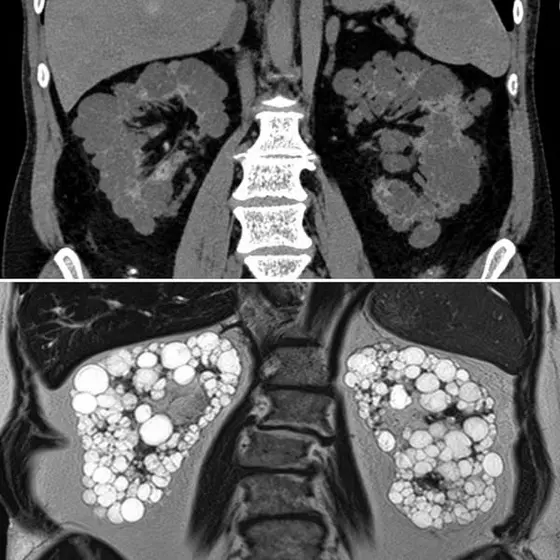
If you're a Type 2 diabetic woman over 50, your metformin, GLP-1, and SGLT2 inhibitors are finally working, but your kidney function is starting to decline — stop and read this one. Because my sister did exactly that for eight years, and it cost her, her kidneys. And by the end of this, you're going to be as furious as I am. There are three things happening right now. One - Your kidney numbers are not declining because you are not trying hard enough. They are declining for a reason that every medication you are taking was never designed to address. Two - Nobody told you this was coming. Not your prescribing doctor, not the clinic, not the pharmacist. They talked about your A1C. They talked about your blood pressure. Not one of them sat down and explained what years of elevated blood sugar actually does to the tiny blood vessels inside your kidneys. And not one of them told you that the standard protocol does nothing to stop it. Three - There is a billion-dollar industry that profits every single day you keep believing your kidney decline is just what Type 2 diabetes does. So let me tell you about my sister. Her name is Linda. 68 years old. Type 2 for eight years. The kind of patient every doctor loves to have. She cut every carb her dietitian told her to cut. She took her Metformin at the same time every morning without missing once. She added the GLP-1 when her doctor said to. She went to every single quarterly appointment for eight years and never cancelled. Her A1C came down. Her blood pressure came down. Her LDL came down. Her primary care doctor called her one of the most compliant patients he had ever managed. And every single quarter for six years, on that same lab printout, her kidney numbers moved in one direction. Creatinine climbing. eGFR dropping. She asked about it at every appointment. Every time she got a version of the same answer. Some decline in kidney function is expected with longstanding Type 2. We are monitoring it closely. Let us adjust the medication and recheck in three months. They adjusted. They rechecked. The numbers kept moving. I know what that pattern means. I know what the trajectory looks like when it does not change direction. I know what the conversation sounds like when a nephrologist finally has to use the word dialysis in a sentence. Because I work as a dialysis nurse for fourteen years. I have sat across from patients and their families in that conversation more times than I can count. I never once imagined sitting across from my own sister in it. She called me on a Thursday evening after her nephrology appointment. She was not crying. She sounded the way people sound when they have been tired for so long they have forgotten what rested felt like. "They said if the numbers keep going this way, we are looking at dialysis in the next few years." I did not say anything for a moment. "Sandra, I did everything they told me to do. Eight years. I never skipped an appointment. I never missed a pill. I eat chicken and vegetables five nights a week. My A1C is good. My blood pressure is good. My cholesterol is good. My kidneys are still going." A pause. "What was the point of doing everything right?" I hung up the phone and sat at my kitchen table for a long time. Because I had watched this exact pattern in hundreds of patients over fourteen years. The ones who showed up. Who took the pills. Who managed their numbers perfectly. And whose kidney function kept declining anyway, quarter after quarter, like a slow leak nobody could find the source of. I had always assumed it was just what the disease did. The way I had been trained to understand it. I was wrong. About all of it. I started reading the next morning. Not guidelines. I had read the guidelines. They did not have what I was looking for. I went into the research underneath them. What I found should have been in every conversation my sister ever had with a doctor. Here is what is actually happening inside your kidneys. Your kidneys are fed by thousands of tiny blood vessels. The smallest in your entire body. When blood sugar stays elevated over years, sugar molecules move through those vessels with every single heartbeat. And they grind. Against the vessel lining. Over and over. Quietly. For years. That grinding damages the walls. The vessels stiffen. They scar. They narrow. The kidneys filter less efficiently. The creatinine climbs. The eGFR drops. Here is the part that made me put the papers down and sit with my hands flat on the desk. Your Metformin tells your liver to make less sugar. Your GLP-1 slows how fast your stomach empties. Your SGLT2 inhibitor pushes sugar out through your urine. Every single medication in the standard Type 2 protocol manages how much sugar enters your bloodstream. Not one of them addresses what the sugar is doing to your vessel lining while it is already in there. So your A1C comes down. Your blood pressure comes down. Your cholesterol comes down. And the
Placements and targeting
More ads from Sandra Keller, RN
A veterinarian in Kentucky keeps a racehorse's arteries clean for about twelve dollars a month. Thirty days. The horse runs faster. Recovers quicker. Holds its pressure steady. That same metabolic principle, adapted for human biology, exists right now. Your doctor charges you four hundred dollars a month to manage the pressure around the problem without ever touching what's creating it. A horse gets the fix. You get a subscription. The compound is the same. The business model is not. I'm Sandra Keller. I've been an ICU nurse for 38 years. I've watched what uncontrolled blood pressure doe
I watched a patient — admitted to our cardiac floor three days earlier with blood pressure of 196 over 118 — pour an entire bag of salted crackers into his lap during evening rounds. My first thought was: this man has a death wish. I grabbed the bag. He said, "Check it first." I'd been a cardiac floor nurse for 15 years. I knew what sodium did to blood pressure. I knew what his chart said. I knew what should happen next. I took his blood pressure. 124 over 76. I looked at the cuff. Looked at his chart. Looked at the cuff again. 196 over 118 three days ago. 124 over 76 now. On the same
Here's what nobody tells diabetics about how to take Ceylon cinnamon correctly. And I say this as someone who spent a decade in metabolic research. Blood sugar is my thing. I'm Sandra Keller, and after 38 years as an ICU nurse, I've watched what uncontrolled glucose does to people over decades. I've seen the trajectory. Ceylon cinnamon is the most studied natural compound for blood sugar control on the planet. It doesn't nudge your numbers down. It addresses why your cells stopped responding to insulin in the first place. The glucose buildup. The constant spikes. The crashes that follow. An
Similar health and medical ads
TL;DR: Customers at returns started calling me the BEFORE lady after my face hit a billboard. My face got so puffy at work, a trucker gave me his breathalyzer. My manager moved me to returns and taped a sign to my register: "She is NOT drunk." My sleep doctor, Dr. Pratt, said my face meant I owed him 600 hours of sleep. His orders: 11 hours flat on my back in his sleep mask. I went to bed before my 6-year-old grandson. My sleep app scored me 100 for 103 nights. A customer asked me if I'd been stung by a hornet. Dr. Pratt's fix: 14 hours of sleep a day. Night 103 he took my "progress pic
Yellow Teeth? 🤯 Oxy Pro Whitening Gel is formulated with 6% Hydrogen Peroxide, the maximum concentration permitted for over-the-counter teeth whitening products in Australia, and the same whitening ingredient used by dental professionals. ✅ Works by oxidising stain compounds on the tooth surface ✅ Helps reduce the appearance of stains and discolouration ✅ 2 ways to whiten. 1 powerful gel. Add a pea-sized amount to your regular toothpaste, or use it in a mouth tray* for a 20-minute application. Professional-inspired whitening, your way. *Mouth tray not included.
Now’s the time to look after your smile. 21% off everything on the website, our new limited-edition Iconic Smile Kit and free gifts. Natural care products with microbiotic active ingredients, developed in collaboration with our holistic dentist and made in France.
Skip the expensive and invasive procedures. This lid lifting treatment delivers a visible pick-me-up for drooping eyelids. It works right away as it dries and helps build up the area over time.
Keep exploring
Find more ads like this
Search millions of real ads by keyword, niche and format, and save the winners to your swipe file.
