My Father-in-Law Lasted Eight Months After His Wife Died and Everyone Said He Died of a Broken Heart — But I Watched What Actually Happened to Him and It Had Nothing to Do With Grief I'm Robert. I'm 58. Eight months ago, my father-in-law Frank was alive. Now I need to tell you what actually killed him. Because it wasn't a broken heart. Frank was 79 when Helen died. Stroke. Dropped her on a Saturday morning while she was watering plants in the garden. One second she was alive. Next second she was on the concrete. Frank was inside watching TV. Didn't hear anything. My wife Sarah found her an hour later when she went over for lunch. Helen's hand was still holding the hose. The funeral was a blur. Everyone said the same things. Good woman. Great marriage. 52 years together. Inseparable. That last word kept coming up. Inseparable. I didn't think much of it at the time. Frank seemed okay at first. Quiet. Moved a little slower. But he showed up to the funeral. Shook hands. Thanked people. Ate something. Did what you do. It was about two weeks later that things started to go wrong. Sarah went over to check on him. Found the fridge full of food Helen had prepped before she died — untouched. Some of it had gone off. The milk was solid. Frank was sitting in his recliner. Said he'd eaten. Sarah opened the bin. Nothing in it. She couldn't find any sign he'd eaten in three days. "Dad, you have to eat," she told him. He looked at her like he genuinely didn't understand the instruction. Not like he was digging his heels in. Like opening the fridge and feeding himself was a skill he'd never once had to use. Because he hadn't. Helen made every meal. Breakfast. Lunch. Dinner. Set it on the table. Put the fork next to it. Frank ate it. That was the system. Had been the system for over 50 years. Take Helen away and the system stopped. Week three. Sarah found his pill bottles untouched. Blood pressure. Cholesterol. Prostate. Seven different bottles, all full. "Dad, when did you last take your meds?" He stared at the bottles. "Helen puts them out." Present tense. Like she was still going to walk in and set them on the counter next to his coffee. Sarah started driving over at 7 each morning. Laying out his pills. Stacking meals in the fridge he could heat up. Writing notes on the fridge. TAKE YOUR PILLS. EAT LUNCH. LOCK THE DOOR BEFORE BED. The notes lasted five days before he stopped seeing them. They just became part of the wall. She set up alarms on his phone. Frank dismissed every single one without reading what they said. Week five, he drove to the pharmacy to pick up a refill Helen had called in before she died. Got lost. Called Sarah from a petrol station he didn't recognise. He'd been going to the same pharmacy for 15 years. Frank wasn't stupid. He'd worked construction for 40 years. Built houses. Read blueprints. Managed crews. This was a man who could look at a bent beam and tell you what went wrong. But he couldn't get himself from Monday to Tuesday without someone telling him what needed doing and when to do it. Sarah took over. Drove him to appointments. Stocked his fridge. Sorted his pills into one of those daily dispensers. Called him every night to make sure he'd locked the door. She was exhausted. Working full time. Managing her own house. And now managing her father like he was a child. "He won't do anything unless I tell him to," she told me one night. Head in her hands at our kitchen table. "I'm not helping him. I'm running him. Like Mum did." I didn't say anything. Because I knew exactly what she meant. Month four. Frank left the stove on overnight. Smoke alarm at 2 AM. Neighbour called the fire department. Nobody hurt. But after that, Sarah started talking about a care home. He could walk. Talk. Dress himself. Nothing physically wrong with him that should've required a care facility. But he could not manage his own life. Month six. He stopped leaving the house. Same recliner. Same channel. Helen's sweater still on the arm of the couch. He'd lost maybe 12 kilos. Answered questions but didn't start conversations. Month seven. He fell getting up for the toilet in the middle of the night. Tripped over a work boot he hadn't put away. Helen used to put his slippers by the bed every night. After she died, his boots ended up wherever he kicked them off. Fractured his hip. He died nine days after the surgery. His heart just stopped. The death certificate said cardiac arrest. At the funeral, Frank's sister said what everyone was thinking. "He died of a broken heart. Couldn't live without her." People nodded. Some cried. It was a nice story. Clean. Romantic. Made sense. And it was wrong. Frank didn't die because he loved Helen too much. He died because Helen was doing something for him that he could not do for himself. Had never been able to do for himself. She was his calendar. His pharmacy. His kitchen. His alarm clock. His memory. She was his brain. And when she died, his brain died with her. For eight months, I watched a man who built houses with his hands fail to feed himself. A man who managed crews of 20 couldn't manage a pill dispenser. A man who read blueprints couldn't read a note on his own fridge. Not because he was grieving. Not because he was old. Because the part of his brain that organises, remembers, plans, and sequences — the part that turns "I need to eat" into actually eating — had never worked properly. And for 52 years, Helen had been the one making it work. That night after the funeral, I couldn't sleep. Not because of Frank. Because of me. I stayed in bed next to Sarah and I started counting. Every morning, she puts my keys and wallet on the kitchen counter. Same spot. If she doesn't do it, I can't find them. She reminds me to take my blood pressure pill. Every single day. For 11 years. She books every appointment. Dentist. Optician. The shoulder that's been killing me for two years. If she doesn't book it, I don't go. She manages the bills. The car insurance. The rates. I have no idea when any of them are due. If you put a gun to my head, I couldn't tell you what we pay for electricity. She tells me when we have plans. When our grandson's birthday party is. When I have to do things. Every single day. And I let her. Because I tried doing it myself, and I couldn't. Same as Frank. Couldn't track more than one thing at a time. Couldn't remember what I'd agreed to. Walk into a room and forget why. Lost my wallet three times in one month last year. Left the stove on twice. I was a plumber for 35 years. Good at it. Ran my own jobs — well, Sarah did the books. I did the work. But the other stuff? The appointments, the pills, the bills, the scheduling, the remembering — I never could. I always just said I wasn't a details guy. That's what I told myself. That's what everyone told me. "Men are just like that." "He's useless around the house, bless him." "You'd lose your head if it wasn't screwed on." Funny lines. Everyone laughed. Including me. Including Sarah. And then I watched Frank die in eight months because the woman who ran his life was gone. And I realised nobody was laughing. I'm the same man. If Sarah died tomorrow — stroke, car accident, anything — I would be Frank. Standing in the kitchen holding a frying pan I've used a thousand times, unable to remember how to turn on the stove. Missing my own meds. Driving to the pharmacy and getting lost. I didn't sleep that night. Or the next. Third night, around 1 in the morning, I gave up on sleep. Sat at the kitchen table with my phone. Started searching. Not "grief support for widowers." Not "elderly men living alone." I typed: "why can't some people remember to eat or take their own pills without help" The first few results were useless. Organisational tips. Productivity hacks. Life coaching nonsense. Then I found something. An article — written normal, not like a textbook — about something called executive function. I'd never heard the term before. But the description... Executive function is the part of your brain that plans, organises, remembers what needs doing, and actually gets you to do it. The difference between knowing you need to eat and actually making food. Between knowing your pills are on the counter and actually taking them. It's the management system. The part that runs the day. And in some people, it doesn't work. Not because they're lazy or stupid or careless. Because the brain chemicals that power it — the ones that handle focus and task management and follow-through — aren't being produced the way they should be. I kept reading. Found another article. This one was about dependency in relationships — people who seem completely capable at work or in specific areas of their lives but literally cannot function in daily management without their partner running it for them. It described Frank. Almost word for word. And then it said the word. ADHD. I almost closed the tab. That's what kids have. Hyperactive boys who can't sit still in school. Not a 79-year-old retired builder. But I kept reading. Because the article wasn't describing a kid bouncing off walls. It was describing a man who built houses and couldn't manage a grocery list. A man whose entire adult life had been held together by a woman who handled every single thing he couldn't. Frank. And me. The article explained it — simply, the way a regular person could understand. The brain has this chemical, dopamine, that basically runs your focus and your ability to manage tasks. In people with this thing, the brain doesn't make enough of it. Or it burns through it too fast. Either way, the management system is always running on empty. Like trying to run a work site with no foreman. The labourers are there. The materials are there. But nobody's coordinating anything. So nothing gets done unless someone from outside — a wife, a partner, a parent — steps in and does the coordinating for you. That was Helen. For 52 years, Helen was Frank's foreman. She wasn't just his wife. She was the part of his brain that didn't work. And I looked at Sarah sleeping in the next room and thought: She's mine. I kept reading. Went deeper into the articles. One of them mentioned that this thing — this chemical issue — isn't just about kids and it isn't just about men who are hyper. Most people who have it never get told. Especially older men. Because the world just calls it something else. "He's not a details guy." "She does everything for him." "Men are just like that." It's not "like that." It's a brain that can't make enough of the chemical it needs to run the day. And without it, you end up doing one of two things. You find someone who manages you — a Helen, a Sarah — or you fall apart. There's no third option. Not without fixing what's actually wrong. I must have been up until 3 in the morning. I found a page about something called saffron. Not the spice you cook with — a concentrated version of it. Something about how it supports the brain's own production of the chemicals that handle focus and task management. I almost scrolled past it. Sounded like every other supplement ad I'd ever seen. But the research behind it stopped me. Published comparisons between this stuff and the standard meds they give people for focus and attention issues. The results were... the same. Worked just as well. But without the side effects that make people quit the meds within a year — the appetite destruction, the emotional flatness, the insomnia. And sleep actually improved. People fell asleep faster. Slept deeper. I hadn't slept properly in years. Sarah had been shaking me awake three or four nights a week because I grind my teeth so hard it sounds like I'm cracking walnuts. I found a company that made it in the right dose. Savaly. Looked them up. ( https://shop.savaly.com/slp2 ) The saffron was the main thing. Same amount used in the research. Plus some other stuff — magnesium for the shortage most people with focus problems apparently have, something for stress and sleep, something to help it all absorb properly. 2 capsules before bed. Works while you sleep. Just helps your brain make the chemicals it's supposed to be making on its own. I read the reviews. Man after man talking about the same life I'd been living. "My wife does everything. I can't remember to take my own meds." "I tried it because I was tired of my wife running my entire life and resenting me for it." One review hit different. "My father depended on my mother for everything. When she got sick, he fell apart in weeks. I could see the same thing happening to me. Three weeks in and I'm doing things I haven't done on my own in 20 years." I just sat at the kitchen table. 1:47 in the morning. Sarah asleep upstairs. This won't do anything, I thought. Another thing that sounds promising at 2 AM and ends up in the back of a cupboard. But I thought about Frank standing in his kitchen holding a frying pan he didn't know how to use. I thought about eight months. I ordered it. It arrived five days later. Small bottle. Dark label. Directions on the back said take 2 capsules before bed with water. Cracked it open that night. Looked at the capsules. Right. One more thing to try. Took them anyway. Day one, nothing. Day two, same. Day three, Sarah didn't shake me awake. I slept through the whole night. First time in probably two years. No teeth grinding. No 3 AM wake-up. I didn't think much of it. Could've been coincidence. Day five, same thing. Full night. Woke up at 5:50. Not groggy. Not scrambling. Just... awake. Day seven, I remembered my blood pressure pill. Without Sarah telling me. She'd put it on the counter like always. I walked past it, picked it up, and took it. Didn't think about it. Didn't have to be reminded. Just did it. She didn't notice. But I did. Day eleven, I remembered again. And the next day. And the next. Three days in a row without being reminded. That had never happened. Not once in 11 years. Day fourteen, I paid the electricity bill. The email reminder came through and I actually opened it, logged in, and paid it. Before the due date. By myself. Without Sarah telling me it was due. When she saw the confirmation email, she didn't say anything for a second. "You paid the electric?" "Yeah." She just stared at me. Day nineteen, I drove to the pharmacy to pick up my blood pressure refill. Didn't get lost. Didn't have to check the GPS. Knew exactly where it was. Which sounds like nothing. But it's the same pharmacy Frank got lost going to. Day twenty-three, Sarah came home from work and the kitchen was clean. Not just clean. Dishes done. Counters wiped. Bin taken out. She stood in the doorway. Didn't move for a few seconds. "What happened?" she said. "Nothing. I just... did it." She turned around and went into the bedroom. I could hear her crying but I didn't follow her in. I think she needed a minute. I knew why she was crying. Because for 32 years she'd been Helen. Running the schedule. Managing the pills. Booking the appointments. Picking up after me. Carrying the whole management load because my brain couldn't do it and we both pretended that was just normal. And for the first time, I did something without being told. Day twenty-eight, I caught myself making a mental list of what I needed at the shop. Standing in the shower, running through it in my head — milk, bread, bin bags, the dishwasher tablets Sarah likes. Without writing it down. Without being told. My brain just... did it. Like a machine that had been sitting idle for 58 years and somebody finally put fuel in it. Day thirty-three, I took my blood pressure pill, made my own lunch, and called the optician to book an eye test. Three tasks. In sequence. Without losing the thread. Sarah was at work. Didn't remind me. Didn't write it down. Week six, something happened that I still think about. I was leaving the house to go to the shops. Got in the car. Started the engine. Pulled out of the driveway. I was already on the main road before I realised. I didn't check the stove. For the past two years, every time I left the house, I went back inside and checked the stove. Sometimes twice. Sometimes three times. Because I didn't trust my own brain to remember whether I'd turned it off. That morning, I just left. Didn't think about it. Didn't need to. Because I knew the stove was off. My brain knew. Without checking. The safety net I'd built because I couldn't trust myself — it was gone. And I didn't even notice it leaving. That's the part I can't explain properly. It wasn't like waking up one morning and feeling different. It was more like noticing — three, four, five weeks in — that things I used to struggle with were just happening. Quietly. Without effort. Without someone managing me through them. My brain was doing the job it was supposed to do. And I didn't have to force it. About two months in, Sarah said something to me while we were watching TV. She said it quiet. Wasn't looking at me. "I don't have to carry you anymore." I didn't answer. Didn't know what to say to that. But I knew what she meant. Because I'd watched her carry Frank's whole life until Helen died. And then I'd watched her try to carry Frank. And then I'd watched Frank die because even Sarah couldn't carry him the way Helen had. Sarah had been carrying me the same way. For 32 years. And she didn't have to anymore. If you made it this far, you recognise this story. Not Frank's part — yours. You're the man whose wife puts his keys by the door every morning. The man who's missed his own meds three times this week. The man who walks into a room and stands there because he forgot why he came in. You say you're not a details guy. You say men are just like that. But you know what you really are. You're a man whose brain can't run itself and whose wife's been doing it for him. Every single day. Without you asking. Without you saying thanks. Without her complaining — or at least not where you'd hear it. And somewhere in the back of your mind, there's a thought you won't say out loud. What happens when she stops? I watched what happens. I watched it for eight months. Frank didn't die of a broken heart. He died because his brain couldn't do the one thing it needed to do to keep him alive — manage itself. And for 52 years, nobody noticed. Because Helen was there. Making it invisible. If I hadn't found what was actually going on — the chemical thing, the dopamine thing, whatever you want to call it — I'd still be exactly where Frank was. One phone call away from the same outcome. Not because I loved Sarah too much. Because my brain can't run without someone running it for me. Give Savaly 90 days. See what shifts. See if you take your meds without being reminded. See if you remember where you put your keys. See if your wife still has to tell you things twice. If nothing changes — if you still can't manage a single day without someone running it for you — reach out and get every penny back. No questions asked. You risk nothing. Here's the truth though. You're standing at a fork right now. One path: Carry on the way you have been. Let your wife keep running your brain. Keep losing your wallet. Keep missing your pills. Keep telling yourself you're just "not a details guy." And hope she never gets sick. Hope she never has a stroke on a Saturday morning while she's watering the garden. Hope you never have to find out what happens when the person running your life stops running it. Another path: Find out if the problem is what I think it is. Try what the research showed works. Take an honest swing at it with nothing to lose. And see if your brain can learn to do the job your wife has been doing for it your entire marriage. I went with the second one. I didn't do it for me. I did it because I watched Frank die and I realised: the only difference between him and me is that Sarah is still alive. That's not a reason to relax. That's a reason to fix it. P.S. — I slept through the night by day three. Remembered my blood pressure pill without being told by day seven. Paid a bill on my own by day fourteen. Cleaned the kitchen without being asked by day twenty-three. Your pace might not match mine. But you'll never find out sitting on the fence. P.P.S. — Sarah doesn't have to carry me anymore. For the first time in 32 years, she can just be my wife. Not my manager. Not my calendar. Not my memory. Just my wife. That's what this gave me. That's what it could give your wife too. https://shop.savaly.com/slp2
Robert Cross Facebook and Instagram ad
Robert Cross ran this carousel ad since Jun 26, 2026, 134 days so far, targeting Ireland, Italy, French Guiana and 27 more countries.
Ad copy
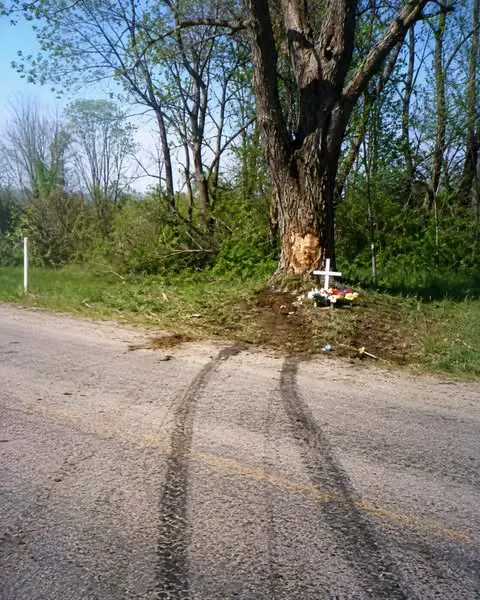
I was 41 when I got the phone call about my brother. He was 41 when the speedometer stopped. Same age. Same blood. Same parents who begged him every holiday to take it easy. Danny wrapped his truck around a white oak at 87 miles an hour on a road he'd driven a thousand times. Sober. Alert. Alive one second, gone the next. For 17 years I thought I understood why. I didn't understand anything. My name is Robert. I'm 58 years old. My brother Danny died 17 years ago. He was 41. Wrapped his truck around a white oak on Route 9, about four miles from our parents' house. Going somewhere around 87 in a 35 zone. He wasn't drunk. Wasn't high. Wasn't texting or falling asleep. Just fast. That was Danny. He was fast his whole life. Fast cars, fast mouth, fast decisions that made you want to grab him by the collar and shake some sense into him. Bought a motorcycle at 19 with money he didn't have. Rode it without a helmet for three years. Wrecked it twice. Bought another one. Got canned from four jobs before he hit 30. Not because he was lazy -- Danny could outwork anyone when something grabbed him. But he'd show up late. Mouth off to a foreman. Storm off a site because someone told him to slow down and do it the right way. He'd start projects at midnight and abandon them by Tuesday. Our mother's garage had three half-built engines, a kayak frame with no bottom, and a go-kart he'd promised his son he'd finish. He never finished the go-kart. I used to tell my wife: "Danny's his own worst enemy." And she'd say: "Someone's gonna get hurt." She was right. She'd been calling it since Danny bought that first motorcycle. The thing is, you could see the wreck coming from a mile away. That's what makes it worse. Not that Danny died fast -- he burned out slow. Decades of watching him torch every job, every marriage, every promise to Marcus at a speed nobody around him could keep up with. Jobs. Money. Marriages -- two of them, both over in under three years. His son, Marcus. God, that kid loved his dad. And Danny loved him. But Danny couldn't sit still long enough to be the father Marcus needed. He'd take him on these wild adventures -- four-wheeling, fishing trips with no plan, spontaneous drives to the coast at 10pm on a school night. Marcus came home wired and exhausted every time. Danny disappeared for a week. "He's fun but he's not safe," Marcus's mother told me once. She wasn't wrong. The family tried. My parents tried. His ex-wives tried. I tried. "Danny, you're 41, not 17. Act like it." That's what I said to him. Two weeks before the tree. We were standing in our parents' driveway after a Sunday cookout. Danny had shown up an hour late, told some story about why, made everybody laugh, then got in an argument with our dad about a loan he'd never paid back. Typical Danny Sunday. As he was leaving, I grabbed his arm. Told him to act his damn age. Told him his son deserved better. Told him he was gonna end up alone or dead if he didn't stop running. He looked at me. Not mad. Not hurt. Just... tired. "I'm fine, Bobby. Relax." Got in his truck and left. Those were his last words to me. Two weeks later. Route 9. White oak. 87 miles an hour. The officer said he wasn't on the phone. Wasn't impaired. Seatbelt on. Radio was playing. Just going fast on a road he knew in the dark. Like he always did. Like it was the only speed he had. After the funeral, people said things. "He lived hard." "He was always gonna go out like that." "Some people can't be saved from themselves." I said some of those things too. For 17 years, that was the story I told myself. Danny was reckless. He didn't care about anybody but himself. He drove too fast and it killed him. Nothing else to it. Except it wasn't. Here's what happened. Marcus -- Danny's son -- turned 23 last year. Good kid. Quiet. Not like his dad at all, or so I thought. Except Marcus called me one night. Late. Maybe 1am. "Uncle Rob, I need to talk to you about something." He'd been struggling at work. Couldn't focus. Started three different training programs and finished none. Got written up for being late. Kept losing track of time, of tasks, of conversations mid-sentence. His girlfriend told him to see somebody. He did. And they told him he had ADHD. I didn't think much of it at first. Figured it was one of those things everybody seems to have now. "Okay," I told him. "So take the meds and you'll be fine." Marcus went quiet for a second. "Uncle Rob. They said it's genetic." And something about the way he said it. I went to bed that night but my head wouldn't shut off. Just lay there staring at the ceiling. Genetic. Fast talker. Fast decisions. Fast temper. Couldn't finish what he started. Couldn't slow down. Never sat still. Couldn't match the pace of the world around him. That wasn't Marcus he was describing. That was Danny. That was my brother. I got up around 3am. Sat at the kitchen table with my laptop. Started reading about ADHD in adults. And that's when 17 years of certainty started falling apart. Every article I read, I saw Danny. Not pieces of Danny. All of Danny. The impulsivity. The inability to finish things he started -- even things he cared about. The restlessness that never turned off. The blown-up relationships. The jobs he couldn't keep. The way he'd hyperfocus on something for 72 hours straight and then drop it like it never existed. The speed. One thing I read stopped me cold. It said that people with undiagnosed ADHD chase stimulation -- speed, risk, danger -- because their brain is running on empty. And the only thing that fills the gap, even for a few minutes, is velocity. Not because they want the thrill. Because their brain is starving, and speed is the only thing that feeds it. I sat at the kitchen table at 3am reading that sentence over and over. Danny wasn't choosing speed. His brain was hunting for something it couldn't make. Every time he rode that motorcycle without a helmet. Every midnight project. The spontaneous trips. Every time he drove 90 on a back road in the dark. His brain needed stimulation the way a starving man needs food. And velocity -- raw, dangerous, fast -- was the only thing that matched the size of what was missing. I kept reading. Couldn't stop. Found something about how the brain chemical that Danny's brain wasn't making enough of -- it's the one that lets you sit still. Lets you wait. Lets you finish something boring. Lets you show up on time and not mouth off and not need the next thing immediately. Without enough of it, your brain is like a motor running with no oil. It goes fast because it has to -- because slowing down feels like dying. You can't throttle back. The engine doesn't have that gear. And here's the part that should make you angry. Everybody around Danny -- me, his wives, our parents, maybe you with someone just like him -- spent 41 years telling him to slow down. "Just be responsible." "Just grow up." "Just think before you act." That's like telling someone with a broken leg to just walk it off. His brain was missing something it needed to function at normal speed. And instead of anyone figuring that out, we told him to try harder. His whole life. Until the oak tree. That night I just sat in the kitchen for a long time. Not reading anymore. Just sitting. Danny died 17 years ago. Can't undo it. Can't unsay what I said in that driveway. But I kept thinking about Marcus. Twenty-three years old. Same blood. Same brain. And I kept thinking about myself. Because the more I read about this -- about what happens when your brain doesn't produce enough of that chemical -- the more I started seeing something I didn't want to see. I never drove 90 on back roads. I wasn't Danny. But I haven't gotten a full night's sleep since my 40s. I get up three, four times. Mind racing before my feet hit the floor. I start things and don't finish them. The back deck I've been "working on" for two years. The closet I've reorganized four times and it's still a mess. I zone out mid-conversation. My wife'll be talking and I'll snap back and realize I missed the last 30 seconds. I snap at things that don't deserve it. The TV. The dog. My wife for asking what I want for dinner. I'm not Danny. But I'm Danny at half speed. And that thought scared me more than anything I'd read. The more I dug into this -- the brain chemical thing, the stimulation thing -- the more I found something I wasn't expecting. Not about meds. I'm not looking for meds. Marcus is figuring that out for himself. I found something about a plant extract -- saffron -- that had been tested alongside stimulant meds. And for the hyperactivity and restlessness piece, it held its own. Not forcing the brain into gear like a stimulant does. Supporting it. Helping it make what it wasn't making on its own. That distinction hit me. Stimulants force the brain to flood with that chemical all at once. Works fast. Wears off fast. Side effects stack up. But saffron -- it doesn't force anything. It supports the brain's own production. Like giving the engine oil instead of revving it harder. I started reading reviews from people who tried it. Not dramatic stories. Quiet ones. People saying their sleep changed first. Then the noise quieted down. Then they finished something they'd been putting off for months. One review was from a woman who said her husband had been restless his whole life. Couldn't sit still. Never got a full night's rest. Couldn't stop moving from one thing to the next. She said after about three weeks, she noticed he wasn't waking up at 3am anymore. That one hit different. I stumbled on something called Savaly. Nine ingredients. Saffron at the dose from the research, plus things that support sleep, calm the chatter, help the brain do what it's supposed to do. Two capsules at night. Builds over time. (Here's the link if you want to see it: https://shop.savaly.com/slp2) I'm not somebody who buys things off the internet. I'm not somebody who talks about supplements. I'm a 58-year-old man who runs electrical for a living and doesn't trust things that sound too good to be true. But I thought about Danny. And I thought about Marcus. And I thought about the fact that I haven't had a solid night's rest in 15 years and I didn't know why until three hours ago. So I ordered it. It showed up a few days later. Small brown bottle. Two capsules at night. Fine. Day one, nothing. Day two, same. Day three -- my eyes opened at 6:15. Not 4am. Not 3:30. 6:15. My wife was still asleep. I just lay there. Confused, mostly. Couldn't remember the last time that had happened. Day five, same thing. Out cold until morning. No racing thoughts at 4am. Just... sleep. I didn't trust it. Figured it was a coincidence. Two good nights doesn't mean anything. Day seven -- I was eating breakfast and my wife looked at me. "You've been sleeping." Not a question. Just a statement. Like she'd been watching me for a week and finally said it out loud. "I guess," I said. "Rob. You've made it through the whole night four times this week. You haven't done that since I've known you." Day eleven -- my mind was quieter in the mornings. I don't know how to explain this. I used to wake up and my brain would already be running -- what I needed to do, what I forgot yesterday, what could go wrong today. This loop that started before my feet hit the floor. It was still running. But the volume was lower. Like someone turned it down a few notches. Day fourteen -- I finished sanding the back deck railing. The whole thing. Start to finish. Didn't get up halfway through to check my phone. Didn't wander off to start something else. Just did it. Four hours straight. And when I was done, I felt... normal. Not wired. Not exhausted. Just done. I can't tell you the last time I finished something in one sitting without getting pulled somewhere else. Day twenty -- caught myself reading a book after dinner. Not scrolling. Not flipping channels. Reading. For an hour. My wife didn't say anything. But she glanced up over her glasses the way she does when she notices something and doesn't want to spook it. Week four -- I had a setback. Couple of bad nights. Mind started racing again. Almost quit. Figured the good stretch was a fluke. But I didn't stop taking it. And by day 30 it came back. Quieter mornings. Better sleep. This low-grade calm I didn't know I was missing. Week six -- my wife and I were watching something on TV after dinner. She paused it. "You haven't yelled at the TV once tonight." I laughed. But she wasn't joking. "Rob, you used to snap at everything. The news. The commercials. Me, sometimes. You're different." I didn't know what to say. She was right. Day forty-something -- this is the one I keep coming back to. I was sitting on the back porch. After work. Still in my boots. Just sitting there. Not scrolling, not fidgeting, not making a list in my head of what I needed to do next. Just sitting. My wife came out with two coffees. Sat down next to me. Didn't say anything for a while. I looked at her and said, "I think I've been running my whole life." She nodded. Like she'd been waiting for me to figure that out. "Just slower than Danny," she said. That one landed. Because she was right. Danny ran at 90 on back roads. I ran at 45 in my own head. Same engine. Same missing piece. Different speed, same problem. I'd been so busy thinking about Danny that I didn't see it in myself. I can't give this to Danny. That's the truth of it and I can't get around it. He's been gone 17 years. The oak tree is still standing. I drive past it twice a week. But I gave it to Marcus. Called him up. Told him what I'd found. About the brain chemical thing. About the saffron. About the research. About how his dad's brain was hunting for something it couldn't make, and speed was the closest thing to feeding it. Marcus was quiet for a long time. Then he said: "That sounds like him." He ordered it that night. Three weeks later he called me. Said he'd been making it through the whole night for the first time he could remember. His boss noticed he wasn't late anymore. His girlfriend told him he seemed... calmer. "Uncle Rob," he said, "I think Dad would've been a different person." I didn't answer that. Because he's right. And there's nowhere good that sentence goes except forward. If you're still here because someone you love can't slow down -- someone who's restless, impulsive, brilliant in flashes but gone in between -- I need you to understand something. It's not a choice. It was never a choice. Their brain is running on empty. And speed, chaos, risk -- that's the only thing that fills the tank for a few minutes at a time. Every time you tell them to slow down, you're telling a starving person to stop eating. But there's something that can feed the brain instead of forcing it into overdrive. Something that supports what's missing instead of masking what's wrong. Give Savaly an honest 90 days. Watch how they sleep. Watch how you sleep, because you're probably running too and don't know it yet. Watch the noise. Watch the mornings. If it doesn't work -- if nothing changes -- you get every penny back. No questions. https://shop.savaly.com/slp2 You risk nothing except finding out 17 years too late that you were wrong about someone you loved. I'd rather you find out now. P.S. -- Danny's son Marcus has been on it for two months now. Last week he called me to say he finished his first full training program at work. Completed the whole thing. "I didn't get up once," he told me. I couldn't talk for a minute after he said that. Because Danny never finished anything. Not because he didn't want to. Because his brain wouldn't let him. Marcus is finishing things. That's enough for me. P.P.S. -- I still drive past that oak tree on Route 9 twice a week. Used to make me angry. Now it just makes me sad. Because I know what was happening inside Danny's head. I know he wasn't reckless. I know he wasn't choosing speed. I know "grow up" was the worst thing any of us could have said. If you've got someone in your life who can't stop moving, can't sit still, can't slow down no matter how many times you ask -- don't wait 17 years to understand why. You might not get 17 years.
Placements and targeting
More ads from Robert Cross
My brother died alone in a rented room at 52 and the landlady found his body before any of us did. I was 40 minutes away. Hadn't called in three months. Not because I didn't love him. Not because we'd had some falling out. I just... forgot he existed. And when I found out why, it nearly wrecked me worse than losing him. My name is Robert. I'm 58. My brother died six years ago. He was 52. I need to tell you what happened to him. Not because it makes me look good — it doesn't. But I spent six years blaming myself, and three months ago I found out it was something else entirely. His name was Danny. Growing up, Danny was the one everybody noticed. Funny. Quick. The kid who'd start a game in the parking lot and pull the whole block into it. Teachers liked him. Girls liked him. Had more energy than anybody knew what to do with. He got his first real job at 19. Warehouse floor. Lasted four months. Second job, driving deliveries. Five months. Third job — I couldn't tell you what it was if you paid me. He was back in our parents' basement by then. Every time, the same pattern. He'd start strong. Show up early. Impress people. You'd think this one's gonna stick. Then something would slip. He'd miss a shift. Forget a task he'd done perfectly for weeks. His boss would pull him aside and Danny would promise to do better, and he'd mean it — that was the thing, he genuinely meant it every single time. Two weeks later, same thing. Then worse. He wasn't drinking. Wasn't on anything. Wasn't lazy — and I know that sounds like something people say, but I watched him try. Over and over and over. Eight jobs in eleven years. Same story each time. His wife left in 2009. Took the kids. I don't blame her — not anymore, anyway. She told my mother once: "I tried. It was exhausting. Every time he left the room it's like I didn't exist to him. Not that he didn't love me. I just didn't register." That sentence stayed with me a long time. Danny moved in with our parents for a while. Then our dad got sick and the house got complicated, so Danny found a room. A church lady — Margaret — rented him the back bedroom of her place. $400 a month. He worked odd jobs, mowed lawns, picked up shifts at a scrap yard. I told myself he was managing. Told myself he was fine. I can't stop circling this one thing — how does a man who tried that hard end up alone in a rented room while everybody who loved him just gradually stops noticing he's there? Because that's what happened. Not all at once. Not because anyone decided to stop caring. Danny just... slipped out of people's minds. His ex-wife was raising the kids. She had her own life. His kids were teenagers and then adults, and Danny was the dad who forgot to call on birthdays and missed school events and always meant to come by but somehow never did. And me. I lived 40 minutes away. And I hadn't called him in three months when Margaret called me on a Tuesday morning to tell me she found him on the floor of his bedroom. Two days. He'd been there two days before she checked. Not his ex-wife. Not his kids. Not me. The landlady. I sat in that funeral home and all I could think was — how does someone die 40 minutes from his brother, and his brother doesn't even know? How does that happen? I told myself it was because I was busy. Because life gets in the way. Because I meant to call and just didn't get around to it. But that wasn't the truth. The truth was worse. Danny stopped existing in my head when he wasn't physically in front of me. The same way a room you walk out of just sort of goes blank. Not gone — just... not there anymore. Not real until you're standing in it again. I'd been doing it my entire life. Not just with Danny. With everyone. Friends who'd fade away because I never called back. An ex-wife who told me she felt like a roommate I sometimes remembered was there. My own daughter, who once told me she'd stopped calling because she figured I'd call when I felt like it. She was 23 when she said that. I hadn't called her in two months. I thought that was just me. Thought I was a lousy brother, a lousy father, a lousy friend. The kind of person who doesn't stay in touch because he doesn't care enough. But I did care. That was the thing that ate me alive. I cared. I just couldn't hold onto people when they weren't right in front of me. Like trying to hold water in your hands. You can feel it there, and then you look down and your hands are dry and you can't remember when it drained out. After the funeral, I had about six months where I barely functioned. Not depression exactly — more like this low-grade horror at what I'd let happen. I'd lie awake at 3am replaying all the times I meant to call Danny and didn't. Every time I told myself I'd drive over this weekend and then the weekend came and went and I never even thought about it. People said the usual things. It wasn't your fault. You couldn't have known. He made his own choices. None of it helped. Because I knew it was partly my fault. Not that he died — but that he died alone. That the person who found his body was someone who charged him rent. Three months ago, I got blindsided. I was sitting on the couch on a Sunday night and a name came up on my phone. A text from my daughter reminding me about Danny's death anniversary. Six years. And I realized I'd flat-out forgotten. Not forgotten forgotten — I knew the date. I could tell you the date right now. But it hadn't crossed my mind. The anniversary of my own brother's death, and I'd have gone through that entire day without a single thought about it if my daughter hadn't texted me. That night I couldn't sleep. Lay there staring at the ceiling thinking about all the people I've let slip away, and how I keep doing it, and how nothing I try makes any difference. I've tried the sticky notes on the fridge. Reminders on my phone. Telling myself every Sunday I'll call someone. I do it for a week, maybe two. Then the notes stop meaning anything and the reminders become noise and Sundays come and go and I forget. Like Danny. Like my brother who spent his whole life trying harder at every job, every relationship, every new start. Promising himself it would be different this time. And it never was. Around 2am I grabbed my phone. Not really knowing what I was looking for. I typed something like "why do I forget people exist when they're not around." Ended up in a thread. Regular people, not any kind of expert forum. Just people describing this exact thing — forgetting people exist when they're not physically present. Losing track of relationships not because they don't matter but because their brain won't hold onto them. One person in that thread said something that stopped me cold. "It's not a personality flaw. Your brain lets things slip away when they're not right in front of you. There's an actual reason — and it's not laziness." I read it three times over. Things fade out of your head because there's nothing holding them in place. That's Danny. That's every job, every relationship, every promise he couldn't keep. Not because he was lazy or unreliable or didn't care. Because his brain couldn't hold the signal. Like trying to keep a radio station tuned when the antenna keeps losing it. And that's me. That's why I forgot to call my brother for three months. Why my daughter gave up calling me. Why every friendship I've ever had just quietly dissolved into nothing. I kept reading. Started looking up what actually causes this — why your brain can't hold onto things that aren't right in front of you. Found a retired researcher's old lecture posted on some university site. The language was technical in places, but the basic idea hit me like a truck. Most people who struggle with this — the forgetting, the way you can't stay focused, the way people and tasks just drop off your radar — their brains are running low on the raw materials they need to produce the chemicals that keep things in working memory. Not broken. Not damaged. Running on empty. And here's what nobody told Danny. Nobody told any of us. Every time Danny tried harder — every new job, every desperate start, every promise to call more — he was pushing a brain that was already spent. More effort just burned through what little he had left faster. The researcher compared it to two different approaches. One forces more output from a system that's already tapped out. That's what most people try — willpower, caffeine, rigid schedules, sheer stubborn effort. Works for a day or two. Then the part of you that can't keep up overrides the structure. The other approach feeds the system. Gives the brain the raw materials it actually needs to produce focus chemicals on its own. Not forcing performance. Supporting the system that produces it. Danny spent his entire life on approach one. Grinding harder on a system that was never going to hold up because it didn't have what it needed to produce. Nobody ever told him there was an approach two. I sat there at 2:51 in the morning, phone in my hand, and it hit me — Danny didn't have to lose everything. He didn't have to lose his job. His wife. His kids. He didn't have to die alone in Margaret's spare bedroom. If someone — anyone — had told him that his brain wasn't broken, that it was starving, that there were missing nutrients it needed to build the chemicals that keep you connected to the people and tasks and plans in your life... But nobody did. And I spent six years blaming his character for something that was happening in his brain chemistry. I started looking up what those raw materials actually were. One kept coming up. Saffron. Not the spice — a concentrated part of it, pulled from the flower. The active stuff inside it. The research said this extract works differently than anything I'd seen before. It doesn't force the brain to pump out more focus chemicals the way stimulant meds do — it keeps the ones your brain already produces active for longer. Stops them from getting recycled too fast. Like the difference between pouring more water into a leaking bucket versus just patching the leak. I almost closed the tab. Sounded like every other supplement pitch I'd scrolled past. But then I found something else. Ten ingredients — I won't pretend I understood all of them, but saffron was the big one, plus magnesium and a few things for stress and sleep I'd never heard of. You take two before bed. Builds up over time. 90-day guarantee. The company was called Savaly. (Link is here: https://shop.savaly.com/slp2) I ordered it. Not out of hope. Out of guilt. If this was the thing that could have saved Danny, the least I could do was find out. It showed up four days later. Small dark bottle. I just stared at it for a while before I opened it. Took the first dose that night. Day one, nothing. Day two, same. Day four, my sleep changed. Didn't wake up at 3am with my head already spinning. Just slept through. Felt strange — couldn't remember the last time that happened. Week two, the fog started thinning. I don't know what else to call it. Like there'd been this layer between me and everything else, and it was getting thinner. Week three, I wasn't ready for what happened next. I was driving home from work on a Thursday and I thought about my daughter. Not because she texted. Not because something reminded me. She just appeared in my mind the way people are supposed to appear in your mind when you care about them. I pulled over and called her. She picked up on the third ring. "Dad?" "Hey." I didn't know what to say. I'd just called because I thought of her. "Is everything okay?" "Yeah. Just... wanted to hear your voice." She was quiet for a second. And then she said the thing that about broke me in half. "You never just call, Dad." She wasn't being mean. She was being honest. I hadn't called her without a reason — an event, a holiday, something I needed — in years. Maybe ever. Week five, I called Danny's ex-wife. Hadn't talked to her in over a year. Didn't rehearse it. Didn't set a reminder. Just picked up the phone. She cried. Told me she'd thought I'd cut her off. I hadn't cut her off. She'd just... gone blank in my head the same way Danny did. The same way they all did. Week six, my daughter called me back. Just to talk. And for once — maybe the first time ever — I was actually present for the conversation. Not nodding while my mind was somewhere else. Not waiting for it to be over. Actually there. She noticed. "Dad, you're different." I didn't tell her what I was taking. Didn't want to make promises. But she was right. Something was different. People weren't disappearing from my mind anymore. I could hold onto more than just whatever was right in front of me. Month two, I drove to the cemetery where Danny's buried. First time in probably a year and a half. I stood there for a long time. I told him I was sorry. That I'd finally figured out what was wrong with both of us. That he wasn't lazy and he wasn't broken and he wasn't a quitter. That his brain was starving the entire time and nobody knew. That if I'd found this ten years ago, maybe he'd still be here. Maybe he'd have kept a job long enough to keep his apartment. Maybe his wife wouldn't have left. Maybe his kids would've had a father who could remember they existed when they weren't in the room. I can't know that. I'll never know that. But I know what it did for me. My daughter calls me twice a week now, and I call her back. Not because of a reminder. Because she stays in my mind the way she's supposed to. Last month I drove to Danny's ex-wife's house and had coffee with her and the grandkids I'd never met. Danny's grandkids. People don't disappear from me anymore. If you read this and you see yourself — the forgetting, the people who faded, the relationships that dissolved not because of conflict but because of absence — I need you to understand something. It's not your character. It's not laziness or selfishness or not caring enough. Your brain is missing what it needs to hold onto the people and things that matter. And every time you try harder — more willpower, more reminders, more promises to yourself — you're revving an engine that has no oil in it. There's a different way. Not forcing more effort. Feeding the system that produces it. Give Savaly an honest 90 days. Pay attention to how you feel. Notice whether people start staying in your mind. Whether you find yourself reaching out without being reminded. If nothing shifts, if you don't feel different within the first few weeks, reach out for a full refund. They don't ask questions. You risk nothing. But if you don't try... I know where that road ends. I buried my brother at the end of it. Danny spent 52 years trying harder. Promising he'd do better. Grinding through on a brain that couldn't keep up because nobody ever told him what it actually needed. He died alone in a rented room. The landlady found him. Not his brother. Not his kids. Not anyone who loved him. A stranger. You don't have to follow that road. https://shop.savaly.com/slp2 P.S. — Sleep was the first thing I noticed — stopped waking up at 3am. Couple weeks in, the fog thinned out. Then one afternoon I just picked up the phone and called my daughter for no reason. She almost didn't believe it was me. Your timeline might look different. But you'll never find out sitting on the fence. P.P.S. — I can't get Danny back. That's the thing I live with. But last weekend I took his grandkids to the park — kids he never met, born after he died. They look like him. Same energy, same quick laugh. I sat on a bench watching them run and I thought about him the entire time. Not because I was trying to. Because he was there in my mind, the way he should have been all along. That's what this gave me back. Not Danny. But the ability to hold onto the people I still have.
My Father-in-Law Lasted Eight Months After His Wife Died and Everyone Said He Died of a Broken Heart — But I Watched What Actually Happened to Him and It Had Nothing to Do With Grief I'm Robert. I'm 58. Eight months ago, my father-in-law Frank was alive. Now I need to tell you what actually killed him. Because it wasn't a broken heart. Frank was 79 when Helen died. Stroke. Dropped her on a Saturday morning while she was watering plants in the garden. One second she was alive. Next second she was on the concrete. Frank was inside watching TV. Didn't hear anything. My wife Sarah found her an hour later when she went over for lunch. Helen's hand was still holding the hose. The funeral was a blur. Everyone said the same things. Good woman. Great marriage. 52 years together. Inseparable. That last word kept coming up. Inseparable. I didn't think much of it at the time. Frank seemed okay at first. Quiet. Moved a little slower. But he showed up to the funeral. Shook hands. Thanked people. Ate something. Did what you do. It was about two weeks later that things started to go wrong. Sarah went over to check on him. Found the fridge full of food Helen had prepped before she died — untouched. Some of it had gone off. The milk was solid. Frank was sitting in his recliner. Said he'd eaten. Sarah opened the bin. Nothing in it. She couldn't find any sign he'd eaten in three days. "Dad, you have to eat," she told him. He looked at her like he genuinely didn't understand the instruction. Not like he was digging his heels in. Like opening the fridge and feeding himself was a skill he'd never once had to use. Because he hadn't. Helen made every meal. Breakfast. Lunch. Dinner. Set it on the table. Put the fork next to it. Frank ate it. That was the system. Had been the system for over 50 years. Take Helen away and the system stopped. Week three. Sarah found his pill bottles untouched. Blood pressure. Cholesterol. Prostate. Seven different bottles, all full. "Dad, when did you last take your meds?" He stared at the bottles. "Helen puts them out." Present tense. Like she was still going to walk in and set them on the counter next to his coffee. Sarah started driving over at 7 each morning. Laying out his pills. Stacking meals in the fridge he could heat up. Writing notes on the fridge. TAKE YOUR PILLS. EAT LUNCH. LOCK THE DOOR BEFORE BED. The notes lasted five days before he stopped seeing them. They just became part of the wall. She set up alarms on his phone. Frank dismissed every single one without reading what they said. Week five, he drove to the pharmacy to pick up a refill Helen had called in before she died. Got lost. Called Sarah from a petrol station he didn't recognise. He'd been going to the same pharmacy for 15 years. Frank wasn't stupid. He'd worked construction for 40 years. Built houses. Read blueprints. Managed crews. This was a man who could look at a bent beam and tell you what went wrong. But he couldn't get himself from Monday to Tuesday without someone telling him what needed doing and when to do it. Sarah took over. Drove him to appointments. Stocked his fridge. Sorted his pills into one of those daily dispensers. Called him every night to make sure he'd locked the door. She was exhausted. Working full time. Managing her own house. And now managing her father like he was a child. "He won't do anything unless I tell him to," she told me one night. Head in her hands at our kitchen table. "I'm not helping him. I'm running him. Like Mum did." I didn't say anything. Because I knew exactly what she meant. Month four. Frank left the stove on overnight. Smoke alarm at 2 AM. Neighbour called the fire department. Nobody hurt. But after that, Sarah started talking about a care home. He could walk. Talk. Dress himself. Nothing physically wrong with him that should've required a care facility. But he could not manage his own life. Month six. He stopped leaving the house. Same recliner. Same channel. Helen's sweater still on the arm of the couch. He'd lost maybe 12 kilos. Answered questions but didn't start conversations. Month seven. He fell getting up for the toilet in the middle of the night. Tripped over a work boot he hadn't put away. Helen used to put his slippers by the bed every night. After she died, his boots ended up wherever he kicked them off. Fractured his hip. He died nine days after the surgery. His heart just stopped. The death certificate said cardiac arrest. At the funeral, Frank's sister said what everyone was thinking. "He died of a broken heart. Couldn't live without her." People nodded. Some cried. It was a nice story. Clean. Romantic. Made sense. And it was wrong. Frank didn't die because he loved Helen too much. He died because Helen was doing something for him that he could not do for himself. Had never been able to do for himself. She was his calendar. His pharmacy. His kitchen. His alarm clock. His memory. She was his brain. And when she died, his brain died with her. For eight months, I watched a man who built houses with his hands fail to feed himself. A man who managed crews of 20 couldn't manage a pill dispenser. A man who read blueprints couldn't read a note on his own fridge. Not because he was grieving. Not because he was old. Because the part of his brain that organises, remembers, plans, and sequences — the part that turns "I need to eat" into actually eating — had never worked properly. And for 52 years, Helen had been the one making it work. That night after the funeral, I couldn't sleep. Not because of Frank. Because of me. I stayed in bed next to Sarah and I started counting. Every morning, she puts my keys and wallet on the kitchen counter. Same spot. If she doesn't do it, I can't find them. She reminds me to take my blood pressure pill. Every single day. For 11 years. She books every appointment. Dentist. Optician. The shoulder that's been killing me for two years. If she doesn't book it, I don't go. She manages the bills. The car insurance. The rates. I have no idea when any of them are due. If you put a gun to my head, I couldn't tell you what we pay for electricity. She tells me when we have plans. When our grandson's birthday party is. When I have to do things. Every single day. And I let her. Because I tried doing it myself, and I couldn't. Same as Frank. Couldn't track more than one thing at a time. Couldn't remember what I'd agreed to. Walk into a room and forget why. Lost my wallet three times in one month last year. Left the stove on twice. I was a plumber for 35 years. Good at it. Ran my own jobs — well, Sarah did the books. I did the work. But the other stuff? The appointments, the pills, the bills, the scheduling, the remembering — I never could. I always just said I wasn't a details guy. That's what I told myself. That's what everyone told me. "Men are just like that." "He's useless around the house, bless him." "You'd lose your head if it wasn't screwed on." Funny lines. Everyone laughed. Including me. Including Sarah. And then I watched Frank die in eight months because the woman who ran his life was gone. And I realised nobody was laughing. I'm the same man. If Sarah died tomorrow — stroke, car accident, anything — I would be Frank. Standing in the kitchen holding a frying pan I've used a thousand times, unable to remember how to turn on the stove. Missing my own meds. Driving to the pharmacy and getting lost. I didn't sleep that night. Or the next. Third night, around 1 in the morning, I gave up on sleep. Sat at the kitchen table with my phone. Started searching. Not "grief support for widowers." Not "elderly men living alone." I typed: "why can't some people remember to eat or take their own pills without help" The first few results were useless. Organisational tips. Productivity hacks. Life coaching nonsense. Then I found something. An article — written normal, not like a textbook — about something called executive function. I'd never heard the term before. But the description... Executive function is the part of your brain that plans, organises, remembers what needs doing, and actually gets you to do it. The difference between knowing you need to eat and actually making food. Between knowing your pills are on the counter and actually taking them. It's the management system. The part that runs the day. And in some people, it doesn't work. Not because they're lazy or stupid or careless. Because the brain chemicals that power it — the ones that handle focus and task management and follow-through — aren't being produced the way they should be. I kept reading. Found another article. This one was about dependency in relationships — people who seem completely capable at work or in specific areas of their lives but literally cannot function in daily management without their partner running it for them. It described Frank. Almost word for word. And then it said the word. ADHD. I almost closed the tab. That's what kids have. Hyperactive boys who can't sit still in school. Not a 79-year-old retired builder. But I kept reading. Because the article wasn't describing a kid bouncing off walls. It was describing a man who built houses and couldn't manage a grocery list. A man whose entire adult life had been held together by a woman who handled every single thing he couldn't. Frank. And me. The article explained it — simply, the way a regular person could understand. The brain has this chemical, dopamine, that basically runs your focus and your ability to manage tasks. In people with this thing, the brain doesn't make enough of it. Or it burns through it too fast. Either way, the management system is always running on empty. Like trying to run a work site with no foreman. The labourers are there. The materials are there. But nobody's coordinating anything. So nothing gets done unless someone from outside — a wife, a partner, a parent — steps in and does the coordinating for you. That was Helen. For 52 years, Helen was Frank's foreman. She wasn't just his wife. She was the part of his brain that didn't work. And I looked at Sarah sleeping in the next room and thought: She's mine. I kept reading. Went deeper into the articles. One of them mentioned that this thing — this chemical issue — isn't just about kids and it isn't just about men who are hyper. Most people who have it never get told. Especially older men. Because the world just calls it something else. "He's not a details guy." "She does everything for him." "Men are just like that." It's not "like that." It's a brain that can't make enough of the chemical it needs to run the day. And without it, you end up doing one of two things. You find someone who manages you — a Helen, a Sarah — or you fall apart. There's no third option. Not without fixing what's actually wrong. I must have been up until 3 in the morning. I found a page about something called saffron. Not the spice you cook with — a concentrated version of it. Something about how it supports the brain's own production of the chemicals that handle focus and task management. I almost scrolled past it. Sounded like every other supplement ad I'd ever seen. But the research behind it stopped me. Published comparisons between this stuff and the standard meds they give people for focus and attention issues. The results were... the same. Worked just as well. But without the side effects that make people quit the meds within a year — the appetite destruction, the emotional flatness, the insomnia. And sleep actually improved. People fell asleep faster. Slept deeper. I hadn't slept properly in years. Sarah had been shaking me awake three or four nights a week because I grind my teeth so hard it sounds like I'm cracking walnuts. I found a company that made it in the right dose. Savaly. Looked them up. ( https://shop.savaly.com/slp2 ) The saffron was the main thing. Same amount used in the research. Plus some other stuff — magnesium for the shortage most people with focus problems apparently have, something for stress and sleep, something to help it all absorb properly. 2 capsules before bed. Works while you sleep. Just helps your brain make the chemicals it's supposed to be making on its own. I read the reviews. Man after man talking about the same life I'd been living. "My wife does everything. I can't remember to take my own meds." "I tried it because I was tired of my wife running my entire life and resenting me for it." One review hit different. "My father depended on my mother for everything. When she got sick, he fell apart in weeks. I could see the same thing happening to me. Three weeks in and I'm doing things I haven't done on my own in 20 years." I just sat at the kitchen table. 1:47 in the morning. Sarah asleep upstairs. This won't do anything, I thought. Another thing that sounds promising at 2 AM and ends up in the back of a cupboard. But I thought about Frank standing in his kitchen holding a frying pan he didn't know how to use. I thought about eight months. I ordered it. It arrived five days later. Small bottle. Dark label. Directions on the back said take 2 capsules before bed with water. Cracked it open that night. Looked at the capsules. Right. One more thing to try. Took them anyway. Day one, nothing. Day two, same. Day three, Sarah didn't shake me awake. I slept through the whole night. First time in probably two years. No teeth grinding. No 3 AM wake-up. I didn't think much of it. Could've been coincidence. Day five, same thing. Full night. Woke up at 5:50. Not groggy. Not scrambling. Just... awake. Day seven, I remembered my blood pressure pill. Without Sarah telling me. She'd put it on the counter like always. I walked past it, picked it up, and took it. Didn't think about it. Didn't have to be reminded. Just did it. She didn't notice. But I did. Day eleven, I remembered again. And the next day. And the next. Three days in a row without being reminded. That had never happened. Not once in 11 years. Day fourteen, I paid the electricity bill. The email reminder came through and I actually opened it, logged in, and paid it. Before the due date. By myself. Without Sarah telling me it was due. When she saw the confirmation email, she didn't say anything for a second. "You paid the electric?" "Yeah." She just stared at me. Day nineteen, I drove to the pharmacy to pick up my blood pressure refill. Didn't get lost. Didn't have to check the GPS. Knew exactly where it was. Which sounds like nothing. But it's the same pharmacy Frank got lost going to. Day twenty-three, Sarah came home from work and the kitchen was clean. Not just clean. Dishes done. Counters wiped. Bin taken out. She stood in the doorway. Didn't move for a few seconds. "What happened?" she said. "Nothing. I just... did it." She turned around and went into the bedroom. I could hear her crying but I didn't follow her in. I think she needed a minute. I knew why she was crying. Because for 32 years she'd been Helen. Running the schedule. Managing the pills. Booking the appointments. Picking up after me. Carrying the whole management load because my brain couldn't do it and we both pretended that was just normal. And for the first time, I did something without being told. Day twenty-eight, I caught myself making a mental list of what I needed at the shop. Standing in the shower, running through it in my head — milk, bread, bin bags, the dishwasher tablets Sarah likes. Without writing it down. Without being told. My brain just... did it. Like a machine that had been sitting idle for 58 years and somebody finally put fuel in it. Day thirty-three, I took my blood pressure pill, made my own lunch, and called the optician to book an eye test. Three tasks. In sequence. Without losing the thread. Sarah was at work. Didn't remind me. Didn't write it down. Week six, something happened that I still think about. I was leaving the house to go to the shops. Got in the car. Started the engine. Pulled out of the driveway. I was already on the main road before I realised. I didn't check the stove. For the past two years, every time I left the house, I went back inside and checked the stove. Sometimes twice. Sometimes three times. Because I didn't trust my own brain to remember whether I'd turned it off. That morning, I just left. Didn't think about it. Didn't need to. Because I knew the stove was off. My brain knew. Without checking. The safety net I'd built because I couldn't trust myself — it was gone. And I didn't even notice it leaving. That's the part I can't explain properly. It wasn't like waking up one morning and feeling different. It was more like noticing — three, four, five weeks in — that things I used to struggle with were just happening. Quietly. Without effort. Without someone managing me through them. My brain was doing the job it was supposed to do. And I didn't have to force it. About two months in, Sarah said something to me while we were watching TV. She said it quiet. Wasn't looking at me. "I don't have to carry you anymore." I didn't answer. Didn't know what to say to that. But I knew what she meant. Because I'd watched her carry Frank's whole life until Helen died. And then I'd watched her try to carry Frank. And then I'd watched Frank die because even Sarah couldn't carry him the way Helen had. Sarah had been carrying me the same way. For 32 years. And she didn't have to anymore. If you made it this far, you recognise this story. Not Frank's part — yours. You're the man whose wife puts his keys by the door every morning. The man who's missed his own meds three times this week. The man who walks into a room and stands there because he forgot why he came in. You say you're not a details guy. You say men are just like that. But you know what you really are. You're a man whose brain can't run itself and whose wife's been doing it for him. Every single day. Without you asking. Without you saying thanks. Without her complaining — or at least not where you'd hear it. And somewhere in the back of your mind, there's a thought you won't say out loud. What happens when she stops? I watched what happens. I watched it for eight months. Frank didn't die of a broken heart. He died because his brain couldn't do the one thing it needed to do to keep him alive — manage itself. And for 52 years, nobody noticed. Because Helen was there. Making it invisible. If I hadn't found what was actually going on — the chemical thing, the dopamine thing, whatever you want to call it — I'd still be exactly where Frank was. One phone call away from the same outcome. Not because I loved Sarah too much. Because my brain can't run without someone running it for me. Give Savaly 90 days. See what shifts. See if you take your meds without being reminded. See if you remember where you put your keys. See if your wife still has to tell you things twice. If nothing changes — if you still can't manage a single day without someone running it for you — reach out and get every penny back. No questions asked. You risk nothing. Here's the truth though. You're standing at a fork right now. One path: Carry on the way you have been. Let your wife keep running your brain. Keep losing your wallet. Keep missing your pills. Keep telling yourself you're just "not a details guy." And hope she never gets sick. Hope she never has a stroke on a Saturday morning while she's watering the garden. Hope you never have to find out what happens when the person running your life stops running it. Another path: Find out if the problem is what I think it is. Try what the research showed works. Take an honest swing at it with nothing to lose. And see if your brain can learn to do the job your wife has been doing for it your entire marriage. I went with the second one. I didn't do it for me. I did it because I watched Frank die and I realised: the only difference between him and me is that Sarah is still alive. That's not a reason to relax. That's a reason to fix it. P.S. — I slept through the night by day three. Remembered my blood pressure pill without being told by day seven. Paid a bill on my own by day fourteen. Cleaned the kitchen without being asked by day twenty-three. Your pace might not match mine. But you'll never find out sitting on the fence. P.P.S. — Sarah doesn't have to carry me anymore. For the first time in 32 years, she can just be my wife. Not my manager. Not my calendar. Not my memory. Just my wife. That's what this gave me. That's what it could give your wife too. https://shop.savaly.com/slp2
Similar health and supplements ads
NO GYM, NO STRESS JUST DANCING! BOOST YOUR MOOD QUICKLY BURN CALORIES Take a quiz and get your dance plan in DanceFitMe
Keep exploring
Find more ads like this
Search millions of real ads by keyword, niche and format, and save the winners to your swipe file.
