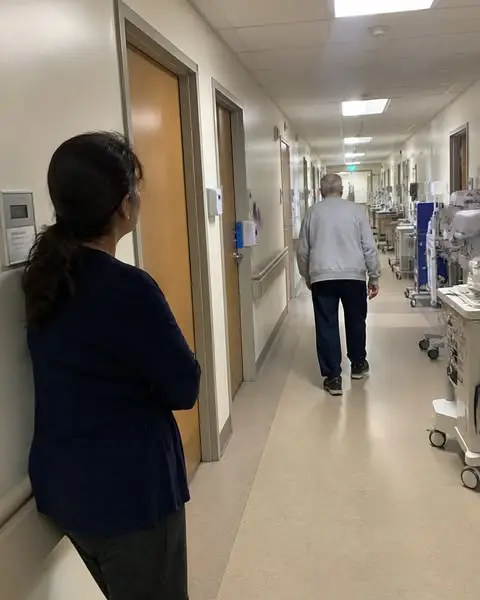
My cholesterol was 268. My new doctor called my old doctor "negligent." My old doctor had been the only one who listened to me for thirty two years. Now I had a prescription I didn't want, a doctor I didn't trust, and a medical record that said "non compliant" next to my name. Dr. Halloran's retirement letter came on a Tuesday. Standard form letter. "After 38 years of practice, I'm stepping away effective March 1st. Your care will be transferred to Dr. Anita Rao." I sat at the kitchen table staring at it. Thirty two years. I'd been seeing Dr. Halloran for thirty two years. He knew my history, knew my father's reaction to statins, knew my fear of medication, and he'd always worked with me, always said the same thing, "let's keep monitoring it, Greg, we'll try the lifestyle approach first, you're doing the right things." Now he was gone. My first appointment with Dr. Rao was March 14th. Routine physical. Transfer of records. Meet the new doctor. I sat in the exam room, same room I'd been in for decades, same posters about cholesterol and heart disease, different doctor. Dr. Rao walked in. Young. Maybe 36. Laptop in hand. "Mr. Donahue." Firm handshake. All business. "I've been going through your file." She sat down, pulled up my records, scrolled, and her expression changed. "Your cholesterol history." She turned the screen toward me. "2021, LDL 151. 2022, LDL 163. 2023, LDL 172. 2024, LDL 186. Today, LDL 196. Total cholesterol 268." She looked at me. "Five years of progressively worsening hyperlipidemia. LDL above 160 for the last three years. No statin prescribed." "Dr. Halloran and I had a plan, lifestyle changes, diet, exercise, he was monitoring..." "For five years?" Her voice was sharp. "Mr. Donahue, your LDL has been in the high risk category for three years without treatment, I don't know what your previous doctor was thinking, but this should have been addressed aggressively years ago." My stomach dropped. "Dr. Halloran knew my history, my father had terrible reactions to..." "Your father's history doesn't change your cholesterol numbers, LDL 196, you could have a heart attack, stroke, peripheral artery disease." She was already typing. "We're starting Rosuvastatin. 40 milligrams daily." "I'd rather..." "This isn't a discussion. Your cholesterol is dangerous. If you refuse treatment, I'm required to document it in your chart as non compliance against medical advice." The printer hummed. She handed me the prescription. "Follow up in twelve weeks. We'll do a full lipid panel and assess your response." She stood. Left the room. The whole appointment took fourteen minutes. I sat there holding the prescription, hands shaking, the words "against medical advice" and "non compliance" rolling through my head like a verdict. In the parking lot, I called my wife Sharon. "How was the new doctor?" "She says Dr. Halloran should have put me on a statin years ago, and she wants me on Rosuvastatin immediately." Silence. "What?" "She said five years without medication was irresponsible." "But Dr. Halloran always said you were..." "I know what he said. She doesn't care. I either take the medication or it goes in my record that I refused." That night I couldn't sleep, just lay in bed staring at the ceiling, Sharon's breathing steady next to me. Dr. Halloran had respected my concerns, we'd worked together for over three decades, dietary changes, exercise, oat fiber, omega 3s, regular bloodwork every six months. My cholesterol had climbed, yes, but gradually, no sudden spikes, no symptoms, no emergencies. Was he wrong to be patient? Was I walking around with arteries closing and didn't even know it? At 3 AM I went downstairs, sat at the kitchen table with my laptop, and started searching. is LDL 196 dangerous high cholesterol risks without statins heart attack risk high cholesterol men 50s Every article said the same thing. Increased risk. Arterial plaque. Heart attack. Stroke. Death. Maybe Dr. Rao is right, I thought, maybe I've been reckless. But then I searched, rosuvastatin side effects long term. Muscle pain. Chronic fatigue. Memory problems. Liver damage. Increased diabetes risk. And my father's face flashed in my mind. He'd been on cholesterol medication for fifteen years, started with Rosuvastatin, the same medication sitting on my counter right now, and the muscle pain came within six weeks, not soreness from exercise, a deep constant ache in his legs and shoulders that never let up, woke him at night, made him wince getting out of a chair, made him grip the handrail on every staircase. They switched him to Atorvastatin and the muscle pain eased slightly, but then the fog rolled in. He started forgetting things, small things at first, where he'd put his keys, what he'd gone to the store for, then bigger things, names of people he'd known for years, the punch line of a story he'd told a hundred times. And the fatigue, that was the worst. This was a man who coached my wrestling team, built our front porch with his own hands, fixed the car in the driveway on weekends. By 65, he was napping twice a day, couldn't follow a conversation without losing the thread, lost interest in everything he used to love, just existing, going through the motions of a life that didn't feel like his anymore. My mother said it was like watching him disappear. He died at 71. Heart attack. While taking the medication that was supposed to protect his heart. Fifteen years of side effects. Fifteen years of feeling like a shadow of himself. And it didn't save him. I closed the laptop, rubbed my face, and just sat there in the kitchen with the prescription on the counter mocking me from across the room. I didn't fill it. One week passed. Then two. Dr. Rao's office called. "Mr. Donahue, our records show you haven't filled your prescription, Dr. Rao wants to confirm you're taking your medication as directed." "I need more time to think about it." "Sir, Dr. Rao noted this as urgent, she strongly recommends..." "I said I need more time." I hung up. Sharon found me in the garage that evening. "Greg. Talk to me." "I'm looking for options." "Options? The doctor said your cholesterol is dangerous." "She said Dr. Halloran was wrong for not putting me on a statin, but Dr. Halloran knew me for thirty two years, he knew my father's history, he saw what those medications did to him, he was being careful with me." "But what if she's right? What if you..." Her voice broke. "I can't lose you." "You won't. I just need to find another way." "What other way?" I didn't have an answer. That weekend I searched everything. Red yeast rice. Fish oil. Plant sterols. Niacin. Every natural cholesterol supplement with actual research behind it. I tried the top rated red yeast rice on Amazon, six weeks, every morning without fail. LDL 193. Basically unchanged. Switched to high dose fish oil, pharmaceutical grade, eight weeks, nothing. Tried a full lipid stack from a specialty supplement store, red yeast rice, plant sterols, niacin, fish oil, the most expensive thing they had. LDL 190. Three points. Maybe four. Noise. I was running out of time and running out of ideas. Three weeks before my appointment I was back at my laptop at 2 AM going in circles, reading the same supplement forums, the same Reddit threads, the same dead ends. Then I changed the search. I stopped searching for supplements and started searching for the mechanism, why does cholesterol actually build up in the first place, what's really happening inside the artery. And I found something that changed the way I understood everything I'd been doing wrong. It was in a cardiovascular physiology paper, the kind of thing that shows up when you stop searching "how to lower cholesterol" and start searching "what actually causes arterial plaque." Basic science. Not hidden. Not controversial. Just not something anyone had ever explained to me in a doctor's office. The number on the lipid panel isn't the problem. The damage is the problem. I read that line three times. Your body makes cholesterol every single day, it's supposed to, your brain needs it, your hormones depend on it, your cells are built from it, cholesterol isn't poison. It leaves your liver, goes out through your blood, drops off what your cells need. Simple delivery route. But your blood is full of unstable molecules called free radicals, from stress, from processed food, from pollution, from sugar, from just getting older, and they attack your cholesterol while it's traveling, and they damage it. Damaged cholesterol doesn't finish the route, it doesn't move on, it sticks to the wall of your artery, and once it's stuck it stays stuck, and more damaged cholesterol comes along and sticks right next to it, layer after layer, and that's plaque, that's the blockage, that's the heart attack. That alone would have been enough to keep me reading. But then I got to the part nobody had ever explained to me. All that cholesterol stuck to your artery walls, your body doesn't know it's stuck, it just knows it sent cholesterol out and it never came back, so it does what any good system does when a delivery doesn't arrive. It sends more. I sat back in my chair. Your body keeps manufacturing replacement cholesterol to make up for what it's losing to the buildup, more gets damaged, more gets stuck, more gets replaced, a cycle that feeds itself, and the longer it runs, the higher your number climbs. That was why my LDL kept climbing. That was why the red yeast rice hadn't moved it. That was why the fish oil hadn't moved it. That was why the lipid stack hadn't moved it. Every single one of those supplements was aimed at the amount. None of them stopped the damage that was driving the amount up. I was bailing water out of a boat while ignoring the hole in the hull. That image hit me like a physical thing, because it was exactly what I'd been doing, real work, genuine effort, hundreds of dollars of supplements and months of disciplined dosing, all of it aimed at lowering a number while the actual mechanism that was driving the number ran unchecked. And the statin? The statin would force my liver to stop producing cholesterol, the number would drop on the chart, Dr. Rao would be happy, but the cholesterol still in my blood would still be getting damaged, still sticking, still building up. The drug would lower the amount. It wouldn't stop the damage. That's why people on statins still have heart attacks. That's why my father had one. His LDL was perfect. His numbers were beautiful. And he died anyway, because the cholesterol he did have was still getting damaged the whole time. We were watching the wrong number. So I started searching for something else, something that actually addressed the damage, not the amount, and I went down a hole I didn't come out of for two nights. What I was looking for was an antioxidant strong enough to neutralize the free radicals attacking my cholesterol in my bloodstream, before they could damage it, before the damaged cholesterol could stick. Most antioxidants don't get there, they work in the gut, or they're broken down before they reach the bloodstream, or they're too weak to neutralize the most aggressive free radicals. I found studies on individual extracts. Green tea. Resveratrol. Pomegranate. Quercetin. All showed modest antioxidant effects in isolation, all had some research behind them, but the gains were small, and the researchers kept noting that isolated extracts didn't produce the same effect as whole plant sources in their natural matrix. Then I found it. Sea buckthorn is a berry that grows wild high in the Himalayan foothills, above the tree line, where winter strips everything down to what can survive. The cold forces the plant to concentrate its nutrients — tocopherols, omega-7, carotenoids — into the fruit just to make it through. Nomads harvested it for centuries; they called it the berry that kept your blood warm. A research group at the University of Helsinki spent a decade studying why the wild high-altitude berries outperformed every farmed source they tested, and found the tocopherol concentration was seven times higher than commercial varieties grown lower down. Then I found the trial — published in the European Journal of Clinical Nutrition, head-to-head against simvastatin, one of the most widely prescribed statins in the world. The sea buckthorn extract matched it. LDL down. HDL up. Triglycerides down. Without draining CoQ10, without the muscle pain, without the brain fog, without the energy crash. I read it three times, then I pulled every paper that cited it. A second trial with similar results. A meta analysis pooling multiple studies. Research going back decades on sea buckthorn's antioxidant capacity. But what stopped me wasn't the comparison study. It was the mechanism paper. The compound doing the work in sea buckthorn is vitamin E — tocopherols — and tocopherols are fat-soluble. That mattered more than it sounded. A water-soluble antioxidant — vitamin C, most of what's in a multivitamin — floats through the watery part of your blood. It never gets close to the cholesterol. But tocopherols dissolve into fat. They travel inside the LDL particle itself, riding along in the exact place the attack happens, inside the cholesterol where the free radical strikes. They shield it from the inside, before the damage can start. Not downstream in your gut like oatmeal. Not on the surface like fish oil. Inside the particle, in your bloodstream, where the damage is actually happening. When the cholesterol stops getting damaged, it stops sticking. When it stops sticking, the body stops overproducing to replace what it was losing, and the cycle breaks. The hole in the hull, sealed from the inside. This wasn't fringe science, this was peer reviewed research sitting in pharmacology and nutrition journals that nobody in a standard clinical setting was looking at. I almost ordered the first sea buckthorn gummy I could find. Bought a bottle off Amazon that weekend. Twelve dollars. Sharon saw the bottle on the counter. "Sea buckthorn? Since when do you take that?" "Since now. Maybe." I took it for a week, didn't feel different. Then I went back to the research and saw what I'd skimmed past. Most sea buckthorn gummies are mostly sugar and flavoring with a trace of fruit. Tocopherols are heat-sensitive — the same cheap processing that makes a gummy taste like candy cooks the active compound right out of it. A real sea buckthorn gummy tastes sharp, tart, almost sour. That's the berry. That's the tocopherol. The Amazon bottle tasted like dessert, which is exactly how I should have known there was nothing in it. That explained the failed week. It didn't explain the price I'd have to pay for the real thing. At 4 AM I searched, standardized sea buckthorn extract organic tocopherols gummy. One brand kept coming up in the research oriented forums, people who'd clearly done the same deep dive I was doing, not wellness blogs, people citing studies, posting lipid panels, tracking month by month. Riova. Riova's gummies use cold-processed extract standardized for tocopherol content — sharp on the tongue, the way the berry actually is. Organic. Third party tested for purity and potency. Made in the USA. Small batch production with low temperature processing that preserves the tocopherols at therapeutic concentration. No heat damage. 90 day money back guarantee. I ordered it immediately. The package arrived three days later. Two gummies with water every morning. That's the whole protocol. I took the first dose after breakfast, didn't expect much, I'd been wrong three times already. I couldn't check my cholesterol that day, you need a blood test for that, but I noticed something by the end of the first week. The 2 PM crash, the one I'd accepted as normal, didn't come, I made it to dinner without feeling like I was running on fumes, slept through the night without waking at 3 AM. Could be placebo. Could be noise. I wasn't counting it yet. Week two, I woke up on a Saturday and my knees didn't ache, stood up from the couch without that low groan I'd stopped noticing because I'd made it so long, my joints felt looser, my thinking felt sharper. Sharon said something first. "You seem less heavy, like something lifted." She was right. I didn't have a word for it until she said it. Week four, I drove to a walk in lab, ordered my own lipid panel, sat in the waiting room like I was waiting for a verdict. The results came back the next morning. LDL 170. Down from 196. I stared at the number, read the report twice, checked the date, checked my name. Twenty six points in four weeks. Without medication. Week seven, I went back, same lab, same panel. LDL 149. Total cholesterol 221. Below 160. Below the threshold that had put the prescription in my hand in the first place. I sat in my car in the parking lot and just breathed for a while. Two days before my appointment with Dr. Rao, I had my pre visit labs drawn, standard bloodwork, the results would be in my chart before she walked in. At the appointment, I sat in the same exam room, same posters about cholesterol and heart disease, different feeling. Dr. Rao walked in. Opened my chart. Stopped. "LDL 136. Total cholesterol 209." "Yes." She looked at 196. Then 136. "You started the Rosuvastatin?" "No." She looked up. "No?" "Sea buckthorn extract. I know how that sounds. But there's a real mechanism. Free radicals damaging cholesterol in the bloodstream cause it to stick to artery walls, that's what builds plaque, and the body keeps overproducing to replace what's stuck. Sea buckthorn contains tocopherols, vitamin E, that ride inside the LDL particle and neutralize those free radicals before the damage happens. There's a head to head trial against Simvastatin published in the European Journal of Clinical Nutrition, the sea buckthorn matched the statin. I'm not saying I understand all of it, but I tried it. And the numbers are in front of you." Long pause. "Where did you read this?" "The European Journal of Clinical Nutrition mainly, there's also a meta analysis pooling multiple trials, and research on tocopherols going back decades. I can email you everything tonight. I saved all of it." She looked at my chart again. Then at me. "What specifically are you taking?" "Riova's Sea Buckthorn Gummies. Standardized extract. Organic. Third party tested. Low temperature processed." She typed it in, read for a long time, looked at the sourcing and testing documentation. "Continue what you're doing. Back in twelve weeks. If it holds below 160, quarterly monitoring. No statin." I walked out of that office and sat in my car for ten minutes. Called Sharon. "LDL 136." She went quiet. Then, "no medication?" "No medication. Quarterly monitoring if it holds." She didn't say anything for a moment, and when she did her voice was tight. "I knew you'd find something." That was four months ago. Last week I got my quarterly panel, LDL 116, total cholesterol 190. Both below the thresholds that matter. Stable. No medication. No compliance flag in my chart. Just results. If you're reading this, you're in the same position I was, cornered, pressured, feeling like a statin is the only option your doctor will accept. Here's what I learned after months of failed supplements and two nights of actual research. The reason most cholesterol supplements don't work is that they're aimed at the amount, they're trying to lower the number on the chart, but they don't stop the damage that's driving the number up in the first place. Your cholesterol keeps getting attacked by free radicals, keeps turning sticky, keeps clinging to your artery walls, and your body keeps overproducing to replace what it's losing to the buildup. Until you address the damage, the cycle doesn't stop, the number doesn't come down, and the disease keeps building underneath whether your lab report looks good or not. The statin lowers the number, but it doesn't stop the damage either, which is why people on statins still have heart attacks, and why my father did, and why his perfect numbers on his perfect lipid panel didn't save him. Riova's Sea Buckthorn Gummies were the only standardized extract I found that met the quality requirements from the actual studies, organic, low temperature processed, tocopherols preserved at therapeutic concentration, third party tested for purity and potency, made in the USA in small batches. I don't know if it's the only one that exists, I know it's the one that worked for me. My LDL dropped from 196 to 116. My doctor monitors me quarterly. No medication. No lectures. No compliance documentation. Just numbers she can't argue with. If you feel cornered, give it 90 days, get your own lipid panel at a walk in lab at week four, then again at week eight, track it yourself, then walk into your next appointment with the data. 90 day money back guarantee. If you don't see improvement in your numbers, if you don't feel a difference, if you're not satisfied for any reason, contact customer service for a full refund. No questions asked. You risk nothing. Riova is a small company, they make everything in small batches to preserve potency, which is why it works when most others don't, and which is also why they sell out regularly and you have to wait for the next batch. Numbers are the only thing that changes a doctor's mind. https://tryriova.com/products/sea-buckthorn-gummies-1 Greg Donahue P.S. I noticed energy and joint changes by week two, LDL dropped 26 points by week four, below the high risk threshold by week seven. She backed off the statin on the spot. Your timeline may vary, but 90 days is the window, and you risk nothing. P.P.S. The research exists. The mechanism is real. You just have to be willing to look for it. I did the looking. Now you have the answer. https://tryriova.com/products/sea-buckthorn-gummies-1
Oakridge Health Clinic Facebook and Instagram ad
Oakridge Health Clinic ran this image ad since Jun 23, 2026, 137 days so far, targeting United Kingdom.
Ad copy
My cholesterol was 268. My new doctor called my old doctor "negligent." My old doctor had been the only one who listened to me for thirty two years. Now I had a prescription I didn't want, a doctor I didn't trust, and a medical record that said "non compliant" next to my name. Dr. Halloran's retirement letter came on a Tuesday. Standard form letter. "After 38 years of practice, I'm stepping away effective March 1st. Your care will be transferred to Dr. Anita Rao." I sat at the kitchen table staring at it. Thirty two years. I'd been seeing Dr. Halloran for thirty two years. He knew my history, knew my father's reaction to statins, knew my fear of medication, and he'd always worked with me, always said the same thing, "let's keep monitoring it, Greg, we'll try the lifestyle approach first, you're doing the right things." Now he was gone. My first appointment with Dr. Rao was March 14th. Routine physical. Transfer of records. Meet the new doctor. I sat in the exam room, same room I'd been in for decades, same posters about cholesterol and heart disease, different doctor. Dr. Rao walked in. Young. Maybe 36. Laptop in hand. "Mr. Donahue." Firm handshake. All business. "I've been going through your file." She sat down, pulled up my records, scrolled, and her expression changed. "Your cholesterol history." She turned the screen toward me. "2021, LDL 151. 2022, LDL 163. 2023, LDL 172. 2024, LDL 186. Today, LDL 196. Total cholesterol 268." She looked at me. "Five years of progressively worsening hyperlipidemia. LDL above 160 for the last three years. No statin prescribed." "Dr. Halloran and I had a plan, lifestyle changes, diet, exercise, he was monitoring..." "For five years?" Her voice was sharp. "Mr. Donahue, your LDL has been in the high risk category for three years without treatment, I don't know what your previous doctor was thinking, but this should have been addressed aggressively years ago." My stomach dropped. "Dr. Halloran knew my history, my father had terrible reactions to..." "Your father's history doesn't change your cholesterol numbers, LDL 196, you could have a heart attack, stroke, peripheral artery disease." She was already typing. "We're starting Rosuvastatin. 40 milligrams daily." "I'd rather..." "This isn't a discussion. Your cholesterol is dangerous. If you refuse treatment, I'm required to document it in your chart as non compliance against medical advice." The printer hummed. She handed me the prescription. "Follow up in twelve weeks. We'll do a full lipid panel and assess your response." She stood. Left the room. The whole appointment took fourteen minutes. I sat there holding the prescription, hands shaking, the words "against medical advice" and "non compliance" rolling through my head like a verdict. In the parking lot, I called my wife Sharon. "How was the new doctor?" "She says Dr. Halloran should have put me on a statin years ago, and she wants me on Rosuvastatin immediately." Silence. "What?" "She said five years without medication was irresponsible." "But Dr. Halloran always said you were..." "I know what he said. She doesn't care. I either take the medication or it goes in my record that I refused." That night I couldn't sleep, just lay in bed staring at the ceiling, Sharon's breathing steady next to me. Dr. Halloran had respected my concerns, we'd worked together for over three decades, dietary changes, exercise, oat fiber, omega 3s, regular bloodwork every six months. My cholesterol had climbed, yes, but gradually, no sudden spikes, no symptoms, no emergencies. Was he wrong to be patient? Was I walking around with arteries closing and didn't even know it? At 3 AM I went downstairs, sat at the kitchen table with my laptop, and started searching. is LDL 196 dangerous high cholesterol risks without statins heart attack risk high cholesterol men 50s Every article said the same thing. Increased risk. Arterial plaque. Heart attack. Stroke. Death. Maybe Dr. Rao is right, I thought, maybe I've been reckless. But then I searched, rosuvastatin side effects long term. Muscle pain. Chronic fatigue. Memory problems. Liver damage. Increased diabetes risk. And my father's face flashed in my mind. He'd been on cholesterol medication for fifteen years, started with Rosuvastatin, the same medication sitting on my counter right now, and the muscle pain came within six weeks, not soreness from exercise, a deep constant ache in his legs and shoulders that never let up, woke him at night, made him wince getting out of a chair, made him grip the handrail on every staircase. They switched him to Atorvastatin and the muscle pain eased slightly, but then the fog rolled in. He started forgetting things, small things at first, where he'd put his keys, what he'd gone to the store for, then bigger things, names of people he'd known for years, the punch line of a story he'd told a hundred times. And the fatigue, that was the worst. This was a man who coached my wrestling team, built our front porch with his own hands, fixed the car in the driveway on weekends. By 65, he was napping twice a day, couldn't follow a conversation without losing the thread, lost interest in everything he used to love, just existing, going through the motions of a life that didn't feel like his anymore. My mother said it was like watching him disappear. He died at 71. Heart attack. While taking the medication that was supposed to protect his heart. Fifteen years of side effects. Fifteen years of feeling like a shadow of himself. And it didn't save him. I closed the laptop, rubbed my face, and just sat there in the kitchen with the prescription on the counter mocking me from across the room. I didn't fill it. One week passed. Then two. Dr. Rao's office called. "Mr. Donahue, our records show you haven't filled your prescription, Dr. Rao wants to confirm you're taking your medication as directed." "I need more time to think about it." "Sir, Dr. Rao noted this as urgent, she strongly recommends..." "I said I need more time." I hung up. Sharon found me in the garage that evening. "Greg. Talk to me." "I'm looking for options." "Options? The doctor said your cholesterol is dangerous." "She said Dr. Halloran was wrong for not putting me on a statin, but Dr. Halloran knew me for thirty two years, he knew my father's history, he saw what those medications did to him, he was being careful with me." "But what if she's right? What if you..." Her voice broke. "I can't lose you." "You won't. I just need to find another way." "What other way?" I didn't have an answer. That weekend I searched everything. Red yeast rice. Fish oil. Plant sterols. Niacin. Every natural cholesterol supplement with actual research behind it. I tried the top rated red yeast rice on Amazon, six weeks, every morning without fail. LDL 193. Basically unchanged. Switched to high dose fish oil, pharmaceutical grade, eight weeks, nothing. Tried a full lipid stack from a specialty supplement store, red yeast rice, plant sterols, niacin, fish oil, the most expensive thing they had. LDL 190. Three points. Maybe four. Noise. I was running out of time and running out of ideas. Three weeks before my appointment I was back at my laptop at 2 AM going in circles, reading the same supplement forums, the same Reddit threads, the same dead ends. Then I changed the search. I stopped searching for supplements and started searching for the mechanism, why does cholesterol actually build up in the first place, what's really happening inside the artery. And I found something that changed the way I understood everything I'd been doing wrong. It was in a cardiovascular physiology paper, the kind of thing that shows up when you stop searching "how to lower cholesterol" and start searching "what actually causes arterial plaque." Basic science. Not hidden. Not controversial. Just not something anyone had ever explained to me in a doctor's office. The number on the lipid panel isn't the problem. The damage is the problem. I read that line three times. Your body makes cholesterol every single day, it's supposed to, your brain needs it, your hormones depend on it, your cells are built from it, cholesterol isn't poison. It leaves your liver, goes out through your blood, drops off what your cells need. Simple delivery route. But your blood is full of unstable molecules called free radicals, from stress, from processed food, from pollution, from sugar, from just getting older, and they attack your cholesterol while it's traveling, and they damage it. Damaged cholesterol doesn't finish the route, it doesn't move on, it sticks to the wall of your artery, and once it's stuck it stays stuck, and more damaged cholesterol comes along and sticks right next to it, layer after layer, and that's plaque, that's the blockage, that's the heart attack. That alone would have been enough to keep me reading. But then I got to the part nobody had ever explained to me. All that cholesterol stuck to your artery walls, your body doesn't know it's stuck, it just knows it sent cholesterol out and it never came back, so it does what any good system does when a delivery doesn't arrive. It sends more. I sat back in my chair. Your body keeps manufacturing replacement cholesterol to make up for what it's losing to the buildup, more gets damaged, more gets stuck, more gets replaced, a cycle that feeds itself, and the longer it runs, the higher your number climbs. That was why my LDL kept climbing. That was why the red yeast rice hadn't moved it. That was why the fish oil hadn't moved it. That was why the lipid stack hadn't moved it. Every single one of those supplements was aimed at the amount. None of them stopped the damage that was driving the amount up. I was bailing water out of a boat while ignoring the hole in the hull. That image hit me like a physical thing, because it was exactly what I'd been doing, real work, genuine effort, hundreds of dollars of supplements and months of disciplined dosing, all of it aimed at lowering a number while the actual mechanism that was driving the number ran unchecked. And the statin? The statin would force my liver to stop producing cholesterol, the number would drop on the chart, Dr. Rao would be happy, but the cholesterol still in my blood would still be getting damaged, still sticking, still building up. The drug would lower the amount. It wouldn't stop the damage. That's why people on statins still have heart attacks. That's why my father had one. His LDL was perfect. His numbers were beautiful. And he died anyway, because the cholesterol he did have was still getting damaged the whole time. We were watching the wrong number. So I started searching for something else, something that actually addressed the damage, not the amount, and I went down a hole I didn't come out of for two nights. What I was looking for was an antioxidant strong enough to neutralize the free radicals attacking my cholesterol in my bloodstream, before they could damage it, before the damaged cholesterol could stick. Most antioxidants don't get there, they work in the gut, or they're broken down before they reach the bloodstream, or they're too weak to neutralize the most aggressive free radicals. I found studies on individual extracts. Green tea. Resveratrol. Pomegranate. Quercetin. All showed modest antioxidant effects in isolation, all had some research behind them, but the gains were small, and the researchers kept noting that isolated extracts didn't produce the same effect as whole plant sources in their natural matrix. Then I found it. Sea buckthorn is a berry that grows wild high in the Himalayan foothills, above the tree line, where winter strips everything down to what can survive. The cold forces the plant to concentrate its nutrients — tocopherols, omega-7, carotenoids — into the fruit just to make it through. Nomads harvested it for centuries; they called it the berry that kept your blood warm. A research group at the University of Helsinki spent a decade studying why the wild high-altitude berries outperformed every farmed source they tested, and found the tocopherol concentration was seven times higher than commercial varieties grown lower down. Then I found the trial — published in the European Journal of Clinical Nutrition, head-to-head against simvastatin, one of the most widely prescribed statins in the world. The sea buckthorn extract matched it. LDL down. HDL up. Triglycerides down. Without draining CoQ10, without the muscle pain, without the brain fog, without the energy crash. I read it three times, then I pulled every paper that cited it. A second trial with similar results. A meta analysis pooling multiple studies. Research going back decades on sea buckthorn's antioxidant capacity. But what stopped me wasn't the comparison study. It was the mechanism paper. The compound doing the work in sea buckthorn is vitamin E — tocopherols — and tocopherols are fat-soluble. That mattered more than it sounded. A water-soluble antioxidant — vitamin C, most of what's in a multivitamin — floats through the watery part of your blood. It never gets close to the cholesterol. But tocopherols dissolve into fat. They travel inside the LDL particle itself, riding along in the exact place the attack happens, inside the cholesterol where the free radical strikes. They shield it from the inside, before the damage can start. Not downstream in your gut like oatmeal. Not on the surface like fish oil. Inside the particle, in your bloodstream, where the damage is actually happening. When the cholesterol stops getting damaged, it stops sticking. When it stops sticking, the body stops overproducing to replace what it was losing, and the cycle breaks. The hole in the hull, sealed from the inside. This wasn't fringe science, this was peer reviewed research sitting in pharmacology and nutrition journals that nobody in a standard clinical setting was looking at. I almost ordered the first sea buckthorn gummy I could find. Bought a bottle off Amazon that weekend. Twelve dollars. Sharon saw the bottle on the counter. "Sea buckthorn? Since when do you take that?" "Since now. Maybe." I took it for a week, didn't feel different. Then I went back to the research and saw what I'd skimmed past. Most sea buckthorn gummies are mostly sugar and flavoring with a trace of fruit. Tocopherols are heat-sensitive — the same cheap processing that makes a gummy taste like candy cooks the active compound right out of it. A real sea buckthorn gummy tastes sharp, tart, almost sour. That's the berry. That's the tocopherol. The Amazon bottle tasted like dessert, which is exactly how I should have known there was nothing in it. That explained the failed week. It didn't explain the price I'd have to pay for the real thing. At 4 AM I searched, standardized sea buckthorn extract organic tocopherols gummy. One brand kept coming up in the research oriented forums, people who'd clearly done the same deep dive I was doing, not wellness blogs, people citing studies, posting lipid panels, tracking month by month. Riova. Riova's gummies use cold-processed extract standardized for tocopherol content — sharp on the tongue, the way the berry actually is. Organic. Third party tested for purity and potency. Made in the USA. Small batch production with low temperature processing that preserves the tocopherols at therapeutic concentration. No heat damage. 90 day money back guarantee. I ordered it immediately. The package arrived three days later. Two gummies with water every morning. That's the whole protocol. I took the first dose after breakfast, didn't expect much, I'd been wrong three times already. I couldn't check my cholesterol that day, you need a blood test for that, but I noticed something by the end of the first week. The 2 PM crash, the one I'd accepted as normal, didn't come, I made it to dinner without feeling like I was running on fumes, slept through the night without waking at 3 AM. Could be placebo. Could be noise. I wasn't counting it yet. Week two, I woke up on a Saturday and my knees didn't ache, stood up from the couch without that low groan I'd stopped noticing because I'd made it so long, my joints felt looser, my thinking felt sharper. Sharon said something first. "You seem less heavy, like something lifted." She was right. I didn't have a word for it until she said it. Week four, I drove to a walk in lab, ordered my own lipid panel, sat in the waiting room like I was waiting for a verdict. The results came back the next morning. LDL 170. Down from 196. I stared at the number, read the report twice, checked the date, checked my name. Twenty six points in four weeks. Without medication. Week seven, I went back, same lab, same panel. LDL 149. Total cholesterol 221. Below 160. Below the threshold that had put the prescription in my hand in the first place. I sat in my car in the parking lot and just breathed for a while. Two days before my appointment with Dr. Rao, I had my pre visit labs drawn, standard bloodwork, the results would be in my chart before she walked in. At the appointment, I sat in the same exam room, same posters about cholesterol and heart disease, different feeling. Dr. Rao walked in. Opened my chart. Stopped. "LDL 136. Total cholesterol 209." "Yes." She looked at 196. Then 136. "You started the Rosuvastatin?" "No." She looked up. "No?" "Sea buckthorn extract. I know how that sounds. But there's a real mechanism. Free radicals damaging cholesterol in the bloodstream cause it to stick to artery walls, that's what builds plaque, and the body keeps overproducing to replace what's stuck. Sea buckthorn contains tocopherols, vitamin E, that ride inside the LDL particle and neutralize those free radicals before the damage happens. There's a head to head trial against Simvastatin published in the European Journal of Clinical Nutrition, the sea buckthorn matched the statin. I'm not saying I understand all of it, but I tried it. And the numbers are in front of you." Long pause. "Where did you read this?" "The European Journal of Clinical Nutrition mainly, there's also a meta analysis pooling multiple trials, and research on tocopherols going back decades. I can email you everything tonight. I saved all of it." She looked at my chart again. Then at me. "What specifically are you taking?" "Riova's Sea Buckthorn Gummies. Standardized extract. Organic. Third party tested. Low temperature processed." She typed it in, read for a long time, looked at the sourcing and testing documentation. "Continue what you're doing. Back in twelve weeks. If it holds below 160, quarterly monitoring. No statin." I walked out of that office and sat in my car for ten minutes. Called Sharon. "LDL 136." She went quiet. Then, "no medication?" "No medication. Quarterly monitoring if it holds." She didn't say anything for a moment, and when she did her voice was tight. "I knew you'd find something." That was four months ago. Last week I got my quarterly panel, LDL 116, total cholesterol 190. Both below the thresholds that matter. Stable. No medication. No compliance flag in my chart. Just results. If you're reading this, you're in the same position I was, cornered, pressured, feeling like a statin is the only option your doctor will accept. Here's what I learned after months of failed supplements and two nights of actual research. The reason most cholesterol supplements don't work is that they're aimed at the amount, they're trying to lower the number on the chart, but they don't stop the damage that's driving the number up in the first place. Your cholesterol keeps getting attacked by free radicals, keeps turning sticky, keeps clinging to your artery walls, and your body keeps overproducing to replace what it's losing to the buildup. Until you address the damage, the cycle doesn't stop, the number doesn't come down, and the disease keeps building underneath whether your lab report looks good or not. The statin lowers the number, but it doesn't stop the damage either, which is why people on statins still have heart attacks, and why my father did, and why his perfect numbers on his perfect lipid panel didn't save him. Riova's Sea Buckthorn Gummies were the only standardized extract I found that met the quality requirements from the actual studies, organic, low temperature processed, tocopherols preserved at therapeutic concentration, third party tested for purity and potency, made in the USA in small batches. I don't know if it's the only one that exists, I know it's the one that worked for me. My LDL dropped from 196 to 116. My doctor monitors me quarterly. No medication. No lectures. No compliance documentation. Just numbers she can't argue with. If you feel cornered, give it 90 days, get your own lipid panel at a walk in lab at week four, then again at week eight, track it yourself, then walk into your next appointment with the data. 90 day money back guarantee. If you don't see improvement in your numbers, if you don't feel a difference, if you're not satisfied for any reason, contact customer service for a full refund. No questions asked. You risk nothing. Riova is a small company, they make everything in small batches to preserve potency, which is why it works when most others don't, and which is also why they sell out regularly and you have to wait for the next batch. Numbers are the only thing that changes a doctor's mind. https://tryriova.com/products/sea-buckthorn-gummies-1 Greg Donahue P.S. I noticed energy and joint changes by week two, LDL dropped 26 points by week four, below the high risk threshold by week seven. She backed off the statin on the spot. Your timeline may vary, but 90 days is the window, and you risk nothing. P.P.S. The research exists. The mechanism is real. You just have to be willing to look for it. I did the looking. Now you have the answer. https://tryriova.com/products/sea-buckthorn-gummies-1
Placements and targeting
More ads from Oakridge Health Clinic
My cholesterol was 268. My new doctor called my old doctor "negligent." My old doctor had been the only one who listened to me for thirty two years. Now I had a prescription I didn't want, a doctor I didn't trust, and a medical record that said "non compliant" next to my name. Dr. Halloran's retirement letter came on a Tuesday. Standard form letter. "After 38 years of practice, I'm stepping away effective March 1st. Your care will be transferred to Dr. Anita Rao." I sat at the kitchen table staring at it. Thirty two years. I'd been seeing Dr. Halloran for thirty two years. He knew my history, knew my father's reaction to statins, knew my fear of medication, and he'd always worked with me, always said the same thing, "let's keep monitoring it, Greg, we'll try the lifestyle approach first, you're doing the right things." Now he was gone. My first appointment with Dr. Rao was March 14th. Routine physical. Transfer of records. Meet the new doctor. I sat in the exam room, same room I'd been in for decades, same posters about cholesterol and heart disease, different doctor. Dr. Rao walked in. Young. Maybe 36. Laptop in hand. "Mr. Donahue." Firm handshake. All business. "I've been going through your file." She sat down, pulled up my records, scrolled, and her expression changed. "Your cholesterol history." She turned the screen toward me. "2021, LDL 151. 2022, LDL 163. 2023, LDL 172. 2024, LDL 186. Today, LDL 196. Total cholesterol 268." She looked at me. "Five years of progressively worsening hyperlipidemia. LDL above 160 for the last three years. No statin prescribed." "Dr. Halloran and I had a plan, lifestyle changes, diet, exercise, he was monitoring..." "For five years?" Her voice was sharp. "Mr. Donahue, your LDL has been in the high risk category for three years without treatment, I don't know what your previous doctor was thinking, but this should have been addressed aggressively years ago." My stomach dropped. "Dr. Halloran knew my history, my father had terrible reactions to..." "Your father's history doesn't change your cholesterol numbers, LDL 196, you could have a heart attack, stroke, peripheral artery disease." She was already typing. "We're starting Rosuvastatin. 40 milligrams daily." "I'd rather..." "This isn't a discussion. Your cholesterol is dangerous. If you refuse treatment, I'm required to document it in your chart as non compliance against medical advice." The printer hummed. She handed me the prescription. "Follow up in twelve weeks. We'll do a full lipid panel and assess your response." She stood. Left the room. The whole appointment took fourteen minutes. I sat there holding the prescription, hands shaking, the words "against medical advice" and "non compliance" rolling through my head like a verdict. In the parking lot, I called my wife Sharon. "How was the new doctor?" "She says Dr. Halloran should have put me on a statin years ago, and she wants me on Rosuvastatin immediately." Silence. "What?" "She said five years without medication was irresponsible." "But Dr. Halloran always said you were..." "I know what he said. She doesn't care. I either take the medication or it goes in my record that I refused." That night I couldn't sleep, just lay in bed staring at the ceiling, Sharon's breathing steady next to me. Dr. Halloran had respected my concerns, we'd worked together for over three decades, dietary changes, exercise, oat fiber, omega 3s, regular bloodwork every six months. My cholesterol had climbed, yes, but gradually, no sudden spikes, no symptoms, no emergencies. Was he wrong to be patient? Was I walking around with arteries closing and didn't even know it? At 3 AM I went downstairs, sat at the kitchen table with my laptop, and started searching. is LDL 196 dangerous high cholesterol risks without statins heart attack risk high cholesterol men 50s Every article said the same thing. Increased risk. Arterial plaque. Heart attack. Stroke. Death. Maybe Dr. Rao is right, I thought, maybe I've been reckless. But then I searched, rosuvastatin side effects long term. Muscle pain. Chronic fatigue. Memory problems. Liver damage. Increased diabetes risk. And my father's face flashed in my mind. He'd been on cholesterol medication for fifteen years, started with Rosuvastatin, the same medication sitting on my counter right now, and the muscle pain came within six weeks, not soreness from exercise, a deep constant ache in his legs and shoulders that never let up, woke him at night, made him wince getting out of a chair, made him grip the handrail on every staircase. They switched him to Atorvastatin and the muscle pain eased slightly, but then the fog rolled in. He started forgetting things, small things at first, where he'd put his keys, what he'd gone to the store for, then bigger things, names of people he'd known for years, the punch line of a story he'd told a hundred times. And the fatigue, that was the worst. This was a man who coached my wrestling team, built our front porch with his own hands, fixed the car in the driveway on weekends. By 65, he was napping twice a day, couldn't follow a conversation without losing the thread, lost interest in everything he used to love, just existing, going through the motions of a life that didn't feel like his anymore. My mother said it was like watching him disappear. He died at 71. Heart attack. While taking the medication that was supposed to protect his heart. Fifteen years of side effects. Fifteen years of feeling like a shadow of himself. And it didn't save him. I closed the laptop, rubbed my face, and just sat there in the kitchen with the prescription on the counter mocking me from across the room. I didn't fill it. One week passed. Then two. Dr. Rao's office called. "Mr. Donahue, our records show you haven't filled your prescription, Dr. Rao wants to confirm you're taking your medication as directed." "I need more time to think about it." "Sir, Dr. Rao noted this as urgent, she strongly recommends..." "I said I need more time." I hung up. Sharon found me in the garage that evening. "Greg. Talk to me." "I'm looking for options." "Options? The doctor said your cholesterol is dangerous." "She said Dr. Halloran was wrong for not putting me on a statin, but Dr. Halloran knew me for thirty two years, he knew my father's history, he saw what those medications did to him, he was being careful with me." "But what if she's right? What if you..." Her voice broke. "I can't lose you." "You won't. I just need to find another way." "What other way?" I didn't have an answer. That weekend I searched everything. Red yeast rice. Fish oil. Plant sterols. Niacin. Every natural cholesterol supplement with actual research behind it. I tried the top rated red yeast rice on Amazon, six weeks, every morning without fail. LDL 193. Basically unchanged. Switched to high dose fish oil, pharmaceutical grade, eight weeks, nothing. Tried a full lipid stack from a specialty supplement store, red yeast rice, plant sterols, niacin, fish oil, the most expensive thing they had. LDL 190. Three points. Maybe four. Noise. I was running out of time and running out of ideas. Three weeks before my appointment I was back at my laptop at 2 AM going in circles, reading the same supplement forums, the same Reddit threads, the same dead ends. Then I changed the search. I stopped searching for supplements and started searching for the mechanism, why does cholesterol actually build up in the first place, what's really happening inside the artery. And I found something that changed the way I understood everything I'd been doing wrong. It was in a cardiovascular physiology paper, the kind of thing that shows up when you stop searching "how to lower cholesterol" and start searching "what actually causes arterial plaque." Basic science. Not hidden. Not controversial. Just not something anyone had ever explained to me in a doctor's office. The number on the lipid panel isn't the problem. The damage is the problem. I read that line three times. Your body makes cholesterol every single day, it's supposed to, your brain needs it, your hormones depend on it, your cells are built from it, cholesterol isn't poison. It leaves your liver, goes out through your blood, drops off what your cells need. Simple delivery route. But your blood is full of unstable molecules called free radicals, from stress, from processed food, from pollution, from sugar, from just getting older, and they attack your cholesterol while it's traveling, and they damage it. Damaged cholesterol doesn't finish the route, it doesn't move on, it sticks to the wall of your artery, and once it's stuck it stays stuck, and more damaged cholesterol comes along and sticks right next to it, layer after layer, and that's plaque, that's the blockage, that's the heart attack. That alone would have been enough to keep me reading. But then I got to the part nobody had ever explained to me. All that cholesterol stuck to your artery walls, your body doesn't know it's stuck, it just knows it sent cholesterol out and it never came back, so it does what any good system does when a delivery doesn't arrive. It sends more. I sat back in my chair. Your body keeps manufacturing replacement cholesterol to make up for what it's losing to the buildup, more gets damaged, more gets stuck, more gets replaced, a cycle that feeds itself, and the longer it runs, the higher your number climbs. That was why my LDL kept climbing. That was why the red yeast rice hadn't moved it. That was why the fish oil hadn't moved it. That was why the lipid stack hadn't moved it. Every single one of those supplements was aimed at the amount. None of them stopped the damage that was driving the amount up. I was bailing water out of a boat while ignoring the hole in the hull. That image hit me like a physical thing, because it was exactly what I'd been doing, real work, genuine effort, hundreds of dollars of supplements and months of disciplined dosing, all of it aimed at lowering a number while the actual mechanism that was driving the number ran unchecked. And the statin? The statin would force my liver to stop producing cholesterol, the number would drop on the chart, Dr. Rao would be happy, but the cholesterol still in my blood would still be getting damaged, still sticking, still building up. The drug would lower the amount. It wouldn't stop the damage. That's why people on statins still have heart attacks. That's why my father had one. His LDL was perfect. His numbers were beautiful. And he died anyway, because the cholesterol he did have was still getting damaged the whole time. We were watching the wrong number. So I started searching for something else, something that actually addressed the damage, not the amount, and I went down a hole I didn't come out of for two nights. What I was looking for was an antioxidant strong enough to neutralize the free radicals attacking my cholesterol in my bloodstream, before they could damage it, before the damaged cholesterol could stick. Most antioxidants don't get there, they work in the gut, or they're broken down before they reach the bloodstream, or they're too weak to neutralize the most aggressive free radicals. I found studies on individual extracts. Green tea. Resveratrol. Pomegranate. Quercetin. All showed modest antioxidant effects in isolation, all had some research behind them, but the gains were small, and the researchers kept noting that isolated extracts didn't produce the same effect as whole plant sources in their natural matrix. Then I found it. Sea buckthorn is a berry that grows wild high in the Himalayan foothills, above the tree line, where winter strips everything down to what can survive. The cold forces the plant to concentrate its nutrients — tocopherols, omega-7, carotenoids — into the fruit just to make it through. Nomads harvested it for centuries; they called it the berry that kept your blood warm. A research group at the University of Helsinki spent a decade studying why the wild high-altitude berries outperformed every farmed source they tested, and found the tocopherol concentration was seven times higher than commercial varieties grown lower down. Then I found the trial — published in the European Journal of Clinical Nutrition, head-to-head against simvastatin, one of the most widely prescribed statins in the world. The sea buckthorn extract matched it. LDL down. HDL up. Triglycerides down. Without draining CoQ10, without the muscle pain, without the brain fog, without the energy crash. I read it three times, then I pulled every paper that cited it. A second trial with similar results. A meta analysis pooling multiple studies. Research going back decades on sea buckthorn's antioxidant capacity. But what stopped me wasn't the comparison study. It was the mechanism paper. The compound doing the work in sea buckthorn is vitamin E — tocopherols — and tocopherols are fat-soluble. That mattered more than it sounded. A water-soluble antioxidant — vitamin C, most of what's in a multivitamin — floats through the watery part of your blood. It never gets close to the cholesterol. But tocopherols dissolve into fat. They travel inside the LDL particle itself, riding along in the exact place the attack happens, inside the cholesterol where the free radical strikes. They shield it from the inside, before the damage can start. Not downstream in your gut like oatmeal. Not on the surface like fish oil. Inside the particle, in your bloodstream, where the damage is actually happening. When the cholesterol stops getting damaged, it stops sticking. When it stops sticking, the body stops overproducing to replace what it was losing, and the cycle breaks. The hole in the hull, sealed from the inside. This wasn't fringe science, this was peer reviewed research sitting in pharmacology and nutrition journals that nobody in a standard clinical setting was looking at. I almost ordered the first sea buckthorn gummy I could find. Bought a bottle off Amazon that weekend. Twelve dollars. Sharon saw the bottle on the counter. "Sea buckthorn? Since when do you take that?" "Since now. Maybe." I took it for a week, didn't feel different. Then I went back to the research and saw what I'd skimmed past. Most sea buckthorn gummies are mostly sugar and flavoring with a trace of fruit. Tocopherols are heat-sensitive — the same cheap processing that makes a gummy taste like candy cooks the active compound right out of it. A real sea buckthorn gummy tastes sharp, tart, almost sour. That's the berry. That's the tocopherol. The Amazon bottle tasted like dessert, which is exactly how I should have known there was nothing in it. That explained the failed week. It didn't explain the price I'd have to pay for the real thing. At 4 AM I searched, standardized sea buckthorn extract organic tocopherols gummy. One brand kept coming up in the research oriented forums, people who'd clearly done the same deep dive I was doing, not wellness blogs, people citing studies, posting lipid panels, tracking month by month. Riova. Riova's gummies use cold-processed extract standardized for tocopherol content — sharp on the tongue, the way the berry actually is. Organic. Third party tested for purity and potency. Made in the USA. Small batch production with low temperature processing that preserves the tocopherols at therapeutic concentration. No heat damage. 90 day money back guarantee. I ordered it immediately. The package arrived three days later. Two gummies with water every morning. That's the whole protocol. I took the first dose after breakfast, didn't expect much, I'd been wrong three times already. I couldn't check my cholesterol that day, you need a blood test for that, but I noticed something by the end of the first week. The 2 PM crash, the one I'd accepted as normal, didn't come, I made it to dinner without feeling like I was running on fumes, slept through the night without waking at 3 AM. Could be placebo. Could be noise. I wasn't counting it yet. Week two, I woke up on a Saturday and my knees didn't ache, stood up from the couch without that low groan I'd stopped noticing because I'd made it so long, my joints felt looser, my thinking felt sharper. Sharon said something first. "You seem less heavy, like something lifted." She was right. I didn't have a word for it until she said it. Week four, I drove to a walk in lab, ordered my own lipid panel, sat in the waiting room like I was waiting for a verdict. The results came back the next morning. LDL 170. Down from 196. I stared at the number, read the report twice, checked the date, checked my name. Twenty six points in four weeks. Without medication. Week seven, I went back, same lab, same panel. LDL 149. Total cholesterol 221. Below 160. Below the threshold that had put the prescription in my hand in the first place. I sat in my car in the parking lot and just breathed for a while. Two days before my appointment with Dr. Rao, I had my pre visit labs drawn, standard bloodwork, the results would be in my chart before she walked in. At the appointment, I sat in the same exam room, same posters about cholesterol and heart disease, different feeling. Dr. Rao walked in. Opened my chart. Stopped. "LDL 136. Total cholesterol 209." "Yes." She looked at 196. Then 136. "You started the Rosuvastatin?" "No." She looked up. "No?" "Sea buckthorn extract. I know how that sounds. But there's a real mechanism. Free radicals damaging cholesterol in the bloodstream cause it to stick to artery walls, that's what builds plaque, and the body keeps overproducing to replace what's stuck. Sea buckthorn contains tocopherols, vitamin E, that ride inside the LDL particle and neutralize those free radicals before the damage happens. There's a head to head trial against Simvastatin published in the European Journal of Clinical Nutrition, the sea buckthorn matched the statin. I'm not saying I understand all of it, but I tried it. And the numbers are in front of you." Long pause. "Where did you read this?" "The European Journal of Clinical Nutrition mainly, there's also a meta analysis pooling multiple trials, and research on tocopherols going back decades. I can email you everything tonight. I saved all of it." She looked at my chart again. Then at me. "What specifically are you taking?" "Riova's Sea Buckthorn Gummies. Standardized extract. Organic. Third party tested. Low temperature processed." She typed it in, read for a long time, looked at the sourcing and testing documentation. "Continue what you're doing. Back in twelve weeks. If it holds below 160, quarterly monitoring. No statin." I walked out of that office and sat in my car for ten minutes. Called Sharon. "LDL 136." She went quiet. Then, "no medication?" "No medication. Quarterly monitoring if it holds." She didn't say anything for a moment, and when she did her voice was tight. "I knew you'd find something." That was four months ago. Last week I got my quarterly panel, LDL 116, total cholesterol 190. Both below the thresholds that matter. Stable. No medication. No compliance flag in my chart. Just results. If you're reading this, you're in the same position I was, cornered, pressured, feeling like a statin is the only option your doctor will accept. Here's what I learned after months of failed supplements and two nights of actual research. The reason most cholesterol supplements don't work is that they're aimed at the amount, they're trying to lower the number on the chart, but they don't stop the damage that's driving the number up in the first place. Your cholesterol keeps getting attacked by free radicals, keeps turning sticky, keeps clinging to your artery walls, and your body keeps overproducing to replace what it's losing to the buildup. Until you address the damage, the cycle doesn't stop, the number doesn't come down, and the disease keeps building underneath whether your lab report looks good or not. The statin lowers the number, but it doesn't stop the damage either, which is why people on statins still have heart attacks, and why my father did, and why his perfect numbers on his perfect lipid panel didn't save him. Riova's Sea Buckthorn Gummies were the only standardized extract I found that met the quality requirements from the actual studies, organic, low temperature processed, tocopherols preserved at therapeutic concentration, third party tested for purity and potency, made in the USA in small batches. I don't know if it's the only one that exists, I know it's the one that worked for me. My LDL dropped from 196 to 116. My doctor monitors me quarterly. No medication. No lectures. No compliance documentation. Just numbers she can't argue with. If you feel cornered, give it 90 days, get your own lipid panel at a walk in lab at week four, then again at week eight, track it yourself, then walk into your next appointment with the data. 90 day money back guarantee. If you don't see improvement in your numbers, if you don't feel a difference, if you're not satisfied for any reason, contact customer service for a full refund. No questions asked. You risk nothing. Riova is a small company, they make everything in small batches to preserve potency, which is why it works when most others don't, and which is also why they sell out regularly and you have to wait for the next batch. Numbers are the only thing that changes a doctor's mind. https://tryriova.com/products/sea-buckthorn-gummies-1 Greg Donahue P.S. I noticed energy and joint changes by week two, LDL dropped 26 points by week four, below the high risk threshold by week seven. She backed off the statin on the spot. Your timeline may vary, but 90 days is the window, and you risk nothing. P.P.S. The research exists. The mechanism is real. You just have to be willing to look for it. I did the looking. Now you have the answer. https://tryriova.com/products/sea-buckthorn-gummies-1
My doctor said if I refused Rosuvastatin, she'd document it in my chart as non compliance against medical advice. I had fourteen minutes with her. She'd never met me before. Dr. Halloran's retirement letter came on a Tuesday. Standard form letter. "After 38 years of practice, I'm stepping away effective March 1st. Your care will be transferred to Dr. Anita Rao." I sat at the kitchen table staring at it. Sixteen years. I'd been seeing Dr. Halloran since I was thirty two. He knew my history, knew my father's reaction to statins, knew my fear of medication, and he'd always worked with me, always said the same thing, "you're young, Greg, let's keep monitoring it, we'll try the lifestyle approach first, you're doing the right things." Now he was gone. My first appointment with Dr. Rao was March 14th. Routine physical. Transfer of records. Meet the new doctor. I sat in the exam room, same room I'd been in for years, same posters about cholesterol and heart disease, different doctor. Dr. Rao walked in. Young. Maybe 36. Laptop in hand. "Mr. Donahue." Firm handshake. All business. "I've been going through your file." She sat down, pulled up my records, scrolled, and her expression changed. "Your cholesterol history." She turned the screen toward me. "2021, LDL 127. 2022, LDL 135. 2023, LDL 142. 2024, LDL 150. Today, LDL 157. Total cholesterol 231." She looked at me. "Three years of steadily climbing LDL. You crossed into the high range this year. No statin prescribed." "Dr. Halloran and I had a plan, lifestyle changes, diet, exercise, he was monitoring..." "You're forty eight with a family history and a number that's gone up every single year." Her voice was sharp. "Mr. Donahue, the earlier we get ahead of this the better, I don't know what your previous doctor was waiting for, but starting now means protecting the next several decades." My stomach dropped. "Dr. Halloran knew my history, my father had terrible reactions to..." "Your father's history doesn't change your cholesterol numbers, LDL 157 and rising, at your age this is exactly when intervention matters most." She was already typing. "We're starting Rosuvastatin. 20 milligrams daily." "I'd rather..." "This isn't a discussion. Your cholesterol is trending the wrong way. If you refuse treatment, I'm required to document it in your chart as non compliance against medical advice." The printer hummed. She handed me the prescription. "Follow up in twelve weeks. We'll do a full lipid panel and assess your response." She stood. Left the room. The whole appointment took fourteen minutes. I sat there holding the prescription, hands shaking, the words "against medical advice" and "non compliance" rolling through my head like a verdict. And one other thing, the math. Forty eight years old. If I started now, that was thirty, maybe forty years on this drug. In the parking lot, I called my wife Sharon. "How was the new doctor?" "She says Dr. Halloran should have put me on a statin already, and she wants me on Rosuvastatin immediately." Silence. "What?" "She said waiting was irresponsible. She wants me starting now, at forty eight, for the rest of my life." "But Dr. Halloran always said you were..." "I know what he said. She doesn't care. I either take the medication or it goes in my record that I refused." That night I couldn't sleep, just lay in bed staring at the ceiling, Sharon's breathing steady next to me. Dr. Halloran had respected my concerns, we'd worked together for years, dietary changes, exercise, oat fiber, omega 3s, regular bloodwork every six months. My cholesterol had climbed, yes, but gradually, no sudden spikes, no symptoms, no emergencies. Was he wrong to be patient? Was I really supposed to start a lifetime of medication at forty eight over a number that had just barely crossed a line? At 3 AM I went downstairs, sat at the kitchen table with my laptop, and started searching. is LDL 157 dangerous at 48 high cholesterol risks without statins starting statins in your 40s Every article said the same thing. Increased risk. Arterial plaque. The earlier you start the longer the protection. Most also said something else. Once you start, you almost never come off. Maybe Dr. Rao is right, I thought, maybe I've been reckless. But then I searched, rosuvastatin side effects long term. Muscle pain. Chronic fatigue. Memory problems. Liver damage. Increased diabetes risk. And my father's face flashed in my mind. He'd been on cholesterol medication for fifteen years, started with Rosuvastatin, the same medication sitting on my counter right now, and the muscle pain came within six weeks, not soreness from exercise, a deep constant ache in his legs and shoulders that never let up, woke him at night, made him wince getting out of a chair, made him grip the handrail on every staircase. They switched him to Atorvastatin and the muscle pain eased slightly, but then the fog rolled in. He started forgetting things, small things at first, where he'd put his keys, what he'd gone to the store for, then bigger things, names of people he'd known for years, the punch line of a story he'd told a hundred times. And the fatigue, that was the worst. This was a man who coached my wrestling team, built our front porch with his own hands, fixed the car in the driveway on weekends. By 65, he was napping twice a day, couldn't follow a conversation without losing the thread, lost interest in everything he used to love, just existing, going through the motions of a life that didn't feel like his anymore. My mother said it was like watching him disappear. He died at 71. Heart attack. While taking the medication that was supposed to protect his heart. Fifteen years of side effects. Fifteen years of feeling like a shadow of himself. And it didn't save him. I sat there and did the math again. My father started in his fifties. I was being asked to start at forty eight. That wasn't fifteen years of this. That was potentially twice as long. I closed the laptop, rubbed my face, and just sat there in the kitchen with the prescription on the counter mocking me from across the room. I didn't fill it. One week passed. Then two. Dr. Rao's office called. "Mr. Donahue, our records show you haven't filled your prescription, Dr. Rao wants to confirm you're taking your medication as directed." "I need more time to think about it." "Sir, Dr. Rao noted this as urgent, she strongly recommends..." "I said I need more time." I hung up. Sharon found me in the garage that evening. "Greg. Talk to me." "I'm looking for options." "Options? The doctor said your cholesterol is dangerous." "She said Dr. Halloran was wrong for not putting me on a statin, but Dr. Halloran knew me for years, he knew my father's history, he saw what those medications did to him, he was being careful with me. And I'm forty eight, Sharon. She wants me on this until I'm eighty." "But what if she's right? What if you..." Her voice broke. "I can't watch you go through what your dad did." "You won't. I just need to find another way." "What other way?" I didn't have an answer. That weekend I searched everything. Red yeast rice. Fish oil. Plant sterols. Niacin. Every natural cholesterol supplement with actual research behind it. I tried the top rated red yeast rice on Amazon, six weeks, every morning without fail. LDL 155. Basically unchanged. Switched to high dose fish oil, pharmaceutical grade, eight weeks, nothing. Tried a full lipid stack from a specialty supplement store, red yeast rice, plant sterols, niacin, fish oil, the most expensive thing they had. LDL 151. Six points. Maybe seven. Noise. I was running out of time and running out of ideas. Three weeks before my appointment I was back at my laptop at 2 AM going in circles, reading the same supplement forums, the same Reddit threads, the same dead ends. Then I changed the search. I stopped searching for supplements and started searching for the mechanism, why does cholesterol actually build up in the first place, what's really happening inside the artery. And I found something that changed the way I understood everything I'd been doing wrong. It was in a cardiovascular physiology paper, the kind of thing that shows up when you stop searching "how to lower cholesterol" and start searching "what actually causes arterial plaque." Basic science. Not hidden. Not controversial. Just not something anyone had ever explained to me in a doctor's office. The number on the lipid panel isn't the problem. The damage is the problem. I read that line three times. Your body makes cholesterol every single day, it's supposed to, your brain needs it, your hormones depend on it, your cells are built from it, cholesterol isn't poison. It leaves your liver, goes out through your blood, drops off what your cells need. Simple delivery route. But your blood is full of unstable molecules called free radicals, from stress, from processed food, from pollution, from sugar, from just getting older, and they attack your cholesterol while it's traveling, and they damage it. Damaged cholesterol doesn't finish the route, it doesn't move on, it sticks to the wall of your artery, and once it's stuck it stays stuck, and more damaged cholesterol comes along and sticks right next to it, layer after layer, and that's plaque, that's the blockage, that's the heart attack. That alone would have been enough to keep me reading. But then I got to the part nobody had ever explained to me. All that cholesterol stuck to your artery walls, your body doesn't know it's stuck, it just knows it sent cholesterol out and it never came back, so it does what any good system does when a delivery doesn't arrive. It sends more. I sat back in my chair. Your body keeps manufacturing replacement cholesterol to make up for what it's losing to the buildup, more gets damaged, more gets stuck, more gets replaced, a cycle that feeds itself, and the longer it runs, the higher your number climbs. That was why my LDL kept climbing. That was why the red yeast rice hadn't moved it. That was why the fish oil hadn't moved it. That was why the lipid stack hadn't moved it. Every single one of those supplements was aimed at the amount. None of them stopped the damage that was driving the amount up. I was bailing water out of a boat while ignoring the hole in the hull. That image hit me like a physical thing, because it was exactly what I'd been doing, real work, genuine effort, hundreds of dollars of supplements and months of disciplined dosing, all of it aimed at lowering a number while the actual mechanism that was driving the number ran unchecked. And the statin? The statin would force my liver to stop producing cholesterol, the number would drop on the chart, Dr. Rao would be happy, but the cholesterol still in my blood would still be getting damaged, still sticking, still building up. The drug would lower the amount. It wouldn't stop the damage. That's why people on statins still have heart attacks. That's why my father had one. His LDL was perfect. His numbers were beautiful. And he died anyway, because the cholesterol he did have was still getting damaged the whole time. We were watching the wrong number. So I started searching for something else, something that actually addressed the damage, not the amount, and I went down a hole I didn't come out of for two nights. What I was looking for was an antioxidant strong enough to neutralize the free radicals attacking my cholesterol in my bloodstream, before they could damage it, before the damaged cholesterol could stick. Most antioxidants don't get there, they work in the gut, or they're broken down before they reach the bloodstream, or they're too weak to neutralize the most aggressive free radicals. I found studies on individual extracts. Green tea. Resveratrol. Pomegranate. Quercetin. All showed modest antioxidant effects in isolation, all had some research behind them, but the gains were small, and the researchers kept noting that isolated extracts didn't produce the same effect as whole plant sources in their natural matrix. Then I found it. Sea buckthorn is a berry that grows wild high in the Himalayan foothills, above the tree line, where winter strips everything down to what can survive. The cold forces the plant to concentrate its nutrients — tocopherols, omega-7, carotenoids — into the fruit just to make it through. Nomads harvested it for centuries; they called it the berry that kept your blood warm. A research group at the University of Helsinki spent a decade studying why the wild high-altitude berries outperformed every farmed source they tested, and found the tocopherol concentration was seven times higher than commercial varieties grown lower down. Then I found the trial — published in the European Journal of Clinical Nutrition, head-to-head against simvastatin, one of the most widely prescribed statins in the world. The sea buckthorn extract matched it. LDL down. HDL up. Triglycerides down. Without draining CoQ10, without the muscle pain, without the brain fog, without the energy crash. I read it three times, then I pulled every paper that cited it. A second trial with similar results. A meta analysis pooling multiple studies. Research going back decades on sea buckthorn's antioxidant capacity. But what stopped me wasn't the comparison study. It was the mechanism paper. The compound doing the work in sea buckthorn is vitamin E — tocopherols — and tocopherols are fat-soluble. That mattered more than it sounded. A water-soluble antioxidant — vitamin C, most of what's in a multivitamin — floats through the watery part of your blood. It never gets close to the cholesterol. But tocopherols dissolve into fat. They travel inside the LDL particle itself, riding along in the exact place the attack happens, inside the cholesterol where the free radical strikes. They shield it from the inside, before the damage can start. Not downstream in your gut like oatmeal. Not on the surface like fish oil. Inside the particle, in your bloodstream, where the damage is actually happening. When the cholesterol stops getting damaged, it stops sticking. When it stops sticking, the body stops overproducing to replace what it was losing, and the cycle breaks. The hole in the hull, sealed from the inside. This wasn't fringe science, this was peer reviewed research sitting in pharmacology and nutrition journals that nobody in a standard clinical setting was looking at. I almost ordered the first sea buckthorn gummy I could find. Bought a bottle off Amazon that weekend. Twelve dollars. Sharon saw the bottle on the counter. "Sea buckthorn? Since when do you take that?" "Since now. Maybe." I took it for a week, didn't feel different. Then I went back to the research and saw what I'd skimmed past. Most sea buckthorn gummies are mostly sugar and flavoring with a trace of fruit. Tocopherols are heat-sensitive — the same cheap processing that makes a gummy taste like candy cooks the active compound right out of it. A real sea buckthorn gummy tastes sharp, tart, almost sour. That's the berry. That's the tocopherol. The Amazon bottle tasted like dessert, which is exactly how I should have known there was nothing in it. That explained the failed week. It didn't explain the price I'd have to pay for the real thing. At 4 AM I searched, cold-processed sea buckthorn extract tocopherols therapeutic concentration. One brand kept coming up in the research oriented forums, people who'd clearly done the same deep dive I was doing, not wellness blogs, people citing studies, posting lipid panels, tracking month by month. Riova. Riova's gummies use cold-processed extract standardized for tocopherol content — sharp on the tongue, the way the berry actually is. Organic. Third party tested for purity and potency. Made in the USA. Small batch production with low temperature processing that preserves the tocopherols at therapeutic concentration. No heat damage. 90 day money back guarantee. I ordered it immediately. The package arrived three days later. Two gummies with water every morning. That's the whole protocol. I took the first dose after breakfast, didn't expect much, I'd been wrong three times already. I couldn't check my cholesterol that day, you need a blood test for that, but I noticed something by the end of the first week. The 2 PM crash, the one I'd accepted as normal, didn't come, I made it to dinner without feeling like I was running on fumes, slept through the night without waking at 3 AM. Could be placebo. Could be noise. I wasn't counting it yet. Week two, I woke up on a Saturday and my knees didn't ache, stood up from the couch without that low groan I'd stopped noticing because I'd made it so long, my joints felt looser, my thinking felt sharper. Sharon said something first. "You seem less heavy, like something lifted." She was right. I didn't have a word for it until she said it. Week four, I drove to a walk in lab, ordered my own lipid panel, sat in the waiting room like I was waiting for a verdict. The results came back the next morning. LDL 137. Down from 157. I stared at the number, read the report twice, checked the date, checked my name. Twenty points in four weeks. Without medication. Week seven, I went back, same lab, same panel. LDL 121. Total cholesterol 194. Below the line. Below the threshold that had put the prescription in my hand in the first place. I sat in my car in the parking lot and just breathed for a while. Two days before my appointment with Dr. Rao, I had my pre visit labs drawn, standard bloodwork, the results would be in my chart before she walked in. At the appointment, I sat in the same exam room, same posters about cholesterol and heart disease, different feeling. Dr. Rao walked in. Opened my chart. Stopped. "LDL 115. Total cholesterol 186." "Yes." She looked at 157. Then 115. "You started the Rosuvastatin?" "No." She looked up. "No?" "Sea buckthorn extract. I know how that sounds. But there's a real mechanism. Free radicals damaging cholesterol in the bloodstream cause it to stick to artery walls, that's what builds plaque, and the body keeps overproducing to replace what's stuck. Sea buckthorn is rich in tocopherols, fat-soluble vitamin E that rides inside the LDL particle and neutralizes those free radicals before the damage happens. There's a head to head trial against Simvastatin published in the European Journal of Clinical Nutrition, the sea buckthorn matched the statin. I'm not saying I understand all of it, but I tried it. And the numbers are in front of you." Long pause. "Where did you read this?" "The European Journal of Clinical Nutrition mainly, there's also a meta analysis pooling multiple trials, and research on sea buckthorn's tocopherols going back decades. I can email you everything tonight. I saved all of it." She looked at my chart again. Then at me. "What specifically are you taking?" "Riova's Sea Buckthorn Gummies. Standardized extract. Organic. Third party tested. Low temperature processed." She typed it in, read for a long time, looked at the sourcing and testing documentation. "Continue what you're doing. Back in twelve weeks. If it holds below 160, quarterly monitoring. No statin." I walked out of that office and sat in my car for ten minutes. Called Sharon. "LDL 115." She went quiet. Then, "no medication?" "No medication. Quarterly monitoring if it holds." She didn't say anything for a moment, and when she did her voice was tight. "I knew you'd find something." That was four months ago. Last week I got my quarterly panel, LDL 108, total cholesterol 180. Both below the thresholds that matter. Stable. No medication. No compliance flag in my chart. Just results. If you're reading this, you're in the same position I was, cornered, pressured, feeling like a statin is the only option your doctor will accept, and staring down decades of it because you're being told to start young. Here's what I learned after months of failed supplements and two nights of actual research. The reason most cholesterol supplements don't work is that they're aimed at the amount, they're trying to lower the number on the chart, but they don't stop the damage that's driving the number up in the first place. Your cholesterol keeps getting attacked by free radicals, keeps turning sticky, keeps clinging to your artery walls, and your body keeps overproducing to replace what it's losing to the buildup. Until you address the damage, the cycle doesn't stop, the number doesn't come down, and the disease keeps building underneath whether your lab report looks good or not. The statin lowers the number, but it doesn't stop the damage either, which is why people on statins still have heart attacks, and why my father did, and why his perfect numbers on his perfect lipid panel didn't save him. Riova's Sea Buckthorn Gummies were the only standardized source I found that met the quality requirements from the actual studies, organic, low temperature processed, tocopherols preserved at therapeutic concentration, third party tested for purity and potency, made in the USA in small batches. I don't know if it's the only one that exists, I know it's the one that worked for me. My LDL dropped from 157 to 108. My doctor monitors me quarterly. No medication. No lectures. No compliance documentation. Just numbers she can't argue with. If you feel cornered, give it 90 days, get your own lipid panel at a walk in lab at week four, then again at week eight, track it yourself, then walk into your next appointment with the data. 90 day money back guarantee. If you don't see improvement in your numbers, if you don't feel a difference, if you're not satisfied for any reason, contact customer service for a full refund. No questions asked. You risk nothing. Riova is a small company, they make everything in small batches to preserve potency, which is why it works when most others don't, and which is also why they sell out regularly and you have to wait for the next batch. Numbers are the only thing that changes a doctor's mind. https://tryriova.com/products/sea-buckthorn-gummies-1 Greg Donahue P.S. I noticed energy and joint changes by week two, LDL dropped 20 points by week four, below the threshold by week seven. She backed off the statin on the spot. Your timeline may vary, but 90 days is the window, and you risk nothing. My LDL went from 157 to 108. https://tryriova.com/products/sea-buckthorn-gummies-1 P.P.S. The research exists. The mechanism is real. You just have to be willing to look for it. I did the looking. Now you have the answer. https://tryriova.com/products/sea-buckthorn-gummies-1
I Refused Rosuvastatin for 3 Years. Here's What Happened to My Cholesterol. I've been a nurse for 34 years, and high cholesterol is one of the hardest things I watch patients struggle with. Not because the numbers are scary. Because the medication is. The one that haunted me most was Ruth. She was 69. LDL of 97 on Crestor for nine years. "Perfect," her doctor had written in her chart. Perfect. She was buying grapefruit in aisle 2 at Safeway when it happened. Widowmaker. She was gone before the paramedics got there. I was the one who called her daughter. That was four years ago. After that call, I started paying attention differently. Not to the numbers. To what was happening to the people next to the numbers. About three years ago, it happened to me. My own LDL started climbing. 166. Then 173. Then 181. All those years of 12 hour shifts and eating whatever was in the break room finally caught up with me. My doctor offered me Rosuvastatin. Ten milligrams daily. "It's the gold standard," he said. "The benefits outweigh the risks." I smiled politely and said I'd think about it. But I knew I wasn't going to take it. I'd watched too many of my patients on that drug. Not just Ruth. Howard was a carpenter. 41 years. Built his own house, built his daughter's house, built a deck on his son's house every other summer. By year four on Crestor, he couldn't grip a hammer. His son finished the last deck. Howard sat in a lawn chair and pointed. Beatrice played piano at her church every Sunday for 30 years. Her hands locked up by month eighteen on Crestor. She stopped going. Told me once, very quietly, that she'd been the organist since she was 22. She wasn't anymore. When I asked Howard's doctor about the grip, he said, "Muscle aches are common. Try some CoQ10." When I asked Beatrice's doctor about her hands, he said, "She's just getting older." I've heard that second line more times than I can count. "He's just getting older." "She's just getting older." It's the thing they say when they don't want to say what the drug is doing. So when Dr. Nguyen said "the benefits outweigh the risks," I knew exactly what he meant. The benefit is a number on a piece of paper. The risks are a carpenter who can't grip a hammer and a pianist who can't play hymns. I wasn't trading one for the other. So I just dealt with it. Red yeast rice. Psyllium twice a day. Metamucil in the morning. Fish oil. Plant sterols. Cut the butter. Cut the cheese. Ate oatmeal until I couldn't stand oatmeal anymore. My LDL came down to 175. Then crept back up to 180. Three years of that. And every time I drew a patient's blood, I thought about Ruth in aisle 2. Then about two months ago, my phone rang on a Saturday morning. Beverly M. We'd worked the same floor for 21 years before she retired. Beverly is the kind of nurse who carries a notebook in her scrub pocket and writes down dosages even when she's known them for 30 years. She irons her sheets. She checks twice. When Beverly calls you on a Saturday, she's calling for a reason. She'd been one of the stubborn cholesterol patients I drew blood from over the years too. LDLs in the 190s, 200s. Statin offered. Refused. Same as me. We'd talked about it more than once over the break room coffee. She said her LDL had dropped 61 points in twelve weeks. Without a statin. She'd been taking something called Sea Buckthorn, two gummies with her morning coffee. And for the first time in fourteen years, her doctor had told her she didn't need to start a medication. I'll be honest, I was skeptical. I've heard every miracle cure story you can imagine in 34 years. Shark cartilage. Colloidal silver. You name it. But Beverly is not a miracle cure person. Beverly is the woman who reads the back of the bottle before she opens the front of it. That night I couldn't sleep. My LDL was 181. Dr. Nguyen had asked me again at my last appointment. "Diane, it's been three years. Please." So at 2 in the morning I got up and opened my laptop. I typed: "sea buckthorn cholesterol research." What came back stopped me. Page after page of research. Peer reviewed. Published. Some of it going back decades. Sea Buckthorn is a berry that grows wild in the Altai Mountains of Siberia, above six thousand feet, where winter drops below minus forty. The cold forces the plant to concentrate its nutrients — tocopherols, omega-7, carotenoids — into the fruit just to survive. Mongolian nomads have harvested it for centuries. They called it the berry that kept your blood warm. Researchers at the University of Helsinki spent a decade studying why the wild Altai berries outperformed every farmed source they tested. The tocopherol concentration was seven times higher than commercial varieties grown at lower elevations. Then I found a clinical trial. Sea buckthorn tocopherol extract head-to-head against simvastatin. The extract matched it: LDL down, HDL up, triglycerides down. Without depleting CoQ10. Without muscle pain. Without brain fog. Not by shutting off the liver. By stopping the damage at the source. I read it three times. Then I went deeper. And what I found rearranged 34 years of what I thought I knew. It turns out the number is not what's actually causing heart attacks. It's what happens to the cholesterol on its way through your bloodstream that does. Your liver makes cholesterol every day. It's supposed to. Your cells need it. Your brain runs on it. Your hormones depend on it. Your liver sends it out into your blood like a delivery route, dropping off what your cells need, then moving on. But your blood is also full of unstable molecules called free radicals. They come from stress, processed food, pollution, sugar, just getting older. And they attack your cholesterol while it's traveling through your bloodstream. They damage it. Damaged cholesterol doesn't finish the route. It doesn't move on. It gets sticky. Starts clinging to the walls of your arteries. And once it's stuck, it stays stuck. More damaged cholesterol comes along and sticks right next to it. Layer after layer. That's plaque. That's the blockage. That's the heart attack. And here's the part that explains why my LDL wouldn't come down no matter what I tried. All that cholesterol stuck to the artery walls? The body doesn't know it's stuck. It just knows it sent cholesterol out and it never came back. So the body does what any good system does when a delivery doesn't arrive. It sends more. The body keeps making replacement cholesterol to make up for what it's losing to the buildup. More gets damaged. More gets stuck. More gets replaced. A cycle that feeds itself. And the longer it runs, the higher the number climbs. That's why oatmeal didn't work. That's why the psyllium didn't work. That's why nothing I tried for three years had moved the needle in either direction more than a few points. Rosuvastatin forces the liver to stop making cholesterol. The number on the lab report goes down. The doctor nods. But Rosuvastatin does nothing about the damage. Nothing. The cholesterol still in your blood keeps getting attacked. Keeps getting sticky. Keeps building plaque. The cycle keeps running underneath the number. That's why Ruth died with an LDL of 97. Her cholesterol number was the cover of the book. Nobody ever read what the rest of it was doing. I sat there at the kitchen table and the hair on my arms came up. Then I kept reading. And I found out why Beverly's number had come down so far. Here's what Sea Buckthorn does. The compound that does the work is vitamin E — tocopherols. And tocopherols are fat-soluble. That matters more than it sounds. A water-soluble antioxidant — vitamin C, most of what's in a multivitamin — floats through the watery part of your blood. It never gets close to the cholesterol. But tocopherols dissolve into fat. They travel inside the LDL particle itself. They ride along in the exact place the attack happens — inside the cholesterol, where the free radical strikes. They shield it from the inside, before the damage can start. When the cholesterol isn't damaged, it doesn't get sticky. When it doesn't get sticky, it doesn't build. The cycle never begins. Not downstream in your gut like oatmeal. Not on the surface like fish oil. In your bloodstream, where the damage is actually happening. When the cholesterol stops getting damaged, it stops sticking to your artery walls. When it stops sticking, the body stops overproducing to replace what it was losing. The cycle starts to break. The number starts to come down. Not because something forced your liver to shut down the way a statin does. Because the body doesn't need to keep making more. I ordered a bottle of sea buckthorn gummies off Amazon the next morning. The first one I bought was a cheap brand. I took them every day for two weeks. My LDL came back at 176. Down from 181. Better. But not life changing. I was frustrated. Beverly had dropped 61 points. I'd dropped 5. So I went back and started reading more carefully. That's when I saw it. Beverly had told me the specific brand she used was called Riova — and I finally understood why it had worked when the Amazon version hadn't. Most sea buckthorn gummies are mostly sugar and flavoring with a trace of fruit. That's what I'd ordered. They were candy-sweet — nothing sharp about them at all. A real sea buckthorn gummy tastes tart, almost sour. That's the berry. That's the tocopherol. If it tastes like candy, the active compound was cooked off in production or was never really there. Riova's gummies use cold-processed Altai extract standardized for tocopherol content — sharp on the tongue, the way the berry actually is. Organic. Third-party tested. Made in the USA. 90-day money-back guarantee. I ordered it that afternoon. It was more expensive than the Amazon bottle. At that point I didn't care. When it arrived, I set the bottle on my kitchen counter. Two gummies with my morning coffee. That was the whole protocol. By the end of the first week I drew my own blood at work and ran it. LDL 172. Down 9 points from 181 in seven days. I checked it twice because I didn't believe it. Week three: 157. Week ten I went in to see Dr. Nguyen. I handed him the bloodwork. He looked at it. Refreshed the screen. Looked again. Total cholesterol 204, down from 213. LDL 118, down from 181. HDL up 17 points, the protective cholesterol the statin had never moved in any of my patients. Triglycerides from 193 to 122. He didn't say anything for a full minute. Then he looked up at me. "Diane. What are you doing." I told him. Sea Buckthorn. The tocopherols. The damaged cholesterol. Beverly. The 2 AM research. He didn't roll his eyes. He didn't say "placebo." He was quiet. Then he said something he had not said to me in 18 years of watching my cholesterol creep up and trying to get me on that drug. "Diane. I'm not going to put you on the Rosuvastatin. Whatever you're doing, keep doing it." I walked out to my car and I sat there for probably ten minutes before I turned the key. It's been three months now. Last Tuesday I worked a 12 hour double shift at the hospital. Came home, ate dinner, walked three miles with my grandson around the reservoir. Didn't sit down until nine. I haven't done that since I was 49. Last Sunday my husband looked up from the newspaper and said, "You're humming again. You haven't hummed in maybe five years." I hadn't even noticed I was doing it. And last month I got a phone call. It was Ruth's daughter, the one I'd called from aisle 2, four years ago. I'd sent her a bottle of Riova's Sea Buckthorn the previous month because her own LDL was climbing and her doctor had just mentioned Crestor. She told me she'd been on it for six weeks. Her LDL had dropped 29 points. Then she said something I haven't stopped thinking about. "You found another way. My mom would have wanted this." I've told seven of my patients about Riova's Sea Buckthorn specifically. Not the Amazon version. The standardized, small batch, third party tested one. Five have come back already. Mildred's dropped another 9 points on her last check. A man named Frank, 61, whose wife had been begging him to stop his Crestor. He's off it now, LDL at 134, first time under 150 in nine years. A woman named Shirley, 70, whose husband told me last week she's "back to being herself." Here's what I know now that I wish I'd known four years ago. The body already has the answer. The berry the Mongolian nomads called the one that kept your blood warm carries the compound that addresses the actual damage running underneath your cholesterol number. You don't have to block your liver. You don't have to drain your CoQ10. You don't have to trade a carpenter's grip for a number on a piece of paper. Frank got his grip back. Shirley is humming in her kitchen. Beverly's LDL is lower than it's been since her 50s. None of them are on a statin. All of them are sleeping through the night. This is what I'd have given to give Ruth four years ago. I'd have driven it to her house. I'd have set the bottle next to her coffee mug myself. I can't do that. But her daughter is on it now. Beverly is on it now. Frank and Shirley and four more people I love are on it now. And the door is open. It wasn't four years ago. It is now. If you're on Rosuvastatin, Crestor, Lipitor, or Atorvastatin, or if your doctor just offered you one and you're sitting on the fence the way I was for three years, I'd take Riova's Sea Buckthorn first. Two gummies. Once a day. With your morning coffee. That's the whole protocol. Try it. See what happens. If I'm wrong, you get your money back. If I'm right, and after 34 years as a nurse, and three months of my own numbers, and Ruth's daughter calling me last month, I know I'm right, you get your life back. 👉 https://tryriova.com/products/sea-buckthorn-gummies-1 ~ Diane Kessler P.S. A few things I wish I'd known before I ordered. Riova's Sea Buckthorn has a 90 day money back guarantee. Every penny back, no questions asked. Pharmacies don't do that with statins. If it doesn't work for you, you're not out anything but time. P.P.S. Here's what my numbers did, for anyone who wants the diary version. Week 1: LDL 181 to 172. Week 3: 157. Week 10: 118. HDL up 17 points. Triglycerides down from 193 to 122. No muscle pain. No brain fog. No dropped tools. Just my numbers getting better and me getting myself back. P.P.P.S. Seven patients, five reported back already. Mildred down another 9. Frank off Crestor at LDL 134. Shirley's husband says she's "back to herself." I'll update this if the other two check in. P.P.P.P.S. I keep two bottles in the house now. Riova is a small company. They make everything in small batches specifically to preserve the active compounds. They can't rush it. The last time I ordered, the bottle took a week to arrive because they were waiting on the next batch. If you're going to try it, I'd grab it while it's in stock. I went 34 years as a nurse without recommending a supplement to anyone. This is the one. 👉 https://tryriova.com/products/sea-buckthorn-gummies-1
Similar health and supplements ads
NO GYM, NO STRESS JUST DANCING! BOOST YOUR MOOD QUICKLY BURN CALORIES Take a quiz and get your dance plan in DanceFitMe
Keep exploring
Find more ads like this
Search millions of real ads by keyword, niche and format, and save the winners to your swipe file.
