He works with metal for a living so when he picked up a tuning fork it wasn't spiritual. It was diagnostic. He pressed the base against the bone behind his ear and held completely still in the fading light. Not because someone told him to. Because he was trying to understand the machine. That man in the photo isn't doing anything mystical. He found a tuning fork in his toolbox and he's using it the same way he uses any diagnostic tool. He's isolating a frequency. He's trying to locate the source of the problem. And here's what makes that image different from every supplement ad you've scrolled past. There's no pill bottle on that windowsill. There's no smiling doctor in a white coat. There's just a man who spent decades around industrial noise trying to figure out why his head won't go quiet. He's you. And the answer he found is not what any of us expected. Here is the thing nobody told you when you walked out of that hearing test with a clean result. A standard audiogram measures whether you can detect tones at set frequencies. It does not measure the state of your auditory nerve. It does not measure blood flow to your cochlea. It does not measure whether the hair cells deep inside your inner ear are being constantly overstimulated. You can pass that test with flying colors and still have a nervous system that is running so hot and so loud that your brain is generating its own phantom signal just to compensate. That signal has a name. You call it ringing. The clinical world calls it tinnitus. But what neither your audiologist nor your general practitioner likely told you is this. The single most common biological driver of tinnitus in men over fifty is not noise damage alone. It is subclinical magnesium insufficiency combined with noise damage. Read that again. Not deficiency. Insufficiency. Your blood panel will come back normal. The standard reference range for serum magnesium is so broad that you can be operating at the low end of normal and your auditory nerve will be behaving like a frayed wire at the same time. Here is the mechanism and it is pure engineering so stay with it. Magnesium is the mineral your nervous system uses to put the brakes on. Every neuron in your body fires when calcium flows in and stops firing when magnesium pushes that calcium back out. That is the fundamental on-off switch of nerve signaling. When magnesium levels drop below the threshold your neurons need, the calcium doesn't get pushed back out efficiently. The switch gets stuck in the on position. In your inner ear, the hair cells that translate vibration into electrical signal are neurons. When those cells don't have enough magnesium to regulate their calcium channels, they do not rest between signals. They fire when nothing is there. Your brain receives an electrical signal from your ear. It interprets that signal as sound. There is no sound. But your brain doesn't know that. So you hear ringing. High-frequency. Constant. Especially at night when there is no ambient noise to compete with it. This is not a theory. The relationship between magnesium insufficiency and tinnitus has been documented in peer-reviewed literature going back decades. Studies on military personnel exposed to impulse noise showed significantly lower rates of noise-induced hearing damage in groups who received magnesium supplementation. Studies on industrial workers showed the same pattern. The auditory nerve needs magnesium to calm down after acoustic stress. If the mineral isn't available in sufficient quantity, the nerve doesn't calm down. It keeps generating signal. And here is the part that will make you genuinely angry if you spent years being told to just live with it. The standard American diet is depleted in magnesium. Processed food has almost none. Heavy physical labor burns through magnesium faster than sedentary work. Chronic stress depletes it. Alcohol depletes it. Certain blood pressure medications deplete it. If you worked a physical trade, ate like most men in skilled work eat, had any stress in your life, and spent years around machinery and tools and engine noise, you have almost certainly been running at insufficient magnesium levels for a long time. Your ear is not broken. Your nervous system is under-resourced. That is a completely different problem. And it has a completely different solution. Now here is the part about the supplement world that is going to sound familiar. Most magnesium supplements on the market are magnesium oxide. It is cheap. It is what you find in a generic multivitamin. The absorption rate is somewhere between four and fourteen percent depending on the study you read. The rest passes through. You take it for a month, nothing changes, and you conclude that magnesium doesn't work. But magnesium oxide was never going to reach your auditory nerve in meaningful concentration. The forms that actually cross the blood-brain barrier, that actually get absorbed into nervous tissue at the cellular level, are the chelated forms. Magnesium glycinate. Magnesium malate. Magnesium taurate. These are bound to amino acids that allow them to be absorbed through a different pathway entirely. They do not compete with other minerals in your gut. They do not cause the digestive disruption that magnesium oxide does. They get in. That distinction is the entire difference between taking magnesium for three months and feeling nothing and taking the right form and noticing that the noise has changed. The product we are describing here is Magnesium Complex by Neuropoise. It is not a single form of magnesium. It is an eight-form matrix that includes the chelated forms that actually reach nervous tissue. The formulation was designed specifically around auditory nerve support, inner-ear circulation, and nervous system down-regulation. That means the forms included were selected because of what they do in the specific tissues involved in tinnitus, not because they are cheap to manufacture. The man in the photo doesn't buy things on faith. Neither do you. So here is what to expect if you are the right person for this. Week one and two you will likely notice changes in sleep before you notice changes in the ringing. That is not a coincidence. Your nervous system is starting to regulate. The same mechanism that quiets auditory nerve firing at night also quiets the general background activation that keeps you from sleeping deeply. By week three and four most people start noticing that the ringing is lower in intensity during the day. Not gone. Lower. There is a difference between a signal that is always screaming and a signal that is present but manageable. That shift is significant. By six to eight weeks the pattern becomes clear. Quieter nights. Less of that exhausting effort to track conversation in a noisy room. Less of the mental calculation you do before you go anywhere social. Less of reading the menu three times because you're afraid of what happens if you have to ask someone to repeat themselves. This is not a cure for severe noise-induced hearing loss. If you destroyed significant hair cell populations over decades of unprotected exposure, that structural damage is what it is. But the physiological noise, the constant high-frequency ringing that is driven by an under-resourced nervous system rather than by permanent structural damage, that is addressable. And the percentage of men who fall into that second category is much higher than the medical community has historically communicated. Because the honest answer, that you might just need a specific form of a specific mineral in sufficient quantity, is not a billable intervention. It doesn't require a prescription. It doesn't require a return visit. There is no money in telling you that. Which is exactly why most men in their fifties and sixties who have been living with ringing for years have never heard this explained in plain mechanical terms. You diagnose problems for a living or you spent your career around people who do. You know that when a machine is making noise it shouldn't be making, the first question is not what part do I replace. The first question is what is this system missing that it needs to run correctly. Start there. https://neuropoise.com/products/get-more-magnesium-complex

Neuropoise Facebook and Instagram ad
Neuropoise ran this image ad since Jun 25, 2026, 135 days so far.
Ad copy
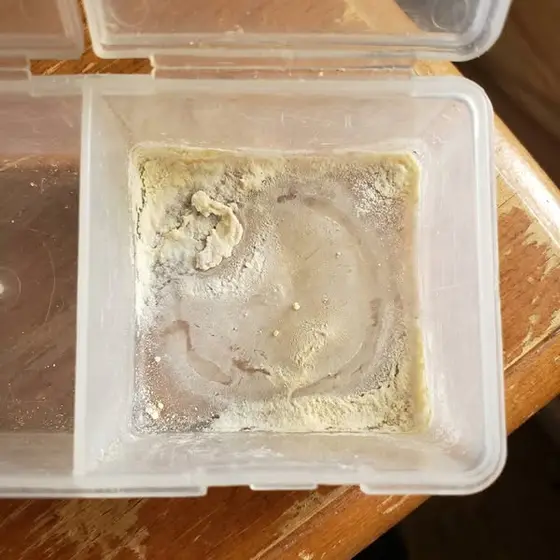
Look at that photo. That chalky crust and pale yellow powder stuck to the bottom of the compartment, that is what dissolves off your supplements every single week before you ever swallow them. You have been touching that residue with your fingers every morning without knowing what it means. If you have tinnitus and you refill that same organizer week after week, what you are about to read is going to change the way you look at every pill you have ever taken. That picture is not a random object. That is your nightstand. That is your Tuesday compartment, or your Thursday, or whichever day you opened last because the organizer was running low. Most people look at that photo and feel a mild wave of something they cannot quite name. Not exactly disgust. More like the feeling you get when you pull the refrigerator away from the wall for the first time in four years. The quiet horror of seeing what has been accumulating in a place you stopped looking. That powder is not harmless dust. That crust in the center is not just moisture. That is what your tablets leave behind when the coating breaks down in humidity, when the binders dissolve faster than the active mineral, when the compressed powder in a cheap tablet separates before it ever reaches your stomach. You have been touching that residue every single morning. And if you have tinnitus, that residue represents something that should make you very uncomfortable. It represents years of a system that was supposed to help you that was quietly failing. I want to tell you about my father. He was 67 when the ringing started. He described it like a single fluorescent tube in a long hallway, buzzing at a frequency just outside what other people could hear. He passed his hearing test. The audiologist said his hearing was, quote, appropriate for his age. He drove home, sat in the kitchen, and told my mother that the ringing was so loud that night he could hear it over the television from three feet away. But his hearing test said he was fine. His general practitioner said it was stress. His cardiologist said it was blood pressure. His ENT said it was tinnitus, which was not a diagnosis, that was just the Latin word for what he already knew was happening. They gave him a white noise machine. He used it every night for four years. The ringing did not stop. He had a pill organizer on his nightstand. He had been filling it every Sunday night for six years. Vitamin D. Fish oil. A B-complex. A multivitamin. Magnesium oxide, because he had read somewhere that magnesium was good for the ears. He never missed a day. He never looked at what was accumulating in the corners of those compartments. I looked at it after he told me the white noise machine was not working anymore. The residue in his organizer was worse than the photo above. The center of three compartments had a hardened yellow crust that had essentially fused to the plastic. That is what was left of his magnesium oxide tablets. And that is when I started pulling on a thread that nobody in the medical system had thought to pull for him. Here is what I found. Magnesium oxide, which is the form sold in the vast majority of budget supplements and multivitamins, has an absorption rate of approximately four percent. Four percent. Which means that if he was taking 400 milligrams of magnesium oxide every morning, his body was receiving, at most, sixteen milligrams of usable magnesium. The rest was passing through. Or dissolving in the humidity of the organizer and crusting to the bottom of the compartment before he even got to it. The recommended daily amount for men over 50 is 420 milligrams. He was absorbing sixteen. He had been absorbing approximately sixteen milligrams of usable magnesium every day for six years while thinking he was covered. And here is the part that connected everything for me. Magnesium is not a general wellness mineral. It is specifically essential for the auditory system in a way that nothing else is. The hair cells in the cochlea, the tiny sensory cells that translate sound vibration into electrical signal, are surrounded by fluid that requires magnesium to maintain its electrochemical balance. When magnesium levels drop below a functional threshold, those hair cells become hypersensitive. They fire without adequate stimulus. They generate electrical signals when there is no external sound to justify them. That signal travels up the auditory nerve to the brain. The brain interprets it as sound. You hear ringing. You hear buzzing. You hear a tone that no one else in the room can hear because it is not coming from the room. It is coming from hair cells that are misfiring because they are not bathed in enough magnesium to stay calm. This is not a fringe theory. This is documented in peer-reviewed audiology research going back to the early 1990s. The problem is that none of that research ever translated into the standard of care. Your audiologist does not test your serum magnesium. Your general practitioner does not connect a 4.8 on the blood panel to the ringing that started three years ago. And the supplement industry kept selling magnesium oxide because it is cheap to produce, easy to tablet, and almost completely useless for the people buying it. The residue in that organizer compartment is the physical evidence of that failure. It is what a mineral looks like when it has not been absorbed. When I started researching what form of magnesium actually crosses from the gut into systemic circulation and makes it to the auditory nerve, I found something that changed how I thought about the whole category. The chelated forms. Magnesium glycinate is bound to glycine, an amino acid that the gut recognizes as a nutrient rather than a foreign mineral salt. Absorption rate is between 80 and 90 percent. Magnesium malate is bound to malic acid, which is used directly in cellular energy production. It crosses the blood-brain barrier. It reaches the nervous system. There are six other forms, each with a different pathway, a different absorption rate, a different tissue affinity. A single-form supplement hits one pathway. An 8-form matrix hits all of them simultaneously. The auditory nerve gets reached by one form. The cochlear fluid gets replenished by another. The vascular smooth muscle around the inner ear, which controls circulation to the entire auditory apparatus, responds to a third. That is the mechanism that my father never got access to because everyone, his doctor, his pharmacist, the label on his supplement bottle, kept pointing him toward a form of magnesium that was leaving a crust in his pill organizer instead of reaching his cochlea. After four months on a properly formulated 8-form chelated magnesium matrix, he described the ringing as, quote, further away. Not gone. He was honest about that. But further away. He could hear my mother talking to him from the next room without asking her to repeat herself. He slept through the night for the first time in two years without the white noise machine running. The fluorescent tube in the long hallway, his words, had gotten dimmer. That is what proper absorption looks like when it finally reaches the system it was supposed to reach years earlier. Magnesium Complex by Neuropoise is an 8-form magnesium matrix that includes chelated forms, specifically magnesium glycinate and magnesium malate, alongside six additional forms designed to address auditory nerve calm, inner-ear circulation, and nervous-system relaxation through multiple pathways simultaneously. It does not contain magnesium oxide. It is not the residue in the corner of your organizer. It is formulated on the research that connects subclinical magnesium insufficiency to auditory hypersensitivity, and it is built for the adults who have been taking the wrong form for years while the ringing got worse and the white noise machine got louder. If you look at that photo above and feel something, that feeling is your body telling you something that six years of magnesium oxide did not fix. The system you trusted left a crust in a plastic compartment. There is a version of this that actually works. https://neuropoise.com/pages/list-1-tn
Placements and targeting
More ads from Neuropoise
That plastic case on the desk. You probably have one just like it. Your dentist made it because you were grinding your teeth down to nothing at night, and you figured if the grinding stopped, maybe the ringing would too. It did not stop the ringing. And your dentist never once asked about it. That image above is not staged. That is what a Wednesday morning looks like for a lot of men between 55 and 70. A used bite block in a plastic case, a mug of coffee going cold, and a set of keys you are about to grab on your way out the door to a day where you will spend most of your mental energy pretending you can hear people clearly. You read the menu three times at dinner last night. Not because you could not decide. Because you were memorizing your order so you would not have to ask the waiter to repeat himself in front of your family. That is the part nobody talks about. Not the ringing itself. The management of the ringing. The constant background work of passing as someone whose head is quiet. Your dentist saw the grind marks on your molars and made you a splint. Your ENT ran a hearing test, told you the results were within normal range, and sent you home. Your primary care doctor said stress. Maybe allergies. Come back in six months. And the ringing kept going. Here is what none of them told you. The jaw splint and the tinnitus are not two separate problems. They are two symptoms of the same underlying deficiency. And that deficiency is almost never tested for in a standard workup. Magnesium. Not the kind you take for constipation. Not a one-form grocery store tablet. A specific set of magnesium forms that cross into nerve tissue, support blood vessel tone in the inner ear, and directly regulate the electrical threshold of your auditory nerve. When that threshold drops, your auditory nerve fires on its own. Without sound coming in. That is tinnitus. Not a broken ear. Not a damaged cochlea that cannot be fixed. A nerve that is misfiring because the mineral it depends on to stay calm is chronically, systematically depleted. And the jaw grinding at night is the same system doing the same thing in a different location. Muscle cells and nerve cells share the same magnesium-dependent signaling pathway. When magnesium is insufficient, nerve cells become hyperexcitable. They fire when they should be resting. Your jaw muscles clench. Your auditory nerve rings. Same deficiency. Same mechanism. Different tissue. Your dentist gave you a piece of plastic to absorb the damage. Nobody addressed what was causing the muscles to fire in the first place. Now here is the part that should make you angry. Subclinical magnesium insufficiency, meaning not low enough to show on a standard serum blood test but low enough to cause real neurological symptoms, affects somewhere between 45 and 68 percent of adults over 50 in the United States. The standard serum magnesium test that your doctor orders measures the magnesium floating in your blood. That is less than one percent of the magnesium in your body. The other 99 percent is inside your cells, inside your nerve tissue, inside the structures of your inner ear. You can have a completely normal serum magnesium result and be severely depleted in the tissue where it matters. Most doctors do not order the test that checks intracellular levels. Most doctors do not know there is a meaningful difference between magnesium glycinate and magnesium oxide and why it matters enormously for nerve tissue specifically. So they test the wrong thing, find a normal number, and tell you your levels are fine. And you go home still grinding your teeth at night and still hearing a frequency that is not there. This is not a conspiracy. It is just a gap. Medicine is very good at treating deficiencies that show up on standard panels. It is not very good at treating insufficiencies that require a different kind of looking. Which means if you are waiting for a doctor to identify this as the problem, you may be waiting a long time. The magnesium forms that actually reach nerve tissue are chelated. Magnesium glycinate is bound to glycine, an amino acid that facilitates transport across the blood-brain barrier and into neuronal cells. Magnesium malate is bound to malic acid and is particularly concentrated in muscle tissue, which is why it directly affects the kind of nocturnal muscle hyperactivity that your dentist is treating with a bite block instead of addressing the actual cause. Magnesium taurate crosses into the cardiovascular tissue of the inner ear, the cochlear blood vessels that regulate fluid pressure and circulation in the structures responsible for translating sound into signal. When those vessels are insufficiently supported, circulation to the inner ear drops. Fluid pressure shifts. The nerve fires. You hear ringing. These are not the same as the magnesium in a grocery store multivitamin. The form determines whether the mineral reaches the tissue that needs it or passes through without being absorbed. Most magnesium supplements are oxide or citrate. They are cheap to manufacture. They are not well absorbed. They will move your bowels and do almost nothing for your auditory nerve. The distinction matters and nobody explains it. That is what Magnesium Complex by Neuropoise is built around. An 8-form magnesium matrix that includes glycinate, malate, and taurate alongside five other chelated and complexed forms chosen specifically to reach nerve tissue, inner ear circulation, and the muscle-nerve signaling pathway that your bite block is currently the only intervention for. The goal is not to replace your dentist's splint. The goal is to address the systemic nerve deficiency that is sitting underneath both the jaw grinding and the tinnitus and quietly running both of them. Men who have tried Magnesium Complex by Neuropoise report something specific in the first two to three weeks. Not silence. The ringing does not vanish overnight. What they notice first is that the nighttime quality changes. Less intensity. Less of that sharp high frequency that used to spike when the room got quiet. Sleep that is not constantly broken by the sensation of sound that is not there. After four to six weeks, the jaw tension changes. Some men stop needing the bite block every single night. Not because the dentist changed anything. Because the muscles are no longer receiving the hyperexcitable nerve signals that were driving the clenching in the first place. After two to three months, the background management gets easier. The dinner-menu rehearsal. The leaning forward in meetings. The asking people to repeat themselves and feeling your face go warm with embarrassment. That gets lighter. Not because the ears changed. Because the nerve is calmer. Because the system is no longer running in a chronic state of mineral depletion that turns every quiet room into a noise problem. Your dentist was not wrong to make you a splint. Your ENT was not lying when they said your hearing test was normal. But neither of them was looking at the thing that was driving the problem. You have spent two years protecting the symptom. Neuropoise is asking you to spend 90 days addressing the root. https://neuropoise.com/products/get-more-magnesium-complex
In 1928, a welfare matron at a telephone exchange kept a private register. Eight operators that year came to her small side office and pressed their hands against their ears and tried to describe something they could not name. The company's annual health report listed zero nerve complaints that year. Not one. The matron's register still exists in an archive in Ohio, and what she wrote in it may be the earliest documented record of what millions of women over fifty are told today is just stress. The photograph above this text was taken inside a welfare room off the main switchboard floor of a telephone exchange. The woman with her hand against her ear is not performing. She is doing exactly what you have probably done in a quiet room, or in a doctor's office, or alone in bed at 3 in the morning when the ringing is loud enough to drown out everything else. She is trying to describe something she cannot quite name. The matron across from her is writing it down. That register mattered. Not because anyone powerful read it. Nobody did. The company filed zero nerve complaints that year. Zero. But the matron wrote eight of them in her own hand, and she wrote the same phrase next to seven of the eight entries. "Persistent ringing. Worsens with fatigue. Operator cannot sleep." That was 1928. That description, almost word for word, is what researchers now classify as chronic tinnitus with sleep disruption. And the reason it went unrecorded, unaddressed, and unfiled for nearly a century is the same reason your doctor may have handed you a pamphlet about stress management and sent you home. The medical system does not have a clean pharmaceutical answer for what is happening inside your auditory nerve. So it tends to call it something else. Here is what is actually happening. Your inner ear contains a structure called the cochlea. The cochlea is wrapped in tiny hair cells. Those hair cells fire electrical signals along the auditory nerve to your brain every time you hear a sound. That process requires energy. Consistent, controlled, mineral-driven energy. The primary mineral that regulates that energy is magnesium. Magnesium controls the gates on your nerve cells. It determines how much electrical activity is allowed to fire and when those cells are allowed to rest. When magnesium levels in your body are insufficient, those gates do not close properly. The auditory nerve keeps firing. Not because there is a sound. Because the mineral that tells it to stop is not there in the amount your body needs. That is the ringing. That is the buzzing. That is the hiss that is there when you wake up, there when the room goes quiet, there when you are trying to listen to someone you love talk to you across a dinner table. Now here is the part that will make you angry. The standard blood test for magnesium does not catch this. A serum magnesium test measures the magnesium floating in your blood. But your blood is not where your body stores magnesium. Less than one percent of your body's magnesium is in your bloodstream. The rest is inside your cells, inside your bones, inside the tissue that lines your inner ear. So a doctor can run a blood panel, look at your serum magnesium, tell you it is normal, and send you home. While the magnesium inside your auditory nerve cells is depleted. While the gates are stuck open. While the ringing continues. This is not a fringe theory. This is published data. Researchers at several major university hospitals have documented the connection between intracellular magnesium insufficiency and both tinnitus severity and sleep disruption in patients over fifty. The telephone operators in that 1928 register were not anxious. They were not imagining things. They were not simply aging. They were working eight-hour shifts with headsets pressed against their ears, in a decade before anyone understood what sustained auditory nerve stress did to the mineral balance inside the cells of the inner ear. The matron knew something was wrong. She wrote it down. The company did not want to know. And the women went home and lived with it. If you are over fifty and you have tinnitus, there is a very specific reason the standard approaches have not worked. Lifestyle advice does not replenish intracellular magnesium. A standard multivitamin with a small amount of magnesium oxide does not replenish intracellular magnesium. Magnesium oxide has the lowest bioavailability of any magnesium compound. Your body absorbs roughly four percent of it. The other ninety-six percent passes through you without reaching the nerve cells that need it. This is why women who have been taking magnesium for years still have the ringing. They are taking the wrong form. The forms that actually cross into your cells and reach auditory nerve tissue are chelated forms. Magnesium glycinate crosses the blood-brain barrier and reaches the nervous system directly. Magnesium malate supports the energy production inside nerve cells specifically. Magnesium taurate has documented effects on inner-ear circulation. These forms are more expensive to produce. They are harder to source. Most supplement companies do not use them. Magnesium Complex by Neuropoise was formulated around this exact problem. Eight forms of magnesium, including the chelated forms the research actually points to, combined into a single daily formula built specifically for auditory nerve support, inner-ear circulation, and the kind of nervous system relaxation that lets your brain stop treating silence like a threat. The people who take it consistently describe a shift that happens in stages. The first thing they notice is sleep. Not the ringing disappearing overnight. The sleep coming back first. Because when the auditory nerve stops firing at the same relentless pitch, the nervous system starts to settle, and the body starts to rest the way it is supposed to. Then, over the following weeks, the ringing becomes something that is present but quieter. Something that no longer fills every quiet room. Something that is no longer the first thing you hear when you wake up. Women who have lived with this for years describe it as the difference between a sound that owns the room and a sound that is just in the background. That shift matters more than people who have never had tinnitus can understand. It means you can sit in a quiet room again. It means you can follow a conversation at dinner without that frequency running underneath it. It means the silence that kept you awake is no longer something you are afraid of. The welfare matron in that photograph had no answer to give the operator sitting across from her. She had no mechanism. No research. No formula. She only had the register, and the willingness to write down what she was told. What she wrote down is what we now understand to be a mineral deficiency in the auditory nerve. And the answer that did not exist in 1928 exists now. It is not a pharmaceutical. It is not a procedure. It is a precise combination of the eight magnesium compounds your auditory nerve actually uses, in the forms your cells can actually absorb. Magnesium Complex by Neuropoise. If you have been living with the ringing and you have been told it is stress, or aging, or something you simply have to accept, you deserve to know what the research actually says. You deserve the answer the welfare matron could not give. https://neuropoise.com/products/get-more-magnesium-complex
That avocado in the photo above was cut open this morning. By afternoon it looked like that. Nobody poisoned it. Nobody burned it. It just got exposed to air, and it rotted from the inside out, the same exact process that is happening inside the neurons in your brain right now. That image above is a piece of avocado flesh left cut-side up for a few hours. No heat. No toxins. Nothing dramatic. Just time and oxygen. And it turned into that. I want you to sit with that for a second, because what you are looking at is called oxidation. It is the same chemical process happening inside your brain cells right now. And the reason nobody has explained it to you in plain language is because there is no expensive prescription drug that owns the solution. So nobody gets paid to tell you. Let me change that. Your brain runs on energy. Not willpower. Not motivation. Not sleep. Energy. Cellular energy. Produced by tiny structures inside every neuron called mitochondria. Mitochondria are the reason you can think clearly at 8 in the morning, hold a complex thought for more than ten seconds, remember a name without straining, and get through the afternoon without feeling like your skull is packed with wet sand. When your mitochondria are working the way they are supposed to, your brain feels sharp, fast, and alive. When they are not, you feel it immediately. The fog rolls in. Words disappear mid-sentence. You read the same paragraph three times and nothing sticks. You walk into a room and forget why before you get there. You feel exhausted by noon even though you slept eight hours. Sound familiar? Here is what your doctor is not telling you. That is not normal aging. That is oxidative stress attacking your brain cells, and the medical system has almost nothing to offer you for it except a shrug and a suggestion to exercise more. Oxidative stress works exactly the way that avocado rotted in the photo. Your neurons get exposed to what are called free radicals, unstable molecules created as a byproduct of basic cellular activity. Under normal conditions, your body neutralizes them. But after 45, that neutralization system gets slower, less efficient, and increasingly overwhelmed. The free radicals accumulate. They attack the mitochondrial membrane, the part that generates ATP, which is your brain's actual fuel. The membrane gets damaged. Energy output drops. Your neurons start working on backup power. And you feel it as fog, fatigue, confusion, and that slow, creeping sense that you are not as sharp as you used to be. Most people assume it is stress. Or sleep. Or getting older. They take a B12 supplement and hope for the best. It does not work. Because B12 does not address the mitochondrial membrane. It does not neutralize free radicals at the cellular level. It does not restore ATP production. It is like putting air freshener in a room that is structurally on fire. The smell might improve briefly. The house still burns. Now here is where the story gets interesting, and also where it gets infuriating. There is a compound that has been studied and used in medicine for over 130 years. It was synthesized in 1876. It was used to treat malaria, methemoglobinemia, and a range of serious neurological conditions. And for decades, researchers have been quietly documenting something else it does. It acts as an electron carrier inside the mitochondria. That means it essentially plugs into your cell's energy production line and helps the mitochondria generate ATP more efficiently, even when oxidative stress has damaged the normal pathway. It also has direct antioxidant activity, neutralizing the free radicals that cause the browning you saw in that avocado. This compound is called Methylene Blue. And unless you are deep into longevity research or neuroscience circles, you have probably never heard of it in the context of brain health. That is not an accident. You cannot patent a compound that has been around for 130 years. So there is no financial incentive for a pharmaceutical company to run a massive clinical trial and market it to you on television. The money is in the drugs they can own. Methylene Blue, they cannot own. So the research sits in academic journals. The doctors who know about it are the ones who went looking for it outside the standard protocol. And the rest of the medical system keeps telling you your labs are normal while you feel like you are disappearing one foggy afternoon at a time. The research is real. A study published in the journal Radiology found that a single low dose of Methylene Blue improved memory encoding and retrieval in healthy adults. Not in people with diagnosed dementia. In cognitively healthy adults who simply took a dose and got tested. Other research has focused on Methylene Blue's role in supporting the electron transport chain, the specific mitochondrial pathway that produces most of your cellular ATP. When that pathway is compromised by oxidative damage, energy production drops and cognitive function drops with it. Methylene Blue helps restore function to that pathway. Not by masking the problem. By actually participating in the chemistry. That distinction matters enormously. Now here is the delivery problem that most Methylene Blue products on the market do not solve. The compound needs to reach your neurons at a meaningful concentration to do what the research describes. If you swallow a capsule, significant amounts of the active compound get broken down during digestion before it ever reaches systemic circulation. The solution is buccal absorption. That means the compound starts absorbing through the tissue in your mouth, directly into the bloodstream, before it ever hits the stomach. This is the same reason some cardiac medications are administered sublingually in emergencies. Speed and bioavailability. A gummy format, chewed slowly and held in the mouth, is specifically suited for this delivery mechanism. It keeps the compound in contact with the buccal tissue long enough for absorption to begin before you swallow. This is why the format is not cosmetic. It is functional. The product that does this correctly is called Methylene Blue Gummies by Neuropoise. USP-Grade, 99.9% pure Methylene Blue, formulated as a gummy specifically to leverage buccal absorption. Not a capsule. Not a powder you dissolve in water. A gummy, because the mechanism of absorption requires mucosal contact time that a pill does not provide. Let me be direct with you about something. If you are 45, 50, 55, or older, and you are relying on a multivitamin, some fish oil, and decent sleep to protect your brain over the next two to three decades, you are bringing a paper umbrella to a rainstorm. The oxidative load on your mitochondria is increasing every year. Your body's natural antioxidant systems are declining every year. The gap between damage and repair is widening every year. And every year that gap stays open is another year of your most valuable cognitive years being spent in a fog you did not have to accept. The avocado in that photo did not rot because it was low quality. It was fresh that morning. It rotted because nobody intervened in the oxidation process. Your neurons are not low quality either. But they are being exposed to the same chemistry. And the question is whether you are going to intervene or sit and watch the browning happen. The people who end up cognitively sharp at 70 are not just lucky. They are people who took the mechanism seriously before the damage was irreversible. Before the fog became permanent. Before the forgetfulness crossed the line into something that scared the people who love them. You are reading this before that line. That matters. Methylene Blue Gummies by Neuropoise is the intervention. USP-Grade purity matters because even trace contaminants in lower-grade versions of this compound cause problems. The 99.9% purity specification is not marketing language. It is a safety requirement. The gummy format with buccal absorption is not a gimmick. It is the reason this format delivers what the research describes instead of what most supplements deliver, which is very little. One more thing before you move on. The afternoon crash you have been blaming on lunch, on age, on stress, is most likely a mitochondrial energy problem. Your neurons are running low on ATP and burning through the last of their reserves between noon and 4 PM. That is the mechanism. That is what you feel. And it is addressable. Not with another cup of coffee. Not with a nap. With the actual chemistry of cellular energy production working the way it is supposed to work. That is what Methylene Blue does. That is what Methylene Blue Gummies by Neuropoise delivers. https://neuropoise.com/products/methylene-blue-gummies-1
Similar skincare ads
✨ Apply Non-Invasive Facial Sculpting Techniques With Precision, Safety, and Holistic Professional Care. In our Facial Sculpting Therapist Certification, the teachings bring together facial anatomy, skin science, manual sculpting methods, lymphatic support, holistic facial care, device-assisted modalities, hygiene, ethics, and client communication. Rather than presenting facial sculpting as a miracle solution or a one-size-fits-all technique, this training teaches a grounded, professional, and responsible approach — combining technical precision with client comfort, aesthetic awareness with ethical practice, and manual skill with holistic sensitivity. Because the program is fully online, you can join from anywhere in the world. No advanced medical background is required — this course is open to beauty therapists, estheticians, massage therapists, spa and wellness professionals, holistic practitioners, and anyone who wants to offer structured, client-centered facial sculpting sessions. And with accreditation from IPHM, CMA, and CPD, insurance eligibility via ICHAP, and CEU credits via NCCAP, this certification is a solid foundation for a credible, insurable practice. Course Highlights — 10 Modules: ▪ Module 1 – Foundations of Facial Sculpting Therapy ▪ Module 2 – Applied Facial Anatomy and Physiology for Sculpting ▪ Module 3 – Skin Science, Assessment, and Treatment Planning ▪ Module 4 – Core Manual Techniques for Facial Sculpting ▪ Module 5 – Advanced Manual Methods — Buccal, Intraoral, and Specialized Techniques ▪ Module 6 – Device-Assisted Facial Sculpting Modalities ▪ Module 7 – Integrative and Holistic Approaches to Facial Sculpting ▪ Module 8 – Hygiene, Safety, Ethics, and Professional Conduct ▪ Module 9 – Client Communication, Cultural Competence, and Practice Management ▪ Module 10 – Integrating Skills into Professional Facial Sculpting Practice 🎧📄 Nearly 10 hours of audio and 11 downloadable PDFs. Lifetime access on any device. 🌿 Weekly live Q&A and access to a private community of practitioners. 🤗 ✨ Interactive quizzes, guided feedback, and direct instructor access. 🏅 Insurance eligible via ICHAP. CEU credits via NCCAP. Rated 4.82 on Trustpilot. 30-day money-back guarantee. Start your journey today and become a Certified Facial Sculpting Therapist. Now is the moment to combine beauty, relaxation, and holistic wellbeing into a professional practice that is safe, refined, and genuinely client-centered. ➔ naturalistico.com/en/learn/course/3076/facial-sculpting-therapist-certification
💪✨ Gentle, hydrating retinol 💧 Shea Butter + Ceramides for deep moisture
Keep exploring
Find more ads like this
Search millions of real ads by keyword, niche and format, and save the winners to your swipe file.