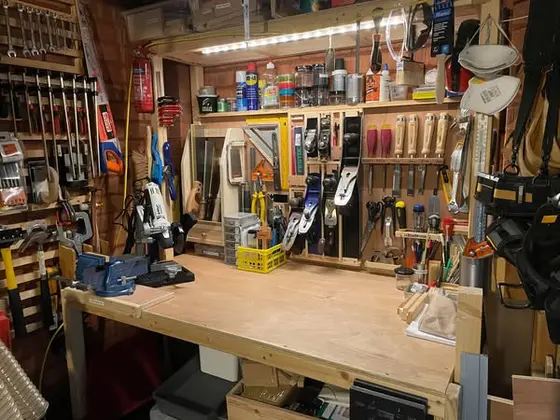
Nerve Support Community Facebook ad creative
alevia.com
Feel Like Yourself Again
Learn more

Nerve Support Community Facebook and Instagram ad

Nerve Support Community ran this image ad since Jun 26, 2026, 134 days so far, targeting United Kingdom.

First seen
Jun 26, 2026
Running for
134 days
Format
Image
Call to action
Learn more
Niche
Shoes and sneakers
Countries
1 targeted
Page likes
1,690

Ad copy

My mechanic dropped a 10mm socket on his own foot two Tuesdays ago and laughed about it. I wasn't supposed to be at the shop that day. I'd come in to pick up my F-150 after a brake job and I was standing in the doorway between the customer waiting area and the bay because I've known Lupe for almost 20 years and we always talk for a few minutes before I leave. He was under a Tacoma on the lift, on the creeper, and he was tightening something on the exhaust, and the socket just slipped out of his hand and bounced off his boot and rolled under the next bay. He laughed. "Third one today, mija," he said. "Pretty soon I'm gonna start charging the shop floor for storage." He laughed but his eyes didn't. I drove home that afternoon thinking about Lupe's eyes. My name is Marisol. I'm 52 years old. I live in Bakersfield, California with my husband Hector and a 13 year old beagle named Frijol who has more health problems than the rest of us combined. We've been in the same little stucco house off Niles Street since 1998. My oldest son lives in Fresno and my youngest is in his last year at Cal State. I work part time at a dental office on Coffee Road, and I've been doing that for 11 years. Lupe Mendoza has been my mechanic since 2006. He owns a 3 bay shop on Edison Highway called Mendoza Auto, and his apprentice is his 27 year old nephew Danny who has a sleeve tattoo of the Virgin Mary and a baby on the way. Lupe is 63. He has been a mechanic since he was 18. He used to be the kind of man who could find a stripped bolt by feel, in the dark, with one hand. I want to tell you what was happening at that shop, because it's where this whole thing started, and because it's why I'm sitting here writing this on a Wednesday morning when I should be folding laundry. I'd noticed something at Mendoza Auto a few months before the socket fell. Little things at first. I'd come in to drop off the truck and Danny would be the one writing up the work order, not Lupe. Lupe would be in the back, on his stool, drinking from a thermos and watching. The first time I noticed it, in February, I figured he was just letting the kid learn. The second time, in March, I thought he might have hurt his back. The third time, in May, I asked him about it. "Tio," I said. We all call him Tio. "You okay? You haven't been doing the write ups." He shrugged. He smiled. He waved me off. "My hands aren't doing what I tell them, Marisol. The pen is too small. The numbers come out like a kid wrote them. Danny does the paperwork now. I do the wrenching." I thought about that for a second. "Okay but Tio, the wrenching needs your hands too." He looked at me for a long beat. Then he shrugged again and walked over to the coffee maker. "The wrenching, the hands know what to do. The pen, the hands argue with me." I didn't push it. But after that, I started watching. I couldn't help it. Every time I came in I'd watch him work, and the man I had known for nearly 20 years was moving differently. He used to glide. He used to walk under a car and have it diagnosed before he'd even finished his coffee. He had hands like a sculptor's, big and dark and strong, with knuckles that looked like he could break a hammer in half. Now he was setting things down too carefully. He was picking up wrenches with his whole fist instead of his fingers. He was using his palm to brace against the fender when he stood up. And he was dropping things. A 10mm socket. A flashlight. A small ratchet. A spark plug. A foam coffee cup that splattered all over the concrete one morning while I was waiting on an oil change. He'd laugh every time. But the laugh was a little smaller every time. And his eyes weren't laughing. The day of the 10mm on the boot was the day I went home and didn't fold any laundry. I sat at my kitchen table and I cried. I want to tell you why I cried, because it wasn't just for Lupe. My father was a mechanic. Antonio Castillo. He worked in a garage in Delano for 41 years, on tractors and pickup trucks and once, famously in our family, on a 1962 Impala that belonged to the man who owned the grapes. My father retired in 2003. Within 18 months of retiring, his hands started doing the same thing Lupe's were doing. Not pain, exactly. Numbness. A loss of fine control. He'd reach for the salt and his fingers wouldn't quite close. He spent the last 6 years of his life with hands that couldn't button his own shirt. My mother buttoned it for him every morning until the morning she didn't have to anymore. His doctor said it was the years on the tools. He said it was just what happens. He said it was the price of a working life. I have hated that explanation for 11 years. So when I sat at my kitchen table that Tuesday and thought about Lupe's eyes and Lupe's laugh and the socket on his boot, I was also thinking about my father in the dining room in Delano with my mother bent over his collar, working a button through a buttonhole, and I was thinking about her hands shaking, and I was thinking about the way my father would look out the window the entire time so he didn't have to look at her, and I was crying in my kitchen with a dish towel pressed against my mouth. I texted Lupe the next morning. I just said, "Tio, can we get coffee. Not at the shop. Somewhere quiet." He texted back, "Saturday. Dewar's. 9 AM." Dewar's is a candy shop on Eye Street that's been there since the 1930s and they make breakfast on weekends. It's not really a candy shop on Saturday mornings, it's a diner with too many old men in too many baseball caps eating eggs. I got there at 8:50. He was already in a booth in the back, with two cups of coffee, sitting with his hands flat on the table like he was bracing for something. I sat down. I didn't even take my purse off my shoulder. "Tio," I said. "What's going on with your hands." He looked at me for a long time. Long enough that I almost apologized and changed the subject. Then he said, "Marisol, I've been a mechanic for 45 years. I've turned a wrench every day of my adult life. I've had cuts and burns and a busted thumb in 1991 from a jack handle that snapped back. None of that ever scared me. This scares me." He picked up his coffee. His hand shook. He set it back down. "It's not the pain," he said. "It's the feeling. The feeling is going. I can't feel a bolt the way I used to. I pick up a 10mm and I have to look at it to know I'm holding it. My fingertips, it's like somebody put a glove over them. A glove I can't take off." He went quiet for a minute. "And it's moving up. It used to just be my fingertips. Now it's most of my fingers. My feet too. I stepped on a wrench last week, a half inch box end, just sitting on the floor of the bay, and I didn't feel it through my boot until I looked down." He looked at me with the saddest eyes I have ever seen on a grown man. "I have a baby coming in October. Danny's baby. My great nephew. I'm supposed to teach him to ride a bike one day. I'm supposed to teach him to fix the chain." I reached across the table and I put my hand on his hand. His skin was warm and thick and the calluses were as hard as they'd ever been. But underneath them I could feel that something was wrong. I don't know how to describe it. It was like holding a hand that didn't quite know I was holding it. "What did the doctor say," I asked. "He said it's diabetic neuropathy. He said my A1C has been creeping up for years and now the nerves are paying for it. He gave me a pill. The pill makes me sleepy and dizzy and I can't drive home from the shop. So I stopped taking the pill." "And then what." "And then nothing, mija. He shrugged. He said this is what happens. He said it'll get worse. He told me to lose weight, eat better, watch my sugar, and try to come to terms with it." He looked out the window. There were two old men outside the diner, both in straw cowboy hats, both leaning on the same pickup truck. "Come to terms with it," he said, very quietly. "That's what he told me." I didn't go home and fold laundry that afternoon either. I went home and I sat at my computer for 6 hours. I made coffee twice. I forgot to eat lunch. Hector came home from work and asked me what I was doing and I told him I was helping Lupe and he kissed the top of my head and let me alone. I read about neuropathy until my eyes burned. I read about what was actually happening inside Lupe's hands and feet. Not the surface explanation, not "your nerves are damaged from sugar." The deeper one. The one his doctor didn't have time to explain in a 9 minute appointment. What I learned, in plain language, was this. There's a thing your nerves do all day, every day, that nobody thinks about. They send signals. Touch. Pressure. Temperature. The feeling of a bolt in your fingertips. The feeling of a wrench through a boot. All of it. And to do that, the nerves themselves need to be in good shape. They need their protective coating intact. They need to be supplied with steady fuel. They need the tissue around them to be calm and well kept. When blood sugar runs high for a long time, even just a little high for a lot of years, a few things start happening underneath the surface. The small blood vessels that feed your nerves start to get stiff and inflamed. The sugar in the blood reacts with proteins in a process called glycation, which is basically the same thing that happens to a steak when you sear it. The reactions kick off a kind of slow, oxidative damage. The nerves stop getting the supply they need. The protective coating starts to break down. The signals start to misfire. And the part that nobody talks about, the part that made me sit up in my chair, is that this is a smoldering process. It's not one big event. It's a slow fire of oxidation and inflammation, burning quietly inside the smallest vessels of your hands and feet, year after year, eating at the nerves from the outside in. That's why it starts in the fingertips and toes. Those are the longest, thinnest nerve endings, fed by the smallest vessels, the furthest away from the heart. They're the first to lose supply when the fire starts. Like the last houses on a power line in a brownout. The pills Lupe's doctor gave him, the ones that made him too dizzy to drive, those pills do nothing about the fire. They just dampen the signal of the pain that the dying nerves are sending up the line. They don't help the nerves. They don't help the vessels. They don't touch the slow oxidation underneath. I'm not a doctor. I work at a dental office. But after 6 hours of reading I understood the shape of what was happening better than I had ever understood it for my own father. And the next thing I read about, late that night, around 10 PM, when Hector was already asleep on the couch with Frijol on his chest, was something called amla. I had never heard the word. I almost scrolled past it. What stopped me was a paragraph that said researchers had been looking at amla, which is a fruit from India, also called Indian gooseberry, for its role in supporting healthy blood sugar response, supporting healthy inflammation levels, and supporting the small vessels and tissues that get hit hardest by long term metabolic stress. The same vessels and tissues that feed the nerves. The compounds in amla, particularly a family of polyphenols and tannins and a marker compound that's apparently a big deal in the research world, have been studied for their connection to oxidative stress reduction. The slow fire. They've been associated with healthier markers of inflammation. They've been linked, in studies, to the kind of pathways that help the body handle the byproducts of high blood sugar more gracefully. Including the byproducts that quietly cook the nerves. I want to be clear about something. I'm not telling you amla is a cure for nerve damage. The research brief I read was very honest about what the studies actually show and what they don't. What I am telling you is that for the first time in 11 years, I read something that made sense of what had happened to my father, and what was happening to Lupe, at the level of the actual mechanism. Not a shrug. Not "this is what happens." Not "come to terms with it." A real explanation. A slow fire fed by metabolic stress, eating at the smallest vessels, starving the longest nerves, and a fruit from the other side of the world that has been used for 2,000 years and is now being studied for the way it supports the body's own ability to handle that fire. I sat there in my kitchen at 10:47 PM and I had what I can only describe as a feeling of being talked to like an adult. I want to tell you what happened next, but first I want to say one more thing about Lupe, because it matters. Lupe is the kind of man who has never asked anybody for anything in his whole life. His father came up from Sonora in 1959 with $40 and a wooden suitcase. His mother cleaned houses in Beverly Hills for 30 years. Lupe paid for community college himself by working at a tire shop on Brundage Lane. He bought Mendoza Auto in 1992 with money he saved one tire rotation at a time. He has never accepted a free meal or a free oil filter or a free piece of advice in his life. So I didn't tell him I'd been researching. I didn't show up at the shop with a printout. I knew how he would react. He would smile, and he would thank me, and he would walk away from the conversation and never come back to it. What I did was, I bought a bottle of Alevia Amla for myself. The brand is Alevia. The product is Alevia Amla. I bought it on a Tuesday night, sitting in bed in my reading glasses, while Hector watched a Dodgers game in the living room. The bottle is small and dark and the label is clean and it has 60 capsules in it. 2 a day. The instructions said to take it with food in the morning. There was a 90 day money back guarantee, which meant I could try the whole bottle, and if I didn't notice anything different, I could send it back and get my money refunded. I'm 52. I don't have neuropathy. But I have my father's history and my own creeping numbers and I have been tired for the last 4 years in a way that feels different from regular tired, and my hands have started to feel a little less reliable when I'm doing crowns at work, and I have been quietly worried about it for longer than I have admitted to anyone, including Hector. So I started taking it. 2 capsules with my morning coffee. I did not feel anything for the first 12 days. I almost forgot about it. I'd put the bottle next to my multivitamin and I'd take both at the same time and I'd go to work. Around day 16, I noticed that I'd stopped reaching for my afternoon Coca Cola at work. I'd been drinking one every day at 2 PM for 6 years. I just hadn't been wanting it. I didn't connect it to the amla at first. I just thought I was breaking a habit. Around day 22, I noticed that I'd been sleeping straight through the night. I hadn't been getting up at 3 AM to pee. I have been getting up at 3 AM to pee since 2016. I almost cried in the bathroom that morning, brushing my teeth, because I had slept 7 hours in a row. Around day 30, Hector said to me at dinner, "Marisol, you've got color in your face. What are you doing different." I told him about the amla. He raised one eyebrow and said, "Huh." And around day 38, I decided it was time to talk to Lupe. I went to the shop on a Friday afternoon, right before closing. Danny was out on a parts run. Lupe was alone, sitting on his stool, wiping his hands on a shop rag. I sat down on the other stool. I didn't say hello. "Tio," I said. "I'm going to talk and you're going to listen. And then you're going to let me give you something." He looked at me. I told him about my father. I told him I'd been thinking about my father for 11 years and that I'd never forgiven the doctor in Delano for shrugging. I told him I'd watched him drop the 10mm and I'd gone home and cried because his eyes looked like my father's eyes had looked in 2004. I told him I'd spent 6 hours reading about what was actually happening inside his hands and his feet. I told him about the slow fire. I told him about the small vessels. I told him about the nerves at the end of the line, starving, year after year. And I told him about Alevia Amla. I told him I'd been taking it for 38 days. I told him it didn't fix me, because I wasn't broken in the way he was, but I told him about the Coca Cola I'd stopped wanting and the night I slept all the way through and the way my face looked in the mirror at the dental office last Tuesday morning. I pulled the bottle out of my purse and I set it on the workbench between us. "I'm not asking you to believe me," I said. "I'm asking you to try one bottle. 30 days. If it does nothing, you send it back and you get every dollar refunded. 90 day guarantee. You don't even have to be nice about it on the phone." He looked at the bottle for a long time. He picked it up. He turned it over slowly. He put it back down. He didn't say anything. I almost left. Then he said, "Mija, what's the fruit again." "Amla," I said. "Indian gooseberry. They've used it over there for thousands of years. Researchers have been looking at it for what it does for the kind of slow tissue damage that comes with high sugar." He nodded slowly. "My grandmother used to talk about a fruit. Not amla. Something from back home. She said her mother gave it to her father when his feet went numb. She said it was an old village thing." He picked up the bottle again. "Every culture has one," he said. "Maybe it's the same fruit. Maybe it's a different one. But every culture, mija. The old ones knew." He took it home that night. It has been 11 weeks since Lupe took that bottle home. I want to tell you what changed for him, and I want to tell you carefully, because I don't want to be the woman who oversells a thing to people who are reading on their phone. In the first 3 weeks, he said he didn't feel much. He kept taking it. I checked in with him every Sunday by text. He'd say "still here, still wrenching." I left him alone. In week 4, he texted me at 6:42 in the morning. The text said, "I felt the bolt today." That was it. That was the whole text. I called him on my lunch break. He told me he'd been changing out a starter on a Honda Civic and he'd reached down to feel a 13mm without looking at it, the way he used to, and his fingertips had told him what size it was. He said he'd sat on the creeper underneath that Civic for almost 5 minutes just holding the bolt. He said the glove was lifting. Not gone. He was very specific. He said it wasn't gone. He said his pinky and his ring finger still felt thicker than they should. But the index finger and the middle finger and the thumb, on both hands, were starting to feel more like themselves. In week 7, he stopped dropping the 10mm. He stopped dropping anything. In week 9, he told me his feet had started feeling the floor of the shop again. He'd gone home one night and walked from his car into his house with no shoes on the front walk, in the gravel, and he'd felt every stone. He cried when he told me that. On the phone. A 63 year old Mexican mechanic who hasn't cried in front of me in 20 years. Last Tuesday, I went into the shop to get my F-150 inspected. Lupe was on his feet. He was writing up the work order himself. The handwriting was steady. The numbers were the size they were supposed to be. He looked up at me when I walked in and he winked. I want to say something to you, whoever you are reading this. Because I know the kind of person who reads a story like this. You're somebody who has watched somebody you love start to lose pieces of themselves quietly, the way my father did, the way Lupe almost did. Or you're somebody who has started to notice it in yourself. The fork that doesn't sit right in your hand. The feet that feel like they're wrapped in something. The button that takes too long. The grip that isn't there. And somebody has told you it's just what happens. I am telling you that there is more going on underneath the surface than your doctor in a 9 minute appointment is going to explain to you. There is a slow fire, fed by years of metabolic stress, burning quietly in the smallest vessels of your body, eating at the nerves at the end of the line. The pills don't put out the fire. They just turn down the volume of the alarm. And there is a fruit from the other side of the world, used for thousands of years, that researchers are looking at for the way it supports the body's own ability to handle that fire. Not as a cure. Not as a miracle. As a daily, quiet, supportive thing that gives your body what it needs to do what it's been trying to do for itself the whole time. Alevia Amla. One bottle. 60 capsules. 2 a day with food. Made in the USA. 90 day money back guarantee. If you take it for the bottle and you feel nothing, you send it back, and they give you your money back, no fight. You can find it here: 👉 alevia.com/amla/33 P.S. Lupe is teaching Danny how to use a torque wrench on the engine mounts of a Tacoma this Saturday. He's standing up to do it. He's holding the wrench in his right hand. His grandbaby is going to be born in 6 weeks. He said the first thing he wants to do after holding her is feel the back of her head with his fingertips, the way he felt his own kids' heads when they were born. He said for a year he was afraid he wasn't going to feel anything when he did. P.P.S. I started Hector on Alevia Amla last month. He works construction and his numbers have been creeping up the same way Lupe's were and he is the most stubborn man I have ever met and he agreed to try it because he could see what it had done for me. He's been on it for 5 weeks and he came in from work last Friday and he told me he hadn't needed his afternoon Mountain Dew all week. He didn't connect the two things. I didn't say anything. Some men have to find their own way. P.P.P.S. If you have a Lupe in your life, or a father in your life, or a husband in your life, or if you are the Lupe in somebody else's life, I am asking you to read about what is actually happening at the level of the mechanism, and then decide for yourself. You have 90 days to send it back. You have nothing to lose except, maybe, the feeling of a 10mm in your fingertips at 7 in the morning under a Toyota. 👉 alevia.com/amla/33

Placements and targeting

FacebookInstagramAudience NetworkThreads🇬🇧 United Kingdom

More ads from Nerve Support Community

Full Nerve Support Community profile
Nerve Support Community
Inactive134 days
alevia.com
Feel Like Yourself Again
Learn more

My son Dale repaved my driveway for Mother's Day this year, and I stood barefoot on the wet concrete to leave a handprint like I did when he was 4, and that's when I realized I couldn't feel the warmth. The concrete was 78 degrees. The sun had been on it for almost two hours. Dale had finished the pour just before lunch and he'd called me out to the front porch with that big stupid grin of his and said, "Mama, get out here, you gotta put your hand in it." I walked down the front steps barefoot because that's how I did it the first time, in 1991, when he was a little boy with his cheeks still round. I knelt down at the edge of the slab. I put my hands flat on the surface. And I felt nothing. Not heat. Not cold. Not the rough wet grit of the concrete. Just pressure, the dull pressure of pushing something with the bottom of my palm. Like wearing a thick winter glove and trying to feel a doorknob through it. I pressed harder. Tried to make my hands work. Nothing. Dale was crouching next to me with his phone out trying to take a picture and he didn't see my face, and I'm grateful for that, because if he had seen my face right then he would have known. I made my hands smile. That's the only way I can describe it. I made my hands do the thing they were supposed to do. Pressed them down. Held them. Counted to three. Lifted them up. Looked at the prints in the wet concrete. Then I stood up and I told him it was perfect, baby, just perfect, and I went inside and I sat on the closed lid of the toilet in my downstairs bathroom and I cried so quietly that even Dale, who was 25 feet away on my porch, couldn't hear me. I'm 63 years old. My name is Patrice. I've lived in the same house off Chapman Highway in Knoxville for 38 years. And the moment I knelt on that concrete and couldn't feel the warm slab my son had poured for me, I knew I was losing pieces of myself I hadn't even noticed leaving. Let me back up. Dale is my middle child. He's 38. He owns a small concrete company that does residential pours all over east Tennessee. Driveways. Patios. Pool decks. The kind of guy with permanently grey hands and a sun-bleached company hat and a Ford F-250 that smells like coffee and silica dust. He's a good son. Calls me every Sunday. Brings his two girls over once a month so they can wreck my couch cushions and eat the cinnamon rolls I keep in the freezer just in case. My driveway had been cracking for about six years. Big spiderwebs at the top by the garage. A whole section near the mailbox that had heaved up about an inch and a half. Every time Dale came over he'd shake his head at it and say, "Mama, I'm gonna do this for you one of these springs." This was the spring. He showed up on the Saturday before Mother's Day with three guys and a Bobcat and a delivery truck, and they tore the old driveway out by 11 AM, prepped the base, laid the rebar, and poured a fresh slab by lunchtime. It was the nicest thing anybody had done for me in years. And I couldn't feel it. I want to tell you when this thing started, but I have to be honest. I don't know. That's the worst part. It snuck up on me so slowly that I can't point to a Tuesday in March of some particular year and say, "There. That's where it started." It just got worse one piece at a time. I'd been having trouble with my feet for maybe four years. The first thing I noticed was that I'd stub my toe on the corner of my bed frame at night and not really feel it. I'd hear it, that little wood thunk. I'd see the toe later, sometimes a little purple. But the moment of stubbing didn't hurt the way stubbing your toe is supposed to hurt. I told my doctor about it at my annual physical maybe three years ago. She's a nice young woman, Dr. Hayes. She asked me to walk a line, heel to toe. I did fine. She tapped my knees with the little hammer. They reacted. She poked the bottom of my foot with a thing that looked like a fishing line. I felt some of it, missed some of it. She said the words I hate now, looking back. "Patrice, some of this is just aging." Aging. She said it kindly. She didn't mean any harm by it. But that word, "aging," has been used against women in my body for 200 years to explain away every single thing that goes wrong with us, and I want you to remember that as you read the rest of this story. She said it could be a touch of neuropathy. Said to watch my blood sugar, even though my blood sugar has always been fine. Said to wear good shoes. Said to come back if it got worse. It got worse. Of course it got worse. The next year I started having trouble at night when I'd get up to use the bathroom. The carpet in my hallway felt strange under my feet. Not painful. Not really anything. Like walking on cold sand through socks. I'd touch the wall to keep my balance even though I wasn't actually unsteady. I just couldn't quite tell where the floor was. Then it started in my hands. This one I noticed at my church. I sing alto in the choir at Mount Olive Baptist on Western Avenue. Have for 22 years. We hold hymnals. Two hundred Sundays a year, I've held a hymnal in my left hand and turned pages with my right hand and sung "Blessed Assurance" and "How Great Thou Art" and "I'll Fly Away." Last summer I dropped the hymnal three times in one service. Just slipped right out of my fingers. The first time, our director Earlene gave me a look from the front row. The second time, my friend Beverly next to me leaned over and whispered, "You alright, baby?" The third time, I just held the book in both hands the rest of the service and pretended I'd been doing that all along. I went home that Sunday afternoon and I sat at my kitchen table and I tried to pick up a dime off the placemat. I could see the dime. I could put my fingertips on the dime. I could not feel the dime well enough to pick it up. It just slid around under my fingers like it was greased. That was the day I started hiding things. I want you to hear that, because I think a lot of women my age are doing it and not telling anybody. I started hiding it. I stopped wearing earrings because I couldn't feel the backs to put them on right. I stopped buttoning the small buttons on my church blouses and started wearing zip-up sweaters instead. I stopped picking up the change at the grocery store and just left it on the counter for the cashier to push back at me. I stopped going to the nail place because I couldn't tell whether the technician was hurting me or not, and she'd look up sometimes and ask if I was okay, and I'd nod because I didn't know what else to do. I stopped walking barefoot in my own house, because my feet would step on a balled-up sock or a hair tie my granddaughter Aniyah had left on the floor and I wouldn't know until I looked down and saw it. I stopped reaching into the back of the dryer to grab the last sock, because once I burned the inside of my wrist on the metal drum and didn't feel it until I saw the red mark. I stopped a lot of things. And the whole time, Dr. Hayes was telling me my A1C was fine and my B12 was fine and there was nothing wrong, and that some of this was just aging, and that I should wear good shoes. I knew it wasn't just aging. A 63 year old woman can stub her toe in the dark and feel it. A 63 year old woman can pick up a dime. A 63 year old woman who has been a soprano then an alto in a Baptist choir for 22 years does not drop the hymnal three times in one service. Something was happening to my nerves. And nobody had any idea what to do about it. So I sat on the lid of the toilet on Mother's Day, after pretending to my son that his driveway felt perfect under my hands, and I cried, and I made a decision. I was going to find out what was happening to me. Even if my doctor wouldn't. That night I sat up in bed with my laptop and I typed in "loss of feeling in hands and feet aging not diabetes" and I went down a rabbit hole that ended at 2:47 in the morning with me having a different understanding of my body than I'd had at 9 PM. Here's what I learned. The cells in your nerves are some of the hungriest cells in your entire body. They need more cellular energy, what scientists call ATP, than almost any other cell type. Because nerves are doing a lot of work. They're maintaining their protective coating, called the myelin sheath. They're sending and receiving electrical signals all day long. They're keeping themselves alive and functional through a constant process of cellular maintenance. All of that work requires cellular energy. Cellular energy comes from the little power plants inside your cells called mitochondria. When you're young, your mitochondria work great. They produce all the cellular energy your nerves need to do their job. Sensation is sharp. Feedback is fast. Your fingers feel a dime. Your feet feel a warm slab of concrete. Your body is operating on full power. But over decades, mitochondria get worn down. Processed food wears them down. Stress wears them down. Toxins wear them down. Pollution wears them down. Certain medications wear them down. The plain old accumulation of oxidative damage that comes with being alive a long time wears them down. And when mitochondria start running on a deficit, who feels it first? The hungriest cells. Your nerve cells. Because they need the most cellular energy. So when the supply starts dropping, the nerves are first in line to feel the shortage. They can't quite keep up with maintaining the myelin sheath the way they used to. The electrical signals don't fire as cleanly. The feedback loops between your brain and your fingertips and your feet start dropping packets, like a bad phone connection. That's when feeling starts going. The tingling. The numbness. The "asleep" sensation that won't go away. The dropped hymnal. The dime that won't pick up. The warm concrete you can't feel. It's not aging. It's an energy problem. And here is the part that hit me so hard I had to close the laptop and put it on the nightstand and sit there in the dark. Every single thing I'd been told to try, every cream, every vitamin, every "just wear good shoes," none of it was addressing my mitochondria. I was being told to put thicker shoes on a house that had no electricity. I read for two more nights after that. Sleep was not happening. I was 63 years old and I had finally found a language for what was happening to me, and I was not going to let go of it. And on the third night, I found something called amla. It's a fruit. The Indian gooseberry. They've been using it in Ayurvedic medicine in India for thousands of years. They call it "the nurse," because of the way it supports the body. The research on amla is interesting. It contains compounds that have been studied for their ability to activate something called AMPK. AMPK is one of the master pathways your body uses to support mitochondrial function. When AMPK is active, mitochondria can produce cellular energy more efficiently. The way they did when you were younger. And amla also happens to have one of the highest natural antioxidant profiles ever measured in any food. Which matters, because the oxidative stress that wore your mitochondria down in the first place is still there, still working against you. Amla helps protect mitochondria from that damage while AMPK is helping them function better. It's a one two. Protection plus activation. And the cells that are most likely to start feeling the difference? The hungriest ones. The nerve cells. The ones in your fingertips and the soles of your feet. I sat there at 2:47 in the morning and I thought, my God. My God. I have been blaming my body for failing when my body has been running on a deficit nobody told me about. I want to be clear about something, because I'm a serious woman and I don't believe in fairy tales. Amla is not a cure. It's not a fix. It's not a magic berry. I don't want you reading this thinking that. What it does is support a pathway your body already has. Your body already knows how to support its mitochondria. Your body already knows how to send cellular energy to your nerves. It just needs the right input to do what it knows how to do. That's the part nobody had ever explained to me before. I ordered Alevia's Amla the next night. I went to alevia.com/amla/33 and I bought two bottles, because my niece Tasha who works in nutrition over at UT had told me on the phone the day before that small companies sell out, and to always order a backup. The bottles came on a Thursday. I started taking them Friday morning with my coffee. Two capsules. That's it. I want to tell you what happened, and I want to be honest about it, because there is too much lying about supplements in this country and I refuse to add to it. Week one, I didn't notice anything. That's normal. You don't repower a body in five days. Week two, I picked up a quarter out of the bottom of my purse without thinking about it. I want you to read that sentence again. I picked up a quarter out of the bottom of my purse without thinking about it. I'd been thinking about every single small object for two years. Every pen. Every key. Every grandkid's hair tie. I'd been bracing for the embarrassment, the dropped thing, the awkward second try. And one Wednesday afternoon at the Kroger checkout, I dug into the bottom of my purse, pinched a quarter between my thumb and finger, and put it on the counter, and only realized after I was back in the car that I had done it the old way. I sat in the parking lot and I cried. Week three, I noticed the carpet in my hallway felt like carpet again. Not cold sand through socks. Carpet. With texture and give and the warm familiar nap of a rug my late mother had picked out at a JCPenney in 1996. Week four, I held a hymnal in one hand for a full service at Mount Olive and turned the pages with my right hand the way I'd been doing it for 22 years, and Beverly didn't have to lean over once. I wept through "Blessed Assurance" that morning and Beverly thought it was just the spirit moving. It was the spirit moving. Just not the way she thought. Week seven was Aniyah's 7th birthday. She was running around my backyard barefoot, the way kids do, and she stopped on the patio and said, "Grandma, the bricks are HOT!" and she looked up at me with that question in her face that 7 year olds get when they realize the world is bigger than they thought. And I knelt down on those same bricks, on that same patio, and I put both my hands flat on them. And I felt them. Warm. Rough. Sun-baked. The little ridges where the mortar lined the seams. The slight grit of dust. The way the heat radiated up through my palms into my wrists. I felt my granddaughter's patio. I sat down right there on the bricks and I pulled her into my lap and I held her and I said, "Yes, baby. Yes they are. They are so hot." I'm 14 weeks in now. I called Dale last Sunday and I asked him if he could come over sometime and break up the corner of the driveway where my handprints are. I told him I wanted to do it again. Properly this time. He laughed at me. Said, "Mama, you can't break up a slab to redo a handprint, that's crazy." I told him I'd pay him. He's coming over next Saturday. Bringing a small sledgehammer. We're going to break up the corner with my old prints, and he's going to mix up a little patch of concrete, and I'm going to put my hands in it again. And this time I'll feel the warm wet of it. The grit. The cold of the cement before it cures. I'm getting it back. Piece by piece. The pieces I didn't know I was losing. If you've been hiding things, if you've stopped wearing earrings or buttoning small buttons or walking barefoot in your own house, if you've been told by a doctor that this is just aging and you've been believing it because what else can you do, I want you to hear me. It is not just aging. Your nerves are some of the hungriest cells in your body, and somewhere along the way the power got turned down. Not off. Down. And every cream and stocking and "good shoe" in the world isn't going to fix a power problem on the cellular level. What you need is to support the mitochondria that feed the nerves. That's what Alevia's Amla does. It supports AMPK. AMPK supports mitochondria. Mitochondria support your nerve cells. Your nerve cells start being able to do what they've always known how to do. And the world starts coming back to you. It comes back piece by piece. A quarter at the bottom of a purse. The carpet under your feet at night. A hymnal in one hand. A warm brick under your palm. Your son's driveway on a Mother's Day morning. Alevia's Amla has a 90 day money-back guarantee. Three full months. If you don't feel something coming back, you send the bottles back and you get every penny back. No questions. Nobody offered me a refund for the four years I spent thinking I was just getting old. Nobody offered me a refund for the hymnals I dropped. Nobody offered me a refund for the Mother's Day morning I knelt on my son's driveway and lied to his face because I couldn't feel his gift. Alevia gives refunds. That tells you who's confident in their product and who's just confident in the fact that you're stuck. 👉 alevia.com/amla/33 P.S. With me, it was small things first. The quarter. The carpet. The hymnal. Then bigger things. The patio. Aniyah in my lap. Walking barefoot through my own kitchen at 6 in the morning and feeling the kitchen tile cool under my feet for the first time in two years. You won't notice everything at once. You'll notice it the way you notice spring coming. Not the day it arrives. The week you realize it's already been here for a while. If you've stopped feeling things, you've adjusted. You've made the world smaller to fit. When the feeling starts coming back, the world starts getting bigger again. You'll remember what bigger feels like. P.P.S. Alevia's Amla has a 90 day money-back guarantee. 90 days. Three months. Longer than any cortisone shot lasted. Longer than any specialist appointment I waited six months to get into and got 11 minutes of conversation out of. If your nerves haven't started coming online in 90 days, every penny back. The specialist didn't offer me a guarantee. The vitamins from CVS didn't offer me a guarantee. The "just wear good shoes" advice didn't offer me a guarantee. Alevia does. Confidence lives in policy. P.P.P.S. Alevia is a small American company. They've sold out before. My niece warned me and I ordered two bottles anyway because I wasn't going to wait two weeks for the next batch. I keep one open, one waiting. Because I'm not going back to hiding the change at the grocery store. I'm not going back to dropping the hymnal. I'm not going back to lying to my son about a driveway. If you've been on the fence about this, go now. They currently have a buy 3 get 2 free deal that I used to stock up. Your nerves have been running on a deficit for years. Every week you wait, the deficit gets deeper. I waited four years. Don't wait four more. P.P.P.P.S. Do not forget about the 90 day money-back guarantee. You're risking nothing. I was risking the rest of my life with my granddaughter's hand in mine. 👉 alevia.com/amla/33

Nerve Support Community
Inactive134 days
alevia.com
Feel Like Yourself Again
Learn more

I found a notebook in my husband's truck last March and I haven't told him I saw it. He's been driving long-haul for 31 years. Same company since he was 24. Same route up the I-75 corridor, Atlanta to Detroit and back, four days on, three days off, for as long as I've known him. His name is Wendell. Everyone calls him Wen. I'm Margie, I'm 57, and we live in a small ranch house outside Cordele, Georgia, the kind of town where the Piggly Wiggly is still the social center and everybody knows whose truck is whose. We've been married 34 years this October. I was cleaning out his cab because he'd come home that Friday with a stomach bug and asked me to grab his thermos and his lunch cooler before everything went rancid in the heat. His truck was parked in our gravel driveway, idling because he'd left the AC running for the dog, our old beagle Roscoe, who likes to sit in the passenger seat when Wen's home. I climbed up into the cab. And there, tucked into the visor above the steering wheel, was a small black Moleskine notebook I'd never seen before. I should have left it alone. I know I should have. But I'm a wife. And I'm 57. And when you've been married to a man for 34 years and he starts keeping a notebook he's never mentioned, you look. I opened it. And what I saw on the inside cover made my hands go cold. It was a diagram of two feet. Hand drawn. In ballpoint pen. Like the kind of foot chart you'd see at a podiatrist's office, except sketched by a man who hadn't drawn anything since middle school art class. And each toe was numbered. And next to certain toes, he'd written little notes in his cramped block handwriting. "Pinky, left. Numb since November." "Big toe, right. Pins and needles. Worse at night." "All four small toes, left foot. Feel like ice even in summer." "Heel, right. Can't tell if I'm pressing brake hard or soft anymore." I sat in the driver's seat of my husband's truck with that notebook in my lap and I couldn't breathe. There were 14 pages. 14 pages of entries, going back almost 11 months. Most of them just two or three sentences. Dated. Methodical. The way he tracks fuel and mileage in his work log. He'd been keeping a record. A secret record of his own feet going numb. And he hadn't told me. I closed the notebook. I put it back exactly where I found it, with the little elastic band turned the same way. I climbed down out of the cab. I walked into our kitchen, and Wen was asleep on the couch with Roscoe on his chest, and I made myself a cup of coffee with hands that wouldn't stop shaking. I didn't say a word. Not that day. Not that week. Because Wendell is the proudest man I have ever known. And I knew if I confronted him, he would lock down. He would minimize. He would tell me it was nothing. And then he would get back in that truck on Monday morning and drive 700 miles north with feet that couldn't feel the pedals. So I started watching him instead. And the more I watched, the more I saw. The way he'd brace himself on the kitchen counter when he stood up from the breakfast table, just for a second, like he was getting his bearings. The way he'd kicked off his work boots in the mudroom and then sit on the bench for an extra minute, rubbing the tops of his feet with his thumbs, his face doing that careful blank thing it does when he's hiding pain. The way he'd been wearing two pairs of socks even in July. The way he'd stopped going on his Sunday walks with Roscoe down to the creek and back, and instead he'd just stand on the porch and throw the ball into the side yard. I don't know how I'd missed it. We'd been married 34 years and somehow my husband had been quietly disappearing inside his own body and I had been so busy with my own life, my job at the elementary school cafeteria, my mother's slow decline in the nursing home over in Vienna, my book club on Wednesdays, that I had not seen what was right in front of me. I was so angry at myself I cried in the laundry room with the door shut. And then I got practical. Because that's what you do when you've been married to a man like Wendell for 34 years. You don't fall apart. You make a plan. I called Dr. Tilman's office on a Tuesday morning while Wen was on the road. Dr. Tilman has been our family doctor for 22 years. He delivered both our boys. He cried at my mother in law's funeral. I explained everything. The notebook. The feet. The bracing on the counter. He was quiet for a long time. Then he said, "Margie, you need to get him in here. The longer this goes on without him talking to me about it, the harder it gets to do anything about it." He told me the word for what Wen was probably describing. Peripheral neuropathy. It's when the small nerves in your feet and your hands stop sending the right signals to your brain. They get sluggish. They get loud. They get quiet. They get cold when nothing is cold. And it's incredibly common in men who have done what Wendell has done. Sitting for 10 to 12 hours a day. Vibration from the road traveling up through the pedals into his legs for three decades. Blood sugar that's been on the high end of normal for years because he ate truck stop food for half his adult life. Dr. Tilman said the nerves don't fail all at once. They fail in slow motion. And the body is a very patient liar. I drove home from the school that afternoon and I sat in my car in the driveway for 20 minutes before I went inside. Because here's the thing nobody tells you about being married to a long-haul trucker. His body is his job. If his feet stop working, his career ends. If his career ends, the man I married, the man who has been so proud of being a provider that he refused to let me work full time until our youngest was in middle school, that man ends with it. I wasn't just scared for his feet. I was scared for who he would become without that truck. I went inside. He was at the kitchen table eating a sandwich. Roscoe was at his feet. I sat down across from him and I said, "Wen, I found the notebook." He didn't look up. He just stopped chewing. For maybe 15 seconds, he didn't move at all. Then he set the sandwich down. And he covered his face with both his big calloused hands. And my husband, who I have seen cry exactly twice in 34 years, once at our wedding and once when his daddy passed, started crying at our kitchen table. He said, "Margie, I can't feel the brake pedal half the time. I press it and I'm guessing. I'm guessing how hard." He said, "I've been guessing since Christmas." I won't tell you what the next two hours of conversation were like. Some things stay between a husband and a wife. But by the end of it, we had agreed on three things. One: he would call dispatch and request local routes only. No more overnight hauls. Day trips inside Georgia and Florida. Two: he would see Dr. Tilman that Friday. Three: we would figure out together what was happening in his body, and we would not pretend anymore. Dr. Tilman ran the tests. His A1C was higher than it should have been. Not diabetic. But the kind of number where Dr. Tilman tapped his pen on the desk and said, "Wendell, your nerves have been swimming in a soup that isn't great for them for a long time." His circulation in his lower legs wasn't what it should be for a 58 year old. And the nerves themselves, on the conductive test, were responding slower than Dr. Tilman wanted to see. He gave us some lifestyle stuff to work on. Cut the truck stop food. Walk more. Some B vitamins. He talked about a prescription for the nerve sensations, but Wen didn't want to start something he'd be on forever, and frankly I didn't want him driving on it either. We left the office with a folder full of pamphlets and a quiet ride home. Wen looked out the window the whole way and didn't say anything until we passed the cotton fields outside Ashburn. Then he said, "Marge, I don't want to be the kind of old man who shuffles. My daddy was that kind of old man. I'd rather not get there." It broke my heart. So I started reading. Every night after he went to bed, I'd sit at the kitchen table with my laptop and a cup of tea and I'd read until 11 or 12. I read about nerve health. About circulation. About what the research said about why small fiber nerves stop working the way they should. A lot of it was over my head. I'm a school cafeteria worker, not a scientist. But what I kept running into, in article after article, was the same word. Inflammation. Quiet, low-grade, body-wide inflammation. The kind that doesn't make you swell up or run a fever. The kind that just hums in the background for years and slowly, slowly, makes the small things in your body work a little less well than they should. The small blood vessels feeding your fingers and toes. The small nerves that branch out into your hands and feet. The little signaling pathways that keep everything talking to everything else. And then I ran across a name I'd never heard before. Amla. It's a fruit. A small green sour berry that grows on a tree in India. They've been using it in traditional medicine over there for a couple thousand years. It's also called Indian gooseberry. I almost closed the tab. Because I've been around long enough to know that every couple of years there's some new "miracle berry" everyone's talking about. Acai. Goji. Noni. The grocery store ends up with a shelf full of overpriced juice and then nobody talks about it again. But something kept pulling me back. The research wasn't fluffy. It wasn't influencers in linen pants on a beach. It was actual papers, in actual journals, from places like the National Library of Medicine. What it kept coming back to was this. Amla is one of the densest sources of vitamin C in the natural world. But it's not the vitamin C alone doing the work. It's the polyphenols. The tannins. A whole pile of plant compounds that, taken together, are some of the strongest natural antioxidants ever studied. And antioxidants matter, especially for nerve and circulatory health, because of something called oxidative stress. Think of it this way. Your body is a house. And every day, just by being alive, your body produces a little bit of smoke. Cooking smoke. The exhaust from being a human running on fuel. If your house has good ventilation, the smoke clears. No big deal. But if the ventilation is off, the smoke builds up. Slowly. Year after year. And it stains the walls. It dulls the windows. It clouds the air. That smoke is oxidative stress. And in people who've spent decades sitting in a truck with their blood sugar a little high and their circulation a little sluggish, that smoke builds up in the smallest, most delicate parts of the body first. The capillaries in the feet. The tiny nerves in the toes. Amla has been shown to support the body's antioxidant defense systems. It works with what your body already does naturally. It helps clear some of that smoke. The research also pointed to amla being associated with healthier inflammation responses, and with supporting healthy blood sugar regulation in people whose numbers were drifting in the wrong direction. Which was exactly Wendell. I sat there at the kitchen table at 11:30 at night and I thought, this can't be real. If a little green berry could do all this, somebody would have told us. Dr. Tilman would have told us. But then I thought about the pamphlet Dr. Tilman gave us. The whole thing was lifestyle changes and a prescription. There wasn't a single page in there about nutritional support for nerve health. Not because Dr. Tilman is a bad doctor. He's a wonderful doctor. But because that's not what he was trained to do. He was trained to manage symptoms, not to think about the soil the symptoms grew out of. I kept reading. And I came across a brand called Alevia. They make an amla supplement. Just amla. No filler, no proprietary blend nonsense, no 18 other ingredients muddying the water. Just concentrated organic amla in a capsule, made in the United States, third party tested. What I appreciated, sitting there at my kitchen table at midnight, was that the company didn't promise anything dramatic. They didn't say it would fix Wen's feet. They didn't say it would reverse anything. They talked about supporting the body's natural defenses. Helping maintain healthy circulation. Supporting nerve and vascular wellness as part of a healthy routine. It was the first thing I'd read in three months that didn't feel like it was selling me a miracle. I ordered two bottles. And here is the part I want you to understand, because this is the part I would have rolled my eyes at six months ago. I didn't tell Wen. Not at first. Because I knew what would happen. He'd hold the bottle in his hand and he'd say "Marge, this is a berry. I'm not putting a berry in my body and expecting it to do anything." And then he wouldn't take it. And I would have wasted my money. So I put one capsule in his vitamin organizer every morning, next to the B complex Dr. Tilman recommended and the fish oil he's been taking for 10 years. He took it without asking. Three weeks went by. Nothing dramatic. Nothing that would make a Facebook post. But around week 4, I noticed he stopped wearing the second pair of socks at night. Around week 5, he came in from working in the side yard and he said, almost to himself, "My feet didn't fall asleep today." I about dropped the plate I was washing. He didn't even realize what he'd said. He just said it the way you'd say "didn't rain today." Like a small observation, made and dismissed. But I was watching now. I was paying attention. Around week 7, he and Roscoe started doing the walk down to the creek again on Sunday mornings. Slowly at first. Then a little farther. Then the full loop. Around week 9, he came home from a day route and he sat in his recliner and he wiggled his toes inside his socks and he said, "Marge, I can feel my pinky toe. The left one. I haven't felt that toe in a year and a half." He looked at me like he was nine years old and had just found a $20 bill on the sidewalk. I told him then. About the amla. About the late nights reading. About the bottle on the shelf. He looked at the bottle for a long time. Then he said, "Well. I'll be." That's all he said. Wendell is not a man of long speeches. But the next morning, he took the capsule out of the organizer himself. And he's been taking it every day since. It's been about 8 months now. He's not 100 percent. I want to be honest with you. The nerves in his feet didn't grow back overnight, and Dr. Tilman warned us they might never come all the way back to where they were at 40. But the notebook is gone. I asked him about it a few weeks ago. He said he threw it out. He said he didn't need to track it anymore because most days he doesn't notice his feet, and the days he does notice them, it's because they feel normal, and noticing normal isn't worth writing down. He's still driving. He took back two of his longer routes. He says he can feel the pedals. He walks Roscoe every morning before his coffee. He sleeps without two pairs of socks. He doesn't brace on the counter when he stands up. And last Saturday, he carried our 4 year old grandson Eli on his shoulders all the way through the Cordele Farmers Market, which is something he hadn't done with our own boys since they were toddlers. I cried in the produce section. Wendell saw and made fun of me for it the whole car ride home. Some things don't change. I'm not writing this to tell you that a little green berry from India is going to do for your husband what it did for mine. I'm writing this because I spent 11 months not knowing something was wrong with the man I love. And I spent another 3 months scared that there was nothing I could do about it. And the thing that finally moved the needle, after the doctor, after the pamphlets, after the lifestyle changes, was something I'd never heard of, made by a company I'd never heard of, recommended by nobody in my actual life. If you've been watching someone you love get quieter about their body, if you've noticed the little things, the second pair of socks, the bracing on the counter, the walks that don't happen anymore, the smile that doesn't quite reach the eyes when they say they're fine, I want you to know that you're not crazy and you're not being dramatic. Bodies are patient liars. They will hide what's wrong for a long, long time. But the things that are quietly making them tired, the inflammation, the oxidative stress, the slow drift of small systems out of tune, those things can be supported. Not magically. Not overnight. But meaningfully. With something as simple as a fruit that's been used in a tradition older than this country has existed. Alevia Amla is what we use. One capsule a day. It costs less than what Wendell used to spend on truck stop coffee in a week. They offer a 90 day money back guarantee. Which I appreciated, because I'm a cafeteria worker, not a millionaire, and I don't throw money at things that don't work. If you try it and your body doesn't respond, you send it back and you get every penny back. They make it easy. I order ours from their website. You can too, at the link below. If you have a Wendell in your life, or if you are the Wendell in someone else's life, this might be worth a look. The body wants to feel like itself again. Sometimes it just needs a little help clearing the smoke. P.S. I still think about that notebook sometimes. The 14 pages of him quietly trying to manage something all by himself because he didn't want to scare me. I keep thinking about how many men out there are keeping their own notebooks. Their own quiet records of things that are slipping. If you love one of them, talk to him this week. Not next week. This week. And maybe slide a bottle of this onto the kitchen counter while you're at it. P.P.S. The 90 day guarantee is a real one. I called the company once because I had a billing question and a woman named Tara answered on the second ring and stayed on the phone with me for 14 minutes. That doesn't happen with most companies anymore. It made me trust them more, not less. P.P.P.S. Wendell wanted me to add that his pinky toe says hello. He thinks he's funny. I let him think that. 👉 https://alevia.com/amla/33

Nerve Support Community
Inactive134 days
alevia.com
Feel Like Yourself Again
Learn more

My mechanic dropped a 10mm socket on his own foot two Tuesdays ago and laughed about it. I wasn't supposed to be at the shop that day. I'd come in to pick up my F-150 after a brake job and I was standing in the doorway between the customer waiting area and the bay because I've known Lupe for almost 20 years and we always talk for a few minutes before I leave. He was under a Tacoma on the lift, on the creeper, and he was tightening something on the exhaust, and the socket just slipped out of his hand and bounced off his boot and rolled under the next bay. He laughed. "Third one today, mija," he said. "Pretty soon I'm gonna start charging the shop floor for storage." He laughed but his eyes didn't. I drove home that afternoon thinking about Lupe's eyes. My name is Marisol. I'm 52 years old. I live in Bakersfield, California with my husband Hector and a 13 year old beagle named Frijol who has more health problems than the rest of us combined. We've been in the same little stucco house off Niles Street since 1998. My oldest son lives in Fresno and my youngest is in his last year at Cal State. I work part time at a dental office on Coffee Road, and I've been doing that for 11 years. Lupe Mendoza has been my mechanic since 2006. He owns a 3 bay shop on Edison Highway called Mendoza Auto, and his apprentice is his 27 year old nephew Danny who has a sleeve tattoo of the Virgin Mary and a baby on the way. Lupe is 63. He has been a mechanic since he was 18. He used to be the kind of man who could find a stripped bolt by feel, in the dark, with one hand. I want to tell you what was happening at that shop, because it's where this whole thing started, and because it's why I'm sitting here writing this on a Wednesday morning when I should be folding laundry. I'd noticed something at Mendoza Auto a few months before the socket fell. Little things at first. I'd come in to drop off the truck and Danny would be the one writing up the work order, not Lupe. Lupe would be in the back, on his stool, drinking from a thermos and watching. The first time I noticed it, in February, I figured he was just letting the kid learn. The second time, in March, I thought he might have hurt his back. The third time, in May, I asked him about it. "Tio," I said. We all call him Tio. "You okay? You haven't been doing the write ups." He shrugged. He smiled. He waved me off. "My hands aren't doing what I tell them, Marisol. The pen is too small. The numbers come out like a kid wrote them. Danny does the paperwork now. I do the wrenching." I thought about that for a second. "Okay but Tio, the wrenching needs your hands too." He looked at me for a long beat. Then he shrugged again and walked over to the coffee maker. "The wrenching, the hands know what to do. The pen, the hands argue with me." I didn't push it. But after that, I started watching. I couldn't help it. Every time I came in I'd watch him work, and the man I had known for nearly 20 years was moving differently. He used to glide. He used to walk under a car and have it diagnosed before he'd even finished his coffee. He had hands like a sculptor's, big and dark and strong, with knuckles that looked like he could break a hammer in half. Now he was setting things down too carefully. He was picking up wrenches with his whole fist instead of his fingers. He was using his palm to brace against the fender when he stood up. And he was dropping things. A 10mm socket. A flashlight. A small ratchet. A spark plug. A foam coffee cup that splattered all over the concrete one morning while I was waiting on an oil change. He'd laugh every time. But the laugh was a little smaller every time. And his eyes weren't laughing. The day of the 10mm on the boot was the day I went home and didn't fold any laundry. I sat at my kitchen table and I cried. I want to tell you why I cried, because it wasn't just for Lupe. My father was a mechanic. Antonio Castillo. He worked in a garage in Delano for 41 years, on tractors and pickup trucks and once, famously in our family, on a 1962 Impala that belonged to the man who owned the grapes. My father retired in 2003. Within 18 months of retiring, his hands started doing the same thing Lupe's were doing. Not pain, exactly. Numbness. A loss of fine control. He'd reach for the salt and his fingers wouldn't quite close. He spent the last 6 years of his life with hands that couldn't button his own shirt. My mother buttoned it for him every morning until the morning she didn't have to anymore. His doctor said it was the years on the tools. He said it was just what happens. He said it was the price of a working life. I have hated that explanation for 11 years. So when I sat at my kitchen table that Tuesday and thought about Lupe's eyes and Lupe's laugh and the socket on his boot, I was also thinking about my father in the dining room in Delano with my mother bent over his collar, working a button through a buttonhole, and I was thinking about her hands shaking, and I was thinking about the way my father would look out the window the entire time so he didn't have to look at her, and I was crying in my kitchen with a dish towel pressed against my mouth. I texted Lupe the next morning. I just said, "Tio, can we get coffee. Not at the shop. Somewhere quiet." He texted back, "Saturday. Dewar's. 9 AM." Dewar's is a candy shop on Eye Street that's been there since the 1930s and they make breakfast on weekends. It's not really a candy shop on Saturday mornings, it's a diner with too many old men in too many baseball caps eating eggs. I got there at 8:50. He was already in a booth in the back, with two cups of coffee, sitting with his hands flat on the table like he was bracing for something. I sat down. I didn't even take my purse off my shoulder. "Tio," I said. "What's going on with your hands." He looked at me for a long time. Long enough that I almost apologized and changed the subject. Then he said, "Marisol, I've been a mechanic for 45 years. I've turned a wrench every day of my adult life. I've had cuts and burns and a busted thumb in 1991 from a jack handle that snapped back. None of that ever scared me. This scares me." He picked up his coffee. His hand shook. He set it back down. "It's not the pain," he said. "It's the feeling. The feeling is going. I can't feel a bolt the way I used to. I pick up a 10mm and I have to look at it to know I'm holding it. My fingertips, it's like somebody put a glove over them. A glove I can't take off." He went quiet for a minute. "And it's moving up. It used to just be my fingertips. Now it's most of my fingers. My feet too. I stepped on a wrench last week, a half inch box end, just sitting on the floor of the bay, and I didn't feel it through my boot until I looked down." He looked at me with the saddest eyes I have ever seen on a grown man. "I have a baby coming in October. Danny's baby. My great nephew. I'm supposed to teach him to ride a bike one day. I'm supposed to teach him to fix the chain." I reached across the table and I put my hand on his hand. His skin was warm and thick and the calluses were as hard as they'd ever been. But underneath them I could feel that something was wrong. I don't know how to describe it. It was like holding a hand that didn't quite know I was holding it. "What did the doctor say," I asked. "He said it's diabetic neuropathy. He said my A1C has been creeping up for years and now the nerves are paying for it. He gave me a pill. The pill makes me sleepy and dizzy and I can't drive home from the shop. So I stopped taking the pill." "And then what." "And then nothing, mija. He shrugged. He said this is what happens. He said it'll get worse. He told me to lose weight, eat better, watch my sugar, and try to come to terms with it." He looked out the window. There were two old men outside the diner, both in straw cowboy hats, both leaning on the same pickup truck. "Come to terms with it," he said, very quietly. "That's what he told me." I didn't go home and fold laundry that afternoon either. I went home and I sat at my computer for 6 hours. I made coffee twice. I forgot to eat lunch. Hector came home from work and asked me what I was doing and I told him I was helping Lupe and he kissed the top of my head and let me alone. I read about neuropathy until my eyes burned. I read about what was actually happening inside Lupe's hands and feet. Not the surface explanation, not "your nerves are damaged from sugar." The deeper one. The one his doctor didn't have time to explain in a 9 minute appointment. What I learned, in plain language, was this. There's a thing your nerves do all day, every day, that nobody thinks about. They send signals. Touch. Pressure. Temperature. The feeling of a bolt in your fingertips. The feeling of a wrench through a boot. All of it. And to do that, the nerves themselves need to be in good shape. They need their protective coating intact. They need to be supplied with steady fuel. They need the tissue around them to be calm and well kept. When blood sugar runs high for a long time, even just a little high for a lot of years, a few things start happening underneath the surface. The small blood vessels that feed your nerves start to get stiff and inflamed. The sugar in the blood reacts with proteins in a process called glycation, which is basically the same thing that happens to a steak when you sear it. The reactions kick off a kind of slow, oxidative damage. The nerves stop getting the supply they need. The protective coating starts to break down. The signals start to misfire. And the part that nobody talks about, the part that made me sit up in my chair, is that this is a smoldering process. It's not one big event. It's a slow fire of oxidation and inflammation, burning quietly inside the smallest vessels of your hands and feet, year after year, eating at the nerves from the outside in. That's why it starts in the fingertips and toes. Those are the longest, thinnest nerve endings, fed by the smallest vessels, the furthest away from the heart. They're the first to lose supply when the fire starts. Like the last houses on a power line in a brownout. The pills Lupe's doctor gave him, the ones that made him too dizzy to drive, those pills do nothing about the fire. They just dampen the signal of the pain that the dying nerves are sending up the line. They don't help the nerves. They don't help the vessels. They don't touch the slow oxidation underneath. I'm not a doctor. I work at a dental office. But after 6 hours of reading I understood the shape of what was happening better than I had ever understood it for my own father. And the next thing I read about, late that night, around 10 PM, when Hector was already asleep on the couch with Frijol on his chest, was something called amla. I had never heard the word. I almost scrolled past it. What stopped me was a paragraph that said researchers had been looking at amla, which is a fruit from India, also called Indian gooseberry, for its role in supporting healthy blood sugar response, supporting healthy inflammation levels, and supporting the small vessels and tissues that get hit hardest by long term metabolic stress. The same vessels and tissues that feed the nerves. The compounds in amla, particularly a family of polyphenols and tannins and a marker compound that's apparently a big deal in the research world, have been studied for their connection to oxidative stress reduction. The slow fire. They've been associated with healthier markers of inflammation. They've been linked, in studies, to the kind of pathways that help the body handle the byproducts of high blood sugar more gracefully. Including the byproducts that quietly cook the nerves. I want to be clear about something. I'm not telling you amla is a cure for nerve damage. The research brief I read was very honest about what the studies actually show and what they don't. What I am telling you is that for the first time in 11 years, I read something that made sense of what had happened to my father, and what was happening to Lupe, at the level of the actual mechanism. Not a shrug. Not "this is what happens." Not "come to terms with it." A real explanation. A slow fire fed by metabolic stress, eating at the smallest vessels, starving the longest nerves, and a fruit from the other side of the world that has been used for 2,000 years and is now being studied for the way it supports the body's own ability to handle that fire. I sat there in my kitchen at 10:47 PM and I had what I can only describe as a feeling of being talked to like an adult. I want to tell you what happened next, but first I want to say one more thing about Lupe, because it matters. Lupe is the kind of man who has never asked anybody for anything in his whole life. His father came up from Sonora in 1959 with $40 and a wooden suitcase. His mother cleaned houses in Beverly Hills for 30 years. Lupe paid for community college himself by working at a tire shop on Brundage Lane. He bought Mendoza Auto in 1992 with money he saved one tire rotation at a time. He has never accepted a free meal or a free oil filter or a free piece of advice in his life. So I didn't tell him I'd been researching. I didn't show up at the shop with a printout. I knew how he would react. He would smile, and he would thank me, and he would walk away from the conversation and never come back to it. What I did was, I bought a bottle of Alevia Amla for myself. The brand is Alevia. The product is Alevia Amla. I bought it on a Tuesday night, sitting in bed in my reading glasses, while Hector watched a Dodgers game in the living room. The bottle is small and dark and the label is clean and it has 60 capsules in it. 2 a day. The instructions said to take it with food in the morning. There was a 90 day money back guarantee, which meant I could try the whole bottle, and if I didn't notice anything different, I could send it back and get my money refunded. I'm 52. I don't have neuropathy. But I have my father's history and my own creeping numbers and I have been tired for the last 4 years in a way that feels different from regular tired, and my hands have started to feel a little less reliable when I'm doing crowns at work, and I have been quietly worried about it for longer than I have admitted to anyone, including Hector. So I started taking it. 2 capsules with my morning coffee. I did not feel anything for the first 12 days. I almost forgot about it. I'd put the bottle next to my multivitamin and I'd take both at the same time and I'd go to work. Around day 16, I noticed that I'd stopped reaching for my afternoon Coca Cola at work. I'd been drinking one every day at 2 PM for 6 years. I just hadn't been wanting it. I didn't connect it to the amla at first. I just thought I was breaking a habit. Around day 22, I noticed that I'd been sleeping straight through the night. I hadn't been getting up at 3 AM to pee. I have been getting up at 3 AM to pee since 2016. I almost cried in the bathroom that morning, brushing my teeth, because I had slept 7 hours in a row. Around day 30, Hector said to me at dinner, "Marisol, you've got color in your face. What are you doing different." I told him about the amla. He raised one eyebrow and said, "Huh." And around day 38, I decided it was time to talk to Lupe. I went to the shop on a Friday afternoon, right before closing. Danny was out on a parts run. Lupe was alone, sitting on his stool, wiping his hands on a shop rag. I sat down on the other stool. I didn't say hello. "Tio," I said. "I'm going to talk and you're going to listen. And then you're going to let me give you something." He looked at me. I told him about my father. I told him I'd been thinking about my father for 11 years and that I'd never forgiven the doctor in Delano for shrugging. I told him I'd watched him drop the 10mm and I'd gone home and cried because his eyes looked like my father's eyes had looked in 2004. I told him I'd spent 6 hours reading about what was actually happening inside his hands and his feet. I told him about the slow fire. I told him about the small vessels. I told him about the nerves at the end of the line, starving, year after year. And I told him about Alevia Amla. I told him I'd been taking it for 38 days. I told him it didn't fix me, because I wasn't broken in the way he was, but I told him about the Coca Cola I'd stopped wanting and the night I slept all the way through and the way my face looked in the mirror at the dental office last Tuesday morning. I pulled the bottle out of my purse and I set it on the workbench between us. "I'm not asking you to believe me," I said. "I'm asking you to try one bottle. 30 days. If it does nothing, you send it back and you get every dollar refunded. 90 day guarantee. You don't even have to be nice about it on the phone." He looked at the bottle for a long time. He picked it up. He turned it over slowly. He put it back down. He didn't say anything. I almost left. Then he said, "Mija, what's the fruit again." "Amla," I said. "Indian gooseberry. They've used it over there for thousands of years. Researchers have been looking at it for what it does for the kind of slow tissue damage that comes with high sugar." He nodded slowly. "My grandmother used to talk about a fruit. Not amla. Something from back home. She said her mother gave it to her father when his feet went numb. She said it was an old village thing." He picked up the bottle again. "Every culture has one," he said. "Maybe it's the same fruit. Maybe it's a different one. But every culture, mija. The old ones knew." He took it home that night. It has been 11 weeks since Lupe took that bottle home. I want to tell you what changed for him, and I want to tell you carefully, because I don't want to be the woman who oversells a thing to people who are reading on their phone. In the first 3 weeks, he said he didn't feel much. He kept taking it. I checked in with him every Sunday by text. He'd say "still here, still wrenching." I left him alone. In week 4, he texted me at 6:42 in the morning. The text said, "I felt the bolt today." That was it. That was the whole text. I called him on my lunch break. He told me he'd been changing out a starter on a Honda Civic and he'd reached down to feel a 13mm without looking at it, the way he used to, and his fingertips had told him what size it was. He said he'd sat on the creeper underneath that Civic for almost 5 minutes just holding the bolt. He said the glove was lifting. Not gone. He was very specific. He said it wasn't gone. He said his pinky and his ring finger still felt thicker than they should. But the index finger and the middle finger and the thumb, on both hands, were starting to feel more like themselves. In week 7, he stopped dropping the 10mm. He stopped dropping anything. In week 9, he told me his feet had started feeling the floor of the shop again. He'd gone home one night and walked from his car into his house with no shoes on the front walk, in the gravel, and he'd felt every stone. He cried when he told me that. On the phone. A 63 year old Mexican mechanic who hasn't cried in front of me in 20 years. Last Tuesday, I went into the shop to get my F-150 inspected. Lupe was on his feet. He was writing up the work order himself. The handwriting was steady. The numbers were the size they were supposed to be. He looked up at me when I walked in and he winked. I want to say something to you, whoever you are reading this. Because I know the kind of person who reads a story like this. You're somebody who has watched somebody you love start to lose pieces of themselves quietly, the way my father did, the way Lupe almost did. Or you're somebody who has started to notice it in yourself. The fork that doesn't sit right in your hand. The feet that feel like they're wrapped in something. The button that takes too long. The grip that isn't there. And somebody has told you it's just what happens. I am telling you that there is more going on underneath the surface than your doctor in a 9 minute appointment is going to explain to you. There is a slow fire, fed by years of metabolic stress, burning quietly in the smallest vessels of your body, eating at the nerves at the end of the line. The pills don't put out the fire. They just turn down the volume of the alarm. And there is a fruit from the other side of the world, used for thousands of years, that researchers are looking at for the way it supports the body's own ability to handle that fire. Not as a cure. Not as a miracle. As a daily, quiet, supportive thing that gives your body what it needs to do what it's been trying to do for itself the whole time. Alevia Amla. One bottle. 60 capsules. 2 a day with food. Made in the USA. 90 day money back guarantee. If you take it for the bottle and you feel nothing, you send it back, and they give you your money back, no fight. You can find it here: 👉 alevia.com/amla/33 P.S. Lupe is teaching Danny how to use a torque wrench on the engine mounts of a Tacoma this Saturday. He's standing up to do it. He's holding the wrench in his right hand. His grandbaby is going to be born in 6 weeks. He said the first thing he wants to do after holding her is feel the back of her head with his fingertips, the way he felt his own kids' heads when they were born. He said for a year he was afraid he wasn't going to feel anything when he did. P.P.S. I started Hector on Alevia Amla last month. He works construction and his numbers have been creeping up the same way Lupe's were and he is the most stubborn man I have ever met and he agreed to try it because he could see what it had done for me. He's been on it for 5 weeks and he came in from work last Friday and he told me he hadn't needed his afternoon Mountain Dew all week. He didn't connect the two things. I didn't say anything. Some men have to find their own way. P.P.P.S. If you have a Lupe in your life, or a father in your life, or a husband in your life, or if you are the Lupe in somebody else's life, I am asking you to read about what is actually happening at the level of the mechanism, and then decide for yourself. You have 90 days to send it back. You have nothing to lose except, maybe, the feeling of a 10mm in your fingertips at 7 in the morning under a Toyota. 👉 alevia.com/amla/33

Nerve Support Community
Inactive134 days
alevia.com
Feel Like Yourself Again
Learn more

My husband stopped wearing slippers in October because he couldn't feel them on his feet anymore. He didn't say that's why. He's not the kind of man who says anything. He just stopped putting them on. I noticed because Ray has worn the same brown leather slippers for 11 years, the ones our daughter Becca bought him for Christmas back when she was still in nursing school, and he wore them every morning from the bed to the coffee pot to the back porch where he reads the paper and looks at the birds on the feeder. Then one Tuesday in October I came out of the bathroom and he was standing in the kitchen in just his socks. White cotton socks. On the cold tile. I said, "Where are your slippers?" He looked down at his feet like he was surprised to see them there. He said, "I don't know. I guess I forgot." He didn't forget. I want to tell you about my husband. His name is Ray and he's 65 years old and we live in a yellow ranch house on the south side of Tulsa, Oklahoma, on a street where everybody mostly minds their own business but waves when you drive past. Ray was an HVAC technician for 38 years. He retired at 62. He has hands like baseball gloves and a laugh like a screen door slamming. He's the most patient man I have ever known. He's also a Type 2 diabetic, diagnosed when he was 53, which is 12 years ago now. We've done everything. The metformin. The blood sugar log book on the kitchen counter that he updates every morning at 6:40 AM after he tests his finger. The walking. The cutting back on the foods he loves. He doesn't drink Dr. Pepper anymore and that was the hardest thing he ever gave up, harder than cigarettes, which he gave up in 1998. For a long time he was fine. The numbers were okay. The doctor said good job, Ray, keep doing what you're doing. Then about 3 years ago his feet started going numb. Just a tingle at first. Pins and needles after he sat too long. He'd shake his foot out and laugh it off. Then it was both feet. Then it was the bottoms of his feet feeling like they were wrapped in cotton. Then it was the burning at night, the kind he'd describe as "like somebody dipped my feet in vinegar." He'd kick the sheets off at 2 AM. I'd hear him out in the kitchen filling a bowl with cold water and putting his feet in it. The doctor said it was diabetic neuropathy. He said, "Ray, this is what happens. We manage it. We don't fix it." That sentence has been ringing in my head for 3 years. We manage it. We don't fix it. The neurologist Dr. Vargas put him on gabapentin first. Took the edge off the burning a little. Made him groggy. Made him forgetful. He left the truck running in the Walmart parking lot one afternoon and didn't realize it for an hour. He was halfway home when I called him from the produce aisle wondering where he went. Then they switched him to Lyrica. Lyrica was worse. It made his ankles swell up like grapefruits and he gained 16 pounds in 6 weeks and he stopped being able to follow the plot of a TV show. We went back. Dr. Vargas said we could try both at lower doses. So now Ray is on two medications that don't fix anything, that just take the edge off, that make him slow and puffy and not quite himself, and his feet are still numb, and the burning still comes at 2 AM, and he sleeps in the recliner now most nights because lying flat makes it worse. This is what we mean when we say "managing it." This is what the system calls success. My husband, who used to be on his feet 10 hours a day crawling through attics in 110 degree summer heat, who used to dance with me in the kitchen when George Strait came on the radio, who used to chase our grandkids around the backyard pretending to be a bear, can't feel the floor. And his slippers sat by the bed. In October I started to lose him. Not all at once. Slowly. Like a radio station fading out as you drive away from town. He stopped going out to the back porch in the morning to look at the birds. He said it was too hard to walk on the wood with bare feet. He said the floorboards felt different than they used to. He stopped going to Lowe's on Saturday mornings. He used to spend 2 hours there walking the aisles, talking to the guys in the plumbing section, coming home with one washer and a story about somebody he ran into. He stopped going because he said it tired him out too much and his feet hurt by the time he got back to the truck. He stopped going to church. He said his feet got cold in the pew and he didn't want to be uncomfortable for an hour. He stopped going downstairs to his workshop. He used to be down there 4 nights a week building things. Birdhouses for the church craft fair. A jewelry box for my mother before she passed. A toy chest for our grandson Eli. He stopped because he said the stairs felt funny and he didn't trust his feet. He just sat in the recliner. And I sat in the kitchen pretending I wasn't watching. I want to tell you something I haven't told anyone, including Ray. In late October, after he'd been in that recliner for about 3 weeks straight, I went into the bedroom one afternoon while he was napping in the living room and I sat on his side of the bed and I looked at his slippers. They were dusty. Not a lot. But enough to see. His slippers had been dusty for 3 weeks. And I sat there and I cried so hard my chest hurt, because I realized what it meant. It wasn't that he forgot them. It wasn't that he was being lazy. It was that he was retreating from his own life one piece at a time, and the slippers were the first thing to go, and the porch was the second, and Lowe's was the third, and his workshop was the fourth, and I didn't know what was going to be the fifth, but I knew it was coming. I have known this man since I was 22 years old. I was watching him disappear from inside the same body. I called Becca that night after Ray fell asleep in the recliner. Becca is our oldest. She's 38. She's a hospice nurse at the Saint Francis Health System in Oklahoma City. She drives down to see us about once a month. She has a son named Eli who is 6, and a husband named Curtis, who is a good man. She works with dying people for a living and I think it has made her one of the most honest people I have ever met. I told her about the slippers. She was quiet for a long time on the phone. Then she said, "Mom. I'm coming down on Friday. I want to talk to you about something." She came down on Friday. I made chili because that's what I make when Becca comes home. We ate at the kitchen table. Ray ate slowly, the way he eats now, like he has to think about each bite. He kept his socks on under the table. After dinner Ray went to the recliner. He was asleep in 11 minutes. Becca and I sat at the table with a second cup of coffee and she pulled something out of her purse. It was a small white bottle with orange writing on the side. She set it on the table between us. She said, "Mom, I want to talk to you about something. I don't usually do this. I see a lot of stuff at work and I am not the kind of person who pushes things on people. But I have been watching Dad for the last 6 months and I need you to listen to me." I listened. She told me that one of the patients she'd cared for in the spring, an older man named Mr. Whitfield from Bartlesville, had Type 2 diabetes and bad neuropathy. He came in for unrelated reasons. But she'd noticed that his feet were not the feet of a diabetic with 14 years of neuropathy. They were warm. He had feeling in them. He told her his daughter had put him on amla 2 years ago, that he took it every morning with his blood pressure medicine, and that his neurologist had been baffled by how stable he'd been for so long. Becca had never heard of it. She looked it up that night at the nurses' station. She read for 3 hours. What she found, and what she explained to me at my kitchen table while Ray snored softly in the next room, is this. Your nerves, especially the long nerves that run down to your feet and your hands, are some of the most energy-hungry cells in your entire body. They need a tremendous amount of cellular energy to maintain themselves. They need energy to keep their protective coating intact. They need energy to send signals back and forth. They need energy to repair the small damage they take every day. That energy comes from your mitochondria. The little engines inside every cell. In a diabetic body, what happens over years is that the high blood sugar creates oxidative stress, and that oxidative stress wears down the mitochondria. And once the mitochondria can't keep up, the nerves don't have the energy they need to maintain themselves. That's when the protective coating starts to thin. That's when the signals start to go wrong. That's when the burning starts at 2 AM. That's when you can't feel your slippers. The gabapentin and the Lyrica, Becca said, work on the signal. They quiet the noise the broken nerve is making. They do nothing about why the nerve is broken. The nerve is broken because the engines inside it ran out of fuel. She told me about amla. She told me it's a fruit that grows in India. She told me it has been used in traditional medicine for thousands of years. She told me what got her attention was that it does two things at once. It helps activate something called AMPK, which is one of the main pathways your body uses to support mitochondrial function. So it can help the engines start running better. And at the same time it has one of the highest antioxidant profiles ever measured in a food, which matters because oxidative stress is what wore the engines down in the first place. So you're putting fuel back in. And you're stopping the damage that was draining the tank. Becca said, "Mom. I'm not telling you it's a miracle. I'm not telling you Dad's neuropathy is going to go away. I am telling you that for the first time since I have been watching him decline, I have read something that addresses what's actually happening inside him instead of just covering it up. And after Mr. Whitfield, I had to try it." She slid the bottle across the table to me. She said, "It's Alevia. It's the brand he was on. I bought one for him and one for you. I want you to try it together." I sat there with the bottle in my hand and I thought about the slippers. For 3 years we had been managing it. We had not been fixing anything. We had been quieting noise. Nobody had ever once mentioned the engines. I want you to understand something. I am not a woman who buys things off the internet. I am not a woman who falls for fads. I have been married to an HVAC technician for 42 years and I have learned how to be skeptical about claims and salesmen and people who tell you they have the answer. But my daughter is a hospice nurse. And she had sat at my kitchen table and explained to me, in plain English, why the thing my husband was being treated for was not what was actually broken. I started Ray on it the next Monday. I didn't tell him what it was at first. I just put two capsules next to his metformin on the kitchen counter and I said, "Becca brought these. They're supposed to be good for circulation. Try them with me." He looked at me over his reading glasses. He said, "Sue. I love you. But I'm not taking another pill." I said, "It's not a pill. It's a berry. Becca said try it. Please try it." He said, "If I do it for a month and nothing changes, I'm stopping." I said, "Fine." He took it that morning. Now I want to tell you what happened over the next 90 days, because this is the part I want to be careful about. The first 2 weeks, nothing. I was watching him like a hawk. I would ask him every night, can you feel the floor? Can you feel your socks? And he'd shake his head no and shrug and go back to the TV. I almost gave up. In week 3, he told me something at breakfast. He said, "I slept in the bed last night." I'd been so out of it I hadn't even noticed. He hadn't slept in the bed in 4 months. He'd been in the recliner every night. I said, "How was it?" He said, "Feet didn't burn till 4." That used to be 2. In week 4, something happened that I will remember for the rest of my life. I was washing dishes at the sink. Ray walked into the kitchen behind me. I heard him stop. I heard him say, "Huh." I turned around. He was standing on the tile floor. In his slippers. He looked at me. He looked down at his feet. He looked at me again. He said, "Sue. I can feel them." I want you to know that I cried at the sink with a soapy plate in my hand. I cried so hard I had to sit down on the kitchen floor. He came over and sat down next to me. On the tile. In his slippers. And he held my hand for I don't know how long. By week 6, the burning was down to once or twice a week instead of every night. He was sleeping in the bed. He was walking out to the back porch in the morning with the paper. He fed the birds. By week 8 he went to Lowe's on a Saturday. He came home with a piece of pine and a story about a guy he ran into who used to work at the same HVAC company he worked at in the late 80s. By week 11 he was downstairs in the workshop building a birdhouse. He told me last weekend he wants to make Eli a toy box for his 7th birthday next spring. He said, "I want him to have something I made." I am writing this from the kitchen table. Ray is downstairs. I can hear the sander. He is still on his metformin. He is still on his gabapentin, but at a lower dose, which the doctor agreed to last month after his last appointment because his nerve function tests had improved. Improved. That word. After 3 years. His neurologist actually asked him what changed. Ray told him. He said the doctor wrote it down on the back of a prescription pad. I don't know what that doctor did with the note. But I know he wrote it down. I am not going to sit here and tell you that my husband's diabetic neuropathy is cured. The doctor was very clear with us that we are still managing a condition. He is still a diabetic. He still has to test his finger at 6:40 AM. He still has to be careful. But the engines are running. He feels his slippers. He sleeps in the bed. He builds things again. And I have my husband back. If you are reading this and you are watching somebody you love retreat from their own life one piece at a time, if you are watching a husband or a father or yourself stop doing the things that made you who you are, if the doctor has told you that this is just how it is now and we just manage it, I want you to know there's another way to think about it. The engines can be supported. Alevia Amla is what Ray takes every morning. 2 capsules with his coffee. There are 30 servings in a bottle. It's shipped from the USA and made in the USA from amla that's sourced from where it grows. They offer a 90-day money-back guarantee. You can use the whole bottle. You can use 3 bottles. You send them back and they refund you. No phone calls. No arguments. Try it for 90 days. The same 90 days Ray tried it for. Worst case, you send it back and you get your money. Best case, your husband walks out to the back porch in his slippers and feeds the birds. P.S. I want to tell you something about Becca. She's been a hospice nurse for 11 years. She sees a lot of people at the end of things. She told me one time that the saddest thing she sees is not the dying itself. She said the saddest thing is the family that sits at the bedside and tells her how the patient was 5 years ago, how he used to fish, how she used to garden, how he used to dance, how she used to laugh, and Becca thinks, "Why did you wait? Why did you watch them disappear for 5 years before you got worried?" She told me that's why she gave me that bottle. She said she didn't want to be sitting at our kitchen table 5 years from now hearing me tell some other nurse about how Dad used to build things. She said she wanted to give us a chance to not be that story. P.P.S. The 90-day guarantee is real. I asked. I called Alevia and asked them to spell it out for me. They said even if the bottle is empty, mail it back, full refund, no questions. That is not how any of Ray's prescriptions work. The Lyrica that made his ankles swell up like grapefruits and put 16 pounds on him did not come with a money-back guarantee. The gabapentin that left a running truck in the Walmart parking lot did not come with one. Nothing in our medicine cabinet does. The pharmacy industry does not refund you when their product makes you worse. Alevia does. That tells you something about who's confident in what they're selling. P.P.P.S. Alevia is a small company. They run out. I've had to wait once already for a reorder. I now keep two bottles in the cabinet because I am not going back to October. I am not going back to dusty slippers. I am not going back to my husband retreating from his own life one piece at a time. If you have been watching somebody you love fade for too long, please don't wait another month. Please don't wait for the next thing to go. The slippers were Ray's first thing. The porch was second. By the time it was the workshop, I was losing him. Don't wait for the workshop. P.P.P.P.S. Becca came down last weekend for dinner. Ray was downstairs sanding. She and I sat at the kitchen table the way we did in October. She said, "Mom. Dad's back." I said, "I know." She said, "Did you ever think this would happen?" I said, "No. I really didn't." She squeezed my hand and she said, "Mr. Whitfield's daughter told me when I asked her about the amla, she said, 'I just wanted to give Dad a chance.' That's what you did, Mom. You gave him a chance." That's all I'm asking you to do. Give the person you love a chance. 👉 https://alevia.com/amla/33

See all 6 ads

Create a free account to unlock every creative, video and landing page.

Sign up free

Similar shoes and sneakers ads

Riley & Knox
Riley & Knox
+1
Inactive3 days
rileyandknox.com
David Miller Leather Sneakers
Shop now

Crafted from high-quality polished leather. Designed for comfort where it matters most. A flexible low-cut profile, soft padded collar, cushioned insole, and supportive dual-density sole work together to keep every step comfortable, all day long.

Riley & Knox
Riley & Knox
+1
Inactive4 days
rileyandknox.com
David Miller Leather Sneakers
Shop now

Crafted from high-quality polished leather. Designed for comfort where it matters most. A flexible low-cut profile, soft padded collar, cushioned insole, and supportive dual-density sole work together to keep every step comfortable, all day long.

Riley & Knox
Riley & Knox
+1
Inactive5 days
rileyandknox.com
David Miller Leather Sneakers
Shop now

Crafted from high-quality polished leather. Designed for comfort where it matters most. A flexible low-cut profile, soft padded collar, cushioned insole, and supportive dual-density sole work together to keep every step comfortable, all day long.

See all ads

Create a free account to unlock every creative, video and landing page.

Sign up free

Keep exploring

Free plan, no card needed

Find more ads like this

Search millions of real ads by keyword, niche and format, and save the winners to your swipe file.

Start free