Wired but tired. Exhausted all day, but your mind won't switch off at night. That's usually cortisol — elevated when it should be winding down, keeping your nervous system stuck in fight-or-flight long after the day's over. Here's what actually helps it stand down: Magnesium L-Threonate — the one form of magnesium that crosses into the brain, where it helps regulate cortisol signaling at the source. L-Theanine — promotes alpha-wave activity for a calm, clear state. No sedation, just a steady shift out of "on" mode. Ashwagandha — buffers the stress response over time by supporting a calmer HPA axis. Glycine — supports a drop in core temperature and deeper sleep architecture. Apigenin — gently supports the nervous system's natural wind-down process. Conveniently, all in one package.
Natruful Facebook and Instagram ad
Natruful ran this image ad since Jun 22, 2026, 138 days so far, targeting United Kingdom.
Ad copy
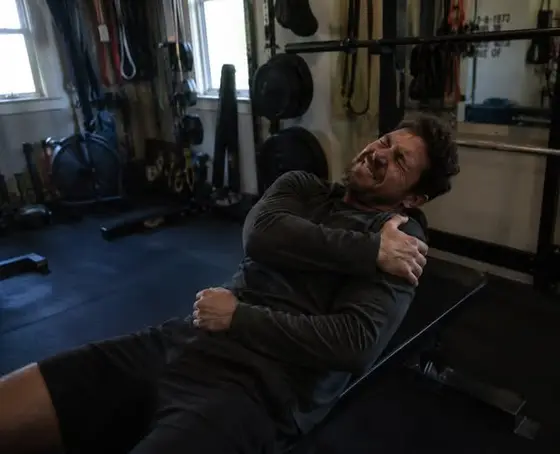
I felt a sharp pain in my shoulder as I lowered the dumbbells and had to let them fall to the floor. And what happened over the next year completely changed everything I had assumed about my body and my genetics. I'm going to tell you about the worst moment I had as a lifter. And the three things that came after it that undid 10 years of plateaus. But I need to start at the beginning. Because if I don't, none of what happened will make sense. And honestly – I need to write this before I forget exactly how I overcame it. -- I was always a relatively skinny kid. It was in my genetics. My dad was called stick. My mum was also known to be very thin when she was young. There was one time I went to visit my grandma and she was so shocked at house skinny I was that she called my mother asking if I had some sort of disease. I never saw it that way though. Never saw myself as particularly skinny. I started going to the gym in university. Eventually I got into basic starting strength routines and eating a lot. I picked up some muscle but probably more fat. One day I was shoulder pressing using the bar and my left shoulder gave way. I continued training, which was a huge mistake. I was young and dumb. A few hours later and I could barely breathe without feeling the pain in my shoulder. Little did I know, that injury would haunt me for the rest of my lifting career. -- Every time I went back to the gym and pressed heavy with any consistency, I'd feel the pain return. I figured that I just had to push through the pain. I did some basic rehabilitation exercises. Ball rolling on the shoulder to relax the rotator cuff muscles and clear out any scar tissue. Basic rotator cuff strengthening exercises that everyone does. Sometimes I swore that it helped. But then I'd notice the pain coming back after another push session. There were a couple of times where I pushed myself to the point where I needed to take long breaks. This went on for years. Years of progressing then regressing. I thought, maybe I'm just at my limit. Maybe it's my bone structure. Doomed to be stuck at novice numbers that people pass in a year of lifting. But I kept trying regardless. Until one day I was pressing a pair of 36kg dumbbells at home on my own bench. And my left shoulder just went. I had injured myself before trying the same thing, but I thought this time would be different. The aftermath was the worst it had ever been. I had to stop working out altogether. -- I was living in China and working on my business at the time. I remember my girlfriend talking about how she had gone to see a gym with her friend. "The trainers are really big in there," she said. I couldn't help but finishing her sentence in my mind: "really big, unlike you." Not that she meant it that way. But I'd been lifting consistently for 5+ years at that point (even longer inconsistently). Yet you couldn't really tell I go to the gym. Disciplined, with nothing to show for it. Was it that I was undisciplined, and just couldn't see it? Maybe these guys you see on YT or IG were just working harder? Maybe they were all on roids? -- Then it hit me. Comparing myself to others is what got me in this position in the first place. Trying to force progressive overload at all costs. Increasing weights when I couldn't control the previous weight. Trying to power through injuries instead of fully recovering. Focusing on benching more without addressing my weaknesses. It was my weaknesses holding me back. So I started looking at all possible rear shoulder / upper back strengthening exercises I could find. I started with bands. I learnt to feel my upper back muscles. Something I had never done before. I went on a ketogenic diet. It reduced inflammation, and improved recovery. It also made me a lot calmer and more focused while I couldn't train hard. This got me back into the gym. I trained bro splits instead of upper lower or full body, to give my body time to recover. And over the months I worked my way back up to where I was. But could still feel the shoulder. It wasn't until I was back in Spain with my grandmother that my biggest breakthrough came. I was back on a normal diet, and my grandma fed me a LOT. I was also sleeping very well. Partly because I was trialling my own sleep supplement, and partly because I was able to take afternoon naps – or "siestas" in Spanish. My shoulder had stopped hurting at all. I was already back onto 36s on the bench, but the gym there only had 37.5kg or 35s. I was about to pick up the 35s when I thought to myself, why not try 37.5kg? It's a smaller jump than dumbells usually are in gyms. 1.5kg instead of 2. I went over to the rack and carried them back to the bench. Sat them on my knees and took some deep breaths. Rocked backward with my legs bringing the dumbbells up over my body. 1 rep. Ok that wasn't so bad. 2 reps. Focusing on my scapula and shoulders on the way down. 3, 4, 5 reps! I felt a little unstable, but it was a new all-time PB for me. At 35 years old, I was stronger than at 25. No drugs. No cheats. I put the dumbbells back down on the rack. Started moving my shoulders around to see what I could feel. No pain. No discomfort. Nothing. I couldn't believe it. -- Looking back I can see what was holding me back and how I solved it. 3 phases. Exercise selection. Diet / inflammation. And sleep.. Firstly, I stopped using minimal exercises for upper back / rear shoulders. I used cable pullbacks while keeping my shoulders down. Every session as a warmup. I did front delt extensions but used my rear shoulders to move the weight, so it became a rear shoulder exercise. I did rear delt flies. I did more variations of cable pull downs. And I did 2 variations of dumbbell rows. One that focuses more on lats, and one that focuses more on those rear upper back muscles. Next, I went on a ketogenic diet. While keto isn't known for being the most effective for building muscle, it does reduce inflammation. Years of sugar and carbs hadn't been doing me any favours. My body wasn't absorbing everything I was giving it, and I felt inflamed all the time. Inflammation was bad for recovery. Keto seemed to reset something. My gut settled down for the first time in years. I was able to eat more without it causing stomach issues. More food, more protein, more building blocks to work with. One thing about keto is that drinking coffee and being on keto can put you into a hyper alert state. Great for work, but not for sleep. I found out I was also a slow caffeine metaboliser. Which means that even a cup of coffee in the morning could affect my sleep at night. I started taking a multitude of pills to improve my sleep. Magnesium. Ashwagandha. L-theanine. Apigenin. Glycine. Different bottles, different doses, different times. It actually worked. But six or seven capsules a night, measured out properly, isn't something most people are going to stick with. And it's not exactly cheap either, buying five or six separate supplements at doses that actually do something. I almost didn't. So eventually I combined all of it into one supplement, in the right doses, so I didn't have to juggle six different bottles to get the same result. I could fall asleep more easily. Feel well rested in the morning. And developed a calm focus which meant that coffee was no longer required. And even if I did have a coffee now and then, it wouldn't affect my sleep as much. That was the final pillar to my recovery. You see, most people think they're getting enough sleep.. But even if you're getting 8 hours in, you might still feel like crap. Much of the time it's because cortisol is out of wack. I know that was the case for me. Caffeine blocked my adenosine receptors. Adenosine is what lets your body know you're tired. Cortisol rises to compensate. That explained a lot, actually. If you're a slow metaboliser, then caffeine can be in your system at 10pm even if you had a coffee at 10am. Most people's cortisol rises quickly in the morning, wakes you up, then fades slowly throughout the day. My cortisol was still elevated in the evening. Which meant I was wired right when I should have been winding down. I could fall asleep, and I could sleep 6-8 hours depending on the day. But I never woke up and felt like I'd slept well. And often I'd feel tired just a few hours after waking up. Seven hours on paper. Never seven hours that counted. So I'd rely on coffee to keep me going. Which meant worse sleep, and the cycle continued. It wasn't until I started taking care of my sleep, that I could end it. Ashwagandha works on the stress response system. The part of your body that produces cortisol. When it's been running too high for too long, it forgets how to turn itself down. Ashwagandha helps recalibrate that. Not overnight. It builds over weeks. But that's the point. You're not masking the problem. You're resetting it. Magnesium L-Threonate is different to normal magnesium. It's the only form that actually crosses the blood-brain barrier. Which is where the cortisol signalling is happening. L-Theanine moves your brain from alert to calm. Not a switch-off. A gear change. Apigenin gently activates the receptors that quieten nervous system activity. Not crudely. Just enough. And glycine drops your core body temperature. Which is one of the signals your body uses to know it's safe to go into deep sleep. It also supports REM sleep. And reduces daytime sleepiness the morning after. Not because it sedates you. Because it helps your body actually recover while you're under. No melatonin. No sedation. Nothing that knocks you out. Just the things your nervous system needs to remember how to stop. -- And it's the combination which worked for me. Not just a single ingredient. I tried sleep hygiene. It helped. I tried powering through days with coffee. It worked. But if you've got a busy, active life, sometimes it's not enough. Truly resting in the evenings and while asleep was the final ingredient I needed. I did the exercises. I cleaned out my gut so I could digest more food better and eat more protein. I calmed down the inflammation. And I got better sleep. -- So if you're reading this and you've been plateaued in the gym. If you think that you're stuck because of your genetics. If you've been consistent but not seen the results. It's not your fault. Your biggest weaknesses are holding you back. The weak shoulder. The weak gut. The bad sleep. Make them strengths, and you'll see how quickly everything else improves. To give you an idea of what I experienced: Week 1, I didn't notice much. Maybe slightly more relaxed going to bed. Week 2, I was falling asleep a more easily. Week 3, I felt better rested in the mornings, like better "quality" sleep, or maybe I wasn't waking up as much during the night. Week 4, I felt less fatigued in the gym, and I could handle longer work outs. Week 5, I stopped reaching for cups of coffee as much, because I already felt a sense of "calm focus". Week 6, I was making faster progress in the gym than in my 20s. Week 8, I felt like I could grind hard during the day but still sleep like when I was a teenager. So if you want to feel truly, naturally, well rested, head to the link below to see if it's available. Try it for 60 days. Because good things take time. If it doesn't do for you what it did for me, send it back for a full refund. Don't spend 10 years being held back by your weaknesses. Don't let your true potential be held back by poor recovery. Don't let your days be held back by your nights.
Placements and targeting
More ads from Natruful
Wired but tired. Exhausted all day, but your mind won't switch off at night. That's usually cortisol — elevated when it should be winding down, keeping your nervous system stuck in fight-or-flight long after the day's over. Here's what actually helps it stand down: Magnesium L-Threonate — the one form of magnesium that crosses into the brain, where it helps regulate cortisol signaling at the source. L-Theanine — promotes alpha-wave activity for a calm, clear state. No sedation, just a steady shift out of "on" mode. Ashwagandha — buffers the stress response over time by supporting a calmer HPA axis. Glycine — supports a drop in core temperature and deeper sleep architecture. Apigenin — gently supports the nervous system's natural wind-down process. Conveniently, all in one package.
I felt a sharp pain in my shoulder as I lowered the dumbbells and had to let them fall to the floor. And what happened over the next year completely changed everything I had assumed about my body and my genetics. I'm going to tell you about the worst moment I had as a lifter. And the three things that came after it that undid 10 years of plateaus. But I need to start at the beginning. Because if I don't, none of what happened will make sense. And honestly – I need to write this before I forget exactly how I overcame it. -- I was always a relatively skinny kid. It was in my genetics. My dad was called stick. My mum was also known to be very thin when she was young. There was one time I went to visit my grandma and she was so shocked at house skinny I was that she called my mother asking if I had some sort of disease. I never saw it that way though. Never saw myself as particularly skinny. I started going to the gym in university. Eventually I got into basic starting strength routines and eating a lot. I picked up some muscle but probably more fat. One day I was shoulder pressing using the bar and my left shoulder gave way. I continued training, which was a huge mistake. I was young and dumb. A few hours later and I could barely breathe without feeling the pain in my shoulder. Little did I know, that injury would haunt me for the rest of my lifting career. -- Every time I went back to the gym and pressed heavy with any consistency, I'd feel the pain return. I figured that I just had to push through the pain. I did some basic rehabilitation exercises. Ball rolling on the shoulder to relax the rotator cuff muscles and clear out any scar tissue. Basic rotator cuff strengthening exercises that everyone does. Sometimes I swore that it helped. But then I'd notice the pain coming back after another push session. There were a couple of times where I pushed myself to the point where I needed to take long breaks. This went on for years. Years of progressing then regressing. I thought, maybe I'm just at my limit. Maybe it's my bone structure. Doomed to be stuck at novice numbers that people pass in a year of lifting. But I kept trying regardless. Until one day I was pressing a pair of 36kg dumbbells at home on my own bench. And my left shoulder just went. I had injured myself before trying the same thing, but I thought this time would be different. The aftermath was the worst it had ever been. I had to stop working out altogether. -- I was living in China and working on my business at the time. I remember my girlfriend talking about how she had gone to see a gym with her friend. "The trainers are really big in there," she said. I couldn't help but finishing her sentence in my mind: "really big, unlike you." Not that she meant it that way. But I'd been lifting consistently for 5+ years at that point (even longer inconsistently). Yet you couldn't really tell I go to the gym. Disciplined, with nothing to show for it. Was it that I was undisciplined, and just couldn't see it? Maybe these guys you see on YT or IG were just working harder? Maybe they were all on roids? -- Then it hit me. Comparing myself to others is what got me in this position in the first place. Trying to force progressive overload at all costs. Increasing weights when I couldn't control the previous weight. Trying to power through injuries instead of fully recovering. Focusing on benching more without addressing my weaknesses. It was my weaknesses holding me back. So I started looking at all possible rear shoulder / upper back strengthening exercises I could find. I started with bands. I learnt to feel my upper back muscles. Something I had never done before. I went on a ketogenic diet. It reduced inflammation, and improved recovery. It also made me a lot calmer and more focused while I couldn't train hard. This got me back into the gym. I trained bro splits instead of upper lower or full body, to give my body time to recover. And over the months I worked my way back up to where I was. But could still feel the shoulder. It wasn't until I was back in Spain with my grandmother that my biggest breakthrough came. I was back on a normal diet, and my grandma fed me a LOT. I was also sleeping very well. Partly because I was trialling my own sleep supplement, and partly because I was able to take afternoon naps – or "siestas" in Spanish. My shoulder had stopped hurting at all. I was already back onto 36s on the bench, but the gym there only had 37.5kg or 35s. I was about to pick up the 35s when I thought to myself, why not try 37.5kg? It's a smaller jump than dumbells usually are in gyms. 1.5kg instead of 2. I went over to the rack and carried them back to the bench. Sat them on my knees and took some deep breaths. Rocked backward with my legs bringing the dumbbells up over my body. 1 rep. Ok that wasn't so bad. 2 reps. Focusing on my scapula and shoulders on the way down. 3, 4, 5 reps! I felt a little unstable, but it was a new all-time PB for me. At 35 years old, I was stronger than at 25. No drugs. No cheats. I put the dumbbells back down on the rack. Started moving my shoulders around to see what I could feel. No pain. No discomfort. Nothing. I couldn't believe it. -- Looking back I can see what was holding me back and how I solved it. 3 phases. Exercise selection. Diet / inflammation. And sleep.. Firstly, I stopped using minimal exercises for upper back / rear shoulders. I used cable pullbacks while keeping my shoulders down. Every session as a warmup. I did front delt extensions but used my rear shoulders to move the weight, so it became a rear shoulder exercise. I did rear delt flies. I did more variations of cable pull downs. And I did 2 variations of dumbbell rows. One that focuses more on lats, and one that focuses more on those rear upper back muscles. Next, I went on a ketogenic diet. While keto isn't known for being the most effective for building muscle, it does reduce inflammation. Years of sugar and carbs hadn't been doing me any favours. My body wasn't absorbing everything I was giving it, and I felt inflamed all the time. Inflammation was bad for recovery. Keto seemed to reset something. My gut settled down for the first time in years. I was able to eat more without it causing stomach issues. More food, more protein, more building blocks to work with. One thing about keto is that drinking coffee and being on keto can put you into a hyper alert state. Great for work, but not for sleep. I found out I was also a slow caffeine metaboliser. Which means that even a cup of coffee in the morning could affect my sleep at night. I started taking a multitude of pills to improve my sleep. Magnesium. Ashwagandha. L-theanine. Apigenin. Glycine. Different bottles, different doses, different times. It actually worked. But six or seven capsules a night, measured out properly, isn't something most people are going to stick with. And it's not exactly cheap either, buying five or six separate supplements at doses that actually do something. I almost didn't. So eventually I combined all of it into one supplement, in the right doses, so I didn't have to juggle six different bottles to get the same result. I could fall asleep more easily. Feel well rested in the morning. And developed a calm focus which meant that coffee was no longer required. And even if I did have a coffee now and then, it wouldn't affect my sleep as much. That was the final pillar to my recovery. You see, most people think they're getting enough sleep.. But even if you're getting 8 hours in, you might still feel like crap. Much of the time it's because cortisol is out of wack. I know that was the case for me. Caffeine blocked my adenosine receptors. Adenosine is what lets your body know you're tired. Cortisol rises to compensate. That explained a lot, actually. If you're a slow metaboliser, then caffeine can be in your system at 10pm even if you had a coffee at 10am. Most people's cortisol rises quickly in the morning, wakes you up, then fades slowly throughout the day. My cortisol was still elevated in the evening. Which meant I was wired right when I should have been winding down. I could fall asleep, and I could sleep 6-8 hours depending on the day. But I never woke up and felt like I'd slept well. And often I'd feel tired just a few hours after waking up. Seven hours on paper. Never seven hours that counted. So I'd rely on coffee to keep me going. Which meant worse sleep, and the cycle continued. It wasn't until I started taking care of my sleep, that I could end it. Ashwagandha works on the stress response system. The part of your body that produces cortisol. When it's been running too high for too long, it forgets how to turn itself down. Ashwagandha helps recalibrate that. Not overnight. It builds over weeks. But that's the point. You're not masking the problem. You're resetting it. Magnesium L-Threonate is different to normal magnesium. It's the only form that actually crosses the blood-brain barrier. Which is where the cortisol signalling is happening. L-Theanine moves your brain from alert to calm. Not a switch-off. A gear change. Apigenin gently activates the receptors that quieten nervous system activity. Not crudely. Just enough. And glycine drops your core body temperature. Which is one of the signals your body uses to know it's safe to go into deep sleep. It also supports REM sleep. And reduces daytime sleepiness the morning after. Not because it sedates you. Because it helps your body actually recover while you're under. No melatonin. No sedation. Nothing that knocks you out. Just the things your nervous system needs to remember how to stop. -- And it's the combination which worked for me. Not just a single ingredient. I tried sleep hygiene. It helped. I tried powering through days with coffee. It worked. But if you've got a busy, active life, sometimes it's not enough. Truly resting in the evenings and while asleep was the final ingredient I needed. I did the exercises. I cleaned out my gut so I could digest more food better and eat more protein. I calmed down the inflammation. And I got better sleep. -- So if you're reading this and you've been plateaued in the gym. If you think that you're stuck because of your genetics. If you've been consistent but not seen the results. It's not your fault. Your biggest weaknesses are holding you back. The weak shoulder. The weak gut. The bad sleep. Make them strengths, and you'll see how quickly everything else improves. To give you an idea of what I experienced: Week 1, I didn't notice much. Maybe slightly more relaxed going to bed. Week 2, I was falling asleep a more easily. Week 3, I felt better rested in the mornings, like better "quality" sleep, or maybe I wasn't waking up as much during the night. Week 4, I felt less fatigued in the gym, and I could handle longer work outs. Week 5, I stopped reaching for cups of coffee as much, because I already felt a sense of "calm focus". Week 6, I was making faster progress in the gym than in my 20s. Week 8, I felt like I could grind hard during the day but still sleep like when I was a teenager. So if you want to feel truly, naturally, well rested, head to the link below to see if it's available. Try it for 60 days. Because good things take time. If it doesn't do for you what it did for me, send it back for a full refund. Don't spend 10 years being held back by your weaknesses. Don't let your true potential be held back by poor recovery. Don't let your days be held back by your nights.
Similar health and supplements ads
NO GYM, NO STRESS JUST DANCING! BOOST YOUR MOOD QUICKLY BURN CALORIES Take a quiz and get your dance plan in DanceFitMe
Keep exploring
Find more ads like this
Search millions of real ads by keyword, niche and format, and save the winners to your swipe file.
