The tooth is usually the last thing you see. Before it breaks through, your baby may already be giving you the clues: flushed cheeks, drool rash, fingers in the mouth, ear pulling, sudden night waking, and that “something is off” fussiness you can’t quite explain. That is what makes teething hard to catch early. You keep looking for the tooth, but the discomfort starts underneath the gums first. So when her cheeks are red, she is tugging at her ears, or she is chewing on everything in sight, it may not be random. It may be her way of telling you her gums are starting to feel pressure. Mama’s Teether gives you a simple way to respond before the whole day turns into guessing. Roll gently along the outside of the jaw, cheeks, and behind the ears when the early signs start showing up. 🍃 100% natural 🌱 Gentle on sensitive baby skin 🧪 Made by a Clinical Aromatherapist Because teething does not start when you see the tooth. It starts when your baby starts acting different.

Nathalie Rose Facebook and Instagram ad
Nathalie Rose ran this carousel ad since Jun 17, 2026, 1 days so far, targeting United Kingdom.
Ad copy
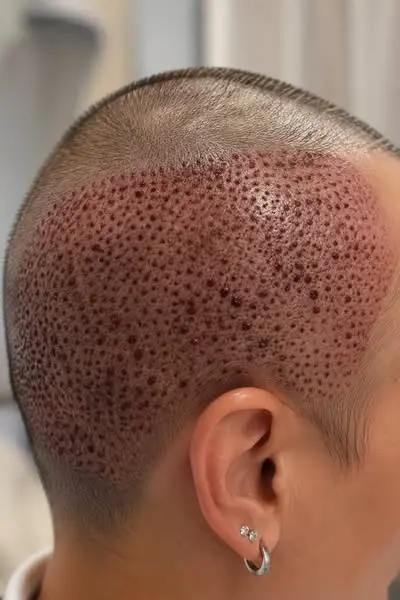
Getting a hair transplant felt like the smartest decision I had ever made. For about three weeks. Then it became the thing I cried about every morning. My name is Nathalie. I’m 46. I had been dealing with thinning hair for years. Not bald. Not dramatic enough for people to notice right away. But enough that I noticed. Every photo. Every bright bathroom mirror. Every time I pulled my hair back and saw my part looking wider than it used to. I tried everything first. Biotin. Collagen. Rosemary oil. Expensive shampoos. Scalp serums. Hair vitamins. The little scalp massager that somehow made me feel productive even though nothing was changing. Then I finally booked the consultation. The doctor was confident. He said I was a good candidate. He said my donor area looked strong. He said the front and crown could be filled in naturally. I believed him because I wanted to believe him. The procedure took almost seven hours. They removed follicles from the back of my head. One by one. Then placed them into the areas I had been hiding for years. The surgery itself wasn’t as bad as I expected. The recovery was. Swelling. Scabs. Tenderness. Trying to sleep without touching my head. Looking in the mirror and telling myself: This is temporary. This is healing. This is going to be worth it. Then came the shedding. Week three, the transplanted hairs started falling out. I knew that could happen. They warned me about that part. But then the hair around it started shedding too. The hair I still had. The hair I was trying to protect. The hair I thought the transplant was supposed to save me from worrying about. I looked worse than before the surgery. My doctor said it was normal. “Shock loss,” he called it. He said it would grow back. So I waited. Month three came. Some hair started coming in. But it didn’t feel like my hair. It stuck up at odd angles. It felt wiry. It was short, uneven, and impossible to style. Month six came. I compared my before and after photos and felt my stomach drop. My hair did not look fuller. It looked different. But not better. The back of my head looked thinner where the follicles had been taken. My part still looked wide. And I was still shedding. Every day. Just like before. At my follow-up, the doctor suggested another session. Another procedure. More money. More recovery. More waiting. I remember sitting in the parking lot after that appointment with my hands on the steering wheel, thinking: How did I spend all this money and still not fix the actual problem? A few weeks later, I had dinner with my friend Claire. We hadn’t seen each other in months. She noticed I kept touching the back of my head. Not in a rude way. In the way only another woman notices when you’re trying to hide something. I finally told her everything. The transplant. The shedding. The money. The fact that I was already being told I might need another one. Claire gave me the name of a dermatologist she had seen for hormonal hair thinning. “Just talk to her,” she said. “She won’t just look at your hairline. She’ll ask why it’s happening.” That sentence stayed with me. Why it’s happening. Because no one had really asked me that. The transplant doctor had moved hair around. But he hadn’t explained why I was still losing it. The dermatologist was different. She asked about my age. My cycle. My stress. My weight changes. My hormones. My family history. Then she looked at my scalp and said something I wish I had heard before the surgery. “A transplant can move hair. But it doesn’t always address why your hair is thinning in the first place.” That hit me hard. Because that was exactly what had happened. I had moved hair into thinning areas… but I hadn’t supported the environment those follicles were growing in. She talked to me about DHT balance. Not in a scary way. Not like my body was broken. Just like something women should understand better, especially as hormones change with age, stress, weight loss, and perimenopause. She explained that DHT is one of the hormones often connected to thinning-looking hair. And that for some women, supporting DHT balance can be an important part of supporting healthier-looking hair from within. That was the first time anyone said something that made sense. Not another shampoo. Not another serum. Not another surgery. Support from within. She told me to look for two ingredients: Pumpkin seed oil. Saw palmetto. Both are commonly used in hair wellness routines because they help support DHT balance and healthier-looking hair. That’s when I found Lunive. Lunive Pumpkin Seed Oil with Saw Palmetto. One simple daily softgel. No greasy oils. No complicated routine. No pretending another topical was going to fix everything. I started taking it the next week. I was skeptical. Of course I was. I had already spent thousands trying to fix my hair. I had already been disappointed by products, promises, and procedures. But I wanted to feel like I was finally supporting the right thing. The first few weeks were quiet. No miracle. No overnight transformation. Just consistency. Then one morning, I washed my hair and realized I hadn’t panicked at the drain. That might sound small. But if you’ve been scared to wash your hair, you understand. By month two, my shedding felt less intense. By month three, I noticed little baby hairs around my hairline. Tiny. Annoying. Sticking straight up. Beautiful. By month four, my hairdresser paused during my blowout and said: “Wait. What are you doing differently?” I almost cried in the chair. Because for the first time in a long time, I didn’t feel like I was watching my hair disappear. I’m not saying I wish I had never looked into a transplant. But I do wish someone had told me this first: A hair transplant does not stop ongoing shedding. It does not support DHT balance. It does not fix the reason your hair may be thinning. It moves hair. And if your hair is still shedding, you need to understand why before you spend thousands more trying to cover it up. I wish I had started supporting my hair from within before I went through surgery. I wish I had known about pumpkin seed oil and saw palmetto earlier. I wish I had found Lunive before I filled my bathroom cabinet with products that only treated the outside. Now my routine is simple. One softgel. Every day. Pumpkin seed oil. Saw palmetto. 2000mg per serving. Designed to support healthier-looking, fuller-looking hair from within. If you’re considering a hair transplant, I’m not here to tell you what to do. That’s between you and your doctor. But I am telling you what I wish someone had told me: Before you move hair around, support the foundation. Before you spend thousands, understand DHT. Before you book another procedure, try a routine you can actually stick with. Lunive Pumpkin Seed Oil with Saw Palmetto. Healthy-looking hair starts from within. 👉 https://trylunive.com/products/lunive-pumpkin-seed-oil-softgels
Placements and targeting
More ads from Nathalie Rose
Is it teething… or something else? If your baby’s tugging their ears, rubbing their cheeks, acting clingy—but has no fever—you're not alone. Many parents go straight to “ear infection,” but it turns out teething pain can actually travel up the nerves into their ears. It’s confusing. It looks like an ear issue… but it’s often just the teeth under the gums starting to shift. Sometimes weeks—or months—before one pops through. That’s why we made a gentle roller you can swipe across their cheeks and behind the ears. It helps calm the nerves where the pain actually travels—without meds, and without putting anything in their mouth. For those moments when you're not sure what’s going on—but you know they need relief.
"My son has been miserable with teething lately—crying, chewing on everything, and nothing seemed to help. I tried the teething roller out of desperation, and honestly, I wasn’t expecting much. But the first time I used it, I rolled it along his jawline before bed, and within a few minutes, he actually calmed down. It was such a relief to see him comfortable again. I love how easy it is to use, even when he’s fussy. I’m so glad I gave it a shot—I don’t know how we got through teething without it.”
The tooth is usually the last thing you see. Before it breaks through, your baby may already be giving you the clues: flushed cheeks, drool rash, fingers in the mouth, ear pulling, sudden night waking, and that “something is off” fussiness you can’t quite explain. That is what makes teething hard to catch early. You keep looking for the tooth, but the discomfort starts underneath the gums first. So when her cheeks are red, she is tugging at her ears, or she is chewing on everything in sight, it may not be random. It may be her way of telling you her gums are starting to feel pressure. Mama’s Teether gives you a simple way to respond before the whole day turns into guessing. Roll gently along the outside of the jaw, cheeks, and behind the ears when the early signs start showing up. 🍃 100% natural 🌱 Gentle on sensitive baby skin 🧪 Made by a Clinical Aromatherapist Because teething does not start when you see the tooth. It starts when your baby starts acting different.
Similar skincare ads
✨ Apply Non-Invasive Facial Sculpting Techniques With Precision, Safety, and Holistic Professional Care. In our Facial Sculpting Therapist Certification, the teachings bring together facial anatomy, skin science, manual sculpting methods, lymphatic support, holistic facial care, device-assisted modalities, hygiene, ethics, and client communication. Rather than presenting facial sculpting as a miracle solution or a one-size-fits-all technique, this training teaches a grounded, professional, and responsible approach — combining technical precision with client comfort, aesthetic awareness with ethical practice, and manual skill with holistic sensitivity. Because the program is fully online, you can join from anywhere in the world. No advanced medical background is required — this course is open to beauty therapists, estheticians, massage therapists, spa and wellness professionals, holistic practitioners, and anyone who wants to offer structured, client-centered facial sculpting sessions. And with accreditation from IPHM, CMA, and CPD, insurance eligibility via ICHAP, and CEU credits via NCCAP, this certification is a solid foundation for a credible, insurable practice. Course Highlights — 10 Modules: ▪ Module 1 – Foundations of Facial Sculpting Therapy ▪ Module 2 – Applied Facial Anatomy and Physiology for Sculpting ▪ Module 3 – Skin Science, Assessment, and Treatment Planning ▪ Module 4 – Core Manual Techniques for Facial Sculpting ▪ Module 5 – Advanced Manual Methods — Buccal, Intraoral, and Specialized Techniques ▪ Module 6 – Device-Assisted Facial Sculpting Modalities ▪ Module 7 – Integrative and Holistic Approaches to Facial Sculpting ▪ Module 8 – Hygiene, Safety, Ethics, and Professional Conduct ▪ Module 9 – Client Communication, Cultural Competence, and Practice Management ▪ Module 10 – Integrating Skills into Professional Facial Sculpting Practice 🎧📄 Nearly 10 hours of audio and 11 downloadable PDFs. Lifetime access on any device. 🌿 Weekly live Q&A and access to a private community of practitioners. 🤗 ✨ Interactive quizzes, guided feedback, and direct instructor access. 🏅 Insurance eligible via ICHAP. CEU credits via NCCAP. Rated 4.82 on Trustpilot. 30-day money-back guarantee. Start your journey today and become a Certified Facial Sculpting Therapist. Now is the moment to combine beauty, relaxation, and holistic wellbeing into a professional practice that is safe, refined, and genuinely client-centered. ➔ naturalistico.com/en/learn/course/3076/facial-sculpting-therapist-certification
💪✨ Gentle, hydrating retinol 💧 Shea Butter + Ceramides for deep moisture
Keep exploring
Find more ads like this
Search millions of real ads by keyword, niche and format, and save the winners to your swipe file.