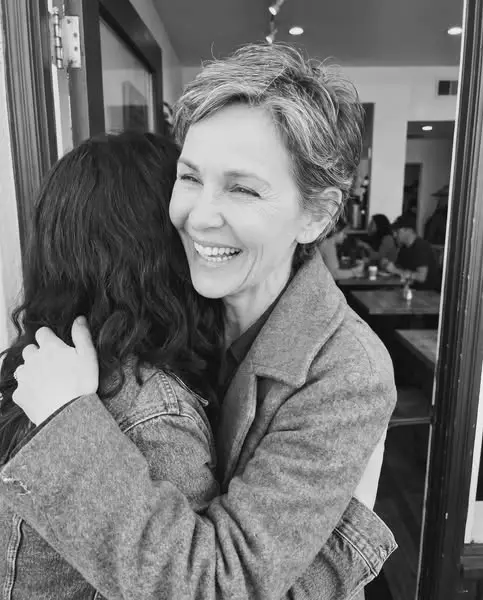
I couldn’t even remember the last time he made me O.
My husband and I stopped having intimacy.
My husband and I became roommates. Not overnight.
Not because of a fight or an affair or any of the things you'd expect to pull two people apart. Just slowly, quietly, the way a fire goes out when nobody's feeding it.
========
Twenty three years together. The man who still makes me laugh every single day.
The man who drove through the night, four hours away when my dad was in hospital without me even having to ask. We had a good marriage.
A real one. And somehow we'd ended up living like two very polite strangers sharing a house.
We became roommates. I noticed it first in the evenings.
We used to talk after dinner, that easy back and forth that just happened naturally after twenty years of knowing each other.
========
Then one night I realised we were just sitting in silence, him watching something on his phone, me scrolling through mine, and neither of us had said a word in forty minutes.
That became normal. Then the bedroom changed.
The intimacy we'd always had, that easy comfortable closeness, started feeling like an obligation. I started making excuses.
Tired. Headache.
Early start tomorrow. He never pushed, because he's not that kind of man.
========
So the weeks turned into months and neither of us said anything about it. The truth is, intimacy didn’t feel like what it used to, for me at least.
One night I looked at him sitting across the room and thought: I miss him. He's right there and I miss him.
That's when I knew something was really wrong. Because it wasn't him.
And it wasn't us. The truth was, something in my body had changed after menopause and instead of talking about it I'd just quietly started disappearing.
Every time we tried, I spent the whole time waiting for a feeling that didn't come anymore. So I'd stopped trying.
And without either of us making a decision about it, the closeness we'd spent twenty three years building had started coming apart at the seams. Because the truth was, it wasn't just the closeness that had gone.
========
My Os had disappeared too. Not all at once.
Just that same slow fade, one degree at a time, until the finish I used to reach easily had stopped showing up at all. I'd be in my head the whole time, chasing a feeling that kept moving further away the harder I reached for it.
Some nights I'd get close. Most nights I wouldn't.
And eventually I started doing what felt easiest, which was just pretending, because that guilt, that fear that coming clean will shatter my husband's confidence, that was eating me alive. I hadn't pretended since we were in our twenties.
And here I was at 52, lying there in the dark feeling like a stranger in my own body. The guilt of that was its own thing entirely.
Every time he looked at me afterward with that quiet satisfied smile I'd feel it sitting heavy in my chest. He had no idea.
========
And I couldn't find a way to tell him without making him feel like the problem when he wasn't the problem. So I stopped putting us in situations where it might come up.
Brief moments became my preference. Fast, simple, no pressure.
Our Sunday mornings, the thing we'd had for fifteen years, the thing I used to look forward to all week, I started finding reasons to be up early. I told myself I was tired.
I told myself it was just a phase. I told myself it would pass.
It didn't pass. The Os stopped almost completely.
And when they did show up they were nothing.
Quick and shallow and gone before I could register they'd happened, like a sneeze that doesn't quite release.
All the build with none of the payoff. And then the sensation started changing too.
========
The device I'd had for years, the one that had never once let me down, started feeling wrong. Harsh.
Irritating. Like my body had become too sensitive in all the wrong ways and not sensitive enough in the ways that mattered.
I threw it in the bin one night and sat on the bathroom floor. Not because I was sad exactly.
More because I felt broken. Like the part of me that knew how to feel pleasure, and the part of me that knew how to be a wife, had both quietly packed up and left at the same time.
So I tried to fix it myself. Because that's what I do.
I bought every lubricant on the market. They fixed the surface dryness and did nothing for the numbness underneath.
I ordered supplements. Maca.
Ashwagandha. A libido blend that promised to reignite my spark.
Two months. Nothing changed.
========
I bought a new device thinking maybe I just needed more intensity. I felt nothing good.
Just that same harsh wrong feeling on tissue that clearly wasn't the same tissue it used to be. Eight months.
Hundreds of pounds. Every solution I could find.
Nothing worked. And my husband and I kept drifting.
I finally made the appointment when he said something that stopped me cold. We were sitting at the dinner table and he said, quietly, not accusingly, just honestly, "I feel like you're not really here anymore."
He wasn't talking about intimacy.
========
He was talking about me. The version of me he married.
The woman who reached for him and laughed easily and showed up fully in her own life. She'd gone somewhere and neither of us knew how to get her back.
I drove to the doctor the next morning. My GP was kind.
She told me it was hormonal, that these things happen after menopause, and suggested I try a different lubricant. I drove home wanting to scream.
I went, hoping for everything to change, for everything to go back to how it was supposed to be. But I left the doctors office with nothing but a broken heart or dreams.
A woman in my book club who went through exactly what I did mentioned Dr. Patel.
"She actually listens," she said. "Like really listens." I didn't go in with high hopes.
But I had nothing left to lose. So I booked it.
========
Dr. Patel didn't touch her computer for the first ten minutes.
She just let me talk. The whole story.
The marriage going quiet. The Os fading.
The device in the bin. The pretending.
The supplements that did nothing. The lubricants that fixed the surface and ignored everything underneath.
My husband sitting across the room feeling like a stranger. I didn't edit myself.
I was too tired to edit. When I finished she didn't sigh or reach for her prescription pad.
She picked up a marker and drew on the paper covering the exam table. "What you're describing has a name," she said.
"Most doctors don't use it. Most women never hear it.
It's called Genitourinary Syndrome of Menopause. GSM.
It affects more than half of all women after menopause and almost none of them are told it's coming." She leaned forward.
"Here's what's happening in plain language.
========
An Os is not just a feeling. It's a physical event.
Your body sends blood rushing into the sensitive tissue, which responds it, fills it, makes it exquisitely sensitive.
That natural responsiveness is what makes an Os physically possible.
Without it the signal can't get through. You can feel a version of it.
But not the real thing." She tapped the paper. "When hormone levels drops after menopause, blood flow to the sensitive tissue decreases significantly.
The tissue starts to thin. It loses its ability to engorge the way it used to.
So your body can be completely switched on in your head but physically the tissue just cannot respond. It's like trying to fill a deflated balloon.
The pump is working perfectly but the balloon has holes in it." Two years of confusion sitting right there in one sentence.
"And the thing nobody tells you is that this compounds on its own.
========
Less sensation means you avoid intimacy. Less intimacy means less blood flow to the area.
The whole system goes into hibernation.
And menopause quietly removes your ability to use it before you even realise what's happening."
I sat there and felt something shift.
This wasn't me being in my head. This wasn't my marriage failing.
This wasn't me falling out of love with my husband or losing interest in him or any of the stories I'd been quietly telling myself for two years.
This was my body losing the physical infrastructure that makes intimacy possible.
And because my body had stopped working the way it used to, I'd withdrawn.
And because I'd withdrawn, my husband had felt it.
And because he'd felt it, the distance had grown.
And the whole thing had been feeding itself for two years without either of us understanding why.
========
"You haven't lost the ability to Os," she said. "The tissue that makes it physically possible has deflated.
And a deflated system can be woken back up."
"So what fixes it?" I asked. "Before I answer that," she said,
"I want to tell you something important about why everything you've already tried hasn't worked." She set the marker down.
"Every solution most women reach for when this happens, lubricants, creams, traditional devices, even some medical interventions, they all have one thing in common. They all rely on friction.
Direct contact against already compromised tissue. And when tissue is thinned and damaged, friction doesn't help it recover.
It aggravates it. Irritates it.
Damages it further.
So every time you tried to fix this with the tools you'd always used, you were unknowingly making the underlying problem worse."
I thought about the device in the bin.
========
The harshness. The irritation.
That wrong feeling where a good feeling used to be. That wasn't my body failing.
That was friction on tissue that could no longer handle friction.
"The women I see who have tried everything and felt nothing aren't failing because their bodies have given up," she said.
"They're failing because every single thing they tried was built on the wrong foundation. The answer isn't more gentle waves against compromised tissue.
The answer is bringing blood flow back without touching the tissue directly at all."
"How?" I asked. She smiled for the first time since I'd walked in.
"It's called air pulse. And the reason it works when everything else hasn't comes down to one thing.
Instead of vibrating against the tissue the way a traditional wellness device does, it creates a gentle seal and uses waves of air pressure to stimulate the delicate area.
No friction.
Just air. And those pressure waves draw blood back into the tissue from the inside.
========
The same blood flow that menopause has been quietly cutting off." She leaned back. "When the blood flow comes back the tissue starts to respond again.
Natural lubrication follows. Sensation returns.
Os that have been physically impossible because the tissue couldn't engorge properly become possible again. Not because anything was forced.
Because the body finally received a stimulus it could actually respond to." "So everything I tried," I said slowly. "The devices.
The creams. All of it." "Was working against your physiology," she said.
"Not with it. Your body wasn't broken.
It was just being approached the wrong way."
========
I drove home and sat in my car in the driveway for a long time. Two years of trying things that were quietly making things worse.
Two years of blaming myself. Two years of watching my marriage go quiet and not understanding why I couldn't stop it.
And the whole time the problem wasn't me. And it wasn't us.
It was friction. I went home and searched for air pulse devices designed specifically for women going through exactly what I was going through.
Most of what I found was aimed at twenty five year olds. Loud branding.
========
Nothing that felt like it understood what I was actually dealing with. And then I found the Lem.
Made by a company called Hello Nancy. Shaped like a lemon.
Palm sized. Bright yellow.
It looked like something you'd find on a kitchen shelf, not a bedroom drawer. I almost kept scrolling.
But something made me stop and read. The technology was exactly what Dr.
Patel had described. Air pulse gentle waves.
No friction. No direct tissue contact.
Twelve intensity settings starting low enough that even the most sensitive compromised tissue could handle it. Medical grade silicone.
Waterproof. Whisper quiet.
And designed specifically for women whose bodies had changed. Not as an afterthought.
I read through the reviews expecting vague five star enthusiasm from people who'd owned it for three days. Instead I found women who sounded exactly like me.
========
"Holy mother of God! I can't put this little sucker down.
I am getting multiple Os with this little guy, and last night, I actually reached a total release! I didn't even think that was a real thing…but I'm here to tell you, IT IS!" - Kathryn R "Wow… it was absolutely awesome!!
I have not dated for a while and had had some health issues. I did not have great expectations, but the Lemon was very successful.
I highly recommend and I'm over my 70s!" - Angela S "I don't even need the highest speeds, the lower ones are plenty, creating sensations that build beautifully and last long after. Lem has turned what used to be a routine moment into something electric, emotional, and deeply bonding." - Pebbs W.
I sat at my kitchen table reading these women's words and felt something I hadn't felt in a very long time. Hope.
Real, cautious, careful hope. Not the desperate kind I'd felt ordering supplements at midnight.
Something quieter. Something that felt like recognition.
These women had been exactly where I was. And they had found their way back.
I ordered it that night. Section four.
The box arrived three days later. Clean packaging.
Nothing embarrassing. It looked like something from a skincare brand.
========
I opened it at my kitchen table like it was the most normal thing in the world, because I'd decided it was going to be.
It wasn’t like a normal wellness device, I could leave this on my nightstand and nobody would suspect a single thing.
The device itself was exactly what the pictures showed. Palm sized.
Bright yellow. Soft medical grade silicone that felt genuinely different to anything I'd held before.
Substantial in a quiet way. I charged it that night and didn't use it.
I wasn't ready. I needed to not have expectations.
So I waited until the following evening when the house was quiet. I started on the lowest setting.
Nothing dramatic happened. But nothing hurt.
Nothing irritated. Nothing felt harsh or wrong.
Just gentle warm pressure. Like something my body could actually receive without flinching.
That alone felt like progress.
========
Day three I moved up two settings.
Something stirred. Faint.
Distant. But there.
Like hearing a song you'd forgotten you knew playing from another room. Day five I noticed I was thinking about it before I'd gotten out of bed.
Not urgently. Just a quiet easy wanting that I hadn't felt come from inside my own body in a very long time.
I lay there just noticing it. Just letting it exist.
========
Day seven my husband reached for me in the middle of the night and I didn't pretend to be asleep. Day nine I felt build.
Real recognizable build. The kind that used to happen easily and had stopped happening at all.
Slow and gathering and unmistakably heading somewhere. I held my breath.
And then it arrived. Not a shadow.
Not a polite knock on a door that doesn't open. A real Os.
The kind that rolls through you before you've fully registered it's coming. The kind that makes you grip something and forget for a few seconds where you are.
I lay there afterward in the quiet and cried. Not sad crying.
The other kind. The kind that comes when something you'd quietly grieved and accepted as lost turns out to not be lost at all.
Just waiting. Just waiting for the right approach.
========
Week two my husband reached for my hand at the dinner table and I felt myself actually lean into him the way I used to.
That easy comfortable closeness that had gone so quiet.
Starting to come back. Week three we had a Sunday morning for the first time in over a year.
Afterward he just held me and said "I've missed you." Not in a dramatic way. Just honestly.
The way you say something when it's simply true. "I've missed you too," I said.
And I meant it in every possible way. Week four the Lem had a permanent spot on my nightstand.
Not hidden. Not in a drawer.
Just there like my hand cream and my book and my glass of water. A normal object in a normal life.
========
The Os kept coming back. Not every time, because that's not how bodies work and anyone who tells you otherwise is selling something.
But when they came they came properly. The wave.
The grip. The few seconds of losing track of where I was.
Week six I initiated on a Tuesday night after dinner for no particular reason other than wanting to. He looked at me like I'd handed him something he'd stopped expecting to receive.
I had. The evenings changed too.
We started sitting together again after dinner. Talking the way we used to.
That easy back and forth of two people who know each other well and actually want to be in the same room. The silence that had settled between us for two years started lifting.
Not dramatically. Just the way things go quiet when they're going right.
He stopped feeling like a stranger. He started feeling like mine again.
And you know what he said to me? He told me, ‘’It’s like you’ve come straight back to me all of sudden’’
========
I went back to Dr. Patel at the six week mark. Not because anything was wrong.
Because I wanted to tell someone who would understand exactly what had changed. When I finished she nodded slowly.
Everything you're describing, the sensation coming back, the natural lubrication, the Os returning, that's not coincidence.
That's physiology doing what physiology does when you finally give it the right conditions." "I thought it was gone forever," I said.
"Most women do," she said. "Because nobody tells them there's a way back.
Nobody tells them the reason nothing worked was the friction. Nobody tells them their body wasn't broken.
It was just being approached the wrong way."
========
I pulled the Lem out of my bag and set it on her desk.
She picked it up, turned it over, looked at it the way she looked at everything.
"This is the one I've been hearing about," she said. She set it back down and looked at me.
"How do you feel?" I thought about the evenings sitting in separate rooms. The excuses.
The pretending. The night my husband said he felt like I wasn't really there anymore.
The bathroom floor. "Like myself," I said.
"And like his wife. For the first time in two years." Here's what I want every woman reading this to understand.
========
If your Os have faded and you've been telling yourself that's just getting older, it isn't.
If your marriage has gone quiet and you've been blaming yourself or blaming him or just quietly accepting the distance, don't.
If you've tried everything and nothing has worked, that's not your body failing you. That's friction failing you.
Every single solution you tried was working against tissue that could no longer handle being worked against. Your body wasn't broken.
Your marriage wasn't broken. You were just being approached the wrong way.
========
The Lem doesn't fix this by adding more of what hasn't worked.
It fixes it by removing the one thing that was quietly making everything worse.
No friction.
Just air pressure drawing blood back into tissue that stopped receiving it. And when the blood flow comes back, the tissue responds.
The sensation returns. The Os come back.
And the woman your husband married comes back with them. If you've been quietly accepting that this part of your life is behind you, I want you to know that I sat exactly where you're sitting.
I tried everything. I watched my marriage go quiet and didn't know how to stop it.
I sat on a bathroom floor and genuinely believed that part of me was gone. It wasn't gone.
And neither are you. 👉 Try The Lem Risk-Free for 30 Days: hellonancy.com
========
P.S.
I didn't write this the night everything came back. I was too busy living it.
It's been about three months now.
Last week my husband and I had dinner, opened a bottle of wine, and ended up in bed on a Wednesday night for no reason other than wanting to.
It was good. We fell asleep.
I didn't think about it again until two days later when I realised I'd stopped keeping track. We both felt young again.
We both felt like we were 19 all over again That's the part nobody tells you about getting yourself back. The magic isn't the first real Os after two years of nothing.
It isn't the first Sunday morning. It isn't even the night your husband holds you and says he's missed you.
The magic is when it stops feeling like a miracle and starts feeling like another Wednesday.