Linda Harrison Facebook ad creative
ryaris.com
Read this if your husband has been on gout medication for years — and your intimacy isn't what it used to be.
Shop now

Linda Harrison Facebook and Instagram ad

Linda Harrison ran this image ad since Mar 2, 2026, 45 days so far.

First seen
Mar 2, 2026
Running for
45 days
Format
Image
Call to action
Shop now
Niche
Electronics and gadgets
Countries
Not disclosed
Page likes
3

Ad copy

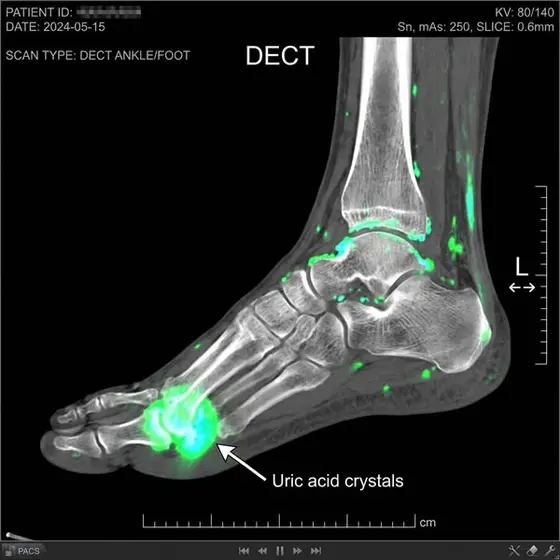
My husband and I hadn't been intimate in almost nine months. I'm sorry — I know that's an overshare. But I've thought about whether to write this post for weeks, and I keep coming back to this: if one woman reads this and recognises what I'm describing, it's worth it. Because I spent the better part of two years thinking something was wrong with us. With me. With our marriage. When the answer was something else entirely. Here's what those two years actually looked like. Eighteen months into my husband being on allopurinol for gout, I started feeling a distance I couldn't explain. He'd come home from work and be completely spent — not tired, spent, like someone had unplugged him. The closeness we'd built over twenty-two years had thinned in ways neither of us was saying out loud. He'd lost drive. Not just physically — in every direction. Flat. Foggy in the middle of conversations. Coming up empty in sentences he'd started confidently. He told his doctor he'd been fatigued. His doctor told him it was probably stress. He believed that. I almost did. What I couldn't get past was the timing. He hadn't been like this before the medication. I'd been trying to locate the version of that thought that didn't sound like an accusation, and failing, and so I'd said nothing for nearly two years while both of us found private explanations that protected us from looking directly at what was happening. The night I finally looked up allopurinol's full side effect profile, I sat in the kitchen for a long time after I closed the laptop. It was all there. Fatigue. Cognitive dulling. Effects on libido — documented, listed, consistent across forum after forum of men who had written about their experience with a specificity that described the previous eighteen months of my marriage. And their wives, in some threads, who had written what I was feeling in language I hadn't been able to find myself. "They don't tell you that. You have to dig around on the internet to find it out." I wasn't confused anymore. I was angry. The information had existed from the beginning — in the prescribing notes his doctor held, on the information sheet from the original prescription. It had just never been the conversation, because the conversation was always about the uric acid number, and the number was responding well. My husband had been sitting across from a doctor every three months for two years describing a version of himself that was less than he was. The response, consistently, was: your levels look excellent. I pushed for a specialist referral. I went to the appointment with him. She ordered the DECT scan above — the imaging that shows what is physically deposited inside the joint tissue, not just what circulates in the blood. The crystal deposits on the scan were significant: accumulated across years of controlled blood levels, sitting in the joint, triggering attacks independently — visible evidence of everything the standard protocol had never been designed to address. But the side effect conversation was why I'd come. She confirmed it without hesitation. Long-term xanthine oxidase inhibition — allopurinol's mechanism — affects metabolic pathways that extend well beyond uric acid production. The fatigue, the cognitive effects, the loss of drive: documented, real, and rarely raised at the appointment where the prescription is written because the appointment is about the number. There was, she said, a natural alternative. PURGE. Celery Seed's 3nB compound inhibits xanthine oxidase through the same pathway as allopurinol — naturally, without what the prescription had been doing to my husband alongside the gout management. Hydrangea Extract — Seven Barks, Cherokee medicine for centuries, confirmed by modern research — actively dissolves existing crystal deposits in joint tissue. The gap the standard protocol leaves open, visible right there on the scan. Chanca Piedra flushes freed uric acid through the kidneys before it can recrystallise. Tart Cherry handles inflammation. BioPerine delivers the full formula at clinical-strength absorption. I ordered it before we got home. Eight months later. My husband is attack-free. His energy is back. The fog lifted. And the distance — the one I'd spent two years building explanations for — has closed. Steadily, unmistakably, back toward the marriage I recognised. I don't need to say more than that. I spent two years thinking something was wrong with us. It wasn't us. It had a cause. The cause had a solution. Nobody offered us either one until I went looking. There's a 30-day money-back guarantee. I wish someone had shown me this two years ago.

Placements and targeting

FacebookInstagramAudience NetworkMessengerThreads

More ads from Linda Harrison

Full Linda Harrison profile
Linda Harrison
Linda Harrison
+1
Inactive1 day
ryaris.com
Read this if you sleep all night and still wake up feeling wrecked and in pain.
Learn more

Two hours of actual sleep last night, by my own rough count. I want to be precise about what I mean, because I think this specific thing gets flattened into "I'm tired" far too easily, and "tired" doesn't begin to cover it. I know what insomnia is. This isn't that. I fell asleep last night. I was, by any external measure, asleep for most of the night. What I wasn't, is rested — and at this point in my life, those two words have almost nothing to do with each other. The hard part stopped being the tiredness itself a long time ago. I adjusted to tired the way you adjust to anything chronic — not happily, but functionally. The actual hard part, the part that still genuinely unsettles me some mornings, is that rest doesn't fix it anymore. I could sleep nine hours tonight, a full uninterrupted stretch, the kind of night that would leave almost anyone else feeling like a new person by morning, and I would still very likely wake up tomorrow feeling close to exactly how I feel right now. The math that's supposed to govern sleep — hours in equals function out — simply doesn't apply to whatever's happening in my body once the lights go off. I've read enough about this by now to know roughly why. Deep sleep is the stage where actual repair happens — not light sleep, not REM, the deep stage specifically, the one where tissue recovers and the nervous system genuinely resets. I know fibromyalgia disrupts access to that stage specifically, which means a full night, by the clock, can pass without my body ever reaching the depth where any of that repair work actually occurs. I'm asleep. I'm just not getting what sleep is supposed to deliver, and there's apparently real sleep-lab data confirming that's not just my own perception of things. Knowing the mechanism hasn't made the mornings easier, if I'm honest. What it has done is stop me from running the same exhausting internal interrogation I used to run on myself for years — am I doing something wrong, should I be exercising more, is this anxiety, do I need a different mattress, a different bedtime, a different supplement, a different specialist. I've tried versions of most of those. None of them touch a problem that was never about my sleep hygiene to begin with. It was always about a stage of sleep my body has trouble accessing, full stop, independent of anything I'm doing right or wrong around it. What I'd actually want someone reading this to take away isn't a tip. It's permission to stop blaming yourself for something that was never within your behavioral control. You can do everything right by every conventional sleep rule and still wake up feeling exactly like I do most mornings, because the rules were written for a nervous system that reaches deep sleep reliably. Yours, like mine, doesn't. I came across a detailed breakdown of this exact mechanism recently, written by a doctor who clearly understands it at a level beyond what most general sleep advice ever touches — and who also goes into why the specific things I tried over the years, the different mattresses and supplements included, were never actually positioned to fix this, because none of them were built to reach the stage of sleep that's actually the problem. There are several other points about fibromyalgia in the same piece worth reading in full, not just this one. If you've ever slept what should be a full, good night and woken up feeling cheated out of it anyway, I'd really encourage you to read what's written there. It explained something to me that nine years of trying different bedtime routines never did.

Linda Harrison
Linda Harrison
+1
Inactive134 days
ryaris.com
Read this if you sleep all night and still wake up feeling wrecked and in pain.
Learn more

Two hours of actual sleep last night, by my own rough count. I want to be precise about what I mean, because I think this specific thing gets flattened into "I'm tired" far too easily, and "tired" doesn't begin to cover it. I know what insomnia is. This isn't that. I fell asleep last night. I was, by any external measure, asleep for most of the night. What I wasn't, is rested — and at this point in my life, those two words have almost nothing to do with each other. The hard part stopped being the tiredness itself a long time ago. I adjusted to tired the way you adjust to anything chronic — not happily, but functionally. The actual hard part, the part that still genuinely unsettles me some mornings, is that rest doesn't fix it anymore. I could sleep nine hours tonight, a full uninterrupted stretch, the kind of night that would leave almost anyone else feeling like a new person by morning, and I would still very likely wake up tomorrow feeling close to exactly how I feel right now. The math that's supposed to govern sleep — hours in equals function out — simply doesn't apply to whatever's happening in my body once the lights go off. I've read enough about this by now to know roughly why. Deep sleep is the stage where actual repair happens — not light sleep, not REM, the deep stage specifically, the one where tissue recovers and the nervous system genuinely resets. I know fibromyalgia disrupts access to that stage specifically, which means a full night, by the clock, can pass without my body ever reaching the depth where any of that repair work actually occurs. I'm asleep. I'm just not getting what sleep is supposed to deliver, and there's apparently real sleep-lab data confirming that's not just my own perception of things. Knowing the mechanism hasn't made the mornings easier, if I'm honest. What it has done is stop me from running the same exhausting internal interrogation I used to run on myself for years — am I doing something wrong, should I be exercising more, is this anxiety, do I need a different mattress, a different bedtime, a different supplement, a different specialist. I've tried versions of most of those. None of them touch a problem that was never about my sleep hygiene to begin with. It was always about a stage of sleep my body has trouble accessing, full stop, independent of anything I'm doing right or wrong around it. What I'd actually want someone reading this to take away isn't a tip. It's permission to stop blaming yourself for something that was never within your behavioral control. You can do everything right by every conventional sleep rule and still wake up feeling exactly like I do most mornings, because the rules were written for a nervous system that reaches deep sleep reliably. Yours, like mine, doesn't. I came across a detailed breakdown of this exact mechanism recently, written by a doctor who clearly understands it at a level beyond what most general sleep advice ever touches — alongside several other points about fibromyalgia in the same piece that I think are worth reading in full, not just this one. If you've ever slept what should be a full, good night and woken up feeling cheated out of it anyway, I'd really encourage you to read what's written there. It explained something to me that nine years of trying different bedtime routines never did.

Linda Harrison
Linda Harrison
+1
Inactive2 days
ryaris.com
Read this if fibromyalgia has taken your ability to ever truly rest.
Learn more

People ask if today's a good day or a bad day, and I've genuinely stopped knowing how to answer that, because the framework itself doesn't match what's actually happening in my body anymore. I know the language for this. I know "baseline" versus "flare," the distinction between widespread pain and an acute episode, I've had this conversation with enough rheumatologists and read enough on my own that I could probably teach a continuing education class on my own nervous system at this point. What I don't think gets said enough, even among people who understand the mechanism perfectly well, is what it actually does to a person to live inside a baseline that never resets. There's no morning where the burning simply isn't there to greet me. There's no version of a day where the ache in my shoulders clocks out, even briefly, the way actual physical exertion eventually does in a normal body. What changes isn't presence versus absence. It's only ever volume. Some mornings it's a low, manageable hum I can think past long enough to function. Other mornings it's the only thing in the room, louder than every conversation happening around it. But the dial never goes to zero. It never has, not once, not for an hour, in longer than I can accurately remember anymore. I used to wait for the good days the way you wait for a weekend — something earned, something coming, a finish line on the other side of enough bad ones. I had to consciously stop doing that. Waiting for a kind of relief that isn't structurally available to me wasn't hope. It was a slow-motion way of disappointing myself on a schedule, so I'd rather just be honest about what's happening than keep performing optimism about a reset that was never coming. What I have instead is something closer to honest accounting. Today is a quiet one, comparatively. Not catastrophic, not my worst version, just the actual baseline, on a morning calm enough that I can sit up, get the coffee made, maybe make it through the rest of the day without anyone noticing anything's different. I think there's a specific, particular loneliness in being asked "good day or bad day?" by people who genuinely care and not having an honest answer that doesn't either alarm them or undersell what's actually going on. So mostly I just say "I'm okay," and what I actually mean by that has very little overlap with what most people mean when they say it. I came across an article recently — written by a doctor, going through several of the actual physiological reasons this baseline never resets, including the deep-sleep disruption that means even a full eight hours in bed doesn't give the body the repair window it needs to come back from anything. I'd read around this topic plenty over the years. This had a few specifics in it I hadn't seen laid out quite this clearly before. If this unbroken, never-actually-zero version of pain is something you live inside too, I think the rest of what's written there is worth your time. There's more in it than just this one piece.

Linda Harrison
Linda Harrison
+1
Inactive1 day
ryaris.com
Read this if fibromyalgia has taken away your social life and identity.
Learn more

I cancelled on my daughter again this weekend, and I genuinely lost count years ago of how many times that exact sentence has come out of my mouth. I texted her Friday night. Three words longer than I wanted, because I kept trying to find a version of "I can't come" that didn't sound like an excuse, even though we both know by now it isn't one. She said it was fine. She always says it's fine, and she means it — that's not the part that gets to me. The part that gets to me is that I remember being the person who never had to send that text. The one who organized the dinners instead of missing them. The one friends called when they needed help moving, not the one quietly backing out because her body had a different plan that day. I don't know the proper word for grieving a version of yourself that isn't dead, just unavailable most of the time. She's not gone. She surfaces, sometimes, on the days my body allows it — fewer of those lately than there used to be, though I've stopped tracking the exact ratio because it wasn't doing me any good to know the number. This morning is one of the days she didn't surface. Nowhere I need to be, because I already cancelled the place I was supposed to be. I used to be the one who couldn't sit still if she tried — the one setting up tables before everyone else arrived, the one who left every gathering last because there was always one more thing to help clean up. Somewhere across the last several years, not in one dramatic moment I could point to and grieve properly, just in a slow accumulation of smaller ones, that version of me quietly became someone I used to be, past tense, the way you'd talk about an old job or an old apartment. What's actually hardest isn't even the cancelling itself anymore. I've made a kind of peace with the cancelling. What's hardest is watching the people who love me adjust their expectations accordingly, without ever saying so out loud. Nobody's cruel about it. They're patient, they're understanding, "it's fine" is said and meant every single time. But there's a specific, quiet grief in watching someone stop being surprised when you cancel — in knowing that "she might not make it" became the baseline assumption instead of the exception, and that nobody did anything wrong by adjusting to that. I'm the one who has to live inside the adjustment they made on my behalf. I'm not writing any of this for reassurance that I'm still a good daughter, a good friend. I know I am, on the days my body lets me be one. I'm writing it because I suspect a lot of people are carrying a version of this exact thing — the slow, undramatic disappearance of being the reliable one — and almost nobody puts language to that particular grief, because it doesn't arrive with anything dramatic enough to talk about out loud. It just arrives as three-word texts on Friday nights, repeated for years. I came across an article recently, written by a neurologist, that talks about exactly this dimension of fibromyalgia alongside several of the physiological mechanisms behind it — the way this condition takes things from a life that nobody warns you about in advance, long before anyone explains the nervous system science underneath it. If any part of this — the cancelling, the version of yourself you're quietly missing — sounds like your life too, I'd really encourage you to read what she's written. There's more in it than I've covered here.

See all 36 ads

Create a free account to unlock every creative, video and landing page.

Sign up free

Similar electronics and gadgets ads

Search a Labz- Electronics
Inactive5 days
tunefulsoul.com
Discover more info about phone payment options
Learn more

From individual users to SMBs, phones are easier to access through payment plans, installments, and tailored packages. See how these options are shaping today’s mobile choices. Learn more.

Pickelect6
Pickelect6
+1
Inactive105 days
cresomall.com
Laptop DVD Player USB C 3.0 Portable CD Burner with SD/TF Card Slot & 3 USB Ports Compatible with Mac, Windows, Linux
Shop now

Bring CDs back to life! 🎶 Introducing our portable Laptop DVD Player with: • USB C 3.0 for speedy data transfer • SD/TF Card Slot & 3 extra USB Ports Works seamlessly on Mac, Windows, Linux Burn CDs and more on-the-go!

Search a Labz- Electronics
Inactive1 day
juicewalla.com
Discover more info about phone payment options
Learn more

From individual users to SMBs, phones are easier to access through payment plans, installments, and tailored packages. See how these options are shaping today’s mobile choices. Learn more.

Search a Labz- Electronics
Inactive1 day
healthandwellnesnews.com
Discover more about phone payment options
Learn more

Learn how mobile device payment plans and tailored packages are shaping purchasing options for individuals and SMBs.

See all ads

Create a free account to unlock every creative, video and landing page.

Sign up free

Keep exploring

Free plan, no card needed

Find more ads like this

Search millions of real ads by keyword, niche and format, and save the winners to your swipe file.

Start free