My wife finally told me she dreads going to bed — and suddenly I realized my 5am alarm had been slowly destroying her sleep for four years. It was a Tuesday night when she said it. We were lying in bed, lights off, and she just said it quietly into the dark. "I'm not angry at you. I'm just always exhausted." I've been waking up at 5:15am for years. Gym before work. Deep work sessions. Getting ahead. I built my whole identity around those early mornings. She'd been paying for them every single day. I sat up and looked at her. "Emma. Why didn't you say something?" "Because I know you n
Liam Miller Facebook and Instagram ad
Liam Miller ran this image ad since Mar 14, 2026, 1 days so far.
Ad copy
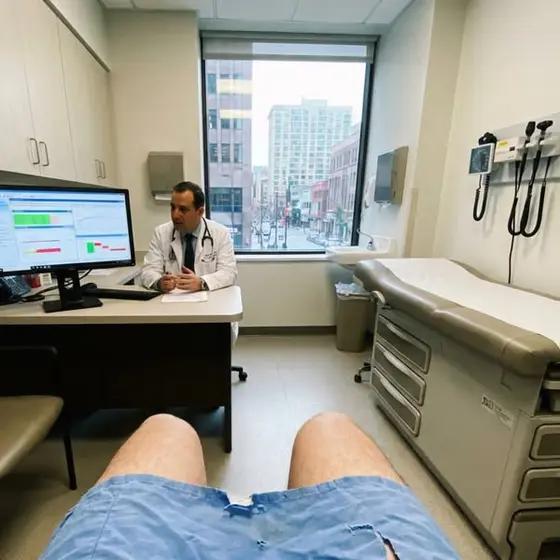
A sleep educator explained to me why the standard sound based alarm almost everyone relies on does not work the same for everyone, and it has everything to do with how the brain exits deep sleep. This hit me on a Thursday afternoon in his office. I had booked the appointment because I was tired of the same pattern repeating. Alarm goes off. I do not wake up. Someone else hears it before I do. Or I wake up twenty minutes later in a panic, trying to piece together what happened. I had already tried everything that seemed reasonable. Earlier bedtime. Consistent schedule. No phone before sleep. Different tones. Louder tones. Softer tones that gradually increase. Two alarms at once. One across the room. One next to the bed. It did not change the core issue. When I explained that I was not snoozing but genuinely sleeping through loud alarms, he did not laugh or suggest I needed more discipline. He asked what kind of stimulus I was using. I said sound. He nodded and pulled up a simple diagram of sleep stages. Light sleep. Deep sleep. REM. He pointed to deep sleep and explained that during certain stages, the brain’s responsiveness to auditory input is reduced. In some people, the threshold required to move from sleep to full wakefulness is simply higher. He was careful with his wording. He did not frame it as a disorder or a defect. He described it as variation. Then he said something that made me rethink the last two years. He said most alarm systems are built on the assumption that sound is enough. That assumption, he explained, does not apply equally to everyone. If the sound does not cross a certain threshold, the brain can register it without fully waking. You might partially process it, but not transition into awareness. That description felt uncomfortably accurate. I had dreamed about alarms before. I had woven the sound into whatever was happening in my sleep. Meanwhile, real time was passing. He did not give me a dramatic solution. He simply explained that different types of sensory input are processed through different pathways. Auditory input is one. Physical or tactile input is another. I left that office thinking about how much effort I had put into adjusting volume and timing without ever questioning the type of stimulus itself. For two years, I had treated it like a settings problem. Wrong ringtone. Wrong app. Wrong decibel level. It had never occurred to me that sound might not be the right tool for me in the first place. After that conversation, I paid more attention to how my body actually responds when I wake up naturally. It is rarely a distant sound that brings me into consciousness. It is usually something physical. Movement. Light shifting across my face. A change in position. That observation led me, slowly, to 100% Wake-Up Alarm. I did not discover it through a big announcement or a bold promise. I came across it while reading about alternatives to traditional alarms. What stood out to me was that it did not rely solely on sound. It focused on physical activation instead. That detail matched what the physician had explained. So I tried 100% Wake-Up Alarm quietly. No backup alarms. No secondary device. Just one change. The first morning it activated, the experience was different from what I was used to. There was no distant ringing blending into a dream. No slow confusion about whether something had been going off for a while. There was a clear physical signal. And I was awake. Not startled in a chaotic way. Not panicked. Just aware. I remember lying there for a few seconds, noticing how straightforward the transition felt. Sleep. Then wakefulness. No middle ground where sound floated around without meaning. Over the next week, I paid attention without overanalyzing. My sleep still felt deep. I still had mornings where I felt groggy. That part did not disappear. But I was conscious at the intended time. I was not discovering that something had been ringing while I remained completely unaware. The bigger shift happened at night. I used to stack alarms out of caution. I would set multiple devices. I would double check the volume. I would go to bed with a small, persistent tension about the morning. With 100% Wake-Up Alarm, that tension eased. I set it once. I go to sleep. And I do not lie there imagining worst case scenarios. I am not claiming that sound based alarms are useless. They clearly work for many people. But for me, understanding that my brain might not respond reliably to auditory cues during deep sleep changed how I interpreted my own experience. It was not about willpower. It was not about caring more. It was about how my nervous system transitions from sleep to wakefulness. Using something based on physical activation aligned better with that reality for me. The difference has been steady rather than dramatic. Mornings feel less unpredictable. I no longer wake up to someone saying, “Your alarm has been going off.” I no longer feel that quiet embarrassment of realizing I missed the signal entirely. Two years ago, I thought I needed a better app. It turns out I needed to understand what kind of signal my body actually responds to. That explanation from a sleep physician did not give me a miracle. It gave me context. And changing the stimulus changed the experience.
Placements and targeting
More ads from Liam Miller
For three years I woke up late, hated myself for four minutes, and figured out what to say. I thought that loop was just who I was. My manager texted me at 8:47 on a Tuesday morning. Just three words: "You coming in?" I was still in bed. My alarm had gone off at 7:00. And 7:05. And 7:10. I had dismissed all three of them in my sleep and had no memory of any of it. That was the third time in six weeks. I didn't text back for eleven minutes because I spent those eleven minutes lying there trying to figure out what to say. Not how to fix it. What to say. I opened a new message to my mana
I woke up at 10:43. Not 6:15, which was when I needed to be at the site. Not 7. Not even 9. Ten forty-three. I had seven missed calls from my manager. Four texts. One from my partner that just said "???" I sat on the edge of the bed with my phone in my hand and I didn't move for a full minute. I just sat there running the math. How late I was. How many guys were standing around waiting for me to open the gate. Whether this was the one that finally got me fired. I almost called in sick. Just to make it go away. I didn't. But I almost did. I'm 31. I run a warehouse crew — twelve guys, ear
My wife finally told me she dreads going to bed — and suddenly I realized my 5am alarm had been slowly destroying her sleep for four years. It was a Tuesday night when she said it. We were lying in bed, lights off, and she just said it quietly into the dark. "I'm not angry at you. I'm just always exhausted." I've been waking up at 5:15am for years. Gym before work. Deep work sessions. Getting ahead. I built my whole identity around those early mornings. She'd been paying for them every single day. I sat up and looked at her. "Emma. Why didn't you say something?" "Because I know you n
Similar software and apps ads
¿Grabados en 3D sin tener ni idea de modelado en tres dimensiones? 🔮✨ ¡Pues sí! En el vídeo de hoy os enseño cómo el software de @xtool.eu utiliza su Inteligencia Artificial para transformar cualquier imagen plana en 2D en un modelo con volumen y relieve en cuestión de segundos. 🤯 Para este proyecto he elegido un foto mia y de mi Willow y lo he grabado directamente sobre este bloque de cristal. El nivel de detalle que consigue el láser con las diferentes profundidades es una auténtica locura. Es la forma perfecta de crear piezas únicas, elegantes y con un toque súper profesional sin complica
"Convierte tus proyectos metálicos en realidad con xTool MetalFab. 🔧 Suelda, corta y limpia acero inoxidable, acero al carbono, latón y aluminio con una sola máquina. ⚙️ La tecnología inteligente mejora la eficiencia con cortes precisos y un flujo de trabajo más sencillo. ✨ Consigue resultados profesionales más rápido gracias a un software fácil de usar y parámetros preconfigurados. 🛡️ Diseñado para ofrecer un rendimiento fiable, mayor seguridad y una larga vida útil.
👀 NO VAYAS A ZARA HOME SIN VER ANTES ESTO… Parte 4 Sé que os encanta esta serie, así que… ¡capítulo nuevo! 🫶🏻 Pero esta vez viene con innovación incluida 👀✨ Además de encontrar ideas muy económicas en Action inspiradas en Zara Home, esta vez he querido ir un paso más allá y personalizarlas con mi xTool F2 Ultra UV. Y es que con ella es súper fácil personalizar un montón de materiales, desde madera y cristal hasta muchísimo más. 🤩✨ Puedes transformar algo sencillo y económico en una pieza mucho más especial. Y decidme que no han quedado monísimas. 🥹🤍 Os dejo por aquí los precios para que p
✨ Magische gordijnlichten met app-bediening 🎨 Puntgestuurde RGB-verlichting met tot 16 miljoen kleuren 📱 Bluetooth-app-bediening: teken je eigen patronen, GIF-animaties en tekstweergaven 📵 Wordt ook geleverd met een handige afstandsbediening voor eenvoudige bediening 💧 Waterbestendige constructie, geschikt voor zowel binnen- als buitengebruik 🔌 USB-voeding, eenvoudig te installeren voor ramen, muren en balkons 🎄 Perfect voor Kerstmis, feesten, bruiloften en gezellige huisdecoratie 🎶 Muzieksynchronisatiemodus – de lichten dansen op de maat van de muziek
Keep exploring
Find more ads like this
Search millions of real ads by keyword, niche and format, and save the winners to your swipe file.
