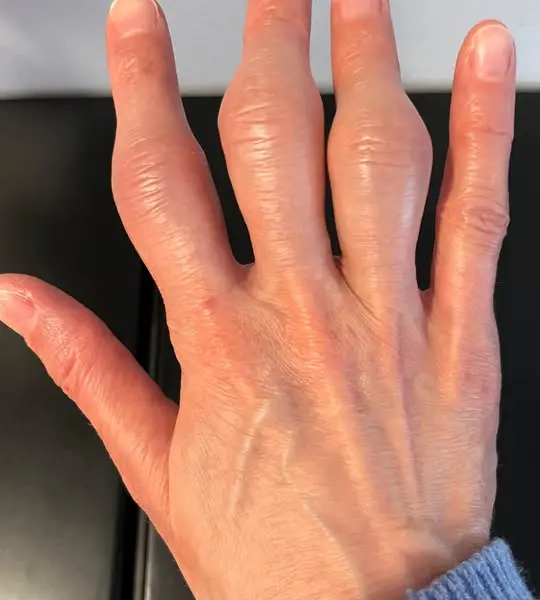
Julia Benner Inactive
Julia Benner Facebook ad creative
velnara.net
Feel Like Yourself Again
See details

Julia Benner Facebook and Instagram ad

Julia Benner ran this image ad since Jun 26, 2026, 134 days so far.

First seen
Jun 26, 2026
Running for
134 days
Format
Image
Call to action
See details
Niche
Skincare
Countries
Not disclosed
Page likes
1

Ad copy

My doctor said if I refused the meloxicam, she'd document it in my medical notes as non-compliance against medical advice. I had fourteen minutes with her. She'd never met me before. Dr Whitfield's retirement letter came on a Tuesday. Standard form letter. "After 38 years of practice, I'm stepping away effective 1 March. Your care will be transferred to Dr Reena Patel." I sat at the kitchen table staring at it. Thirty two years. I'd been seeing Dr Whitfield for thirty two years. He knew my history, knew what my mother went through with her joints, knew my fear of starting down that same road, and he'd always worked with me, always said the same thing, "let's keep an eye on it, Julia, we'll try the gentle approach first, you're doing the right things." Now he was gone. My first appointment with Dr Patel was 14 March. Routine visit. Transfer of records. Meet the new doctor. I sat in the consulting room, same room I'd been in for decades, same posters about joints and arthritis, different doctor. Dr Patel walked in. Young. Maybe 36. Laptop in hand. "Ms Benner." Firm handshake. All business. "I've been going through your file." She sat down, pulled up my records, scrolled, and her expression changed. "Your hands and knees." She turned the screen toward me. "2022, mild stiffness noted. 2023, reduced grip strength. 2024, swelling in both knees, morning stiffness over an hour. 2025, difficulty with stairs. Today you're telling me you can't open a jar or kneel down." She looked at me. "Five years of progressively worsening osteoarthritis. Both hands, both knees. No prescription on file." "Dr Whitfield and I had a plan, gentle movement, anti-inflammatory foods, he was keeping an eye on it..." "For five years?" Her voice was sharp. "Ms Benner, your osteoarthritis has been getting visibly worse for three years without any real treatment, I don't know what your previous doctor was thinking, but this should have been managed aggressively years ago." My stomach dropped. "Dr Whitfield knew what happened to my mother, she had terrible problems with..." "Your mother's history doesn't change your joints, Ms Benner, you can barely grip a steering wheel, you're holding furniture to stand up." She was already typing. "We're starting meloxicam. 15 milligrams daily." "I'd rather..." "This isn't a discussion. Your joints are deteriorating. If you refuse treatment, I'm required to document it in your medical notes as non-compliance against medical advice." The printer hummed. She handed me the prescription. "Follow-up in twelve weeks. We'll see how you're responding." She stood. Left the room. The whole appointment took fourteen minutes. I sat there holding the prescription, hands shaking, the words "against medical advice" and "non-compliance" rolling through my head like a verdict. In the car park, I called my husband Tom. "How was the new doctor?" "She says Dr Whitfield should have put me on a tablet years ago, and she wants me on meloxicam immediately." Silence. "What?" "She said five years without medication was irresponsible." "But Dr Whitfield always said you were..." "I know what he said. She doesn't care. I either take the medication or it goes in my record that I refused." That night I couldn't sleep, just lay in bed staring at the ceiling, Tom's breathing steady next to me. Dr Whitfield had respected my concerns, we'd worked together for over three decades, gentle movement, the foods that calmed the swelling, regular check-ups every six months. My joints had got worse, yes, but gradually, no sudden collapse, no emergency. Was he wrong to be patient? Was I walking around with joints quietly breaking down and didn't even know it? At 3am I went downstairs, sat at the kitchen table with my laptop, and started searching. is osteoarthritis in both hands serious joint damage without treatment osteoarthritis getting worse in your 50s Every article said the same thing. Progressive damage. Cartilage loss. Loss of mobility. Surgery further down the line. Maybe Dr Patel is right, I thought, maybe I've been reckless. But then I searched, meloxicam side effects long term. Stomach ulcers. Internal bleeding. Kidney damage. Higher risk of heart attack and stroke. Fluid retention. Swelling. And my mother's face flashed in my mind. She'd been on anti-inflammatory tablets for years for her arthritis, started with the same kind sitting on my worktop right now, and at first it helped, the swelling went down, she said she finally got her hands back. But the stomach trouble came within a few months, a burning that never let up, then the doctor warning her about her stomach lining, switching her around, adding another tablet to protect her from the first one. And the whole time the joints kept going. She had to stop gardening. Then she couldn't manage the stairs in her own house. Then she couldn't get up from a chair without someone lifting under her arm. This was a woman who used to dance in the kitchen with the radio on, who carried me on her hip and my brother on the other, who could thread a needle in dim light and never complained. By 68 she needed a walking frame. By 70 a wheelchair. By 72 she was in a care home because Dad couldn't lift her anymore and neither could I. I'd visit and she'd be parked by the window, hands curled in her lap, looking out at a garden she couldn't get to. The tablets managed the pain on paper. The medical notes said her arthritis was being treated. And underneath it her body kept folding in on itself anyway. My father said it was like watching her get smaller every week. She died in that care home at 74. Her body just gave out. Years in a chair by a window, taking the medication that was supposed to keep her moving. Years of side effects. Years of feeling like a shadow of herself. And it didn't keep her on her feet. I closed the laptop, rubbed my face, and just sat there in the kitchen with the prescription on the worktop mocking me from across the room. I didn't fill it. One week passed. Then two. Dr Patel's surgery called. "Ms Benner, our records show you haven't filled your prescription, Dr Patel wants to confirm you're taking your medication as directed." "I need more time to think about it." "Ms Benner, Dr Patel noted this as urgent, she strongly recommends..." "I said I need more time." I hung up. Tom found me in the spare room that evening, sitting on the floor I couldn't get up from without the bed frame. "Julia. Talk to me." "I'm looking for options." "Options? The doctor said your joints are deteriorating." "She said Dr Whitfield was wrong for not putting me on a tablet, but Dr Whitfield knew me for thirty two years, he knew what my mother went through, he saw what those tablets did to her while her body fell apart anyway, he was being careful with me." "But what if she's right? What if you end up..." His voice broke. "I'm not watching you go through what your mum went through." "You won't. I just need to find another way." "What other way?" I didn't have an answer. That weekend I searched everything. Turmeric. Glucosamine. Collagen. Fish oil. Every natural joint supplement with actual research behind it. I tried the top-rated turmeric on Amazon, six weeks, every morning without fail. My hands were exactly the same. And it wrecked my stomach, the same burning my mother used to describe. Switched to glucosamine and chondroitin, the big bottle everyone swears by, eight weeks, nothing. Tried a full joint stack from a specialist supplement shop, collagen, glucosamine, fish oil, turmeric, the most expensive thing they had. Maybe a little less stiff for an hour in the morning. Maybe. Then back to the same. I was running out of time and running out of ideas. Three weeks before my appointment I was back at my laptop at 2am going in circles, reading the same supplement forums, the same threads, the same dead ends. Then I changed the search. I stopped looking for supplements and started looking for the real reason joints break down in the first place. What's actually happening inside the joint. Why mine kept getting worse year after year no matter what I did. And I found something that changed the way I understood the whole thing. It wasn't hidden. It wasn't some secret nobody wanted me to know. It was basic science. Just nothing anyone had ever bothered to explain to me in a doctor's surgery. Your joints aren't worn out parts. They're living tissue. I read that line three times. The cartilage between your bones, the fluid that keeps everything gliding, the cushioning that lets you move without grinding, all of it is kept up by living cells inside your joints. Those cells work to repair damage and resolve inflammation. When you're young, they keep up easily. That's why you could kneel, stand, carry, garden, and wake up fine. That wasn't luck. That was the cells in your joints doing their job. But here's the part nobody told me. The inflammatory response in specific joints can get stuck in the "on" position. Modern life keeps overloading the two main control pathways, NF-kB and 5-LOX, so the inflammation that should flare, do its job, and then resolve stays active instead. And when that happens in particular joints, the environment stays hostile. Repair slows. Stiffness and ache build. That is what was happening in my hands first, then my knees. That was the part that stopped me cold. Your joints aren't breaking down just because you're getting older. They're breaking down in specific places because the inflammatory signals in those joints aren't resolving the way they should, and basic approaches never fully addressed both pathways with enough strength where it was needed. That's why the stiffness was always worst first thing in the morning. The unresolved signals had been running in the background all night. I sat back in my chair. That was why my joints kept getting worse year after year. That was why the turmeric hadn't worked. That was why the glucosamine hadn't worked. That was why the joint stack hadn't worked. Most basic turmeric only weakly affects one pathway and most of it never gets absorbed into the bloodstream in any meaningful amount. The others try to supply building blocks, but they can't do much when the inflammatory environment in those specific joints is still running hot. It was like trying to calm a fire with only half the tools and poor delivery. None of it addressed both major pathways properly, so none of it lasted. And the meloxicam? The meloxicam would shut down the pain signal. The swelling would go down. Dr Patel would be happy. But the inflammatory pathways in those specific joints would still be stuck. The damage underneath would keep going. The drug quiets what you feel. It doesn't help the body resolve what’s actually happening in the affected joints. That's why my mother's medical notes said she was being treated while her body folded into a wheelchair anyway. The tablets managed what she felt. They never touched the full picture of what was keeping the inflammation active underneath. We were watching the wrong thing. So I started looking for something else. Something that actually went after the inflammation in the specific joints that were affected. Not just numbing it. Helping it resolve. What I needed was something that could support both major inflammatory pathways at once with real strength and proper delivery, so the body could finally calm what had been stuck and let normal movement return. Most things don't do that. They only hit one part weakly or with poor absorption. None of them give complete support across both pathways where it matters. Then I found something else. Researchers had been studying two traditional botanicals used for joint comfort for thousands of years. When combined properly at clinical strength with absorption support, they target the two main pathways that keep inflammation active in specific joints, curcumin for the NF-kB pathway and Boswellia for the 5-LOX pathway. Basic turmeric only kind of works because it misses one pathway and barely gets absorbed. This combination provides complete anti-inflammation support for the exact joints that were affected. That was the difference. Basic turmeric tries to fight inflammation from one angle with weak delivery. Glucosamine and collagen try to supply materials but can't calm the active signals. They were all working with only half the picture. The right formula hits both pathways with clinical-strength standardised extracts and black pepper extract to make sure it actually reaches where it's needed. The specific joints. Complete support. Resolution instead of just masking. And there was more. The same modern factors that keep the pathways overloaded keep feeding the cycle. This combination also provides antioxidant support to help protect the tissues while the inflammation calms. This wasn't fringe stuff either. This was real research on how these two botanicals work together on the exact mechanisms behind localised joint stiffness and discomfort. I almost stopped right there and ordered the first thing I could find. Got a basic turmeric bottle that weekend. Cheap. Six weeks. Nothing changed except my stomach burned the way my mother used to describe. At 4am I searched for a proper Curcumin and Boswellia combination with clinical dosing and absorption support. One brand kept coming up on the forums where people were posting their actual week-by-week logs. Velnara. Clinical-strength 95% standardised Curcumin 500 mg paired with 500 mg Boswellia serrata extract plus black pepper extract for real absorption. Standardised. Third-party tested. Made to consistent strength. No fillers. No junk. 60-day money-back guarantee. I ordered it immediately. The parcel arrived three days later. Two capsules with a meal every morning. That's the whole protocol. And they were easy to take. I started keeping a little notebook by the sink, jotting down each morning how my hands felt and what I could do, so I'd have my own record instead of just a feeling. I took the first dose after breakfast, didn't expect much, I'd been wrong three times already. Week one, my hands still took their time in the morning, but the burning in my stomach that turmeric used to cause never showed up. I made it to dinner without that bone-deep drained feeling I'd just accepted as normal. I slept through the night without the 2am ache waking me. Could be nothing. I wasn't counting it yet. Week two, I woke up on a Saturday and my hands didn't feel locked. They loosened in a few minutes instead of half an hour. I gripped the kettle without thinking. The dull ache in both knees I'd carried around for months had quietened. Tom noticed before I said anything. "You're moving easier. You came down the stairs like a normal person." He was right. I hadn't even noticed I'd stopped holding the rail with both hands. Week three, most mornings my hands just opened. I knelt down to find a pot in the bottom cupboard and got back up holding the worktop with one hand instead of hauling myself up. I went for a walk round the block with Tom and made it the whole way without stopping to wait out the pain. Then one afternoon I caught myself an hour into pulling weeds in the garden, the thing my mother had to give up, and realised I hadn't thought about my joints once. Not because something was masking it. Because the everyday stiffness had lifted. Week seven, I walked further than I had in two years. I cut my own food at dinner with friends and nobody had to quietly do it for me. I opened a jar of pasta sauce standing at the worktop and just stood there holding it, almost laughing. Two days before my appointment with Dr Patel, I sat at the kitchen table and just breathed for a while. At the appointment, I sat in the same consulting room, same posters about joints and arthritis, different feeling. Dr Patel walked in. Opened my medical notes. Then asked me to grip her fingers, raise my arms, bend my knees, the same movement tests from before. She stopped. "Your range of motion is significantly better. The swelling in both knees is down. Your grip is stronger than your last visit." She looked at the screen, then at me. "What have you been taking?" "I never filled the meloxicam." She looked up. "No?" "Velnara Joint Support. The Curcumin and Boswellia formula. I know how that sounds. But there's a real reason it works for specific joints. The inflammatory pathways in those joints can get stuck and stay active. Basic turmeric only weakly hits one pathway and most of it never gets absorbed. This combines clinical-strength standardised curcumin for one pathway with Boswellia for the other, plus black pepper for absorption, so it actually supports resolution where it's needed. I kept my own notes at home. I can email you everything tonight, and the research." Long pause. "Where did you read this?" "Research on how these two botanicals work together on the main inflammatory pathways in joints. I saved all of it." She looked at the medical notes again. Then at me. "What specifically are you taking?" "Velnara Joint Support Capsules. 95% standardised Curcumin with Boswellia and black pepper extract. Third-party tested." She typed it in, read for a long time, looked at the sourcing and testing documentation. "Keep doing what you're doing. Back in twelve weeks. If your function holds where it is, we'll keep monitoring instead of medicating. No meloxicam." I walked out of that office and sat in my car for ten minutes. Called Tom. "She backed off the meloxicam." He went quiet. Then, "no tablet?" "No tablet. Monitoring instead, if it holds." He didn't say anything for a moment, and when he did his voice was tight. "Your mum would've wanted you to keep digging like that." That was four months ago. Last week I got down on the floor to play with my grandson and got back up on my own. My mother never got to do that with mine. If you're reading this, you're in the same position I was, cornered, pressured, feeling like meloxicam or one of its cousins is the only option your doctor will accept. Here's what I learned after months of failed supplements and two nights of actual research. The reason most joint supplements don't work is that they're aiming at the wrong thing. They only partially address one inflammatory pathway with weak absorption or delivery, while the other pathway in the specific joints stays active. The inflammation doesn't fully resolve. The stiffness and limitation keep building underneath whether the pain is masked or not. Meloxicam quiets the pain, but it doesn't touch the full picture of what's keeping the inflammation active in those specific joints, which is why my mother's medical notes said she was being treated while she folded into a wheelchair anyway, and why managing what she felt never kept her on her feet. Velnara Joint Support was the only one I found that matched the quality and complete dual-pathway approach the research actually supports, clinical-strength 95% standardised Curcumin paired with Boswellia extract plus black pepper for absorption. I don't know if it's the only one out there. I know it's the one that worked for me. I went from holding furniture to stand, to getting off the floor on my own. My doctor monitors me now. No medication. No lectures. No compliance flag. Just movement she can see with her own hands. If you feel cornered, give it 60 days, keep your own notes, how long your hands take in the morning, what you can grip, how far you can walk, then walk into your next appointment with your own record. 60-day money-back guarantee. If you don't notice a difference, if you're not satisfied for any reason, contact customer services for a full refund. No questions asked. You risk nothing. Velnara makes everything to consistent clinical strength with third-party testing, which is why it works when basic turmeric and single-pathway options don't. What you can do with your own hands is the only thing that changes a doctor's mind. 👉 https://velnara.net/products/curcumin-boswellia Julia Benner P.S. I noticed my stomach wasn't burning the way turmeric used to make it by the end of the first week, my hands were loosening in a few minutes by week two, and I was walking the block and getting off the floor on my own by week seven. She backed off the meloxicam on the spot. Your timeline may vary, but 60 days is the window, and you risk nothing. P.P.S. The research exists. The reason it works for specific joints is real. You just have to be willing to look for it. I did the looking. Now you have the answer. 👉 https://velnara.net/products/curcumin-boswellia

Placements and targeting

FacebookInstagramAudience NetworkMessengerThreads

More ads from Julia Benner

Full Julia Benner profile
Julia Benner
Julia Benner
+1
Inactive135 days
velnara.net
Feel Like Yourself Again
See details

My doctor said if I refused the meloxicam, she'd document it in my medical notes as non-compliance against medical advice. I had fourteen minutes with her. She'd never met me before. Dr Whitfield's retirement letter came on a Tuesday. Standard form letter. "After 38 years of practice, I'm stepping away effective 1 March. Your care will be transferred to Dr Reena Patel." I sat at the kitchen table staring at it. Thirty two years. I'd been seeing Dr Whitfield for thirty two years. He knew my history, knew what my mother went through with her joints, knew my fear of starting down that same road, and he'd always worked with me, always said the same thing, "let's keep an eye on it, Julia, we'll try the gentle approach first, you're doing the right things." Now he was gone. My first appointment with Dr Patel was 14 March. Routine visit. Transfer of records. Meet the new doctor. I sat in the consulting room, same room I'd been in for decades, same posters about joints and arthritis, different doctor. Dr Patel walked in. Young. Maybe 36. Laptop in hand. "Ms Benner." Firm handshake. All business. "I've been going through your file." She sat down, pulled up my records, scrolled, and her expression changed. "Your hands and knees." She turned the screen toward me. "2022, mild stiffness noted. 2023, reduced grip strength. 2024, swelling in both knees, morning stiffness over an hour. 2025, difficulty with stairs. Today you're telling me you can't open a jar or kneel down." She looked at me. "Five years of progressively worsening osteoarthritis. Both hands, both knees. No prescription on file." "Dr Whitfield and I had a plan, gentle movement, anti-inflammatory foods, he was keeping an eye on it..." "For five years?" Her voice was sharp. "Ms Benner, your osteoarthritis has been getting visibly worse for three years without any real treatment, I don't know what your previous doctor was thinking, but this should have been managed aggressively years ago." My stomach dropped. "Dr Whitfield knew what happened to my mother, she had terrible problems with..." "Your mother's history doesn't change your joints, Ms Benner, you can barely grip a steering wheel, you're holding furniture to stand up." She was already typing. "We're starting meloxicam. 15 milligrams daily." "I'd rather..." "This isn't a discussion. Your joints are deteriorating. If you refuse treatment, I'm required to document it in your medical notes as non-compliance against medical advice." The printer hummed. She handed me the prescription. "Follow-up in twelve weeks. We'll see how you're responding." She stood. Left the room. The whole appointment took fourteen minutes. I sat there holding the prescription, hands shaking, the words "against medical advice" and "non-compliance" rolling through my head like a verdict. In the car park, I called my husband Tom. "How was the new doctor?" "She says Dr Whitfield should have put me on a tablet years ago, and she wants me on meloxicam immediately." Silence. "What?" "She said five years without medication was irresponsible." "But Dr Whitfield always said you were..." "I know what he said. She doesn't care. I either take the medication or it goes in my record that I refused." That night I couldn't sleep, just lay in bed staring at the ceiling, Tom's breathing steady next to me. Dr Whitfield had respected my concerns, we'd worked together for over three decades, gentle movement, the foods that calmed the swelling, regular check-ups every six months. My joints had got worse, yes, but gradually, no sudden collapse, no emergency. Was he wrong to be patient? Was I walking around with joints quietly breaking down and didn't even know it? At 3am I went downstairs, sat at the kitchen table with my laptop, and started searching. is osteoarthritis in both hands serious joint damage without treatment osteoarthritis getting worse in your 50s Every article said the same thing. Progressive damage. Cartilage loss. Loss of mobility. Surgery further down the line. Maybe Dr Patel is right, I thought, maybe I've been reckless. But then I searched, meloxicam side effects long term. Stomach ulcers. Internal bleeding. Kidney damage. Higher risk of heart attack and stroke. Fluid retention. Swelling. And my mother's face flashed in my mind. She'd been on anti-inflammatory tablets for years for her arthritis, started with the same kind sitting on my worktop right now, and at first it helped, the swelling went down, she said she finally got her hands back. But the stomach trouble came within a few months, a burning that never let up, then the doctor warning her about her stomach lining, switching her around, adding another tablet to protect her from the first one. And the whole time the joints kept going. She had to stop gardening. Then she couldn't manage the stairs in her own house. Then she couldn't get up from a chair without someone lifting under her arm. This was a woman who used to dance in the kitchen with the radio on, who carried me on her hip and my brother on the other, who could thread a needle in dim light and never complained. By 68 she needed a walking frame. By 70 a wheelchair. By 72 she was in a care home because Dad couldn't lift her anymore and neither could I. I'd visit and she'd be parked by the window, hands curled in her lap, looking out at a garden she couldn't get to. The tablets managed the pain on paper. The medical notes said her arthritis was being treated. And underneath it her body kept folding in on itself anyway. My father said it was like watching her get smaller every week. She died in that care home at 74. Her body just gave out. Years in a chair by a window, taking the medication that was supposed to keep her moving. Years of side effects. Years of feeling like a shadow of herself. And it didn't keep her on her feet. I closed the laptop, rubbed my face, and just sat there in the kitchen with the prescription on the worktop mocking me from across the room. I didn't fill it. One week passed. Then two. Dr Patel's surgery called. "Ms Benner, our records show you haven't filled your prescription, Dr Patel wants to confirm you're taking your medication as directed." "I need more time to think about it." "Ms Benner, Dr Patel noted this as urgent, she strongly recommends..." "I said I need more time." I hung up. Tom found me in the spare room that evening, sitting on the floor I couldn't get up from without the bed frame. "Julia. Talk to me." "I'm looking for options." "Options? The doctor said your joints are deteriorating." "She said Dr Whitfield was wrong for not putting me on a tablet, but Dr Whitfield knew me for thirty two years, he knew what my mother went through, he saw what those tablets did to her while her body fell apart anyway, he was being careful with me." "But what if she's right? What if you end up..." His voice broke. "I'm not watching you go through what your mum went through." "You won't. I just need to find another way." "What other way?" I didn't have an answer. That weekend I searched everything. Turmeric. Glucosamine. Collagen. Fish oil. Every natural joint supplement with actual research behind it. I tried the top-rated turmeric on Amazon, six weeks, every morning without fail. My hands were exactly the same. And it wrecked my stomach, the same burning my mother used to describe. Switched to glucosamine and chondroitin, the big bottle everyone swears by, eight weeks, nothing. Tried a full joint stack from a specialist supplement shop, collagen, glucosamine, fish oil, turmeric, the most expensive thing they had. Maybe a little less stiff for an hour in the morning. Maybe. Then back to the same. I was running out of time and running out of ideas. Three weeks before my appointment I was back at my laptop at 2am going in circles, reading the same supplement forums, the same threads, the same dead ends. Then I changed the search. I stopped looking for supplements and started looking for the real reason joints break down in the first place. What's actually happening inside the joint. Why mine kept getting worse year after year no matter what I did. And I found something that changed the way I understood the whole thing. It wasn't hidden. It wasn't some secret nobody wanted me to know. It was basic science. Just nothing anyone had ever bothered to explain to me in a doctor's surgery. Your joints aren't worn out parts. They're living tissue. I read that line three times. The cartilage between your bones, the fluid that keeps everything gliding, the cushioning that lets you move without grinding, all of it is kept up by living cells inside your joints. Those cells work to repair damage and resolve inflammation. When you're young, they keep up easily. That's why you could kneel, stand, carry, garden, and wake up fine. That wasn't luck. That was the cells in your joints doing their job. But here's the part nobody told me. The inflammatory response in specific joints can get stuck in the "on" position. Modern life keeps overloading the two main control pathways, NF-kB and 5-LOX, so the inflammation that should flare, do its job, and then resolve stays active instead. And when that happens in particular joints, the environment stays hostile. Repair slows. Stiffness and ache build. That is what was happening in my hands first, then my knees. That was the part that stopped me cold. Your joints aren't breaking down just because you're getting older. They're breaking down in specific places because the inflammatory signals in those joints aren't resolving the way they should, and basic approaches never fully addressed both pathways with enough strength where it was needed. That's why the stiffness was always worst first thing in the morning. The unresolved signals had been running in the background all night. I sat back in my chair. That was why my joints kept getting worse year after year. That was why the turmeric hadn't worked. That was why the glucosamine hadn't worked. That was why the joint stack hadn't worked. Most basic turmeric only weakly affects one pathway and most of it never gets absorbed into the bloodstream in any meaningful amount. The others try to supply building blocks, but they can't do much when the inflammatory environment in those specific joints is still running hot. It was like trying to calm a fire with only half the tools and poor delivery. None of it addressed both major pathways properly, so none of it lasted. And the meloxicam? The meloxicam would shut down the pain signal. The swelling would go down. Dr Patel would be happy. But the inflammatory pathways in those specific joints would still be stuck. The damage underneath would keep going. The drug quiets what you feel. It doesn't help the body resolve what’s actually happening in the affected joints. That's why my mother's medical notes said she was being treated while her body folded into a wheelchair anyway. The tablets managed what she felt. They never touched the full picture of what was keeping the inflammation active underneath. We were watching the wrong thing. So I started looking for something else. Something that actually went after the inflammation in the specific joints that were affected. Not just numbing it. Helping it resolve. What I needed was something that could support both major inflammatory pathways at once with real strength and proper delivery, so the body could finally calm what had been stuck and let normal movement return. Most things don't do that. They only hit one part weakly or with poor absorption. None of them give complete support across both pathways where it matters. Then I found something else. Researchers had been studying two traditional botanicals used for joint comfort for thousands of years. When combined properly at clinical strength with absorption support, they target the two main pathways that keep inflammation active in specific joints, curcumin for the NF-kB pathway and Boswellia for the 5-LOX pathway. Basic turmeric only kind of works because it misses one pathway and barely gets absorbed. This combination provides complete anti-inflammation support for the exact joints that were affected. That was the difference. Basic turmeric tries to fight inflammation from one angle with weak delivery. Glucosamine and collagen try to supply materials but can't calm the active signals. They were all working with only half the picture. The right formula hits both pathways with clinical-strength standardised extracts and black pepper extract to make sure it actually reaches where it's needed. The specific joints. Complete support. Resolution instead of just masking. And there was more. The same modern factors that keep the pathways overloaded keep feeding the cycle. This combination also provides antioxidant support to help protect the tissues while the inflammation calms. This wasn't fringe stuff either. This was real research on how these two botanicals work together on the exact mechanisms behind localised joint stiffness and discomfort. I almost stopped right there and ordered the first thing I could find. Got a basic turmeric bottle that weekend. Cheap. Six weeks. Nothing changed except my stomach burned the way my mother used to describe. At 4am I searched for a proper Curcumin and Boswellia combination with clinical dosing and absorption support. One brand kept coming up on the forums where people were posting their actual week-by-week logs. Velnara. Clinical-strength 95% standardised Curcumin 500 mg paired with 500 mg Boswellia serrata extract plus black pepper extract for real absorption. Standardised. Third-party tested. Made to consistent strength. No fillers. No junk. 60-day money-back guarantee. I ordered it immediately. The parcel arrived three days later. Two capsules with a meal every morning. That's the whole protocol. And they were easy to take. I started keeping a little notebook by the sink, jotting down each morning how my hands felt and what I could do, so I'd have my own record instead of just a feeling. I took the first dose after breakfast, didn't expect much, I'd been wrong three times already. Week one, my hands still took their time in the morning, but the burning in my stomach that turmeric used to cause never showed up. I made it to dinner without that bone-deep drained feeling I'd just accepted as normal. I slept through the night without the 2am ache waking me. Could be nothing. I wasn't counting it yet. Week two, I woke up on a Saturday and my hands didn't feel locked. They loosened in a few minutes instead of half an hour. I gripped the kettle without thinking. The dull ache in both knees I'd carried around for months had quietened. Tom noticed before I said anything. "You're moving easier. You came down the stairs like a normal person." He was right. I hadn't even noticed I'd stopped holding the rail with both hands. Week three, most mornings my hands just opened. I knelt down to find a pot in the bottom cupboard and got back up holding the worktop with one hand instead of hauling myself up. I went for a walk round the block with Tom and made it the whole way without stopping to wait out the pain. Then one afternoon I caught myself an hour into pulling weeds in the garden, the thing my mother had to give up, and realised I hadn't thought about my joints once. Not because something was masking it. Because the everyday stiffness had lifted. Week seven, I walked further than I had in two years. I cut my own food at dinner with friends and nobody had to quietly do it for me. I opened a jar of pasta sauce standing at the worktop and just stood there holding it, almost laughing. Two days before my appointment with Dr Patel, I sat at the kitchen table and just breathed for a while. At the appointment, I sat in the same consulting room, same posters about joints and arthritis, different feeling. Dr Patel walked in. Opened my medical notes. Then asked me to grip her fingers, raise my arms, bend my knees, the same movement tests from before. She stopped. "Your range of motion is significantly better. The swelling in both knees is down. Your grip is stronger than your last visit." She looked at the screen, then at me. "What have you been taking?" "I never filled the meloxicam." She looked up. "No?" "Velnara Joint Support. The Curcumin and Boswellia formula. I know how that sounds. But there's a real reason it works for specific joints. The inflammatory pathways in those joints can get stuck and stay active. Basic turmeric only weakly hits one pathway and most of it never gets absorbed. This combines clinical-strength standardised curcumin for one pathway with Boswellia for the other, plus black pepper for absorption, so it actually supports resolution where it's needed. I kept my own notes at home. I can email you everything tonight, and the research." Long pause. "Where did you read this?" "Research on how these two botanicals work together on the main inflammatory pathways in joints. I saved all of it." She looked at the medical notes again. Then at me. "What specifically are you taking?" "Velnara Joint Support Capsules. 95% standardised Curcumin with Boswellia and black pepper extract. Third-party tested." She typed it in, read for a long time, looked at the sourcing and testing documentation. "Keep doing what you're doing. Back in twelve weeks. If your function holds where it is, we'll keep monitoring instead of medicating. No meloxicam." I walked out of that office and sat in my car for ten minutes. Called Tom. "She backed off the meloxicam." He went quiet. Then, "no tablet?" "No tablet. Monitoring instead, if it holds." He didn't say anything for a moment, and when he did his voice was tight. "Your mum would've wanted you to keep digging like that." That was four months ago. Last week I got down on the floor to play with my grandson and got back up on my own. My mother never got to do that with mine. If you're reading this, you're in the same position I was, cornered, pressured, feeling like meloxicam or one of its cousins is the only option your doctor will accept. Here's what I learned after months of failed supplements and two nights of actual research. The reason most joint supplements don't work is that they're aiming at the wrong thing. They only partially address one inflammatory pathway with weak absorption or delivery, while the other pathway in the specific joints stays active. The inflammation doesn't fully resolve. The stiffness and limitation keep building underneath whether the pain is masked or not. Meloxicam quiets the pain, but it doesn't touch the full picture of what's keeping the inflammation active in those specific joints, which is why my mother's medical notes said she was being treated while she folded into a wheelchair anyway, and why managing what she felt never kept her on her feet. Velnara Joint Support was the only one I found that matched the quality and complete dual-pathway approach the research actually supports, clinical-strength 95% standardised Curcumin paired with Boswellia extract plus black pepper for absorption. I don't know if it's the only one out there. I know it's the one that worked for me. I went from holding furniture to stand, to getting off the floor on my own. My doctor monitors me now. No medication. No lectures. No compliance flag. Just movement she can see with her own hands. If you feel cornered, give it 60 days, keep your own notes, how long your hands take in the morning, what you can grip, how far you can walk, then walk into your next appointment with your own record. 60-day money-back guarantee. If you don't notice a difference, if you're not satisfied for any reason, contact customer services for a full refund. No questions asked. You risk nothing. Velnara makes everything to consistent clinical strength with third-party testing, which is why it works when basic turmeric and single-pathway options don't. What you can do with your own hands is the only thing that changes a doctor's mind. 👉 https://velnara.net/products/curcumin-boswellia Julia Benner P.S. I noticed my stomach wasn't burning the way turmeric used to make it by the end of the first week, my hands were loosening in a few minutes by week two, and I was walking the block and getting off the floor on my own by week seven. She backed off the meloxicam on the spot. Your timeline may vary, but 60 days is the window, and you risk nothing. P.P.S. The research exists. The reason it works for specific joints is real. You just have to be willing to look for it. I did the looking. Now you have the answer. 👉 https://velnara.net/products/curcumin-boswellia

Julia Benner
Julia Benner
+1
Inactive1 day
velnara.net
Feel Like Yourself Again
See details

I’m going to say something that nobody living with joint pain wants to hear and I don’t care if it upsets you. Numbing the pain isn’t going to keep you out of the operating theatre. Not the ibuprofen you choke down. Not the turmeric. Not the glucosamine. Not the steroid injection you keep going back for. NONE OF IT IS GOING TO STOP WHAT IS ACTUALLY HAPPENING. I know because I watched my father-in-law do all of it. Every single thing they told him. Six straight years. Tablets every morning. Turmeric. Collagen. A steroid injection every time the pain roared back. And his hands curled up like claws anyway. Sixty four years old. Couldn’t open a jar. Couldn’t cut his own food. Couldn’t lift his own grandchildren. Holding on to furniture just to stand up out of a chair. Because he spent six years numbing the pain instead of fixing what was breaking underneath it. And the worst part. Years later it started in my own hands. Right around the age he was when his started. Same stiffness every morning. Same doctor saying the same thing. It’s just part of getting older. And I almost let it happen to me, because I was still listening to the same advice that did nothing for him. I’m done being polite about this. If your joints are getting worse every year and you’re sitting there wondering whether to start another tablet or let them cut you open, you’re wasting time your body doesn’t have. Read this entire post. Every word. Because the answer is in here, and it isn’t another six years of doing everything right while your joints fall apart anyway. My name is David M. I’m 58. I live in Leeds with my wife Karen and our two grown-up children. I’m not an old man. I hike. I work with my hands. I read the labels before I buy anything. That’s what made it so hard to swallow when my own hands started locking up. My father-in-law Ted was 58 when his started. The doctor told him it was arthritis and that it was just part of getting older. No real conversation. Handed him a prescription. Then a referral for the injections. Said it was “the standard treatment.” Said it was “the best we can do at your age.” Said it would manage the pain. Ted did exactly what they told him. Took the tablets every single morning until they wrecked his stomach. Bought every supplement on the shelf. Turmeric. Collagen. Glucosamine. Fish oil. Got the steroid injection whenever the pain came roaring back. For SIX YEARS. In the beginning, the injections helped. Six weeks of relief. The doctor said they were managing it. Sent him home happy. But Ted didn’t feel like he was winning. The relief always wore off. And every time it came back, it came back worse than before. He told the doctor. “That’s normal,” they said. “We can do another injection.” By year three, the man who used to carry his grandchildren on his shoulders couldn’t pick one up at all. Was scared he’d drop them. He started running his hands under hot water every morning just to make a fist. Twenty minutes some days before his fingers would cooperate. The deep grinding ache woke him at 2am. A bone-deep tiredness that sleep never fixed. “That isn’t anything we can fix,” they told him. “We see this in men your age.” You know what they said when he asked if there was another way? “At some point we talk about replacing the joint. Until then, manage the pain.” So he stayed on the merry-go-round. Year after year. Another injection. Another prescription. A man slowly seizing up in the chair across from me at every family gathering. And then it got to the point everyone dreaded. He couldn’t dress himself without help. Couldn’t stand from a chair without someone pulling him up. Couldn’t cut the turkey at his own Christmas table. A capable man. Reduced to needing help with everything. He spent his last years feeling like a ninety year old trapped in a sixty year old body. At one of those last family gatherings, my wife grabbed my hand and said something I will never forget. “They spent six years managing his pain. And the thing that was actually destroying his joints, nobody ever touched it.” Three months ago, I went in because my hands had got bad. The doctor moved my fingers around. Looked at the stiffness. “David, this is arthritis. It’s wear and tear. It’s just part of getting older.” He started writing a prescription. “We’ll manage the pain. Further down the line we can talk about other options.” My chest went tight. I saw Ted running his hands under hot water. Saw him unable to lift my children. Saw him needing to be pulled out of a chair. “No,” I said. He blinked at me. “I watched my father-in-law do exactly that for six years. The tablets. The supplements. The injections. His joints fell apart anyway. So I’m not signing up to manage the pain while the same thing happens to me.” He gave me the look they save for difficult patients. “Give me ninety days,” I said. He wasn’t happy. I didn’t care. For three months I did everything else right. Cleaned up my diet. Cut the processed food. Cut the seed oils. Took the turmeric. The collagen. The glucosamine. The fish oil. Everything the man before me had taken. Three months later my hands were no better. Still locked up every morning. Still aching by the afternoon. Still running them under hot water just to get going. After ninety days of clean eating and a cupboard full of supplements. Nothing. I drove home from that appointment knowing the only thing left was the prescription, then the injections, then the operating theatre. The exact road that ended with a man I loved unable to cut his own food. And I felt something snap. I had eaten clean. Taken every supplement they swear by. And the only answer left was to start down the exact road that broke the man before me, for an outcome that didn’t even keep him whole. That night I couldn’t sleep. My hands ached too much to lie still. At 2am I gave up trying. Went downstairs. Opened my laptop. I started researching everything. What actually keeps joints stiff and limited. Not the pain. The actual process that won’t let the inflammation calm down so normal movement can return. Why some people stay active into their eighties with good joints, and others fall apart at sixty. What’s actually happening when inflammation that should have resolved stays active and starts limiting what you can do. Every mainstream site said the same things. It’s age. It’s wear and tear. Manage the pain. Take the anti-inflammatories. Eventually replace the joint. I had tried everything but the surgery. I refused to start down the road that broke the man before me. So I kept digging. Looking for people who had actually solved this. Not just numbed the pain. Solved the thing underneath it. That’s when I found the thread. A long discussion of people who had got their joints moving comfortably again without a cupboard full of tablets and without going under the knife. And in the comments, one name kept coming up. A retired pharmacist named Walter. People kept saying, “Ask Walter what he takes. Walter knows the chemistry.” Fifteen comments. Twenty. All pointing to the same man. Someone mentioned the town he lived in. A cafe he had coffee at every morning. I looked at the clock. 2:47am. By 8am I was in my car. By 1pm I was three hours away, walking into that cafe. I didn’t have an address. Just a town and the name of a cafe. I asked the woman behind the counter if a regular named Walter came in. She pointed to a table by the window. A man about ten years older than me. Reading glasses pushed up on his head. Working a crossword. Looked sharp. Looked well. His hands moved across that crossword without a hint of stiffness. I walked over. He looked up. “You drove a long way,” he said. Not a question. “Three hours,” I said. He nodded at the seat across from him. “Sit down.” I told him about Ted. About my hands. About the prescription waiting for me at home. About three months of clean eating and supplements that did nothing. He listened without saying a word. Then he set down his pen, made a tight fist, and opened it again. Smooth. Easy. “This was me at sixty,” he said. “Couldn’t make this fist. Couldn’t open a jar. My doctor was talking about replacing both knees.” He stood up from the table without using his hands. Sat back down. “This is me now. Seventy years old. No surgery. No tablets. I garden every morning.” I stared at his hands. “Mine lock up every morning,” I said. “I run them under hot water just to get going.” “Just about where I was,” he said. I looked at him. Sharp. Steady. Moving like a man twenty years younger with the joints to match. “What are you taking,” I asked. He folded the crossword. “Finish your coffee first,” he said. “Then I will explain it properly, because if I just hand you a name you won’t believe it and you won’t stick with it.” The next thing he said changed everything. “Your joints aren’t just wearing down because you’re getting older,” he said. “The inflammation that started to protect them has got stuck in the ‘on’ position. And numbing the pain does nothing to help your body turn it back to resolution mode. That’s why your father-in-law fell apart while doing everything they told him.” I said, “What does that mean.” He broke it down. “Your joints are living tissue. The cartilage between your bones, the fluid that keeps everything lubricated, the cushioning that lets you move without grinding. All of it is maintained by living cells working around the clock. When you were younger those cells handled the daily wear and tear and the inflammatory response turned on, did its job, and turned off cleanly. That’s why you never thought about your joints. You could kneel down, stand up, open jars, carry your children, and wake up fine. That wasn’t luck. That was your body’s inflammatory control working the way it should.” “Here’s the part nobody explains to you.” “Modern life keeps the main inflammatory pathways firing long after they should have shut off. The processed food. The seed oils. The sugar. The stress. The toxins. They create a constant stream of signals that keep NF-kB and 5-LOX pathways activated. Your body never gets the chance to fully resolve the inflammation and return to normal repair and maintenance. And your joints pay the price first because they take so much daily stress.” “As those pathways stay overactive, the environment in the joint stays hostile. Stiffness builds overnight. Movement gets harder. And every time you try to push through it, the unresolved inflammation just keeps the cycle going.” “That’s why the stiffness is worst first thing in the morning. Your body has had hours with those signals still running in the background. By the time you wake up, everything feels seized.” “Now you understand why nothing you tried worked.” “Your anti-inflammatories just suppress the pain signal for a few hours. They don’t help your body resolve the underlying pathways. And long term they can actually make things harder on your stomach and healing. Your steroid injection calms everything for six weeks, then wears off and often comes back stronger, because it never touched the two main control points that keep the inflammation stuck.” He tapped the table. “And here’s the one that gets everybody. Your turmeric, your collagen, your glucosamine, your fish oil. You did everything right with those. But most turmeric supplements only hit one pathway weakly because the curcumin is poorly absorbed, the vast majority never even reaches your bloodstream in meaningful amounts. Collagen and glucosamine try to supply building blocks, but they can’t do much when the inflammatory environment is still hostile. It’s like trying to repair a foundation while the water is still rising. You were giving your body pieces of the solution, but not the complete support it needed to actually calm both major pathways and let normal movement return.” I sat there with my coffee going cold, opening and closing my aching hand. “So what actually helps resolve it,” I said. He smiled for the first time. “This specific botanical formula,” he said. “And I know how that sounds after everything you’ve already tried.” He told me about two plants that traditional healing systems have used for thousands of years when movement and comfort became difficult. Turmeric and Boswellia serrata. Healers reached for concentrated versions of both when basic approaches weren’t enough. “Modern science finally figured out the precise way to use them together,” he said. “Inside the inflammatory process there are two primary control points that drive most joint stiffness and discomfort. One is the NF-kB pathway, it ramps up a wide range of inflammatory compounds. The other is the 5-LOX pathway, it produces leukotrienes that specifically contribute to stiffness and ongoing joint stress. Basic turmeric or cheap curcumin only weakly influences the first one and barely gets absorbed. Boswellia targets the second pathway directly and effectively. When you combine a high-potency 95% standardised Curcumin extract at 500 mg with 500 mg of Boswellia serrata extract, and add black pepper extract to increase curcumin absorption dramatically, you give your body complete support across both pathways. This helps the inflammatory response finally resolve instead of staying stuck, so everyday comfort and smoother movement can return.” “That’s what makes it different from everything you tried. Most turmeric supplements only address one part of the story, which is why they often only kind of work. Collagen and glucosamine deliver materials but can’t calm the active signals. This formula targets both major pathways with clinical-strength, standardised extracts and proper absorption support. It helps your body do what it’s been trying to do all along: calm the overactive inflammation and get back to comfortable daily movement.” He held up his open hand again. “And it does one more thing. The same modern stressors create oxidative stress that keeps feeding the cycle. This combination also provides antioxidant support to protect tissues while the resolution happens.” Then he said the thing that made me trust him. “But here’s what you need to know, because it’s where most people waste their money. Almost everything on the shelf is cheap turmeric powder or low-potency single extracts without the Boswellia synergy or the absorption enhancer. You could take handfuls of weak stuff and still never get meaningful support where it’s needed. The formula that gets results is this clinically dosed, high-potency blend: 500 mg of 95% standardised Curcumin paired with 500 mg Boswellia serrata extract plus black pepper extract for real absorption. Consistent strength every time. Third-party tested. Made in small batches here in the UK so it stays potent. That’s the difference between something that actually supports joint comfort and something that sits in your cupboard next to the expired vitamins.” He told me his old colleagues knew about the research. Plenty of them do. “But there is no patent on these botanicals,” he said. “No NHS pathway that makes it the default recommendation. No big profit push behind the complete formula. So the ones who care quietly point the patients who ask the right questions in the right direction, and let the results do the talking.” Then he wrote a name on the corner of his crossword and slid it across the table. The one he trusted. Velnara Joint Support Capsules. The exact clinical-strength Curcumin + Boswellia formula with the absorption support. Small capsules, easy to take, no huge tablets. “This doesn’t just numb the pain,” he said. “It starts helping your body resolve the inflammation that was keeping your joints from feeling comfortable and moving freely in the first place.” He opened and closed his hand one more time. “You don’t have to get cut open to move again. You just have to give your body the complete support it needs to calm what’s been stuck.” I ordered my first bottle that day. Two capsules every morning with breakfast. I didn’t white-knuckle anything. I didn’t start some punishing new routine. I kept hiking, kept working with my hands as best I could, kept eating the way I already ate. I just took it. Every morning. Week one. The constant deep ache started to ease. Afternoons felt more comfortable for the first time in a long while. Week three. I woke up one morning and my hands moved with noticeably less stiffness. I didn’t need the long hot water warm-up just to get going. Morning stiffness was clearly down. I stood there at the sink and almost cried. Week six. I was out in the garden for two hours. Kneeling. Standing. Gripping the tools. And it hit me on the drive back that I hadn’t thought about my hands or knees once all morning. Not because something was masking the pain. Because the everyday stiffness and discomfort had lifted. Week ten. I got down on the floor and played with the neighbour’s grandchildren. Got back up without holding on to anything. That was four months ago. I never started the prescription. I went on a four-day hiking trip in May, used my hands and my knees hard every day, and woke up fine every morning. My wife noticed before I said a word. Said I move like I used to. Said I’m laughing more. Said I’ve got my life back. I think about Ted almost every day. Because now I understand what happened to him. For six years they managed his pain. The tablets, the supplements, the injections. But the two main inflammatory pathways were never properly supported so the response could resolve. The environment in his joints stayed hostile. The stiffness and limitation kept building because nobody ever gave his body the complete dual-pathway support it needed to calm what was stuck. His joints didn’t fall apart because he got old. They became more limited because everyone spent six years numbing the pain and nobody ever helped resolve the inflammation at the source. His doctor told him it was just part of getting older. It wasn’t. It was the only answer the doctor had. And it was aimed at the wrong target. I’m writing this because I see the same thing playing out for millions of people my age. The hands that won’t open easily in the morning. The knees that feel stiff on the stairs. The jars they can’t open. And a doctor who shrugs and says it’s age, manage the pain, eventually we’ll replace the joint. Some comply and lose their stomach to the tablets and their joints to the injections while the limitation continues anyway. Some just give up and let the surgery decide their future. Both groups are losing. Because both groups are fighting only the pain. The pain was never the whole problem. The stuck inflammatory response is. And every day it stays unresolved, whether you’ve numbed the pain or not, your joints are getting closer to the point where comfortable movement becomes much harder. You don’t have to spend the next twenty years on a merry-go-round of tablets that wreck your stomach and injections that wear off worse than before. You don’t have to let someone cut you open and gamble on a recovery. You need to start giving your body the complete support it needs to resolve the inflammation and protect your everyday comfort and mobility, before the limitation decides your future for you. Because I almost started down the exact road that broke a man I loved, chasing relief that didn’t even keep him whole. And Ted never got the chance to know there was another way. Don’t let that be your story. Don’t spend six years numbing the pain while your joints quietly become more limited anyway. Don’t wait until you can’t cut your own food at your own table. Start giving your body the targeted botanical support it needs to calm what’s been stuck while you still can. 👉 https://velnara.net/products/curcumin-boswellia P.S. A lot of people messaged me asking where to get it. I always order straight from the official site. There are cheap counterfeits and basic low-potency turmeric powders floating around that don’t have the full Curcumin + Boswellia + absorption support formula or the clinical standardisation. P.P.S. I felt the difference by week three. That was the morning my hands moved with much less stiffness and I didn’t need the long hot water routine. By week six I spent two hours in the garden and didn’t think about my joints once. By week ten I was on the floor with the children and stood back up without holding on to anything. No surgery. No tablets. No giving up the life I built. P.P.P.S. Ted did everything they told him for SIX YEARS. The tablets. The supplements. The injections. And his joints became more limited anyway, because simply numbing the pain never helped resolve the inflammation at the source. He spent his last years unable to cut his own food. If your joints are getting worse every year and your doctor just shrugged and said it’s age, you have a window right now. Don’t waste it numbing pain while the real limitation keeps building. 👉 https://velnara.net/products/curcumin-boswellia

Julia Benner
Julia Benner
+1
Inactive2 days
velnara.net
I Reported Him To Administration. He'd Just Smoked A Cigarette 3 Days After Admission With An FEV1 Of 58%. His Oxygen Came Back At 98%.
Shop now

I watched a smoker walk out the hospital doors and light up three days after his pulmonologist had written "no smoking, no exertion" across his chart while we tracked his oxygen. I flagged him to administration, certain he'd yanked out his own monitoring lines to sneak out of his room. His oxygen reading came back at 98%. I'm Julia. Fifteen years now as a respiratory floor nurse. I've watched smokers lose lung function in real time. I've seen cigarettes cake airways with tar and clog them shut with mucus that hardens until nothing can shift it. I've suctioned airways. I've held hands through intubations. So when this man — admitted three days earlier with an FEV1 of 58% and oxygen that sank to 88% on a flat walk — stepped out the front entrance in his gown, dragging his IV pole, and lit a cigarette, I trailed him back to his room ready to write him up for leaving against medical advice. "Your chart says no smoking, no exertion until those numbers settle. You shouldn't be out there." He looked at me and said, "Watch." Smoked it to the filter. Right there in front of me. While I stood taking notes like I was building a case for court. An hour later I came back with the pulse oximeter from the station. Put him through a walk test while I watched. 98%. Steady. No drop. No wheeze. I looked at the meter. Then his wristband. Then his chart. None of it added up. I reported him to administration. Told them he had to have swapped wristbands with another patient to get out of his room. They came around an hour later to confirm who he was. Ran another walk test. 98% again. Same man. Same wristband. Same impossible numbers. His pulmonologist stopped in that evening and ran his own lung function test. The FEV1 came back at 71% — up from the 58% on his admission three days before. The doctor sat down and asked, "What are you taking that isn't on your chart?" The patient reached into his bedside drawer and pulled out a small spray bottle. Said his brother had brought it the morning after he was admitted. His brother's respiratory therapist had mentioned it off the record, after the insurance company turned down coverage for yet another maintenance inhaler. Four botanicals. Concentrated. A spray — not a pill. Called Velnara. The doctor carried the bottle out to the nurse's station. I watched him pull the ingredient list up on his screen and read through research articles for a solid 20 minutes. When he came back, he sat down and walked us through what was going on. "There's more than one layer of mucus down in his lungs. There are two. A fresh layer on the surface, and a hardened layer cemented underneath it for years. Every breath he takes runs through a tube that's caked on the inside. His inhaler widens that tube, but it never touches what's coating it." "Mucinex can't fix a cemented layer. It's water-based — all it does is thin the fresh stuff sitting on top." I stood in the doorway listening. In 15 years of nursing, it was the clearest explanation of stuck mucus I'd ever heard. He kept going: "Picture his airways like a chimney nobody's swept in twenty years. Inhalers keep shoving more air up the flue, but the walls stay caked. Sooner or later the whole structure starts to give. So doctors push harder — stronger inhalers, more air, more pressure — hoping it finally breaks loose. It won't. That bottom layer is still cemented in place." "This doesn't add more pressure. It dissolves the cement." I drove home that night and couldn't sleep. My own morning clear-out had been stuck at 20 minutes for over a year. My FEV1 sat at 78%. My doctor wanted me on a daily maintenance inhaler, but I'd seen what those do to patients over the long haul. I'd tried everything else. Mucinex 1200, twice a day. Steam with eucalyptus. NAC capsules. Mullein tea, then mullein drops. A saline nebulizer. Nothing budged the deep stuff more than a couple minutes off my morning routine. And here was a patient admitted at an FEV1 of 58%, smoking a cigarette outside three days later, walking the corridor at 98%. At 2:47 AM, still wide awake, I started digging. The two-layer mucus trap. The reason expectorants keep failing on COPD lungs. Not the runny mucus of a head cold — a hardened, protein-bound layer that's been packed at the bottom of the airways for years, with the cilia buried under it, unable to move. The first thing I came across was on mucus biofilm — how aging mucus oxidizes and binds into a cement-like structure that water-based expectorants just slide right off of. The second was on eucalyptus terpenes acting as a solvent — actually breaking that oily hardened layer apart at the molecular level instead of only thinning the surface. The third was a paper on calendula and ciliary function — those buried sweepers finally getting the signal to start moving again. I kept reading. The mechanism lined up exactly with what the pulmonologist had explained to the patient. The morning cough that brings up nothing isn't only about the smoking. It's a tar-and-mucus layer that's been chemically cemented onto your airway walls for years, glued in place by protein bonds, with the cilia buried beneath it and unable to move. A maintenance inhaler relaxes the muscles wrapped around your airways. It's a chemical override. It works — but it never clears the coating. It just widens the tube while the walls stay caked. Velnara does something different. Its botanicals land directly on the airway lining — sprayed, not swallowed — and dissolve the cemented layer the way a solvent lifts grease off a pan. They break the bond at the bottom, not just the top. They don't add pressure. They dissolve the cement. But dissolving it isn't the whole job. The airways are also swollen shut from chronic inflammation — and that's where Licorice Root comes in. Licorice root quiets the inflammation that's been keeping the passage clamped tight. In a lung formula, it's easing the swelling that holds the airway pinched. Then there's Peppermint, which opens the airway so the loosened mucus has somewhere to travel. And Calendula, which revives the buried cilia, so the sweeping system that's sat idle for years finally kicks back on. The chimney walls get dissolved clean. The cilia wake up. Your lungs finish the job they'd been straining to do for years. The chimney is finally swept. The system works again. And here's the part that matters most — why a spray and not a pill. Swallow a capsule and it heads to your stomach, gets shredded by stomach acid, run through your liver, then absorbed into your bloodstream — and only whatever survives that gauntlet ever reaches your lungs. Most of it never makes it. That's exactly why the teas and capsules did nothing for me. The medicine never showed up. The right delivery is a spray that goes straight to the trapped layer — the same route hospitals take with a nebulizer. I ordered a bottle that morning. Week 1, the tightness in my chest eased. I'd carried a low-grade heaviness for years and chalked it up to "just being a 15-year nurse who's breathed enough secondhand smoke in the lobby." The first thing I noticed wasn't a number. It was that I stopped hunching over the sink between my first cough and my coffee. Easier, looser breathing. That night I went to bed at 10:30. I woke at 6:45. I hadn't stirred once. No coughing. Not propped up on three pillows fighting for air. None of that 3 AM choking I'd had for years. I slept flat through the night for the first time in 14 months. Week 2, it happened. Over the sink, I brought up a clot of mucus so dark it was nearly black. Thick. Old. I just stood there staring at it in the basin. The Purge, the doctor had called it — the cemented layer finally tearing loose. I ran the test three mornings straight because I couldn't quite believe it. Week 3, my twenty-minute morning clear-out dropped to six. I quit grabbing my rescue inhaler before the climb to the third floor. I made it up without slowing at the second landing. Week 6, my morning routine was down to two clears and a sip of coffee. I hadn't had mornings like that in over two years. Week 10, my lung function test came back. FEV1 at 89%. Up from 78%. My doctor stared at it. Ran another spirometry. Same result. "Your FEV1 is consistently up 11 points." "Yes." "Your morning cough is gone. You're sleeping flat." "Yes." She looked up at me. "What did you do?" "A botanical spray. Eucalyptus, licorice root, peppermint, calendula. Sprayed right to the airways, not swallowed. There are studies. I brought them." I handed her a folder with six published papers. She paged through them. Read for five minutes. Closed the folder. "Your oxygen saturation on exertion is up. Your FVC climbed 8 points." I nodded. "Whatever you're doing — keep doing it." That patient I reported? I ran into him at his six-month follow-up. Caught him in the hallway. "I reported you because I was sure you were about to hurt yourself." He grinned. "I know. But my FEV1's at 81% now. Haven't been back in the hospital since. I clear my chest in five minutes. And I still smoke half a pack a day." His lungs weren't dead. That bottom layer just needed clearing. I've recommended Velnara to six patients since. Every one of them has come back and told me the same thing. A looser chest in the first week. Dark mucus surfacing inside two. Their morning clear-out halved by week three. Sleeping flat within the first couple months. One patient broke down crying when she told me she'd slept flat in her own bed for the first time in two years. Another patient's FEV1 climbed from 67% to 76% in three months. His pulmonologist told him to keep taking whatever it was. But here's what I really need you to understand. Most of what gets sold for this flat-out fails. I tried the cheap stuff first myself. Generic capsules off Amazon. My morning clear-out barely moved. Here's why most of it doesn't work. It's swallowed. A dry capsule has to be swallowed, broken down by stomach acid, run through your liver, then pulled into your bloodstream — and only the fraction that survives that trip reaches your lungs. Most never arrives. You can't fix a lung problem by way of your stomach. The right format is a spray that goes straight to the airways, the way a hospital nebulizer does. It only reaches the surface. Water-based expectorants thin the fresh top layer and slide right off the cemented one beneath it. They're treating the layer that was never the problem. It's underdosed and scattershot. A pinch of dried herb buried in a multivitamin isn't a solvent for hardened mucus. That's the gap between a working blend and a decorative one. It isn't tested. Most supplements aren't third-party verified. You've no real idea what's in the bottle. The spray that actually worked — the one that patient had, the one I switched to — is Velnara. Four concentrated botanicals. Eucalyptus to dissolve the cemented layer. Licorice root to shut down the inflammation. Peppermint to open the airways. Calendula to revive the buried cilia. The only formula putting all four together in a single spray that's delivered straight to the airways. Sprayed right to the trapped layer — two layers down, where Mucinex never got. The same route hospitals use — not a pill that dies in your stomach. The active compounds reach the lungs at strengths a capsule simply can't deliver. Third-party tested. Made in an FDA-registered facility here in the USA. Every batch checked. The difference between that first generic and Velnara was the difference between my morning clear-out dropping a couple minutes and dropping from 20 minutes to 5 — and bringing up the black stuff that had been lodged in there for years. Same idea. Completely different outcome. If you're done with doctors warning you about COPD progression while you keep choking on what won't come up, try Velnara risk-free. They run a 60-day money-back guarantee. No questions asked. If you don't bring up the dark stuff, if your morning clear-out doesn't shrink, if you don't sleep any flatter — you pay nothing. But when that cemented layer finally lifts — when you're not dreading the next lung function test, when you're sleeping flat in your own bed again — you'll see why respiratory therapists quietly steer patients toward this. Your lungs aren't dead. That bottom layer just needs clearing. Spray it twice into each airway with breakfast. Most people feel a looser chest within 3 to 7 days. Dark mucus surfacing around week two. The morning clear-out shrinking between weeks 2 and 4. Full benefits — sleeping flat with no recliner, the FEV1 lift, the chest that feels clean — land at 8 to 12 weeks. They sell out. Small company, and the stock keeps going. If you click through and see "Out of Stock," get on the notification list. If it's in stock, order now. There's a promotion running right now. Buy two, get one free. 65% off while it lasts, free shipping. If you're living with: A morning clear-out that's turned into twenty minutes at the sink before you can start your day. A cough that won't bring up the deep stuff no matter how hard you hack at it. Waking up over and over each night choking on what's pooled overnight. A chest that feels heavy and cemented the second you wake. Sleeping in a recliner or stacked on three pillows because lying flat means choking. Mucinex that thins something but never the layer that's actually stuck. Try this. Give it 60 days. See what comes up over the sink. See how flat you sleep. If it doesn't work, you get your money back. But if it works the way it worked for me, for the patient I reported who walked the corridor at 98%, for the six patients I've sent this way... You'll wonder why you didn't try it sooner. I went from a 20-minute morning clear-out to 5. From bringing up nothing to coughing out the black stuff. From three pillows to sleeping flat. From a heavy, cemented chest to a clean one. That patient went from an FEV1 of 58% to 81% — and he still smokes half a pack a day. Your lungs aren't broken forever. That bottom layer just needs clearing. Tap below and grab Velnara while it's still in stock. 👉 velnara.net/products/naturva-lung-cleansing-spray ~ Julia B., RN, Respiratory Floor, 15 years

Julia Benner
Julia Benner
+1
Inactive2 days
velnara.net
I Reported Him To Administration. He'd Just Smoked A Cigarette 3 Days After Admission With An FEV1 Of 58%. His Oxygen Came Back At 98%.
Shop now

I watched a smoker walk out the hospital doors and light up three days after his pulmonologist had written "no smoking, no exertion" across his chart while we tracked his oxygen. I flagged him to administration, certain he'd yanked out his own monitoring lines to sneak out of his room. His oxygen reading came back at 98%. I'm Julia. Fifteen years now as a respiratory floor nurse. I've watched smokers lose lung function in real time. I've seen cigarettes cake airways with tar and clog them shut with mucus that hardens until nothing can shift it. I've suctioned airways. I've held hands through intubations. So when this man — admitted three days earlier with an FEV1 of 58% and oxygen that sank to 88% on a flat walk — stepped out the front entrance in his gown, dragging his IV pole, and lit a cigarette, I trailed him back to his room ready to write him up for leaving against medical advice. "Your chart says no smoking, no exertion until those numbers settle. You shouldn't be out there." He looked at me and said, "Watch." Smoked it to the filter. Right there in front of me. While I stood taking notes like I was building a case for court. An hour later I came back with the pulse oximeter from the station. Put him through a walk test while I watched. 98%. Steady. No drop. No wheeze. I looked at the meter. Then his wristband. Then his chart. None of it added up. I reported him to administration. Told them he had to have swapped wristbands with another patient to get out of his room. They came around an hour later to confirm who he was. Ran another walk test. 98% again. Same man. Same wristband. Same impossible numbers. His pulmonologist stopped in that evening and ran his own lung function test. The FEV1 came back at 71% — up from the 58% on his admission three days before. The doctor sat down and asked, "What are you taking that isn't on your chart?" The patient reached into his bedside drawer and pulled out a small spray bottle. Said his brother had brought it the morning after he was admitted. His brother's respiratory therapist had mentioned it off the record, after the insurance company turned down coverage for yet another maintenance inhaler. Four botanicals. Concentrated. A spray — not a pill. Called Velnara. The doctor carried the bottle out to the nurse's station. I watched him pull the ingredient list up on his screen and read through research articles for a solid 20 minutes. When he came back, he sat down and walked us through what was going on. "There's more than one layer of mucus down in his lungs. There are two. A fresh layer on the surface, and a hardened layer cemented underneath it for years. Every breath he takes runs through a tube that's caked on the inside. His inhaler widens that tube, but it never touches what's coating it." "Mucinex can't fix a cemented layer. It's water-based — all it does is thin the fresh stuff sitting on top." I stood in the doorway listening. In 15 years of nursing, it was the clearest explanation of stuck mucus I'd ever heard. He kept going: "Picture his airways like a chimney nobody's swept in twenty years. Inhalers keep shoving more air up the flue, but the walls stay caked. Sooner or later the whole structure starts to give. So doctors push harder — stronger inhalers, more air, more pressure — hoping it finally breaks loose. It won't. That bottom layer is still cemented in place." "This doesn't add more pressure. It dissolves the cement." I drove home that night and couldn't sleep. My own morning clear-out had been stuck at 20 minutes for over a year. My FEV1 sat at 78%. My doctor wanted me on a daily maintenance inhaler, but I'd seen what those do to patients over the long haul. I'd tried everything else. Mucinex 1200, twice a day. Steam with eucalyptus. NAC capsules. Mullein tea, then mullein drops. A saline nebulizer. Nothing budged the deep stuff more than a couple minutes off my morning routine. And here was a patient admitted at an FEV1 of 58%, smoking a cigarette outside three days later, walking the corridor at 98%. At 2:47 AM, still wide awake, I started digging. The two-layer mucus trap. The reason expectorants keep failing on COPD lungs. Not the runny mucus of a head cold — a hardened, protein-bound layer that's been packed at the bottom of the airways for years, with the cilia buried under it, unable to move. The first thing I came across was on mucus biofilm — how aging mucus oxidizes and binds into a cement-like structure that water-based expectorants just slide right off of. The second was on eucalyptus terpenes acting as a solvent — actually breaking that oily hardened layer apart at the molecular level instead of only thinning the surface. The third was a paper on calendula and ciliary function — those buried sweepers finally getting the signal to start moving again. I kept reading. The mechanism lined up exactly with what the pulmonologist had explained to the patient. The morning cough that brings up nothing isn't only about the smoking. It's a tar-and-mucus layer that's been chemically cemented onto your airway walls for years, glued in place by protein bonds, with the cilia buried beneath it and unable to move. A maintenance inhaler relaxes the muscles wrapped around your airways. It's a chemical override. It works — but it never clears the coating. It just widens the tube while the walls stay caked. Velnara does something different. Its botanicals land directly on the airway lining — sprayed, not swallowed — and dissolve the cemented layer the way a solvent lifts grease off a pan. They break the bond at the bottom, not just the top. They don't add pressure. They dissolve the cement. But dissolving it isn't the whole job. The airways are also swollen shut from chronic inflammation — and that's where Licorice Root comes in. Licorice root quiets the inflammation that's been keeping the passage clamped tight. In a lung formula, it's easing the swelling that holds the airway pinched. Then there's Peppermint, which opens the airway so the loosened mucus has somewhere to travel. And Calendula, which revives the buried cilia, so the sweeping system that's sat idle for years finally kicks back on. The chimney walls get dissolved clean. The cilia wake up. Your lungs finish the job they'd been straining to do for years. The chimney is finally swept. The system works again. And here's the part that matters most — why a spray and not a pill. Swallow a capsule and it heads to your stomach, gets shredded by stomach acid, run through your liver, then absorbed into your bloodstream — and only whatever survives that gauntlet ever reaches your lungs. Most of it never makes it. That's exactly why the teas and capsules did nothing for me. The medicine never showed up. The right delivery is a spray that goes straight to the trapped layer — the same route hospitals take with a nebulizer. I ordered a bottle that morning. Week 1, the tightness in my chest eased. I'd carried a low-grade heaviness for years and chalked it up to "just being a 15-year nurse who's breathed enough secondhand smoke in the lobby." The first thing I noticed wasn't a number. It was that I stopped hunching over the sink between my first cough and my coffee. Easier, looser breathing. That night I went to bed at 10:30. I woke at 6:45. I hadn't stirred once. No coughing. Not propped up on three pillows fighting for air. None of that 3 AM choking I'd had for years. I slept flat through the night for the first time in 14 months. Week 2, it happened. Over the sink, I brought up a clot of mucus so dark it was nearly black. Thick. Old. I just stood there staring at it in the basin. The Purge, the doctor had called it — the cemented layer finally tearing loose. I ran the test three mornings straight because I couldn't quite believe it. Week 3, my twenty-minute morning clear-out dropped to six. I quit grabbing my rescue inhaler before the climb to the third floor. I made it up without slowing at the second landing. Week 6, my morning routine was down to two clears and a sip of coffee. I hadn't had mornings like that in over two years. Week 10, my lung function test came back. FEV1 at 89%. Up from 78%. My doctor stared at it. Ran another spirometry. Same result. "Your FEV1 is consistently up 11 points." "Yes." "Your morning cough is gone. You're sleeping flat." "Yes." She looked up at me. "What did you do?" "A botanical spray. Eucalyptus, licorice root, peppermint, calendula. Sprayed right to the airways, not swallowed. There are studies. I brought them." I handed her a folder with six published papers. She paged through them. Read for five minutes. Closed the folder. "Your oxygen saturation on exertion is up. Your FVC climbed 8 points." I nodded. "Whatever you're doing — keep doing it." That patient I reported? I ran into him at his six-month follow-up. Caught him in the hallway. "I reported you because I was sure you were about to hurt yourself." He grinned. "I know. But my FEV1's at 81% now. Haven't been back in the hospital since. I clear my chest in five minutes. And I still smoke half a pack a day." His lungs weren't dead. That bottom layer just needed clearing. I've recommended Velnara to six patients since. Every one of them has come back and told me the same thing. A looser chest in the first week. Dark mucus surfacing inside two. Their morning clear-out halved by week three. Sleeping flat within the first couple months. One patient broke down crying when she told me she'd slept flat in her own bed for the first time in two years. Another patient's FEV1 climbed from 67% to 76% in three months. His pulmonologist told him to keep taking whatever it was. But here's what I really need you to understand. Most of what gets sold for this flat-out fails. I tried the cheap stuff first myself. Generic capsules off Amazon. My morning clear-out barely moved. Here's why most of it doesn't work. It's swallowed. A dry capsule has to be swallowed, broken down by stomach acid, run through your liver, then pulled into your bloodstream — and only the fraction that survives that trip reaches your lungs. Most never arrives. You can't fix a lung problem by way of your stomach. The right format is a spray that goes straight to the airways, the way a hospital nebulizer does. It only reaches the surface. Water-based expectorants thin the fresh top layer and slide right off the cemented one beneath it. They're treating the layer that was never the problem. It's underdosed and scattershot. A pinch of dried herb buried in a multivitamin isn't a solvent for hardened mucus. That's the gap between a working blend and a decorative one. It isn't tested. Most supplements aren't third-party verified. You've no real idea what's in the bottle. The spray that actually worked — the one that patient had, the one I switched to — is Velnara. Four concentrated botanicals. Eucalyptus to dissolve the cemented layer. Licorice root to shut down the inflammation. Peppermint to open the airways. Calendula to revive the buried cilia. The only formula putting all four together in a single spray that's delivered straight to the airways. Sprayed right to the trapped layer — two layers down, where Mucinex never got. The same route hospitals use — not a pill that dies in your stomach. The active compounds reach the lungs at strengths a capsule simply can't deliver. Third-party tested. Made in an FDA-registered facility here in the USA. Every batch checked. The difference between that first generic and Velnara was the difference between my morning clear-out dropping a couple minutes and dropping from 20 minutes to 5 — and bringing up the black stuff that had been lodged in there for years. Same idea. Completely different outcome. If you're done with doctors warning you about COPD progression while you keep choking on what won't come up, try Velnara risk-free. They run a 60-day money-back guarantee. No questions asked. If you don't bring up the dark stuff, if your morning clear-out doesn't shrink, if you don't sleep any flatter — you pay nothing. But when that cemented layer finally lifts — when you're not dreading the next lung function test, when you're sleeping flat in your own bed again — you'll see why respiratory therapists quietly steer patients toward this. Your lungs aren't dead. That bottom layer just needs clearing. Spray it twice into each airway with breakfast. Most people feel a looser chest within 3 to 7 days. Dark mucus surfacing around week two. The morning clear-out shrinking between weeks 2 and 4. Full benefits — sleeping flat with no recliner, the FEV1 lift, the chest that feels clean — land at 8 to 12 weeks. They sell out. Small company, and the stock keeps going. If you click through and see "Out of Stock," get on the notification list. If it's in stock, order now. There's a promotion running right now. Buy two, get one free. 65% off while it lasts, free shipping. If you're living with: A morning clear-out that's turned into twenty minutes at the sink before you can start your day. A cough that won't bring up the deep stuff no matter how hard you hack at it. Waking up over and over each night choking on what's pooled overnight. A chest that feels heavy and cemented the second you wake. Sleeping in a recliner or stacked on three pillows because lying flat means choking. Mucinex that thins something but never the layer that's actually stuck. Try this. Give it 60 days. See what comes up over the sink. See how flat you sleep. If it doesn't work, you get your money back. But if it works the way it worked for me, for the patient I reported who walked the corridor at 98%, for the six patients I've sent this way... You'll wonder why you didn't try it sooner. I went from a 20-minute morning clear-out to 5. From bringing up nothing to coughing out the black stuff. From three pillows to sleeping flat. From a heavy, cemented chest to a clean one. That patient went from an FEV1 of 58% to 81% — and he still smokes half a pack a day. Your lungs aren't broken forever. That bottom layer just needs clearing. Tap below and grab Velnara while it's still in stock. 👉 velnara.net/products/naturva-lung-cleansing-spray ~ Julia B., RN, Respiratory Floor, 15 years

Similar skincare ads

Naturalistico
Naturalistico
+2
Active104 days
naturalistico.com
Get Instant Access
Learn more

✨ Apply Non-Invasive Facial Sculpting Techniques With Precision, Safety, and Holistic Professional Care. In our Facial Sculpting Therapist Certification, the teachings bring together facial anatomy, skin science, manual sculpting methods, lymphatic support, holistic facial care, device-assisted modalities, hygiene, ethics, and client communication. Rather than presenting facial sculpting as a miracle solution or a one-size-fits-all technique, this training teaches a grounded, professional, and responsible approach — combining technical precision with client comfort, aesthetic awareness with ethical practice, and manual skill with holistic sensitivity. Because the program is fully online, you can join from anywhere in the world. No advanced medical background is required — this course is open to beauty therapists, estheticians, massage therapists, spa and wellness professionals, holistic practitioners, and anyone who wants to offer structured, client-centered facial sculpting sessions. And with accreditation from IPHM, CMA, and CPD, insurance eligibility via ICHAP, and CEU credits via NCCAP, this certification is a solid foundation for a credible, insurable practice. Course Highlights — 10 Modules: ▪ Module 1 – Foundations of Facial Sculpting Therapy ▪ Module 2 – Applied Facial Anatomy and Physiology for Sculpting ▪ Module 3 – Skin Science, Assessment, and Treatment Planning ▪ Module 4 – Core Manual Techniques for Facial Sculpting ▪ Module 5 – Advanced Manual Methods — Buccal, Intraoral, and Specialized Techniques ▪ Module 6 – Device-Assisted Facial Sculpting Modalities ▪ Module 7 – Integrative and Holistic Approaches to Facial Sculpting ▪ Module 8 – Hygiene, Safety, Ethics, and Professional Conduct ▪ Module 9 – Client Communication, Cultural Competence, and Practice Management ▪ Module 10 – Integrating Skills into Professional Facial Sculpting Practice 🎧📄 Nearly 10 hours of audio and 11 downloadable PDFs. Lifetime access on any device. 🌿 Weekly live Q&A and access to a private community of practitioners. 🤗 ✨ Interactive quizzes, guided feedback, and direct instructor access. 🏅 Insurance eligible via ICHAP. CEU credits via NCCAP. Rated 4.82 on Trustpilot. 30-day money-back guarantee. Start your journey today and become a Certified Facial Sculpting Therapist. Now is the moment to combine beauty, relaxation, and holistic wellbeing into a professional practice that is safe, refined, and genuinely client-centered. ➔ naturalistico.com/en/learn/course/3076/facial-sculpting-therapist-certification

Naturalistico
Naturalistico
+2
Active104 days
naturalistico.com
Get Instant Access
Learn more

✨ Apply Non-Invasive Facial Sculpting Techniques With Precision, Safety, and Holistic Professional Care. In our Facial Sculpting Therapist Certification, the teachings bring together facial anatomy, skin science, manual sculpting methods, lymphatic support, holistic facial care, device-assisted modalities, hygiene, ethics, and client communication. Rather than presenting facial sculpting as a miracle solution or a one-size-fits-all technique, this training teaches a grounded, professional, and responsible approach — combining technical precision with client comfort, aesthetic awareness with ethical practice, and manual skill with holistic sensitivity. Because the program is fully online, you can join from anywhere in the world. No advanced medical background is required — this course is open to beauty therapists, estheticians, massage therapists, spa and wellness professionals, holistic practitioners, and anyone who wants to offer structured, client-centered facial sculpting sessions. And with accreditation from IPHM, CMA, and CPD, insurance eligibility via ICHAP, and CEU credits via NCCAP, this certification is a solid foundation for a credible, insurable practice. Course Highlights — 10 Modules: ▪ Module 1 – Foundations of Facial Sculpting Therapy ▪ Module 2 – Applied Facial Anatomy and Physiology for Sculpting ▪ Module 3 – Skin Science, Assessment, and Treatment Planning ▪ Module 4 – Core Manual Techniques for Facial Sculpting ▪ Module 5 – Advanced Manual Methods — Buccal, Intraoral, and Specialized Techniques ▪ Module 6 – Device-Assisted Facial Sculpting Modalities ▪ Module 7 – Integrative and Holistic Approaches to Facial Sculpting ▪ Module 8 – Hygiene, Safety, Ethics, and Professional Conduct ▪ Module 9 – Client Communication, Cultural Competence, and Practice Management ▪ Module 10 – Integrating Skills into Professional Facial Sculpting Practice 🎧📄 Nearly 10 hours of audio and 11 downloadable PDFs. Lifetime access on any device. 🌿 Weekly live Q&A and access to a private community of practitioners. 🤗 ✨ Interactive quizzes, guided feedback, and direct instructor access. 🏅 Insurance eligible via ICHAP. CEU credits via NCCAP. Rated 4.82 on Trustpilot. 30-day money-back guarantee. Start your journey today and become a Certified Facial Sculpting Therapist. Now is the moment to combine beauty, relaxation, and holistic wellbeing into a professional practice that is safe, refined, and genuinely client-centered. ➔ naturalistico.com/en/learn/course/3076/facial-sculpting-therapist-certification

Flowarmth.AR05
Flowarmth.AR05
+1
Inactive8 days
flowarmth.com
🏆🏆 Retinol Body Lotion 6 oz with Shea Butter and Ceramides Skin Care Hydrating
Shop now

💪✨ Gentle, hydrating retinol 💧 Shea Butter + Ceramides for deep moisture

See all ads

Create a free account to unlock every creative, video and landing page.

Sign up free

Keep exploring

Free plan, no card needed

Find more ads like this

Search millions of real ads by keyword, niche and format, and save the winners to your swipe file.

Start free