Here's what happens when someone with neuropathy finally gives their nerves what they actually need — not a painkiller that masks the signal, but real fuel and repair at the cellular level. Week 1: You take your first Cortéa softgel. Within hours, coconut oil MCTs are already converting to ketones — feeding your starved nerve cells through a pathway that bypasses the damage. R-ALA starts neutralizing the free radicals that have been destroying your nerve tissue for years. You might sleep slightly better. Small thing. But you notice. Week 2: The antioxidant protection is building. Glutathione levels rising. The oxidative assault on your nerves is meeting resistance for the first time. The burning feels slightly less constant. You're not sure if it's real yet. It is. Week 3–4: This is when the clinical trials show it. Burning and tingling start to ease. Electric shock episodes reduce in frequency. You go a full day without reaching for pain relief and realise it halfway through the next morning. Week 6–8: Your balance feels more stable. You trust your feet on the stairs again. Nighttime pain is manageable. People around you start noticing before you even say anything. Week 12: You remember what it felt like to move through a day without counting sensations. That's what 90 days of repair AND fuel does that one mechanism never could. Cortéa. R-ALA 600mg + Coconut Oil MCTs. The only nerve supplement that stops the damage and feeds the repair — simultaneously. 90-day money back guarantee try it risk free today.
Jennifer Johnson Facebook and Instagram ad
Jennifer Johnson ran this image ad since Apr 10, 2026, 1 days so far.
Ad copy
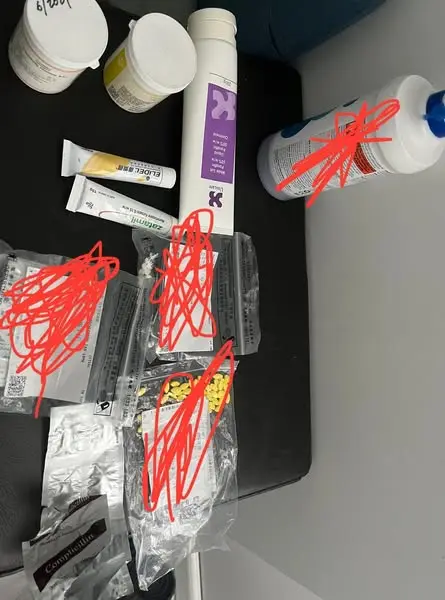
If your baby's cream drawer looks anything like this — stop. I need to tell you something the dermatologist never will. Look at that photo. That's not a drawer. That's a timeline. Every single one of those tubes, those bottles, those blister packs there was a moment before each one where I felt something. Something small and fragile that I kept letting myself feel even though it kept costing me. Hope. The Elidel was the specialist's idea. She said it with such confidence, such clinical certainty, that I drove to the pharmacy that same afternoon and handed over $80 without blinking. I remember sitting in the car park reading the instructions twice. Applying it that night with these careful, deliberate strokes like if I did it exactly right, that would be the thing that finally made the difference. It didn't make a difference. The Zatamil was my own research. 2 AM, three weeks into the Elidel not working, down a rabbit hole of parenting forums and eczema groups and threads full of desperate mothers just like me, all of us comparing products like we were comparing war notes. Someone said Zatamil had changed their baby's skin completely. Three people replied agreeing. I ordered it before I finished reading the thread. It helped. For about nine days. And then his skin adjusted or the weather changed or I ate something wrong or — honestly I don't know. I never knew. That was the thing that was slowly hollowing me out. Not just that nothing worked. But that I could never figure out why nothing worked. Every failure was a mystery. Every mystery made me feel more lost. Every time I felt more lost I felt more like the problem was me. The antibiotics — Complicillin — came after the infection. Because that's what happens when the barrier breaks down long enough. Bacteria gets in. Staph gets in. And suddenly you're not just dealing with eczema anymore, you're dealing with infected eczema, and the pediatrician is writing out antibiotics for a five month old and looking at you with this expression that isn't quite accusatory but isn't quite not accusatory either and you drive home and you sit in the driveway for ten minutes before you go inside because you don't want him to see your face. He's five months old. He can't read faces yet. You know that. And you still sit in the driveway. I kept every single one of them. People thought that was strange. My mum suggested I just throw them out, make space, move on. My husband quietly put a bin bag on the counter one Saturday morning and I put it away without saying anything. I wasn't keeping them because I was sentimental. I was keeping them because I needed to be able to look at them. Because there were days — there were a lot of days — when I started to wonder if I was overreacting. If maybe other mothers dealt with this and just got on with it. If maybe I was being dramatic about how bad it was, how long it had been, how little any of it had helped. Those are the thoughts that come when you're exhausted and isolated and you've spent six months being told by professionals that what you're doing is right and you just need to keep doing it and eventually it will get better. I would look at that pile and I would think: no. This is real. This has been six months. You are not imagining this. The pile was proof. Not proof that I'd failed. Proof that I'd tried everything I'd been given and been let down by every single one of it. That's a different thing. It took me a long time to understand that those were different things. I drew the crosses the night I finally understood why. Not out of anger. Out of something quieter than anger. I'd been reading for three hours. It was past midnight. Noah was finally asleep — that restless, scratching-in-his-sleep kind of asleep that meant I'd be up again in two hours — and I was sitting on the kitchen floor with my back against the cabinet because I couldn't make myself get into bed and just wait. I found a thread. A long one. Posted by a woman who described the exact same timeline I'd lived — the Aveeno, the CeraVe, the hydrocortisone rebound, the specialist who didn't pick her baby up. She wrote it the way you write something when you've finally understood something so clearly that the only thing left to do is explain it to someone else. She said: We've all been treating a moisture problem. But it was never a moisture problem. A baby's skin barrier isn't like adult skin. At three to six months old, it's still building itself. Still forming. Still trying to complete a structure that requires 92 specific minerals to hold together at a cellular level — zinc, magnesium, calcium, potassium, and 88 others — to cement the skin cells into a barrier that can actually keep moisture in and bacteria out. When those minerals are missing, the barrier is structurally incomplete. Not dry. Not irritated. Incomplete. Like a wall that's been built without mortar. It looks like a wall. It functions like a wall for a while. But there are gaps. And through those gaps moisture escapes and bacteria enters and the skin stays inflamed and broken no matter what you put on top of it. Moisturizers sit on the surface. They can't reach a structural deficiency. Steroids suppress the inflammation. They don't fill the gaps. That's why the hydrocortisone worked for 48 hours. It silenced the alarm. But the building was still broken. When you stopped, the alarm started again. Louder this time. Because the barrier had now been through another cycle of breaking down and nothing had been given to help it rebuild. That's not a flare. That's a foundation that was never given what it needed to set. I sat on the kitchen floor and I read that three times. And then I went and got a red marker. I crossed out every single one. Not because I was angry at the doctors. Not entirely, anyway. Because I finally understood what they'd all had in common. Every single product in that pile — the specialist creams, the prescription ointments, the pharmacy recommendations, the things I'd found at midnight on forums — every single one of them was designed to treat the surface. To manage the symptom. To quiet the skin down for long enough that you'd feel like progress was being made. None of them were ever going to rebuild what was missing. None of them contained the 92 minerals the barrier was trying to build itself from. None of them were ever going to work. Not really. Not in the way that mattered. And I thought about every morning I'd unwrapped his sleep suit and felt that drop in my stomach. Every night I'd applied something new with careful hopeful hands. Every appointment I'd sat in with my list of questions and my photos organised by date. Every time I'd driven home with another tube and told myself this one, maybe this one. Six months. A pile of crossed-out evidence. And an answer that nobody had given me in a single appointment. And here's the part I need you to sit with. Because this is the part I think about the most. The part that, even now, I can't quite put down. There is a window. It's not something doctors talk about. It's not on any of the packaging. But it's real and it matters more than anything else I'm going to tell you. In the first six to twelve months of life, a baby's skin barrier is still actively forming. Still reaching for the materials it needs to complete itself. Still capable — if given what it's missing — of closing. Of sealing. Of becoming the barrier it was always meant to be. After that window, the structure hardens into whatever state it's in. Not permanently broken. But significantly, fundamentally harder to repair. Every morning that starts with the same sleep suit, the same stomach drop, the same redness — that's a morning inside a window that is quietly, steadily closing. I don't tell you that to make you panic. I tell you that because I lost months I didn't need to lose. Because I kept rotating through the pile and waiting for something to change and trusting a system that had already given me everything it had. Because nobody told me that the answer wasn't in the next prescription. It was in what the prescriptions weren't providing. I tell you that because if someone had told me earlier, I would have had more mornings that didn't start with dread. I would have taken him to the park sooner. Irish Sea Moss is the only natural source of all 92 of those minerals. That's not a marketing line. That's the reason it's been used in traditional medicine for centuries before anyone put it in a jar with a label. MotherMoss™ was built around one idea and one idea only: stop treating the surface. Give the barrier what it was actually missing. Irish Sea Moss. Colloidal Oatmeal. Aloe Vera. Shea Butter. No steroids. No synthetic fragrance. No ingredients you need to google at midnight to check if they're safe for a newborn. Because it's not a pharmaceutical intervention. It's skin-level nutrition. It's the 92 minerals his barrier has been reaching for in every cream you've applied and not been able to find. I ordered it the night I drew the crosses. I didn't let myself feel hopeful. I'd learned that hope without mechanism is just expensive. The first application, Noah didn't brace. Every cream before that — even the ones I'd paid $60 for in a health food store, even the ones labeled "ultra sensitive" and "newborn safe" — made him stiffen the moment the cream touched his skin. He'd learned by five months old that being touched there meant sting. He'd learned that and I'd watched him learn it and I can't explain to you what that does to a mother except to say that it sits somewhere very specific in your chest and doesn't move. This time he just sighed. Long and slow and completely relaxed. I put him down. I lay in bed and I stared at the ceiling and I waited for the 2 AM wake-up. The scratching. The crying that wasn't hungry crying or tired crying but that specific distressed crying that I'd learned to recognise in the dark by sound alone. It didn't come. I woke up at 5:47 AM because my body had been trained to wake up before he did. I lay completely still and listened. The house was quiet. I went to him. I stood over the crib in the grey early light and I looked at his hands. They were open. Relaxed. Not curled into the scratching fists I'd gotten used to finding him in. Morning three, I unzipped his sleep suit and looked at his chest in the bathroom light. The red had pulled back. Not gone. But retreated. Like something was finally happening underneath instead of just on top. Day seven, the weeping patches behind his knees were sealing over. Not the thin brittle dryness of steroid use. Actually sealing. The way skin is supposed to heal. Day fourteen, I touched his cheek with the back of my hand and I just stood there in the middle of the room and didn't move. Soft. Just soft. Smooth and soft and whole. I'd forgotten what his skin felt like before. I hadn't realised I'd forgotten until I felt it again and something in me just went completely still. Week three, I took him to the park. I didn't plan it. I didn't check what time it would be quietest or prepare myself for the looks or think about exit routes. I just put him in the carrier one morning and walked out the front door like it was something I'd always done. A woman stopped near the swings. She leaned over to look at him the way strangers do. I felt my whole body tighten. I felt six months of dread compress into the two seconds before she spoke. She said: "He is absolutely gorgeous. Look at that skin." I made it to the car. I sat in the driver's seat and I pressed my hands flat on my thighs and I breathed. Not crying. Something past crying. Something that felt like setting something down that you'd been carrying for so long you'd forgotten you were carrying it. Now I want you to be honest with yourself for a moment. Because I know what you're going to do after you finish reading this. You're going to open another tab. You're going to search something. Maybe "Irish Sea Moss baby eczema" or "MotherMoss reviews" or "best natural cream for infant eczema." You're going to read more. Compare more. Think about it more. Save it for later. Tell yourself you'll order it once you've done a bit more research. I know because that's exactly what I did. For three months. Three months of tabs. Three months of threads. Three months of "I'll look into it more this week" while Noah's skin stayed exactly the same and the window kept closing and I kept telling myself that more information was the thing standing between me and the answer. It wasn't. The information was already there. I had the answer. I just couldn't make myself stop researching long enough to act on it. And here's what those three months actually cost me. Not $30. Not $50. Not whatever feels like a "risk" right now. Ninety-two mornings of unwrapping that sleep suit. Ninety-two mornings of the stomach drop. Ninety-two mornings of starting the day already behind, already defeated, already carrying the weight of something that hadn't been solved yet. Ninety-two mornings of a window that was still open but getting smaller. That's what the research cost me. That's what waiting cost me. Not money. Time. And not my time — his time. The time when his barrier was still plastic enough, still reaching, still capable of closing if I'd just given it what it needed ninety-two mornings earlier. So let me ask you something honestly. What's the actual risk here? You try it. It doesn't work. You use the 30-day guarantee and you pay nothing. You're exactly where you are right now — minus thirty days of the same mornings you're already having. Or you don't try it. You open another tab. You do another week of research. You try the next thing someone recommends on the forum. You wait to see if he grows out of it. You keep rotating through the pile. And six months from now you're sitting on the same kitchen floor at the same hour reading about the same mineral deficiency that was always the answer and thinking about all the mornings between now and then. The research is free. But the mornings aren't. Every single morning you spend in the same cycle isn't just a bad morning. It's a morning inside a window that doesn't reopen. It's a morning his barrier spent without what it needed. It's a morning you spent carrying something you didn't have to carry. That's what inaction actually costs. Mornings. His mornings. Yours. The question is whether another ninety-two mornings of the same thing is worth the research. Worst case, you get every cent back and you're exactly where you are right now. Best case, three days from now you walk into his room in the morning and something is different. And you'll know within three days. You won't need thirty. Stop researching. Start rebuilding. The window is still open.
Placements and targeting
More ads from Jennifer Johnson
I'm a paediatric dermatologist, and most of my colleagues won't tell you this. Some of them don't even know. But There's bacteria living in your baby's eczema patches right now, and that's why the eczema keeps coming back no matter what you do. I've been practising for years, and in that time, I've watched the same scene play out hundreds of times. A mother brings her baby in with eczema. Red patches. Cracked skin. Sometimes the child is "scratching themselves to a point of bleeding." The mother is exhausted and her "heart is in shambles" watching her baby cry because their skin hurts. She's hoping someone will finally give her an answer. And what does she get? The dermatologist glances at the baby's skin for maybe fifteen seconds. Types something into the computer. Prints a prescription. "Moisturise with Aveeno or CeraVe." "Use this hydrocortisone on the bad patches." "Come back in six weeks if it doesn't improve." That's it. That's the answer she waited months to hear while her baby lived in "mitten jail." I know because I used to be that dermatologist. I used to hand out the same piece of paper and watch parents leave with the same hope. It never was different. They'd come back in two months and the eczema would be "even worse" as soon as they stopped the steroids. They'd have spent hundreds on every brand recommended, but nothing worked for more than a few days. I was cycling them through products, just giving them something new to try so they'd feel like we were making progress. We weren't. The babies kept scratching, the parents kept suffering, and I knew deep down my advice wasn't working. That's what most doctors do — not because they're evil, but because "treating eczema topically is just a band-aid" that fails to address the root. Why does the system keep working this way? Because it's easy. Because it's what we were taught. Because there's money in keeping people on the product treadmill — buying cream after cream after cream, coming back for appointment after appointment after appointment. I'm not saying every dermatologist is deliberately cheating their patients. Most of them genuinely believe the advice they're giving. They went to the same medical schools I did. They learned the same protocols. They never questioned whether those protocols were actually solving the problem. But some of them know. Some of them have seen the research on staph aureus colonisation. Some of them understand the bacterial component. And they still hand out Aveeno samples and steroid prescriptions because that's what the system rewards. The system doesn't reward curing patients. The system rewards repeat visits. A baby whose eczema clears up permanently is a patient you never see again. A baby whose eczema keeps cycling is a patient who comes back every two months for the next three years. I'm not playing that game anymore. Three years ago, I stopped accepting incomplete answers. I started researching why eczema keeps coming back and looking at the studies my colleagues weren't asking about. What I found made me angry. Staph aureus bacteria is present in up to 90% of moderate to severe eczema cases. This isn't a rare complication. It's happening in almost every baby that walks into a clinic. When the skin barrier is broken, staph gets into those cracks and colonises the damaged areas. It produces compounds — alpha-toxin, delta-toxin, proteases — that irritate the skin further, causing more inflammation, more damage, and more cracks. It's an endless, vicious cycle. This is why your baby is trapped in a loop. And here's what made me furious when I finally understood it: when you slather on thick layers of ointment, you aren't just "locking in moisture." You are creating a greenhouse for bacteria to breed. Warmth. Moisture. Trapped against broken skin. That's exactly the environment staph needs to double its population every 20 minutes. This is why steroids feel like a temporary fix. They calm the inflammation but leave the bacterial colony completely untouched. The moment you stop, the bacteria that never left restarts the whole cycle within days. To break the cycle, we have to stop looking at eczema as just "dry skin" and start treating it as a microbiome crisis. When I discovered the bacteria connection, I started looking for something that would actually address it. Not just mask symptoms. Not just reduce inflammation temporarily. Something that would disrupt the bacterial colonisation so the skin could finally heal. Antibiotics work — but only while you're taking them. The bacteria comes right back when you stop. You can't keep a baby on antibiotics forever. I didn't recommend anything to patients at first. I wanted to be sure. Then my own niece developed eczema. She was three months old. It started on her cheeks and spread to her neck and chest within weeks. My sister, who is also a physician, did everything the standard protocol says to do: the premium moisturisers, the careful steroid use, the elimination diets. Nothing worked for more than a few days. She called me crying at 3:00 AM, asking if there was something the standard approach wasn't addressing. I told her about the bacteria. I told her that people with eczema have higher levels of staph bacteria — and that slathering on thick ointments can actually trap the bacteria, creating a greenhouse for it to breed. Then I told her about something I'd been researching. Irish Sea Moss. She was skeptical. She's a doctor. She'd been trained the same way I had. But she was at her "wits' end" watching her baby live in "mitten jail." She tried it anyway. Here's why it works in a way that nothing she'd tried before could: Irish Sea Moss carries 92 of the 102 minerals the human body uses. For eczema skin specifically: zinc drives skin cell turnover and barrier repair. Magnesium regulates the inflammatory response. Iodine has natural antimicrobial properties that disrupt the bacterial biofilm sitting in your baby's patches. And carrageenan — sea moss's primary polysaccharide — forms a protective film over broken skin that, unlike petroleum-based occlusives, has demonstrated antimicrobial activity against gram-positive bacteria including staph aureus. It seals the barrier while making the environment hostile for the bacteria causing the damage. It's paired with colloidal oatmeal — one of only two natural ingredients with FDA-approved skin protectant status. Avenanthramides, the compounds unique to oats, directly block the NF-κB inflammatory pathway driving the flares. They also suppress histamine release from mast cells — that's the itch signal your baby physically cannot ignore. At the same time, beta-glucan in the oats stimulates ceramide production — the lipid your baby's broken skin barrier is critically low on and cannot rebuild without. This isn't a moisturiser with a nice ingredient list. It's a formula built around what eczema skin is actually missing. Within a week of my niece using it, her skin looked different. Calmer. Less angry. By week three, the patches that had been raw and weeping for months were closing. Actually healing. By week five, her skin was "perfectly healthy." My sister sent me a photo and asked if I was sure this was the same baby. I've since recommended this to dozens of parents whose babies weren't responding to the standard Aveeno or CeraVe routine. The product is called MotherMoss. It doesn't just grease the skin. It uses 92 of the 102 minerals your child's body needs to actually "rebuild the skin barrier" at a cellular level — while disrupting the bacteria that's been keeping the cycle going. I'm a dermatologist who got tired of a system that keeps parents on a treadmill. Your baby deserves actual healing, not just "temporary relief." The reason nothing has worked is that you were given an incomplete roadmap. Until you address the mineral deficiency and kill the bacteria driving the inflammation, the cycle continues. Now you know what's actually happening in your baby's skin. Now you can finally "get your soft baby back."
I stopped taking him to the park. Not because of the weather. Because of the looks. I started noticing it around week six. The way a stranger's eyes would catch his face mid-smile at him — and then something would shift. Just slightly. Just enough. They'd look away too fast, or they'd do this thing where they kept smiling but their eyes went somewhere else, like they were being polite about something they'd seen. I told myself I was imagining it. I wasn't imagining it. There was a woman at the coffee shop near our house — I'd seen her there before, always friendly, the type who stops to coo at every baby. She looked at Eli. She looked at his cheeks, his forehead, the red that had spread down to his neck overnight. And she smiled at me the way people smile at someone who's just told them some bad news. Tight. Careful. Sympathetic. She didn't say anything. She ordered her coffee and left. I drove home. I put Eli down for his nap. I stood in the kitchen and I didn't move for a long time. I think that was the day I stopped going out. Not officially. I didn't decide it. I just started finding reasons. The weather wasn't right. He'd just eaten. He needed a nap. I had things to do at home. The reasons kept coming because I needed them to keep coming, because the real reason — the one I couldn't say out loud — was that I couldn't handle one more person looking at my son's face and seeing something wrong. Something I was supposed to have fixed. My mother-in-law came to visit in week eight. She held him for maybe ten minutes. She didn't say anything about his skin directly — she's not that kind of person — but at some point she said, very gently, very carefully: "Have you tried just keeping him off dairy? My friend's daughter had something similar and it cleared right up." I smiled. I said I'd look into it. After she left I sat on the bathroom floor with the door locked and I cried in a way I hadn't cried since the early weeks. Not sad crying. Frustrated crying. The kind that comes from trying so hard for so long that you've forgotten what it felt like to not be trying. I had already cut out dairy. Three weeks earlier. I'd also cut out gluten, eggs, and soy because I'd read a thread at midnight that said soy could be a trigger and at that point I was willing to try anything, eat anything, give up anything, because the idea that I was the cause — that something in my milk was burning my son's skin from the inside — that idea had burrowed so deep into me that I couldn't shake it. I wasn't eating properly. I was barely sleeping. Every morning I would unwrap his sleep suit with this sick feeling in my stomach, this dread, because I already knew what I was going to see and I needed to see it anyway. Needed to check. Needed to confirm whether last night's cream application had done anything or whether we were, again, starting the day the same way we'd started every day for the past two months. Red. Raw. Worse than yesterday or exactly the same as yesterday. Never better. I had tried the Aveeno because the midwife said it was the gold standard. I had tried the CeraVe and then the Eucerin when the Aveeno seemed to spread the redness. I had tried the prescription hydrocortisone that the pediatrician wrote out like it was a sure thing, like relief was finally coming, and it worked — it actually worked — for about 48 hours. And then on day three his skin didn't just come back. It came back angrier. Fuller. Like the cream had been holding something down and letting go of it had made it explode. I remember reading about "rebound flares" at 1 AM and feeling something I can only describe as a very quiet collapse. Not dramatic. Not a breakdown. Just this slow, internal folding. Like something in me that had been holding itself up very straight for a very long time just... couldn't anymore. I remember thinking: I am doing everything right and nothing is working and I don't know what that means about me. I stopped telling people how bad it was. Because when I told people, they gave me suggestions. And I had tried every suggestion. And explaining that I had tried every suggestion made me feel like I was being difficult, like I was the problem, like a good mother would have found the answer by now because there are 4,000 posts on this parenting forum and at least half of them say "this worked for us!" and if it worked for them, why wasn't it working for me? What was I missing? What was I doing wrong? I googled "baby eczema won't respond to anything" at 2 AM on a Wednesday. I googled "why does hydrocortisone make eczema worse." I googled "can baby eczema cause permanent scarring" and I want to tell you that I wish I hadn't, because the answer to that last one sent me into a spiral that lasted four days. Four days of looking at my son and feeling like the window for fixing this was closing. Like every morning I didn't solve it was a morning I was letting something permanent happen to him. I was not a neglectful mother. I was an obsessed one. And somehow that felt worse. Because at least neglect has a clear fix. Obsession just eats you. The dermatologist didn't pick him up. I had waited three weeks for that appointment. I had written a list of everything we'd tried, every product, every timeline, every reaction. I had photos organized by date on my phone. I was ready. I was going to finally get a real answer from a real expert and we were going to have a plan. She looked at him for maybe ten seconds. Typed something into her laptop. Said: "Severe flare. Continue the steroid, three days on, four days off. More Vaseline. Most children outgrow it by three." By three. He was 19 weeks old. I walked to the car. I buckled him in. I sat in the driver's seat and I didn't start the engine for a long time. I wasn't crying. I was past crying. I was in that place that's further than crying, the place where something just goes very flat and very quiet inside you and you realize that nobody is coming with the answer. That the system you trusted — the midwife, the pediatrician, the dermatologist, the gold-standard creams — had given you everything it had. And everything it had wasn't enough. I found the answer at 2:47 AM. Not from a doctor. From a forum thread titled: "For moms who have tried everything." Someone in that thread explained something that nobody — not one professional — had ever said to me in six months of appointments. Baby eczema isn't a moisture problem. It's a mineral deficiency. A developing skin barrier needs 92 essential minerals to hold itself together structurally. To cement the skin cells. To seal. When those minerals are missing — and in most eczema babies they are — the barrier is like a wall with no mortar. Moisture escapes. Bacteria enters. The skin stays inflamed no matter how much cream you layer on top. Steroids suppress the reaction. They don't fill the gap. Moisturizers coat the surface. They don't reach what's actually missing. That's why the hydrocortisone worked for 48 hours and then made it worse. It quieted the alarm without fixing the building. When you stopped, the building collapsed again. That was the treadmill I'd been on for six months. That was the $1,200 and the elimination diets and the 3 AM google spirals and the bathroom floor and the coffee shop woman with the careful smile. I had been trying to fix a structural problem with a surface solution. And here's the part that sat with me for a long time after I read it. The minerals don't become harder to absorb as babies get older. They become less effective. There is a window — somewhere in those first six to twelve months — where the skin barrier is still actively trying to build itself. Still reaching for what it needs. Still plastic enough that if you give it the right raw materials, it can close. It can seal. It can become what it was supposed to be. After that window, the barrier hardens into whatever state it's in. Not permanently broken. But significantly harder to repair. I thought about all the mornings I'd unwrapped his sleep suit and seen the same redness and told myself we'll figure it out eventually. I thought about the dermatologist saying he'll grow out of it by three like three years was a minor inconvenience and not 156 more weeks of this. Of him learning that being touched hurts. Of him spending the first years of his life uncomfortable in his own skin. Of me spending those same years planning around the looks, the comments, the careful smiles. I thought about what it would mean to wait. And then I thought about what it would mean if the window closed while I was still waiting. That was the night I stopped waiting. I want you to think about something for a moment. Think about six months from now. If nothing changes — if you keep rotating through the same creams, the same prescriptions, the same elimination diets — where are you? You're in the same kitchen at 6 AM, unzipping the same sleep suit, feeling the same drop in your stomach. He's older now. More aware. Old enough to understand that strangers look at him differently. Old enough to start understanding what that means. You're still planning your day around the quiet hours. Still cancelling. Still finding reasons to stay home. Still lying awake at night running through everything you ate that day, everything you applied, everything you might have done differently. Still waiting for him to grow out of it. Now think about six months from now if the window closes. Not because you didn't care. Not because you didn't try. But because the one thing his skin was actually missing — the thing nobody told you about in any of those appointments — was never in any of those tubes. I'm not saying that to scare you. I'm saying it because someone should have said it to me earlier. Much earlier. Before month three became month six. Before the bathroom floor. Before I stopped going to the park. Before I lost that time. You still have the window. Right now, today, his barrier is still building. Still reaching. Still capable of closing if you give it what it needs. That is not a small thing. That is everything. Irish Sea Moss is the only natural source of all 92 of those minerals. The ones his barrier has been trying to find in every cream you've applied and couldn't. MotherMoss™ was built around that single idea. Not another moisturizer. Not another "gentle" formula with a clean label and no mechanism. A cream that actually gives the skin what it was structurally missing. Irish Sea Moss. Colloidal Oatmeal. Aloe. Shea Butter. No steroids. No synthetic fragrance. Safe for a three-month-old because it's nutrition for the skin, not a pharmaceutical bandage over a wound that keeps reopening. I ordered it that night. I didn't let myself feel hopeful. Hope had been too expensive for too long. The first night I applied it, Eli didn't flinch. Every other cream — even the ones labeled "sensitive," even the ones I'd paid $40 for in a health food store — made him stiffen. He'd learned by then that cream meant sting. He'd learned that at 4 months old and that fact had been quietly destroying me for weeks. This time he just went still. Calm still. Relaxed still. I put him down. I didn't sleep. Morning three, I unzipped his sleep suit and stood very quietly in the dim room and looked at his chest. The red had pulled back. Not gone. But pulled back. Like something was actually happening underneath. Day seven, the weeping patches behind his knees were sealing over. Not steroid-thin. Genuinely closing. Day fourteen, I touched his cheek in the morning and I had to stop what I was doing. I just stood there with my hand on his face. It was soft. Just soft. Just normal. Just skin. Week three, I took him to the park. I didn't plan it. I didn't think about it or prepare myself or choose an off-peak hour. I just put him in the carrier one morning and walked out the front door. A woman by the swings leaned over to look at him. I felt my whole body go tight. Waiting for the look. The smile. The silence. She said: "Oh my goodness. He is absolutely beautiful." I made it to the car before I started crying. Not sad crying. The other kind. The kind that comes when something you'd given up on quietly comes back. The window is still open. But it won't be forever. Every morning that starts the same way — the sleep suit, the stomach drop, the same redness — is a morning inside a window that is slowly, quietly closing. Not to scare you. To tell you what I wish someone had told me. You don't have to keep waiting to see if he grows out of it. You don't have to keep rotating through the next cream, the next prescription, the next elimination phase. You don't have to keep planning your life around the quiet hours and the careful smiles. The answer isn't another surface fix. It's 92 minerals. It was always 92 minerals.
Similar beauty and makeup ads
Der GRÖSSTE Sale des Sommers ist da 🔥 Sichere dir jetzt bis zu 40% RABATT auf alles. Entdecke, warum über 500.000 Kundinnen und Kunden auf uns vertrauen für klarere Poren und glattere Haut. Plus gratis Geschenke zu deiner Bestellung. Warte nicht, dieser Sale dauert nicht ewig. Jetzt einkaufen. https://www.vueskin.com/collections/all
We lied… and we’re sorry 😅 We thought this would just brighten your underarms. But it actually changed how women carry themselves. Reaching for tank tops. Raising their arms without thinking twice. 💁♀️ No bleach. No burn. Just gentle results in weeks ✨
Grace Enzymoteraphy: More than a Transformation, an Experience 🌺 Our Grace straightening is the darling of all hairdressers, but it continues to surprise with each application. 🤩 The Before and After: You have to see it to believe it! Throughout this video, we show the before and after of this client marveling at the result. Straightening, revitalized hair, natural movement and spectacular shine - all in a single application! And the best part is that this result is lasting, making your clients feel even more confident and empowered. 🏃 ♀️ Run to Our Website! 🏃 ♀️ link in our profile bio. The transformation that Grace Enzimoteraphy can provide is something unique that will make your clients loyal.
Worried About Harsh Chemicals Burning Your Skin? Not Anymore. 🛡️ Experience Instaglow Underarm Brightening Cream – the gentle solution that actually works. No bleach, no sting, no irritation. Just pure, science-backed brightening. Our dermatologist-approved formula combines Tranexamic Acid, Niacinamide, and soothing botanicals to fade darkness safely. Clinically proven results in 4-8 weeks, with zero harsh side effects. Stop sacrificing your skin's health for results. Try Instaglow risk-free today! Limited time offer. Try Instaglow now to experience worry-free brightening.
Keep exploring
Find more ads like this
Search millions of real ads by keyword, niche and format, and save the winners to your swipe file.
