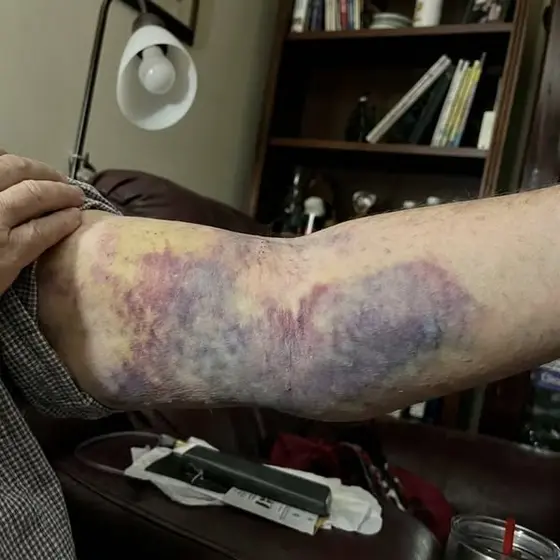
Here's how to use Ceylon Cinnamon the right way, and if you don't believe me, I've been a nurse for 38 years. Blood sugar biology is my thing. And I need to confess something. For 38 years I've been telling diabetic patients to take their Metformin, follow the ADA diet, and trust their doctor. Last year, my own fasting blood sugar hit 187. I did none of those things. Here's why. I've been a nurse for 38 years, and high blood sugar is one of the hardest things I see patients struggle with. The afternoon crashes. The brain fog. The desperate thirst that never stops. I've had patients tell me they're up 3 or 4 times every night running to the bathroom. Day and night, it never stops. About three years ago, it happened to me. My own blood sugar started spiking out of control. All those years of long shifts and not taking care of myself the way I should have finally caught up with me. At first it was just feeling tired after lunch. Then came the crashes. Those sudden waves of exhaustion and brain fog that hit you out of nowhere. By the end of my shift, I could barely think straight. But the worst part? Nighttime. The second I'd finally fall asleep, I'd wake up needing to pee. Again. And again. I'd be dragging myself to the bathroom three, sometimes four times a night, feeling exhausted and thirsty no matter how much water I drank. Now I was the one living with it. And let me tell you, every patient was right. It's a living hell. My doctor offered me Metformin. I smiled politely and said I'd think about it. But I knew I wasn't going to take it. I've watched too many of my patients struggle with the side effects. The diarrhea so bad they're afraid to leave the house. The nausea and stomach cramps that never fully go away. The fact that their blood sugar still isn't stable. And for what? Most of them tell me it barely keeps their numbers in check. I wasn't about to trade one nightmare for another. So I just dealt with it. Apple cider vinegar shots. Berberine. Cutting carbs completely. Nothing really worked. But what else was I supposed to do? Then about two months ago, one of my regular patients came in for her appointment. Sweet lady with type 2 diabetes and blood sugar issues for years. She'd been struggling with it for over a decade. I always felt terrible for her because she'd tried everything and nothing gave her more than a few hours of stable energy. But this time she seemed different. Lighter somehow. I asked her how she was managing, and she said something I didn't expect. She told me her blood sugar actually wasn't crashing anymore. She'd found this supplement, Ceylon cinnamon, with natural polyphenols and cinnamaldehyde. Been taking it every morning. And for the first time in years, she was sleeping through the night without waking up to pee. I'll be honest, I was very skeptical. I've heard every miracle cure story you can imagine. But she seemed so genuinely relieved. Like she'd finally found something that actually worked. That same night, my blood sugar was all over the place again. I woke up twice to pee and couldn't get back to sleep. And I kept thinking about what she'd said. So I looked it up. Turns out the active compounds in real Ceylon cinnamon, the polyphenols, proanthocyanidins, and cinnamaldehyde, restore your cells' ability to respond to insulin properly. It doesn't force your body to produce more insulin like drugs do. Plus it reduces inflammation and supports your metabolism naturally. The science actually made sense. I ordered some. Ground powder capsules from a brand on Amazon. Took them every morning for three weeks. My numbers moved maybe 5 points. Nothing real. So I ordered a different brand. Same thing. Powder capsules, slightly different label. Three weeks later, no meaningful change. I was getting frustrated. Everyone said Ceylon cinnamon worked. But it wasn't working for me. So I went back and started reading more carefully. That's when I noticed something. People weren't just saying Ceylon cinnamon. They were getting specific about which Ceylon cinnamon. One person said they tried three different brands before finding one that actually worked. Another mentioned most Ceylon cinnamon you can buy online is ground powder, the cheap stuff that doesn't have any of the actual healing compounds your body can absorb. I started researching. Turns out most Ceylon cinnamon supplements are ground powder your body can't absorb, low concentration with not enough active compounds, mixed with fillers and additives, actually Cassia cinnamon mislabeled as Ceylon, and have no bioavailability enhancers so the compounds pass through unused. The Ceylon cinnamon supplements that actually worked for blood sugar had to be concentrated extract at a 12:1 ratio or higher, with an MCT oil delivery system for absorption, authentic Cinnamomum verum from Sri Lanka, and third-party tested for verified purity and potency. I kept seeing the same brand mentioned over and over in the reviews and testimonials. Xymera. I ordered it. It was more expensive than the others I'd tried. But at that point I didn't care. When it arrived, I could tell the difference immediately. These weren't powder capsules. They were softgels filled with a concentrated extract suspended in MCT oil. The quality was obvious. I took one softgel that first morning. I didn't expect much. I'd already been disappointed twice. But about 30 minutes later, I noticed something. The usual mid-morning crash wasn't happening. Like someone had flipped a switch and my energy was actually staying steady. I went from feeling like I was dragging through the day to actually feeling clear-headed and energized. I could actually feel my brain working properly again for the first time in months. That night, I slept through. Actually slept through without a single bathroom trip. No waking up at 2 AM. No stumbling to the bathroom half-asleep. Just sleep. When I woke up the next morning, I laid there stunned. Eight hours. I'd slept eight hours without waking up once. By the end of the first week, I checked my blood sugar in the morning. 118. Not 181 like with the other brands. 118. I checked it three times because I didn't believe it. It hadn't been under 160 in over a year. Those afternoon crashes that used to knock me out? Gone. The brain fog that made me forget what I was saying mid-sentence? Cleared up almost completely. I could work a full shift without feeling like I needed a nap by 2 PM. It's been two months now. I sleep through the night. Every night. The crashes are gone. The constant thirst is gone. Sometimes I get a tiny bit of fatigue after a really long shift, but it's nothing. Nothing compared to what it was. I saw my patient last week and thanked her. She just smiled and said she was glad it helped. Look, for almost three years I thought I just had to live with the crashes and brain fog. That this was my life now. But I was wrong. And here's the thing. Not all Ceylon cinnamon is created equal. I wasted weeks on cheap brands that barely moved the needle. Xymera's concentrated extract with MCT oil delivery is the only one that actually worked. If my patient hadn't mentioned Ceylon cinnamon that day, I'd still be waking up exhausted with my blood sugar all over the place. I've told five of my patients with high blood sugar about Xymera specifically. Every single one of them has come back and said they're finally getting stable energy. One lady told me she slept through the night for the first time in three years. I'm sharing this because I hope it can help someone else the way it helped me. After 38 years as a nurse, I thought I knew every option out there. Turns out, my patient knew something I didn't. Here's where I got mine: https://Xymera.com/products/ceylon-cinnamon-7200mg (They're running a sale right now. I just ordered 3 more bottles.) P.S. A few things I wish I'd known before ordering: When I first ordered Xymera, I didn't know they had a 90-day money-back guarantee. If it doesn't work for you, you get your money back. No questions asked. I wish I'd known that earlier. Would have saved me from trying those cheaper brands that did nothing. Most people buy it at regular price, but right now they're running a promotion where you can get it at a significant discount. That's actually how I was able to stock up on three bottles. The only problem is that Xymera is a small company committed to quality testing. They're getting really popular, probably because nurses like me keep recommending it to patients, and they can't always keep up with demand. I want to apologize in advance because when you click the link below, you might see that they're sold out. I've had patients wait weeks before Xymera was back in stock. But I'd still suggest clicking to see if they have any left. If you're dealing with high blood sugar, constant fatigue, brain fog, or waking up multiple times at night, and especially if medications like Metformin are making your life miserable, I'd grab some before they're gone again. I went from 187 to 118 in six weeks. If there's even a chance this could work for you, it's worth trying. 👉 Check if Xymera is in stock here: https://Xymera.com/products/ceylon-cinnamon-7200mg
Jacqueline Orrence Facebook and Instagram ad
Jacqueline Orrence ran this image ad since Jun 26, 2026, 134 days so far.
Ad copy
The best way to protect your kidneys is NOT drinking more water, NOT cutting protein, and definitely NOT waiting for dialysis. If your doctor has mentioned protein in your urine, rising creatinine, or declining kidney function — you need to hear this. What they don't tell you is what comes next. I used to ask every new dialysis patient the same thing: "What was your A1C before your kidneys failed?" After 11,000 patients and the same answer every single time, I stopped asking. It was always "managed." Always between 6.5 and 7.5. Always someone who'd been told to cut protein, reduce salt, and come back in six months. The chairs aren't full of people who ignored their kidneys. They're full of people who trusted the wrong number. I'm telling you this now because last month I got my own prediabetes diagnosis with creeping creatinine — and I refuse to end up in one of my own chairs. I'm a dialysis nurse. Fourteen years. Roughly 11,000 patients connected to machines. Let me tell you what that actually looks like. The slow, irreversible slide. 10%. Then 20%. Then 50%. Until one day your doctor says: "You need dialysis. Three times a week. Four hours per session. For the rest of your life." A needle goes into a fistula — a surgical access point in the arm that leaves a scar most patients hide under long sleeves even in summer. Then comes the exhaustion. Not normal tiredness. The kind where you can barely lift your head off the pillow. Your body is poisoning itself with waste your kidneys can't filter anymore. The swelling in your legs, ankles, and face. Puffiness that makes you unrecognizable to your own grandchildren. The dietary restrictions that make eating miserable. No potassium. No phosphorus. No salt. Bananas dangerous. Tomatoes dangerous. Cheese dangerous. And the waiting list. Years. Sometimes a decade. Praying for a transplant that might never come. I've watched marriages buckle under the schedule. I've watched grandchildren learn to plan around Grandma's dialysis days. I've watched a 61-year-old man read the same magazine in the waiting room every Tuesday and Thursday for three years while his wife was connected. I've watched patients stop coming. I know what that means. One of my long-term patients — Ruth, 63, three years in my unit — told me something I think about every day. She said: "This isn't living. This is just not dying yet." Every. Single. One. So here's the trap most people are stuck in. Two paths. Both lead to suffering. Path one: Follow doctor's orders. Cut protein. Drink more water. Take the ACE inhibitor. Monitor labs every six months. Watch your kidney function drop year after year anyway. Path two: Do nothing. Leave the damage unchecked. Foam in the toilet that won't go away. Ankles that swell by 4 PM. Crushing fatigue that won't lift no matter how much you rest. Most people over the age of 50 tragically ignore these symptoms until it's too late. They blame the puffiness on age. They blame the fatigue on stress. They blame the foam on hard water. It's none of those things. It's your kidneys screaming for help. But there's a third path your doctor will never mention. And it's the only one I've ever seen actually move the numbers in the right direction. Last month I sat in my own doctor's office and heard "prediabetes" attached to my own name. A1C: 6.4. Fasting glucose 135 to 145. And here's the part that made my hands go cold — my creatinine had crept from 0.8 to 1.0 over ten months. My GFR had dropped from 98 to 86. There was foam in my toilet most mornings. My ankles were swelling by 4 PM. The fatigue I'd been blaming on long shifts wasn't from the shifts. On paper, none of that was alarming. My doctor said "we'll keep an eye on it." But I've heard those exact words from the charts of people now sitting in my chairs. I know what a creatinine of 1.0 looks like at the BEGINNING. Because I've held the hands of people whose creatinine started at 1.0. I felt something I'd never felt in 14 years of nursing — real, bone-deep terror. Not for my patients. For myself. So I stopped trusting the monitoring and started asking a different question. Not "how do I slow this down" — but "why is my body actually doing this in the first place?" Here's what nobody explains to you. Think of every cell in your body like a tiny room. On the walls there are doors — small protein doors called GLUT4 transporters. In a healthy body those doors stay open. Sugar comes through the blood, doors open, sugar goes inside, cell burns it for energy. In an insulin-resistant body, those doors retreat. They pull away from the wall. The pancreas sends the signal — and they don't answer. So sugar piles up in the blood. The doors are shut. That sugar doesn't just wait there. It destroys things. Think of your kidneys like the finest mesh screen — millions of tiny filters called glomeruli. That excess sugar is like sand being forced through the mesh under pressure. Hour after hour. Day after day. The mesh starts to tear. First it leaks a little protein — that's the foam in the toilet most people are too scared to google. Then the tears get bigger. Then filtration drops. Then the system fails. And it's not just kidneys. That same sugar pileup strips the insulation off your nerves — that's why your feet burn. It starves your brain — that's why the fog rolls in by 2pm. It wrecks the vessels behind your eyes — that's why the floaters showed up. It locks your body in fat-storage mode — that's why the belly won't budge. It shatters your sleep — that's why you're up three times a night. And it damages the blood vessels responsible for intimacy — that's why that part of your life quietly disappeared. ALL of it traces back to the same closed doors. Your doctor monitors the headline number. The story underneath is your organs falling apart. Now let me address what you're probably thinking. First: "What about cutting protein?" Cutting protein gives the torn mesh less to filter. It doesn't repair the mesh. It doesn't stop the sand. The tearing continues — quieter, but still happening. Second: "I've been drinking more water." Drinking more water flushes toxins. But it doesn't stop the friction tearing your filters. You're running more fluid through the same broken screens. Third: "What about ACE inhibitors?" ACE inhibitors slow the damage by reducing pressure. But the sand is still coming. The mesh is still tearing. Just slower. All of these target pieces of the puzzle — but miss the complete mechanism. The doors are still closed. The sugar is still piling up. The damage continues underneath whatever you're doing on top. The monitoring just measures how torn the mesh is getting. Nobody is stopping the sand. — When I started pulling research on PubMed, I found compounds that may actually help coax those doors back open. Type-A Polymers and MHCP. Found in one specific plant — Ceylon cinnamon. Cinnamomum verum. A 2003 study in Diabetes Care showed a 29% drop in fasting blood glucose. A 2012 review in the Journal of Medicinal Food analyzed eight randomized trials and found meaningful drops in fasting glucose and A1C. Research in Pharmacognosy Research mapped the GLUT4 mechanism — how these compounds bring those doors back to the surface. When the doors reopen, the sand stops being forced through the mesh. Protein leakage drops. Creatinine stabilizes. GFR holds. Published. Proven. Replicated. And every time I bring this up with someone whose kidneys are declining, I get the look. Wide eyes. Raised eyebrows. That "You mean… cinnamon? The thing in my pumpkin pie? That's supposed to fix my kidneys?" face. I get it. It sounds unrelated. But the people who come back to me eight weeks later always come back in tears. Their fasting numbers stabilized. Their creatinine stopped climbing. Some of their GFR numbers went up — which is supposed to be impossible without a transplant. Their faces have changed. The puffiness is gone. They're sleeping. They look like themselves again for the first time in years. And many of them showed their doctors their new numbers and heard the words they never thought possible: "Your kidney function is stable. Keep doing whatever you're doing." In 14 years working in a dialysis unit — not one doctor has ever mentioned any of this to a patient in my care. Not because they're hiding it. Because the pipeline that moves research from a journal into a treatment room runs on patent money. You can't patent a plant. No patent means no money. No sales reps, no training updates, no guideline changes. That should make you angry. Not at your doctor. At the structure that kept this from all of us — including the nurse who works at the end of the road. And I understood instantly why every cinnamon supplement on every shelf had never worked for anyone. Three things wrong with all of them. Wrong species. Most use Cassia — completely different plant. 250 times more coumarin, which can damage your liver at daily doses. Wrong dose. A 500mg capsule is a taste-level dose. Studies used the equivalent of thousands of milligrams — concentrated and extracted. No delivery system. The compounds that target those doors are fat-soluble. They need fat to cross a cell wall made of fat. A hard capsule full of dry powder can't carry them through. I've watched patients bring supplement bottles to dialysis sessions and ask if they should keep taking them. I look at the label — Cassia, 500mg, dry powder — and I don't know what to say. It's like bringing a garden hose to a house fire. If you tried cinnamon before and it did nothing — you weren't wrong to try. The tool was wrong. — After I understood the mechanism and the delivery failure, I found something called Xymera. Real Ceylon cinnamon — Cinnamomum verum — concentrated 12-to-1 into a liquid extract suspended in MCT oil. Then sealed inside a softgel. One softgel a day delivers the equivalent of 7,200mg of raw Ceylon. The therapeutic range the studies used. Because the extract is already suspended in MCT oil, the moment the gel dissolves, the active compounds are riding the fat carrier they need. Not trapped in dry fiber. Suspended, bioavailable, ready to reach the cell. DNA-verified. Third-party tested for heavy metals every batch. Sourced from Sri Lanka — the original home of true Ceylon cinnamon, where the tree has been cultivated for over two thousand years. The diabetes rate there sits far below America's close to 50 percent. The kidney failure rate is a fraction of ours. I work in a dialysis unit that's always full. In Sri Lanka, they barely need one. Comes in a sealed bag, not a bottle stuffed with fillers. One softgel. Swallow it with your morning coffee. That's it. No measuring. No mixing. No taste. It's the one part of the morning that doesn't feel like managing a disease. Here's what happened to me. Within two weeks the fog lifted. Not managed — lifted. My feet stopped aching. The ankle swelling was gone by Friday of the second week. I slept through the night for the first time in months. By week four my fasting readings — which had been running 135 to 145 — started showing up in the low 90s. The foam in the toilet was gone. I checked three mornings in a row to be sure. At ten weeks I got my blood panel back. A1C: 6.4 to 5.4. Creatinine: back to 0.8. GFR: climbed from 86 to 94. Protein in the urine: undetectable. Seven pounds gone without changing what I ate. But the thing I remember most isn't a number. It's my own doctor looking at the panel, then looking at me, and saying: "Your kidney function is stable. Keep doing whatever you're doing." And then walking into my dialysis unit the next morning knowing — for the first time in months — I wasn't going to end up in one of my own chairs. I told Ruth what I'd found. She looked at me with tears running down her face and said: "Tell everyone. Don't let them end up like me." That's why I'm writing this. In a recent customer survey, 78% of Xymera users noticed more consistent readings within 30 days. 82% reported steadier energy. 74% said cravings loosened. 69% reported burning and tingling in their feet improved. 67% said their doctor commented on their bloodwork. Across 2,660+ verified reviews — 4.8 stars. Less than 1% have ever asked for their money back. — You're in a window right now. The monitoring phase — the "we're keeping an eye on it" phase — is the ONLY phase where the trajectory can still change. Every patient in my dialysis chairs was in that window once. Every one of them would give anything to go back to it. One side — nothing changes. The creatinine climbs. The GFR drops. The foam shows up. The ankles puff up until your grandchildren don't recognize you. 10% drop. Then 20%. Then 50%. And one morning you're not reading about dialysis — you're being scheduled for it. Three days a week. Four hours a session. The fistula scar hidden under long sleeves. No potassium. No phosphorus. No salt. The transplant waiting list that may never come through. The chair. The other side… One softgel. Swallowed with your morning coffee. Five seconds. Done. Over the next few weeks the energy holds. The fog lifts. The feet quiet. The swelling drops. The foam disappears. And at your next blood panel, your doctor looks up from the chart and says something you haven't heard in two years: "Your kidney function is stable. Keep doing whatever you're doing." The window stays open. The chair stays empty. Right now Xymera has a deal — buy two bags, get one free. Three-month supply. The exact window the research points to for meaningful kidney marker and A1C changes. Six bags gets you free shipping plus a recipe guide and benefits booklet. Hand-harvested, certified Ceylon from Sri Lanka. Concentrated 12-to-1. Suspended in MCT oil. Sealed in softgels. Not factory-produced Cassia powder pressed into hard capsules. Harvest cycles are limited. The next harvest has a lead time. Every order comes with a 90-day money-back guarantee. If you're not genuinely amazed by the shift in your fasting readings, the foam that disappears, the ankles that go down, the feet that stop burning, the kidney labs trending the right direction — you get every dollar back. Less than 1% ever ask. That number says everything. The doors are closed. The sand is still coming. But the window is still open. Don't let someone else tell your story with the words "I wish someone had told me sooner." I just did. If you're in the monitoring phase right now — the creeping creatinine, the dropping GFR, the foam in the toilet, the doctor "keeping an eye on it" — at least check out that page. It breaks down exactly how the Ceylon extract works and why the cinnamon you tried before didn't do anything.
Placements and targeting
More ads from Jacqueline Orrence
Cinnamon used to be worth more than gold. Wars were fought over it. Empires rose and fell for control of the bark. Then we replaced it with sawdust from Chinese tree farms and called it the same thing. It's not. I'm Dr. Cornelius Carter. I spent 34 years as a medical historian at Johns Hopkins, specializing in ancient pharmacology—the medicines that existed before pharmaceutical companies decided what counted as medicine. Three years ago, I stopped being a historian and became a patient. Fasting glucose: 181. A1C: 7.1. Blood pressure: 156/98. My physician said the words I'd been hearing my colleagues dread for years. "We need to start you on metformin. And we may need to add an antihypertensive. Your blood pressure is heading toward Stage 2 hypertension. At this rate, you're looking at real cardiovascular risk." I nodded. Took the prescription. Filled it at the pharmacy downstairs. And left it in my desk drawer for three months. Not because I'm reckless. Not because I'm in denial. But because I've spent my entire career studying what medicine looked like before we industrialized it—and I knew there were answers buried in history that modern cardiology and endocrinology had stopped looking for. I'd written two books on ancient trade routes and medicinal compounds. I'd translated Arabic medical texts from the 10th century. I'd traced the movement of healing plants across empires. I knew something most doctors don't: the same high blood sugar that's wrecking my glucose tolerance is also damaging my arteries. My blood pressure was already climbing. Without intervention, I was headed toward either diabetes medications that don't address the arterial damage—or blood pressure medications that treat the symptom while the underlying destruction continues. And I knew something most doctors don't. Cinnamon wasn't always a spice. It was a medicine. One of the most valuable substances on earth for over 2,000 years. In the 1500s, Portuguese soldiers burned entire villages in Sri Lanka to control the cinnamon trade. The Dutch East India Company made it a capital offense to sell a single stick outside their supply chain. Men were executed for bark. Physicians used it to treat plagues. It was currency, medicine, and myth rolled into one. Kings didn't sprinkle it on oatmeal. They locked it in vaults. I have a 16th-century Dutch trade manifest in my office. Cinnamon was listed above silver. Above silk. Above everything except gold itself. And when I looked at my glucose meter reading 181 and my blood pressure reading 156/98, I asked myself the question I'd been asking about ancient medicine my whole career: What did they know that we forgot? So I did what I've done for 34 years. I went back to the sources. Not medical journals. Historical records. I started with Dioscorides—the Greek physician whose De Materia Medica was the foundation of Western pharmacology for 1,500 years. He documented cinnamon's use for what he called "disorders of the blood and vital humors" and "hardening of the vessels." I moved to Ibn Sina—Avicenna—the Persian polymath whose Canon of Medicine described cinnamon as essential for "conditions of excessive thirst, wasting, and the stiffening of channels through which blood flows." Excessive thirst. Wasting. Stiffening blood vessels. The classical descriptions of what we now call diabetes and hypertension—the combination that kills hearts. Then I found the text that changed everything. A 12th-century Arabic translation of a 6th-century Sinhala medical treatise from Sri Lanka—the island where true cinnamon originated. The physicians described a preparation of cinnamon bark, ground and dissolved in coconut oil, given to patients whose "sweet urine attracted ants" and whose pulse had become hard and rapid. That's how ancient physicians diagnosed the metabolic condition we now call diabetes and hypertension. They observed that ants were attracted to the patient's urine because of the sugar content. And they measured cardiovascular stress by checking if the pulse was strong and fast—a sign that the heart was working too hard. The treatment was cinnamon. Specifically, Ceylon cinnamon. Dissolved in fat. For 1,400 years, this was documented medicine for both the disorder of blood sugar and the strain on the cardiovascular system. Then something happened. Demand outgrew supply. Ceylon cinnamon—Cinnamomum verum—only grows in Sri Lanka. Limited land. Slow cultivation. Expensive to harvest. Traders found a shortcut: a cousin species from Southeast Asia. Cassia. Cinnamomum cassia. Looked the same. Smelled close enough. Cost almost nothing to grow. They called it cinnamon and shipped it by the ton. Nobody asked questions. The chemistry wasn't the same—not even close. True Ceylon cinnamon contains a compound called Methyl Hydroxychalcone Polymer—MHCP. It mimics insulin at the receptor level. Same lock, same key, same door opening. Your cells can't tell the difference between MHCP and insulin. Glucose enters without your pancreas working overtime. Cassia contains almost none of it. What Cassia does contain is coumarin—up to 250 times more than Ceylon. Coumarin is hepatotoxic. It damages your liver with daily use. So we replaced a medicine with a toxin, called them the same thing, and filed cinnamon under "spice." The ancient physicians knew the difference. The trade companies knew the difference. The men who died protecting those Sri Lankan groves knew the difference. We forgot. I sat in my office until 3 AM reading these texts, looking at my glucose meter, looking at my blood pressure monitor, and realizing that the answer to my cardiovascular crisis had been in my own research the entire time. The next morning, I ordered Ceylon cinnamon capsules from Amazon. The dry powder kind. $16.99. I took two capsules every morning for three weeks. My fasting glucose dropped from 181 to 174. My blood pressure stayed at 156/98. Seven points on glucose. Zero improvement on the pressure that was actually threatening my heart. I wasn't surprised. The ancient texts were explicit: the bark was prepared in fat. Coconut oil. Sesame oil. Always fat. I'd ignored that detail. I assumed it was ceremonial. It wasn't. It was biochemistry. Cinnamon's active compounds—cinnamaldehyde and MHCP—are fat-soluble. Without a lipid carrier, they pass through the gut largely unabsorbed. The 12th-century Sinhala physicians understood bioavailability before we had a word for it. So I did what they did. I bought MCT oil—medium-chain triglycerides derived from coconut oil. I opened the capsules, mixed the Ceylon powder into a tablespoon of MCT oil, and took it every morning. The taste was terrible. Gritty. Oily. But I was committed. Day three: I noticed something strange. My usual 2 PM crash—the one where I'd fall asleep at my desk grading papers—didn't happen. I was just... alert. Steady. Present. Day five: I slept through the night for the first time in two years. No 3 AM bathroom trips. No lying awake until 4:30. Just sleep. I tested my fasting glucose that morning. 158. 23 points lower than when I started. I tested again. Same number. I called my wife into the kitchen. "Look at this." "That's good?" "That's the lowest number I've seen in eighteen months." Week two: 134. Week three: 118. Week four: 101. I checked it three times. I hadn't seen a fasting glucose below 110 in over two years. I also checked my blood pressure that week. 148/92. Down from 156/98. The afternoon crashes were gone. The constant thirst was gone. The brain fog that made me re-read the same paragraph six times—gone. And for the first time in eighteen months, my blood pressure was actually moving in the right direction. The relief was palpable. Not just because of the glucose numbers—but because I could feel my arterial system beginning to heal. I felt like myself again. Three months later, I walked into my doctor's office with a glucose log, blood pressure readings, and a folder of historical medical texts. She looked at my numbers for a long time. "Your fasting glucose is averaging 96." "Yes." "Your A1C is 5.7. Down from 7.1." "Yes." She pulled up my blood pressure monitor data. "Your blood pressure is averaging 128/82. It was 156/98 three months ago." I nodded. "Blood pressure this high doesn't usually reverse without medication. Once it climbs like yours had, we typically manage it pharmacologically long-term. But you've brought it down naturally to normal range." She looked at recent cardiac markers. "Your arterial inflammation markers are down significantly. Your endothelial function improved. The stress on your heart has decreased." She looked up. "What did you do?" "I didn't take the metformin." Her face tightened. "I took Ceylon cinnamon. The real species—Cinnamomum verum—dissolved in MCT oil. The same preparation documented in medical texts from the 6th century. The mechanism has been validated in clinical trials for 40 years. I brought the studies." I handed her a folder with eight published papers and my translation of the Sinhala treatise. She read for ten minutes. Closed the folder. "Your triglycerides dropped. Your inflammatory markers are down. Your vascular function improved. Your blood pressure normalized naturally." "I know." She sat back in her chair. "Keep doing whatever you're doing." That was nine months ago. My fasting glucose is consistently between 92 and 100. My A1C is 5.5. My blood pressure is stable at 128/82. My doctor says my metabolic markers and cardiovascular health look better than they have in a decade. I sleep through every single night. The crashes are gone. The fog is gone. The fear that my arteries were being damaged—the fear that I was heading toward a heart attack—that's gone too. I found what the ancient physicians knew. What the empires fought wars over. What we lost when we replaced medicine with sawdust and called it the same thing. And then I found something better than mixing powder into oil every morning. A company called Xymera had already figured it out. True Ceylon cinnamon. Cinnamomum verum, sourced from Sri Lanka—DNA verified, not just labeled. 7,200mg equivalent per softgel. A 12:1 concentrated extract. The clinical dose that corresponds to the ancient preparations—not a token amount. Suspended in MCT oil. The fat-soluble delivery that the Sinhala physicians understood 1,400 years ago. Third-party tested. Every batch verified for purity and coumarin levels—because Cassia, the impostor that replaced Ceylon, contains up to 250 times more coumarin and can damage your liver with daily use. One softgel. Once a day. No gritty oil mixture. No guessing. The same compound. The same mechanism. The same medicine that kings locked in vaults and empires went to war over—but optimized for modern delivery. I've told five colleagues about this. Three were pre-diabetic. Two were fully type 2 with elevated blood pressure. All five came back with the same story. Better sleep within the first week. Stable energy. Lower fasting glucose within a month. Blood pressure dropping by week 3-4. One colleague—a fellow historian, 62 years old, fasting glucose of 176 and blood pressure of 151/94—dropped his glucose to 104 in six weeks and his blood pressure to 130/80. His cardiologist said his cardiovascular risk profile had shifted dramatically. He called me and said, "Why doesn't anyone know about this?" I told him the truth. Because we forgot. Because we substituted. Because we filed one of the most powerful medicines in human history under "spice" and stopped paying attention. Because we didn't understand that the same compound that regulates blood sugar also heals damaged arteries and normalizes blood pressure. Here's what I want you to understand. The ancient physicians documented this. The clinical trials confirmed the mechanism. MHCP mimics insulin at the receptor level. Cinnamaldehyde activates AMPK—the same pathway exercise uses to move glucose into cells. But here's what's critical: Lower blood sugar means less glucose poisoning your arteries. Less inflammation means your vessels can relax again. Your blood pressure drops naturally because your arteries are no longer under constant inflammatory attack from elevated glucose. Both history and science confirm it. But you have to get it right. True Ceylon—not Cassia. Clinical dose—not 500mg token amounts. Fat-soluble delivery—not dry powder that passes through you. Third-party tested—not mystery capsules from unknown sources. That's Xymera. Cinnamon used to be worth more than gold because people understood what it could do. Then we forgot. Then we faked it. Then we filed it under "spice" and moved on. The original still grows in Sri Lanka. Still carries the compound your insulin receptors respond to. Still does what it did when kings locked it in vaults and physicians used it to shift outcomes. You just can't find it at Costco. But you can find it in Xymera. Tap below. 90 days risk-free. See what happens when you stop settling for sawdust and start taking the bark that built empires. ~ Dr. Cornelius Carter, PhD, Medical History, Johns Hopkins University, 34 years P.S. A few things I wish I'd known before I started: 1. Don't waste money on cheap cinnamon capsules. I tried them first. Seven points in three weeks. The powder doesn't absorb without fat. The ancient physicians documented this 1,400 years ago—I just had to learn it myself. 2. Most "cinnamon" supplements are Cassia, not Ceylon. Different species. Up to 250 times more coumarin. Linked to liver damage with daily use. If the label doesn't specify Ceylon (Cinnamomum verum), it's almost certainly Cassia. 3. Timeline: Sleep improves first—usually within a week. Energy stabilizes around week two. Blood sugar drops show up between weeks 2-4. Blood pressure begins normalizing around week 3-4. Full benefits take 8-12 weeks. 4. Xymera offers a money-back guarantee. If your numbers don't improve, you pay nothing. 5. They sell out regularly. Small company, growing fast. If it's in stock, I'd order now. If you're dealing with: High fasting glucose that won't come down Blood pressure that keeps climbing no matter what you do Afternoon crashes that destroy your focus Brain fog that makes simple tasks exhausting Heart palpitations that won't go away Waking up multiple times with your heart pounding The underlying terror that a heart attack is coming The medicine that empires went to war over still exists. The compound your cells recognize is still there. The preparation the ancient physicians documented still works. We just forgot. Then we faked it. Then we moved on. Xymera is the original. The one they fought wars over. The one your cells still recognize. Tap below. Try it for 90 days. See what happens when you stop settling for sawdust and start taking the bark that built empires.
I'm a nurse with Diabetes Type 2. I tried everything. Here's what actually worked. I'm Sandra. I've been an ICU nurse for 38 years. I've held the hands of dying diabetics. I've watched metformin destroy quality of life for decades. I've seen the trajectory. And I've seen something else—the thing nobody talks about. I've watched metabolic disease destroy the kidneys silently. High blood sugar isn't just a blood sugar problem. It's chronic inflammation and oxidative stress damaging the small blood vessels in your kidneys year after year. So when my fasting glucose hit 187 and my A1C climbed to 7.2, I knew exactly what my doctor would say before she said it. "We need to start you on metformin." I smiled. Nodded. Took the prescription. And threw it away three days later. Not because I'm reckless. Not because I'm in denial. But because I've seen what metformin does to people who take it. The nausea. The digestive devastation. The constant bathroom trips. The brain fog that never lifts. And I've seen what it doesn't do—it doesn't address the cellular damage that caused the diabetes in the first place. Both paths—untreated diabetes and metformin—lead to declining kidney function. I was trying to find a third option. For three years, I tried everything else. Apple cider vinegar before meals. Cinnamon in my coffee. Berberine twice daily. I cut carbs so aggressively I was eating 40 grams a day. I walked 10,000 steps. I did resistance training three times a week. My fasting glucose dropped from 187 to 170. My A1C went from 7.2 to 6.8. Better. But not good enough. Not even close. And the cost? I was exhausted. Irritable. Craving carbs constantly. My brain felt wrapped in cotton by 2 PM every single day. I'd wake up at 3 AM to pee, check my glucose out of habit—still 160—and lie there until 4:30 AM unable to fall back asleep. I was doing everything right and still losing. My husband found me crying in the bathroom one night at 11 PM, staring at my glucose meter. 192. After a dinner of grilled chicken and broccoli. "Just take the damn metformin," he said. "I can't," I whispered. "I've seen what it does." But I was running out of options. Then something happened that changed everything. I was discharging a patient—type 2 diabetic, 61 years old, admitted three months earlier with foot swelling and declining kidney function. His creatinine was 1.3. He was heading toward stage 3 kidney disease. Standard progression for someone whose blood sugar had been out of control for years. But this time, something was different. He looked... lighter. Not just physically. His whole energy was different. His skin had that glow people get when their inflammation drops. He was cracking jokes with the physical therapist. I pulled up his chart. His fasting glucose that morning: 94. Three months ago at admission: 178. His creatinine: 1.1. Down from 1.3. I walked back into his room. "Mr. Patterson. Your blood sugar. Your kidneys. What changed?" He grinned. "You're not going to believe me." "Try me." "I stopped taking metformin." My stomach dropped. "You stopped your medication?" "Three months ago. Started taking this Ceylon cinnamon supplement my daughter found. Metabolae. Took about two weeks and my blood sugar just... dropped. My energy came back. And here's the thing—my kidney numbers improved. After a month I felt better than I had in ten years. Talked to my doctor, she ran labs, said whatever I was doing was working. Weaned me off the metformin." I stared at him. "You're telling me a cinnamon supplement dropped your fasting glucose by 84 points and improved your kidney function?" "I'm telling you I sleep through the night now. My brain works again. I'm not chained to a toilet. And my doctor is thrilled with my numbers. Both of them." I went home that night and couldn't sleep. Not because of my blood sugar. Because of what he'd said. I've been a nurse for 38 years. I don't believe in magic pills. I don't trust testimonials. I trust mechanisms and evidence. So at 2:47 AM, still awake, I started researching. Ceylon cinnamon. The true cinnamon—Cinnamomum verum—grown in Sri Lanka. Not the cheap Cassia variety that fills most supplement shelves. The real thing, used in medicine for centuries and now being studied in clinical trials for metabolic disease. The first study I found was from Japan. Type 2 diabetics given clinical-dose Ceylon cinnamon extract showed significant improvements in insulin sensitivity and fasting glucose after 12 weeks. The second study was from India. Patients with metabolic syndrome showed reduced oxidative stress markers and improved blood sugar metabolism. The third was from Italy. Ceylon cinnamon's active compound—cinnamaldehyde—reduced inflammatory cytokines and protected pancreatic beta cells from oxidative damage. But then I found something that made me sit up in bed. A study from Germany on diabetic nephropathy—kidney damage caused by high blood sugar. They gave type 2 diabetics with declining kidney function a concentrated Ceylon cinnamon extract. After 12 weeks, their proteinuria—the protein leaking through damaged kidneys—dropped by 38%. Their creatinine improved. The kidney damage was slowing. In some cases, reversing. The mechanism made sense. Type 2 diabetes isn't just high blood sugar. It's chronic inflammation and oxidative stress damaging your cells' ability to respond to insulin. And that same oxidative stress is destroying the small blood vessels in your kidneys. Metformin forces your liver to produce less glucose. It's a chemical override. It works for blood sugar, but it doesn't address the cellular damage causing the insulin resistance in the first place. And it doesn't reverse kidney damage. Ceylon cinnamon works differently. Cinnamaldehyde—its primary active compound—activates the same metabolic pathways that exercise activates. It moves glucose into cells without relying on insulin. It shuts down the NLRP3 inflammasome—the master switch behind chronic metabolic inflammation. It reduces the oxidative stress that's blocking your insulin receptors and damaging your blood vessels. It's not forcing anything. It's removing the interference. And that matters for the kidneys too. Diabetic kidney damage isn't random. It's glucose-driven oxidative stress destroying the small blood vessels in your kidneys year after year. Reduce the blood sugar. Reduce the inflammation. Reduce the oxidative stress damaging your glomeruli. Give the kidneys a chance to recover. I ordered a bottle that morning. Generic cinnamon capsules from Amazon. $14.99. Took two with breakfast on a Monday. Didn't expect anything. That afternoon at work, something was different. My usual 2 PM crash—the one where my brain shuts off and I need to find coffee or I'll fall asleep standing up—didn't happen. I was just... steady. Clear. Functional. I figured it was placebo effect. That night, I went to bed at 10:30 PM. I woke up at 6:45 AM. I hadn't woken up once. Not to pee. Not with restless legs. Not with my mind racing about tomorrow's shift. I slept through the night for the first time in 14 months. I tested my fasting glucose. 142. 45 points lower than my usual 187. I tested again. Same number. I called my husband into the bathroom. "Look at this." "That's... good, right?" "That's the lowest fasting glucose I've had in two years." Day three: 134. Day five: My brain fog was lifting. I could focus during rounds. I could remember patient details without checking my notes three times. Day seven: I was sleeping through every night. My fasting glucose was consistently between 110 and 120. Week two: 98. I checked it three times because I didn't believe it. I hadn't seen a fasting glucose below 100 in over two years. The afternoon crashes were gone. The constant thirst was gone. The 3 AM bathroom trips were gone. I felt like myself again. But then I realized something. I hadn't just improved my blood sugar. I needed to check my kidney function. Three months later, I walked into my doctor's office for my quarterly checkup with a printout of my glucose log and my most recent lab work. She stared at it for a long time. "Your fasting glucose is consistently in the 90s." "Yes." "Your A1C is 5.8. Down from 7.2." "Yes." "Your creatinine is 1.1. It was 1.4 three months ago." I nodded. She looked up at me. "What did you do?" "I didn't take the metformin." Her face hardened. "Sandra—" "I took Ceylon cinnamon. Concentrated extract, 7,200mg equivalent, suspended in MCT oil. There are studies. I brought them." I handed her a folder with eight published papers. She flipped through them. Read for five minutes. Closed the folder. "Kidney function doesn't improve. Once you hit stage 2, the goal is to slow the decline. Not reverse it. But you reversed it." "I know." She sat back in her chair. "Your blood vessels are healing. The inflammation markers are down. Your insulin sensitivity is normal again. And your kidneys are recovering function." "I know." "Keep doing whatever you're doing." That was seven months ago. My fasting glucose is consistently between 90 and 100. My A1C is 5.6. My kidney function is stable in the normal range. My creatinine stays at 1.1. The decline stopped. Then reversed. I sleep through every single night. The afternoon crashes are gone. The brain fog is gone. My irritability—the thing my husband had learned to just tolerate—is gone. I feel like I did ten years ago. I've recommended Ceylon cinnamon to six patients now. All six have come back and told me the same thing: better sleep, usually within the first week. Stable energy throughout the day. Lower fasting glucose within the first month. Improved mental clarity. One patient cried when she told me she'd slept through the night for the first time in two years. She'd been waking up 3-4 times to pee. Another patient's A1C dropped from 7.4 to 6.1 in three months. Her doctor told her to keep taking whatever she was taking. A third patient—this one with early stage 2 kidney disease—came back six weeks later and said his creatinine had stabilized. After years of watching it climb, it finally stopped. But here's what I need you to understand. I tried cheap cinnamon first. Generic capsules from Amazon. After two weeks my blood sugar had dropped maybe 10 points. Better than nothing, but not life-changing. Most cinnamon supplements fail for the same reasons: They're not real Ceylon. What's sold as "cinnamon" in most supplements—and most grocery stores—is Cassia, a completely different species grown in China. Cassia contains up to 250 times more coumarin, a compound linked to liver damage with daily use. Your body processes it differently. The clinical benefits found in studies were for true Ceylon cinnamon—Cinnamomum verum—not Cassia. Most brands won't even tell you which one they're using. They're underdosed. Clinical studies showing meaningful blood sugar and kidney function benefits used concentrated Ceylon extract equivalent to 6,000–7,200mg of whole cinnamon daily. Most capsules contain 500–1,500mg of powder. A fraction of what actually moves the numbers. They use the wrong delivery format. Cinnamon's active compounds—cinnamaldehyde and the polyphenols—are fat-soluble. They need fat to absorb properly. Dry powder capsules have poor bioavailability. The right carrier is MCT oil from coconuts, which increases absorption dramatically and adds its own independent blood sugar benefits. MCT oil also crosses the blood-brain barrier, which is why people report the brain fog lifting so quickly. They're not tested. Most supplements aren't third-party tested. You have no idea if you're getting real Ceylon or mislabeled Cassia. No way to verify the dose. No certificate of analysis. The Ceylon cinnamon that actually worked for me—the one Mr. Patterson told me about, the one I switched to after the generic barely moved the needle—is Xymera. It's true Ceylon cinnamon. Cinnamomum verum, sourced from Sri Lanka. DNA-verified, not just labeled. It's dosed at 7,200 mg equivalent per softgel. A 12:1 concentrated extract. The amount that corresponds to clinical benefit—not a token dose buried in a capsule. It's suspended in MCT oil from coconuts. The bioavailability is dramatically higher than dry cinnamon powder. And MCT oil independently improves insulin sensitivity through its own pathway while crossing the blood-brain barrier, which is why the brain fog clears so fast. It's third-party tested. GMP-certified. Every batch verified for purity, potency, and—critically—coumarin levels. Confirmed safe for daily long-term use in a way Cassia never could be. It's not cheap. But after trying the cheap version and watching it barely work, I understand why. You're either getting real Ceylon cinnamon at a clinical dose with proper absorption, or you're taking ground Cassia from China that could stress your liver and won't move your numbers. The difference between the generic I tried first and Metabolae was the difference between my fasting glucose dropping 10 points and dropping 87 points. Between my kidney function staying stagnant and actually reversing. Same ingredient category. Completely different product. Completely different results. I'm not anti-medication. If metformin is working for you and you're not suffering, keep taking it. But if you're like me—if the side effects are intolerable, if your numbers aren't improving, if your kidneys are starting to decline and you're watching the trajectory toward dialysis, if you're desperate for something that actually works without destroying your quality of life—this is worth trying. My patient told me about it. I tried it. It worked. I told six patients. It worked for all six. That's not a coincidence. That's a pattern. I'm sharing this because I hope it can help someone else the way it helped me. I just ordered three more last week because they run promotions periodically and I'm not going back to waking up at 3 AM or watching my kidney function decline. P.S. A few things I wish I'd known before ordering: 1. They offer a 30-day money-back guarantee. No questions asked. If your fasting glucose doesn't drop, if your sleep doesn't improve, if you see no difference, or if your kidney markers don't stabilize, you pay nothing. 2. Take one softgel daily with breakfast. Each softgel delivers a 7,200 mg equivalent of concentrated Ceylon extract in MCT oil. Don't substitute with generic cinnamon capsules—the dose and absorption are not comparable. 3. Timeline: Most people notice better sleep within 3-7 days. Energy improvement shows up around week two. Blood sugar drops start showing up between weeks 2-4. Kidney function stabilization and improvement—the creatinine improvement, the proteinuria reduction—takes 8-12 weeks, sometimes longer depending on the baseline. 4. They sell out. It's a small company. They're getting more popular. If you click the link and see "Out of Stock," sign up for the notification. If it's in stock, I'd order now before it's gone. 5. There's a promotion running right now. I got three bottles at a significant discount. If you're going to try it, now's the time. If you're dealing with: High blood sugar that won't come down no matter what you try Waking up multiple times every night to pee Afternoon crashes that make you useless by 2 PM Brain fog that makes you forget simple things Constant thirst and that "foggy" feeling Rising creatinine or declining kidney function Fear that your kidneys or eyes or nerves are next The thought of dialysis or kidney transplant hanging over your head And especially if metformin is making your life miserable or you're refusing to take it because of the side effects, like I did... Try this. Give it 30 days. See what happens to your fasting blood sugar. See what happens to your sleep. See what happens to your energy and your mental clarity. See what happens to your kidney markers—your creatinine, your eGFR, your kidney function. If it doesn't work, you get your money back. But if it works like it did for me, for Mr. Patterson, for the six patients I've recommended it to... You'll wonder why you didn't try it sooner. I went from stage 2 kidney disease back to normal function. From a fasting glucose of 187 to 96. From creatinine 1.4 to 1.1. From waking up 2-3 times every night to sleeping through. From brain fog and irritability to clarity and calm. If there's even a chance this could work for you, it's worth trying. ~ Sandra K., RN, ICU, 38 years P.P.S. My patient who originally told me about this had to try three different brands before he found Metabolae. He wasted money on cheap capsules that barely moved his numbers. Most weren't even real Ceylon—they were Cassia, a different species with up to 250 times more coumarin, linked to liver damage. And even the real Ceylon ones came in dry powder form that barely absorbs without a fat carrier. Wrong species, wrong format, wrong results. Don't make the same mistake. If you're going to try Ceylon cinnamon, get the version that actually works: true Ceylon source, 7,200 mg clinical dose, MCT oil suspension, third-party tested, and DNA-verified for species. That's Xymera. That's the only one worth taking. https://xymera.store/products/ceylon-cinnamon
Similar health and supplements ads
NO GYM, NO STRESS JUST DANCING! BOOST YOUR MOOD QUICKLY BURN CALORIES Take a quiz and get your dance plan in DanceFitMe
Keep exploring
Find more ads like this
Search millions of real ads by keyword, niche and format, and save the winners to your swipe file.
