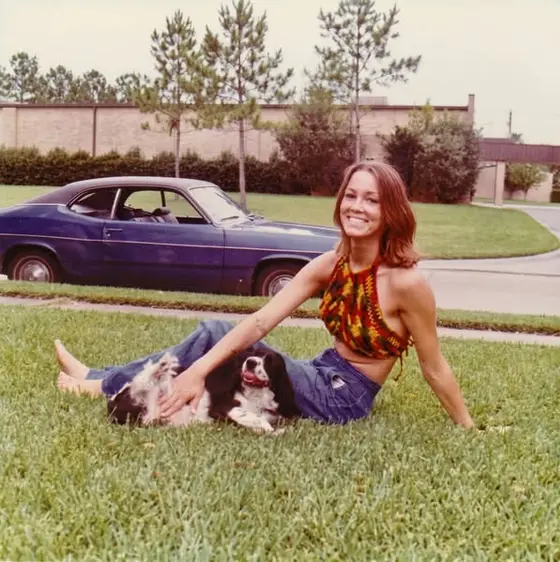
My mum quit drinking on 8th July 2011. Poured every bottle down the sink. Went on the Mediterranean diet. Walked three miles a day. Started juicing kale, of all things. She did everything the doctor told her. She died of liver failure on 19th October at 4:17 AM.
She was 61 years old.
Quit drinking on 8th July. Ate nothing that wasn't approved. Lost 22 pounds. Walked three miles a day, rain or shine.
The hospital bill was $63,000. The funeral was $11,200.
Her favourite wine glass — the hand-blown Riedel I gave her for her 60th birthday — is still on the shelf above my dad's sink. He can't move it.
If he moves it, she's really gone.
I need to tell you what happened to my mum. Because fifteen years after we buried her, I sat in my own doctor's office and heard the same words she heard. And I'm seeing the same posts on Facebook now that I was making just months before she died — "my mum's doctor told her her liver enzymes are too high, any advice?" — and it makes me physically ill.
If you're a woman over 40 who drinks, or you have a mother, a sister, a daughter who does, please read this entire thing.
I know it's long. I know you're scrolling. I know you have things to do.
Fifteen years ago I would have given anything — everything — for someone to tell me what I'm about to tell you. Now I'm telling you because last month I almost ended up exactly where my mum ended up.
Mum went in for a routine physical on 28th June 2011.
She felt fine. Better than fine. She'd just turned 60. She still hosted Sunday dinner for nine people. She still walked the dog two miles every morning. She still ran her book club. She thought she was indestructible and honestly so did I.
Two days later her doctor called.
ALT of 198. AST of 187.
"Your liver enzymes are very elevated, Margaret. We need to talk about your drinking."
Mum was quiet on the call. I was in the kitchen pretending not to listen.
"How much do you drink?"
"A glass or two of wine with dinner. Maybe three on a Saturday. A little prosecco at brunch on Sundays."
"That's enough to do this. You need to stop. Completely. No exceptions. We'll retest in three months."
Mum hung up the phone and sat at the kitchen table for forty minutes without saying anything.
Then she stood up, walked to the wine fridge — the one Dad had built into the kitchen island for her 55th birthday — and took everything out.
I watched her pour out a $140 bottle of Châteauneuf-du-Pape. A $90 bottle of Sancerre she'd been saving for her anniversary. A case of the Provençal rosé she ordered every spring. The Tuscan reds. The crémant she kept for "ordinary Tuesdays that needed bubbles." Forty-six bottles down the kitchen sink in under two hours.
"That's it," she said. "I'm done."
And she was.
For 103 days, she didn't touch a drop.
No wine. No champagne. Not at my cousin's wedding in August. Not at her book club in September when they read a novel set in Burgundy and everyone else opened a bottle of Pinot. Not at her own 61st birthday dinner in October where my aunt ordered a glass of Chablis right in front of her and Mum drank sparkling water with a slice of lemon.
She stopped going to her Thursday wine night at Linda's house because she couldn't sit there sober whilst everyone else got loose. She lost her friend Diane, who told her "you've got so serious" and stopped inviting her. She lost the Friday girls' dinners. She lost the wine tastings in Sonoma she and her friends had been doing every spring for twelve years. She lost a piece of herself she'd been carrying for 35 years.
And she did it anyway.
Because the doctor said to.
She lost 22 pounds in those three months. She bought a juicer — my mum, with the juicer, I still can't picture it. She started walking three miles every morning before work. She took the milk thistle her doctor "wasn't against." She took a multivitamin. She ate a salad every day, the woman who used to say a meal without carbs was a punishment.
She did everything right.
The follow-up labs came back on 7th October 2011.
ALT: 184. AST: 176.
She'd quit drinking entirely for 90 days and the numbers had barely moved.
The doctor said "give it more time. The liver heals slowly. We'll retest in 6 months. Keep doing what you're doing."
Mum rang me that night. I was 40, living in my first place in Chicago after my divorce, eating leftover takeout at the counter. She sat at the kitchen table back home. The same table she'd sat at after the first call.
She didn't say anything for a long time.
Then she said: "Sarah, I gave up everything. Everything. And it didn't work."
I told her to give it time. I told her the doctor said six months. I told her to trust the process.
So she kept walking. She kept juicing. She kept taking the milk thistle.
Five days later — five days — Dad rang me at 2:30 AM. She'd woken up with a pain in her right side that doubled her over.
He was driving her to A&E.
I was on a plane from O'Hare to Indianapolis by 6 AM.
By the time I got to the hospital, the whites of her eyes were yellow. Not "a little off." Yellow. Like a highlighter. Like someone had switched the lights out behind them.
The A&E doctor — a young woman, couldn't have been 35 — had looked at Mum's bloodwork and her face had done this thing. Dad told me about it in the family room, his hands shaking around a paper cup of coffee.
"Mrs Whitfield, your bilirubin is 8.2. Your ALT is now 847. Your liver is in acute decompensation. We're admitting you to the ICU."
"But I quit drinking three months ago," Mum had said.
The doctor just looked at her.
"I know, Mrs Whitfield. I'm sorry."
Mum spent 11 days in the ICU.
I learnt things about the liver I never wanted to know.
I learned that when a liver shuts down, the toxins your body produces every single day — ammonia, mostly — start building up in your blood and crossing into your brain. They call it hepatic encephalopathy. It means your mother stops being your mother. She looks at you like she's trying to remember who you are. She says things that don't connect. On day 6, Mum asked me three times in twenty minutes if I'd remembered to pack my lunchbox for school. I was 40 years old. I hadn't carried a lunchbox in 30 years.
I learned that they inject something called NAC intravenously when a liver is shutting down. The nurse told me it's the same compound they use for paracetamol overdoses. She said it forces the liver to start rebuilding the master antioxidant it uses to protect itself — something called glutathione. She said it's the only thing they've got, and at this stage they were hoping it could buy her time.
It bought her 11 days.
Day 8, her kidneys started failing. The doctors talked about a transplant. Then they talked about her not being a candidate because of how fast she was declining. Then they stopped talking about transplants altogether.
Day 10, her belly swelled up like she was nine months pregnant. They drained 4 litres of fluid out of her abdomen. Four litres. The nurse called it ascites. I called my brother.
Day 11 — October 19th, 2011 — Dad and I were in the family room down the hall. They'd asked us to step out whilst they intubated her.
At 4:09 AM I heard the long beep.
At 4:17 AM, a doctor I'd never seen walked into the family room.
I knew. Dad knew.
"I'm so sorry. We did everything we could."
I drove Dad home at 6 AM.
The juicer was still on the counter. The walking shoes were by the back door. The milk thistle was on the windowsill above the sink, next to the multivitamin.
Her favourite wine glass, the Riedel I'd given her for her 60th birthday — was still on the shelf above the sink.
Where it sits today.
Dad sat in her reading chair.
I sat at the kitchen table.
Neither of us moved for six hours.
The house was so quiet I could hear the refrigerator hum.
40 years of being her daughter. And now the only sound in her house was the refrigerator.
The funeral was October 24th, 2011.
Mum's sister flew in from Arizona. My brother drove up from Bloomington with his kids. My five-year-old niece wore a black dress that was too big for her.
She asked me: "Aunt Sarah, when is Grammy coming home?"
I told her Grammy was in heaven now.
She said: "Can we call her there?"
I had to walk out of the room.
After the funeral, I flew back to Chicago and tried to go back to normal.
I couldn't.
But fifteen years passed.
I worked. I dated. I bought a flat. I never had children of my own — I have my niece, who is 20 now and texts me every Sunday. I told myself I was fine. I cut back on wine for about a year after Mum died and then I drifted right back to where I'd been — a glass with dinner most nights, two on Fridays, a bottle split with a friend when we caught up. The same drinking habits my mum had. I told myself I was younger. I told myself I was different. I told myself I'd watch it.
Last month I went in for my own annual physical. 55 years old. I felt fine. Better than fine.
Three days later, my doctor rang.
ALT of 198. AST of 187.
Exact same as my mum's.
I sat down on the floor of my kitchen with the phone still pressed to my ear and I couldn't breathe.
"Sarah, your liver enzymes are very elevated. We need to talk about your drinking."
I knew exactly what was coming. I'd watched my mother die from that sentence.
She told me to stop drinking completely. Mediterranean diet. Exercise. Retest in three months.
I hung up the phone and I knew — I KNEW — if I did exactly what my mum did, I would end up exactly where my mum ended up.
So I didn't.
I sat in my flat that night and I made a decision. I wasn't going to be the second woman in my family to give up everything she loved and die anyway. I wasn't going to leave my niece the way my mum left me.
I started researching. Not because I wanted to. Because I had to. Because my mum gave up everything for nothing — and if her death couldn't save her own daughter fifteen years later, what was the point of any of it?
I read for weeks. Medical journals I barely understood. Hepatology forums. Studies out of Japan and Germany. And one thing kept coming up, over and over, that no doctor ever told us:
The reason Mum's numbers didn't come down is that quitting drinking only stops the damage. It doesn't repair what's already gone.
Specifically: glutathione.
Glutathione is the master antioxidant your liver uses to filter everything that passes through your body — every medication, every toxin, every drink, every greasy meal, every breath of polluted air. Every cell in your liver depends on it.
And here's what no one told us.
After age 40, your body produces about 10% less glutathione every single year. For women, the drop accelerates further during perimenopause and menopause, when oestrogen — which helps regulate the enzymes that build glutathione — falls off a cliff. Modern life — processed food, medications, environmental toxins — burns through what's left even faster. By 55 most women have lost more than half their production capacity without knowing it.
And here's the part that made me sit up straight:
When your glutathione is low, the wine that's supposed to be neutralised harmlessly, now starts damaging your liver. Mum's liver wasn't damaged because she drank too much. It was damaged because she didn't have enough glutathione left to handle the wine she was having.
Read that again.
Her liver wasn't damaged by the Sancerre. It was damaged by the empty tank the Sancerre was being processed through.
And here's why quitting alone didn't save her: stopping the drinking stops the depletion. It doesn't refill the tank. Her tank was already empty by the time the doctor told her to quit. The damage was already cascading. Eating clean, exercising, juicing kale — those things slow how fast you deplete what's left. They don't refill what's already gone.
That's why her numbers wouldn't move.
She gave up everything she loved to stop the bleeding from a wound that was already inside her.
I sat with that for three days.
And then I started looking at what I'd been about to do.
I'd thrown out Mum's milk thistle the week after the funeral. But I bought a new bottle for myself. Because I also got the diagnosis. Because I didn't want to end up like my mum. Because I was scared.
My doctor — a different one to Mum's, who I called because I trusted her — laughed when I told her.
"Sarah, milk thistle protects the liver cells you still have working. But you can't protect cells that are running on empty. It sits on the surface. It doesn't refill anything."
Then she said something I'll never forget:
"If your mother had been on something that actually rebuilt her glutathione supply, the picture might have been very different."
I stopped breathing for a second.
"Why didn't her doctor prescribe that?"
She was quiet for a long time.
"Because we don't prescribe supplements. And the version that works isn't a prescription."
I went to CVS the next day. I stood in that aisle for forty minutes.
Milk thistle. Liver detox tea. Dandelion root capsules. "Liver cleanse" 30-day programme. Multivitamins with "liver support." Generic NAC capsules — £14.99, 600mg, the cheap stuff.
I bought the cheap NAC. Took it for two weeks. No changes to my numbers.
I started Googling and what I found made me throw the bottle in the bin.
A compromised liver can't absorb a capsule properly. The capsule passes through the organ that's already failing before the active ingredients reach the bloodstream. Most of what you're paying for never makes it where it needs to go. I was peeing out £14.99.
Liquid bypasses this entirely. Liquid hits the bloodstream directly.
I had been doing the right thing in the wrong form.
The same wrong form my mum did.
I was furious. I'm still furious.
About a week later I was reading a thread on Facebook — one of those liver health groups, full of women like Mum was, "elevated enzymes" women, "borderline NAFLD" women, women in their 40s and 50s who'd had a couple glasses of wine after work for twenty years and were now being told they'd done permanent damage — and a woman posted something that stopped me cold.
She said her mother had been told to quit drinking at 58. She quit. Her numbers barely moved for six months — sound familiar? — and then she found a liquid formula that combined NAC with actual glutathione, plus two bitter herbs to open the drainage pathway.
Her ALT went from 191 to 41 in ten weeks.
Without going back to drinking. Without doing anything else different.
I read that post six times.
I started looking into the formula she mentioned. And what I learnt is that there are five things a serious liver support has to do at the same time, or it's a waste of your money:
It has to rebuild the production of glutathione from the inside out. That's NAC — the same compound the ICU was putting into Mum's IV at the end. Not a vitamin. The actual building block.
It has to replenish glutathione that's already been depleted, directly, whilst the rebuild is happening. That's L-Glutathione itself. NAC restarts the factory. L-Glutathione restocks the shelves at the same time.
It has to package and move the fat that's already backed up inside your liver cells. That's choline. Choline is the fuel for the export pump. Without it, the fat just sits there hardening into scar tissue, no matter how much weight you lose.
It has to open the drainage pathway so what the liver processes actually leaves the body instead of recirculating. That's a bitter herb blend — artichoke extract and dandelion root, working in sequence. One opens bile production. The other clears the final pathway out.
And it has to be in liquid form. Because a compromised liver cannot absorb a capsule properly.
Five things. All five. At the same time. In liquid form.
I went through every product I'd looked at in CVS. Not one of them did all five. Most did one. The expensive ones did two. None of them were liquid.
That's when I found Purelia.
It was the only formula I could find that hit all five. NAC. L-Glutathione. Choline. Artichoke. Dandelion. Liquid dropper, two droppers in the morning. 60-day money-back guarantee tied to your actual labs — if your numbers don't improve, you get every penny back, no questions asked.
I almost didn't order it.
After the CVS aisle. After the milk thistle. After Mum. After everything.
But I was 55 years old with an ALT of 198 — the exact same number my mum had the day her doctor called. I had a father who'd already buried his wife and didn't need to bury his daughter. I had a niece who didn't need to grow up the way I did — asking why her aunt wasn't coming to her wedding. I had Mum's sister in Arizona, now 67, who still had a glass of Pinot every night and refused to talk about any of it.
I ordered it.
I didn't quit drinking. But I took two droppers every morning. Religiously. The same time every day. Like it was the thing standing between me and a hospital bed in Indianapolis.
I went back to my doctor four weeks ago for a follow-up.
ALT: 33.
Down from 198. In ten weeks.
I hadn't quit drinking. I'd just cut back to a glass with dinner most nights, instead of two. I hadn't changed my diet much. I'd added some walks. The main thing I changed was the liquid I took in the morning.
I sat in the parking lot of the doctor's office and I called my dad.
I was crying so hard he couldn't understand me at first.
I said: "Dad, I think Mum died because nobody told her about this."
He didn't say anything for a long time.
Then he said: "Sarah, send a bottle to your Aunt Carol. Send one to everyone your mother loved. Send one to anyone you love."
So I did.
My Aunt Carol. 67, still drinks her glass of Pinot every night, came back from a routine appointment with an ALT of 174. Didn't know what to do. I sent her a bottle. Just wrote a note that said "Mum would've wanted you to."
She took it. She kept drinking — she wouldn't quit, she's stubborn like that — but she took the drops every morning.
She went back to her doctor three weeks ago for a follow-up.
ALT: 38.
Down from 174. In ten weeks.
She called me crying. My aunt. 67 years old. The woman who taught me how to make pie crust from scratch when I was 11, crying on the phone like a child.
Then there's my sister-in-law. 51, two kids in college, "borderline fatty liver" at her last physical. Started taking it six weeks ago. She says her afternoon energy is back. She says the dull ache she'd been feeling under her right rib for two years — the one her doctor said was "probably perimenopause" — is gone.
Mum's old book club friend Diane — the one who'd told her she'd "got so serious" — is 64 now. She heard about it from my aunt. She started taking it eight weeks ago. She came to my dad's house last weekend, sat at the kitchen table where my mum used to sit, and cried for twenty minutes. She said she wished she'd known. She said she wished she hadn't said what she said. She said she'd give anything to take it back.
I'm not a doctor. I'm not a scientist. I'm not selling anything and I don't get a penny from any of this.
I'm a 55-year-old woman sitting in my flat at 2 in the morning because I can't sleep and I almost died the same way my mother died and the only thing that's standing between me and her fate is a liquid that costs less than a bottle of the wine she used to drink.
Here's what I know because I lived it twice — once watching my mother die fifteen years ago, once watching my own labs come back the exact same way last month:
Quitting drinking stops the damage. It doesn't refill what's been depleted. It doesn't repair the damage.
Milk thistle protects cells. It doesn't rebuild the tank those cells are running on.
A liver running on empty cannot absorb a capsule properly. Liquid bypasses this.
My mum gave up everything she loved for 103 days and it didn't save her because nobody told her what was actually broken.
It would have killed me too if I'd done what she did.
I wish someone had told us before 28th June 2011.
Before the routine physical. Before the wine fridge emptied into the sink. Before the 103 days of sparkling water with lemon. Before October 19th at 4:17 AM.
I can't go back. Mum can't come back. Her wine glass is still on the shelf at my dad's house and it's going to stay there.
But you can still go forward. Your mum can. Your sister can. Your daughter can. You can.
The page that explains all of this — the glutathione mechanism, why the numbers don't move when you quit, what your doctor doesn't know about liquid absorption, and what Purelia actually contains — it's the page I found at 3 AM the night after my own diagnosis.
Not protecting. Restoring.
That's the line that finally made it click for me.
I want you to read it. Not for me. For your mother. For your daughter. For whoever you'd leave behind. For whoever might have to bury you the way I buried my mum.
👇 https://discount.britawell.com/Purelia/pdp
Mum used to say: "You can't unring the bell, but you can stop ringing it."
You can stop ringing it.
I did.
— Sarah Whitfield, age 55 Chicago, IL
P.S. The wine glass is still on the shelf at my dad's house. Fifteen years and he still can't move it. Every time I drive down to visit him I walk past it and for one second I forget. For one second I think she's about to come down the stairs and tell me she's heading out for her walk before breakfast. She's not. She hasn't in fifteen years. $63,000 in hospital bills. $11,200 for the funeral. 103 days of her giving up everything she loved for nothing. And a liquid that costs less than a bottle of the wine she used to pour on a Tuesday — a liquid my own doctor told me could have changed everything if we'd known. Please. Don't end up where my mum ended up. Don't let your daughter end up where I almost did.
👇 https://discount.britawell.com/Purelia/pdp
P.P.S. I don't work for Purelia. I don't get a penny from this. I'm writing this at 2:14 AM because I can't sleep and my mum would have been 76 next month and my dad still sets two plates at dinner sometimes without thinking and my Aunt Carol is 67 and stubborn and my niece is 20 years old and just got engaged and I keep thinking about the wedding next summer and the toast I'll give and the fact that my mother won't be there to see it and I'm scared every time the phone rings. Share this with any woman you love who drinks. Even a little. Even "socially." Even if she already quit. Even if she's your daughter. Please.