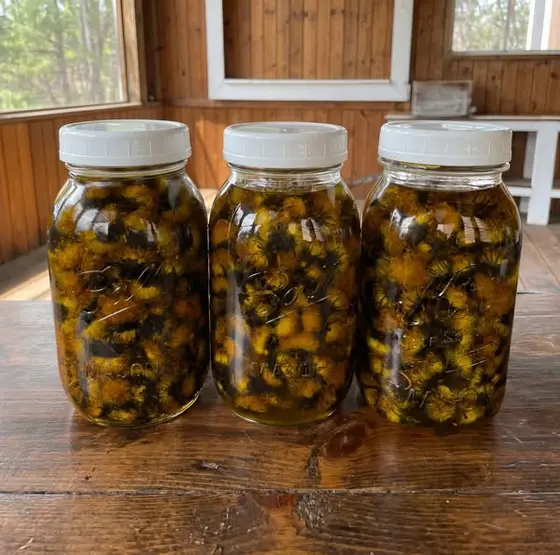
Ingrid Pedersen Facebook ad creative
discount.britawell.com
Support Your Body's Liver Naturally 🌿
See details

Ingrid Pedersen Facebook and Instagram ad

Ingrid Pedersen ran this image ad since Jun 26, 2026, 134 days so far.

First seen
Jun 26, 2026
Running for
134 days
Format
Image
Call to action
See details
Niche
Health and supplements
Countries
Not disclosed
Page likes
192

Ad copy

I was diagnosed with "fatty liver" at 42. I am 55 now. And I have spent thirteen years being told my liver enzymes are "just a little elevated" and nothing can be done. Last week, for the first time in over a decade, my ALT came back normal. Not because of a new medication. Not because I finally lost the weight they kept telling me to lose. Because I finally understood what my liver was actually running out of — and gave it back. And I am furious that nobody told me this thirteen years ago. Let me tell you what thirteen years of "monitoring" looks like. Because if you're on that path, you need to know where it leads. Year 1: Diagnosis. "Fatty liver." ALT 78. Doctor says lose weight, cut back on drinking. I barely drank. A glass of wine at dinner. Rosé with the girls on weekends. "Take milk thistle. We'll monitor it." I was 42 years old. Otherwise healthy. Scared but obedient. Year 3: Still on milk thistle. ALT 82. Went up. Doctor shrugs. "Some people just have stubborn livers." Tells me to try a Mediterranean diet. I was already eating well. Also mentioned the fatigue and belly to my OB/GYN. "You're approaching perimenopause. Completely normal for your age." Year 5: ALT 89. Bloating so bad I looked four months pregnant by dinner every night. The 2pm crash. The ache under my right ribcage that became background noise. Gastroenterologist adds metformin. "Your blood sugar is creeping up." OB/GYN adjusts my HRT. "Your hormones are fluctuating. Give it time." Two doctors. Two different answers. The belly stayed. Year 8: ALT 97. Three medications now. Fibroscan shows early fibrosis. Gastroenterologist uses the word "progression" for the first time. I brought the fatigue and the fog to both doctors. One said liver. One said hormones. Neither said enough. I am 50 years old and being told my liver is scarring. Year 10: ALT 104. Fibroscan worse. Brain fog so bad I forget words mid-conversation. My skin has a greyish cast. My eyes aren't quite white anymore. The puffiness in my face that no amount of sleep fixes. I've gained 30 pounds despite eating less every year. Four medications. I stopped wearing the fitted dresses I used to love. Started buying everything loose and dark. Angled myself in every photo until I stopped letting anyone take photos at all. Year 11: I stop hosting. The dinner parties I used to throw every month. The table I'd set for twelve. The kitchen I used to spend Saturday afternoons in — music on, wine open, something on the stove. Too tired. Too bloated. Too embarrassed by the belly that won't go down no matter what I do. I stopped suggesting we have people over. My husband stopped asking. We told each other it was the hormones. We believed it because we needed to believe something. Year 13: ALT 108. Five medications. Fibroscan shows F2 trending towards F3. My gastroenterologist starts mentioning "transplant evaluation" in the way doctors mention things to plant the seed. Casually. Like it's just another data point. I am 55 years old. I have followed every instruction for over a decade. Two doctors. Two protocols. And my liver is falling apart whilst everyone manages the decline without ever stopping it. That's the word I want you to hear. Managing. Not fixing. Not reversing. Not even understanding why. Managing. The pace at which my liver deteriorates. Thirteen years of monitoring. Thousands of pounds in appointments, bloodwork, ultrasounds, fibroscans, hormone panels. And the only things that changed were the number of medications and the number on my fibroscan. Both kept going up. At 53 I started researching on my own. Because I was done waiting for doctors who had run out of ideas years ago. I found the research on glutathione depletion. How after 40 your body produces about 10% less glutathione every year. How modern life — processed food, medications, environmental toxins — burns through what's left even faster. How by 50 most women have lost nearly half their production capacity without knowing it. And how without glutathione your liver keeps running but has nothing to work with. Fat backs up inside liver cells. Toxins recirculate. Enzymes climb. The damage has nowhere to go. For the first time in 13 years I had an explanation for why nothing worked. My liver wasn't failing because of my diet. It wasn't failing because of my hormones. It wasn't failing because of my age. It was failing because the one compound it needed to filter everything that passed through my body had been quietly running out for years. And every pill, every supplement, every hormone adjustment I'd tried was addressing something else entirely whilst the real problem kept compounding underneath. So I did what the internet told me to do. I bought milk thistle. Again. Took it for three months. ALT went from 108 to 99. Nine points. First meaningful movement in years. I was cautiously hopeful. So I added a liver detox tea. Four more months. ALT: 89. Better. Actually improving for the first time in over a decade. But let me be honest about what I was experiencing day to day. The bloating was slightly better. Energy marginally improved. But I was still exhausted by 2pm. Still had that ache. Still puffy. Still foggy. And the rate of improvement was slow. Seven months in — I'd spent hundreds on supplements and my ALT was still elevated. At that pace it would take another year to reach normal range. Maybe longer. And my fibroscan hadn't improved. I'm 53 years old. I don't have years to wait for marginal improvements. Then I found something in a liver disease forum. A woman — older, like me — who'd had a similar trajectory. Over a decade of elevated enzymes. Tried milk thistle. Tried detox teas. Saw modest improvement. Then tried something different. She wrote: "The supplements were doing something. But they were protecting cells that were still running on empty. I needed something that actually restored what my liver had run out of." She explained what I'd missed. Milk thistle protects liver cells. But you cannot protect cells running on an empty tank. It sits on the surface while the depletion continues underneath. And capsules don't reach where they need to go. A liver running on empty can't absorb a capsule properly. Most of the active ingredient passes through unused. The right compounds in the wrong format don't work. I'd been taking supplements that even if they'd been the right compounds — which they weren't — my compromised liver couldn't absorb them anyway. What her liver actually needed was specific. And it needed to reach the bloodstream directly. She'd found a liquid formula that addressed every stage of the depletion. NAC — the compound hospitals inject IV when a liver is shutting down. That's not marketing. That's what emergency medicine reaches for when it needs to save a liver fast. NAC forces your liver to rebuild its own glutathione supply from the inside out. Not from outside. From within the cell itself. L-Glutathione — replenishes depleted stores directly at the cellular level at the same time. NAC rebuilds from within. L-Glutathione replenishes directly. Together they restore what depletion took at two levels simultaneously. Choline — the compound your liver needs to package and export fat from inside liver cells. Without enough choline fat doesn't leave. It builds up inside liver cells driving the inflammation and fibrosis that was showing up on my fibroscan. Most women are chronically deficient and have no idea it's been driving their numbers up for years. Artichoke and Dandelion — they open the drainage pathway so everything the liver processes actually leaves the body instead of recirculating. Once glutathione is restored and fat starts moving you need a clear exit route. Artichoke stimulates bile flow. Dandelion supports the drainage channel. Together they complete the final step — what gets processed actually gets out. Liquid formula. Because a compromised liver needs compounds that reach the bloodstream directly — not capsules waiting to dissolve in an organ that's already failing. "That's the difference," she wrote. "I spent years on supplements that drifted through my stomach and scattered before reaching my liver. A liquid formula delivered the compounds directly to my bloodstream and did in six weeks what years of capsules couldn't finish." I ordered Purelia that night. I have to tell you what it felt like. Because in 13 years of pills and supplements and hormone adjustments and diets I had never felt anything actually changing. Week one: The bloating reducing daily. By the end of the week I ate dinner and my stomach didn't distend. I sat at the table with my husband and just looked down at my abdomen. Flat. At 7pm. "What's wrong?" he asked. "Nothing. That's the point. Nothing hurts. Nothing's swollen." Week two: The fog. I can't describe this adequately. I had accepted brain fog as normal. As perimenopause. As "just what 53 feels like." I didn't know I was foggy until it started clearing. Colours looked brighter. Conversations were easier. I could follow a dinner through without losing my train of thought three times. Week three: The ache under my ribs. I pressed the spot. The spot I've been pressing for 13 years. The one that was always tender, always present, always reminding me something was wrong. Nothing. No tenderness. No pressure. No swelling. I pressed harder. Nothing. I sat on the edge of my bed and just stared at the wall for a long time. Week four: Energy. Real energy. Not caffeine energy. Not HRT energy. Not "I slept 10 hours and I'm slightly less exhausted" energy. Actual energy that lasted past noon. Past 2pm. Past 6pm. On Saturday I went to the grocery store and bought food for twelve. My husband stood in the kitchen doorway watching me unload the bags. "Who's coming over?" he asked. "Everyone," I said. He laughed. He hadn't heard me say that in three years. Week six: I ran labs. ALT: 32. Normal. For the first time in thirteen years. My gastroenterologist pulled up my history. The screen showed 13 years of numbers. A slow relentless climb from 78 to 108. Seven months of milk thistle and detox teas bringing it to 89. And then six weeks of glutathione restoration dropping it to 32. She looked at me. "What changed?" I told her. Purelia. Liquid formula. NAC forcing the liver to rebuild glutathione from the inside out. L-Glutathione replenishing directly at the same time. Choline exporting the fat that had been backing up inside liver cells for over a decade. Liquid reaching the bloodstream directly instead of passing through a compromised organ unused. She wrote it down. She'd never heard of addressing glutathione depletion as a treatment approach for fatty liver. Thirteen years as my doctor. Never once mentioned the one compound my liver had been running out of the whole time. Last weekend I hosted a dinner party for the first time in three years. Set the table for twelve. Cooked everything from scratch. Opened the wine myself. Was still talking at midnight when the last guest finally left. My husband stood in the kitchen doorway watching me clear the glasses. "I've missed her," he said. He wasn't talking to anyone in particular. He meant me. Here's what I need you to hear. Especially if you're my age. Especially if you've been "monitoring" for years. Especially if every symptom you bring gets labelled as hormonal. Every year you spend taking milk thistle and hormone supplements and detox teas that enter your stomach and get diluted before reaching your liver is another year your liver sits depleted, running on empty, trying to process everything without the one compound it needs. Seven months of milk thistle and detox teas: ALT from 108 to 89. Nineteen-point drop. Six weeks of Purelia: ALT from 89 to 32. Fifty-seven point drop. I did more in six weeks of actual glutathione restoration than I did in seven months of swallowing things that protected an empty tank. And I did more in those six weeks than 13 years of medication, milk thistle, hormone therapy, diets, and monitoring COMBINED. I'm 55 years old now. My ALT has been normal for five consecutive months. My fibroscan improved — for the first time EVER. The bloating is gone. The ache is gone. The fog is gone. My skin has colour again. My eyes are white. The belly I'd been blaming on my hormones for five years is gone. Two droppers in the morning. It takes thirty seconds. I put it in my water whilst I make my coffee. It's the simplest thing I do for my health. And after 13 years and thousands of pounds spent on solutions that couldn't address what my liver was actually running out of — it's the only thing that actually worked. My one regret? That I spent seven months and hundreds of pounds on milk thistle and detox teas before I learned that my liver needed glutathione restoration — not protection of cells that had nothing to run on. If I'd started with Purelia from the beginning I'd have saved those seven months. If someone had told me this 13 years ago I'd have saved... everything. If you've had elevated enzymes for years. If your doctor keeps telling you to "monitor it." If every symptom you bring gets labelled as hormonal. If milk thistle hasn't fixed anything. If you're tired of swallowing things that protect an empty tank instead of refilling it. Your liver has been waiting for the right compounds. Not protection. Restoration. Purelia. Liquid formula. Two droppers a day. Not protecting. Restoring. 90-day money-back guarantee. If your numbers don't improve, full refund. No questions asked. It's not too late. It wasn't too late at 53. And it's not too late for you. 👉 https://discount.britawell.com/Purelia/pdp P.S. — It has now been five months since my last "your enzymes are elevated" conversation. Five months without being told to "just monitor." Five months without being told it's probably hormonal. Five months of normal labs. At 55 I am not done living. And two droppers of liquid gave me more than 13 years of medicine and hormone management did. That's not an exaggeration. That's my chart.

Placements and targeting

FacebookInstagramAudience NetworkMessengerThreads

More ads from Ingrid Pedersen

Full Ingrid Pedersen profile
Ingrid Pedersen
Ingrid Pedersen
+1
Inactive134 days
discount.britawell.com
Natural relief in just a few weeks
See details

I'm a nurse with liver disease. I refused to stop drinking. Here's what happened. I've been a nurse for 31 years, and liver disease is one of the toughest things women deal with, in my experience. The belly that just won't flatten, no matter what they eat. The exhaustion that hits every afternoon like a flipped switch. The brain fog so thick they forget words mid-sentence. I've had patients tell me they wake up three, sometimes four times a night. The thirst that never goes away. The stabbing under the right rib they've learned to ignore because nobody takes it seriously. Day and night, it never stops. About two years ago, it happened to me. My own liver values started to rise. My doctor said the words I've said to patients myself more times than I can count: fatty liver. I had to stop drinking. Possibly forever. All the years of long shifts and wine with dinner and lack of self-care had apparently finally caught up with me. I'm 44. And until two years ago, I considered myself basically healthy. A glass of wine with dinner most evenings. Rosé with the girls at the weekend. A cocktail at company events. Perhaps a few too many on holidays – but who doesn't. No problem. It never was. Only somewhere around 42, things started to change. At first, it was just the belly. That hard, bloated middle that appeared and never went away again. I stopped wearing the figure-hugging dresses I used to wear out to events. Started buying loose-fitting tops. Turned sideways in every photo. And by dinner time – even on evenings when I'd eaten almost nothing – I looked like I was four months pregnant. It didn't matter what I ate. By evening, my belly was so bloated, as if something inside me had swollen. I blamed it on the long shifts. On getting older. Then came the 2pm crash. That sudden wall of exhaustion and fog that hit me in the middle of my shift. I'm a nurse. I need to be able to think clearly. I started to dread the afternoons. Then the sleep. I finally fell asleep and woke up an hour later. Thirsty. Then again. Then again. I lay there calculating how many hours I had left before the alarm went off, wondering if it was even worth falling asleep again. Then the skin. Random itching that woke me at 3am whilst I scratched my forearms. Redness on my palms that I'd never had before. I looked puffy and aged, in a way that seemed to happen overnight. I was at book club and had to leave early because I couldn't keep my eyes open past nine o'clock. I cancelled the girls' trips I used to always plan. I turned up to dinners and spent the whole time somehow trying to hold it together. I put it down to perimenopause. My friends and I joked about our wine bellies. Perfectly normal stuff for your 40s, we told ourselves. Now I was the one experiencing what my patients had always described. And let me tell you – every single one of them was right. It's hell on earth. My doctor offered me permanent abstinence. Official. In writing. Stop drinking completely and maintain it for life. I smiled politely and said I'd think about it. But I knew I wouldn't. I've seen too many of my patients go down that path. Those who stop completely, do everything right, grit their teeth through every party, every holiday and every girls' trip for years – and still end up back on my ward, with levels that kept rising anyway. The belly that never got flatter, even after the drinking stopped. The fatigue that never went away. The fibrosis that progressed regardless. And for what? A life where you say no to everything, whilst what you're trying to prevent happens anyway. I wasn't prepared to trade my quality of life for an outcome that wasn't even guaranteed. So I resigned myself to it. Milk thistle – twice daily, the good sort, for four months. My levels barely moved. Liver detox supplements from the health food shop. Two different brands. Nothing changed. Reduced my wine consumption by half. One glass instead of two. Sparkling water on girls' nights, which I used to really enjoy. The belly didn't budge. The fatigue didn't budge. The lab results dropped from 91 to 84. After four months of deprivation. Nothing really worked. But what else was I supposed to do. Then, about six weeks ago, one of my regular patients came in for her appointment. A lovely woman. She'd been struggling with elevated liver levels and the same swollen, bloated belly for years. I always felt sorry for her because she'd tried everything – she'd gone through with the abstinence, completely overhauled her diet, taken the supplements. Nothing gave her more than a few points' movement before her levels climbed back up again. But this time she seemed different. Somehow lighter. I asked her how she was doing. She said something I hadn't expected. She told me that her lab results had actually normalised. She had found a liquid liver formula – a specific combination of active ingredients that she had read about in a hepatology forum. She had been taking it every morning for two months. And for the first time in years, she was sleeping through the night. I'll be honest – I was sceptical. After 31 years, I've heard every supplement story there is. I've watched patients chase miracle cures. I know how that usually ends. But she seemed so genuinely relieved. Not excited like people who want to sell you something. Relieved. Like someone who's been holding their breath for a long time and finally lets it out. That same night I woke up at 2 a.m. Thirsty. Then again at 4. I couldn't stop thinking about what she'd said. So I did some research. It turned out that the active ingredients she mentioned – NAC, L-Glutathione, Choline, Artichoke – address something that the standard protocol never touches. Your liver uses a single molecule to neutralise everything that passes through it. Every drink, every medication, every processed ingredient, every environmental toxin. One molecule does it all. It's called glutathione. Here's what nobody explains: alcohol doesn't just cause the damage. It depletes the very compound your liver uses to repair itself. Every drink empties the defence at the same moment it launches the attack. When you're younger, production keeps up. After 40, glutathione production naturally declines, in addition to the cumulative depletion from years of normal drinking. You reach a point – very quietly, without warning – where the tank is empty. And now your liver is trying to do its entire job without anything left to work with. The permanent abstinence protocol addresses the input. It slows down how quickly you empty the tank. It doesn't replenish what's already gone. That's why the women I've observed who followed the protocol perfectly still developed progressive fibrosis. Still kept the belly that wouldn't go away. Still ended up on my ward, with values that continued to rise even after years of discipline. The tank remained empty. Stopping the drain doesn't fill it. The research on this was right there in the hepatology literature. Published. Peer-reviewed. Not hidden – just never linked to standard clinical practice. No prescription version. No insurance billing code. No profit in recommending it. At first I ordered the active ingredients individually. NAC from the pharmacy. My results shifted. The ALT value dropped from 84 to 71 in three weeks. Better. But not where it needed to be. So I added a liver supplement that contained NAC plus milk thistle. Another two weeks. The levels stagnated at 69. I was starting to get frustrated. So I went back and read more carefully. That's when I understood what was missing. NAC alone forces your liver to rebuild glutathione from the inside out. But at the same time, it needs L-Glutathione, which replenishes the depleted stores directly at the cellular level – a rebuilding from both directions simultaneously. Choline is the compound that packages and exports accumulated fat in liver cells before it hardens into scar tissue. Without choline, the fat stays. That's where the belly comes from that doesn't respond to diet or exercise – it's not fat you can burn off. It's your liver telling you it can't export what's accumulating inside. Artichoke forces the bile flow to open so that what's been neutralised actually leaves your body instead of recirculating. And all of this needs to be in liquid form. Because an overloaded liver can't properly absorb a capsule. The active ingredients need to reach the bloodstream directly. I needed all four. In the right concentrations. In liquid form. Together. In the forums my patient had referred to, I kept seeing one product mentioned. A special formula that contained all four compounds in clinical concentrations, liquid delivery, no fillers. It was called Purelia. I ordered it. When it arrived, I immediately noticed it was different from what I'd been taking before. The concentration, the consistency. You can tell when something's been seriously formulated or just thrown together. I started with it the next morning. After about a week, I noticed the 2 p.m. crash didn't happen. It didn't get weaker – it simply didn't happen. I got through an entire shift without hitting the wall. I'd forgotten what that felt like. That night I slept through. Actually through. No waking up at 2 a.m. No lying there calculating hours. Just sleep. When I woke up, I lay there for a moment trying to understand what was different. Eight hours. I hadn't slept eight hours straight in over a year. At the end of the first week, I checked my own lab values. ALT: 47. Previously 84. I ran the test twice. The belly I'd been hiding under loose tops started to soften in week three. The hardness, the pressure, that constant bloated tension. It eased. By dinner time I no longer looked four months pregnant. The brain fog lifted. I could think clearly through an entire shift. Stopped just nodding, hoping no one would ask me to repeat something. The itching that used to wake me at 3 a.m. Gone by week four. It's been six weeks now. I'm sleeping through the night. Every night. The afternoon slump is gone. My skin is clearing. The stabbing pain under my right rib, which I'd been pressing every morning out of habit – went quiet in week four. Last weekend I went to my friend's birthday dinner. Wore the fitted dress I hadn't touched for two years. Stayed until midnight. Had two glasses of rosé and didn't give it a second thought. I saw my patient at her last appointment and told her what had happened. She smiled and said she was pleased it had helped. After 31 years as a nurse, I thought I knew every option available to women with liver conditions. Turns out, one of my patients knew something I didn't. Look – I know how supplement stories sound. I've been the sceptical nurse on the other side of that conversation more times than I can count. But I also know what my lab results show. And I know what it feels like to put on a dress you'd already given up on and finally feel like yourself again. Not all liver supplements are the same. I wasted four months on products that barely moved my numbers. Purelia is the only one that's actually worked – and now I understand exactly why. The formula has to be complete. NAC and L-Glutathione together, not one without the other. Choline, to actually export the fat that's accumulated. Artichoke, to open the drainage pathway. And all of it in liquid form, so it reaches the bloodstream instead of passing through the organ that's already struggling. If my patient hadn't seemed so much "lighter" that day, I'd still be buying loose tops, leaving dinners early, and watching my lab numbers slowly climb. Since then, I've discreetly mentioned Purelia to four patients. Women struggling with the same bloating, the same slump, the same rising enzyme levels – and the same doctor telling them to give up everything they enjoy. Every single one of them came back and said something's finally shifting. One of them went on her first girls' trip last month in three years. She texted me from the airport. I'm sharing this here because I've spent 31 years watching women suffer from something that's far more treatable than we've all been told. And because it's worth saying out loud when there's a chance this might help someone the way it's helped me. If you're a woman dealing with the belly that won't go away – the one that makes you look four months pregnant by dinner, no matter what you eat – the 2pm crash, the brain fog, the sleep that's constantly interrupted – and especially if you've already tried cutting back or taking milk thistle, and your levels have barely budged – then this is what I wish someone had told me two years ago. And if you're already cutting back and telling yourself you've got it under control – you need to know that only slows the drain. None of it replenishes what's already gone. One path: Keep cutting back. Take their supplements. Hope your levels move. Hope the belly finally responds. Hope you're one of the ones who doesn't have to give up every girls' trip, every party and every celebration – only to discover too late that stopping wasn't enough. The other path: Replenish what's actually run out. Give your liver what it's been starving for. Track your levels. See what happens. I chose the second path. It gave me back my lab results. My sleep. My fitted dress. Without giving up a single thing. Purelia works. NAC to rebuild glutathione from the inside out – the very ingredient hospitals turn to in acute liver crises. L-Glutathione to replenish depleted stores directly at cellular level. Choline to export accumulated fat before it hardens. Artichoke to open the final drainage pathway so what's processed actually flows out. Liquid formula. Clinical concentrations. No fillers. Test it for 60 days. Track your lab results. If you don't see improvement – full refund, no questions asked. You risk nothing. Purelia is a small company. They refuse to expand at the expense of quality. They regularly sell out. If they're in stock whilst you're reading this, don't wait. — Sandra R., Registered Nurse P.S. – I felt the difference in the first week. Saw measurable improvement in lab results in week three. At six weeks it's still improving. Still going to parties. Still on girls' trips. Still wearing the fitted dresses. I'm just finally giving my liver back what it's been doing without all this time. P.P.S. – My colleague on the ward asked me last week why I seem so different. I told her everything. She started Purelia four days ago. She texted me yesterday morning: slept through the night for the first time in months. After 31 years I finally have something real to offer the women on my ward.

Ingrid Pedersen
Ingrid Pedersen
+1
Inactive134 days
discount.britawell.com
Support your liver without giving up the life you built
See details

My older sister was diagnosed with fatty liver in March 2022. She never drank a day in her life. After the diagnosis, she cut out sugar. Went on the Mediterranean diet. Walked three miles a day. Lost 38 pounds. She died of liver failure on July 8th, 2024 at 4:33 AM. She was 62 years old. She cut out sugar completely on March 14th. Did the Mediterranean diet for two years and four months. Lost 38 pounds. Walked her yellow lab Daisy three miles every single morning before the Wisconsin sun got too high, summer and winter, didn't matter. She did everything the hepatologist told her. The hospital bill was $68,000. The funeral was $11,200. Her last voicemail is still on my phone. I can't delete it. If I delete it, she's really gone. I need to tell you what happened to Carol. Because every week I see posts on Facebook from women like her — "my enzymes are slightly elevated, the doctor said to cut carbs, any tips?" — and I can't keep scrolling past them. If you or someone you love has been told their liver enzymes are creeping up — or has walked out of a doctor's office with a diet plan and a six-month follow-up — please read this whole thing. I know it's long. I know you're scrolling. I know you have things to do. Fifteen months ago I would have given anything — everything — for someone to tell me what I'm about to tell you. Carol went in for her annual physical on March 11th, 2022. She felt fine. Better than fine. She'd just turned 60. She was still teaching the kindergarten Sunday school class at our church. She still tended the rose garden behind her house. She thought she was healthy and honestly so did I — she'd never smoked, never been a drinker, our dad was 87 and still driving. Three days later her primary called. ALT of 87. AST of 81. The ultrasound came back with moderate steatosis. The hepatologist confirmed it two weeks later. Non-alcoholic fatty liver disease. F2 fibrosis already. "There's no medication for this. We treat it with lifestyle. Mediterranean diet, drop 10% of your body weight, walk every day. We'll retest in six months." Carol hung up the phone and sat at her kitchen table for forty minutes without saying anything. Then she stood up, opened the pantry, and started filling a rubbish bag. I was there. I'd driven over the second she called. I watched her throw out the Honey Nut Cheerios. The Wheat Thins. Three boxes of Lorna Doones. Two jars of Welch's grape jelly her grandchildren ate when they came over. The Stouffer's lasagnas in the freezer. The Marie Callender's pies. The Breyers mint chocolate chip she'd kept in the bottom drawer for thirty years. "That's it," she said. "I'm done." And she was. For 28 months, she didn't break the diet once. No bread. No pasta. No sugar. Not at her granddaughter's first communion party in May. Not on Bill's 65th birthday cruise where the dining room set down a slice of New York cheesecake in front of her and she asked them to take it back. Not at her own 61st birthday dinner where I made her grilled snapper and a salad and she smiled and said it was the best birthday meal she'd ever had. She stopped going to the Wednesday potluck at her bridge club because everyone was bringing pasta salads and bread baskets and she couldn't sit there with a plate of plain chicken without feeling like she was in the wrong room. She stopped coming to my Saturday morning coffee — the one we'd been having on my back porch since 1993 — because the smell of my homemade biscuits made her quiet in a way I couldn't fix. She lost her oldest friend Diane, who told her "you're no fun anymore" and stopped calling. She lost a piece of herself she'd been carrying for 35 years. And she did it anyway. Because the doctor said to. She lost 38 pounds. She walked Daisy — her yellow lab — three miles every morning before the heat got high, summer and winter, didn't matter. She bought a juicer. Carol. With a juicer. I still can't picture it. She took the milk thistle her hepatologist "wasn't against." She took a multivitamin. She drank lemon water every morning. She ate exactly what they told her to eat. She did everything right. The follow-up labs came back on September 14th, 2022. ALT: 84. AST: 79. Six months of doing everything right and the numbers had barely moved. The doctor said, "The liver heals slowly. Give it more time. We'll retest in six months. Keep doing what you're doing." So she did. March 2023 labs: ALT 89. AST 84. Higher. September 2023 labs: ALT 97. AST 92. The fibroscan in May 2024 showed F3. She had progressed. Carol came home that night and sat at her kitchen table. The same table she'd sat at after the first phone call. She didn't say anything for a long time. Then she said: "Janet, I gave up everything. Everything I loved to eat. For 26 months. And it's getting worse." I told her to give it more time. I told her the hepatologist said it could take two years. I told her to trust the process. She nodded. She kept walking Daisy. She kept eating the snapper and the spinach. She kept taking the milk thistle. Five days later — five days — she woke up at 2 AM with a pain in her right side that doubled her over. Bill drove her to the ER and called me from the car park at 4 AM. I got in my car in my pyjamas. By the time I got there, the whites of her eyes were yellow. Not "a little off." Yellow. Like a highlighter. Like someone had switched a light on behind them. The ER doctor — a young woman, couldn't have been 35 — looked at Carol's bloodwork and her face did this thing. "Mrs Whitaker, your bilirubin is 8.7. Your ALT is now 584. Your liver is in acute decompensation. We're admitting you to ICU." "But I've been on the diet for over two years," Carol said. The doctor just looked at her. "I know, Mrs. Whitaker. I'm so sorry." Carol spent 6 days in the ICU. I learned things about the liver I never wanted to know. I learned that when a liver shuts down, the toxins your body produces every single day — ammonia, mostly — start building up in your blood and crossing into your brain. They call it hepatic encephalopathy. It means your sister stops being your sister. She looks at you like she's trying to remember who you are. She says things that don't connect. On day 3, Carol asked me three times in twenty minutes where our mother was. Our mother died in 2018. I learned that they inject something called NAC intravenously when a liver is shutting down. The nurse told me it's the same compound they use for paracetamol overdoses. She said it forces the liver to start rebuilding the master antioxidant it uses to protect itself — something called glutathione. She said it's the only thing they've got, and at this stage they were hoping it could buy her time. It bought her 6 days. Day 4, her kidneys started failing. The doctors talked about a transplant. Then they talked about her not being a candidate because of how fast she was declining. Then they stopped talking about transplants altogether. Day 5, her belly swelled up like she was nine months pregnant. They drained 3 litres of fluid out of her abdomen. The nurse called it ascites. I called Tom in Phoenix. Day 6 — July 8th — I was in the family waiting room down the hall. They'd asked me to step out. At 4:27 AM I heard the long beep down the corridor. At 4:33 AM, a young resident I'd never seen walked into the waiting room. I knew. "Mrs. Marsh. I'm so sorry. We did everything we could." I drove home at 6:30 AM. Then I drove to Bill's a few hours later, because he couldn't be in that house alone yet. Carol's juicer was still on the counter. Her walking shoes by the back door. The milk thistle on the windowsill above the sink, right next to the multivitamin. And on my phone, her voicemail from the day before. From when she didn't know yet. "Hey Jan, it's me. Call me back when you get a sec. I love you." Where it sits today. I went home that night and sat down in Carol's chair. The one she'd sat in every Saturday morning at my kitchen table for 35 years. I didn't move for seven hours. The house was so quiet I could hear the clock in the hallway tick. 56 years she'd been my sister. And the loudest thing in my house was a clock. The funeral was July 15th. Bill flew their daughter in from Portland with the grandkids. Our brother Tom flew up from Phoenix. The grandkids wore dresses that were too big for them. My five-year-old grand-niece asked me: "Aunt Janet, when is Grammy coming home?" I told her Grammy was in heaven now. She said: "Can we call her there?" I had to walk out of the room. After the funeral, I tried to go back to normal. I couldn't. Because every time I opened Facebook I saw women of Carol's age — posting things like, "my enzymes came back borderline, doctor said borderline fatty liver, anyone tried anything?" Or, "Mediterranean diet for 6 months, my numbers haven't moved, what else can I try?" And I knew — I KNEW — some of them were doing exactly what Carol did. The diet. The walking. The juicing. The milk thistle. And ending up where she ended up. I couldn't just sit there and watch it happen. So I started researching. Not because I wanted to. Because I had to. Because if Carol gave up two years and four months of everything she loved for nothing — if I can't save even one other family from what happened to mine — then I can't live with that. I read for weeks. PubMed papers I had to read three times to understand. Hepatology forums where people described Carol's exact trajectory. Studies out of Japan and Germany. And one thing kept coming up, over and over, that no hepatologist ever told us. The reason Carol's numbers didn't come down is that the lifestyle changes only slow the damage. They don't repair what's already gone. Specifically: glutathione. Glutathione is the master antioxidant your liver uses to filter everything that passes through your body — every medication, every environmental toxin, every fatty meal, every hormone, every breath of polluted air. Every cell in your liver depends on it. And here's what no one told us. After age 40, your body produces about 10% less glutathione every single year. Modern life — processed food, medications, environmental toxins — burns through what's left even faster. By 55 most people have lost nearly half their production capacity without knowing it. When your glutathione is low, your liver keeps running but has nothing to work with. Fat backs up inside liver cells. Toxins recirculate. Enzymes climb. The damage has nowhere to go. Read that again. Carol's liver wasn't damaged because she ate the wrong food. It was damaged because her glutathione tank was empty — and once it's empty, even the cleanest food in the world will slowly destroy your liver. And here's why eating clean alone didn't save her: cleaning up the diet stops the depletion. It doesn't refill the tank. Her tank was already empty by the time the hepatologist told her to cut the carbs. That's why her numbers wouldn't move. She gave up everything she loved to eat to stop the bleeding from a wound that was already inside her. I sat with that for three days. And then I started looking at what I'd been doing. I'd thrown out the milk thistle bottle Carol had left at my house. But I bought a new bottle for myself. Because I'm 57. Because my last physical came back with "mildly elevated" liver enzymes too. Because I was terrified. I took it for a month. My internist — a different one than Carol's, who I called because I trusted her — laughed when I told her. "Janet, milk thistle protects liver cells. But you cannot protect cells running on an empty tank. It sits on the surface whilst the depletion continues underneath. It doesn't refill anything." Then she said something I'll never forget. "If Carol had been on something that actually rebuilt her glutathione, her story might have been very different." I stopped breathing for a second. "Why didn't her doctor prescribe that?" She was quiet for a long time. "Because we don't prescribe supplements. And the version that works isn't a prescription." I went to Walgreens the next day. I stood in that aisle for forty-five minutes. Milk thistle. Liver detox tea. Dandelion root capsules. 30-day "liver cleanse" kits. Multivitamins with "liver support." Generic NAC capsules — $14.99 a bottle, 600mg, the cheap stuff. I bought the NAC. Took it for three weeks. Ran my labs. Nothing. I started digging again and what I found made me throw the bottle in the bin. A liver running on empty can't absorb a capsule properly. Most of the active ingredient passes through unused. The capsule passes through the organ that's already failing before it ever reaches the bloodstream. You're paying for compounds that never get where they need to go. Liquid bypasses this entirely. Liquid hits the bloodstream directly. I had been doing the right thing in the wrong form. I was furious. I'm still furious. About two weeks later I was up at 1 AM on the NAFLD subreddit — the same one I'd been reading since Carol died — and a woman in Oregon posted something that stopped me cold. She said her sister had been diagnosed with NAFLD at 58. F3 fibrosis. She did the diet. Her fibroscan progressed anyway — sound familiar? — and then she found a liquid formula that combined NAC with actual L-Glutathione, plus two bitter herbs to open the drainage pathway, plus choline to actually move the fat out of her liver cells. Her ALT went from 106 to 31 in twelve weeks. Her next fibroscan came back at F1. Without changing anything else. I read that post four times. I started looking into the formula she mentioned. And what I learned is that there are five things a serious liver support has to do at the same time, or it's a waste of your money. It has to rebuild the production of glutathione from the inside out. That's NAC — the same compound the ICU was putting into Carol's IV at the end. Not a vitamin. The actual building block. It has to replenish glutathione that's already been depleted, directly, whilst the rebuild is happening. That's L-Glutathione itself. NAC restarts the factory. L-Glutathione restocks the shelves at the same time. It has to package and move the fat that's already backed up inside your liver cells. That's choline. Choline is the fuel for the fat export pump. Without it, the fat just sits there hardening into scar tissue, no matter how much weight you lose. This is the part nobody told Carol. She was eating the cleanest diet of her life and the fat in her liver cells had no way out. There was no export pump because there was no fuel for one. It has to open the drainage pathway so what the liver processes actually leaves the body. That's a bitter herb blend — artichoke and dandelion, working in sequence. One opens bile production. The other clears the final pathway out. And it has to be in liquid form. Because a compromised liver cannot absorb a capsule properly. Five things. All five. At the same time. In liquid form. I went through every product I'd looked at in Walgreens. Not one of them did all five. Most did one. The expensive ones did two. Not a single liquid in the whole aisle. That's when I found Purelia. It was the only formula I could find that hit all five. NAC. L-Glutathione. Choline. Artichoke. Dandelion. Liquid dropper, two droppers in the morning. 60-day money-back guarantee tied to your actual labs — if your numbers don't improve, you get every penny back, no questions asked. I almost didn't order it. After the Walgreens aisle. After the milk thistle. After Carol. After everything. But my brother Tom was sitting on an ALT of 142 and a "borderline fatty liver" diagnosis his GP said to "monitor." My son-in-law in Atlanta had just been told his fibroscan showed early steatosis. I had my own labs creeping in the wrong direction. I ordered it. Tom first. ALT 142. Diagnosed NAFLD eighteen months ago, doing the diet, watching the numbers climb anyway. I didn't ask. I sent him a bottle and a note that said, "If you don't take this every day I will never speak to you again, Tom, I mean it." He took it. He didn't give up his food — he's stubborn the way Carol was stubborn — but he took the two droppers every morning. He went back to his doctor last month for his follow-up. ALT: 41. Down from 142. In ten weeks. He hadn't changed anything else. Same diet, same walks, same life. The only thing he changed was the liquid he took with his morning coffee. He rang me crying. My 54-year-old brother. Crying on the phone like a child. He said, "Jan, I think Carol died because nobody told her about this." I had to hang up. Then there's my son-in-law in Atlanta. 39, two little girls, early NAFLD on his last fibroscan. Started taking it eight weeks ago. He says the dull ache he'd had under his right rib for two years — the one his doctor told him was "probably just gas" — is gone. He says his afternoon energy is back for the first time since the diagnosis. My neighbour across the street, Patricia. Her husband died of cirrhosis fourteen months before Carol. She and I started having coffee on Tuesdays after the funeral. She started taking it three days after I told her, just for prevention. She says it's the first time in years that she doesn't feel like she's waiting for her own diagnosis. I told Bill, Carol's husband. I told the women in my Bible study. I told Carol's old quilting circle when they came by to drop off a casserole. I'm not a doctor. I'm not a scientist. I'm not selling anything and I don't get one penny from any of this. I'm a 57-year-old woman sitting in my kitchen at 2 in the morning because I can't sleep and I can't stop thinking about Tom in Phoenix and my son-in-law in Atlanta and the women on the NAFLD subreddit posting "my sister's numbers won't come down, what else can we try." Here's what I know because I lived it: Eating clean stops the depletion. It doesn't refill what's been depleted. It doesn't repair the damage. Milk thistle protects liver cells. But you cannot protect cells running on an empty tank. A liver running on empty cannot absorb a capsule properly. Liquid bypasses this. Carol gave up everything she loved to eat for 28 months and it didn't save her because nobody told her what was actually broken. I wish someone had told us before March 11th, 2022. Before the diagnosis. Before the rubbish bag of food in the pantry. Before the 28 months of plain grilled snapper. Before July 8th at 4:33 AM. I can't go back. Carol can't come back. Her chair at my kitchen table is going to stay where it is. But you can still go forward. Your sister can. Your mother can. Your daughter can. You can. The page that explains all of this — the glutathione mechanism, why the Mediterranean diet alone wasn't enough, what your hepatologist doesn't know about liquid absorption, and exactly what's inside Purelia — it's the page I found at 3 AM. Not protecting. Restoring. That's the line that finally made it click for me. I want you to read it. Not for me. For whoever you'd leave behind. 👇 https://discount.britawell.com/Purelia/pdp Carol used to say, "You can't change what already happened. But you can ask better questions about what comes next." You can ask better questions. — Janet Marsh, age 57, Madison, WI P.S. Carol's voicemail is still on my phone. I still can't delete it. Every morning I scroll past it and for one second I think it's new. For one second I think she's calling to ask if I want to come over for Saturday coffee. She's not. $68,000 in hospital bills. $11,200 for the funeral. 28 months of her giving up every food she loved for nothing. And a liquid that costs less than the bag of organic kale she was juicing every morning — a liquid my own doctor told me could have changed everything if we'd known. Please. Don't end up here. Don't let someone you love end up here. 👇 https://discount.britawell.com/Purelia/pdp P.P.S. I don't work for Purelia. I don't get a penny from this. I'm writing this at 2:41 AM because I can't sleep and Carol's chair across the table is empty and Tom in Phoenix is 54 and the women on that subreddit are still posting at 2 AM and I'm terrified every time my phone rings. Share this with anyone you love who has fatty liver. Even "mild." Even "borderline." Even if they're doing the diet perfectly. Especially then. Please. DISCLAIMER: Individual experiences vary. These statements have not been evaluated by the FDA. This product is not intended to diagnose, treat, cure, or prevent any disease.

Ingrid Pedersen
Ingrid Pedersen
+1
Inactive134 days
discount.britawell.com
Natural Relief In Weeks
See details

I'm a Nurse With Liver Disease. I Refused to Stop Drinking. Here's What Happened. I've been a nurse for 31 years, and liver disease is one of the hardest things I see women struggle with. The belly that won't go down no matter what they eat. The exhaustion that hits every afternoon like a switch being thrown. The brain fog so thick they lose words mid-sentence. I've had patients tell me they wake up three, sometimes four times a night. The thirst that never goes away. The ache under their right rib they've learned to ignore because nobody takes it seriously. Day and night, it never stops. About two years ago, it happened to me. My own liver enzymes started climbing. My doctor said the words I'd said to patients more times than I can count: fatty liver. I needed to stop drinking. Possibly permanently. All those years of long shifts and wine with dinner and not taking care of myself the way I should have finally caught up with me, apparently. I'm 44. And until two years ago I thought of myself as basically healthy. A glass of wine with dinner most nights. Rosé with the girls on weekends. A cocktail at work events. Maybe a few too many at Christmas and New Year — but who doesn't. Not a problem. Never has been. Except somewhere around 42, things started changing. At first it was just the belly. That hard, bloated middle that showed up and never left. I stopped wearing the fitted dresses I used to wear to dinner parties. Started buying flowy tops. Angled myself in every photo. And by dinner — even on nights I ate almost nothing — I'd look four months pregnant. Didn't matter what I ate. By evening my stomach would distend like something inside me was swollen. I blamed the long shifts. Blamed getting older. Then came the 2pm crash. That sudden wall of exhaustion and fog that would hit me mid-shift. I'm a nurse. I need to think straight. I started dreading afternoons. Then the sleep. I'd finally fall asleep and wake up an hour later. Thirsty. Then again. Then again. Lying there calculating how many hours I had left before my alarm, wondering if it was even worth trying to get back to sleep. Then the skin. Random itching that would wake me up at 3am scratching my forearms. Redness on my palms I'd never had before. Looking puffy and aged in ways that seemed to happen overnight. I'd be at book club and have to leave early because I couldn't keep my eyes open past nine. I'd cancel the girls' trips I used to plan. I'd show up to dinner parties and spend the whole time trying to hold it together. I blamed perimenopause. My friends and I joked about our wine bellies. Normal 40s stuff, we told ourselves. Now I was the one living what my patients described. And let me tell you — every one of them was right. It's a living hell. My doctor offered permanent abstinence. Officially. In writing. Stop drinking entirely and maintain it for life. I smiled politely and said I'd think about it. But I knew I wasn't going to do it. I've watched too many of my patients go that route. The ones who stop completely, do everything right, white-knuckle through every dinner party and Christmas and girls' trip for years — and still end up back in my unit with numbers that kept climbing anyway. The belly that never went down even after the drinking stopped. The fatigue that never lifted. The fibrosis that advanced regardless. And for what? A life of saying no to everything whilst the thing you're trying to prevent keeps happening anyway. I wasn't about to trade my quality of life for an outcome that wasn't even guaranteed. So I just dealt with it. Milk thistle — twice a day, the good kind, for four months. My numbers barely moved. Liver detox supplements from the health shop. Two different brands. Nothing shifted. Cut my wine intake in half. A glass instead of two. Sparkling water at the girls' dinners I used to actually enjoy. The belly didn't move. The fatigue didn't move. The labs moved from 91 to 84. After four months of cutting back. Nothing really worked. But what else was I supposed to do. Then about six weeks ago, one of my regular patients came in for her appointment. Lovely woman. Had been dealing with elevated liver enzymes and that same swollen, bloated belly for years. I always felt for her because she'd tried everything — she'd done the abstinence, done the diet overhaul, done the supplements. Nothing gave her more than a few points of movement before her numbers climbed back up. But this time she seemed different. Lighter, somehow. I asked how she was managing. She said something I didn't expect. She told me her labs had actually normalised. She'd found a liquid liver formula — a specific combination of compounds she'd read about in a hepatology forum. Had been taking it every morning for two months. And for the first time in years, she was sleeping through the night. I'll be honest — I was sceptical. After 31 years I've heard every supplement story there is. I've watched patients chase miracle cures. I know how this usually ends. But she seemed so genuinely relieved. Not excited the way people are when they're selling something. Relieved. Like someone who'd been holding their breath for a long time and finally let it go. That same night, I woke up at 2am. Thirsty. Then again at 4. I kept thinking about what she'd said. So I looked it up. Turns out, the compounds she mentioned — NAC, L-Glutathione, Choline, Artichoke — address something the standard protocol never touches. Your liver uses one molecule to neutralise everything that passes through it. Every drink, every medication, every processed ingredient, every environmental toxin. One molecule does all of it. It's called glutathione. Here's what nobody explains: alcohol doesn't just create the damage. It depletes the only compound your liver uses to repair it. Every drink drains the defence at the same moment it creates the attack. When you're younger, production keeps up. After 40, glutathione production naturally declines on top of the cumulative depletion from years of normal drinking. You hit a point — quietly, without any announcement — where the tank runs dry. And now your liver is trying to do its entire job with nothing left to work with. The permanent abstinence protocol addresses the input. It slows how fast you drain the tank. It does not refill what's already gone. That's why the women I've watched follow the protocol perfectly still end up with advancing fibrosis. Still end up with the belly that won't go down. Still end up in my unit with numbers that kept climbing even after years of compliance. The tank stayed empty. Stopping the drain doesn't fill it. The research was sitting right there in the hepatology literature. Published. Peer-reviewed. Not hidden — just never connected to standard clinical practice. No prescription version. No Medicare code. No profit in recommending it. I ordered the compounds separately at first. NAC from the pharmacy. My numbers moved. ALT dropped from 84 to 71 in three weeks. Better. But not where they needed to be. So I added a liver support supplement that had NAC plus milk thistle. Two more weeks. Numbers stalled at 69. I was getting frustrated. So I went back and read more carefully. That's when I understood what was missing. NAC alone forces your liver to rebuild glutathione from the inside out. But it needs L-Glutathione replenishing the depleted stores directly at the cellular level at the same time — rebuilding from both directions simultaneously. Choline is the compound that packages accumulated fat inside liver cells and exports it before it hardens into scar tissue. Without choline, the fat stays. That's where the belly that doesn't respond to diet or exercise comes from — it's not fat you can burn. It's your liver telling you it can't export what's building up inside it. Artichoke forces bile flow open so what gets neutralised actually leaves your body instead of recirculating. And all of it has to be in liquid form. Because a congested liver can't absorb a capsule properly. The compounds have to reach the bloodstream directly. I needed all four. In the right concentrations. In liquid form. Together. I kept seeing one product mentioned in the forums my patient had referenced. A specific formula that had all four compounds in clinical concentrations, liquid delivery, no fillers. It was called Purelia. I ordered it. When it arrived I could tell it was different from what I'd been taking. The concentration, the consistency. You can tell when something is formulated seriously versus thrown together. I started it the next morning. After about a week, I noticed the 2pm crash wasn't happening. Not fading — not happening. I got through a full shift without hitting the wall. I'd forgotten what that felt like. That night, I slept through. Actually slept through. No waking up at 2am. No lying there calculating hours. Just sleep. When I woke up I lay there for a moment trying to understand what was different. Eight hours. I hadn't slept eight consecutive hours in over a year. By the end of the first week, I ran my own labs. ALT: 47. Down from 84. I ran it twice. The belly that I'd been buying flowy tops to hide started softening by week three. The hardness, the pressure, that constant bloated tightness. Easing. By dinner I didn't look four months pregnant anymore. The brain fog lifting. I could think through a full shift. Stopped nodding along hoping nobody would ask me to repeat something back. The itching that used to wake me up at 3am. Gone by week four. It's been six weeks now. I sleep through the night. Every night. The crash is gone. The skin is clearing. The ache under my right rib that I'd been pressing on every morning out of habit — went quiet in week four. I went to my mate's birthday dinner last weekend. Wore the fitted dress I hadn't touched in two years. Stayed until midnight. Had two glasses of rosé and didn't think twice about it. I saw my patient at her last appointment and told her what had happened. She smiled and said she was glad it helped. After 31 years as a nurse, I thought I knew every option available to women with liver disease. Turns out, one of mine knew something I didn't. Look — I know how supplement stories sound. I've been the sceptical nurse on the other side of this conversation more times than I can count. But I also know what my labs show. And I know what it feels like to put on a dress you gave up on and actually feel like yourself again. Not all liver supplements are created equal. I wasted four months on products that barely moved my numbers. Purelia is the only thing that actually worked — and now I understand exactly why. The formula has to be complete. NAC and L-Glutathione together, not one without the other. Choline to actually export the fat that's been accumulating. Artichoke to open the drainage pathway. And all of it in liquid form so it reaches the bloodstream instead of passing through the organ that's already struggling. If my patient hadn't come in looking lighter that day, I'd still be buying flowy tops and leaving dinner parties early and watching my labs slowly climb. I've quietly mentioned Purelia to four patients since then. Women dealing with the same belly, the same crash, the same climbing enzymes, the same doctor telling them to give up everything they enjoy. Every one of them has come back and said something is finally moving. One of them went on her first girls' trip in three years last month. She texted me from the airport. I'm sharing this because I spent 31 years watching women suffer through something that is more treatable than any of us were told. And because if there's a chance this helps someone the way it helped me — it's worth saying out loud. If you're a woman dealing with the belly that won't go down — the one that makes you look four months pregnant by dinner no matter what you eat — the 2pm crash, the brain fog, the sleep that keeps getting interrupted — and especially if you've already tried cutting back or taking milk thistle and the numbers barely moved — this is what I wish someone had told me two years ago. And if you're already cutting back and telling yourself you're handling it — you need to know that's only slowing the drain. None of that refills what's already gone. One path: keep cutting back. Take their supplements. Hope your numbers move. Hope the belly finally responds. Hope you're one of the ones who doesn't give up every girls' trip and dinner party and celebration — and still finds out too late that stopping wasn't enough. Another path: refill what actually ran out. Give your liver what it's been starving for. Track your numbers. See what happens. I chose the second path. It gave me my labs back. My sleep back. My fitted dress back. Without giving up a single thing. Purelia does. NAC to rebuild glutathione from the inside out — the same compound hospitals reach for in acute liver crisis. L-Glutathione to replenish the depleted stores directly at the cellular level. Choline to export the accumulated fat before it hardens. Artichoke to open the final drainage pathway so what gets processed actually leaves. Liquid formula. Clinical concentrations. No fillers. Try it for 60 days. Track your labs. If you don't see improvement — full refund, no questions asked. You risk nothing. Purelia is a small company. They refuse to scale at the expense of quality. They sell out regularly. If they're in stock when you read this, don't wait. 👉 https://discount.britawell.com/Purelia/pdp — Sandra R., RN P.S. — I felt the difference by week one. Saw measurable lab improvement by week three. Still improving at six weeks. Still going to dinner parties. Still on the girls' trips. Still wearing the fitted dresses. Just finally giving my liver what it had been running without. P.P.S. — My colleague on the floor asked why I seemed different last week. I told her everything. She started Purelia four days ago. She texted me yesterday morning: slept through the night for the first time in months. After 31 years I finally have something real to offer the women in my unit. 👉 https://discount.britawell.com/Purelia/pdp

Ingrid Pedersen
Ingrid Pedersen
+1
Inactive134 days
discount.britawell.com
My sister did everything right... Her liver failed anyway
See details

My older sister quit drinking on July 8th, 2024. Poured every bottle down the sink. Went on the Mediterranean diet. Walked three miles a day. Started juicing kale, of all things. She did everything the doctor told her. She died of liver failure on October 19th at 4:17 AM. She was 61 years old. Quit drinking on July 8th. Ate nothing that wasn't approved. Lost 19 pounds. Walked three miles a day, rain or shine. The hospital bill was $63,000. The funeral was £11,200. The birthday card she sent me last March — the last one — is still on my fridge. I can't take it down. If I take it down, she's really gone. I need to tell you what happened to Caroline. Because I'm seeing the same posts on Facebook that I was making just months before she died — "my sister's doctor told her her liver enzymes are too high, any tips?" — and it makes me physically ill. If you're a woman over 45 who drinks wine, or someone you love is, please read this entire thing. I know it's long. I know you're scrolling. I know you have things to do. Fifteen months ago I would have given anything — everything — for someone to tell me what I'm about to tell you. Caroline went in for a routine physical on June 28th, 2024. She felt fine. Better than fine. She'd just turned 61. She still taught third-grade Sunday school. She still walked the dog every morning. She thought she had decades left and honestly so did I. Two days later her doctor called. ALT of 168. AST of 154. "Your liver enzymes are very elevated, Caroline. We need to talk about your drinking." Caroline called me the second she hung up with the doctor. The way she always called me about everything — kids, marriages, mammograms, our mother's funeral, the lump that turned out to be nothing in 2019. Five years older than me and she still called me first. "Maggie, I think I'm in trouble." She told me about the call. The numbers. What the doctor said. "How much do you drink?" "A glass or two of wine with dinner. Sometimes three on a Friday. Maybe a little more on holidays." "That's enough to do this. You need to stop. Completely. No exceptions. We'll retest in three months." She was quiet for a long time. That night she stood up, walked to the wine fridge, and took everything out. I know because she FaceTimed me whilst she did it. I watched her pour out a $90 bottle of Caymus. A $40 bottle of Kendall-Jackson. The pinot grigio she liked on Sunday afternoons. The rosé her daughter brought back from her trip to Provence. The whole fridge — gone in under an hour. "That's it," she said. "I'm done." And she was. For 103 days, she didn't touch a drop. No wine. No champagne. Not at her daughter's anniversary party in August. Not at my granddaughter's baptism in September. Not at her own birthday dinner in October where her best friend Diane ordered a chardonnay right in front of her and Caroline drank sparkling water with a lemon. She stopped going to her Thursday night book club because she couldn't sit there sober whilst everyone else enjoyed themselves. She lost her friend Linda, who told her "you're no fun anymore" and stopped inviting her. She lost the Friday wine nights on the patio. She lost a piece of herself she'd been carrying for thirty years. And she did it anyway. Because the doctor said to. She lost 19 pounds in those three months. She bought a juicer — Caroline, with the juicer, I still can't picture it. She started walking three miles every morning before work. She took the milk thistle her doctor "wasn't against." She took a multivitamin. She ate a salad every day, the woman who used to call iceberg lettuce "the saddest vegetable." She did everything right. The follow-up labs came back on 7th October. ALT: 159. AST: 148. She'd quit drinking entirely for 90 days and the numbers had barely moved. The doctor said "give it more time. The liver heals slowly. We'll retest in 6 months. Keep doing what you're doing." Caroline called me that night. Her voice sounded different. "Maggie, I gave up everything. Everything. And it didn't work." I told her to give it time. I told her the doctor said six months. I told her to trust the process. I told her she was the strong one and she could do this and we'd get through it together. She nodded. She kept walking. She kept juicing. She kept taking the milk thistle. Five days later — five days — she woke up at 2 AM with a pain in her right side that doubled her over. Her husband drove her to the A&E and rang me from the car park at 4 AM. I got in my car in my pyjamas. By the time I got there at half five, the whites of her eyes were yellow. Not "a little off." Yellow. Like a highlighter. Like someone had switched the lights out behind them. The A&E doctor — a young woman, couldn't have been 35 — looked at Caroline's bloodwork and her face did this thing. "Your bilirubin is 7.8. Your ALT is now 791. Your liver is in acute decompensation. We're admitting you to the ICU." "But I quit drinking three months ago," Caroline said. The doctor just looked at her. "I know. I'm sorry." Caroline spent 11 days in the ICU. I learnt things about the liver I never wanted to know. I learnt that when a liver shuts down, the toxins your body produces every single day — ammonia, mostly — start building up in your blood and crossing into your brain. They call it hepatic encephalopathy. It means your sister stops being your sister. She looks at you like she's trying to remember who you are. She says things that don't connect. On day 6, Caroline asked me three times in twenty minutes if our mother was back home from work. Our mother died in 2012. I learned that they inject something called NAC intravenously when a liver is shutting down. The nurse told me it's the same compound they use for paracetamol overdoses. She said it forces the liver to start rebuilding the master antioxidant it uses to protect itself — something called glutathione. She said it's the only thing they've got, and at this stage they were hoping it could buy her time. It bought her 11 days. Day 8, her kidneys started failing. The doctors talked about a transplant. Then they talked about her not being a candidate because of how fast she was declining. Then they stopped talking about transplants altogether. Day 10, her belly swelled up like she was nine months pregnant. They drained 4 litres of fluid out of her abdomen. Four litres. The nurse called it ascites. I called our youngest sister Patty. Day 11 — October 19th — I was in the family room down the hall. They'd asked me to step out whilst they intubated her. At 4:09 AM I heard the long beep. At 4:17 AM, a doctor I'd never seen walked into the family room. I knew. "I'm so sorry. We did everything we could." I drove home at 6 AM. When I walked into my own kitchen, the birthday card she'd sent me in March was still on the fridge, exactly where it had been since spring. Caroline's handwriting on the front. Maggie — 56 looks good on you. Love always, your big sister. I stood in front of the fridge and I read it nine times. Where it is today. I sat at my kitchen table. I didn't move for six hours. The house was so quiet I could hear the refrigerator hum. 56 years she'd been my sister. And now the only sound in my house was the refrigerator. The funeral was January 19th. Caroline's daughter flew in from Indianapolis with the grandkids. Our youngest sister Patty drove up from Cincinnati. The grandkids wore dresses that were too big for them. Caroline's six-year-old granddaughter asked me: "Aunt Maggie, when is Grammy coming home?" I told her Grandma was in heaven now. She said: "Can we call her there?" I had to walk out of the room. After the funeral, I tried to go back to normal. I couldn't. Because every time I opened my phone I saw women my age — women I went to high school with, women in my book club, women I'd watched Caroline share a bottle of pinot with on her deck for twenty summers — posting things like "doc said my liver enzymes are a little high, anyone tried milk thistle?" or "annual physical, slightly fatty liver, no big deal, just cutting back on the wine." And I knew — I KNEW — some of them were doing exactly what Caroline did. Quitting. Eating clean. Walking. Juicing. Taking the milk thistle. And dying anyway. I couldn't just sit there and watch it happen. Not when my own labs from my last physical had come back with the same word the doctor used on Caroline. Borderline. ALT of 64. "Nothing to worry about yet, Margaret, but let's keep an eye on it." I couldn't just sit there and watch it happen to me, either. So I started researching. Not because I wanted to. Because I had to. Because if Caroline gave up everything for nothing — if I can't save even one woman from what happened to her — then I can't live with that. And because I am next. I read for weeks. Medical journals I barely understood. Hepatology forums. Studies out of Japan and Germany. And one thing kept coming up, over and over, that no doctor ever told us: The reason Caroline's numbers didn't come down is that quitting drinking only stops the damage. It doesn't repair what's already gone. Specifically: glutathione. Glutathione is the master antioxidant your liver uses to filter everything that passes through your body — every medication, every toxin, every glass of wine, every greasy meal, every breath of polluted air. Every cell in your liver depends on it. And here's what no one told us. After age 40, your body produces about 10% less glutathione every single year. Modern life — processed food, medications, environmental toxins — burns through what's left even faster. By 55 most women have lost nearly half their production capacity without knowing it. And here's the part that made me sit up straight: When your glutathione is low, the wine that's supposed to be neutralised harmlessly, now starts damaging your liver. Caroline's liver wasn't damaged because she drank too much. It was damaged because she didn't have enough glutathione left to handle the wine she was having. Read that again. Her liver wasn't damaged by the pinot. It was damaged by the empty tank the pinot was being processed through. And here's why quitting alone didn't save her: stopping the drinking stops the depletion. It doesn't refill the tank. Her tank was already empty by the time the doctor told her to quit. The damage was already cascading. Eating clean, exercising, juicing kale — those things slow how fast you deplete what's left. They don't refill what's already gone. That's why her numbers wouldn't move. She gave up everything she loved to stop the bleeding from a wound that was already inside her. I sat with that for three days. And then I started looking at what I'd been doing. I'd thrown out Caroline's milk thistle the week after the funeral. But I bought a new bottle for myself. Because I'm 56. Because my labs were "borderline." Because I drink the same wine my sister drank. Because I was scared. I took it for three weeks. My doctor — a different one from Caroline's, who I called because I trusted — laughed when I told her. "Margaret, milk thistle protects the liver cells you still have working. But you can't protect cells that are running on empty. It sits on the surface. It doesn't refill anything." Then she said something I'll never forget. "If Caroline had been on something that actually rebuilt her glutathione supply, the picture might have been very different." I stopped breathing for a second. "Why didn't her doctor prescribe that?" She was quiet for a long time. "Because we don't prescribe supplements. And the version that works isn't a prescription." I went to CVS the next day. I stood in that aisle for forty minutes. Milk thistle. Liver detox tea. Dandelion root capsules. "Liver cleanse" 30-day programme. Multivitamins with "liver support." Generic NAC capsules — $14.99, 600mg, the cheap stuff. I bought the cheap NAC. Took it for two weeks. No changes to my numbers. I started Googling and what I found made me throw the bottle in the bin. A compromised liver can't absorb a capsule properly. The capsule passes through the organ that's already failing before the active ingredients reach the bloodstream. Most of what you're paying for never makes it where it needs to go. You're peeing out $14.99. Liquid bypasses this entirely. Liquid hits the bloodstream directly. I had been doing the right thing in the wrong form. I was furious. I'm still furious. About a week later I was reading a thread on Facebook — one of those liver health groups, full of people like Caroline was, "elevated enzymes" people, "borderline NAFLD" people, women who'd had a glass of wine every night with dinner for twenty years and were now being told they'd done permanent damage — and a woman posted something that stopped me cold. She said her sister had been told to quit drinking at 56. She quit. Her numbers barely moved for six months — sound familiar? — and then she found a liquid formula that combined NAC with actual glutathione, plus two bitter herbs to open the drainage pathway. Her ALT went from 174 to 39 in ten weeks. Without stopping drinking. Without doing anything else different. I read that post six times. I started looking into the formula she mentioned. And what I learned is that there are five things a serious liver support has to do at the same time, or it's a waste of your money: It has to rebuild the production of glutathione from the inside out. That's NAC — the same compound the ICU was putting into Caroline's IV at the end. Not a vitamin. The actual building block. It has to replenish glutathione that's already been depleted, directly, whilst the rebuild is happening. That's L-Glutathione itself. NAC restarts the factory. L-Glutathione restocks the shelves at the same time. It has to package and move the fat that's already backed up inside your liver cells. That's choline. Choline is the fuel for the export pump. Without it, the fat just sits there hardening into scar tissue, no matter how much weight you lose. It has to open the drainage pathway so what the liver processes actually leaves the body instead of recirculating. That's a bitter herb blend — artichoke extract and dandelion root, working in sequence. One opens bile production. The other clears the final pathway out. And it has to be in liquid form. Because a compromised liver cannot absorb a capsule properly. Five things. All five. At the same time. In liquid form. I went through every product I'd looked at in CVS. Not one of them did all five. Most did one. The expensive ones did two. None of them were liquid. That's when I found Purelia. It was the only formula I could find that hit all five. NAC. L-Glutathione. Choline. Artichoke. Dandelion. Liquid dropper, two droppers in the morning. 60-day money-back guarantee tied to your actual labs — if your numbers don't improve, you get every penny back, no questions asked. I almost didn't order it. After the CVS aisle. After the milk thistle. After Caroline. After everything. But I had a daughter who'd been drinking a glass of wine with dinner since her kids were born. I had a sister, my last sister, who drinks the same way Caroline did. And I had myself, with my "borderline" labs and my dead sister's birthday card on my fridge. I ordered it. For all three of us. I started on it myself the day the box arrived. Two droppers in the morning, every morning, no missed days. I went back to my doctor four weeks ago for the follow-up she'd scheduled. ALT: 31. Down from 64. In ten weeks. I hadn't quit drinking. I hadn't started exercising more than I already did. I hadn't changed my diet. The only thing I'd changed was the liquid I took in the morning. My doctor stared at the screen for a long time. She said: "Margaret, whatever you're doing, keep doing it." I drove home and I sat in my car in the driveway and I cried for forty minutes. Because Caroline never got those numbers. Because Caroline did everything and got nothing. And I did nothing and got everything. My youngest sister Patty. Bottle and a half a week, every week, for twenty years. "Borderline fatty liver" at her last physical. ALT of 89. Doctor told her to "cut back" — same script Caroline got, just with smaller numbers. I sent her a bottle. I didn't ask. I just sent it. Wrote a note that said "If you don't take this every day I will never speak to you again, Patty, I mean it. I am not burying another sister." She took it. She kept having her glass of wine with dinner — she wouldn't quit, she's stubborn the way Caroline was stubborn — but she took it every morning. She went back to her doctor three weeks ago for a follow-up. ALT: 36. Down from 89. In ten weeks. She hadn't stopped drinking. She hadn't changed her diet. She hadn't started exercising. The only thing she changed was the liquid she took in the morning. She called me crying. My baby sister. 53 years old. Crying on the phone like she did when she was nine. She said: "Maggie, I think Caroline died because nobody told her about this." I had to hang up. Then there's my daughter Sarah. 34, two kids, drinks a glass of wine every night after she puts the kids to bed because that's what mothers in their thirties do now. Started taking it six weeks ago — she didn't argue when I asked, she'd been at the hospital, she'd seen her aunt's eyes go yellow. She says her afternoon energy is back. She says the brain fog she'd been blaming on the kids is gone. She says she finally slept through the night for the first time since the funeral. I told my niece — Caroline's daughter. I told Caroline's college roommate. I told the women in Caroline's old book club when I went to drop off the rest of her cookbooks. I told the church ladies who brought casseroles for three months after the funeral. I'm not a doctor. I'm not a scientist. I'm not selling anything and I don't get a penny from any of this. I'm a 56-year-old woman sitting at my kitchen table at 2 in the morning because I can't sleep and I can't stop thinking about my baby sister and my daughter and whether the same thing is sitting inside them that was sitting inside Caroline. Here's what I know because I lived it: Quitting drinking stops the damage. It doesn't refill what's been depleted. It doesn't repair the damage. Milk thistle protects cells. It doesn't rebuild the tank those cells are running on. A liver running on empty cannot absorb a capsule properly. Liquid bypasses this. Caroline gave up everything she loved for 103 days and it didn't save her because nobody told her what was actually broken. I wish someone had told us before June 28th, 2024. Before the routine physical. Before the wine fridge emptied into the sink. Before the 103 days of sparkling water with lemon. Before October 19th at 4:17 AM. I can't go back. Caroline can't come back. Her birthday card is still on my fridge and it's going to stay there. But you can still go forward. Your sister can. Your daughter can. Your mother can. You can. The page that explains all of this — the glutathione mechanism, why the numbers don't move when you quit, what your doctor doesn't know about liquid absorption, and what Purelia actually contains — it's the page I found at 3 AM. Not protecting. Restoring. That's the line that finally made it click for me. I want you to read it. Not for me. For whoever you'd leave behind. Or whoever would have to bury you. 👇 https://discount.britawell.com/Purelia/pdp Caroline used to say: "The only thing you can't fix is the thing you don't know is broken." Now you know. — Margaret Brennan, age 56 Louisville, KY P.S. The birthday card is still on my fridge. I still can't take it down. Every morning I walk past it and for one second I forget. For one second I think my phone is about to ring and it's going to be Caroline asking if I watched Jeopardy last night. It's not. $63,000 in hospital bills. $11,200 for the funeral. 103 days of her giving up everything she loved for nothing. And a liquid that costs less than a bottle of the wine she used to drink — a liquid her own doctor told me could have changed everything if we'd known. Please. Don't end up here. Don't let someone you love end up here. 👇 https://discount.britawell.com/Purelia/pdp P.P.S. I don't work for Purelia. I don't get a penny from this. I'm writing this at 2:14 AM because I can't sleep and my big sister is gone and my baby sister is stubborn and my daughter is pouring a glass after the kids go to bed and I'm scared every time the phone rings. Share this with any woman you love who drinks wine. Even a glass with dinner. Even "just on weekends." Even if they already quit. Please.

See all 31 ads

Create a free account to unlock every creative, video and landing page.

Sign up free

Similar health and supplements ads

28-Day Fun Weight Loss Challenge
+2
Inactive1 day
easy-quiz.dancefit.me
7 MIN HOME DANCE PLAN FOR BEGINNERS
Learn more

NO GYM, NO STRESS JUST DANCING! BOOST YOUR MOOD QUICKLY BURN CALORIES Take a quiz and get your dance plan in DanceFitMe

28-Day Fun Weight Loss Challenge
+2
Inactive7 days
easy-quiz.dancefit.me
7 MIN HOME DANCE PLAN FOR BEGINNERS
Learn more

NO GYM, NO STRESS JUST DANCING! BOOST YOUR MOOD QUICKLY BURN CALORIES Take a quiz and get your dance plan in DanceFitMe

28-Day Fun Weight Loss Challenge
+2
Inactive8 days
easy-quiz.dancefit.me
7 MIN HOME DANCE PLAN FOR BEGINNERS
Learn more

NO GYM, NO STRESS JUST DANCING! BOOST YOUR MOOD QUICKLY BURN CALORIES Take a quiz and get your dance plan in DanceFitMe

28-Day Fun Weight Loss Challenge
+2
Inactive4 days
easy-quiz.dancefit.me
7 MIN HOME DANCE PLAN FOR BEGINNERS
Learn more

NO GYM, NO STRESS JUST DANCING! BOOST YOUR MOOD QUICKLY BURN CALORIES Take a quiz and get your dance plan in DanceFitMe

See all ads

Create a free account to unlock every creative, video and landing page.

Sign up free

Keep exploring

Free plan, no card needed

Find more ads like this

Search millions of real ads by keyword, niche and format, and save the winners to your swipe file.

Start free