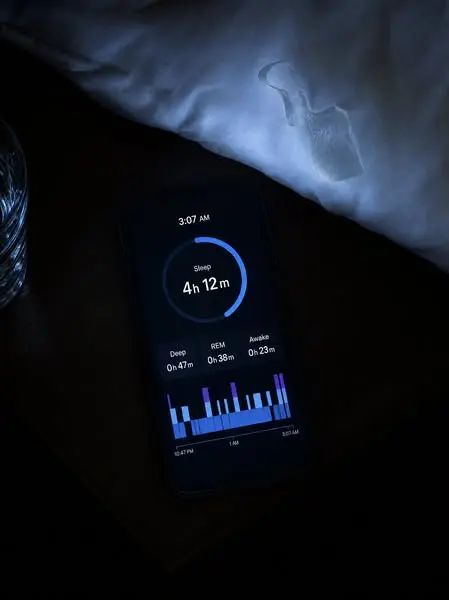
Health Matters Daily Facebook ad creative
tryvivalign.com
It wasn't discipline. It was timing. ⏰
Shop now

Health Matters Daily Facebook and Instagram ad

Health Matters Daily ran this image ad since Jun 26, 2026, 1 days so far.

First seen
Jun 26, 2026
Running for
1 days
Format
Image
Call to action
Shop now
Niche
Health and supplements
Countries
Not disclosed
Page likes
19

Ad copy

My Oura readiness score averaged 68 for the 3 months before I found this. In the first 2 weeks after I started, it averaged 82. I hadn't changed my training load, my nutrition, my supplement protocol, or my sleep timing. The only new variable was overnight tongue positioning. 14 points on an Oura readiness score from a single structural intervention isn't a marginal improvement. It's the kind of delta I'd been trying to engineer for 18 months with every other tool in my protocol. I want to document what I'd already tried before I get to what finally worked because I think the failure pattern matters as much as the result. I'd been tracking my sleep with an Oura ring for 22 months when I hit the wall. My readiness score was averaging 67-69. My deep sleep percentage was sitting between 13 and 14%. My HRV was 2 to 3 points below where I expected it to be given my training load and lifestyle variables. I knew the issue was related to my airway. My partner had confirmed I was mouth breathing during the night. My morning data was consistent with what the research says about the effect of mouth breathing on sleep architecture. So I started working through the standard toolkit. Mouth tape first. I tried 3 different brands over about 4 months. The best one stayed on until roughly 2 to 3 a.m. before either sliding or detaching. My data on nights the tape held versus nights it didn't showed a marginal improvement in deep sleep percentage but nothing that moved my readiness score in a meaningful way. On nights it detached before 2 a.m., I couldn't measure any reliable effect at all. Chin strap next. It kept my jaw in a better position than using nothing, but it caused enough neck stiffness by morning that I couldn't sustain it. Dropped it after 6 weeks. Nasal strips. They helped with nasal flow, but they don't address tongue position. My pharyngeal space was still being compromised by a collapsed tongue regardless of how much nasal flow I had. I understood this, but I hadn't found anything in the structural category that addressed the tongue directly. I spent 3 hours on a biohacking forum in January going through a thread someone had started about structural overnight airway interventions that didn't use tape. Not the standard recommendations. Someone was asking specifically about devices that positioned the tongue rather than just the lips or the jaw. The thread went deep into the anatomy before anyone mentioned a product. Here's what the thread confirmed that I already knew from the research but hadn't been applying structurally. The tongue is the primary structural determinant of pharyngeal space during sleep. When it rests on the palate, it holds the pharynx open, advances the mandible forward, and creates the conditions for nasal breathing to continue through the full sleep cycle. When it collapses off the palate it narrows the pharyngeal space, drops the mandible, and creates the conditions for mouth breathing to establish itself within the first 90 minutes of sleep. Mouth tape attempts to maintain nasal breathing by closing the lips. But if the tongue has already collapsed off the palate the pharyngeal space is compromised before lip position becomes the limiting variable. Closing the lips with an adhesive when the upstream structural failure is already active is treating the wrong point in the chain. A device that positions the tongue on the palate before sleep removes the upstream structural failure entirely. The tongue stays. The pharynx stays open. Nasal breathing continues. Mandible advancement follows. The lips staying closed becomes a secondary effect rather than the primary intervention. The device that kept coming up in the thread was a progressive oral positioner with 3 stages. Not a mandibular advancement device in the traditional sense. The key design element was a raised tongue plate on the inner surface that elevated and positioned the tongue against the palate and held it there through the mechanics of the device rather than through adhesive force. The outer chamber sealed the lips. The inner chamber positioned the tongue. Both working simultaneously through the full sleep cycle. I ordered it that night. The first 3 nights involved an adjustment period I'd expected. A new device in the mouth during sleep always has a learning curve. By night 4, I was falling asleep with it without thinking about it. By night 6, I was waking up with it still in place, which mouth tape had never reliably managed. Night 8 was the first night my deep sleep percentage crossed 20%. I'd been tracking it for 22 months. It had never crossed 20%. The readiness score data over the first 2 weeks showed an average of 82. The 3 months prior, it had averaged 68. I hadn't touched any other variable. My training was identical. My supplement protocol was identical. My sleep timing was identical. The delta was structural. By week 6, my HRV had moved from a baseline of 48 to an average of 54. My deep sleep percentage was holding between 19 and 22% consistently rather than the 13 to 14% I'd been tracking for 22 months. My morning cognitive clarity score, which I track subjectively but consistently, had moved from what I'd describe as functional to what I'd describe as sharp. I'm currently in the third stage of the progression. Each stage increases the positioning firmness incrementally. The adjustment period for each stage is 3 to 4 nights. The biometric data has continued to improve through each stage rather than plateauing. The product is called Vivalign Arc. It's a progressive overnight system with 3 stages. I was skeptical of something at this price point solving a problem that 18 months of more expensive interventions hadn't moved. The data changed my view on that. If the upstream structural variable is the limiting factor, addressing it directly at the source produces results that no downstream intervention can match regardless of cost. I'll leave the link below. If you've been optimizing everything around your sleep and the readiness or recovery data isn't responding the way the research says it should, the structural airway variable is where I'd look next. Not the chemistry, not the environment. The structure. Type STRUCTURAL in the comments if you've been using adhesive solutions for mouth breathing and your biometric data isn't reflecting the improvement you expected. I read every comment, and I'll send you the full breakdown of the tongue positioning mechanism and what to expect across the 3 stages.

Placements and targeting

FacebookInstagramAudience NetworkMessengerThreads

More ads from Health Matters Daily

Full Health Matters Daily profile
Health Matters Daily
+1
Inactive1 day
tryvivalign.com
Stop watching it get worse 😤
Shop now

Research on inflammatory markers in adults without apnea and with structural mouth breathing shows consistent elevations in CRP, IL 6, and TNF-alpha levels compared to nasal breathing controls. The elevations range from 15 to 25% across studies and are independent of diet, training load, and supplementation variables. Omega 3 supplementation, anti inflammatory nutrition protocols, and cold exposure all work on the inflammatory response from the outside. A structural overnight airway variable that's generating 15 to 25% elevated inflammation from the inside operates upstream of every anti inflammatory intervention in the protocol. You can't supplement your way past a structural cause. I want to document how I identified the structural cause because the path I took was not the one I expected. I'd been running an anti inflammatory protocol for about 14 months. Omega 3 at 4 grams daily. High polyphenol diet. Cold exposure 4 times per week. Periodic fasting. My training load was periodized to avoid the inflammatory spikes that come with overreaching. I was doing everything the research said should produce low systemic inflammation. I ran a full biomarker panel in November. My hs CRP was 1.8. My IL 6 was elevated at the upper end of the normal range. My TNF alpha was borderline. None of my markers were clinically significant. All of them were higher than my protocol should have been producing. I'd been optimizing against an inflammation load I hadn't been able to move for over a year, and I hadn't understood why. I went back into the literature looking for the variable I'd missed. I pulled research on inflammation drivers in adults with otherwise healthy lifestyles and found a consistent pattern I hadn't weighted heavily enough in my protocol design. Chronic mild nocturnal hypoxia in adults without apnea produces a consistent upstream inflammatory signal that operates independently of diet, training, and supplementation. The mechanism is straightforward. Mild oxygen suppression during sleep activates the hypoxia inducible factor pathway, which upregulates inflammatory cytokine production as a protective response. The inflammation isn't a reaction to anything in the daytime protocol. It's a nightly structural signal generated by a compromised overnight airway that runs independently of everything the protocol is doing. My partner had confirmed I was mouth breathing during sleep. I'd been addressing it with mouth tape for 8 months with partial effect. My tape was detaching before 3 a.m. consistently. The structural cause was still running for most of the night. The research pointed toward a device that addressed the structural cause rather than the downstream symptom. Not tape at the lips. A structural device that positioned the tongue on the palate and advanced the mandible simultaneously, removing the pharyngeal compression that was driving the hypoxia, the inflammatory signal, and the HRV suppression my Oura had been flagging every morning for 14 months. I found the specific device through a thread on the same research network I'd been using to track the inflammation literature. The mechanism matched everything the research had described. I ordered it that week. The adjustment period was 4 nights. By night 5, I was asleep without awareness of the device. By the end of week 2, my Oura readiness score had moved from a baseline average of 68 to an average of 81. My HRV moved from 47 to 54 within the first month. The inflammatory marker data took longer to shift because the cellular biology that had been running the inflammatory signal for over a year doesn't reverse in a week. I ran a repeat panel at 90 days. My hs CRP had dropped from 1.8 to 0.6. My IL 6 had moved from the upper end of normal to mid range. My TNF alpha had normalized. Every marker had moved in the direction the research predicted it would once the structural upstream cause was removed. 14 months of anti inflammatory protocol hadn't moved those numbers. 90 days of structural airway correction did. The protocol hadn't been wrong. It had been working against a structural inflammatory driver it couldn't reach. I removed the structural driver, and the protocol produced the output it was always designed to produce. The product is called Vivalign Arc. It's a progressive overnight system with 3 stages. The raised tongue plate on the inner surface positions the tongue on the palate. The outer chamber advances the mandible. Both variables corrected simultaneously through the full sleep cycle. I was skeptical of something at this price point addressing a problem that 14 months of a serious anti inflammatory protocol hadn't moved. The "90 day" biomarker panel resolved that skepticism. I'll leave the link below. If your inflammatory markers are running higher than your protocol predicts they should be and you've addressed diet, training load, and supplementation without moving the numbers, the structural overnight airway variable is where the research points next. Not another supplement. Not a different protocol. The structural cause that operates upstream of everything the protocol is doing. Type INFLAMMATION in the comments if your biomarker data isn't responding to your anti inflammatory protocol the way the research says it should. I read every comment, and I'll send you the full breakdown of the overnight hypoxia mechanism, the inflammatory pathway it activates, and what to expect across the 3 structural correction stages.

Similar health and supplements ads

28-Day Fun Weight Loss Challenge
+2
Inactive1 day
easy-quiz.dancefit.me
7 MIN HOME DANCE PLAN FOR BEGINNERS
Learn more

NO GYM, NO STRESS JUST DANCING! BOOST YOUR MOOD QUICKLY BURN CALORIES Take a quiz and get your dance plan in DanceFitMe

28-Day Fun Weight Loss Challenge
+2
Inactive7 days
easy-quiz.dancefit.me
7 MIN HOME DANCE PLAN FOR BEGINNERS
Learn more

NO GYM, NO STRESS JUST DANCING! BOOST YOUR MOOD QUICKLY BURN CALORIES Take a quiz and get your dance plan in DanceFitMe

28-Day Fun Weight Loss Challenge
+2
Inactive8 days
easy-quiz.dancefit.me
7 MIN HOME DANCE PLAN FOR BEGINNERS
Learn more

NO GYM, NO STRESS JUST DANCING! BOOST YOUR MOOD QUICKLY BURN CALORIES Take a quiz and get your dance plan in DanceFitMe

28-Day Fun Weight Loss Challenge
+2
Inactive4 days
easy-quiz.dancefit.me
7 MIN HOME DANCE PLAN FOR BEGINNERS
Learn more

NO GYM, NO STRESS JUST DANCING! BOOST YOUR MOOD QUICKLY BURN CALORIES Take a quiz and get your dance plan in DanceFitMe

See all ads

Create a free account to unlock every creative, video and landing page.

Sign up free

Keep exploring

Free plan, no card needed

Find more ads like this

Search millions of real ads by keyword, niche and format, and save the winners to your swipe file.

Start free