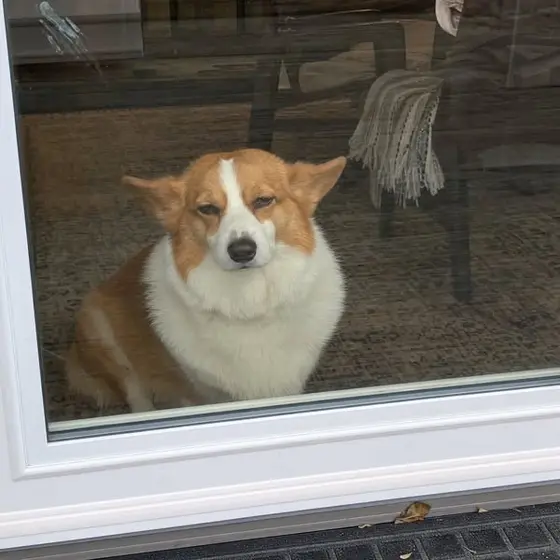
If you have a Corgi, read this. One day my dog stopped walking to me. He could see me. He just couldn't get up. His name is Biscuit. He's seven. Long body, short legs, big ears. A normal happy Corgi. Let me tell you about the night that scared me. I came home like always. I dropped my keys and called his name. Normally he runs to me and does a little spin. He loves that spin. This time he didn't come. I found him in the kitchen. He was just sitting there. He looked right at me. His tail gave one small wag. But he did not get up. I knelt down and patted my leg. "Come here, buddy." He looked at me. He looked at the floor. And he stayed. It was only three steps. He could see me. He just could not do it. It was like there was a glass wall between us that only he could feel. That wall is real. It's a disc in his spine pressing on a nerve. It blocks the message from his brain to his back legs. The brain says "walk." The message hits the wall and stops. Here is the part that still scares me. That morning he was fine. He jumped off the bed. He did his spin. By that night he could not walk across the room. That's how fast it can go. One day your dog is normal. The next day he's stuck on the floor looking at you. Then the vet told me something that made me feel sick. The wall did not go up that night. It had been building for months. And Biscuit had been trying to tell me the whole time. He started pausing before he jumped on the couch. He stopped doing his spin when I grabbed the leash. He would shiver a little when I touched near his hips. He started standing at the bottom of the stairs and looking up instead of going. I saw all of it. And I had an excuse for all of it. He's getting older. He ate too fast. It's cold out. He's just being lazy. The vet said she hears those same excuses every week. From people sitting right where I was. With a dog that can't walk anymore. Corgis are built for this problem. Long back, short legs, weak discs. She said the real question is not "will the disc act up." It's "will you catch it early, or find out the day it gives out." Biscuit got lucky. That night was a flare, not a full tear. We caught it in time. Crate rest. No more stairs or couch jumping. A harness instead of a collar. Keeping him slim. And one thing I had never heard of. Keeping the swelling around his spine down, every day, at home. The vet told me rehab clinics use red and infrared light on these dogs. Two wavelengths, 660 and 850 nanometers. They go through fur and skin and calm the swelling right at the disc. No drugs. Think of it like this. The swelling is a tap left running. The light helps open the drain so the area is not always puffy and sore. The problem is the clinic charges every visit, twice a week, forever. So most people quit. So I use a mat made for dogs instead. It's called LumaPet. Same two wavelengths, the same strength used in the studies, shaped to lay right over his back. Fifteen minutes a night while he chews a treat. He thinks it's a warm blanket. It has a money-back guarantee, so the worst case was mailing it back. I want to be honest about what it does and does not do. It will not fix a torn disc. Nothing at home will. If your dog suddenly can't move his back legs, drags a paw, or screams when you touch his back, do not wait. That's the wall, all the way up. Go to the vet today. But for a breed that lives one bad jump away from that wall, keeping the spine calm and the swelling low is the whole game. That, and respecting the stairs. Biscuit walks across the kitchen now. He did his spin again last week. I stood in the doorway and watched him do a silly little circle by the leash hook. I almost cried over something he's done a thousand times. If you have a Corgi, please don't wait for the quiet version of him. Don't wait for the night he looks at you from across the room and can't come. Watch for the pauses. The skipped spin. The shiver. The bottom of the stairs. That's the wall going up, one brick at a time. And there's still time to stop it. The article below is what finally made this make sense to me. It explains why "slowing down" in a Corgi is almost never just age. And it shows the simple at-home routine that's helping at-risk dogs stay off the surgery table. Read it before your dog goes quiet on you. 👇 ivddadv.ivddprevention.com P.S. The vet said the cruel part of IVDD is that it's loud for months, then silent the day it matters. The silence is not the start. It's the end. Listen earlier.
Emma & Her Doxie Facebook and Instagram ad
Emma & Her Doxie ran this image ad since Jun 17, 2026, 8 days so far, targeting United Kingdom.
Ad copy
If you have a Corgi, read this. One day my dog stopped walking to me. He could see me. He just couldn't get up. His name is Biscuit. He's seven. Long body, short legs, big ears. A normal happy Corgi. Let me tell you about the night that scared me. I came home like always. I dropped my keys and called his name. Normally he runs to me and does a little spin. He loves that spin. This time he didn't come. I found him in the kitchen. He was just sitting there. He looked right at me. His tail gave one small wag. But he did not get up. I knelt down and patted my leg. "Come here, buddy." He looked at me. He looked at the floor. And he stayed. It was only three steps. He could see me. He just could not do it. It was like there was a glass wall between us that only he could feel. That wall is real. It's a disc in his spine pressing on a nerve. It blocks the message from his brain to his back legs. The brain says "walk." The message hits the wall and stops. Here is the part that still scares me. That morning he was fine. He jumped off the bed. He did his spin. By that night he could not walk across the room. That's how fast it can go. One day your dog is normal. The next day he's stuck on the floor looking at you. Then the vet told me something that made me feel sick. The wall did not go up that night. It had been building for months. And Biscuit had been trying to tell me the whole time. He started pausing before he jumped on the couch. He stopped doing his spin when I grabbed the leash. He would shiver a little when I touched near his hips. He started standing at the bottom of the stairs and looking up instead of going. I saw all of it. And I had an excuse for all of it. He's getting older. He ate too fast. It's cold out. He's just being lazy. The vet said she hears those same excuses every week. From people sitting right where I was. With a dog that can't walk anymore. Corgis are built for this problem. Long back, short legs, weak discs. She said the real question is not "will the disc act up." It's "will you catch it early, or find out the day it gives out." Biscuit got lucky. That night was a flare, not a full tear. We caught it in time. Crate rest. No more stairs or couch jumping. A harness instead of a collar. Keeping him slim. And one thing I had never heard of. Keeping the swelling around his spine down, every day, at home. The vet told me rehab clinics use red and infrared light on these dogs. Two wavelengths, 660 and 850 nanometers. They go through fur and skin and calm the swelling right at the disc. No drugs. Think of it like this. The swelling is a tap left running. The light helps open the drain so the area is not always puffy and sore. The problem is the clinic charges every visit, twice a week, forever. So most people quit. So I use a mat made for dogs instead. It's called LumaPet. Same two wavelengths, the same strength used in the studies, shaped to lay right over his back. Fifteen minutes a night while he chews a treat. He thinks it's a warm blanket. It has a money-back guarantee, so the worst case was mailing it back. I want to be honest about what it does and does not do. It will not fix a torn disc. Nothing at home will. If your dog suddenly can't move his back legs, drags a paw, or screams when you touch his back, do not wait. That's the wall, all the way up. Go to the vet today. But for a breed that lives one bad jump away from that wall, keeping the spine calm and the swelling low is the whole game. That, and respecting the stairs. Biscuit walks across the kitchen now. He did his spin again last week. I stood in the doorway and watched him do a silly little circle by the leash hook. I almost cried over something he's done a thousand times. If you have a Corgi, please don't wait for the quiet version of him. Don't wait for the night he looks at you from across the room and can't come. Watch for the pauses. The skipped spin. The shiver. The bottom of the stairs. That's the wall going up, one brick at a time. And there's still time to stop it. I asked the vet what to watch for. She pointed me to a guide. It lays out the six things every Corgi, Dachshund, Beagle, or Pug owner should know about IVDD. It covers the early signs most people blame on "old age." And the one simple thing owners do at home before a flare ever happens. It can go from a normal morning to a silent kitchen in one day. Read this while your dog can still walk to you. 👇 ivddprevention.com/listi-ivdd P.S. The vet said the cruel part of IVDD is that it's loud for months, then silent the day it matters. The silence is not the start. It's the end. Listen earlier.
Placements and targeting
More ads from Emma & Her Doxie
I paid for an emergency vet visit to find out the cloudy eye was the least of his problems. If you have a Frenchie, read this before yours "walks funny" too. His name is Winston. French Bulldog. He's six. Two weeks ago his left eye went cloudy overnight. One day normal, next morning it looked like someone had breathed on glass. If you've ever seen that on your dog, you know the panic. I took photos. I googled at 1 AM. I booked the first appointment of the morning. The vet looked at his eye with the little light. Put a drop of dye in it. Two minutes, very calm. "This is treatable," she said. "Drops, two weeks, he'll be fine." I almost cried with relief. I was already packing up to leave. Then she said, "Before you go. Can you walk him to the door and back for me?" I thought it was a weird request. I did it. She watched him waddle down the hallway. And she went quiet in a way I did not like. "How long has he been walking like that?" Like what? He walks like he always walks. He's a Frenchie. They all walk funny. That's half the reason we love them. She crouched down and pressed gently along his back, one spot at a time. When she got to the middle of his spine, Winston flinched and ducked away. "That," she said, "is what I want to talk about. Not the eye." Here is what she explained to me, and I'm going to say it simply because I needed it simple. French Bulldogs are a dwarf breed. Short legs, short back, compressed spine. Between the bones of the spine there are little discs, like soft cushions. In Frenchies, those cushions are under more pressure than in almost any other dog, and they can bulge or pop. It's called IVDD. And it's everywhere in this breed. The cruel part is that you cannot see it coming the way you can see a cloudy eye. The eye announced itself overnight. The spine had probably been complaining for months. The hesitation before jumping on the couch. The way he'd stopped doing his little spins when I grabbed the leash. The shiver down his back some mornings. Standing at the bottom of the stairs looking up instead of going. I had noticed every single one of those things. And I had explained every single one away. He's lazy. He's chubby. He's six now. It's hot today. The vet said she hears those exact excuses every week. Owners bring her the eye, the ear, the itchy paw. The things they can see. Almost nobody brings her the back, because a sore back in a Frenchie just looks like a Frenchie being a Frenchie. Until the day it doesn't. Until the disc that was bulging finally pushes hard on the spinal cord, and the dog that jumped off the couch a thousand times jumps off one more time and his back legs don't come with him. She told me that's how she meets most of her IVDD cases. Not at the warning stage. At the emergency stage. Sometimes it's surgery. Sometimes it's worse. Winston wasn't there yet. She called it the early inflammatory stage. Sore, inflamed, irritated. Catchable. "You're lucky the eye brought you in," she said. "Most people don't come in for the back until the back gives out." So the eye got its drops. And the back got a plan. Ramps instead of jumping. Off the bed, off the couch, no more launching like a maniac. A harness instead of a collar. Keeping him lean. And the part I'd never heard of: keeping the inflammation around the spine down, every day, at home. She told me rehab clinics use red and near-infrared light on these dogs. Specific wavelengths, 660 and 850 nanometers, that pass through fur and skin and calm the inflammation right where the disc is irritated, no drugs involved. The problem is the clinic sessions add up fast, twice a week, indefinitely, so most owners quit. What I found instead is a mat version of the same thing, made for dogs, called LumaPet. Both wavelengths, the output the studies use, shaped to drape right over his back. Fifteen minutes a night while he chews something. He thinks it's a heated blanket. There's a money-back guarantee, so the only real risk was a return label. It will not fix a popped disc. Nothing at home fixes that. If your dog suddenly can't move his back legs, drags a paw, or screams when you touch him, that's an emergency, go to the vet now, today. But for a breed that lives its whole life one bad jump away from that emergency, keeping the spine calm and the inflammation low is the whole game. That, and the ramps. Winston's eye cleared up in two weeks, just like she said. His back is the project now. He did his little leash spin again on Saturday. First time in months. I didn't realize how long it had been gone until it came back. If you have a Frenchie, look past the stuff you can see. The eye, the ears, the wrinkles, those announce themselves. The back stays quiet until it's loud. I asked the vet to write down everything I should watch for. She did something better. She pointed me to a guide that lays out the six things every owner of a Frenchie, Dachshund, Corgi or Beagle should know about IVDD, including the early signs almost everyone writes off as "getting older" and the simple thing owners are doing at home before a flare-up ever happens. It can go from a normal morning to an emergency in one day. Read this while your dog is still in the warning stage: 👇 ivddprevention.com/listi-ivdd P.S. The vet told me one thing I can't stop repeating to other Frenchie owners: "He doesn't walk funny because he's a Frenchie. Plenty of the time, he walks funny because something hurts." Watch the walk. It's the back talking.
I paid for an emergency vet visit to find out the cloudy eye was the least of his problems. If you have a Frenchie, read this before yours "walks funny" too. His name is Winston. French Bulldog. He's six. Two weeks ago his left eye went cloudy overnight. One day normal, next morning it looked like someone had breathed on glass. If you've ever seen that on your dog, you know the panic. I took photos. I googled at 1 AM. I booked the first appointment of the morning. The vet looked at his eye with the little light. Put a drop of dye in it. Two minutes, very calm. "This is treatable," she said. "Drops, two weeks, he'll be fine." I almost cried with relief. I was already packing up to leave. Then she said, "Before you go. Can you walk him to the door and back for me?" I thought it was a weird request. I did it. She watched him waddle down the hallway. And she went quiet in a way I did not like. "How long has he been walking like that?" Like what? He walks like he always walks. He's a Frenchie. They all walk funny. That's half the reason we love them. She crouched down and pressed gently along his back, one spot at a time. When she got to the middle of his spine, Winston flinched and ducked away. "That," she said, "is what I want to talk about. Not the eye." Here is what she explained to me, and I'm going to say it simply because I needed it simple. French Bulldogs are a dwarf breed. Short legs, short back, compressed spine. Between the bones of the spine there are little discs, like soft cushions. In Frenchies, those cushions are under more pressure than in almost any other dog, and they can bulge or pop. It's called IVDD. And it's everywhere in this breed. The cruel part is that you cannot see it coming the way you can see a cloudy eye. The eye announced itself overnight. The spine had probably been complaining for months. The hesitation before jumping on the couch. The way he'd stopped doing his little spins when I grabbed the leash. The shiver down his back some mornings. Standing at the bottom of the stairs looking up instead of going. I had noticed every single one of those things. And I had explained every single one away. He's lazy. He's chubby. He's six now. It's hot today. The vet said she hears those exact excuses every week. Owners bring her the eye, the ear, the itchy paw. The things they can see. Almost nobody brings her the back, because a sore back in a Frenchie just looks like a Frenchie being a Frenchie. Until the day it doesn't. Until the disc that was bulging finally pushes hard on the spinal cord, and the dog that jumped off the couch a thousand times jumps off one more time and his back legs don't come with him. She told me that's how she meets most of her IVDD cases. Not at the warning stage. At the emergency stage. Sometimes it's surgery. Sometimes it's worse. Winston wasn't there yet. She called it the early inflammatory stage. Sore, inflamed, irritated. Catchable. "You're lucky the eye brought you in," she said. "Most people don't come in for the back until the back gives out." So the eye got its drops. And the back got a plan. Ramps instead of jumping. Off the bed, off the couch, no more launching like a maniac. A harness instead of a collar. Keeping him lean. And the part I'd never heard of: keeping the inflammation around the spine down, every day, at home. She told me rehab clinics use red and near-infrared light on these dogs. Specific wavelengths, 660 and 850 nanometers, that pass through fur and skin and calm the inflammation right where the disc is irritated, no drugs involved. The problem is the clinic sessions add up fast, twice a week, indefinitely, so most owners quit. What I found instead is a mat version of the same thing, made for dogs, called LumaPet. Both wavelengths, the output the studies use, shaped to drape right over his back. Fifteen minutes a night while he chews something. He thinks it's a heated blanket. There's a money-back guarantee, so the only real risk was a return label. It will not fix a popped disc. Nothing at home fixes that. If your dog suddenly can't move his back legs, drags a paw, or screams when you touch him, that's an emergency, go to the vet now, today. But for a breed that lives its whole life one bad jump away from that emergency, keeping the spine calm and the inflammation low is the whole game. That, and the ramps. Winston's eye cleared up in two weeks, just like she said. His back is the project now. He did his little leash spin again on Saturday. First time in months. I didn't realize how long it had been gone until it came back. If you have a Frenchie, look past the stuff you can see. The eye, the ears, the wrinkles, those announce themselves. The back stays quiet until it's loud. The vet's plan was ramps, a harness, and keeping the inflammation around his spine down every night at home. The article below is what made the last part click for me. It explains why "slowing down" in a Frenchie is almost never just age, and the at-home therapy that's helping at-risk breeds stay off the surgery table. There's a Frenchie in there who's 18 and still going. Read it before you write off the next weird walk: 👇 ivddadv.ivddprevention.com P.S. The vet told me one thing I can't stop repeating to other Frenchie owners: "He doesn't walk funny because he's a Frenchie. Plenty of the time, he walks funny because something hurts." Watch the walk. It's the back talking.
TO ALL FRENCH BULLDOG OWNERS TREATING A "MINOR" BACK PROBLEM WITH PAIN PILLS... Don't make my mistake. The pills made my dog look fine. While the real problem kept getting worse underneath. This photo is where it ended. His name is Bruno. Five-year-old French Bulldog. The happiest dog I've ever had. It started small. One morning he yelped when he jumped off the couch. A little stiff in the back. By the afternoon he seemed okay. We went to the vet just to be safe. "It's a minor back strain," she said. "Common in this breed. Here's an anti-inflammatory for the pain. Rest him a few days and he'll be back to normal." It sounded simple. We trusted her. Why wouldn't we? Bruno got his pills. Within two days he was bouncing around like nothing had happened. And that was the problem. He looked completely fine. So we relaxed. The pills were working. He wasn't in pain. He went back to jumping on the couch, climbing the stairs, launching off the bed. Because nothing seemed wrong anymore. I remember thinking, well, that was easy. A few weeks later, another yelp. Another stiff morning. Back to the vet, more pills, fine again in two days. We did this a few times. Each time it scared me a little less. It became routine. What I didn't understand was that the pills were only switching off the alarm. They did nothing about what kept setting it off. The disc in his spine was getting weaker with every jump he took while he "felt fine." The small signs were there between the flare-ups. The pause before he jumped. The skipped spin at the leash. The shiver down his back. But I had pills for the pain, so I stopped really watching. Then came that Tuesday. He ate breakfast. He did his zoomies. He jumped off the couch like he had a thousand times. By that night, he couldn't move his back legs. I picked him up and he screamed. His back end just hung there, limp. I have never driven anywhere so fast in my life. The disc had finally ruptured. Fully. It was crushing his spinal cord. They rushed him into emergency surgery. That photo is from after. My dog, asleep on a stack of towels, a tube in his leg, so small under that blanket. I slept in the waiting room. While I waited, I did what everyone does. I searched. "French bulldog back legs gave out." Post after post. Story after story. IVDD support groups with thousands of owners, all telling the same story I was living. "He was fine that morning." "We were managing it with pain meds." "Then one jump and he was down." One line stopped me cold: "The painkillers just let him keep destroying his own back." That was us. Exactly us. When I finally sat down with the surgeon, she explained it in a way I'll never forget. A French Bulldog's spine is built fragile. Short legs, long back, discs under constant pressure. When a disc gets irritated, the body floods the area with inflammation, and that inflammation is part of what keeps weakening it. Pain pills, she said, mask the pain. That's all. They don't touch the inflammation eating at the disc. And worse, a dog who feels no pain doesn't protect himself. He jumps. He runs. He finishes the job. "The goal was never just to stop the pain," she said. "It was to calm the inflammation and protect the spine. Long before a day like this." Recovery was going to be long. Crate rest for weeks. Ramps for life. A harness. Keeping him lean. And keeping the inflammation around his spine down, every single day, so the next disc doesn't follow the first. She told me rehab clinics use red and near-infrared light for exactly that. But the clinic charges by the session, twice a week, and it adds up so fast that most people quit. So I went looking for one I could use at home. I almost ordered the first one on Amazon. Great reviews. "Vet recommended." Then I checked the specs. Wrong wavelengths. Only the red you can see, no deep infrared. The power was too weak to reach anything. Device after device, same story. Too weak, wrong light, or both. Then my wife mentioned Bruno to a friend. The friend said, "My cousin's Frenchie had the exact same thing. She found a company that actually makes these for dogs, the real wavelengths, strong enough to work. It's the only thing that helped." The company was LumaPet. A small company. The founder's own dog had IVDD, and he spent two years building a device with true 660nm and 850nm light, medical-grade, strong enough to actually reach the spine. Not a cheap Amazon panel. Something built by someone who had lived this. Here is what finally made sense to me. The light doesn't mask anything. The two wavelengths pass through fur and skin to the tissue around the spine, calm the inflammation, and help those cells make their own energy. Picture the inflammation as a tap left running over the disc. The light helps open the drain. No drugs. Nothing switched off. Nothing hidden. I started using it the day he came home, gently, with the surgeon's okay. Week 2: He settled. Calmer, resting better, falling asleep under the warmth of it. Week 4: Steadier on his feet during his slow, supervised little walks. Week 6: He did his spin again. Just a small one, by the leash hook. I sat on the floor and cried. Now it's part of our routine. Fifteen minutes while he chews a treat, every day, for the rest of his life. Because I am never living the back end of this again if I can help it. I think about those months a lot. Every flare-up I treated like a quick fix. Every jump I let him take because the pills told me he was fine. The pills were never fixing anything. They were hiding the one thing I needed to see. Let me be honest, because I've lived the worst version of this. Red light is not a cure. It would not have un-ruptured that disc, and it is never a replacement for a vet. ⚠️ If your dog suddenly can't move his back legs, drags a paw, or screams when you touch his back, do not order anything and do not wait. That is the emergency I lived. Go to a vet today. Today. But for the Frenchie who isn't there yet, calming that inflammation and protecting that spine, every day, is the thing I would give anything to have started before the first yelp. It's fifteen boring minutes. And it's one of the only parts of this you can actually do yourself, at home, before you end up where I am. LumaPet is small. They don't mass produce. They won't use cheap LEDs. Sometimes they're out of stock. But they offer a 60-day money-back guarantee, so trying it costs nothing but a return label. I don't have all the answers. I'm just a Frenchie owner who learned the hard way that switching off the pain is not the same as fixing the problem. I can only tell you what I wish I'd done a year ago. Watch the back. The pauses, the skipped spin, the shiver, the bottom of the stairs. Don't just quiet them. Listen to them. The guide below is what I wish I'd read before that first yelp. It lays out the six things every Frenchie, Dachshund, Corgi or Beagle owner should know about IVDD, the early signs almost everyone hides behind pain pills, and the simple thing owners do at home before a disc ever gives out. It can go from a normal morning to this photo in a single day. I'm living proof. 👉 ivddprevention.com/listi-ivdd P.S. Bruno wagged his tail at me this morning. He's home. He's healing. I would have given anything to skip the rest of this story. You still can.
Similar pets ads
Add cute fun to every mark! 🐱💖 Cat Pattern Round Self-inking StampSelf-inking design, no ink pad needed, easy to Cute cat patterns make marking fun & Perfect for school, office, home, dormitory, crafts & daily Small, portable, clear imprint, a lovely little stationery must-have! #CatStamp #SelfInkingStamp #OfficeSupplies #SchoolStationery #CuteStationery
Struggle with puppy peeing and biting? Our simple, positive program turns stress into joy, helping you raise a calm and obedient pup! ⭐️ Potty train - in 3 days ⭐️ Stop biting - in 3 hours ⭐️ Stay in crate - in 5 hours ⭐️ Stop barking - in 1 day
Dog training doesn’t have to mean stress, barking, and guilt. With the right approach, your dog can build better habits through simple daily lessons — without pressure or confusion 🐶
Struggle with puppy peeing and biting? Our simple, positive program turns stress into joy, helping you raise a calm and obedient pup! ⭐️ Potty train - in 3 days ⭐️ Stop biting - in 3 hours ⭐️ Stay in crate - in 5 hours ⭐️ Stop barking - in 1 day
Keep exploring
Find more ads like this
Search millions of real ads by keyword, niche and format, and save the winners to your swipe file.
