I found a man slumped over the steering wheel of a pickup truck that had rolled across my front lawn last Wednesday morning, and I almost called the coroner before I called 911. I want to tell you that whole story. Because what I learned from it ended up being the most important thing anyone's said to me about my own husband in 11 years of living with his diagnosis, and I'd be a coward if I kept it to myself. My name is Elizabeth. I'm 61 years old, I live on a quiet street in Parma, Ohio, and I worked in a school cafeteria for 29 years before my knees finally told me they were done. I retired in April. My husband Gene retired the year before. We thought we were going to have these long slow mornings together with coffee and the crossword and maybe a trip to the lake finally. Instead I spent that first summer watching him sit in his recliner with the TV on mute, and I started to understand that retirement wasn't the gift everybody told us it would be. Gene is 64. He worked at the Ford stamping plant in Brook Park for 36 years, the body panel line, the one everybody said was going overseas any day now and then somehow never did. He came home every night with grease under his nails and metal dust in his collar and that particular kind of factory exhaustion that doesn't leave a man's face even after a full weekend. He had sharp eyes his whole life. The kind of sharp where he could spot a deer at the tree line from 200 yards and call it before anybody else in the truck. But somewhere around 53, something started to slip. It wasn't dramatic. It was the kind of slow that you don't notice until you're already on the other side of it. He stopped reading his westerns before bed. He stopped going out to the garage to work on his birdhouses, and he had a whole stack of unfinished ones sitting on the workbench gathering sawdust. His doctor told him his blood sugar was creeping up. Then it wasn't creeping anymore, it was just up. They put him on metformin. Then a second pill. Then they started talking about injections for his eyes, and his vision still got cloudier by the month like looking through a dirty windshield. I'd watch him hold the newspaper at arm's length in the morning squinting like he was trying to read it through fog, and I'd pretend I wasn't watching. That's the part that nobody tells you about long marriages. You learn to look away from the things that scare you, because looking at them too directly makes them real. Anyway. Last Wednesday morning I was making coffee and I looked out the kitchen window and I saw a truck on my front lawn. Just sitting there. Engine running. The front bumper pushed up against the mailbox post at an angle that told me something had gone wrong. It was a dark green Ford F-150, the kind with the rust spot on the tailgate, and I knew it belonged to Harold from three doors down. Harold is 69. He's a retired plumber. His wife Ruth passed three years ago from a stroke, and ever since then he's been one of those men who waves but doesn't really stop walking. I figured maybe he'd clipped the curb or had a flat or something. So I waited. I made my coffee. I sliced a banana for Gene. Five minutes went by. Harold didn't come up. I went out on the porch in my robe and slippers, and I called his name, and he didn't move. I walked across the lawn and I saw him through the windshield, slumped sideways against the door, both hands pressed over his eyes, his face this awful gray color I had only ever seen on one other person in my entire life and that was my father in his hospital bed the morning he died. I started screaming his name and pounding on the window. He didn't lift his hands from his eyes. But his lips moved. I ran back to the house, I called 911, I told the dispatcher I had a neighbor who had driven onto my lawn and wasn't responding and I couldn't get the door open because it had locked when the truck came to a stop. Gene came out in his slippers. We both stood there banging on that window while the dispatcher talked in my ear. The ambulance got there in 9 minutes. The fire department got there first and they used some kind of tool to pop the lock, and they pulled Harold out and sat him on the grass of my front yard and worked on him for what felt like an hour but was probably 5 minutes. They got him talking. They loaded him in the ambulance. One of the paramedics, a young woman with her hair pulled back, told me his blood sugar had been fine but his right eye had hemorrhaged, and the sudden blackout was why he'd lost control of the truck. She said, ma'am, this happens way more than you'd think with diabetic men this age. Their eyes bleed on the inside without any warning, they lose vision while they're driving or climbing stairs, and they don't make it. She said it real plain, like she'd said it a hundred times before. Like it was just a fact about the world. Harold is okay. He's home now. They kept him for 3 days and they did a laser procedure and sent him home with a patch over his eye and a sheet of paper about follow-up appointments. But I haven't slept right since that morning. Because I know my husband. And I know that if Gene's vision went black while he was behind the wheel on Route 17, he wouldn't pull over in time. He wouldn't call 911. He would grip the wheel tighter and tell himself it would pass and try to make it home because he wouldn't want to be a burden. And if Harold's eye had bled two minutes later, after he'd passed my house and gotten to the main road with the semis, I might have lost him. I might lose Gene the same way. That's the thought that's been sitting in my chest for the last 8 days like a stone I can't swallow. So I started reading. I'm not a researcher. I worked in a school kitchen. But I know how to use a library card and I know how to call my niece, who is an ophthalmic technician at a retina clinic in Columbus, and ask her the questions I should be asking. I called her that Thursday morning. I told her about Harold. I told her about Gene's diabetes pills and his cloudy vision and the way he holds the newspaper at arm's length in the morning like he's losing a fight with the print. She was quiet for a long time on the phone. Then she said something that knocked the wind out of me. She said, Aunt Elizabeth, his diabetes pills don't protect his eyes. They manage the sugar in his blood. But the damage to his eyes isn't happening in his blood — it's happening inside the eye itself, behind a wall his medication was never built to reach. I said what wall. She said the retina. The back of the eye where all the seeing actually happens. It has its own tiny blood vessels, thinner than a human hair, and it has a barrier that keeps most things in the blood from getting through — the way a screen door keeps the bugs out even when the air passes through. When that barrier is healthy, the vessels hold strong, and the vision stays clear. She said when you're in your 30s and 40s, those tiny vessels hold up fine. But years of blood sugar swings and oxidative stress and the kind of silent inflammation that builds in every diabetic, all of that wears the vessels down from the inside. Year by year. Layer by layer. And once those vessels get fragile enough, they start to leak. Fluid seeps into the retina. The tissue swells. The vision blurs. And every month of swelling damages more cells, which weakens more vessels, which causes more leaking. She said that's the cycle. That's why diabetic eyes tend to get worse and worse no matter how well you manage the blood sugar. I asked her, well what do you do for the eye. And she said, that's the thing nobody talks about, Aunt Elizabeth. The diabetes pills don't go anywhere near the eye. Lutein from the drugstore helps a little because it adds some pigment to the macula, but at those doses it's like putting a Band-Aid on a house fire. The issue isn't one nutrient. It's that the whole shield inside the retina has collapsed. Then she said, there is something I've been recommending to some of my patients with diabetic eyes. It's not a drug. It's a formula based on a landmark government study called AREDS2. There's research now that specific nutrients at specific doses can actually rebuild that shield from the inside in a way nothing else really does. She said the most important ones. Three macular carotenoids. I wrote it down on the back of an envelope. L U T E I N. I asked her to spell the other two. She told me there are three carotenoids… lutein, zeaxanthin, and meso-zeaxanthin. They aren't fancy. They exist in leafy greens and egg yolks. But what the research is showing is that at clinical doses, all three together physically embed themselves in the macula and rebuild the protective shield that absorbs the oxidative damage before it reaches the vessels. The way your eyes protected themselves when you were younger. She said it's not a magic bullet. It's not a replacement for his medication. But it's the only thing she's seen that actually works inside the eye itself instead of just managing the blood sugar from the outside. And she said something that I've been thinking about every day since. She said, Aunt Elizabeth, his diabetes pills are like guards at the front gate. This formula is the one that actually goes inside the building where the fire is. I sat there at my kitchen table holding that envelope and I started crying. Because for 11 years I've watched Gene shrink. I've watched him stop reading his westerns and stop building his birdhouses and stop going to his grandson's baseball games because he couldn't see the field. I've watched the doctor manage his A1C number and never once tell us there was a second battlefield inside the eye. I felt like somebody had finally given me a map. She told me about a brand called Visiovance. She said it's the one she trusts because it has all three carotenoids at full clinical doses, plus 12 other supporting ingredients, third party tested every batch, and she said she'd been telling her own mother about it. I ordered a bottle of Visiovance that same afternoon. It came in 5 days. A little dark bottle. Nothing flashy. Two capsules in the morning with breakfast. I didn't tell Gene at first. I just put it on the counter next to the coffee maker and I said babe, my niece told me to start taking these, my eyes have been getting tired too, want to take them with me. He said sure. He's a sweet man. The first week, nothing happened that I could put a finger on. The second week, he stopped squinting at the television. That hadn't happened in maybe 3 years. I noticed it on a Thursday night — he was watching the ballgame and his face was relaxed, not all scrunched up the way it had been for months. I didn't say anything. I didn't want to jinx it. The third week, he went out to the garage on a Saturday. He was out there for 2 hours. I walked out with a glass of lemonade and I saw him sitting at his workbench with a small brush, painting a blue stripe on one of his unfinished birdhouses. He looked up at me and he kind of smiled, and he said, I can see the lines again. I had to go back inside because I was about to lose it. By the end of the second month, the floaters had eased up. Not gone, but eased. His eye doctor saw him for a regular check and said the retina looked more stable than it had in over a year and asked what he was doing different. Gene said, my wife's making me take some kind of eye vitamin. The doctor laughed. Then she wrote it down. I'm not going to tell you Visiovance is a miracle and I'm not going to tell you it cured anything, because it isn't and it didn't. What I'm going to tell you is what I see with my own eyes. I see my husband reading the box scores in the morning without holding the paper at arm's length. I see him backing out of the driveway at dusk without that white-knuckle grip on the wheel. I see him picking up his grandson and pointing at a bird in the yard and naming it before I can. I see a man who is starting to come back from somewhere far away. And every time I look out the kitchen window at my front lawn, I think about Harold's truck pushed up against that mailbox post, and I thank God it wasn't Gene, and I thank my niece for telling me about the second battlefield. I want to say a few things directly, in case you're still reading. If your husband's A1C is under control and his eyes are still getting worse, the pills aren't reaching the eye. If you've been told this is just what diabetes does, ask yourself why some diabetics keep their vision into their 80s and some lose it at 55. If you've tried lutein and bilberry and fish oil and zinc and you're still where you started, it's because none of those things alone, at drugstore doses, can rebuild the shield inside the macula. They're working on the wrong layer. Visiovance works on the layer everything else misses. Visiovance is the company my niece pointed me to. They make a 15-ingredient eye formula at clinical doses. One bottle is a month. They have a 90 day money back guarantee, which means if you take it for 3 months and you don't notice anything, you can send the empty bottles back and they refund you. I'm not affiliated with them. I'm a retired cafeteria worker in Parma. I'm just a woman who almost lost her neighbor and is trying not to lose her husband's sight. If you want to look at it, the link is below. Take it for 90 days. That's what my niece told me. Give the macula time to rebuild what it's supposed to rebuild. P.S. Harold came over yesterday with a bag of tomatoes from his garden. He sat at our kitchen table for an hour. He's started taking Visiovance too. His daughter asked me where I got the name from. P.P.S. I keep that envelope with L U T E I N written on the back of it in the kitchen drawer with the coupons. Some days when Gene is out in the garage painting his birdhouses I take it out and I look at it. It's just a word on an envelope. But it's the word that gave me my husband back. P.P.P.S. The 90 day guarantee is the only reason I tried it. If I'd been asked to risk $45 with no way out, I wouldn't have. The fact that you can return it if it doesn't do anything for you is what made me say yes. It's also what made me feel okay telling you about it. 👉 https://visiovance.com/products/visiovance-15-in-1-advanced-eye-formula
Dr. Walter Peters Facebook and Instagram ad
Dr. Walter Peters ran this image ad since Jun 25, 2026, 135 days so far, targeting United Kingdom.
Ad copy
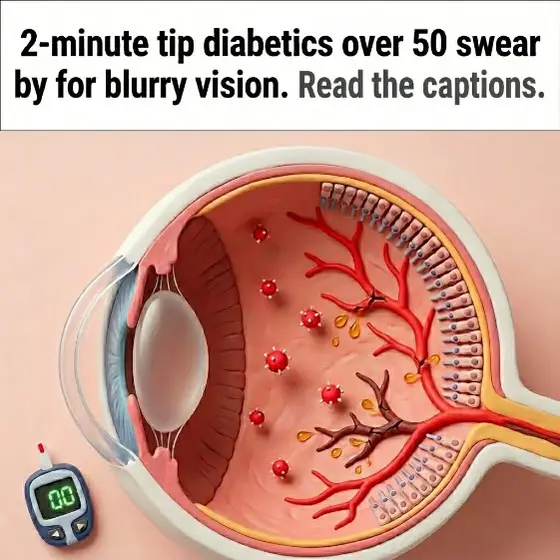
If you've noticed your vision getting blurrier every single month… not just tired eyes after a long day, actual blurring that stays no matter how much you rest, floaters drifting across your sight, or a dark spot forming right in the center of whatever you're looking at… And your eye doctor ran a dilated exam, told you it's "diabetic changes in the retina," and sent you home with instructions to keep your blood sugar tight and come back in six months... I'm about to tell you exactly what they're not telling you and why they'll NEVER give you the real answer. And by the end of this, you're gonna be furious. Because there are three things happening right now: One… Your eyes are sending you a distress signal that something is actively breaking down. And it has NOTHING to do with how well you're managing your blood sugar. Two… The medical system is gaslighting you into thinking this is just what happens when you're diabetic, that your scans are "mild background changes," that this is just something you monitor while it gets worse. And three… There's a multi-billion-dollar vision loss treatment industry that profits every single day your real problem stays hidden… Because eye injections are a $13 billion industry and nobody makes money when you fix the upstream problem before you need their needles. So let me tell you what happened with my mother. Because her story is going to open your eyes to how broken this really is. For THREE YEARS my mother Linda was watching her vision fall apart and every doctor she saw treated each piece in isolation while the whole thing crumbled. She was 67 when she first noticed something wrong. Sitting in her kitchen on a Sunday morning. She picked up the newspaper and instead of the usual crisp black text, it was smeared. Like someone had dragged a wet thumb across the ink. A hazy blur right in the center of her vision. She blinked. Rubbed her eyes. Looked again. The blur was still there. She thought it was a one-time thing. Tired eyes. Maybe she needed new glasses. It wasn't a one-time thing. Within two weeks it was every day. Morning. Afternoon. Under bright lights, in dim rooms. Every single time she tried to read or focus on a face, the blur was there. Dense. Persistent. Refusing to clear. She mentioned it to my father. He said get new glasses. She went to the optometrist and got a stronger prescription. She was so careful about wearing them that she kept them on from morning until bed. The blur: unchanged. If anything, worse — because now she could see the edges of everything sharply but the center was exactly the same, which meant whatever was causing it wasn't a focus issue. She went to her ophthalmologist. The scans came back. Microaneurysms visible in both retinas. Early leaking from damaged blood vessels. Her doctor looked at the images and said: "You're showing signs of diabetic retinopathy. It's common in patients with type 2 diabetes. We'll monitor it every six months. Make sure you're keeping your blood sugar under control and staying on top of your A1C." That was it. No investigation into why a 67-year-old woman's retinal blood vessels were breaking down this quickly despite controlled blood sugar. No assessment of what was driving the capillary damage producing the blur she was seeing every day. No mention of the biological mechanism that was actively degrading her retinal vasculature — the microscopic blood vessels at the back of each eye that are supposed to nourish the photoreceptors giving you sharp, clear vision. "We'll monitor it." Monitor it getting worse. That was the plan. The night vision went next. Not just dimmer headlights. Not the kind of glare where you squint and adjust. This was a complete whiteout every time oncoming traffic passed — halos exploding off every light source, the road disappearing behind blinding starbursts that didn't clear. She'd been the one who drove everyone — grandkids to practice, friends to dinner, my father to his appointments. Now she was making excuses to be home before dark because she didn't have the confidence to pull onto the highway after sunset. My father noticed before she said anything. "You're different," he told her. "You won't go anywhere after five o'clock." By month six: the floaters. Dark specks multiplying across her field of vision like gnats she couldn't swat away. She'd be reading a recipe and a shadow would drift across the page. She'd look up at the sky and see a swarm of dark threads swimming through the blue. Her eyes looked the same from the outside — but inside, something was disintegrating and sending debris floating through her sight every waking moment. By year one: the reading. She'd always been a voracious reader — three books a week, crosswords every morning, handwritten letters to friends. Now the words on the page were disappearing into a gray smudge. Her ophthalmologist updated her prescription again. Didn't connect it to the retinal vessel deterioration. Didn't explain that the photoreceptors responsible for central detail vision were being starved of oxygen by leaking, damaged capillaries — and that without healthy blood supply, no lens on earth could bring those words back into focus. A cycle nobody told her she was trapped in. By year two: the retinal damage had progressed significantly. Moderate nonproliferative diabetic retinopathy. Her retina specialist — a new addition to her growing list of doctors — told her: "We want to keep you off injections for as long as possible. Let's be aggressive with the blood sugar control and start monitoring you every three months." Off injections. For as long as possible. Like it was a countdown, not a condition to reverse. By year three: the faces. She was the grandmother who never missed a thing — every smile, every scraped knee, every costume at the school play. Now she was sitting in the front row and couldn't make out her own granddaughter's expression from ten feet away. Her family started narrating things for her — gently, the way people do when they can see someone slipping. Her world was shrinking. Not just the vision — her entire life. She'd stopped going to her watercolor class because she couldn't mix colors accurately anymore. She'd stopped driving altogether. My father said she looked ten years older than she was — not because of wrinkles, but because the light behind her eyes had gone out. She told me once, sitting at her kitchen table, staring at her hands: "I feel like my eyes are dying and everyone keeps telling me to manage my blood sugar better. Nobody's asking why my eyes are still getting worse when my A1C is under control. Nobody's trying to fix it. They're all just watching me go blind." Here's what she tried. And I need you to pay attention because you've probably tried most of this too. Blood sugar management — metformin, then increased, then insulin added. Tight glycemic control reduces the rate at which high glucose damages retinal blood vessels, which slows the progression of diabetic retinopathy. SLOWS. Not stops. Not reverses. Slows the rate at which her retina continued to deteriorate. Her A1C came down to 5.7 — technically perfect. Her eyes continued their decline on their own schedule. Because A1C fights on Battlefield One — the bloodstream. It cannot reach Battlefield Two — inside the eye. AREDS vitamins — the standard formula her ophthalmologist recommended. PreserVision, the blue box from the pharmacy. Her doctor confirmed what should be obvious: the AREDS2 nutrients provide baseline support for macular health. They do absolutely nothing to stop the oxidative cascade actively destroying her retinal capillaries. They do nothing to address the damage happening on the second battlefield — inside the eye, behind the blood-retinal barrier. Her blur: unchanged. Her vessel leaking: still progressing. She was the most compliant patient with progressively failing vision you've ever seen. Blue light glasses — wore them every minute in front of a screen. Her daughter-in-law bought her the most expensive pair she could find. The eye strain improved somewhat because blue light does irritate the retina. Her vision at the next check: deteriorated another line on the chart. Because blue light glasses reduce surface irritation. They don't address the capillary destruction happening deeper inside the eye. Lutein supplements — generic capsules from the pharmacy shelf. The standard 10mg dose. Six months. Her vision test: unchanged. The lutein content was likely too low to rebuild meaningful macular pigment density — and without zeaxanthin and meso-zeaxanthin alongside it, the single carotenoid couldn't form the complete protective shield her retina needed. Sunglasses — her retina specialist emphasized UV protection to slow oxidative damage from sunlight. She wore prescription polarized lenses every time she stepped outside. It reduced one source of photooxidative stress on her retina. It did nothing to the internal oxidative cascade destroying her retinal blood vessels from within. Bilberry capsules. Fish oil. Turmeric from the health food store — the ones with 95% curcuminoids on the label but no bioavailability enhancer, which means the curcumin passed through her gut largely unabsorbed. Four hundred dollars of supplements across two years that looked good on paper and changed nothing in her vision tests. Between the retina specialist visits, the optometrist visits, the blood sugar medications, the AREDS vitamins, and the supplements — she'd spent over $8,000 across three years. Vision: still declining. Blur: every day. The countdown to injections: still running. At this point I'm not frustrated anymore. I'm angry. Because I'm watching my mother — who is doing everything right, following every protocol, spending thousands — get worse while her doctors manage her retinal destruction with one intervention layered on top of another, each addressing a downstream symptom while the upstream cause runs completely undisturbed. And that's when I started asking the questions nobody wants you to ask: Why are her retinal blood vessels leaking? What is physically degrading the microscopic capillary walls that are supposed to hold blood and fluid inside the vessels and out of her retina? Why is her vision declining year over year despite perfect A1C numbers, AREDS vitamins, and UV protection — all of which are supposed to slow progression? Why does every intervention her doctors prescribe address what's happening AFTER the capillary is destroyed — but not one of them addresses what's destroying the capillary? What is the actual biological mechanism destroying her retinal tissue? And why does NOBODY ever talk about it? So I went looking. Not wellness blogs. Not supplement company marketing. Peer-reviewed research on retinal capillary degradation, blood-retinal barrier integrity, and the biochemical cascade driving chronic diabetic vision deterioration. And I found something that made everything click. The retina processes approximately 10 million pieces of visual information per second through roughly 130 million photoreceptor cells — each fed by a network of microscopic capillaries so delicate they're only one cell thick, with walls so precise they allow oxygen and nutrients through while holding back blood cells and fluid. When those capillary walls are intact, blood stays in the vessels. Clear vision. When those capillary walls are damaged — when the endothelial cells break apart, when the structural proteins that hold the vessel walls together degrade — blood and fluid begin leaking into the retinal tissue. That's the blur. That's the dark spot. That's what you're seeing every time you try to read or look at a face. But here's what nobody tells you: Your A1C measures the sugar in your blood. But the damage to your eyes isn't happening in your blood — it's happening inside the eye itself, behind a wall your blood sugar simply can't reach. That's why you can do everything right, bring your A1C down to a perfect 5.7 — and still sit in the chair and hear "there's new leaking." It feels like a punishment. It feels like you failed. You didn't. The one thing no one explained: there are two battlefields. Your insulin, pills, diet and finger-sticks all fight on the first one — your bloodstream. But the leaking, swelling and bleeding happen on the second battlefield, deep inside the eye, where nothing in your current treatment was ever built to go. You haven't been losing. You've been fighting in the wrong place. Specifically: the accumulation of reactive oxygen species — ROS — inside the retinal tissue itself. Free radicals that are chemically attacking the endothelial cells of the retinal capillary walls, corroding the vessel structure, destroying the blood-retinal barrier that keeps fluid out of the macula, and triggering a chronic inflammatory cascade that recruits immune cells which cause further damage as they attempt to clean up the oxidative wreckage. The retina is among the most metabolically active tissue in the body. It processes enormous amounts of light energy through tiny, oxygen-hungry photoreceptor cells every waking second. This makes it extraordinarily vulnerable to oxidative damage — more so than almost any other tissue. And in diabetic patients, chronically elevated glucose has already weakened the vessel walls — making them exponentially more vulnerable to oxidative destruction even after blood sugar normalizes. As you age — as your antioxidant defenses naturally decline — the oxidative burden on the retina begins to exceed the body's ability to neutralize it. The capillary wall proteins oxidize. Degrade. Lose their structural integrity. The vessels leak. Fluid pools. Vision blurs. And it accelerates. Because once the capillary wall is damaged, the inflammatory response it triggers produces more reactive oxygen species. Which cause more vessel damage. Which triggers more inflammation. A self-amplifying destruction cycle that runs inside the retina — getting worse month by month while your doctor measures the result (declining visual acuity, increasing retinal hemorrhages) without addressing the cause (oxidative degradation of the retinal vasculature). Let that land for a second. Your A1C does nothing to neutralize reactive oxygen species attacking the retinal capillaries. It manages glucose in the bloodstream — Battlefield One. It does not reach the oxidative cascade destroying your vision on Battlefield Two — inside the eye itself. That's why you can bring your A1C down to a perfect 5.7 and the blur doesn't change. That's why your doctor says "there's new leaking" even when your numbers are perfect. AREDS vitamins provide baseline carotenoid support to the macula. They do not stop the oxidative cascade once it's already running. They do not repair the damaged capillary walls already leaking. They manage a nutritional deficiency while the oxidative destruction continues. Blood sugar medications reduce the glucose-driven damage to retinal blood vessels, which slows the rate at which new capillaries are compromised. They do nothing to the oxidative process destroying the ones already damaged from within. That's why vision still declines on medication — just more slowly. Every intervention she was given was downstream of the actual problem. The oxidative degradation inside the retina was also driving everything else. The night vision loss? The retina's rod cells are responsible for low-light sight. As retinal tissue is oxidatively degraded, the rod cells die first — they're the most metabolically demanding and the most vulnerable. Fewer rod cells. Less light sensitivity. Complete whiteout from headlights that no prescription lens can correct. The floaters? Damaged retinal cells and leaking capillaries shed debris — dead fragments of photoreceptors and endothelial cells that break loose and drift through the vitreous fluid. Each dark speck you see floating across your vision is a piece of dead tissue from inside your own eye. The central dark spot? The macula has the highest concentration of photoreceptors in the entire retina. When diabetic capillary damage starves these cells of oxygen and floods them with leaked fluid, the cone cells at the very center of your field of vision die first — because they're packed most densely and burn the most oxygen. Detail vision disappears. Which forces the remaining cones to work harder. Which exposes them to more oxidative stress. A cycle within a cycle. The color fading? Damaged cone cells can no longer process the full spectrum of light wavelengths. As different cone populations die — red-sensing, green-sensing, blue-sensing — colors wash out, flatten, and eventually disappear. Your world is literally losing its color because the cells that create it are being oxidatively destroyed. The headlight glare? Damaged retinal pigment epithelium can no longer absorb and recycle excess light properly. When bright light hits your retina, instead of being cleanly processed, it scatters through damaged tissue — creating halos, starbursts, and blinding glare. The oxidative stress that's destroying your photoreceptors is simultaneously wrecking the support cells that manage light processing. She wasn't just diabetic. She wasn't just unlucky. Her retina was being oxidatively degraded — free radicals were chemically destroying the capillary walls and photoreceptors in a self-amplifying cascade that was blurring her vision, killing her night sight, filling her eyes with floaters, erasing faces, fading colors, and marching her toward blindness while every doctor she'd seen addressed the consequences without once targeting the oxidative destruction driving them. And here's what made my blood boil. The connection between oxidative stress and diabetic retinal degeneration is documented. The role of reactive oxygen species in retinal capillary destruction — independent of blood sugar levels — is in the research literature. It's published. It's replicated. It's cited in ophthalmology journals. But the standard clinical protocol for diabetic retinopathy doesn't include a retinal oxidative stress assessment. Doesn't measure the specific biomarkers — macular pigment optical density, retinal antioxidant capacity — that would reveal whether oxidative degradation is driving the capillary destruction. Doesn't ask whether the ROS cascade can be interrupted before injections or blindness become the only options. Because there's no pharmaceutical drug that normalizes oxidative stress inside retinal tissue specifically. You can't patent an eye-specific antioxidant protocol. There's no revenue in telling a diabetic woman that her blurring vision and declining eye chart scores are being driven by an oxidative cascade that specific botanical compounds can interrupt — even when her blood sugar is perfectly controlled. There IS revenue in monitoring visits at $400 every three months. Blood sugar medications that slow progression without stopping it. Specialist referrals. And eventually — when the leaking becomes diabetic macular edema or proliferative diabetic retinopathy, eye injections. Every four to six weeks. $2,000 per injection. For the rest of her life. See how that works? Manage each downstream symptom with a separate intervention. Never address the oxidative cascade degrading the retinal tissue that is generating every symptom. Keep her declining. Keep her returning. Until the needle becomes necessary. So I kept digging. Research on retinoprotective compounds. Studies on diabetic retinal oxidative stress reduction. Clinical evidence on what actually interrupts the ROS cascade in retinal tissue without pharmaceuticals. And one specific combination of compounds kept appearing. Not in wellness content. In peer-reviewed ophthalmology and nutrition research. Macular carotenoids — in combination with targeted retinal antioxidants. Not the generic lutein from a drugstore bottle. Not a multivitamin with an eye health sticker. A specific combination of 15 compounds at clinical doses — specifically because of what they deliver together that no single ingredient achieves alone. Three retinal carotenoids — Lutein at 20mg, Zeaxanthin at 2mg, and Meso-Zeaxanthin at 2mg — which are the ONLY nutrients that physically cross the blood-retinal barrier and embed directly into the macular tissue. They are the front-line defense on Battlefield Two — the only compounds proven to accumulate in the exact tissue being oxidatively destroyed. Most eye supplements include one carotenoid at half the dose. This delivers all three at clinical strength. Alpha-Lipoic Acid — at 50mg — the one antioxidant studied directly for diabetic eyes and nerves that works in BOTH water-soluble and fat-soluble environments simultaneously. Not a single-phase antioxidant that only protects one type of cell structure. A dual-action compound that crosses into both the aqueous and lipid compartments of retinal cells — neutralizing reactive oxygen species in the exact tissues being oxidatively degraded, on both sides of the cellular membrane. The piece generic eye vitamins leave out entirely. Astaxanthin — 6,000 times more powerful than Vitamin C at neutralizing singlet oxygen, the specific type of free radical generated by light energy hitting retinal tissue. Without adequate astaxanthin, the photoreceptors lose their ability to survive the constant oxidative bombardment they face every second your eyes are open. It crosses the blood-retinal barrier and stops the oxidative "rust" corroding fragile capillary walls from the inside. Bilberry Extract and Ginkgo Biloba — anthocyanins that strengthen capillary walls from the structural level while simultaneously driving blood flow into the smallest retinal vessels. They modulate the inflammatory signaling cascade that amplifies oxidative damage within compromised retinal tissue. Strengthen the vessel walls and you interrupt the self-amplifying leakage cycle — the exact cycle driving diabetic retinopathy progression. Saffron Extract, Taurine, and Luteolin — each targeting a different point in the oxidative destruction pathway. Saffron protects light-sensitive photoreceptor cells and improves their electrical signaling. Taurine shields retinal cells against light-induced damage. Luteolin calms the NF-κB inflammatory cascade that recruits immune cells causing secondary destruction. Not one of these compounds alone. All fifteen. In a single formula. Working on different points of the same oxidative-inflammatory cascade simultaneously. Not masking a symptom. Not slowing a decline. Interrupting the biochemical process that is actively destroying the retinal tissue — and giving the photoreceptors and capillary walls the raw materials they need to repair. Fighting on Battlefield Two — where the damage actually happens — for the first time. My mother tried to find an eye formula that matched what the research described. First: the bestselling one. Top of the Amazon results. Generic AREDS2 formula — PreserVision. Three months. Vision test: dropped another line. Blur: unchanged. Second: a health food store brand. "Clinical strength" on the label. $32 for a bottle. Two months. Marginal improvement in her eye fatigue. Vision test: unchanged. Blur: unchanged. Floaters: unchanged. She went back to the research. Read the dosing methodology. The studies showing retinoprotective benefits and retinal oxidative stress reduction used all three carotenoids together — lutein, zeaxanthin, AND meso-zeaxanthin — at clinical doses, combined with specific antioxidants like alpha-lipoic acid and astaxanthin that cross the blood-retinal barrier. She turned over both bottles. Neither contained meso-zeaxanthin at all. Neither included alpha-lipoic acid or astaxanthin. Neither had more than 10mg of lutein. She'd been taking the wrong formula at the wrong dose with the wrong combination for five months while her retina continued its decline. And I'm reading through a diabetic retinopathy support group one night— she has another retina specialist appointment coming and her vision has dropped another half-line — and I see a man in the comments mention a company called Visiovance. So I went to the site. Expecting to be disappointed. And I nearly dropped my phone. All three macular carotenoids — Lutein, Zeaxanthin, AND Meso-Zeaxanthin — the specific combination with the highest documented retinal penetration and protective effect in the research literature. At 20mg Lutein per serving. Full clinical dose. Not the standard 5-10mg that every drugstore brand hides behind. The dose at which retinoprotective effects were actually measured in the AREDS2 trial and beyond. Plant-based capsule designed for optimal absorption — taken with healthy fats to maximize carotenoid uptake, with every fat-soluble compound paired with its ideal cofactor for full bioavailability across the blood-retinal barrier. Third-party tested. Every batch verified for carotenoid content, antioxidant potency, and purity. No proprietary blends. No mystery dosing. Every specification listed. Not a generic eye supplement stacking lutein and zinc at doses that don't reach the retinal tissue. A precision-formulated retinoprotective formula that delivers 15 specific compounds shown in research to interrupt the oxidative cascade degrading the retinal tissue — at the doses and in the combination that actually allows them to cross onto Battlefield Two. The battlefield your blood sugar can't reach. The battlefield where your diabetic retinopathy is actually happening. My mother started taking Visiovance. After two weeks? She called me on a Wednesday morning. "The blur is different. I know that sounds strange but it's lighter. Less dense. It used to be like looking through frosted glass. This morning I could make out the headlines on the newspaper. I sat there staring at the page." The first visible sign that the oxidative assault on her retinal tissue was beginning to slow. After three weeks? "I drove to the grocery store at 6pm. The sun was low and I didn't even think about it until I was already in the parking lot. I don't remember the last time I went anywhere after dark without panic." The carotenoids and astaxanthin integrating into the retinal tissue — interrupting the ROS cascade — allowing the surviving rod cells to function without constant oxidative assault. Better light processing. Better contrast adaptation. The crippling night-vision loss beginning to lift. After four weeks? The floaters. She was reading in her living room one afternoon and my father noticed before she did. "You haven't brushed at your eyes once," he said. She paused. Looked around the room. The dark specks that had swarmed her vision for two years — fewer. Fainter. The cellular debris from oxidative destruction — slowing. The retinal cells stabilizing instead of shedding fragments into her field of vision. "I can see the clock on the wall from the couch," she told me. "I haven't been able to do that in two years." After six weeks? She picked up a medicine bottle and read the entire label. Fine print. No magnifying glass. Not from a new prescription. From her retinal photoreceptors beginning to restore their function as the oxidative assault on the capillary walls slowed, the leaking reduced, and the carotenoid shield rebuilt. My father noticed and asked what changed. After eight weeks? "I read to the grandkids last night. The whole book. I didn't have to hand it to your father halfway through. Emma looked up at me and said Grammy can you see again? I almost cried." The photoreceptor cells that had been dying under constant oxidative bombardment and oxygen starvation from leaking vessels — stabilizing as the antioxidant compounds reached the retinal tissue and the capillary walls strengthened. Her central vision emerging from the blur of damaged cells that had been disintegrating around her. After ten weeks? She went in for her three-month appointment. The one that had been a countdown for three years. The one where her vision dropped a line or two every time and her retina specialist's face got a little more serious. She sat in the office. The retina specialist pulled up the scans. Retinal hemorrhaging: reduced. Vessel leakage: decreased. Macular pigment density: increased. He stared at the scan. Then at my mother. Then back at the scan. "Your retinal scans have improved significantly. The leaking has reduced." "Improved?" "Your macular pigment layer is measurably thicker than three months ago. The microaneurysms appear stable — no new hemorrhaging. This is... this is not what I expected." Long pause. "Your visual acuity has also improved. You're reading two additional lines on the chart compared to your last visit. That's a significant improvement in central vision function." "What does that mean?" "It means whatever is happening to your retinal tissue — the diabetic damage has slowed, possibly reversed. The capillary walls appear more intact. The macular shield is... rebuilding." My mother explained. Oxidative stress as the primary driver of diabetic retinal tissue degradation — independent of blood sugar. The ROS cascade amplified by NF-κB inflammatory signaling. The three carotenoids embedding in the macular tissue itself. The astaxanthin and alpha-lipoic acid neutralizing reactive oxygen species on both sides of the cell membrane. The bilberry strengthening capillary walls. The full antioxidant network interrupting the self-amplifying destruction cycle on Battlefield Two. Her retina specialist was quiet for a long time. "The role of oxidative stress in diabetic retinopathy progression — independent of glycemic control — is well-established in the literature. We don't have a pharmaceutical intervention that specifically targets it. We manage the downstream effects — leakage, swelling, vessel growth." "There is an intervention," my mother said. "It's just not pharmaceutical." Another long pause. "Your improvement is clinically significant. I'd like to extend your monitoring interval to six months instead of three and recheck then." Extend. Not add injections. Extend. She walked to her car. Called me from the parking lot. "Two extra lines on the chart. Vessel leaking reduced. Macular pigment rebuilding. He's pushing the next appointment to six months. Three years of decline and this is the first time — the first time — anything went in the other direction. And my A1C didn't even change. It was already at 5.7. It was never about the blood sugar." I didn't say anything for a moment. "Three years," she said. "Four doctors. $8,000. Every single one of them was watching my retina break down. None of them tried to fix the retina. They all just kept telling me to manage my blood sugar better — and my blood sugar was already perfect." Total improvement at five months: Visual acuity: improved by three full lines on the eye chart — enough to pass a driving test she'd been told she'd never pass again. Central blur: resolved. Clear, sharp central vision, no persistent haze, for the first time in over three years. Macular pigment density: measurably increased — back within healthy range for her age. Retinal hemorrhaging: stabilized — no new leaking on follow-up scans. Floaters: reduced by more than 80%. Barely noticeable. Night vision: restored enough to drive comfortably after dark with no glare sensitivity. Reading: returned to pre-decline baseline — books, recipes, medicine bottles, all without magnification. Color vision: brightened. Colors vivid and distinct again. Faces: clear from across the room — her granddaughter's expressions, the details she'd been missing for years, sharp and defined again. Monitoring interval: extended from every three months to every six months — her specialist saw no reason to watch it as closely. Not from an injection managing the downstream consequence of retinal destruction. From interrupting the oxidative cascade destroying the retina. Protecting the retinal tissue with barrier-crossing antioxidants that integrate directly into the cells. Fighting on Battlefield Two — where diabetic retinopathy actually happens — for the first time. Giving the eyes the biochemical raw materials to repair what had been degrading for years while everyone watched and told her to manage her A1C. This is what they don't want you to know. The second you interrupt the oxidative cascade driving your diabetic retinal degradation, you don't need their progression management. You don't need their "we'll monitor it every three months" while the vision drops line by line toward blindness. You don't need their injections fighting the downstream leakage effects of damaged capillaries that continue to degrade underneath. The oxidative attack stops. The capillary walls stabilize. The blood stays in your vessels where it belongs. The blur disappears. The eyes recover function they'd been losing for years. The way they would have — years ago — if someone had looked upstream of the eye chart number and asked what was chemically destroying the retina and why — instead of just telling you to manage your blood sugar better while the damage continued on a battlefield your A1C was never built to reach. Now here's what you need to understand. Photoreceptor damage doesn't wait for you to figure this out. You don't regenerate photoreceptors. Once a photoreceptor is oxidatively destroyed beyond repair, it's gone. The remaining cells compensate — processing more light, working harder — which exposes them to MORE oxidative stress, which destroys THEM faster. This is why diabetic vision decline accelerates. It's not linear. It's exponential. And every month the oxidative cascade runs unchecked, you lose visual capacity you cannot get back. The blur you're seeing isn't a minor annoyance. It's a real-time readout of retinal tissue being destroyed — photoreceptors dying and capillaries leaking every day the oxidative process continues. The eye chart score your doctor checks every few months isn't just declining. It's declining at an accelerating rate because each lost photoreceptor increases the oxidative burden on the survivors. And every intervention aimed at managing your blood sugar leaves the oxidative destruction inside the eye running unchecked on Battlefield Two. So if you're dealing with ANY of this — blurring vision that won't clear no matter how tight your A1C is, an eye chart score that drops every time they check it, floaters multiplying by the month, night vision so destroyed you've stopped driving after dark, reading so difficult you've given up the books and recipes that made you you, faces you can't make out clearly anymore, colors fading from your world, a doctor who monitors your decline toward injections or blindness while telling you your blood sugar is fine — this is the time. Not next year when the vision drops below legal driving limits and they start talking about injections. Not when blindness becomes "inevitable." Not when the photoreceptors you could have saved are gone. Right now. Visiovance 15-in-1 Advanced Eye Formula. All three macular carotenoids at full clinical doses. 20mg Lutein. Astaxanthin, Alpha-Lipoic Acid, Bilberry, Saffron, Ginkgo, Taurine, Luteolin, and full AREDS2 base. Designed specifically to fight on the battlefield your blood sugar can't reach. Third-party tested. Every batch verified. No proprietary blends. Every specification listed. Does not impact blood glucose levels. 90-day money-back guarantee. Use every capsule. If the blur doesn't clear, if the sharpness doesn't return, if you don't feel the difference in your vision — full refund. No questions asked. Because your eye doctor isn't coming to investigate the oxidative cascade destroying your retina. There's no protocol for it. There's no pharmaceutical for it. There's no revenue in it. And your A1C — no matter how perfect it is — was never built to fight on the battlefield where your vision is actually being destroyed. You have to fix this yourself. 👉 https://visiovance.com/products/visiovance-15-in-1-advanced-eye-formula
Placements and targeting
More ads from Dr. Walter Peters
My A1C was 5.7. Perfect. I'd kept it there for three years. And my retina specialist just looked at my scans and said: "There's more leaking. We need to increase your injections to every four weeks." I sat there staring at him thinking — how? How is this possible? I did everything right. I've had type 2 diabetes for 17 years. And I want you to understand — I wasn't careless. I wasn't one of those people who ignored it. I fought this thing every single day of my life. I checked my blood sugar every morning before my feet hit the floor. Pricked my finger before every meal. Logged every number in a little notebook my wife bought me. Took my Metformin on schedule. Never missed a dose. Cut the sugar. Cut the carbs. Cut the bread. Counted every gram of everything I put in my mouth. Walked after dinner every night. Lost 35 pounds. Brought my A1C down from 9.8 to 5.7. My endocrinologist told me I was a model patient. She used my chart as an example for other diabetics. And four years ago, my optometrist found the first changes. Microaneurysms. Tiny dot-like bleeds in the back of my eyes. The earliest signs of diabetic retinopathy. I felt my chest tighten. Because I knew what that meant. My mother had diabetes too. She was on eye injections for six years. Eylea. Every six weeks. She never missed one. And she still went blind. I watched her go from reading her bible every morning to sitting in a dark room waiting for someone to bring her food. The woman who raised four kids and worked two jobs couldn't pour her own coffee because she couldn't see the cup. And now the same disease was starting in my eyes. My optometrist referred me to a retina specialist. He looked at my scans. Confirmed the diagnosis. And said: "We'll monitor this closely. Keep your blood sugar under control. If it progresses, we'll start injections." I asked him: "Is there anything else I can do?" He said: "You're already doing everything right. Just keep it up." Keep it up. Six months later, the leaking had started. He put me on Eylea. Every six weeks. $2,100 per injection. The needle. That cold metal claw they clamp over your eyelid to force it open — leaving you pinned, staring straight up, helpless, as the needle comes slowly down toward your eye. The gritty, sandy, scraping feeling that lingers for days afterward. The bloodshot, horror-movie eye that pools red across the white. My grandson wouldn't look at me for a week after my last injection. He said my eye scared him. I told him it was fine. It wasn't fine. And then the dread. The knot in my stomach that starts building three days before every appointment. The calendar on the kitchen wall with "INJECTION" circled in red every six weeks. No end in sight. For two years, I did the injections faithfully. Never missed one. And my vision kept getting worse. The floaters came first. Little dark shapes drifting across everything I tried to look at — like shadows I couldn't blink away. Then the blur that came and went. Clear one morning, smeared the next. Never knowing which version of my eyes I'd wake up to. Then the headlights at night — exploding into blinding white starbursts across the windshield. I stopped driving after dark. My world shrank to the hours before sunset. And through all of it, my A1C stayed at 5.7. Perfect. Every single screening. I sat in that exam chair at my two-year check and my retina specialist said the words I'd been dreading: "There's more leaking. We need to increase your injections to every four weeks." I looked at him and said: "I've done everything you asked. My blood sugar is perfect. I've been getting injections for two years. Why is it still getting worse?" He looked at me the way doctors look at you when they don't have a good answer. "Diabetic retinopathy is a progressive disease. We're managing it as well as we can." Managing it. Not fixing it. Managing it. I left that office and sat in my car in the parking lot for twenty minutes. And I felt something I hadn't let myself feel in years. The guilt. That quiet voice that says you did this to yourself. That if you'd just eaten better twenty years ago. If you'd caught the diabetes earlier. If you'd controlled it better in those first years before you took it seriously. This is your punishment. You earned this. I carried that guilt home like a stone in my chest. Three weeks later, at two in the morning, I was sitting at my kitchen table reading everything I could find about diabetic retinopathy. My wife had gone to bed hours ago. I couldn't sleep. The next injection was in nine days and I couldn't stop thinking about it. And I found something that changed everything. A comprehensive review published in 2020 in Clinical and Experimental Pharmacology and Physiology. Written by researchers studying diabetic retinopathy specifically. Not macular degeneration. Diabetic retinopathy. And it explained something that nobody — not my endocrinologist, not my retina specialist, not a single doctor in 17 years of diabetes management — had ever told me. There are two battlefields. My A1C measures the sugar in my blood. Every weapon I'd been given fights on that battlefield. My insulin. My Metformin. My diet. My finger-sticks. Every tool in my diabetes management fights in the blood. But the damage to my retina isn't happening in my blood. It's happening inside the eye itself. Behind a wall called the blood-retinal barrier. In the tissue. Running through two pathways that my blood sugar control physically cannot reach. The first pathway: glycation. Sugar chemically bonding to the soft walls of my retinal capillaries and hardening them from the inside — like sugar caramelizing on a stovetop. Making them brittle. Porous. Until they weep fluid. And this happens locally, inside the tissue, on its own clock — whether my blood sugar reads 5.7 or 9.0 that morning. The second pathway: oxidative corrosion. Free radicals quietly eating the cells lining those capillaries — like rust corroding a pipe from the inside. Working between every appointment. Regardless of what my last lab said. I sat there at my kitchen table at three in the morning and I felt something break open. Because I realized — my A1C was perfect. My blood sugar was managed. And the damage was happening on a completely different battlefield. A battlefield my treatment was never built to reach. I hadn't been failing. I'd been fighting in the wrong place. And the guilt I'd been carrying for years — the shame that I'd done this to myself — was based on a lie. The lie that perfect control equals perfect protection. It doesn't. Because the damage is on the other side of a wall. And nobody gave me anything to fight on that side. I cried at my kitchen table. Not because I was sad. Because I was relieved. For the first time in years, someone had explained why doing everything right wasn't enough — and it wasn't because I'd failed. It was because there was a second battlefield. And I'd never been given weapons for it. That same review confirmed something else. There's a compound called Alpha-Lipoic Acid that prevents both micro and macro damage to retinal blood vessels. It protects the pericytes — the cells that guard your capillary walls. It reduces the growth signal that triggers the abnormal vessel formation that leads to injections. And it works through multiple mechanisms — all on the second battlefield, all behind the wall that blood sugar cannot cross. And almost every eye supplement on the market leaves it out entirely. I started researching. What else reaches the second battlefield? What else actually crosses the blood-retinal barrier and gets inside the retinal tissue where the damage is happening? The answer was a small, specific group of compounds. Not vitamins. Not minerals. Fat-soluble nutrients that physically accumulate in retinal tissue — the only "keys" shaped to fit the lock that blocks everything else. And that's when I realized something that made me sick. In 17 years of diabetes management — 17 years of endocrinologists, primary care doctors, retina specialists, dietitians — not ONE person had ever told me there was something I could take for the inside of my eye. Not one. I had a pill organizer with seven compartments. Metformin. Blood pressure medication. A statin. A daily aspirin. A multivitamin my wife insisted on. Every single one fights in my blood. In my arteries. In my liver. In my bloodstream. Not one of them was ever designed to cross into my retinal tissue. Not one of them reaches the second battlefield. And when I asked my retina specialist — "Is there anything else I can do?" — he said: "Keep your blood sugar under control. Keep getting your injections. We'll monitor it." That was the entire plan. Manage the blood. Drain the leak. Monitor the damage. Repeat forever. Nobody told me there were compounds that physically cross the blood-retinal barrier. Nobody told me there were nutrients studied specifically for diabetic eyes. Nobody mentioned Alpha-Lipoic Acid. Nobody mentioned Bilberry for leaking vessels. Nobody mentioned Meso-Zeaxanthin for the center of my retina. The second battlefield didn't exist in any conversation I'd ever had with any doctor in 17 years. Not because the research doesn't exist. It does — published in peer-reviewed journals, confirmed in clinical trials. But because my retina specialist is a surgeon. He fights fires. Needles and lasers. That's his training. That's his lane. The daily nutritional support that could reinforce the capillary walls between his appointments — that lives outside his lane entirely. Nobody teaches it. Nobody bills for it. Nobody brings samples to his office. So I sat in that injection chair for two years — every six weeks, $2,100 a needle, the claw, the dread, the aftermath — while the corrosion continued on the second battlefield. And nobody told me there was anything I could send there. I found it myself. At three in the morning. At my kitchen table. I found a formula online that had everything the research said a diabetic retina actually needs. All three retinal carotenoids — Lutein at 20mg, Zeaxanthin at 2mg, and Meso-Zeaxanthin at 2mg. The only nutrients that physically cross into and accumulate in retinal tissue. A meta-analysis of 20 randomized controlled trials confirmed that adding Meso-Zeaxanthin — the one most supplements skip — produced a greater increase in macular pigment density than formulas without it. Alpha-Lipoic Acid at 50mg. The diabetic-specific ingredient. The one the published research confirmed works through multiple mechanisms to protect diabetic retinal vessels. The piece nobody ever told me about in 17 years. Astaxanthin to cross the blood-retinal barrier — something Vitamin C and E physically cannot do. Bilberry to reinforce the fragile capillary walls that are leaking — in a double-blind trial on diabetic retinopathy patients, 11 out of 14 showed significant improvement within one month. Plus: Saffron — protects retinal cells from light damage. Ginkgo — reopens blood flow to the smallest vessels. Taurine — replaces the fuel your retinal cells burn through under high blood sugar. Luteolin — calms the inflammation glycemic stress keeps firing up. Omega-3s — rebuilds the cracked photoreceptor membranes. Zinc, Copper, Vitamin C, Vitamin E — the AREDS2 ratio powering your eye's own antioxidant defense. 15 ingredients. Sugar-free. Does not touch glucose. The brand was called Visiovance. I'll be honest — I almost didn't order it. I'd never been told a supplement for my eyes was even a possibility. For 17 years, the entire plan was blood sugar management and injections. The idea that something you swallow could cross into your retinal tissue and work on the second battlefield — it sounded too good. Too simple. Too different from everything I'd been told. But they had a 90-day money-back guarantee. Even empty bottles. And I figured — I'm already spending $2,100 every four weeks on needles that aren't stopping the damage. What's one more thing to try? I ordered a bottle. Week 1: Nothing. Vision the same. Floaters the same. I documented the date and waited. Week 3: The gritty, sandy, burning feeling in my eyes — the one I'd accepted as just part of having diabetes — started fading. Subtle. But there. I noticed it because for the first time in months, my eyes didn't feel exhausted at the end of the day. Week 4: My wife said something that stopped me. "You're not rubbing your eyes anymore." She was right. I hadn't noticed, but the constant irritation had eased. Week 6: The floaters. The dark little dementors that had been drifting across my vision for two years — there were fewer of them. Noticeably fewer. I sat in my living room and looked out the window and the shadows that usually drifted across the light weren't there. Not all of them. But enough that I noticed. Week 8: Colors. I can't explain this any other way — it was like someone turned the lights back on. Everything looked more vivid. More saturated. I looked at my granddaughter's drawing on the refrigerator and the reds and blues were brighter than I'd seen in years. Week 10: I read the newspaper in the evening. Without squinting. Without the magnifying glass my wife had bought me. I read the box scores. The whole column. Front to back. First time in over a year. Week 12: I drove to church at night. My wife was in the passenger seat. The headlights from oncoming cars — they didn't explode into starbursts. They were just headlights. My wife grabbed my arm and said: "You're not flinching." I hadn't driven after dark in eight months. I drove us home too. I went back to my retina specialist at my three-month check. He dilated my eyes. Looked at the scans for a long time. Looked at me. Looked back at the scans. "The leaking has stabilized," he said. "No new microaneurysms. Capillary walls look more stable. Whatever you changed, keep doing it." I didn't need an increase in injection frequency. For the first time in two years, the news wasn't worse. He asked what I'd changed. I told him: my A1C didn't change. It's still 5.7. My diabetes management didn't change. My injections didn't change. The only thing I changed was I started sending something to the second battlefield — the one nobody ever told me about in 17 years. He wrote it down. That was eight months ago. My last screening was three weeks ago. My retina specialist used a word he'd never used with me before: "improved." Not "stable." Not "not worse." Improved. The floaters are mostly gone. The blur that used to come and go has stayed clear for four months straight. The gritty burning is gone entirely. I drive at night. I read the newspaper every evening. I looked at my granddaughter's face across the Thanksgiving table and I could see her smile. Her actual smile. Not a shape. Not a blur. Her face. My A1C is still 5.7. It never changed. My diabetes management is exactly the same. The only thing that changed was what reaches the second battlefield. And I need to tell you one more thing. If your A1C is managed and your eyes are still getting worse — it is not your fault. You did not do this to yourself. The damage is happening on a battlefield your blood sugar was never built to reach. Nobody told you. Nobody told me. And nobody told me there was anything I could send there for 17 years. That guilt you're carrying — put it down. It was never yours to carry. The gap wasn't in you. It was in the conversation that never happened. Visiovance. 15 ingredients. Sugar-free. Does not touch your glucose. 90-day money-back guarantee — even empty bottles. Less than 1% of people ask for a refund. Because it works. Your injections fight the fires. This formula stops the arson. Don't wait until the next scan shows more leaking. Don't wait until the injection frequency increases again. Don't accept the treadmill as the whole story. Your retina is waiting for support on the second battlefield. I know. Because mine was too. 👉 https://visiovance.com/products/visiovance-15-in-1-advanced-eye-formula
I refused eye injections for 3 years. Then my vision dropped to 20/100 and my ophthalmologist said, "We're out of time." I'm Elizabeth. I've been an ophthalmology nurse for 34 years. I've held the hands of patients going blind. I've watched eye injections destroy quality of life for decades. I've seen the trajectory. So when my own vision started blurring and my retinal scan showed leaking blood vessels and microaneurysms in both eyes, I knew exactly what my doctor would say before she said it. "We need to start you on eye injections." I smiled. Nodded. Scheduled the first appointment. And cancelled it three days later. Not because I'm reckless. Not because I'm in denial. But because I've seen what those injections do to people who get them, and I've seen what diabetic retinopathy does to people who don't. Both paths lead to misery. I was trying to find a third option. For three years, I tried everything else. Lutein capsules from the drugstore. Bilberry extract twice daily. Fish oil every morning. I wore blue-light blocking glasses constantly. I did eye exercises from YouTube. I ate carrots and leafy greens like my life depended on it. I also did the thing every doctor tells you to do: I got my blood sugar under control. My A1C dropped from 7.2 to 5.7. Perfect range. Textbook compliance. My floaters reduced slightly. My eye strain went from terrible to just bad. Better. But not good enough. Not even close. And here's the part that made me furious: my A1C was 5.7 — perfect — and at my next retinal scan, the doctor said, "There's new leaking." I stared at her. "How? My blood sugar is controlled. My A1C is perfect." She shrugged. "It doesn't always correlate." That's all she said. Five words. No explanation. No solution. Just… it doesn't always correlate. I went home feeling like I'd been punished for doing everything right. Like my body had betrayed me. Like nothing I did mattered. My husband found me crying in the living room one night at 11 PM, staring at the TV I could barely make out. Just blurs and shapes. After a full year of perfect blood sugar and supplements and lifestyle changes. "Just get the damn injections," he said. "I can't," I whispered. "I've seen what they do." But I was running out of options. Then something happened that changed everything. I was discharging a patient — type 2 diabetic, 67 years old, admitted four months earlier with diabetic retinopathy. Standard progression for someone whose retinal blood vessels had been deteriorating for years. But this time, something was different. He looked... lighter. Not just physically. His whole energy was different. His eyes had that brightness people get when they can actually see the world again. He was cracking jokes with the nurse across the room — from fifteen feet away. I pulled up his chart. His visual acuity that morning: 20/25. Four months ago at admission: 20/200. I walked back into his room. "Mr. Patterson. Your vision. What changed?" He grinned. "You're not going to believe me." "Try me." "I stopped getting the injections." My stomach dropped. "You stopped your injections?" "Four months ago. Started taking this eye supplement my daughter found. Visiovance. Took about two weeks and my vision just... sharpened. After a month I could see better than I had in ten years. Talked to my doctor, she ran scans, said whatever I was doing was working. Cancelled the next round of injections." I stared at him. "You're telling me an eye supplement took your vision from 20/200 to 20/25?" "I'm telling you I can drive at night now. I can read without glasses. I'm not dreading needles in my eyes every month. And my doctor is thrilled with my scans." I paused. "What about your A1C?" He laughed. "Same as it's been for two years. 6.1. Nothing changed with my blood sugar. This thing doesn't touch glucose. It does something else entirely." I went home that night and couldn't sleep. Not because of my eyes. Because of what he'd said. It doesn't touch glucose. It does something else entirely. I've been a nurse for 34 years. I don't believe in magic pills. I don't trust testimonials. I trust mechanisms and evidence. So at 3:20 AM, still awake, I started researching. And that's when I finally understood something that no doctor, no endocrinologist, no ophthalmologist had ever explained to me clearly: There are two battlefields. Your A1C measures the sugar in your blood. Your insulin, your pills, your diet, your finger-sticks — all of that fights on the first battlefield: your bloodstream. But the leaking, swelling, and bleeding in your eyes? That's happening on the second battlefield — deep inside the eye itself, behind a barrier your blood sugar control simply cannot reach. That's why you can do everything right. Bring your A1C down to a perfect 5.7. Eat perfectly. Exercise. Take your metformin. Monitor your glucose religiously. And still sit in that chair and hear: "There's new leaking." It's not a punishment. It's not a failure. It's that you've been fighting on the wrong battlefield. Your blood sugar treatments were never built to get inside the eye. They were built to manage glucose in your bloodstream. They do that job well. But the oxidative damage, the inflammation, the fragile capillary walls that rupture and leak inside your retina — that's a completely different war. And nothing in your current treatment plan was ever designed to fight it. Once I understood that, everything clicked. The solution isn't another blood sugar intervention. It's nutrients that actually cross into the retina and fight on the second battlefield — right where the damage is happening. And specific nutrients can do this. Not all of them. Not most of them. But a very specific combination, at very specific doses, can physically cross into the retinal tissue and do what blood sugar control never could. Lutein, zeaxanthin, and meso-zeaxanthin. The three macular carotenoids — the only pigments your body deposits directly into the retina itself. Not floating in the bloodstream. Inside the eye. They're the only nutrients that physically cross the blood-retinal barrier and embed themselves in your macular tissue. Once there, they act as a natural antioxidant shield — absorbing damaging light wavelengths, neutralizing the free radicals that corrode fragile capillary walls, and rebuilding the macular pigment layer that protects your sharpest central vision. This isn't fighting on the first battlefield. This is finally showing up on the second one. The first study I found was from Harvard. Patients given clinical-dose lutein and zeaxanthin showed significant improvements in macular pigment density and visual acuity after 12 weeks. The second was from the National Eye Institute. The AREDS2 trial — the largest clinical study ever conducted on eye nutrition — confirmed that specific carotenoids and antioxidants at therapeutic doses reduced the risk of vision loss progression. The third was from Oxford. Saffron extract — another key ingredient — protected light-sensitive photoreceptor cells and improved visual acuity by two full lines on the eye chart within 90 days. And then I found the research on alpha-lipoic acid — the one antioxidant studied specifically for diabetic eyes and nerves. It works in both the watery and fatty parts of retinal cells. It's the piece generic eye vitamins leave out entirely. The mechanism made complete sense. Diabetic retinopathy isn't just "high blood sugar damaging your eyes." It's glucose-driven oxidative stress corroding the walls of the tiny capillaries inside your retina until they rupture, leak, swell, and starve your photoreceptor cells of oxygen. The eye injections block abnormal blood vessel growth. It's a chemical override on the second battlefield — but it's a blunt instrument. It doesn't rebuild capillary walls. It doesn't neutralize the oxidative stress causing the damage. It doesn't restore the macular pigment shield. It just temporarily plugs the leak while the underlying damage continues. The right nutrients work differently. They don't just plug leaks — they strengthen the vessel walls so they stop leaking in the first place. They neutralize the oxidative "rust" that corrodes fragile capillaries. They rebuild the protective shield inside your retina that glucose has been destroying for years. It's not masking symptoms. It's fighting on the right battlefield for the first time. I ordered a bottle that morning. Generic lutein capsules from Amazon. $12.99. Took two with breakfast on a Monday. Didn't expect anything. That afternoon at work, something was different. My usual 2 PM eye fatigue — the one where my eyes burn and strain so badly I need to close them for five minutes just to keep going — didn't happen. I was just... steady. Clear. Comfortable. I figured it was placebo effect. That night, I drove home after dark. The oncoming headlights didn't blind me like usual. I didn't squint once. No halos. No starbursts. No white-knuckling the steering wheel because I couldn't see the lane lines. I drove at night without anxiety for the first time in over a year. The next morning, I picked up my phone. The text was sharper. Not perfect. But noticeably clearer than it had been in months. I looked again. Still clear. I called my husband into the kitchen. "Look at the clock across the room. What time does it say?" "7:15. Why?" "Because I can read it from here. I haven't been able to do that in over a year." Day three: The floaters were fading. Day five: Colors looked brighter. I could read patient charts without holding them six inches from my face. Day seven: My eyes weren't burning by end of shift. I could read road signs from two blocks away instead of one. Week two: I printed a Snellen eye chart from the internet. I could read the 20/30 line. I tested again the next morning because I didn't believe it. I hadn't been able to read past 20/70 in over two years. The afternoon eye fatigue was gone. The constant squinting was gone. The dread of driving home after dark was gone. And my A1C? Still 5.7. Unchanged. Because this had nothing to do with blood sugar. It was finally fighting on the second battlefield — inside the eye itself — where the real damage was happening all along. I felt like myself again. Three months later, I walked into my ophthalmologist's office for my quarterly checkup with a folder of printed eye charts I'd been tracking at home. She stared at them for a long time. "Your visual acuity is consistently 20/25." "Yes." "Your retinal scans show no new hemorrhaging. No new leakage. The swelling has resolved. Your blood vessels have stabilized." "Yes." She looked up at me. "What did you do?" "I didn't get the injections." Her face hardened. "Elizabeth…" "I took an eye supplement. Visiovance. Fifteen ingredients that work inside the eye — on the second battlefield. The one blood sugar control can't reach. There are studies. I brought them." I handed her a folder with six published papers. She flipped through them. Read for five minutes. Closed the folder. "Your retinal thickness stabilized. Your scans are clear. The retinopathy was progressing rapidly three months ago." I nodded. "Diabetic retinopathy doesn't reverse. Once blood vessels start leaking, the goal is to slow the decline. Not stabilize it. But yours has stabilized." "I know." She sat back in her chair. "Keep doing whatever you're doing." That was seven months ago. My visual acuity is consistently 20/25. My retinal scans show no new hemorrhaging or leakage. The diabetic damage has not progressed whatsoever. My A1C is the same 5.7 it's been for two years — the supplement doesn't touch blood glucose at all. I can drive at night without fear. The floaters are gone. The eye strain is gone. The constant anxiety about going blind — the thing my husband had learned to just tolerate — is gone. I feel like I did ten years ago. I've recommended Visiovance to six patients now — all type 2 diabetics with retinopathy. All six have come back and told me the same thing: less eye strain, usually within the first week. Sharper vision throughout the day. Reduced floaters within the first month. Improved night driving. And not a single one reported any impact on their blood sugar levels. One patient cried when she told me she could see her grandchild's face clearly again for the first time in two years. She'd been squinting to make out expressions from across the room. Her A1C had been perfect the entire time — 5.9 — and her eyes kept getting worse. Until she started fighting on the second battlefield. Another patient's visual acuity went from 20/80 to 20/30 in three months. Her doctor told her to keep taking whatever she was taking. But here's what I need you to understand. I tried cheap lutein first. Generic capsules from Amazon. After two weeks my vision had improved maybe slightly. Better than nothing, but not life-changing. Most eye supplements fail for the same reasons — and for diabetic eyes specifically, they fail even harder: They don't contain all three macular carotenoids. What's sold as an "eye vitamin" in most stores contains only lutein — maybe some zeaxanthin. Almost none include meso-zeaxanthin, the carotenoid that protects the very center of your macula where your sharpest vision lives. Your macula needs all three working together to build a complete shield on the second battlefield. Without meso-zeaxanthin, you're leaving the most critical zone of your retina completely unprotected. Most brands don't even mention it. They're underdosed. Clinical studies showing meaningful vision benefits used 20mg of lutein, 2mg of zeaxanthin, and therapeutic doses of supporting antioxidants daily. Most drugstore capsules contain 5–10mg of lutein and trace amounts of everything else. A fraction of what's needed to actually cross into the retina and make a difference. For diabetic eyes under constant oxidative assault, underdosing isn't just ineffective — it's useless. They leave out alpha-lipoic acid. This is the one antioxidant studied directly for diabetic eyes and nerves. It works in both the watery and fatty parts of retinal cells — the only antioxidant that can do both. Generic eye vitamins skip it entirely because it's expensive. But for a diabetic retina being corroded by glucose-driven oxidative stress, it's arguably the most important ingredient in the formula. They don't strengthen blood vessel walls. Most eye supplements dump carotenoids into your system without addressing the actual mechanical failure in diabetic retinopathy: fragile capillary walls that can't hold fluid where it belongs. You need bilberry anthocyanins that physically reinforce vessel wall integrity. You need astaxanthin — 6,000 times more powerful than Vitamin C at stopping the oxidative "rust" that corrodes those walls. Without these, you're shielding the retina but doing nothing about the leaking. They're not tested. Most supplements aren't third-party tested. You have no idea if you're getting clinical-strength doses or cheap filler. No way to verify the potency. No certificate of analysis. For diabetic eyes that are actively deteriorating, taking an unverified supplement is gambling with the time you have left. The eye supplement that actually worked for me — the one Mr. Patterson told me about, the one I switched to after the generic barely moved the needle — is Visiovance. It was specifically designed to fight on the second battlefield — inside the eye — where blood sugar control can't reach. 3 Retinal Carotenoids at Clinical Doses: Lutein at 20mg (competitors use 5-10mg), zeaxanthin at 2mg, AND meso-zeaxanthin at 2mg. The only nutrients that physically cross the blood-retinal barrier and embed themselves directly in your macular tissue. Complete coverage of every zone — not just one or two. Alpha-Lipoic Acid — 50mg: The one antioxidant studied directly for diabetic eyes and nerves. Works in both the watery and fatty parts of retinal cells. The piece generic eye vitamins leave out entirely. Astaxanthin — 4mg: 6,000 times more powerful than Vitamin C at stopping the oxidative "rust" that corrodes fragile capillary walls. This is what keeps blood vessels from rupturing and leaking. Bilberry Extract — 50mg: Anthocyanins that strengthen the walls of tiny blood vessels so they hold fluid where it belongs. Directly targets the mechanical failure in diabetic retinopathy. Ginkgo Biloba + Saffron Extract: Ginkgo drives blood flow into the smallest retinal vessels. Saffron improves retinal cell function — clinically studied, with patients reading two additional lines on the eye chart after 90 days. Taurine + Luteolin + Full AREDS2 Base: Supports retinal cells and calms inflammation, with Vitamin C, Vitamin E, Omega-3s, Zinc & Copper in the AREDS2 clinical ratio. Fifteen ingredients total. Each one fighting on the second battlefield. Each one doing the job blood sugar control was never built to do. It's third-party tested. GMP-certified. FDA-registered manufacturing facility. Every batch verified for purity, potency, and — critically — ingredient identity. Confirmed to contain exactly what the label claims in a way most drugstore brands never could. And it does not impact blood glucose levels. At all. It's not a blood sugar pill. It's not competing with your metformin or your insulin. It fights on the completely separate battlefield where the actual retinal damage is occurring. It's not cheap. But after trying the cheap version and watching it barely work — while my retinal scans kept showing new leaking despite a perfect A1C — I understand why. You're either getting all three macular carotenoids at clinical doses with fifteen synergistic ingredients designed specifically to cross into the retina and fight diabetic damage where it lives... or you're taking one underdosed nutrient from a drugstore brand that stays in your bloodstream and never reaches the second battlefield. The difference between the generic I tried first and Visiovance was the difference between squinting slightly less and reading the 20/25 line on the eye chart. Same ingredient category. Completely different product. Completely different results. I'm not anti-injection. If eye injection treatments are working for you and you're tolerating them well, keep getting them. But if you're like me — if the injections terrify you, if your A1C is controlled but your eyes keep getting worse, if you're doing everything right and still hearing "there's new leaking," if you're desperate for something that actually works without a needle in your eye every month — this is worth trying. Because chances are, you've been fighting in the wrong place this whole time. Your blood sugar is handled. Your diet is handled. Your medication is handled. But no one gave you anything to fight on the second battlefield — inside the eye — where the damage is actually happening. Visiovance does that. That's all it does. And for diabetic eyes, that's everything. My patient told me about it. I tried it. It worked. I told six patients. It worked for all six. That's not a coincidence. That's a pattern. I'm sharing this because I hope it can help someone else the way it helped me. Here's where I got mine: Visiovance 15-in-1 Advanced Eye Formula, all 3 macular carotenoids, 15 clinically studied ingredients, AREDS2+ clinical doses, doesn't impact blood glucose. I just ordered three more bottles last week because they run promotions periodically and I'm not going back to squinting at everything or white-knuckling the steering wheel after dark. P.S. A few things I wish I'd known before ordering: They offer a 90-day money-back guarantee. No questions asked. If your vision doesn't sharpen, if your eye strain doesn't improve, if you see no difference, you pay nothing. Take two capsules daily with a meal containing healthy fats. Each serving delivers all 15 clinically studied ingredients at AREDS2+ therapeutic doses. It does NOT impact blood glucose — you can take it alongside any diabetes medication without interference. Timeline: Most people notice reduced eye strain and glare sensitivity within 2 weeks. Clearer vision and reduced blurring shows up around month two. Night vision improvement and reduced floaters start between months 2-3. Full benefits — the visual acuity improvement, the sharp contrast, the complete elimination of eye fatigue — take 3-6 months. They sell out. It's a smaller company. They're getting more popular. If you click the link and see "Out of Stock," sign up for the notification. If it's in stock, I'd order now before it's gone. There's a promotion running right now. I got three bottles at a significant discount. If you're going to try it, now's the time. If you're dealing with: Blurry vision that keeps getting worse even though your A1C is controlled Floaters drifting across your vision constantly Night driving that terrifies you because of halos and glare Eye fatigue that makes you useless by mid-afternoon Struggling to read fine print or recognize faces across a room A doctor telling you "there's new leaking" despite doing everything right Fear that your diabetic retinopathy is progressing toward blindness And especially if you're doing everything right with your blood sugar and your eyes are STILL getting worse — that's the A1C trap. You're fighting on the first battlefield. Your eyes need help on the second one. Try this. Give it 90 days. See what happens to your visual clarity. See what happens to your night driving. See what happens to your eye strain and your ability to read. If it doesn't work, you get your money back. But if it works like it did for me, for Mr. Patterson, for the six patients I've recommended it to... You'll wonder why no one told you about the second battlefield sooner. I went from progressing diabetic retinopathy back to stable scans. From 20/100 vision to 20/25. From dreading every nighttime drive to doing it without a second thought. From eye fatigue and constant squinting to clarity and comfort. All while my A1C stayed exactly where it was — because this was never about blood sugar. It was about finally fighting in the right place. If there's even a chance this could work for you, it's worth trying. ~ Elizabeth M., Ophthalmology, 34 years P.P.S. My patient who originally told me about this had to try three different brands before he found Visiovance. He wasted money on cheap capsules that barely moved the needle. Most didn't even contain all three macular carotenoids — they had lutein only, missing the zeaxanthin and meso-zeaxanthin your retina desperately needs for complete protection. None of them contained alpha-lipoic acid — the one antioxidant proven for diabetic eyes. And even the ones with lutein were underdosed at 5-10mg instead of the 20mg proven in clinical trials. They were all first-battlefield supplements trying to fight a second-battlefield war. Wrong formula, wrong doses, wrong battlefield, wrong results. Don't make the same mistake. If you're going to try an eye supplement for diabetic retinopathy, get the version designed to cross into the retina and fight where the damage actually lives: all three carotenoids, alpha-lipoic acid, 15 clinically studied ingredients, AREDS2+ doses, third-party tested, zero impact on blood glucose. That's Visiovance. That's the only one worth taking.
Similar skincare ads
✨ Apply Non-Invasive Facial Sculpting Techniques With Precision, Safety, and Holistic Professional Care. In our Facial Sculpting Therapist Certification, the teachings bring together facial anatomy, skin science, manual sculpting methods, lymphatic support, holistic facial care, device-assisted modalities, hygiene, ethics, and client communication. Rather than presenting facial sculpting as a miracle solution or a one-size-fits-all technique, this training teaches a grounded, professional, and responsible approach — combining technical precision with client comfort, aesthetic awareness with ethical practice, and manual skill with holistic sensitivity. Because the program is fully online, you can join from anywhere in the world. No advanced medical background is required — this course is open to beauty therapists, estheticians, massage therapists, spa and wellness professionals, holistic practitioners, and anyone who wants to offer structured, client-centered facial sculpting sessions. And with accreditation from IPHM, CMA, and CPD, insurance eligibility via ICHAP, and CEU credits via NCCAP, this certification is a solid foundation for a credible, insurable practice. Course Highlights — 10 Modules: ▪ Module 1 – Foundations of Facial Sculpting Therapy ▪ Module 2 – Applied Facial Anatomy and Physiology for Sculpting ▪ Module 3 – Skin Science, Assessment, and Treatment Planning ▪ Module 4 – Core Manual Techniques for Facial Sculpting ▪ Module 5 – Advanced Manual Methods — Buccal, Intraoral, and Specialized Techniques ▪ Module 6 – Device-Assisted Facial Sculpting Modalities ▪ Module 7 – Integrative and Holistic Approaches to Facial Sculpting ▪ Module 8 – Hygiene, Safety, Ethics, and Professional Conduct ▪ Module 9 – Client Communication, Cultural Competence, and Practice Management ▪ Module 10 – Integrating Skills into Professional Facial Sculpting Practice 🎧📄 Nearly 10 hours of audio and 11 downloadable PDFs. Lifetime access on any device. 🌿 Weekly live Q&A and access to a private community of practitioners. 🤗 ✨ Interactive quizzes, guided feedback, and direct instructor access. 🏅 Insurance eligible via ICHAP. CEU credits via NCCAP. Rated 4.82 on Trustpilot. 30-day money-back guarantee. Start your journey today and become a Certified Facial Sculpting Therapist. Now is the moment to combine beauty, relaxation, and holistic wellbeing into a professional practice that is safe, refined, and genuinely client-centered. ➔ naturalistico.com/en/learn/course/3076/facial-sculpting-therapist-certification
💪✨ Gentle, hydrating retinol 💧 Shea Butter + Ceramides for deep moisture
Keep exploring
Find more ads like this
Search millions of real ads by keyword, niche and format, and save the winners to your swipe file.
