The day I couldn't feel the chisel in my own hand, I sat down on the shop floor and didn't get up for an hour.
I've built furniture for forty-one years. Tables, cabinets, a crib for every grandchild. My hands have always known what to do before my brain caught up. That morning I was running a chisel along a joint I'd cut a thousand times, and I felt the tool slip — not because my grip failed, but because I couldn't feel that it was failing. The chisel skated across the wood and stopped a half inch from my other hand.
A half inch.
I put it down, sat on the cold concrete with sawdust on my knees, and finally said out loud what I'd been refusing to say for two years.
It's reaching my hands now.
My name is Walt. I'm 66. And this is the story of how I almost gave away my shop, and the unlikely person who talked me out of it.
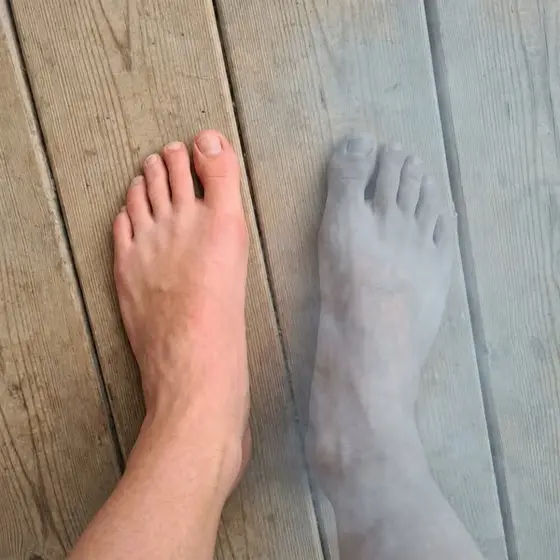
The neuropathy started in my feet about five years ago. Tingling at first, the kind you brush off. Then burning at night that pulled me out of sleep. Then numbness that spread across the soles until standing at the workbench all day became something I had to plan around. I bought anti-fatigue mats. I sat more. I told myself feet were one thing — a man can work sitting down.
But hands are different. Hands are the whole job. Hands are who I am.
So when the tingling reached my fingertips, when I started dropping screws I couldn't feel and misjudging pressure on tools I'd used my entire life, something in me went quiet and scared in a way the feet never made me.
I did what everybody does. I went looking for help.
My doctor ran the bloodwork, looked at my feet, and said what they always say. Peripheral neuropathy. Progressive. Common after sixty. Manage the symptoms. He mentioned gabapentin — said it would take the edge off the burning.
I asked what it does to your head.
He was honest. Some fog. Some drowsiness, especially starting out. Maybe some dizziness.
I'm a man who works with razor-sharp tools and a table saw. Fog and dizziness aren't side effects for me — they're how I lose a finger. I told him I'd hold off. He didn't push. He just wrote "patient declined" and told me to come back in six months.
So I tried to fix it myself. B12, the good methylated kind. Alpha lipoic acid at a real dose. A nerve formula with a label so long it read like a parts list. Magnesium. Fish oil. Months of it, every morning, faithfully. Some weeks felt a hair better. Most felt like every week before.
Meanwhile the work got harder. I started turning down commissions. Then I started thinking the unthinkable — selling the equipment, letting the lease go, closing the shop my father helped me set up in 1983.
My wife Diane caught me one night staring at a classified listing I'd half-written to sell my lathe.
"You're not selling that," she said.
"Di, I can barely feel the wood anymore. I'm going to hurt myself or ruin somebody's order."
She didn't argue. She just said, "Talk to Eli before you do anything."
Eli is our grandson. He's twenty-three and in his last year of nursing school, the first one in the family to go into medicine. I figured Diane wanted me to talk to him so he could gently tell me it was time to hang it up.
He came by that Sunday. Sat across from me at the kitchen table while I explained everything — the feet, now the hands, the supplements that did nothing, the plan to close up.
He listened the whole way through. Then he asked me a question no doctor ever had.
"Grandpa, has anyone explained to you why your nerves are actually breaking down? Not what it's called. Why."
I said no. They'd named it. Nobody had ever explained it.
"Okay," he said, and he grabbed a napkin and a pen like he was back in class. "Your nerve cells are alive. They're constantly working — repairing the protective coating around the nerve, carrying signals back and forth, fixing damage as it happens. But to do any of that, they need energy. A lot of it. Your nerve cells are some of the biggest cells you have. A single nerve can run three feet long. Keeping that much living tissue going takes more energy than almost anything else in your body. They're the hungriest cells you've got."
"Where does the energy come from?" I asked.
"Little power plants inside the cell called mitochondria. Think of them as the engine. When the engine's running, your nerve cells have the power to maintain themselves and repair damage. But as you age — and modern food and stress make it worse — those engines start to wear out and slow down. And here's the part nobody told you. Because your nerve cells are the hungriest, they're the first ones to run out of power when the engines fade."
He tapped the napkin.
"That's your tingling. Then your burning. Then the numbness. It started in your feet because your feet are the farthest from the engine room. Now it's reaching your hands. Your nerves aren't dying, Grandpa. They're starving."
I sat there with forty-one years suddenly making sense.
"Then why didn't the supplements work?" I asked. "I took all of them."
"Because you were delivering parts to an engine that was shut off. B12, alpha lipoic acid, magnesium — all good, all real. But if the cell doesn't have the power to use them, they just sit there. You were dropping off lumber at a shop where the lights were out and nobody could pick it up."
That one hit me right in the chest. Because that's exactly what it was.
"So what turns the engine back on?" I asked.
He smiled, because apparently this was the part he'd been excited to tell me.
"There's a switch in your body called AMPK. It's the master control for your mitochondria. Flip it on and your body starts firing those engines back up. And there's a fruit that's one of the best natural ways to do it. It's called Amla — Indian gooseberry. Healers in the Himalayas have used it for over five thousand years for exactly this kind of breakdown. They called it 'the nurse.' And when scientists ranked over three thousand foods by antioxidant strength, Amla came out on top. Not blueberries. Not turmeric. Amla, and it wasn't close."
"And the nerves?" I asked.
"That's the beautiful part. When the power comes back, the hungriest cells respond first. The ones that have been starving the longest. Your nerves were the first to fail, so they're the first in line when the energy returns. They finally get to do the repair work they've been trying to do for years."
I didn't sell the lathe that week.
I did the reading myself, the way I check measurements twice before I cut. Everything Eli said held up. But I also learned something he hadn't mentioned: most Amla on the shelf is worthless. The compounds that flip the AMPK switch are fragile. High heat during manufacturing destroys them, and most cheap brands use high heat. You end up with ground-up fruit that does nothing.
I learned that one the hard way — bought a fourteen-dollar bottle off the internet first, took it a week, felt nothing. Then I read closer. What the research used was a standardized extract. Organic. Processed with low heat so the active compounds survive. Third-party tested for actual potency, not just purity.
I went looking for one that met all of it, and one name kept coming up on the forums where people post their real week-by-week logs.
Simple Dose.
Standardized Amla extract. Organic. Low-heat processed so the good stuff makes it into the capsule. Third-party tested, with the lab results published right on their site. Clinical-strength dose in a vegetable capsule. Made in the USA in small batches.
60-day money-back guarantee. Full refund if it did nothing.
After two years of watching my hands betray me, sixty days was an easy bet.
Two capsules with breakfast. That's the whole thing.
I expected nothing for a while — I knew nerves don't heal in a weekend, and I'd been let down before. I told myself to give it the full sixty days before I judged it.
End of week one, the burning in my feet that usually woke me didn't wake me. I slept through. I chalked it up to a good night.
Week two, Diane noticed before I did. She watched me carry a board across the shop and said, "Your hands look surer." She was right. I just hadn't let myself say it.
Week three, I picked up a maple offcut and ran my thumb across the grain — and I felt it. The ridges, the smoothness, the little catch where the grain changed direction. I stood at my bench holding a scrap of wood like it was treasure. I hadn't felt grain in over a year. I'd forgotten that wood has a texture you can read with your fingertips. I had to put it down and step outside for a minute.
By weeks five and six the numbness in my feet was pulling back, the tingling in my fingers had quieted, and my grip felt like my grip again. Not perfect. I'll be honest with you — it's not like I'm forty. But I can feel the tool. I can feel the pressure. I can feel when something's about to slip, which is the whole thing that scared me in the first place.
Last month I finished a rocking chair. First piece I've completed start to finish in almost two years. I gave it to Eli for his graduation, with a little brass plate underneath that says "from the hands you saved."
He cried. So did I, if you want the truth.
Here's what I need you to hear, because I almost gave away the only thing I've ever been good at.
If you've tried the supplements and they didn't work, you didn't fail and they didn't fail you because nature can't help. They failed because they were feeding cells that had no power to use them. Your nerve cells are the hungriest in your body, and when their engines slow down, they starve first — no matter how much you give them.
Gabapentin doesn't turn the engines back on either. It turns the alarm down. That's not the same as fixing the wiring.
Simple Dose Amla was the one that finally went after the cause for me — organic, low-heat processed, full active compounds, third-party tested, made in the USA in small batches. I won't tell you it's the only good one out there. I'll tell you it's the one that gave me my hands back when I had a listing half-written to sell my tools.
If you feel cornered, give it 60 days. Take it every morning, don't skip, and write down what you feel and what you don't so you can see it changing. That's the entire protocol.
60-day money-back guarantee. If nothing changes, you get every cent back, no questions asked. You risk nothing but finding out.
Simple Dose runs small batches to keep the potency where it needs to be — which is exactly why it works when the cheap stuff doesn't, and also why they sell out. I keep a spare bottle in the shop drawer now, right next to the chisels I almost gave away.
Your nerves were built to heal. They're just waiting for the power to come back on.
👉 https://mysimpledose.com/products/amla-superfruit-capsules
Walt Brennan
P.S. My feet slept through the night by week one. Diane noticed my hands by week two. I felt wood grain again by week three. Your timeline may be different — but 60 days is the window, and you don't lose a thing by finding out.
👉 https://mysimpledose.com/products/amla-superfruit-capsules