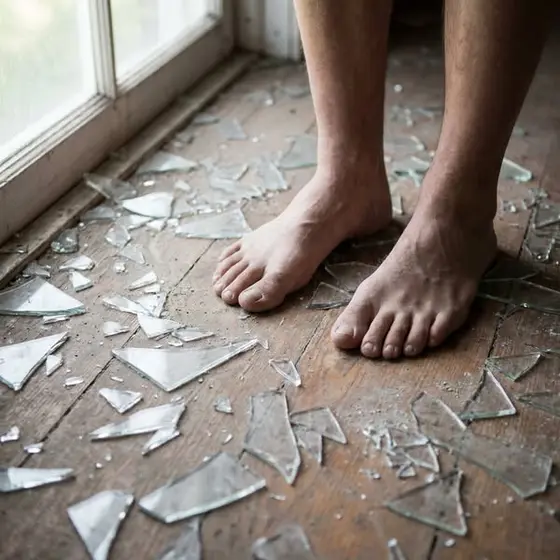
A doctor I'd known for nine minutes told me I was "choosing" to go numb. Then she slid a form across the desk for me to sign, confirming I was refusing care against her advice. I'm 64. I taught fourth grade for thirty-one years. And I sat in that chair thinking about my sister Dana — about what the exact pills this woman was pushing had done to her — and I could not make my hand pick up the pen. Let me back up. For six years my neuropathy was handled by Dr. Reyes. I'd been his patient since my kids were in elementary school. He knew me. He knew Dana. He knew why the word "Gabapentin" made my throat tighten. Every visit he'd say, "We watch it closely, Maris, and we keep doing the things that are helping. You're not in crisis." And we did. B12. Alpha lipoic acid. Walking the dog every morning my feet would let me. Bloodwork twice a year. Then the practice got swallowed by a hospital network. Dr. Reyes took early retirement rather than work for them. A letter told me my new provider would be Dr. Holt. My first appointment with her, I sat in a renovated version of the same office. New logo on the wall. New everything. She came in reading a tablet, not looking up. "Maris. Let's see." She scrolled, and her mouth went flat. "Six years of documented progression. Tingling in 2020. Nighttime burning by 2022. Numbness across both feet last year. You reported a near-fall in your kitchen three weeks ago." She finally looked at me. "And not one prescription in the chart. That's a problem." "Dr. Reyes and I had a—" "Dr. Reyes isn't your physician anymore." She was already typing. "This is permanent nerve damage and it is advancing. Untreated, you're looking at a wheelchair inside a few years. We start Gabapentin today, 300 milligrams three times a day." "I'd really rather not. My sister had a terrible—" "Your sister isn't my patient. You are. And I'm not comfortable letting this go untreated." She printed something. Not the prescription. A form. "If you decline, I'll need you to sign this. It documents that you're refusing recommended treatment against medical advice." Nine minutes. That's how long it took her to turn me into a liability she needed in writing. I didn't sign. I didn't fill anything. I told her I needed to think, and she said "think quickly" and was gone. In the car I called my daughter Becca. "How'd it go with the new one?" "She wants me on Gabapentin. Today. She made me feel like a problem patient for saying no." A long pause. Then, quietly, "Mom. That's what Aunt Dana started on." "I know." Neither of us said anything for a second, because we were both seeing the same thing. Dana is three years older than me. She got neuropathy first. She did exactly what the doctors told her — started the pills, took them faithfully, raised the dose when they said to raise it. The fog came inside two months. Not forgetfulness. A fog. She'd lose the thread of a sentence and just stop, mid-word, looking for it. She gained twenty-eight pounds that first year without changing a thing. The dizziness made her unsteady on feet she already couldn't feel, and she went down hard on the back steps and cracked two ribs. After that she stopped going out. Then she stopped calling. The sister who used to host every holiday, who knew everyone's birthday, who could talk your ear off for two hours — she went quiet and stayed quiet. She's in an assisted-living apartment now. I visit on Sundays. Some days she knows exactly who I am and some days she calls me by our mother's name. She is sixty-seven years old. And here's the part that has never left me: her feet still burn. After everything that drug took, it never even did the one thing it was sold to do. That was the future Dr. Holt wanted me to sign up for, in writing, in nine minutes. Becca came over that night. Found me in the kitchen with a cold cup of tea. "What are you going to do?" "Find another way." "What if there isn't one? What if she's right and you wait too long?" Her eyes filled. "I already lost Aunt Dana to this. I'm not doing it again with you." "You won't," I said. I had no idea if that was true. So I started looking, the way I used to research everything for my classroom — late, stubborn, refusing to stop until it made sense. First I tried the supplements properly. The highest-rated nerve formula online — six weeks, every morning. Nothing. Then alpha lipoic acid on its own, a real dose, two months. A few easier nights, then back to baseline. Then a forty-dollar "advanced nerve complex" with a label like a chemistry final. Same story. Some nights felt softer. Most felt like every night before them. Three weeks from my follow-up, at one in the morning, I stopped searching for products and started searching for the actual reason nerves break down — why mine kept marching forward no matter what I poured into them. And I finally understood something nobody in a white coat had ever bothered to explain. I'd been treating the wrong thing for six years. The burning wasn't the disease. It was a power outage. Your nerves are alive. The whole web of them through your feet and legs is living tissue, kept up every second by cells that repair the wiring, carry the signals, and patch the protective coating around the nerve. But those cells can only do that work if they have energy — and nerve cells need a staggering amount of it, because a single nerve can run three feet long. They are the hungriest cells in the entire body. That energy is made by your mitochondria, the little power plants inside every cell. When they're running strong, the energy flows, the repairs happen, the coating holds, the signals stay clean. When they slow down — with age, with processed food and sugar and stress speeding the decline — the lights start going out. And because nerve cells are the hungriest, they're the first to be cut off. That's the tingling. Then the burning. Then the numbness. Then the slow creep up the leg. I sat there and the whole six years rearranged itself. That was why the B12 did nothing. The alpha lipoic acid. The chemistry-final complex. Every one of them dropped nutrients at the cell's door — and the cell had no power to bring them inside and use them. It was like leaving groceries on the porch of a dark, empty house. The food arrives. Nobody inside has the strength to carry it in. And the Gabapentin? It wouldn't restore one watt of that power. It would just turn the volume down on the pain so I couldn't hear the alarm — while the cells kept starving in the dark and the numbness kept spreading. That's why Dana kept declining on it. That's why her feet still burn today. So I went looking for the opposite of a volume knob. Something that could turn the power back on. Most things couldn't. CoQ10, PQQ, the NAD boosters — small effects, and the researchers kept saying the same thing: one isolated piece pulled from a plant rarely matches the whole plant doing what it evolved to do. Then I found the fruit. Scientists once ranked over three thousand foods by antioxidant strength. One sat at the very top, and not by a little. Not blueberries. Not turmeric. A fruit called Amla — the Indian gooseberry. It grows in the Himalayan foothills, where healers have used it for more than five thousand years. They called it "the nurse" — what they gave to people whose bodies were failing from the inside, including the ones losing feeling in their hands and feet. But it was the mechanism that made me sit forward. Amla switches on something called AMPK — your body's master switch for the mitochondria. Flip it, and the power plants come back online and start producing energy the way they did decades ago. And when the power returns, your nerve cells respond first, because they're the hungriest and they've been starved the longest — sitting there this whole time with every nutrient you ever swallowed and no energy to use any of it. The second the lights come on, they get to work. They repair the wiring. They rebuild the coating. The burning fades because the cell finally has fuel to fix the damage instead of just screaming about it. Feeling comes back as the coating returns. Balance steadies because your brain and your feet can finally hear each other again. The groceries and the people inside the house, finally in the same room. I almost ordered the first Amla I saw — a cheap bottle of powder. Took it a week. Nothing. Then I went back and caught what I'd missed: the research didn't use ground-up powder. It used a standardized extract, organic, processed with low heat — because high heat, the kind most cheap brands use, destroys the very compounds that flip the AMPK switch. The reason it works at all. That bargain bottle was dead on arrival. Whatever made the fruit matter had been cooked out before it was capped. So at two in the morning I searched for the real thing: organic, standardized, low-heat, third-party tested. One name kept coming up — not on the glossy blogs, but in the forums where people post their own week-by-week symptom logs. Simple Dose. Standardized Amla extract. Organic. Low-heat processed so the active compounds survive. Third-party tested for potency, not just purity, with the lab results published on their site. Clinical-strength dose in a vegetable capsule. Made in the USA in small batches. 60-day money-back guarantee. I ordered it that night. Two capsules every morning. I expected nothing — I'd been disappointed three times already, and I knew nerves don't heal in a weekend. I told myself sixty days before I'd let myself believe anything. End of week one: I slept all the way through the night. No 3 AM burning pulling me out of sleep. I woke up where I'd fallen asleep. I hadn't done that in two years. Week two: Becca stopped by, watched me cross the kitchen, and said, "You're walking like yourself again." She wasn't being sweet. She looked surprised. Week three: I was washing dishes and felt the warm water move across my feet where I'd splashed. Not the burn. The warmth. I stood at the sink with my hands dripping, just feeling it, and then I cried over something as small as dishwater. Week seven: I tested both feet with a little monofilament I'd ordered, three mornings in a row, marking every spot. Feeling across the whole foot. Steadier balance than I'd had in three years. Eleven nights without a single burning episode. Two days before my follow-up, the nurse did my pre-visit nerve assessment, so the numbers were already in the file when Dr. Holt walked in. She opened it. Stopped. Read it twice. "Protective sensation has returned across both feet. Vibration sense improved. Balance normal." She looked at me. "You started the Gabapentin." "No." "...No?" "Amla extract. I know how that sounds. But there's a real reason. My nerve cells need energy, and that energy comes from the mitochondria. Age and modern life slow those down, and nerve cells are the hungriest in the body, so they starve first — that's the burning and the numbness. Amla flips a switch called AMPK that restarts the mitochondria, so the cells finally have the power to repair what's been damaged." She didn't answer right away. She read the chart again. When she looked back up, she was a different kind of careful than she'd been the first time. "What exactly are you taking?" "Simple Dose Amla. Standardized, organic, low-heat, third-party tested." She typed it in and read for a long while. Then: "Keep doing it. Come back in twelve weeks. If this holds, we don't prescribe anything." I sat in the parking lot and called Becca and could barely get the words out. No medication. No form to sign. Just feeling, in a chart, that a doctor couldn't argue with. That was five months ago. My last assessment: full sensation, normal balance, no burning, no spreading. I still visit Dana on Sundays. Some days she knows me. I sit with her and I think about how close I came to signing that form — to walking the same road, one obedient dose at a time. If you're reading this, you might be cornered the way I was. Made to feel like the pills are your only option and saying no makes you the problem. Here's what six years and four failed bottles taught me. Most nerve supplements fail because they deliver materials to cells that have no power to use them. B12, alpha lipoic acid, magnesium — all of it shows up and just sits there, because the mitochondria have been dimming for years. Until you turn the power back on, nothing changes and the numbness keeps climbing. Gabapentin doesn't turn the power on either. It turns the alarm off. That's why people keep losing feeling on it. That's why my sister did. That's why her feet still burn. Simple Dose Amla was the only one I found that matched what the research actually demanded — organic, low-heat processed, full active compounds, third-party tested, made in the USA in small batches. I won't tell you it's the only good one in the world. I'll tell you it's the one that gave me my feet back after everything else failed. If you feel cornered, give it 60 days. Keep a log at home — what you feel, what you don't — and bring it to your next appointment. Take it every morning. Don't skip. That's the whole protocol. 60-day money-back guarantee. No difference, no satisfaction, full refund — no questions. You risk nothing but finding out. Simple Dose runs small batches to protect the potency, which is exactly why it works when the cheap stuff doesn't — and also why it sells out. I keep a spare bottle in the drawer now after getting caught waiting once. Feeling is the only argument a doctor can't talk you out of. 👉 https://mysimpledose.com/products/amla-superfruit-capsules Maris Halloran P.S. Sleep came back by week one. Becca noticed my walk by week two. I felt warm dishwater on my feet by week three, and full sensation by week seven. Your timeline may differ — but 60 days is the window, and you risk nothing. 👉 https://mysimpledose.com/products/amla-superfruit-capsules P.P.S. I almost signed a form agreeing to go numb. Instead I did the research no one had done for me. The reason it works is real — you just have to be willing to look. 👉 https://mysimpledose.com/products/amla-superfruit-capsules
Dr. Viktoria Martinez Facebook and Instagram ad
Dr. Viktoria Martinez ran this image ad since Jun 28, 2026, 132 days so far.
Ad copy
A doctor I'd known for nine minutes told me I was "choosing" to go numb. Then she slid a form across the desk for me to sign, confirming I was refusing care against her advice. I'm 64. I taught fourth grade for thirty-one years. And I sat in that chair thinking about my sister Dana — about what the exact pills this woman was pushing had done to her — and I could not make my hand pick up the pen. Let me back up. For six years my neuropathy was handled by Dr. Reyes. I'd been his patient since my kids were in elementary school. He knew me. He knew Dana. He knew why the word "Gabapentin" made my throat tighten. Every visit he'd say, "We watch it closely, Maris, and we keep doing the things that are helping. You're not in crisis." And we did. B12. Alpha lipoic acid. Walking the dog every morning my feet would let me. Bloodwork twice a year. Then the practice got swallowed by a hospital network. Dr. Reyes took early retirement rather than work for them. A letter told me my new provider would be Dr. Holt. My first appointment with her, I sat in a renovated version of the same office. New logo on the wall. New everything. She came in reading a tablet, not looking up. "Maris. Let's see." She scrolled, and her mouth went flat. "Six years of documented progression. Tingling in 2020. Nighttime burning by 2022. Numbness across both feet last year. You reported a near-fall in your kitchen three weeks ago." She finally looked at me. "And not one prescription in the chart. That's a problem." "Dr. Reyes and I had a—" "Dr. Reyes isn't your physician anymore." She was already typing. "This is permanent nerve damage and it is advancing. Untreated, you're looking at a wheelchair inside a few years. We start Gabapentin today, 300 milligrams three times a day." "I'd really rather not. My sister had a terrible—" "Your sister isn't my patient. You are. And I'm not comfortable letting this go untreated." She printed something. Not the prescription. A form. "If you decline, I'll need you to sign this. It documents that you're refusing recommended treatment against medical advice." Nine minutes. That's how long it took her to turn me into a liability she needed in writing. I didn't sign. I didn't fill anything. I told her I needed to think, and she said "think quickly" and was gone. In the car I called my daughter Becca. "How'd it go with the new one?" "She wants me on Gabapentin. Today. She made me feel like a problem patient for saying no." A long pause. Then, quietly, "Mom. That's what Aunt Dana started on." "I know." Neither of us said anything for a second, because we were both seeing the same thing. Dana is three years older than me. She got neuropathy first. She did exactly what the doctors told her — started the pills, took them faithfully, raised the dose when they said to raise it. The fog came inside two months. Not forgetfulness. A fog. She'd lose the thread of a sentence and just stop, mid-word, looking for it. She gained twenty-eight pounds that first year without changing a thing. The dizziness made her unsteady on feet she already couldn't feel, and she went down hard on the back steps and cracked two ribs. After that she stopped going out. Then she stopped calling. The sister who used to host every holiday, who knew everyone's birthday, who could talk your ear off for two hours — she went quiet and stayed quiet. She's in an assisted-living apartment now. I visit on Sundays. Some days she knows exactly who I am and some days she calls me by our mother's name. She is sixty-seven years old. And here's the part that has never left me: her feet still burn. After everything that drug took, it never even did the one thing it was sold to do. That was the future Dr. Holt wanted me to sign up for, in writing, in nine minutes. Becca came over that night. Found me in the kitchen with a cold cup of tea. "What are you going to do?" "Find another way." "What if there isn't one? What if she's right and you wait too long?" Her eyes filled. "I already lost Aunt Dana to this. I'm not doing it again with you." "You won't," I said. I had no idea if that was true. So I started looking, the way I used to research everything for my classroom — late, stubborn, refusing to stop until it made sense. First I tried the supplements properly. The highest-rated nerve formula online — six weeks, every morning. Nothing. Then alpha lipoic acid on its own, a real dose, two months. A few easier nights, then back to baseline. Then a forty-dollar "advanced nerve complex" with a label like a chemistry final. Same story. Some nights felt softer. Most felt like every night before them. Three weeks from my follow-up, at one in the morning, I stopped searching for products and started searching for the actual reason nerves break down — why mine kept marching forward no matter what I poured into them. And I finally understood something nobody in a white coat had ever bothered to explain. I'd been treating the wrong thing for six years. The burning wasn't the disease. It was a power outage. Your nerves are alive. The whole web of them through your feet and legs is living tissue, kept up every second by cells that repair the wiring, carry the signals, and patch the protective coating around the nerve. But those cells can only do that work if they have energy — and nerve cells need a staggering amount of it, because a single nerve can run three feet long. They are the hungriest cells in the entire body. That energy is made by your mitochondria, the little power plants inside every cell. When they're running strong, the energy flows, the repairs happen, the coating holds, the signals stay clean. When they slow down — with age, with processed food and sugar and stress speeding the decline — the lights start going out. And because nerve cells are the hungriest, they're the first to be cut off. That's the tingling. Then the burning. Then the numbness. Then the slow creep up the leg. I sat there and the whole six years rearranged itself. That was why the B12 did nothing. The alpha lipoic acid. The chemistry-final complex. Every one of them dropped nutrients at the cell's door — and the cell had no power to bring them inside and use them. It was like leaving groceries on the porch of a dark, empty house. The food arrives. Nobody inside has the strength to carry it in. And the Gabapentin? It wouldn't restore one watt of that power. It would just turn the volume down on the pain so I couldn't hear the alarm — while the cells kept starving in the dark and the numbness kept spreading. That's why Dana kept declining on it. That's why her feet still burn today. So I went looking for the opposite of a volume knob. Something that could turn the power back on. Most things couldn't. CoQ10, PQQ, the NAD boosters — small effects, and the researchers kept saying the same thing: one isolated piece pulled from a plant rarely matches the whole plant doing what it evolved to do. Then I found the fruit. Scientists once ranked over three thousand foods by antioxidant strength. One sat at the very top, and not by a little. Not blueberries. Not turmeric. A fruit called Amla — the Indian gooseberry. It grows in the Himalayan foothills, where healers have used it for more than five thousand years. They called it "the nurse" — what they gave to people whose bodies were failing from the inside, including the ones losing feeling in their hands and feet. But it was the mechanism that made me sit forward. Amla switches on something called AMPK — your body's master switch for the mitochondria. Flip it, and the power plants come back online and start producing energy the way they did decades ago. And when the power returns, your nerve cells respond first, because they're the hungriest and they've been starved the longest — sitting there this whole time with every nutrient you ever swallowed and no energy to use any of it. The second the lights come on, they get to work. They repair the wiring. They rebuild the coating. The burning fades because the cell finally has fuel to fix the damage instead of just screaming about it. Feeling comes back as the coating returns. Balance steadies because your brain and your feet can finally hear each other again. The groceries and the people inside the house, finally in the same room. I almost ordered the first Amla I saw — a cheap bottle of powder. Took it a week. Nothing. Then I went back and caught what I'd missed: the research didn't use ground-up powder. It used a standardized extract, organic, processed with low heat — because high heat, the kind most cheap brands use, destroys the very compounds that flip the AMPK switch. The reason it works at all. That bargain bottle was dead on arrival. Whatever made the fruit matter had been cooked out before it was capped. So at two in the morning I searched for the real thing: organic, standardized, low-heat, third-party tested. One name kept coming up — not on the glossy blogs, but in the forums where people post their own week-by-week symptom logs. Simple Dose. Standardized Amla extract. Organic. Low-heat processed so the active compounds survive. Third-party tested for potency, not just purity, with the lab results published on their site. Clinical-strength dose in a vegetable capsule. Made in the USA in small batches. 60-day money-back guarantee. I ordered it that night. Two capsules every morning. I expected nothing — I'd been disappointed three times already, and I knew nerves don't heal in a weekend. I told myself sixty days before I'd let myself believe anything. End of week one: I slept all the way through the night. No 3 AM burning pulling me out of sleep. I woke up where I'd fallen asleep. I hadn't done that in two years. Week two: Becca stopped by, watched me cross the kitchen, and said, "You're walking like yourself again." She wasn't being sweet. She looked surprised. Week three: I was washing dishes and felt the warm water move across my feet where I'd splashed. Not the burn. The warmth. I stood at the sink with my hands dripping, just feeling it, and then I cried over something as small as dishwater. Week seven: I tested both feet with a little monofilament I'd ordered, three mornings in a row, marking every spot. Feeling across the whole foot. Steadier balance than I'd had in three years. Eleven nights without a single burning episode. Two days before my follow-up, the nurse did my pre-visit nerve assessment, so the numbers were already in the file when Dr. Holt walked in. She opened it. Stopped. Read it twice. "Protective sensation has returned across both feet. Vibration sense improved. Balance normal." She looked at me. "You started the Gabapentin." "No." "...No?" "Amla extract. I know how that sounds. But there's a real reason. My nerve cells need energy, and that energy comes from the mitochondria. Age and modern life slow those down, and nerve cells are the hungriest in the body, so they starve first — that's the burning and the numbness. Amla flips a switch called AMPK that restarts the mitochondria, so the cells finally have the power to repair what's been damaged." She didn't answer right away. She read the chart again. When she looked back up, she was a different kind of careful than she'd been the first time. "What exactly are you taking?" "Simple Dose Amla. Standardized, organic, low-heat, third-party tested." She typed it in and read for a long while. Then: "Keep doing it. Come back in twelve weeks. If this holds, we don't prescribe anything." I sat in the parking lot and called Becca and could barely get the words out. No medication. No form to sign. Just feeling, in a chart, that a doctor couldn't argue with. That was five months ago. My last assessment: full sensation, normal balance, no burning, no spreading. I still visit Dana on Sundays. Some days she knows me. I sit with her and I think about how close I came to signing that form — to walking the same road, one obedient dose at a time. If you're reading this, you might be cornered the way I was. Made to feel like the pills are your only option and saying no makes you the problem. Here's what six years and four failed bottles taught me. Most nerve supplements fail because they deliver materials to cells that have no power to use them. B12, alpha lipoic acid, magnesium — all of it shows up and just sits there, because the mitochondria have been dimming for years. Until you turn the power back on, nothing changes and the numbness keeps climbing. Gabapentin doesn't turn the power on either. It turns the alarm off. That's why people keep losing feeling on it. That's why my sister did. That's why her feet still burn. Simple Dose Amla was the only one I found that matched what the research actually demanded — organic, low-heat processed, full active compounds, third-party tested, made in the USA in small batches. I won't tell you it's the only good one in the world. I'll tell you it's the one that gave me my feet back after everything else failed. If you feel cornered, give it 60 days. Keep a log at home — what you feel, what you don't — and bring it to your next appointment. Take it every morning. Don't skip. That's the whole protocol. 60-day money-back guarantee. No difference, no satisfaction, full refund — no questions. You risk nothing but finding out. Simple Dose runs small batches to protect the potency, which is exactly why it works when the cheap stuff doesn't — and also why it sells out. I keep a spare bottle in the drawer now after getting caught waiting once. Feeling is the only argument a doctor can't talk you out of. 👉 https://mysimpledose.com/products/amla-superfruit-capsules Maris Halloran P.S. Sleep came back by week one. Becca noticed my walk by week two. I felt warm dishwater on my feet by week three, and full sensation by week seven. Your timeline may differ — but 60 days is the window, and you risk nothing. 👉 https://mysimpledose.com/products/amla-superfruit-capsules P.P.S. I almost signed a form agreeing to go numb. Instead I did the research no one had done for me. The reason it works is real — you just have to be willing to look. 👉 https://mysimpledose.com/products/amla-superfruit-capsules
Placements and targeting
More ads from Dr. Viktoria Martinez
I was nineteen when I found my mother on the kitchen floor. She'd been down for almost three hours. Her feet had gone so numb she never felt herself losing balance, and once she was on the floor she couldn't get the leverage to stand back up. I'll never forget her face when I came through the door. Not frightened. Embarrassed. Like a child caught doing something wrong. Forty-four years later, I was lying on the same kind of floor, in my own kitchen, staring up at the underside of my own table, and the only thought in my head was: So this is how it starts. My name is Ruth. I'm 63. And I have spent most of my adult life quietly terrified of becoming my mother. She had what they called neuropathy. Nobody ever explained it to her beyond that word. The burning came first, then the numbness, then the falls. She broke her hip at 71 on the back porch steps and was never the same after. She stopped going out. Then she stopped calling. The woman who taught me to bake bread and never forgot a birthday slowly folded up into a chair by the window. She died at 74. Her feet were still burning the week she passed. After everything, the one thing nobody ever stopped was the burning. I promised myself — promised — that I would never let that happen to me. Then, at 58, I felt the first tingle in my toes. I knew exactly what it was. I'd watched it before, from the front row, for years. And I felt the floor of my life tilt, because I knew where this road went. I'd helped my mother down every step of it. I went to my doctor immediately, determined to get ahead of it. Dr. Pruitt looked at my feet, scrolled through my chart, and gave me twelve minutes. "Peripheral neuropathy," he said, like he was reading a weather report. "Progressive. Very common after sixty. We manage the symptoms." Manage. The same word they used on my mother. He offered gabapentin. I asked what it did long-term. He talked about fog and dizziness and weight. I thought about my mother already unsteady on numb feet, and how a drug that made you dizzier was the last thing she'd needed. I told him I wanted to try other things first. He shrugged, typed a note, and told me to come back in six months. I was a statistic to him. Exactly what my mother had been to her doctors. Nothing learned in forty-four years. So I tried to outrun it on my own. B12, the expensive methylated kind. Alpha lipoic acid at a real clinical dose, twice a day, for months. A nerve formula with a label like a phone book. Magnesium. Fish oil. Capsaicin cream that burned worse than the neuropathy. I spent close to two hundred dollars a month for nearly two years. Some weeks felt slightly better. Most weeks felt like the week before. And underneath all of it, the thing I feared most kept happening anyway. It spread. It started in my toes. By the second year it had taken the balls of both feet. Then the numbness crept toward my ankles, and I started doing the things I swore I'd never do. Holding the railing on every staircase. Scanning the floor in front of me. Wearing shoes inside my own house because bare feet felt unsafe. And then, on an ordinary Tuesday, I went down in my kitchen. I didn't trip. My feet simply didn't tell me where they were, and the floor came up to meet me. I lay there for I don't know how long, looking at the underside of my own table, unable to find the strength or the angle to get back up — and I understood, with a calm that scared me more than panic would have, that I had become her. I cried on that floor. Not from the fall. From the certainty of where it was all heading. I almost gave up that week. I'd stopped believing anything would change it. I had started rehearsing the version of my life where I just accepted it, the way my mother had to. What changed everything wasn't a doctor. It was a pharmacist. I was at the counter picking up yet another nerve supplement — the third brand that year — and the young pharmacist, her name was Renee, rang it up, paused, and said something no one in a white coat ever had. "Can I ask you something? Has anyone ever explained to you why none of these work?" I told her no. I told her I'd tried them all. She leaned on the counter and lowered her voice, like she was telling me something she wasn't strictly supposed to. "Your nerve cells are alive. They spend every second repairing themselves, carrying signals, keeping the protective coating around the nerve intact. But to do any of that they need energy — and your nerve cells need more of it than almost anything else in your body, because they're enormous. A single nerve can run three feet long. They're the hungriest cells you have." "Okay," I said. "That energy is made by little engines inside the cell called mitochondria. As you age, and with everything modern life throws at you, those engines wear down and slow. And because your nerve cells are the hungriest, they're the very first to run out of power. That's the tingling. Then the burning. Then the numbness. Then the spreading." I felt the hair stand up on my arms. "So the supplements," she went on, nodding at the bottle in my hand, "all of these deliver nutrients to the cell. That part's real. But if the cell has no power, it can't use any of them. It's like buying a brand-new battery and trying to put it in a car whose engine already seized. The power is sitting right there in the box. The car still can't move." I stood at that counter and felt forty-four years of helplessness rearrange itself into something I could finally understand. "And gabapentin?" I asked. "Turns the alarm down. It doesn't restore the power. The damage keeps going underneath. That's why people keep getting worse on it." That's why my mother's feet burned until the day she died. "So what does turn the power back on?" I asked. She smiled like she'd hoped I'd ask. "There's a switch in your body called AMPK. It's the master control for those engines. Flip it on and your body starts firing the mitochondria back up. And one of the best natural ways to flip it is a fruit called Amla — Indian gooseberry. Himalayan healers used it for over five thousand years for exactly this kind of breakdown. They called it 'the nurse.' When researchers tested over three thousand foods for antioxidant strength, it came out number one. Not blueberries. Not green tea. Amla, and it wasn't close." "Why would it help the nerves specifically?" I asked. "Because when the power comes back, the hungriest cells respond first. The ones that have been starving the longest. Your nerves failed first — so they're first in line to recover." I went home and read everything I could find, the way my mother never had the chance to. It all held up. But I also learned the part Renee hadn't said: most Amla on the shelf is useless. The compounds that flip the AMPK switch are fragile and high heat destroys them — and most cheap brands use high heat. You get a bottle of dead powder. I found that out for myself first, with a fourteen-dollar bottle that did nothing for a week. Then I read closer. What the research used was a standardized extract — organic, low-heat processed, third-party tested for actual potency, not just purity. I went looking for one that met every mark, and one name kept surfacing in the forums where people post their real week-by-week logs. Simple Dose. Standardized Amla extract. Organic. Low-heat processed so the active compounds survive into the capsule. Third-party tested, with the lab results published right on their site. Clinical-strength dose in a vegetable capsule. Made in the USA in small batches. 60-day money-back guarantee. Every cent back if it did nothing. After two years of watching myself turn into my mother, sixty days was nothing. Two capsules with breakfast. That's all it is. I told myself to expect nothing until the full sixty days. I'd been let down too many times to hope early. End of week one: I slept through the night. The burning that usually pulled me awake didn't. I woke up in the same position I'd fallen asleep in, and I lay there for a minute not trusting it. Week two: my daughter, who'd been quietly watching me decline for years, said over the phone, "Mom, you sound lighter." I hadn't told her I'd started anything. Week three: I was standing at the sink and felt the warm dishwater run over my feet where I'd splashed. Not the burn. The warmth. I stood there with my hands dripping and cried, the way you cry over something far too small to cry over, because if you've lost it you understand. By weeks five and six the numbness was pulling back down toward my toes instead of climbing, my balance felt like mine again, and I'd stopped white-knuckling the stair rail. Then came the morning that closed the circle. My granddaughter Lila, who's six, asked me to do a puzzle with her on the living room floor. For two years I'd said no to the floor, because the floor was where you fell and didn't get up. That morning I got down on it. We did the whole puzzle. And when we finished, I put my hand flat on the carpet, pushed, and stood up on my own. Steady. No furniture, no help, no one watching to catch me. Lila didn't even notice. To her, Grandma just stood up. I had to go to the bathroom and hold the sink for a minute, because the last person I'd watched lie helpless on a floor was my mother, and here I was getting up off one like it was nothing. Two months later I had my follow-up with Dr. Pruitt. The nurse ran the little filament test first, touching different spots on my feet. When Dr. Pruitt came in he opened the chart, stopped, and read it twice. "Your sensation has improved since your last visit." He looked genuinely puzzled. "You started the gabapentin?" "No," I said. "Amla extract. It works on cellular energy — the mitochondria my nerve cells were starving for." He made me spell it. He wrote it down. He told me to keep doing exactly what I was doing and didn't reach for the prescription pad. That was five months ago. My last assessment was stable. Full sensation across both feet. Normal balance. No spreading. I still think about my mother on that floor. I think about how no one ever explained any of this to her. How she did everything they told her and it took her anyway. And I think about how close I came to the exact same ending, one obedient appointment at a time. If you're reading this, you might be where I was — watching it spread, running out of things to try, quietly bracing for the version of your life where you just accept it. Here's what two years and a pharmacist finally taught me. Most nerve supplements fail because they deliver materials to cells that have no power to use them. B12, alpha lipoic acid, magnesium — it all shows up and just sits there, because the engines that run your nerve cells have been winding down for years. Until you turn the power back on, nothing changes and the numbness keeps climbing. Gabapentin doesn't turn the power on. It turns the alarm off. That's why my mother burned until the end. Simple Dose Amla is the one that finally went after the cause for me — organic, low-heat processed, full active compounds, third-party tested, made in the USA in small batches. I won't tell you it's the only good one in the world. I'll tell you it's the one that let me get up off my own kitchen floor. If you feel cornered, give it 60 days. Take it every morning, don't skip, and write down what you feel and what you don't so you can watch it change. That's the whole protocol. 60-day money-back guarantee. No difference, full refund, no questions. You risk nothing but finding out. Simple Dose runs small batches to protect the potency — which is exactly why it works when the cheap stuff doesn't, and also why it sells out. I keep a spare bottle in the cabinet now, where my mother used to keep her bread flour. You were not built to slowly disappear. Your nerves were built to heal. They've just been waiting for the power to come back on. Don't wait forty-four years for someone to finally explain it to you. I almost did. 👉 https://mysimpledose.com/products/amla-superfruit-capsules Ruth Maddox P.S. I slept through the night by week one. My daughter heard it in my voice by week two. I felt warm water on my feet by week three, and I stood up off my own living room floor by week six. Your timeline may be different — but 60 days is the window, and you risk nothing finding out. 👉 https://mysimpledose.com/products/amla-superfruit-capsules
The day I couldn't feel the chisel in my own hand, I sat down on the shop floor and didn't get up for an hour. I've built furniture for forty-one years. Tables, cabinets, a crib for every grandchild. My hands have always known what to do before my brain caught up. That morning I was running a chisel along a joint I'd cut a thousand times, and I felt the tool slip — not because my grip failed, but because I couldn't feel that it was failing. The chisel skated across the wood and stopped a half inch from my other hand. A half inch. I put it down, sat on the cold concrete with sawdust on my knees, and finally said out loud what I'd been refusing to say for two years. It's reaching my hands now. My name is Walt. I'm 66. And this is the story of how I almost gave away my shop, and the unlikely person who talked me out of it. The neuropathy started in my feet about five years ago. Tingling at first, the kind you brush off. Then burning at night that pulled me out of sleep. Then numbness that spread across the soles until standing at the workbench all day became something I had to plan around. I bought anti-fatigue mats. I sat more. I told myself feet were one thing — a man can work sitting down. But hands are different. Hands are the whole job. Hands are who I am. So when the tingling reached my fingertips, when I started dropping screws I couldn't feel and misjudging pressure on tools I'd used my entire life, something in me went quiet and scared in a way the feet never made me. I did what everybody does. I went looking for help. My doctor ran the bloodwork, looked at my feet, and said what they always say. Peripheral neuropathy. Progressive. Common after sixty. Manage the symptoms. He mentioned gabapentin — said it would take the edge off the burning. I asked what it does to your head. He was honest. Some fog. Some drowsiness, especially starting out. Maybe some dizziness. I'm a man who works with razor-sharp tools and a table saw. Fog and dizziness aren't side effects for me — they're how I lose a finger. I told him I'd hold off. He didn't push. He just wrote "patient declined" and told me to come back in six months. So I tried to fix it myself. B12, the good methylated kind. Alpha lipoic acid at a real dose. A nerve formula with a label so long it read like a parts list. Magnesium. Fish oil. Months of it, every morning, faithfully. Some weeks felt a hair better. Most felt like every week before. Meanwhile the work got harder. I started turning down commissions. Then I started thinking the unthinkable — selling the equipment, letting the lease go, closing the shop my father helped me set up in 1983. My wife Diane caught me one night staring at a classified listing I'd half-written to sell my lathe. "You're not selling that," she said. "Di, I can barely feel the wood anymore. I'm going to hurt myself or ruin somebody's order." She didn't argue. She just said, "Talk to Eli before you do anything." Eli is our grandson. He's twenty-three and in his last year of nursing school, the first one in the family to go into medicine. I figured Diane wanted me to talk to him so he could gently tell me it was time to hang it up. He came by that Sunday. Sat across from me at the kitchen table while I explained everything — the feet, now the hands, the supplements that did nothing, the plan to close up. He listened the whole way through. Then he asked me a question no doctor ever had. "Grandpa, has anyone explained to you why your nerves are actually breaking down? Not what it's called. Why." I said no. They'd named it. Nobody had ever explained it. "Okay," he said, and he grabbed a napkin and a pen like he was back in class. "Your nerve cells are alive. They're constantly working — repairing the protective coating around the nerve, carrying signals back and forth, fixing damage as it happens. But to do any of that, they need energy. A lot of it. Your nerve cells are some of the biggest cells you have. A single nerve can run three feet long. Keeping that much living tissue going takes more energy than almost anything else in your body. They're the hungriest cells you've got." "Where does the energy come from?" I asked. "Little power plants inside the cell called mitochondria. Think of them as the engine. When the engine's running, your nerve cells have the power to maintain themselves and repair damage. But as you age — and modern food and stress make it worse — those engines start to wear out and slow down. And here's the part nobody told you. Because your nerve cells are the hungriest, they're the first ones to run out of power when the engines fade." He tapped the napkin. "That's your tingling. Then your burning. Then the numbness. It started in your feet because your feet are the farthest from the engine room. Now it's reaching your hands. Your nerves aren't dying, Grandpa. They're starving." I sat there with forty-one years suddenly making sense. "Then why didn't the supplements work?" I asked. "I took all of them." "Because you were delivering parts to an engine that was shut off. B12, alpha lipoic acid, magnesium — all good, all real. But if the cell doesn't have the power to use them, they just sit there. You were dropping off lumber at a shop where the lights were out and nobody could pick it up." That one hit me right in the chest. Because that's exactly what it was. "So what turns the engine back on?" I asked. He smiled, because apparently this was the part he'd been excited to tell me. "There's a switch in your body called AMPK. It's the master control for your mitochondria. Flip it on and your body starts firing those engines back up. And there's a fruit that's one of the best natural ways to do it. It's called Amla — Indian gooseberry. Healers in the Himalayas have used it for over five thousand years for exactly this kind of breakdown. They called it 'the nurse.' And when scientists ranked over three thousand foods by antioxidant strength, Amla came out on top. Not blueberries. Not turmeric. Amla, and it wasn't close." "And the nerves?" I asked. "That's the beautiful part. When the power comes back, the hungriest cells respond first. The ones that have been starving the longest. Your nerves were the first to fail, so they're the first in line when the energy returns. They finally get to do the repair work they've been trying to do for years." I didn't sell the lathe that week. I did the reading myself, the way I check measurements twice before I cut. Everything Eli said held up. But I also learned something he hadn't mentioned: most Amla on the shelf is worthless. The compounds that flip the AMPK switch are fragile. High heat during manufacturing destroys them, and most cheap brands use high heat. You end up with ground-up fruit that does nothing. I learned that one the hard way — bought a fourteen-dollar bottle off the internet first, took it a week, felt nothing. Then I read closer. What the research used was a standardized extract. Organic. Processed with low heat so the active compounds survive. Third-party tested for actual potency, not just purity. I went looking for one that met all of it, and one name kept coming up on the forums where people post their real week-by-week logs. Simple Dose. Standardized Amla extract. Organic. Low-heat processed so the good stuff makes it into the capsule. Third-party tested, with the lab results published right on their site. Clinical-strength dose in a vegetable capsule. Made in the USA in small batches. 60-day money-back guarantee. Full refund if it did nothing. After two years of watching my hands betray me, sixty days was an easy bet. Two capsules with breakfast. That's the whole thing. I expected nothing for a while — I knew nerves don't heal in a weekend, and I'd been let down before. I told myself to give it the full sixty days before I judged it. End of week one, the burning in my feet that usually woke me didn't wake me. I slept through. I chalked it up to a good night. Week two, Diane noticed before I did. She watched me carry a board across the shop and said, "Your hands look surer." She was right. I just hadn't let myself say it. Week three, I picked up a maple offcut and ran my thumb across the grain — and I felt it. The ridges, the smoothness, the little catch where the grain changed direction. I stood at my bench holding a scrap of wood like it was treasure. I hadn't felt grain in over a year. I'd forgotten that wood has a texture you can read with your fingertips. I had to put it down and step outside for a minute. By weeks five and six the numbness in my feet was pulling back, the tingling in my fingers had quieted, and my grip felt like my grip again. Not perfect. I'll be honest with you — it's not like I'm forty. But I can feel the tool. I can feel the pressure. I can feel when something's about to slip, which is the whole thing that scared me in the first place. Last month I finished a rocking chair. First piece I've completed start to finish in almost two years. I gave it to Eli for his graduation, with a little brass plate underneath that says "from the hands you saved." He cried. So did I, if you want the truth. Here's what I need you to hear, because I almost gave away the only thing I've ever been good at. If you've tried the supplements and they didn't work, you didn't fail and they didn't fail you because nature can't help. They failed because they were feeding cells that had no power to use them. Your nerve cells are the hungriest in your body, and when their engines slow down, they starve first — no matter how much you give them. Gabapentin doesn't turn the engines back on either. It turns the alarm down. That's not the same as fixing the wiring. Simple Dose Amla was the one that finally went after the cause for me — organic, low-heat processed, full active compounds, third-party tested, made in the USA in small batches. I won't tell you it's the only good one out there. I'll tell you it's the one that gave me my hands back when I had a listing half-written to sell my tools. If you feel cornered, give it 60 days. Take it every morning, don't skip, and write down what you feel and what you don't so you can see it changing. That's the entire protocol. 60-day money-back guarantee. If nothing changes, you get every cent back, no questions asked. You risk nothing but finding out. Simple Dose runs small batches to keep the potency where it needs to be — which is exactly why it works when the cheap stuff doesn't, and also why they sell out. I keep a spare bottle in the shop drawer now, right next to the chisels I almost gave away. Your nerves were built to heal. They're just waiting for the power to come back on. 👉 https://mysimpledose.com/products/amla-superfruit-capsules Walt Brennan P.S. My feet slept through the night by week one. Diane noticed my hands by week two. I felt wood grain again by week three. Your timeline may be different — but 60 days is the window, and you don't lose a thing by finding out. 👉 https://mysimpledose.com/products/amla-superfruit-capsules
Create a free account to unlock every creative, video and landing page.
Sign up freeSimilar health and supplements ads
NO GYM, NO STRESS JUST DANCING! BOOST YOUR MOOD QUICKLY BURN CALORIES Take a quiz and get your dance plan in DanceFitMe
Keep exploring
Find more ads like this
Search millions of real ads by keyword, niche and format, and save the winners to your swipe file.
