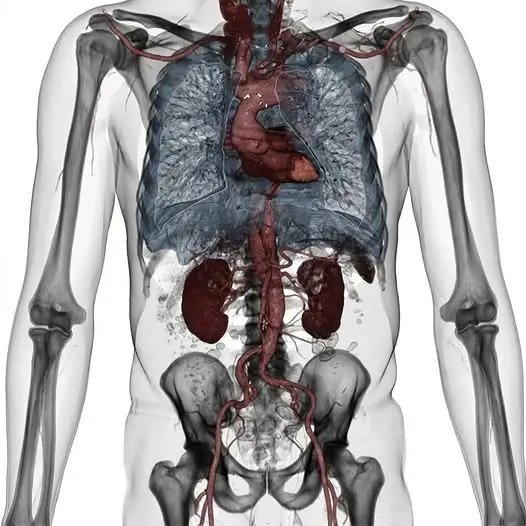
Dr. Michael Harris Facebook ad creative
aurivita.co
If Your Father Died Of A Heart Attack Before 65, Your Body Is Warning You.
Learn more

Dr. Michael Harris Facebook and Instagram ad

Dr. Michael Harris ran this image ad since Jun 26, 2026, 134 days so far.

First seen
Jun 26, 2026
Running for
134 days
Format
Image
Call to action
Learn more
Niche
Health and supplements
Countries
Not disclosed
Page likes
435

Ad copy

If your father died of a heart attack before 65 and your ejaculate has disappeared, weakened, or started going backwards, you have somewhere between three and five years before the same vascular failure that took him could reach you. I am a urologist with 19 years of practice. My own father died at 62. I have spent the last decade watching men carry their fathers' cardiac timelines into my office and offering them nothing more than the same prescription cascade that did not save the previous generation. I am writing this letter to break that silence. If you are a man with a father, brother, uncle, or grandfather who died of a heart attack before 65, your cardiovascular risk does not start at the cuff reading on your next physical. It started the day you inherited the same vascular biology that took him. And if your ejaculate has started disappearing — if your stream has weakened, if your morning erections have started fading — your body is sending you the warning his body did not get the chance to act on. I'm Dr. Daniel Westbrook. I'm a board-certified urologist whose father died of a heart attack at 62, and who spent the next decade after that loss writing eight-minute prescriptions to men with the same family history without ever telling them what their bodies were trying to warn them about. When my own urinary and vascular symptoms started at 51, I knew something I had never explained to a single patient with a family history. The prostate isn't the disease. The erection isn't the disease. The retrograde ejaculation isn't the disease. They are all symptoms of one underlying problem — the same systemic vascular damage that ran through your father's body and ended his life in his late fifties or early sixties is now expressing itself in yours. Almost every standard urological treatment masks the symptom while the underlying disease compounds toward the same cardiac event that took him. I have treated thousands of men with a family history of early cardiac death in my career. I have seen what happens to the son whose father died at 58. To the brother whose older brother died at 61. To the grandson whose grandfather died at 63 and whose own father had bypass surgery at 59. And I have seen what almost no urologist documents properly because the appointments are too short and family history is a checkbox on intake forms rather than a clinical signal that ought to change the conversation. The 53-year-old. His father died of a heart attack at 61. He came in for urinary symptoms last fall. PSA crept past 4. Blood pressure 142 over 90. His ejaculate had been disappearing for two years and he had not told me at his previous visits. He had been carrying the silent terror of watching his father go down at 61 — and he was 53 — and his body had been screaming the same warning his father's body had screamed and that nobody had translated. He almost left my office that day with a tamsulosin prescription. The same protocol that would have masked his most urgent biological signal at the exact moment in his life when he needed to read it. The 49-year-old. Two older brothers, both gone before 60. One at 56 from a heart attack, one at 58 from a stroke. He came in with weakening stream and waking up two or three times a night. No prescriptions yet. His primary care doctor had not even mentioned his family history at his last physical. His PSA was 3.6. His blood pressure was 144 over 92. His cholesterol was 218. His morning erections had started fading the previous year and his ejaculatory volume had visibly decreased. He had been carrying the certainty that he was going to die before 60 — the family pattern was that clear — and his body had been sending him every conceivable form of the same warning that took his brothers. I see these men in follow-up appointments. They do not complain. They are grateful I am "managing" their condition. They have accepted that they are simply going to follow their fathers and brothers into the cascade. But I know what they lost. They had years to address the endothelial dysfunction that was producing every one of their symptoms simultaneously — the same dysfunction that almost certainly killed the family members they grew up watching. Years to restore nitric oxide signaling. Years to break the pattern. Their symptoms had been screaming the warning the entire time. The medical system answered each scream with a different prescription while the underlying endothelial damage compounded toward the cardiac event that ran in the family. What almost no doctor explains to a man with a family history of early cardiac death is this. Cardiovascular disease that kills men in their late fifties and early sixties is rarely a sudden event. It is the endpoint of a decades-long progression of endothelial dysfunction — the slow degradation of the nitric oxide-producing lining of every blood vessel in the body. The endpoint is the heart attack. The middle of the disease is the rising blood pressure, the slow narrowing of arteries, the inflammation in the lining of every vessel. The earliest expression of the disease — five to ten years before the cardiac event — is the failure of the smallest vessels first. The penile arteries. The bladder neck. The microvasculature of the prostate. This is true for every man with the disease. It is more aggressively true for men who inherited a genetic predisposition to it. If your father died at 58, 60, 62, or 64 of a cardiac event, you inherited the underlying vulnerability. Not certainty — vulnerability. Whether the inherited vulnerability becomes the same outcome depends on the next twenty years of your life. On whether the endothelial dysfunction that runs in your family gets identified early and addressed at the cellular level, or whether each downstream symptom gets handed a separate prescription while the underlying disease compounds toward the same endpoint. The retrograde ejaculation you have been quietly living with is not the warning. The fading erections are the warning. The urinary symptoms that came before them are the warning before the warning. The plaque slowly accumulating in your coronary arteries — silent for now, symptomatic later, exactly the way it was silent in your father's body before it killed him — is the disease. A 2006 study in European Urology documented this timeline. Erectile dysfunction precedes the first cardiovascular event by an average of three to five years. In men with a first-degree family history of premature cardiac death, the timeline shortens. The vascular disease tends to express itself earlier and progress faster because the underlying vulnerability is more deeply established. Your prostate symptoms are not embarrassing. Your retrograde ejaculation is not just "what your body does at your age." They are the warnings your father's body never got the chance to act on. I was not going to start the cascade I had been writing for thousands of men with family histories like mine. Not after my own father. I tried what men with family history try. Aggressive Mediterranean diet. Exercise five days a week. Weight loss. Helped some markers. Did not move the urinary symptoms. Standard supplements. Saw palmetto. Pumpkin seed oil. Beta-sitosterol. L-arginine. The standard list. Did not move the needle. My PSA was stable. My weight had come down. My LDL was decent. But my nitric oxide markers stayed low. My flow rate stayed weak. My morning erections stayed inconsistent. The lifestyle work had improved some surface markers while the inherited endothelial vulnerability continued to express itself in the same pattern that had taken my father. But I kept thinking about something that made no sense in standard practice. Endothelial dysfunction can be partially reversed even in men with hereditary vascular vulnerability if the right cellular pathway is activated. Nitric oxide production can be restored. The cardiology research had been showing this for fifteen years. Almost no one in primary care or urology was applying it to the family-history population specifically. So why was I not applying it to myself? November 14th. 10:23 PM. I was reviewing journals after a long clinic day. Couldn't sleep. The urinary symptoms were worse. The morning erections were almost completely gone. I was 51 years old and my father had died at 62. I had eleven years according to the family pattern. I was scrolling through research on endothelial dysfunction interventions. Not looking for anything specific. Just tired and afraid in a way I had not let myself feel since the day my father went down. I found a paper on capsaicin and TRPV1 receptor activation in vascular endothelium. Capsaicin from chili peppers activates TRPV1 receptors in the lining of every blood vessel in the body. These receptors trigger sustained nitric oxide release through a pathway that remains responsive even in patients with hereditary endothelial vulnerability. Nitric oxide causes the smooth muscle in arteries — and in the prostate, and in the corpora cavernosa, and at the bladder neck — to function correctly. The mechanism didn't just support symptom relief. It supported endothelial repair across populations. Sustained capsaicin exposure had been shown in multiple studies to reverse early endothelial dysfunction, reduce arterial inflammation, and restore nitric oxide signaling — including in patients with documented family history of cardiovascular disease. David Julius at UCSF won the Nobel Prize in 2021 specifically for the TRPV1 discovery. I sat there at 10:23 PM staring at the diagram and thinking about my father. He had died on a Tuesday morning at the kitchen table. Reaching for his coffee. He had been having urinary symptoms for years. He had been having difficulty with morning erections for at least a decade. He had been on Lisinopril for fifteen years. Nobody had ever connected any of those symptoms to the cardiac event that finally took him. Every single one of them had been there. Every single one of them had been masked or ignored. Tamsulosin forces smooth muscle relaxation by blocking alpha-1 adrenoceptors. The relaxation lasts as long as the medication is in your bloodstream. Your underlying endothelial dysfunction does not improve. Capsaicin activates your body's natural TRPV1 receptors. Continuous nitric oxide release. Natural sustained smooth muscle tone. Your endothelium heals instead of being chemically suppressed. The vascular dysfunction causing your urinary symptoms, your retrograde ejaculation, your fading erections, and your inherited cardiovascular risk simultaneously — actually improves. At 11:11 PM I went looking for a properly formulated capsaicin supplement. What I learned during that search is something every man with a family history who tries capsaicin needs to know. Capsaicin is fat-soluble. When you swallow a powdered cayenne capsule, your stomach acid destroys most of the active compound before it reaches your bloodstream. For capsaicin to actually reach the endothelial cells where TRPV1 lives, it must be dissolved in an oleic-acid-rich oil before it enters your body. Cold-pressed avocado oil is the carrier the research uses. Absorption rates go from 10 percent to nearly 90 percent. Almost no supplement on the market does this. Most use the cheapest possible carrier oils — soybean oil, safflower oil, sunflower oil. The same family of refined seed oils documented to drive arterial inflammation. I found one brand that was different. Aurivita Capsaicin Power. 3mg of pharmaceutical-grade capsaicin per softgel. Cold-pressed avocado oil base. BioPerine. Hawthorn, beetroot, Korean Red Ginseng, D3, K2. I ordered a bag that night. Three softgels in the morning with breakfast. I started November 15th. November 22nd. One week in. Morning erections returning. November 29th. Two weeks in. Did not wake up to urinate the previous night for the first time in two years. December 13th. Four weeks in. Morning erections every day. Full stream returning. My wife asked what I had changed. "Different approach," I told her. "Whatever it is, keep doing it." January 10th. Eight weeks in. Repeat bloodwork. Blood pressure down from 144 over 88 to 126 over 78. Inflammatory markers down across the panel. LDL down 23 points. I went back to my urologist colleague for a flow study and a digital exam. He looked at my flow rate. Looked at his notes from six months ago. "Dan, what did you do?" I explained the TRPV1 receptor activation. The continuous nitric oxide pathway. The capsaicin mechanism. The way it remained effective even with hereditary vulnerability. He was quiet for a long moment. "I have hundreds of patients with family histories of early cardiac death. If what you are describing is reproducible..." "The mechanism is real." He started ordering it for his patients with strong family histories who had urinary symptoms and weak flow. I am not writing this letter because I am against medications. Antihypertensives, statins, tamsulosin — they all have their place. But none of them fix your underlying endothelial dysfunction. None of them address the inherited vascular vulnerability that ran through your father's body and is now running through yours. None of them reverse the disease. They mask each individual symptom while the same pattern that killed your father continues to express itself in you. And I see what happens five years later when men carrying their fathers' cardiac timelines walk into my office having had their first event. The urinary symptoms had been there for years. The retrograde ejaculation had been there. The erectile dysfunction had been there. The medical system had answered each warning with a different prescription while the family pattern arrived on schedule. Your prostate symptoms are not failing you. Your retrograde ejaculation is not failing you. They are warning you the way your father's symptoms warned him — and you have the chance to do something he did not. I think about what I almost did. I almost started tamsulosin on top of the lifestyle work. I almost accepted retrograde ejaculation as the cost of "managing" my urinary symptoms while the family pattern came for me on the same timeline it came for my father. Eight weeks. That is how long it took my blood pressure to drop, my urinary symptoms to ease, my morning erections to return, and my flow rate to recover to where it had been at 45. Eight weeks of letting my endothelium do what it was designed to do. Heal. I think about my father a lot. He was a quiet, careful man. He did what his doctors told him to do. He took his Lisinopril every morning. He cut salt. He walked. He told us he was fine. And his body was sending him every conceivable form of the same warning that took him, and nobody told him what those warnings were, and he died at the kitchen table at 62. I am not going to die at 62. Not because I am special. Because somebody who knew the mechanism finally told me what my body had been warning me about. That is what I am doing for you now. Your retrograde ejaculation is the warning your father's body sent him too. The one nobody translated. The one that, if your medical team takes the standard approach, will be masked into silence with a tamsulosin prescription while the family pattern continues to express itself underneath. You can break the pattern. Or you can follow it. I broke mine. I want you to break yours. Aurivita Capsaicin Power costs $54 for 60 days. 120-day money-back guarantee. Send back the bags, even empty, if your symptoms have not measurably improved. aurivita.co/products/cayenne-pepper-softgels — Dr. Daniel Westbrook, MDBoard-Certified Urologist, 19 yearsPracticing physicianSon of a man who died of a heart attack at 62 P.S. — Give it 60 to 90 days. The upside is the version of yourself that does not become the next entry in your family's cardiac timeline. P.P.S. — Your son is watching. Whatever you do now, he will inherit not just your vascular biology but your example. Break the pattern for him. Activate TRPV1 now, before the cascade your medical team is treating as ordinary reaches the same endpoint it reached in the previous generation.

Placements and targeting

FacebookInstagramMessengerThreads

More ads from Dr. Michael Harris

Full Dr. Michael Harris profile
Dr. Michael Harris
Dr. Michael Harris
Inactive134 days
aurivita.co
If Your Father Died Of A Heart Attack Before 65, Your Body Is Warning You.
Learn more

If your father died of a heart attack before 65 and your ejaculate has disappeared, weakened, or started going backwards, you have somewhere between three and five years before the same vascular failure that took him could reach you. I am a urologist with 19 years of practice. My own father died at 62. I have spent the last decade watching men carry their fathers' cardiac timelines into my office and offering them nothing more than the same prescription cascade that did not save the previous generation. I am writing this letter to break that silence. If you are a man with a father, brother, uncle, or grandfather who died of a heart attack before 65, your cardiovascular risk does not start at the cuff reading on your next physical. It started the day you inherited the same vascular biology that took him. And if your ejaculate has started disappearing — if your stream has weakened, if your morning erections have started fading — your body is sending you the warning his body did not get the chance to act on. I'm Dr. Daniel Westbrook. I'm a board-certified urologist whose father died of a heart attack at 62, and who spent the next decade after that loss writing eight-minute prescriptions to men with the same family history without ever telling them what their bodies were trying to warn them about. When my own urinary and vascular symptoms started at 51, I knew something I had never explained to a single patient with a family history. The prostate isn't the disease. The erection isn't the disease. The retrograde ejaculation isn't the disease. They are all symptoms of one underlying problem — the same systemic vascular damage that ran through your father's body and ended his life in his late fifties or early sixties is now expressing itself in yours. Almost every standard urological treatment masks the symptom while the underlying disease compounds toward the same cardiac event that took him. I have treated thousands of men with a family history of early cardiac death in my career. I have seen what happens to the son whose father died at 58. To the brother whose older brother died at 61. To the grandson whose grandfather died at 63 and whose own father had bypass surgery at 59. And I have seen what almost no urologist documents properly because the appointments are too short and family history is a checkbox on intake forms rather than a clinical signal that ought to change the conversation. The 53-year-old. His father died of a heart attack at 61. He came in for urinary symptoms last fall. PSA crept past 4. Blood pressure 142 over 90. His ejaculate had been disappearing for two years and he had not told me at his previous visits. He had been carrying the silent terror of watching his father go down at 61 — and he was 53 — and his body had been screaming the same warning his father's body had screamed and that nobody had translated. He almost left my office that day with a tamsulosin prescription. The same protocol that would have masked his most urgent biological signal at the exact moment in his life when he needed to read it. The 49-year-old. Two older brothers, both gone before 60. One at 56 from a heart attack, one at 58 from a stroke. He came in with weakening stream and waking up two or three times a night. No prescriptions yet. His primary care doctor had not even mentioned his family history at his last physical. His PSA was 3.6. His blood pressure was 144 over 92. His cholesterol was 218. His morning erections had started fading the previous year and his ejaculatory volume had visibly decreased. He had been carrying the certainty that he was going to die before 60 — the family pattern was that clear — and his body had been sending him every conceivable form of the same warning that took his brothers. I see these men in follow-up appointments. They do not complain. They are grateful I am "managing" their condition. They have accepted that they are simply going to follow their fathers and brothers into the cascade. But I know what they lost. They had years to address the endothelial dysfunction that was producing every one of their symptoms simultaneously — the same dysfunction that almost certainly killed the family members they grew up watching. Years to restore nitric oxide signaling. Years to break the pattern. Their symptoms had been screaming the warning the entire time. The medical system answered each scream with a different prescription while the underlying endothelial damage compounded toward the cardiac event that ran in the family. What almost no doctor explains to a man with a family history of early cardiac death is this. Cardiovascular disease that kills men in their late fifties and early sixties is rarely a sudden event. It is the endpoint of a decades-long progression of endothelial dysfunction — the slow degradation of the nitric oxide-producing lining of every blood vessel in the body. The endpoint is the heart attack. The middle of the disease is the rising blood pressure, the slow narrowing of arteries, the inflammation in the lining of every vessel. The earliest expression of the disease — five to ten years before the cardiac event — is the failure of the smallest vessels first. The penile arteries. The bladder neck. The microvasculature of the prostate. This is true for every man with the disease. It is more aggressively true for men who inherited a genetic predisposition to it. If your father died at 58, 60, 62, or 64 of a cardiac event, you inherited the underlying vulnerability. Not certainty — vulnerability. Whether the inherited vulnerability becomes the same outcome depends on the next twenty years of your life. On whether the endothelial dysfunction that runs in your family gets identified early and addressed at the cellular level, or whether each downstream symptom gets handed a separate prescription while the underlying disease compounds toward the same endpoint. The retrograde ejaculation you have been quietly living with is not the warning. The fading erections are the warning. The urinary symptoms that came before them are the warning before the warning. The plaque slowly accumulating in your coronary arteries — silent for now, symptomatic later, exactly the way it was silent in your father's body before it killed him — is the disease. A 2006 study in European Urology documented this timeline. Erectile dysfunction precedes the first cardiovascular event by an average of three to five years. In men with a first-degree family history of premature cardiac death, the timeline shortens. The vascular disease tends to express itself earlier and progress faster because the underlying vulnerability is more deeply established. Your prostate symptoms are not embarrassing. Your retrograde ejaculation is not just "what your body does at your age." They are the warnings your father's body never got the chance to act on. I was not going to start the cascade I had been writing for thousands of men with family histories like mine. Not after my own father. I tried what men with family history try. Aggressive Mediterranean diet. Exercise five days a week. Weight loss. Helped some markers. Did not move the urinary symptoms. Standard supplements. Saw palmetto. Pumpkin seed oil. Beta-sitosterol. L-arginine. The standard list. Did not move the needle. My PSA was stable. My weight had come down. My LDL was decent. But my nitric oxide markers stayed low. My flow rate stayed weak. My morning erections stayed inconsistent. The lifestyle work had improved some surface markers while the inherited endothelial vulnerability continued to express itself in the same pattern that had taken my father. But I kept thinking about something that made no sense in standard practice. Endothelial dysfunction can be partially reversed even in men with hereditary vascular vulnerability if the right cellular pathway is activated. Nitric oxide production can be restored. The cardiology research had been showing this for fifteen years. Almost no one in primary care or urology was applying it to the family-history population specifically. So why was I not applying it to myself? November 14th. 10:23 PM. I was reviewing journals after a long clinic day. Couldn't sleep. The urinary symptoms were worse. The morning erections were almost completely gone. I was 51 years old and my father had died at 62. I had eleven years according to the family pattern. I was scrolling through research on endothelial dysfunction interventions. Not looking for anything specific. Just tired and afraid in a way I had not let myself feel since the day my father went down. I found a paper on capsaicin and TRPV1 receptor activation in vascular endothelium. Capsaicin from chili peppers activates TRPV1 receptors in the lining of every blood vessel in the body. These receptors trigger sustained nitric oxide release through a pathway that remains responsive even in patients with hereditary endothelial vulnerability. Nitric oxide causes the smooth muscle in arteries — and in the prostate, and in the corpora cavernosa, and at the bladder neck — to function correctly. The mechanism didn't just support symptom relief. It supported endothelial repair across populations. Sustained capsaicin exposure had been shown in multiple studies to reverse early endothelial dysfunction, reduce arterial inflammation, and restore nitric oxide signaling — including in patients with documented family history of cardiovascular disease. David Julius at UCSF won the Nobel Prize in 2021 specifically for the TRPV1 discovery. I sat there at 10:23 PM staring at the diagram and thinking about my father. He had died on a Tuesday morning at the kitchen table. Reaching for his coffee. He had been having urinary symptoms for years. He had been having difficulty with morning erections for at least a decade. He had been on Lisinopril for fifteen years. Nobody had ever connected any of those symptoms to the cardiac event that finally took him. Every single one of them had been there. Every single one of them had been masked or ignored. Tamsulosin forces smooth muscle relaxation by blocking alpha-1 adrenoceptors. The relaxation lasts as long as the medication is in your bloodstream. Your underlying endothelial dysfunction does not improve. Capsaicin activates your body's natural TRPV1 receptors. Continuous nitric oxide release. Natural sustained smooth muscle tone. Your endothelium heals instead of being chemically suppressed. The vascular dysfunction causing your urinary symptoms, your retrograde ejaculation, your fading erections, and your inherited cardiovascular risk simultaneously — actually improves. At 11:11 PM I went looking for a properly formulated capsaicin supplement. What I learned during that search is something every man with a family history who tries capsaicin needs to know. Capsaicin is fat-soluble. When you swallow a powdered cayenne capsule, your stomach acid destroys most of the active compound before it reaches your bloodstream. For capsaicin to actually reach the endothelial cells where TRPV1 lives, it must be dissolved in an oleic-acid-rich oil before it enters your body. Cold-pressed avocado oil is the carrier the research uses. Absorption rates go from 10 percent to nearly 90 percent. Almost no supplement on the market does this. Most use the cheapest possible carrier oils — soybean oil, safflower oil, sunflower oil. The same family of refined seed oils documented to drive arterial inflammation. I found one brand that was different. Aurivita Capsaicin Power. 3mg of pharmaceutical-grade capsaicin per softgel. Cold-pressed avocado oil base. BioPerine. Hawthorn, beetroot, Korean Red Ginseng, D3, K2. I ordered a bag that night. Three softgels in the morning with breakfast. I started November 15th. November 22nd. One week in. Morning erections returning. November 29th. Two weeks in. Did not wake up to urinate the previous night for the first time in two years. December 13th. Four weeks in. Morning erections every day. Full stream returning. My wife asked what I had changed. "Different approach," I told her. "Whatever it is, keep doing it." January 10th. Eight weeks in. Repeat bloodwork. Blood pressure down from 144 over 88 to 126 over 78. Inflammatory markers down across the panel. LDL down 23 points. I went back to my urologist colleague for a flow study and a digital exam. He looked at my flow rate. Looked at his notes from six months ago. "Dan, what did you do?" I explained the TRPV1 receptor activation. The continuous nitric oxide pathway. The capsaicin mechanism. The way it remained effective even with hereditary vulnerability. He was quiet for a long moment. "I have hundreds of patients with family histories of early cardiac death. If what you are describing is reproducible..." "The mechanism is real." He started ordering it for his patients with strong family histories who had urinary symptoms and weak flow. I am not writing this letter because I am against medications. Antihypertensives, statins, tamsulosin — they all have their place. But none of them fix your underlying endothelial dysfunction. None of them address the inherited vascular vulnerability that ran through your father's body and is now running through yours. None of them reverse the disease. They mask each individual symptom while the same pattern that killed your father continues to express itself in you. And I see what happens five years later when men carrying their fathers' cardiac timelines walk into my office having had their first event. The urinary symptoms had been there for years. The retrograde ejaculation had been there. The erectile dysfunction had been there. The medical system had answered each warning with a different prescription while the family pattern arrived on schedule. Your prostate symptoms are not failing you. Your retrograde ejaculation is not failing you. They are warning you the way your father's symptoms warned him — and you have the chance to do something he did not. I think about what I almost did. I almost started tamsulosin on top of the lifestyle work. I almost accepted retrograde ejaculation as the cost of "managing" my urinary symptoms while the family pattern came for me on the same timeline it came for my father. Eight weeks. That is how long it took my blood pressure to drop, my urinary symptoms to ease, my morning erections to return, and my flow rate to recover to where it had been at 45. Eight weeks of letting my endothelium do what it was designed to do. Heal. I think about my father a lot. He was a quiet, careful man. He did what his doctors told him to do. He took his Lisinopril every morning. He cut salt. He walked. He told us he was fine. And his body was sending him every conceivable form of the same warning that took him, and nobody told him what those warnings were, and he died at the kitchen table at 62. I am not going to die at 62. Not because I am special. Because somebody who knew the mechanism finally told me what my body had been warning me about. That is what I am doing for you now. Your retrograde ejaculation is the warning your father's body sent him too. The one nobody translated. The one that, if your medical team takes the standard approach, will be masked into silence with a tamsulosin prescription while the family pattern continues to express itself underneath. You can break the pattern. Or you can follow it. I broke mine. I want you to break yours. Aurivita Capsaicin Power costs $54 for 60 days. 120-day money-back guarantee. Send back the bags, even empty, if your symptoms have not measurably improved. aurivita.co/products/cayenne-pepper-softgels — Dr. Daniel Westbrook, MDBoard-Certified Urologist, 19 yearsPracticing physicianSon of a man who died of a heart attack at 62 P.S. — Give it 60 to 90 days. The upside is the version of yourself that does not become the next entry in your family's cardiac timeline. P.P.S. — Your son is watching. Whatever you do now, he will inherit not just your vascular biology but your example. Break the pattern for him. Activate TRPV1 now, before the cascade your medical team is treating as ordinary reaches the same endpoint it reached in the previous generation.

Dr. Michael Harris
Dr. Michael Harris
Inactive134 days
aurivita.co
If Your Father Died Of A Heart Attack Before 65, Your Body Is Warning You.
Learn more

If your father died of a heart attack before 65 and your ejaculate has disappeared, weakened, or started going backwards, you have somewhere between three and five years before the same vascular failure that took him could reach you. I am a urologist with 19 years of practice. My own father died at 62. I have spent the last decade watching men carry their fathers' cardiac timelines into my office and offering them nothing more than the same prescription cascade that did not save the previous generation. I am writing this letter to break that silence. If you are a man with a father, brother, uncle, or grandfather who died of a heart attack before 65, your cardiovascular risk does not start at the cuff reading on your next physical. It started the day you inherited the same vascular biology that took him. And if your ejaculate has started disappearing — if your stream has weakened, if your morning erections have started fading — your body is sending you the warning his body did not get the chance to act on. I'm Dr. Daniel Westbrook. I'm a board-certified urologist whose father died of a heart attack at 62, and who spent the next decade after that loss writing eight-minute prescriptions to men with the same family history without ever telling them what their bodies were trying to warn them about. When my own urinary and vascular symptoms started at 51, I knew something I had never explained to a single patient with a family history. The prostate isn't the disease. The erection isn't the disease. The retrograde ejaculation isn't the disease. They are all symptoms of one underlying problem — the same systemic vascular damage that ran through your father's body and ended his life in his late fifties or early sixties is now expressing itself in yours. Almost every standard urological treatment masks the symptom while the underlying disease compounds toward the same cardiac event that took him. I have treated thousands of men with a family history of early cardiac death in my career. I have seen what happens to the son whose father died at 58. To the brother whose older brother died at 61. To the grandson whose grandfather died at 63 and whose own father had bypass surgery at 59. And I have seen what almost no urologist documents properly because the appointments are too short and family history is a checkbox on intake forms rather than a clinical signal that ought to change the conversation. The 53-year-old. His father died of a heart attack at 61. He came in for urinary symptoms last fall. PSA crept past 4. Blood pressure 142 over 90. His ejaculate had been disappearing for two years and he had not told me at his previous visits. He had been carrying the silent terror of watching his father go down at 61 — and he was 53 — and his body had been screaming the same warning his father's body had screamed and that nobody had translated. He almost left my office that day with a tamsulosin prescription. The same protocol that would have masked his most urgent biological signal at the exact moment in his life when he needed to read it. The 49-year-old. Two older brothers, both gone before 60. One at 56 from a heart attack, one at 58 from a stroke. He came in with weakening stream and waking up two or three times a night. No prescriptions yet. His primary care doctor had not even mentioned his family history at his last physical. His PSA was 3.6. His blood pressure was 144 over 92. His cholesterol was 218. His morning erections had started fading the previous year and his ejaculatory volume had visibly decreased. He had been carrying the certainty that he was going to die before 60 — the family pattern was that clear — and his body had been sending him every conceivable form of the same warning that took his brothers. I see these men in follow-up appointments. They do not complain. They are grateful I am "managing" their condition. They have accepted that they are simply going to follow their fathers and brothers into the cascade. But I know what they lost. They had years to address the endothelial dysfunction that was producing every one of their symptoms simultaneously — the same dysfunction that almost certainly killed the family members they grew up watching. Years to restore nitric oxide signaling. Years to break the pattern. Their symptoms had been screaming the warning the entire time. The medical system answered each scream with a different prescription while the underlying endothelial damage compounded toward the cardiac event that ran in the family. What almost no doctor explains to a man with a family history of early cardiac death is this. Cardiovascular disease that kills men in their late fifties and early sixties is rarely a sudden event. It is the endpoint of a decades-long progression of endothelial dysfunction — the slow degradation of the nitric oxide-producing lining of every blood vessel in the body. The endpoint is the heart attack. The middle of the disease is the rising blood pressure, the slow narrowing of arteries, the inflammation in the lining of every vessel. The earliest expression of the disease — five to ten years before the cardiac event — is the failure of the smallest vessels first. The penile arteries. The bladder neck. The microvasculature of the prostate. This is true for every man with the disease. It is more aggressively true for men who inherited a genetic predisposition to it. If your father died at 58, 60, 62, or 64 of a cardiac event, you inherited the underlying vulnerability. Not certainty — vulnerability. Whether the inherited vulnerability becomes the same outcome depends on the next twenty years of your life. On whether the endothelial dysfunction that runs in your family gets identified early and addressed at the cellular level, or whether each downstream symptom gets handed a separate prescription while the underlying disease compounds toward the same endpoint. The retrograde ejaculation you have been quietly living with is not the warning. The fading erections are the warning. The urinary symptoms that came before them are the warning before the warning. The plaque slowly accumulating in your coronary arteries — silent for now, symptomatic later, exactly the way it was silent in your father's body before it killed him — is the disease. A 2006 study in European Urology documented this timeline. Erectile dysfunction precedes the first cardiovascular event by an average of three to five years. In men with a first-degree family history of premature cardiac death, the timeline shortens. The vascular disease tends to express itself earlier and progress faster because the underlying vulnerability is more deeply established. Your prostate symptoms are not embarrassing. Your retrograde ejaculation is not just "what your body does at your age." They are the warnings your father's body never got the chance to act on. I was not going to start the cascade I had been writing for thousands of men with family histories like mine. Not after my own father. I tried what men with family history try. Aggressive Mediterranean diet. Exercise five days a week. Weight loss. Helped some markers. Did not move the urinary symptoms. Standard supplements. Saw palmetto. Pumpkin seed oil. Beta-sitosterol. L-arginine. The standard list. Did not move the needle. My PSA was stable. My weight had come down. My LDL was decent. But my nitric oxide markers stayed low. My flow rate stayed weak. My morning erections stayed inconsistent. The lifestyle work had improved some surface markers while the inherited endothelial vulnerability continued to express itself in the same pattern that had taken my father. But I kept thinking about something that made no sense in standard practice. Endothelial dysfunction can be partially reversed even in men with hereditary vascular vulnerability if the right cellular pathway is activated. Nitric oxide production can be restored. The cardiology research had been showing this for fifteen years. Almost no one in primary care or urology was applying it to the family-history population specifically. So why was I not applying it to myself? November 14th. 10:23 PM. I was reviewing journals after a long clinic day. Couldn't sleep. The urinary symptoms were worse. The morning erections were almost completely gone. I was 51 years old and my father had died at 62. I had eleven years according to the family pattern. I was scrolling through research on endothelial dysfunction interventions. Not looking for anything specific. Just tired and afraid in a way I had not let myself feel since the day my father went down. I found a paper on capsaicin and TRPV1 receptor activation in vascular endothelium. Capsaicin from chili peppers activates TRPV1 receptors in the lining of every blood vessel in the body. These receptors trigger sustained nitric oxide release through a pathway that remains responsive even in patients with hereditary endothelial vulnerability. Nitric oxide causes the smooth muscle in arteries — and in the prostate, and in the corpora cavernosa, and at the bladder neck — to function correctly. The mechanism didn't just support symptom relief. It supported endothelial repair across populations. Sustained capsaicin exposure had been shown in multiple studies to reverse early endothelial dysfunction, reduce arterial inflammation, and restore nitric oxide signaling — including in patients with documented family history of cardiovascular disease. David Julius at UCSF won the Nobel Prize in 2021 specifically for the TRPV1 discovery. I sat there at 10:23 PM staring at the diagram and thinking about my father. He had died on a Tuesday morning at the kitchen table. Reaching for his coffee. He had been having urinary symptoms for years. He had been having difficulty with morning erections for at least a decade. He had been on Lisinopril for fifteen years. Nobody had ever connected any of those symptoms to the cardiac event that finally took him. Every single one of them had been there. Every single one of them had been masked or ignored. Tamsulosin forces smooth muscle relaxation by blocking alpha-1 adrenoceptors. The relaxation lasts as long as the medication is in your bloodstream. Your underlying endothelial dysfunction does not improve. Capsaicin activates your body's natural TRPV1 receptors. Continuous nitric oxide release. Natural sustained smooth muscle tone. Your endothelium heals instead of being chemically suppressed. The vascular dysfunction causing your urinary symptoms, your retrograde ejaculation, your fading erections, and your inherited cardiovascular risk simultaneously — actually improves. At 11:11 PM I went looking for a properly formulated capsaicin supplement. What I learned during that search is something every man with a family history who tries capsaicin needs to know. Capsaicin is fat-soluble. When you swallow a powdered cayenne capsule, your stomach acid destroys most of the active compound before it reaches your bloodstream. For capsaicin to actually reach the endothelial cells where TRPV1 lives, it must be dissolved in an oleic-acid-rich oil before it enters your body. Cold-pressed avocado oil is the carrier the research uses. Absorption rates go from 10 percent to nearly 90 percent. Almost no supplement on the market does this. Most use the cheapest possible carrier oils — soybean oil, safflower oil, sunflower oil. The same family of refined seed oils documented to drive arterial inflammation. I found one brand that was different. Aurivita Capsaicin Power. 3mg of pharmaceutical-grade capsaicin per softgel. Cold-pressed avocado oil base. BioPerine. Hawthorn, beetroot, Korean Red Ginseng, D3, K2. I ordered a bag that night. Three softgels in the morning with breakfast. I started November 15th. November 22nd. One week in. Morning erections returning. November 29th. Two weeks in. Did not wake up to urinate the previous night for the first time in two years. December 13th. Four weeks in. Morning erections every day. Full stream returning. My wife asked what I had changed. "Different approach," I told her. "Whatever it is, keep doing it." January 10th. Eight weeks in. Repeat bloodwork. Blood pressure down from 144 over 88 to 126 over 78. Inflammatory markers down across the panel. LDL down 23 points. I went back to my urologist colleague for a flow study and a digital exam. He looked at my flow rate. Looked at his notes from six months ago. "Dan, what did you do?" I explained the TRPV1 receptor activation. The continuous nitric oxide pathway. The capsaicin mechanism. The way it remained effective even with hereditary vulnerability. He was quiet for a long moment. "I have hundreds of patients with family histories of early cardiac death. If what you are describing is reproducible..." "The mechanism is real." He started ordering it for his patients with strong family histories who had urinary symptoms and weak flow. I am not writing this letter because I am against medications. Antihypertensives, statins, tamsulosin — they all have their place. But none of them fix your underlying endothelial dysfunction. None of them address the inherited vascular vulnerability that ran through your father's body and is now running through yours. None of them reverse the disease. They mask each individual symptom while the same pattern that killed your father continues to express itself in you. And I see what happens five years later when men carrying their fathers' cardiac timelines walk into my office having had their first event. The urinary symptoms had been there for years. The retrograde ejaculation had been there. The erectile dysfunction had been there. The medical system had answered each warning with a different prescription while the family pattern arrived on schedule. Your prostate symptoms are not failing you. Your retrograde ejaculation is not failing you. They are warning you the way your father's symptoms warned him — and you have the chance to do something he did not. I think about what I almost did. I almost started tamsulosin on top of the lifestyle work. I almost accepted retrograde ejaculation as the cost of "managing" my urinary symptoms while the family pattern came for me on the same timeline it came for my father. Eight weeks. That is how long it took my blood pressure to drop, my urinary symptoms to ease, my morning erections to return, and my flow rate to recover to where it had been at 45. Eight weeks of letting my endothelium do what it was designed to do. Heal. I think about my father a lot. He was a quiet, careful man. He did what his doctors told him to do. He took his Lisinopril every morning. He cut salt. He walked. He told us he was fine. And his body was sending him every conceivable form of the same warning that took him, and nobody told him what those warnings were, and he died at the kitchen table at 62. I am not going to die at 62. Not because I am special. Because somebody who knew the mechanism finally told me what my body had been warning me about. That is what I am doing for you now. Your retrograde ejaculation is the warning your father's body sent him too. The one nobody translated. The one that, if your medical team takes the standard approach, will be masked into silence with a tamsulosin prescription while the family pattern continues to express itself underneath. You can break the pattern. Or you can follow it. I broke mine. I want you to break yours. Aurivita Capsaicin Power costs $54 for 60 days. 120-day money-back guarantee. Send back the bags, even empty, if your symptoms have not measurably improved. aurivita.co/products/cayenne-pepper-softgels — Dr. Daniel Westbrook, MDBoard-Certified Urologist, 19 yearsPracticing physicianSon of a man who died of a heart attack at 62 P.S. — Give it 60 to 90 days. The upside is the version of yourself that does not become the next entry in your family's cardiac timeline. P.P.S. — Your son is watching. Whatever you do now, he will inherit not just your vascular biology but your example. Break the pattern for him. Activate TRPV1 now, before the cascade your medical team is treating as ordinary reaches the same endpoint it reached in the previous generation.

Dr. Michael Harris
Dr. Michael Harris
Inactive134 days
aurivita.co
If Your Father Died Of A Heart Attack Before 65, Your Body Is Warning You.
Learn more

If your father died of a heart attack before 65 and your ejaculate has disappeared, weakened, or started going backwards, you have somewhere between three and five years before the same vascular failure that took him could reach you. I am a urologist with 19 years of practice. My own father died at 62. I have spent the last decade watching men carry their fathers' cardiac timelines into my office and offering them nothing more than the same prescription cascade that did not save the previous generation. I am writing this letter to break that silence. If you are a man with a father, brother, uncle, or grandfather who died of a heart attack before 65, your cardiovascular risk does not start at the cuff reading on your next physical. It started the day you inherited the same vascular biology that took him. And if your ejaculate has started disappearing — if your stream has weakened, if your morning erections have started fading — your body is sending you the warning his body did not get the chance to act on. I'm Dr. Daniel Westbrook. I'm a board-certified urologist whose father died of a heart attack at 62, and who spent the next decade after that loss writing eight-minute prescriptions to men with the same family history without ever telling them what their bodies were trying to warn them about. When my own urinary and vascular symptoms started at 51, I knew something I had never explained to a single patient with a family history. The prostate isn't the disease. The erection isn't the disease. The retrograde ejaculation isn't the disease. They are all symptoms of one underlying problem — the same systemic vascular damage that ran through your father's body and ended his life in his late fifties or early sixties is now expressing itself in yours. Almost every standard urological treatment masks the symptom while the underlying disease compounds toward the same cardiac event that took him. I have treated thousands of men with a family history of early cardiac death in my career. I have seen what happens to the son whose father died at 58. To the brother whose older brother died at 61. To the grandson whose grandfather died at 63 and whose own father had bypass surgery at 59. And I have seen what almost no urologist documents properly because the appointments are too short and family history is a checkbox on intake forms rather than a clinical signal that ought to change the conversation. The 53-year-old. His father died of a heart attack at 61. He came in for urinary symptoms last fall. PSA crept past 4. Blood pressure 142 over 90. His ejaculate had been disappearing for two years and he had not told me at his previous visits. He had been carrying the silent terror of watching his father go down at 61 — and he was 53 — and his body had been screaming the same warning his father's body had screamed and that nobody had translated. He almost left my office that day with a tamsulosin prescription. The same protocol that would have masked his most urgent biological signal at the exact moment in his life when he needed to read it. The 49-year-old. Two older brothers, both gone before 60. One at 56 from a heart attack, one at 58 from a stroke. He came in with weakening stream and waking up two or three times a night. No prescriptions yet. His primary care doctor had not even mentioned his family history at his last physical. His PSA was 3.6. His blood pressure was 144 over 92. His cholesterol was 218. His morning erections had started fading the previous year and his ejaculatory volume had visibly decreased. He had been carrying the certainty that he was going to die before 60 — the family pattern was that clear — and his body had been sending him every conceivable form of the same warning that took his brothers. I see these men in follow-up appointments. They do not complain. They are grateful I am "managing" their condition. They have accepted that they are simply going to follow their fathers and brothers into the cascade. But I know what they lost. They had years to address the endothelial dysfunction that was producing every one of their symptoms simultaneously — the same dysfunction that almost certainly killed the family members they grew up watching. Years to restore nitric oxide signaling. Years to break the pattern. Their symptoms had been screaming the warning the entire time. The medical system answered each scream with a different prescription while the underlying endothelial damage compounded toward the cardiac event that ran in the family. What almost no doctor explains to a man with a family history of early cardiac death is this. Cardiovascular disease that kills men in their late fifties and early sixties is rarely a sudden event. It is the endpoint of a decades-long progression of endothelial dysfunction — the slow degradation of the nitric oxide-producing lining of every blood vessel in the body. The endpoint is the heart attack. The middle of the disease is the rising blood pressure, the slow narrowing of arteries, the inflammation in the lining of every vessel. The earliest expression of the disease — five to ten years before the cardiac event — is the failure of the smallest vessels first. The penile arteries. The bladder neck. The microvasculature of the prostate. This is true for every man with the disease. It is more aggressively true for men who inherited a genetic predisposition to it. If your father died at 58, 60, 62, or 64 of a cardiac event, you inherited the underlying vulnerability. Not certainty — vulnerability. Whether the inherited vulnerability becomes the same outcome depends on the next twenty years of your life. On whether the endothelial dysfunction that runs in your family gets identified early and addressed at the cellular level, or whether each downstream symptom gets handed a separate prescription while the underlying disease compounds toward the same endpoint. The retrograde ejaculation you have been quietly living with is not the warning. The fading erections are the warning. The urinary symptoms that came before them are the warning before the warning. The plaque slowly accumulating in your coronary arteries — silent for now, symptomatic later, exactly the way it was silent in your father's body before it killed him — is the disease. A 2006 study in European Urology documented this timeline. Erectile dysfunction precedes the first cardiovascular event by an average of three to five years. In men with a first-degree family history of premature cardiac death, the timeline shortens. The vascular disease tends to express itself earlier and progress faster because the underlying vulnerability is more deeply established. Your prostate symptoms are not embarrassing. Your retrograde ejaculation is not just "what your body does at your age." They are the warnings your father's body never got the chance to act on. I was not going to start the cascade I had been writing for thousands of men with family histories like mine. Not after my own father. I tried what men with family history try. Aggressive Mediterranean diet. Exercise five days a week. Weight loss. Helped some markers. Did not move the urinary symptoms. Standard supplements. Saw palmetto. Pumpkin seed oil. Beta-sitosterol. L-arginine. The standard list. Did not move the needle. My PSA was stable. My weight had come down. My LDL was decent. But my nitric oxide markers stayed low. My flow rate stayed weak. My morning erections stayed inconsistent. The lifestyle work had improved some surface markers while the inherited endothelial vulnerability continued to express itself in the same pattern that had taken my father. But I kept thinking about something that made no sense in standard practice. Endothelial dysfunction can be partially reversed even in men with hereditary vascular vulnerability if the right cellular pathway is activated. Nitric oxide production can be restored. The cardiology research had been showing this for fifteen years. Almost no one in primary care or urology was applying it to the family-history population specifically. So why was I not applying it to myself? November 14th. 10:23 PM. I was reviewing journals after a long clinic day. Couldn't sleep. The urinary symptoms were worse. The morning erections were almost completely gone. I was 51 years old and my father had died at 62. I had eleven years according to the family pattern. I was scrolling through research on endothelial dysfunction interventions. Not looking for anything specific. Just tired and afraid in a way I had not let myself feel since the day my father went down. I found a paper on capsaicin and TRPV1 receptor activation in vascular endothelium. Capsaicin from chili peppers activates TRPV1 receptors in the lining of every blood vessel in the body. These receptors trigger sustained nitric oxide release through a pathway that remains responsive even in patients with hereditary endothelial vulnerability. Nitric oxide causes the smooth muscle in arteries — and in the prostate, and in the corpora cavernosa, and at the bladder neck — to function correctly. The mechanism didn't just support symptom relief. It supported endothelial repair across populations. Sustained capsaicin exposure had been shown in multiple studies to reverse early endothelial dysfunction, reduce arterial inflammation, and restore nitric oxide signaling — including in patients with documented family history of cardiovascular disease. David Julius at UCSF won the Nobel Prize in 2021 specifically for the TRPV1 discovery. I sat there at 10:23 PM staring at the diagram and thinking about my father. He had died on a Tuesday morning at the kitchen table. Reaching for his coffee. He had been having urinary symptoms for years. He had been having difficulty with morning erections for at least a decade. He had been on Lisinopril for fifteen years. Nobody had ever connected any of those symptoms to the cardiac event that finally took him. Every single one of them had been there. Every single one of them had been masked or ignored. Tamsulosin forces smooth muscle relaxation by blocking alpha-1 adrenoceptors. The relaxation lasts as long as the medication is in your bloodstream. Your underlying endothelial dysfunction does not improve. Capsaicin activates your body's natural TRPV1 receptors. Continuous nitric oxide release. Natural sustained smooth muscle tone. Your endothelium heals instead of being chemically suppressed. The vascular dysfunction causing your urinary symptoms, your retrograde ejaculation, your fading erections, and your inherited cardiovascular risk simultaneously — actually improves. At 11:11 PM I went looking for a properly formulated capsaicin supplement. What I learned during that search is something every man with a family history who tries capsaicin needs to know. Capsaicin is fat-soluble. When you swallow a powdered cayenne capsule, your stomach acid destroys most of the active compound before it reaches your bloodstream. For capsaicin to actually reach the endothelial cells where TRPV1 lives, it must be dissolved in an oleic-acid-rich oil before it enters your body. Cold-pressed avocado oil is the carrier the research uses. Absorption rates go from 10 percent to nearly 90 percent. Almost no supplement on the market does this. Most use the cheapest possible carrier oils — soybean oil, safflower oil, sunflower oil. The same family of refined seed oils documented to drive arterial inflammation. I found one brand that was different. Aurivita Capsaicin Power. 3mg of pharmaceutical-grade capsaicin per softgel. Cold-pressed avocado oil base. BioPerine. Hawthorn, beetroot, Korean Red Ginseng, D3, K2. I ordered a bag that night. Three softgels in the morning with breakfast. I started November 15th. November 22nd. One week in. Morning erections returning. November 29th. Two weeks in. Did not wake up to urinate the previous night for the first time in two years. December 13th. Four weeks in. Morning erections every day. Full stream returning. My wife asked what I had changed. "Different approach," I told her. "Whatever it is, keep doing it." January 10th. Eight weeks in. Repeat bloodwork. Blood pressure down from 144 over 88 to 126 over 78. Inflammatory markers down across the panel. LDL down 23 points. I went back to my urologist colleague for a flow study and a digital exam. He looked at my flow rate. Looked at his notes from six months ago. "Dan, what did you do?" I explained the TRPV1 receptor activation. The continuous nitric oxide pathway. The capsaicin mechanism. The way it remained effective even with hereditary vulnerability. He was quiet for a long moment. "I have hundreds of patients with family histories of early cardiac death. If what you are describing is reproducible..." "The mechanism is real." He started ordering it for his patients with strong family histories who had urinary symptoms and weak flow. I am not writing this letter because I am against medications. Antihypertensives, statins, tamsulosin — they all have their place. But none of them fix your underlying endothelial dysfunction. None of them address the inherited vascular vulnerability that ran through your father's body and is now running through yours. None of them reverse the disease. They mask each individual symptom while the same pattern that killed your father continues to express itself in you. And I see what happens five years later when men carrying their fathers' cardiac timelines walk into my office having had their first event. The urinary symptoms had been there for years. The retrograde ejaculation had been there. The erectile dysfunction had been there. The medical system had answered each warning with a different prescription while the family pattern arrived on schedule. Your prostate symptoms are not failing you. Your retrograde ejaculation is not failing you. They are warning you the way your father's symptoms warned him — and you have the chance to do something he did not. I think about what I almost did. I almost started tamsulosin on top of the lifestyle work. I almost accepted retrograde ejaculation as the cost of "managing" my urinary symptoms while the family pattern came for me on the same timeline it came for my father. Eight weeks. That is how long it took my blood pressure to drop, my urinary symptoms to ease, my morning erections to return, and my flow rate to recover to where it had been at 45. Eight weeks of letting my endothelium do what it was designed to do. Heal. I think about my father a lot. He was a quiet, careful man. He did what his doctors told him to do. He took his Lisinopril every morning. He cut salt. He walked. He told us he was fine. And his body was sending him every conceivable form of the same warning that took him, and nobody told him what those warnings were, and he died at the kitchen table at 62. I am not going to die at 62. Not because I am special. Because somebody who knew the mechanism finally told me what my body had been warning me about. That is what I am doing for you now. Your retrograde ejaculation is the warning your father's body sent him too. The one nobody translated. The one that, if your medical team takes the standard approach, will be masked into silence with a tamsulosin prescription while the family pattern continues to express itself underneath. You can break the pattern. Or you can follow it. I broke mine. I want you to break yours. Aurivita Capsaicin Power costs $54 for 60 days. 120-day money-back guarantee. Send back the bags, even empty, if your symptoms have not measurably improved. aurivita.co/products/cayenne-pepper-softgels — Dr. Daniel Westbrook, MDBoard-Certified Urologist, 19 yearsPracticing physicianSon of a man who died of a heart attack at 62 P.S. — Give it 60 to 90 days. The upside is the version of yourself that does not become the next entry in your family's cardiac timeline. P.P.S. — Your son is watching. Whatever you do now, he will inherit not just your vascular biology but your example. Break the pattern for him. Activate TRPV1 now, before the cascade your medical team is treating as ordinary reaches the same endpoint it reached in the previous generation.

Dr. Michael Harris
Dr. Michael Harris
Inactive134 days
aurivita.co
If Your Father Died Of A Heart Attack Before 65, Your Body Is Warning You.
Learn more

If your father died of a heart attack before 65 and your ejaculate has disappeared, weakened, or started going backwards, you have somewhere between three and five years before the same vascular failure that took him could reach you. I am a urologist with 19 years of practice. My own father died at 62. I have spent the last decade watching men carry their fathers' cardiac timelines into my office and offering them nothing more than the same prescription cascade that did not save the previous generation. I am writing this letter to break that silence. If you are a man with a father, brother, uncle, or grandfather who died of a heart attack before 65, your cardiovascular risk does not start at the cuff reading on your next physical. It started the day you inherited the same vascular biology that took him. And if your ejaculate has started disappearing — if your stream has weakened, if your morning erections have started fading — your body is sending you the warning his body did not get the chance to act on. I'm Dr. Daniel Westbrook. I'm a board-certified urologist whose father died of a heart attack at 62, and who spent the next decade after that loss writing eight-minute prescriptions to men with the same family history without ever telling them what their bodies were trying to warn them about. When my own urinary and vascular symptoms started at 51, I knew something I had never explained to a single patient with a family history. The prostate isn't the disease. The erection isn't the disease. The retrograde ejaculation isn't the disease. They are all symptoms of one underlying problem — the same systemic vascular damage that ran through your father's body and ended his life in his late fifties or early sixties is now expressing itself in yours. Almost every standard urological treatment masks the symptom while the underlying disease compounds toward the same cardiac event that took him. I have treated thousands of men with a family history of early cardiac death in my career. I have seen what happens to the son whose father died at 58. To the brother whose older brother died at 61. To the grandson whose grandfather died at 63 and whose own father had bypass surgery at 59. And I have seen what almost no urologist documents properly because the appointments are too short and family history is a checkbox on intake forms rather than a clinical signal that ought to change the conversation. The 53-year-old. His father died of a heart attack at 61. He came in for urinary symptoms last fall. PSA crept past 4. Blood pressure 142 over 90. His ejaculate had been disappearing for two years and he had not told me at his previous visits. He had been carrying the silent terror of watching his father go down at 61 — and he was 53 — and his body had been screaming the same warning his father's body had screamed and that nobody had translated. He almost left my office that day with a tamsulosin prescription. The same protocol that would have masked his most urgent biological signal at the exact moment in his life when he needed to read it. The 49-year-old. Two older brothers, both gone before 60. One at 56 from a heart attack, one at 58 from a stroke. He came in with weakening stream and waking up two or three times a night. No prescriptions yet. His primary care doctor had not even mentioned his family history at his last physical. His PSA was 3.6. His blood pressure was 144 over 92. His cholesterol was 218. His morning erections had started fading the previous year and his ejaculatory volume had visibly decreased. He had been carrying the certainty that he was going to die before 60 — the family pattern was that clear — and his body had been sending him every conceivable form of the same warning that took his brothers. I see these men in follow-up appointments. They do not complain. They are grateful I am "managing" their condition. They have accepted that they are simply going to follow their fathers and brothers into the cascade. But I know what they lost. They had years to address the endothelial dysfunction that was producing every one of their symptoms simultaneously — the same dysfunction that almost certainly killed the family members they grew up watching. Years to restore nitric oxide signaling. Years to break the pattern. Their symptoms had been screaming the warning the entire time. The medical system answered each scream with a different prescription while the underlying endothelial damage compounded toward the cardiac event that ran in the family. What almost no doctor explains to a man with a family history of early cardiac death is this. Cardiovascular disease that kills men in their late fifties and early sixties is rarely a sudden event. It is the endpoint of a decades-long progression of endothelial dysfunction — the slow degradation of the nitric oxide-producing lining of every blood vessel in the body. The endpoint is the heart attack. The middle of the disease is the rising blood pressure, the slow narrowing of arteries, the inflammation in the lining of every vessel. The earliest expression of the disease — five to ten years before the cardiac event — is the failure of the smallest vessels first. The penile arteries. The bladder neck. The microvasculature of the prostate. This is true for every man with the disease. It is more aggressively true for men who inherited a genetic predisposition to it. If your father died at 58, 60, 62, or 64 of a cardiac event, you inherited the underlying vulnerability. Not certainty — vulnerability. Whether the inherited vulnerability becomes the same outcome depends on the next twenty years of your life. On whether the endothelial dysfunction that runs in your family gets identified early and addressed at the cellular level, or whether each downstream symptom gets handed a separate prescription while the underlying disease compounds toward the same endpoint. The retrograde ejaculation you have been quietly living with is not the warning. The fading erections are the warning. The urinary symptoms that came before them are the warning before the warning. The plaque slowly accumulating in your coronary arteries — silent for now, symptomatic later, exactly the way it was silent in your father's body before it killed him — is the disease. A 2006 study in European Urology documented this timeline. Erectile dysfunction precedes the first cardiovascular event by an average of three to five years. In men with a first-degree family history of premature cardiac death, the timeline shortens. The vascular disease tends to express itself earlier and progress faster because the underlying vulnerability is more deeply established. Your prostate symptoms are not embarrassing. Your retrograde ejaculation is not just "what your body does at your age." They are the warnings your father's body never got the chance to act on. I was not going to start the cascade I had been writing for thousands of men with family histories like mine. Not after my own father. I tried what men with family history try. Aggressive Mediterranean diet. Exercise five days a week. Weight loss. Helped some markers. Did not move the urinary symptoms. Standard supplements. Saw palmetto. Pumpkin seed oil. Beta-sitosterol. L-arginine. The standard list. Did not move the needle. My PSA was stable. My weight had come down. My LDL was decent. But my nitric oxide markers stayed low. My flow rate stayed weak. My morning erections stayed inconsistent. The lifestyle work had improved some surface markers while the inherited endothelial vulnerability continued to express itself in the same pattern that had taken my father. But I kept thinking about something that made no sense in standard practice. Endothelial dysfunction can be partially reversed even in men with hereditary vascular vulnerability if the right cellular pathway is activated. Nitric oxide production can be restored. The cardiology research had been showing this for fifteen years. Almost no one in primary care or urology was applying it to the family-history population specifically. So why was I not applying it to myself? November 14th. 10:23 PM. I was reviewing journals after a long clinic day. Couldn't sleep. The urinary symptoms were worse. The morning erections were almost completely gone. I was 51 years old and my father had died at 62. I had eleven years according to the family pattern. I was scrolling through research on endothelial dysfunction interventions. Not looking for anything specific. Just tired and afraid in a way I had not let myself feel since the day my father went down. I found a paper on capsaicin and TRPV1 receptor activation in vascular endothelium. Capsaicin from chili peppers activates TRPV1 receptors in the lining of every blood vessel in the body. These receptors trigger sustained nitric oxide release through a pathway that remains responsive even in patients with hereditary endothelial vulnerability. Nitric oxide causes the smooth muscle in arteries — and in the prostate, and in the corpora cavernosa, and at the bladder neck — to function correctly. The mechanism didn't just support symptom relief. It supported endothelial repair across populations. Sustained capsaicin exposure had been shown in multiple studies to reverse early endothelial dysfunction, reduce arterial inflammation, and restore nitric oxide signaling — including in patients with documented family history of cardiovascular disease. David Julius at UCSF won the Nobel Prize in 2021 specifically for the TRPV1 discovery. I sat there at 10:23 PM staring at the diagram and thinking about my father. He had died on a Tuesday morning at the kitchen table. Reaching for his coffee. He had been having urinary symptoms for years. He had been having difficulty with morning erections for at least a decade. He had been on Lisinopril for fifteen years. Nobody had ever connected any of those symptoms to the cardiac event that finally took him. Every single one of them had been there. Every single one of them had been masked or ignored. Tamsulosin forces smooth muscle relaxation by blocking alpha-1 adrenoceptors. The relaxation lasts as long as the medication is in your bloodstream. Your underlying endothelial dysfunction does not improve. Capsaicin activates your body's natural TRPV1 receptors. Continuous nitric oxide release. Natural sustained smooth muscle tone. Your endothelium heals instead of being chemically suppressed. The vascular dysfunction causing your urinary symptoms, your retrograde ejaculation, your fading erections, and your inherited cardiovascular risk simultaneously — actually improves. At 11:11 PM I went looking for a properly formulated capsaicin supplement. What I learned during that search is something every man with a family history who tries capsaicin needs to know. Capsaicin is fat-soluble. When you swallow a powdered cayenne capsule, your stomach acid destroys most of the active compound before it reaches your bloodstream. For capsaicin to actually reach the endothelial cells where TRPV1 lives, it must be dissolved in an oleic-acid-rich oil before it enters your body. Cold-pressed avocado oil is the carrier the research uses. Absorption rates go from 10 percent to nearly 90 percent. Almost no supplement on the market does this. Most use the cheapest possible carrier oils — soybean oil, safflower oil, sunflower oil. The same family of refined seed oils documented to drive arterial inflammation. I found one brand that was different. Aurivita Capsaicin Power. 3mg of pharmaceutical-grade capsaicin per softgel. Cold-pressed avocado oil base. BioPerine. Hawthorn, beetroot, Korean Red Ginseng, D3, K2. I ordered a bag that night. Three softgels in the morning with breakfast. I started November 15th. November 22nd. One week in. Morning erections returning. November 29th. Two weeks in. Did not wake up to urinate the previous night for the first time in two years. December 13th. Four weeks in. Morning erections every day. Full stream returning. My wife asked what I had changed. "Different approach," I told her. "Whatever it is, keep doing it." January 10th. Eight weeks in. Repeat bloodwork. Blood pressure down from 144 over 88 to 126 over 78. Inflammatory markers down across the panel. LDL down 23 points. I went back to my urologist colleague for a flow study and a digital exam. He looked at my flow rate. Looked at his notes from six months ago. "Dan, what did you do?" I explained the TRPV1 receptor activation. The continuous nitric oxide pathway. The capsaicin mechanism. The way it remained effective even with hereditary vulnerability. He was quiet for a long moment. "I have hundreds of patients with family histories of early cardiac death. If what you are describing is reproducible..." "The mechanism is real." He started ordering it for his patients with strong family histories who had urinary symptoms and weak flow. I am not writing this letter because I am against medications. Antihypertensives, statins, tamsulosin — they all have their place. But none of them fix your underlying endothelial dysfunction. None of them address the inherited vascular vulnerability that ran through your father's body and is now running through yours. None of them reverse the disease. They mask each individual symptom while the same pattern that killed your father continues to express itself in you. And I see what happens five years later when men carrying their fathers' cardiac timelines walk into my office having had their first event. The urinary symptoms had been there for years. The retrograde ejaculation had been there. The erectile dysfunction had been there. The medical system had answered each warning with a different prescription while the family pattern arrived on schedule. Your prostate symptoms are not failing you. Your retrograde ejaculation is not failing you. They are warning you the way your father's symptoms warned him — and you have the chance to do something he did not. I think about what I almost did. I almost started tamsulosin on top of the lifestyle work. I almost accepted retrograde ejaculation as the cost of "managing" my urinary symptoms while the family pattern came for me on the same timeline it came for my father. Eight weeks. That is how long it took my blood pressure to drop, my urinary symptoms to ease, my morning erections to return, and my flow rate to recover to where it had been at 45. Eight weeks of letting my endothelium do what it was designed to do. Heal. I think about my father a lot. He was a quiet, careful man. He did what his doctors told him to do. He took his Lisinopril every morning. He cut salt. He walked. He told us he was fine. And his body was sending him every conceivable form of the same warning that took him, and nobody told him what those warnings were, and he died at the kitchen table at 62. I am not going to die at 62. Not because I am special. Because somebody who knew the mechanism finally told me what my body had been warning me about. That is what I am doing for you now. Your retrograde ejaculation is the warning your father's body sent him too. The one nobody translated. The one that, if your medical team takes the standard approach, will be masked into silence with a tamsulosin prescription while the family pattern continues to express itself underneath. You can break the pattern. Or you can follow it. I broke mine. I want you to break yours. Aurivita Capsaicin Power costs $54 for 60 days. 120-day money-back guarantee. Send back the bags, even empty, if your symptoms have not measurably improved. aurivita.co/products/cayenne-pepper-softgels — Dr. Daniel Westbrook, MDBoard-Certified Urologist, 19 yearsPracticing physicianSon of a man who died of a heart attack at 62 P.S. — Give it 60 to 90 days. The upside is the version of yourself that does not become the next entry in your family's cardiac timeline. P.P.S. — Your son is watching. Whatever you do now, he will inherit not just your vascular biology but your example. Break the pattern for him. Activate TRPV1 now, before the cascade your medical team is treating as ordinary reaches the same endpoint it reached in the previous generation.

See all 16 ads

Create a free account to unlock every creative, video and landing page.

Sign up free

Similar health and supplements ads

28-Day Fun Weight Loss Challenge
+2
Inactive1 day
easy-quiz.dancefit.me
7 MIN HOME DANCE PLAN FOR BEGINNERS
Learn more

NO GYM, NO STRESS JUST DANCING! BOOST YOUR MOOD QUICKLY BURN CALORIES Take a quiz and get your dance plan in DanceFitMe

28-Day Fun Weight Loss Challenge
+2
Inactive7 days
easy-quiz.dancefit.me
7 MIN HOME DANCE PLAN FOR BEGINNERS
Learn more

NO GYM, NO STRESS JUST DANCING! BOOST YOUR MOOD QUICKLY BURN CALORIES Take a quiz and get your dance plan in DanceFitMe

28-Day Fun Weight Loss Challenge
+2
Inactive8 days
easy-quiz.dancefit.me
7 MIN HOME DANCE PLAN FOR BEGINNERS
Learn more

NO GYM, NO STRESS JUST DANCING! BOOST YOUR MOOD QUICKLY BURN CALORIES Take a quiz and get your dance plan in DanceFitMe

28-Day Fun Weight Loss Challenge
+2
Inactive4 days
easy-quiz.dancefit.me
7 MIN HOME DANCE PLAN FOR BEGINNERS
Learn more

NO GYM, NO STRESS JUST DANCING! BOOST YOUR MOOD QUICKLY BURN CALORIES Take a quiz and get your dance plan in DanceFitMe

See all ads

Create a free account to unlock every creative, video and landing page.

Sign up free

Keep exploring

Free plan, no card needed

Find more ads like this

Search millions of real ads by keyword, niche and format, and save the winners to your swipe file.

Start free