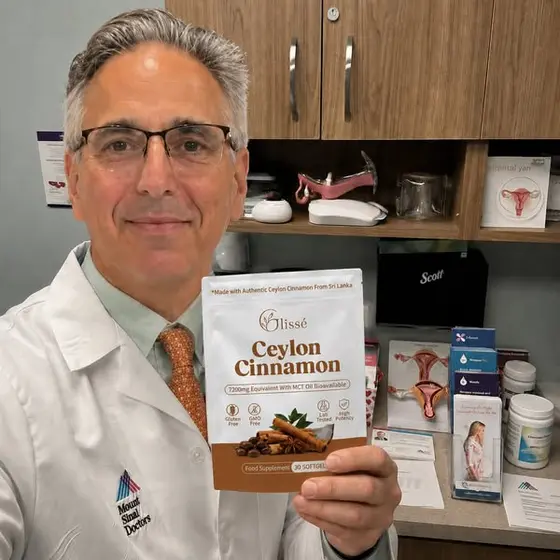
Drinking more water will not protect your kidneys. Cutting protein will not protect your kidneys. And neither will waiting for your next blood test result to tell you something is wrong. If your GP or consultant has mentioned protein in your urine, rising creatinine, or declining kidney function -- what comes next is the part they rarely explain properly. I used to ask every new dialysis patient the same thing: "What was your HbA1c before your kidneys failed?" After 11,000 patients and the same answer every single time, I stopped asking. It was always "managed." Always between 48 and 58 mmol/mol. Always someone who had been told to cut protein, reduce salt, and come back in six months. The chairs aren't full of people who ignored their kidneys. They're full of people who never knew what was quietly damaging them. I'm telling you this now because last year I got my own pre-diabetes diagnosis with creeping creatinine -- and I refuse to end up in one of my own chairs. I'm Dr Henry Caldwell. I've been a consultant nephrologist, kidney specialist, for 18 years. Roughly 11,000 patients connected to machines across NHS renal units. Let me tell you what that actually looks like. The slow slide. 10%. Then 20%. Then 50%. Until one day your consultant says: "You need dialysis. Three times a week. Four hours per session. For the rest of your life." A needle goes into a fistula -- a surgical access point in the arm that leaves a scar most patients hide under long sleeves even in summer. Then comes the exhaustion. Not normal tiredness. The kind where you can barely lift your head off the pillow. Your body is struggling with waste your kidneys can no longer filter properly. The swelling in your legs, ankles, and face. Puffiness that makes you look different to your own grandchildren. The food restrictions that make eating miserable. No potassium. No phosphate. No salt. Bananas dangerous. Tomatoes dangerous. Cheese dangerous. And the waiting list. Years. Sometimes a decade. Hoping for a transplant that might never come. I've watched marriages buckle under the schedule. I've watched grandchildren learn to plan around Nan's dialysis days. I've watched a 61-year-old man read the same magazine in the waiting room every Tuesday and Thursday for three years while his wife was connected. I've watched patients stop coming. I know what that means. One of my long-term patients -- Ruth, 63, three years in my unit -- told me something I think about every day. She said: "This isn't living. This is just not dying yet. " Every single one of them was once where you are right now. Feeling fine. Managing numbers. Trusting the monitoring. Assuming that because nothing hurt, nothing was wrong. That assumption is exactly what made the damage possible. Here is the part that nobody tells you clearly enough. Your kidneys work every hour of every day. They filter your blood, hold on to what your body needs, and remove what it does not. And the thing that damages them most is not always what people expect. Not alcohol. Not salt. Not protein. Blood sugar. More specifically -- blood sugar that your cells are no longer using properly. Every time your blood sugar rises, your body releases insulin to help move that sugar out of your blood and into your cells. But over time, if this happens too often, your cells can stop listening. Insulin gives the signal. Nothing happens. The pancreas sends more. Still nothing. So the glucose has nowhere to go. It stays in the blood. And it circulates through your kidneys. Your kidneys are like a very fine filter. Millions of tiny filters inside them are designed to let waste pass through while keeping protein in your blood where it belongs. In a healthy kidney, that filter holds. But when too much glucose keeps passing through those tiny filters, day after day, year after year, it starts to wear them down. Slowly. Quietly. Without pain. First, tiny gaps appear. Protein starts slipping through in small amounts. Your eGFR drops a point or two. Nothing feels alarming. Then the gaps get bigger. More protein leaks. Your eGFR drops more. And you still feel nothing. That is the cruelest part. Your kidneys can lose a huge amount of function before you notice a single symptom. The damage can happen silently for years. No pain. No obvious warning. No clear signal. Until one morning, the foam in your toilet appears. And by then, it is not really a warning sign. It is a report. Last year I sat in my own GP surgery and heard "pre-diabetes" attached to my own name. HbA1c: 46 mmol/mol. Fasting blood glucose: 7.5 to 8.0 mmol/L. And here's the part that made my hands go cold -- my creatinine had crept from 71 to 88 µmol/L over ten months. My eGFR had dropped from 98 to 86. There was foam in my toilet most mornings. My ankles were swelling by 4pm. The fatigue I'd been blaming on long shifts wasn't from the shifts. On paper, none of that looked dramatic. My GP said: "We'll keep an eye on it." But I've heard those exact words in the notes of people now sitting in my chairs. I know what a creatinine of 88 µmol/L looks like at the beginning. Because I've held the hands of people whose creatinine started there too. I felt something I'd never felt in 18 years of nephrology. Real, bone-deep fear. Not for my patients. For myself. So I stopped asking, "How do I slow this down?" And I started asking a better question. "Why is my body actually doing this in the first place?" Here's the simple version. Think of every cell in your body like a tiny room. On the walls of that room are small doors. These doors help sugar move out of the blood and into the cell, where it can be used for energy. Those doors are called GLUT4 transporters. In a healthy body, insulin gives the signal, the doors open, sugar goes inside, and blood sugar comes down. But in insulin resistance, those doors stop responding properly. The signal comes. The doors stay shut. So sugar stays in the blood. And that sugar keeps moving through the smallest, most delicate blood vessels in your body. Your kidneys. Your feet. Your eyes. Your brain. That is why the same problem can show up in different ways. Burning feet. Brain fog at 2pm. Waking up three times a night. Swollen ankles. Foam in the toilet. It can look like five different problems. But often, it is one problem showing up in five places. The doors are not opening properly. Your doctor monitors the headline number. The HbA1c. The creatinine. The eGFR. Those numbers matter. But they do not always show the full story early enough. The story underneath is what is happening inside the tiny vessels before the numbers look serious. Now let me address what you're probably thinking. "What about cutting protein?" Cutting protein gives your kidneys less to filter. That can help reduce strain. But it does not deal with the reason the filters are under pressure in the first place. "What about drinking more water?" Drinking more water can support hydration. But it does not stop glucose from irritating those tiny filters if the sugar is still sitting in your blood. "What about my medicine?" Some medicines reduce how much glucose your liver releases. That can lower the amount of sugar in the blood. That is useful. But if your cells still are not letting glucose in properly, the problem is not fully addressed. The blood sugar may be lower than before. But the doors are still not opening the way they should. That is what I mean when I say: Your medicine may reduce the flood. But it does not always open the drain. All of these things can help pieces of the puzzle. But the missing piece is the same. The doors are still closed. The sugar is still hanging around. And the body is still under pressure. When I started reading through the research again, I found something that had been sitting in published journals for years without making it into normal conversations in my dialysis unit. Researchers studying Ceylon cinnamon found something interesting. Not the cheap cinnamon sitting in most kitchen cupboards. Not Cassia. True Ceylon cinnamon. Cinnamomum verum. A different plant, grown in Sri Lanka, with a different compound profile. The key compound is cinnamaldehyde. And what made me stop reading and sit back in my chair was simple. This compound appears to speak directly to those glucose doors. Not by forcing the body to make more insulin. Not by pushing an already tired system harder. But by helping those doors come back to the surface, so glucose can move out of the blood and into the cells again. When the doors open, glucose has somewhere to go. When glucose has somewhere to go, the pressure in the bloodstream can reduce. When that pressure reduces, the kidneys are no longer being asked to filter the same heavy load all day, every day. That is the idea. Simple. Powerful. And somehow rarely explained. A 2003 study in Diabetes Care showed a 29% drop in fasting blood glucose. A 2012 review in the Journal of Medicinal Food analysed eight randomised trials and found meaningful drops in fasting glucose and HbA1c. Research in Pharmacognosy Research mapped the GLUT4 mechanism -- how these compounds help bring those doors back to the surface. When the doors reopen, the sand stops being forced through the mesh. Protein leakage can reduce. Creatinine can stabilise. eGFR can hold. And every time I bring this up with someone whose kidneys are declining, I get the look. Wide eyes. Raised eyebrows. "You mean cinnamon?That's supposed to help my kidneys?" I understand the reaction. It sounds too simple. But the people who come back to me eight weeks later often come back different. Their fasting numbers are steadier. Their creatinine has stopped climbing. Some of their eGFR numbers improve. Their faces look less puffy. They are sleeping better. They look like themselves again. And many of them show their doctors the new numbers and hear the words they had been waiting to hear: "Your kidney function is stable.Keep doing whatever you're doing." In 18 years of nephrology, not one doctor had properly explained this to patients in my care. Not because they were hiding it. Because the system is not built to push natural compounds into everyday treatment conversations. You can't patent a plant in the same way you can patent a drug. No patent means no sales reps. No sales reps means no training updates. No training updates means no guideline changes. So the research sits in journals. And the patients sit in chairs. That should make you angry. Not at your doctor. At the structure that kept this from all of us. Including me. And I understood instantly why every cinnamon supplement on every shelf had never worked for anyone. Three things were wrong with most of them. Wrong species. Most use Cassia -- a completely different plant. Cassia can contain far more coumarin, a compound that may burden the liver when taken every day. The research showing real metabolic results is based on true Ceylon -- Cinnamomum verum from Sri Lanka. Not Cassia. Wrong dose. A 500mg capsule is usually not close to the level used in the research. Studies often used the equivalent of thousands of milligrams, concentrated and extracted. Most products on the shelf give you a fraction of that. Wrong delivery. The active compounds in Ceylon cinnamon are fat-soluble. That means they absorb better when carried with fat. A dry capsule full of powder has no real fat carrier. So the compounds may pass through the gut without reaching the cells they are meant to support. That is why your old cinnamon may have done nothing. Not because cinnamon cannot work. Because the product was not built properly. If you tried cinnamon before and felt nothing, you were not wrong to try. The tool was wrong. After I understood the mechanism and the delivery problem, I found Glissé. Real Ceylon cinnamon -- Cinnamomum verum -- sourced from Sri Lanka, where the tree has been cultivated for over two thousand years. Concentrated 12-to-1 into a liquid extract and suspended in MCT oil. Then sealed inside a softgel. One softgel a day delivers the equivalent of 7,200mg of raw Ceylon. The range that matches the research. Because the extract is already suspended in MCT oil, the moment the softgel dissolves, the active compounds are riding the fat carrier they need. Not trapped in dry fibre. Suspended, bioavailable, and ready to support the cells. DNA-verified for species -- not just a label claim, an actual Certificate of Analysis. Third-party tested for purity and coumarin levels every batch. GMP-certified. Comes in a sealed bag, not a bottle. One softgel. Swallow it with your morning coffee. That's it. No measuring. No mixing. No taste. It's the one part of the morning that does not feel like managing a disease. Here's what happened to me. Within two weeks, the fog lifted. Not managed -- lifted. My feet stopped aching. The ankle swelling was gone by Friday of the second week. I slept through the night for the first time in months. By week four, my fasting readings -- which had been running 7.5 to 8.0 mmol/L -- started showing up in the low 5s. The foam in the toilet was gone. I checked three mornings in a row to be sure. At ten weeks I got my blood test results back. HbA1c: 46 mmol/mol to 36 mmol/mol. Creatinine: back to 71 µmol/L. eGFR: climbed from 86 to 94. Protein in the urine: undetectable. But the thing I remember most is not a number. It's my own GP looking at the results, then looking at me, and saying: "Your kidney function is stable.Keep doing whatever you're doing." And then walking into my dialysis unit the next morning knowing -- for the first time in months -- I was not going to end up in one of my own chairs. I told Ruth what I'd found. She looked at me with tears running down her face and said: "Tell everyone. Don't let them end up like me." That's why I'm writing this. You're in a window right now. The monitoring phase. The "we're keeping an eye on it" phase. This is the phase where the direction can still change. Every patient in my dialysis chairs was in that window once. Every one of them would give anything to go back to it. The damage does not announce itself. That is exactly why the window before it shows up clearly on your blood tests is when it matters most. One side -- nothing changes. The creatinine climbs. The eGFR drops. The foam shows up. The ankles puff up until your grandchildren do not recognise you. 10% drop. Then 20%. Then 50%. And one morning you're not reading about dialysis -- you're being scheduled for it. Three days a week. Four hours a session. The fistula scar hidden under long sleeves. No potassium. No phosphate. No salt. The transplant waiting list that may never come through. The chair. The other side... One softgel. Swallowed with your morning coffee. Over the next few weeks, the energy holds. The fog lifts. The feet quiet. The swelling drops. The foam disappears. And at your next blood test, your doctor looks up from the chart and says something you have not heard in two years: "Your kidney function is stable.Keep doing whatever you're doing." The window stays open. The chair stays empty. The doors are closed. The sand is still coming. But the window is still open. Don't let someone else tell your story with the words: "I wish someone had told me sooner." I just did. ~ Dr Henry Caldwell, Consultant Nephrologist, 18 years Here are the changes I found with Glisse Your morning blood sugar will start moving in the right direction, instead of staying stuck no matter what you cut out. Your energy starts to feel steadier through the day, without the heavy 2pm crash that makes you reach for coffee or sugar. Your sleep slowly improves as your body feels less unsettled at night, especially if you are waking up to use the bathroom. The signs you have been worrying about -- foam in the toilet, swollen ankles, tingling feet, brain fog -- can finally start to feel less frightening because you are no longer just watching them get worse. And most importantly, your next blood test can become the appointment where your doctor pauses, looks at the numbers, and says the words you have been waiting to hear: "Your kidney function is stable.Keep doing whatever you're doing." That is the difference between monitoring decline and finally giving your body a chance to change direction.
Dr Henry Caldwell, GP Facebook and Instagram ad
Dr Henry Caldwell, GP ran this image ad since Jun 26, 2026, 134 days so far.
Ad copy
I was peeing and it was foaming like beer. I called my mate James — he's been a paramedic for 20 years. He said, "That's protein, Henry. Your kidneys are leaking. My patients with that end up on dialysis." My name is Dr Henry Caldwell. I've been a nephrologist — a kidney specialist — for 20 years. I've delivered the dialysis sentence to hundreds of patients. I've watched kidneys fail in slow motion, year after year, creatinine climbing, protein spilling, until there's nothing left to do but hook someone up to a machine three times a week for the rest of their life. So when I looked down at my own toilet and saw white foam covering the entire surface — like someone had just poured a beer into the bowl — I felt something I hadn't felt in years. Terror. I flushed. Waited twenty minutes. Went again. More foam. That's when I called James. "James. My urine is foaming. Like thick foam." Silence for three seconds. "That's protein, Henry. Your kidneys are leaking. My patients with that... they end up on dialysis. Usually within a few years. You need to speak to a doctor tomorrow." I hung up. And I just stared at the toilet. The foam was still there. Mocking me. I'm a nephrologist. I don't panic. But I stood there in my own bathroom and felt exactly what my patients must feel when I deliver the news. I'd been avoiding this for 18 months. My HbA1c was 93 mmol/mol. My fasting blood glucose was 10.4 mmol/L most mornings. I knew I was in trouble. But seeing the foam made it real. That foam was my kidneys leaking protein in real time. The next morning I sat across from my colleague — a position I'm not used to being in — as a patient, not a consultant. She ordered a urine test. It came back positive for protein. She pulled up my results. HbA1c hovering at 93 mmol/mol for the last 18 months. My creatinine was 124 µmol/L. Stage 2 kidney disease. I already knew what she was going to say. I'd said it myself hundreds of times. "Henry," she said. "Your kidneys are under pressure. The high blood sugar is damaging them. That foam you're seeing? That's protein leaking through the tiny filters in your kidneys." Hearing it said out loud — about me — was different. "So what do I do?" "Usually, this means dialysis in a few years. Three times a week. Four hours per session. For the rest of your life." I felt the walls closing in. I'm a nephrologist. I know what dialysis looks like up close. I've watched it take decades of quality of life from my patients. I know the fatigue, the food restrictions, the infections, the slow decline. I know exactly what that sentence means. "Is there anything that can stop it?" She paused. Looked at me for a long moment. "Between you and me, there's something that may help reduce the pressure. I can't prescribe it because it's not a pharmaceutical treatment. But if I were you, I'd look into Glissé." "What's that?" "Your kidneys are like two coffee filters," she said. "They're designed to handle a steady flow of glucose from your bloodstream. A little at a time. All day. No problem." She leaned forward. "But when your cells are insulin-resistant, they stop taking in glucose properly. So that glucose just sits in your blood. And your liver keeps releasing more glucose into your blood trying to feed those starving cells." "That steady flow turns into a fire hose." "Your kidneys are trying to filter that glucose pressure 24 hours a day. And they can't handle it forever. Like running a coffee filter under full blast from a kitchen tap. The filter starts to tear." "Protein starts leaking through those tears. That's the foam." She pointed at the urine result. "That foam you saw in the toilet? That's your kidneys struggling in real time." I felt sick. I was a nephrologist. I knew this mechanism. I'd explained it to patients myself. But I'd never thought about it happening inside my own body. "Glissé doesn't patch the tears," she said. "It helps address the fire hose. It supports the cells so they start handling glucose better again.Less pressure.Less protein leaking." "Why can't you officially recommend it?" "Because it's not a medicine. I can't prescribe it. Can't officially tell you to take it. But the research exists. And I've seen it help." She wrote something on a piece of paper. Slid it across the desk. Not a prescription. Just a name: Glissé. I went home that day and couldn't sleep. Not because of my blood sugar. Because of what she'd said. Your kidneys are leaking. I've been a nephrologist for 28 years. I don't believe in magic pills. I don't trust hype. I trust mechanisms and evidence. So at 2:47am, still awake, I started researching. Glissé. A Ceylon cinnamon extract formulated for blood sugar support. Not the cheap Cassia variety that fills most supplement shelves. The real thing — Cinnamomum verum — grown in Sri Lanka and used traditionally for centuries. The first study I found was from Japan. Type 2 diabetics given clinical-dose Ceylon cinnamon extract showed significant improvements in insulin sensitivity and fasting glucose after 12 weeks. The second study was from India. Patients with diabetic kidney disease showed reduced protein in urine and improved kidney markers after 16 weeks. The third was from Italy. Ceylon cinnamon's active compound — cinnamaldehyde — reduced inflammatory cytokines and helped protect kidney cells from oxidative stress. I kept reading. The mechanism made sense. Type 2 diabetes isn't just high blood sugar. It's also inflammation and oxidative stress damaging your cells' ability to respond to insulin. And as a nephrologist, I understand exactly why that matters for the kidneys. Diabetic kidney damage isn't random. It's glucose-driven stress slowly damaging the small blood vessels in your kidneys year after year. Ceylon cinnamon works differently from standard medicine. Cinnamaldehyde — its primary active compound — supports the same metabolic pathways that exercise activates. It helps move glucose into cells without relying only on insulin. It helps calm the inflammatory signals behind chronic metabolic stress. It's not forcing anything. It's helping remove the interference. Reduce the blood sugar load. Reduce the pressure. Give the kidneys a chance. I ordered a bag that morning. Took one softgel with breakfast on a Monday. Didn't expect anything. That afternoon, something was different. My usual 2pm crash — the one where my brain shuts off and I need coffee to make it through afternoon rounds — didn't happen. I was just...steady. Clear. Functional. That night, I went to bed at 10:30pm. I woke up at 6:45am. I hadn't woken up once. Not to pee. Not with restless legs. Not with my mind racing. I slept through the night for the first time in 14 months. I tested my fasting blood glucose. 9.0 mmol/L. Lower than my usual 10.4. Day three: 8.6 mmol/L. Day five: The foam in my urine was less. Not gone. But I could see the water now instead of just white foam covering everything. Day seven: 8.2 mmol/L. And the foam was barely there. Just a little ring around the edge. Week two: My brain fog was lifting. I could focus during patient consultations. I could remember blood test results and case details without checking my notes three times. Week four: 7.7 mmol/L. Waking up consistently in the 7s. And the foam? Gone. Completely gone. Clear water. I literally took a picture and sent it to James. He called me immediately. "What did you do?" "Glissé. Ceylon cinnamon extract. My colleague told me about it quietly." He was quiet for a second. "I'm going to tell my patients about this." Three months later, I walked into my colleague's room with a printout of my blood sugar log. She stared at it for a long time. "Your fasting glucose is consistently in the low 6" "Yes." "Your HbA1c is 68 mmol/mol.Down from 93." "Yes." She pulled up another blood result. "Your creatinine is 97 µmol/L. It was 124 three months ago." I nodded. "Kidney function doesn't usually improve like this, Henry. Once you hit stage 2, the goal is usually to slow the decline. Not reverse it. But your numbers have moved back." "I know." She ordered another urine test. No protein. None. "The foam is gone," I told her. She smiled. "Your kidneys have stopped leaking." Six months later: HbA1c 56 mmol/mol. Creatinine stable at 97 µmol/L. Still no protein in my urine. Waking up in the low 6s every single morning. My colleague pulled up my results. Looked at the progression. "You're not on the dialysis path anymore," she said. I almost cried. That was seven months ago. My fasting blood glucose is consistently between 6.1 and 6.7 mmol/L. My HbA1c is 54 mmol/mol. My kidney function is stable in the normal range. I sleep through every single night. The afternoon crashes are gone. The brain fog is gone. The foam is gone. I've recommended Glissé to four patients now. All four have come back and told me the same thing: better sleep within the first week. Less foam within two weeks. Lower fasting glucose within the first month. One patient cried when she told me she'd slept through the night for the first time in two years. She'd been waking up 3-4 times to use the toilet. Another patient's HbA1c dropped from 84 to 60 mmol/mol in three months. His foam disappeared in week three. But here's what I need you to understand. Not all Ceylon cinnamon works. Most cinnamon supplements fail for the same reasons: They're not real Ceylon. What's sold as "cinnamon" in most supplements is Cassia, a completely different species. Cassia contains far more coumarin, a compound linked to liver stress with daily use. Clinical benefits were found for true Ceylon cinnamon — Cinnamomum verum — not Cassia. They're underdosed. Clinical studies showing meaningful blood sugar and kidney support used concentrated Ceylon extract equivalent to 6,000–7,200mg daily. Most capsules contain 500–1,500mg of powder. A fraction of what was used in the research. They use the wrong delivery format. Cinnamon's active compounds are fat-soluble. They need fat to absorb properly. Dry powder capsules have poor bioavailability. The right carrier is MCT oil, which helps absorption. They're not tested. Most supplements aren't third-party tested. You have no idea if you're getting real Ceylon or mislabelled Cassia. The Ceylon cinnamon that actually worked for me — the one my colleague told me about quietly — is Glissé. It's true Ceylon cinnamon. Cinnamomum verum, sourced from Sri Lanka. DNA-verified. It's dosed at 7,200mg equivalent per softgel. A concentrated extract. The amount that matches the clinical-dose range. It's suspended in MCT oil. The bioavailability is far better than dry powder. It's third-party tested. GMP-certified. Every batch verified for purity, potency, and coumarin levels. It's not cheap. But after seeing what it did for my kidneys — and I'm someone who knows exactly what kidneys look like when they're failing — I understand why. You're either getting real Ceylon cinnamon at a meaningful dose with proper absorption, or you're taking Cassia that could burden your liver and may never reach the problem properly. I'm not anti-medicine. If your treatment is working and you're not suffering, keep taking it. But if you're like I was — if your HbA1c is high, if you're seeing foam in your toilet, if you're terrified of dialysis — this is worth trying. My colleague told me about it. I tried it. It worked. I told four patients. It worked for all four. That's not a coincidence. That's a pattern. And I say that as a nephrologist who has spent 28 years studying exactly how kidneys fail. I'm sharing this because I hope it can help someone else the way it helped me. Here is what can change when you give your body the right support for 90 days: The foam in your urine can start to reduce as your kidneys face less daily pressure. Your fasting blood sugar can start moving in the right direction instead of staying stuck every morning. Your sleep can improve as your body feels less unsettled at night and you stop waking up to use the toilet again and again. Your energy can feel steadier through the day, without the 2pm crash and brain fog taking over. And most importantly, your next blood test can become the moment your doctor looks at your results and says: "Your kidney function is stable.Keep doing whatever you're doing." They offer a 90-day money-back guarantee. Take one softgel daily with breakfast. Each delivers 7,200mg equivalent of concentrated Ceylon extract in MCT oil. Most people notice better sleep within the first week. Foam reduction can show around week 2-3. Blood sugar movement often starts between weeks 2-4. Full HbA1c and kidney marker changes can take 8-12 weeks. They sell out because batches are limited. If you're dealing with foam in your urine, high HbA1c, waking up multiple times to use the toilet, or the fear that dialysis is coming, try this. Give it 90 days. See what happens to the foam. See what happens to your fasting blood sugar. See what happens to your kidneys. If it doesn't work, you get your money back. But if it works like it did for me... You'll wonder why you didn't try it sooner. I went from stage 2 kidney disease back to normal function. From foam in every toilet to clear water. From a fasting glucose of 10.4 mmol/L to 6.4 mmol/L. From waking up 2-3 times every night to sleeping through. From being on the dialysis path to being told by my own colleague: "You're not on that path anymore." I've spent 28 years watching kidneys fail. I know what that path looks like. And I know what it means to step off it. If there's even a chance this could work for you, it's worth trying. ~ Dr Henry Caldwell, Consultant Nephrologist, 20 years The damage you prevent today is the dialysis you avoid tomorrow. Every day that fire hose keeps blasting, your kidneys face more pressure. Don't wait until the foam turns into kidney failure. Don't wait until 124 µmol/L creatinine becomes 177 and dialysis becomes inevitable. If you're seeing foam, your kidneys may already be leaking. Shut off the fire hose before it's too lat
Placements and targeting
More ads from Dr Henry Caldwell, GP
Drinking more water will not protect your kidneys. Cutting protein will not protect your kidneys. And neither will waiting for your next blood test result to tell you something is wrong. If your GP or consultant has mentioned protein in your urine, rising creatinine, or declining kidney function -- what comes next is the part they rarely explain properly. I used to ask every new dialysis patient the same thing: "What was your HbA1c before your kidneys failed?" After 11,000 patients and the same answer every single time, I stopped asking. It was always "managed." Always between 48 and 58 mmol/mol. Always someone who had been told to cut protein, reduce salt, and come back in six months. The chairs aren't full of people who ignored their kidneys. They're full of people who never knew what was quietly damaging them. I'm telling you this now because last year I got my own pre-diabetes diagnosis with creeping creatinine -- and I refuse to end up in one of my own chairs. I'm Dr Henry Caldwell. I've been a consultant nephrologist, kidney specialist, for 18 years. Roughly 11,000 patients connected to machines across NHS renal units. Let me tell you what that actually looks like. The slow slide. 10%. Then 20%. Then 50%. Until one day your consultant says: "You need dialysis. Three times a week. Four hours per session. For the rest of your life." A needle goes into a fistula -- a surgical access point in the arm that leaves a scar most patients hide under long sleeves even in summer. Then comes the exhaustion. Not normal tiredness. The kind where you can barely lift your head off the pillow. Your body is struggling with waste your kidneys can no longer filter properly. The swelling in your legs, ankles, and face. Puffiness that makes you look different to your own grandchildren. The food restrictions that make eating miserable. No potassium. No phosphate. No salt. Bananas dangerous. Tomatoes dangerous. Cheese dangerous. And the waiting list. Years. Sometimes a decade. Hoping for a transplant that might never come. I've watched marriages buckle under the schedule. I've watched grandchildren learn to plan around Nan's dialysis days. I've watched a 61-year-old man read the same magazine in the waiting room every Tuesday and Thursday for three years while his wife was connected. I've watched patients stop coming. I know what that means. One of my long-term patients -- Ruth, 63, three years in my unit -- told me something I think about every day. She said: "This isn't living. This is just not dying yet. " Every single one of them was once where you are right now. Feeling fine. Managing numbers. Trusting the monitoring. Assuming that because nothing hurt, nothing was wrong. That assumption is exactly what made the damage possible. Here is the part that nobody tells you clearly enough. Your kidneys work every hour of every day. They filter your blood, hold on to what your body needs, and remove what it does not. And the thing that damages them most is not always what people expect. Not alcohol. Not salt. Not protein. Blood sugar. More specifically -- blood sugar that your cells are no longer using properly. Every time your blood sugar rises, your body releases insulin to help move that sugar out of your blood and into your cells. But over time, if this happens too often, your cells can stop listening. Insulin gives the signal. Nothing happens. The pancreas sends more. Still nothing. So the glucose has nowhere to go. It stays in the blood. And it circulates through your kidneys. Your kidneys are like a very fine filter. Millions of tiny filters inside them are designed to let waste pass through while keeping protein in your blood where it belongs. In a healthy kidney, that filter holds. But when too much glucose keeps passing through those tiny filters, day after day, year after year, it starts to wear them down. Slowly. Quietly. Without pain. First, tiny gaps appear. Protein starts slipping through in small amounts. Your eGFR drops a point or two. Nothing feels alarming. Then the gaps get bigger. More protein leaks. Your eGFR drops more. And you still feel nothing. That is the cruelest part. Your kidneys can lose a huge amount of function before you notice a single symptom. The damage can happen silently for years. No pain. No obvious warning. No clear signal. Until one morning, the foam in your toilet appears. And by then, it is not really a warning sign. It is a report. Last year I sat in my own GP surgery and heard "pre-diabetes" attached to my own name. HbA1c: 46 mmol/mol. Fasting blood glucose: 7.5 to 8.0 mmol/L. And here's the part that made my hands go cold -- my creatinine had crept from 71 to 88 µmol/L over ten months. My eGFR had dropped from 98 to 86. There was foam in my toilet most mornings. My ankles were swelling by 4pm. The fatigue I'd been blaming on long shifts wasn't from the shifts. On paper, none of that looked dramatic. My GP said: "We'll keep an eye on it." But I've heard those exact words in the notes of people now sitting in my chairs. I know what a creatinine of 88 µmol/L looks like at the beginning. Because I've held the hands of people whose creatinine started there too. I felt something I'd never felt in 18 years of nephrology. Real, bone-deep fear. Not for my patients. For myself. So I stopped asking, "How do I slow this down?" And I started asking a better question. "Why is my body actually doing this in the first place?" Here's the simple version. Think of every cell in your body like a tiny room. On the walls of that room are small doors. These doors help sugar move out of the blood and into the cell, where it can be used for energy. Those doors are called GLUT4 transporters. In a healthy body, insulin gives the signal, the doors open, sugar goes inside, and blood sugar comes down. But in insulin resistance, those doors stop responding properly. The signal comes. The doors stay shut. So sugar stays in the blood. And that sugar keeps moving through the smallest, most delicate blood vessels in your body. Your kidneys. Your feet. Your eyes. Your brain. That is why the same problem can show up in different ways. Burning feet. Brain fog at 2pm. Waking up three times a night. Swollen ankles. Foam in the toilet. It can look like five different problems. But often, it is one problem showing up in five places. The doors are not opening properly. Your doctor monitors the headline number. The HbA1c. The creatinine. The eGFR. Those numbers matter. But they do not always show the full story early enough. The story underneath is what is happening inside the tiny vessels before the numbers look serious. Now let me address what you're probably thinking. "What about cutting protein?" Cutting protein gives your kidneys less to filter. That can help reduce strain. But it does not deal with the reason the filters are under pressure in the first place. "What about drinking more water?" Drinking more water can support hydration. But it does not stop glucose from irritating those tiny filters if the sugar is still sitting in your blood. "What about my medicine?" Some medicines reduce how much glucose your liver releases. That can lower the amount of sugar in the blood. That is useful. But if your cells still are not letting glucose in properly, the problem is not fully addressed. The blood sugar may be lower than before. But the doors are still not opening the way they should. That is what I mean when I say: Your medicine may reduce the flood. But it does not always open the drain. All of these things can help pieces of the puzzle. But the missing piece is the same. The doors are still closed. The sugar is still hanging around. And the body is still under pressure. When I started reading through the research again, I found something that had been sitting in published journals for years without making it into normal conversations in my dialysis unit. Researchers studying Ceylon cinnamon found something interesting. Not the cheap cinnamon sitting in most kitchen cupboards. Not Cassia. True Ceylon cinnamon. Cinnamomum verum. A different plant, grown in Sri Lanka, with a different compound profile. The key compound is cinnamaldehyde. And what made me stop reading and sit back in my chair was simple. This compound appears to speak directly to those glucose doors. Not by forcing the body to make more insulin. Not by pushing an already tired system harder. But by helping those doors come back to the surface, so glucose can move out of the blood and into the cells again. When the doors open, glucose has somewhere to go. When glucose has somewhere to go, the pressure in the bloodstream can reduce. When that pressure reduces, the kidneys are no longer being asked to filter the same heavy load all day, every day. That is the idea. Simple. Powerful. And somehow rarely explained. A 2003 study in Diabetes Care showed a 29% drop in fasting blood glucose. A 2012 review in the Journal of Medicinal Food analysed eight randomised trials and found meaningful drops in fasting glucose and HbA1c. Research in Pharmacognosy Research mapped the GLUT4 mechanism -- how these compounds help bring those doors back to the surface. When the doors reopen, the sand stops being forced through the mesh. Protein leakage can reduce. Creatinine can stabilise. eGFR can hold. And every time I bring this up with someone whose kidneys are declining, I get the look. Wide eyes. Raised eyebrows. "You mean cinnamon?That's supposed to help my kidneys?" I understand the reaction. It sounds too simple. But the people who come back to me eight weeks later often come back different. Their fasting numbers are steadier. Their creatinine has stopped climbing. Some of their eGFR numbers improve. Their faces look less puffy. They are sleeping better. They look like themselves again. And many of them show their doctors the new numbers and hear the words they had been waiting to hear: "Your kidney function is stable.Keep doing whatever you're doing." In 18 years of nephrology, not one doctor had properly explained this to patients in my care. Not because they were hiding it. Because the system is not built to push natural compounds into everyday treatment conversations. You can't patent a plant in the same way you can patent a drug. No patent means no sales reps. No sales reps means no training updates. No training updates means no guideline changes. So the research sits in journals. And the patients sit in chairs. That should make you angry. Not at your doctor. At the structure that kept this from all of us. Including me. And I understood instantly why every cinnamon supplement on every shelf had never worked for anyone. Three things were wrong with most of them. Wrong species. Most use Cassia -- a completely different plant. Cassia can contain far more coumarin, a compound that may burden the liver when taken every day. The research showing real metabolic results is based on true Ceylon -- Cinnamomum verum from Sri Lanka. Not Cassia. Wrong dose. A 500mg capsule is usually not close to the level used in the research. Studies often used the equivalent of thousands of milligrams, concentrated and extracted. Most products on the shelf give you a fraction of that. Wrong delivery. The active compounds in Ceylon cinnamon are fat-soluble. That means they absorb better when carried with fat. A dry capsule full of powder has no real fat carrier. So the compounds may pass through the gut without reaching the cells they are meant to support. That is why your old cinnamon may have done nothing. Not because cinnamon cannot work. Because the product was not built properly. If you tried cinnamon before and felt nothing, you were not wrong to try. The tool was wrong. After I understood the mechanism and the delivery problem, I found Glissé. Real Ceylon cinnamon -- Cinnamomum verum -- sourced from Sri Lanka, where the tree has been cultivated for over two thousand years. Concentrated 12-to-1 into a liquid extract and suspended in MCT oil. Then sealed inside a softgel. One softgel a day delivers the equivalent of 7,200mg of raw Ceylon. The range that matches the research. Because the extract is already suspended in MCT oil, the moment the softgel dissolves, the active compounds are riding the fat carrier they need. Not trapped in dry fibre. Suspended, bioavailable, and ready to support the cells. DNA-verified for species -- not just a label claim, an actual Certificate of Analysis. Third-party tested for purity and coumarin levels every batch. GMP-certified. Comes in a sealed bag, not a bottle. One softgel. Swallow it with your morning coffee. That's it. No measuring. No mixing. No taste. It's the one part of the morning that does not feel like managing a disease. Here's what happened to me. Within two weeks, the fog lifted. Not managed -- lifted. My feet stopped aching. The ankle swelling was gone by Friday of the second week. I slept through the night for the first time in months. By week four, my fasting readings -- which had been running 7.5 to 8.0 mmol/L -- started showing up in the low 5s. The foam in the toilet was gone. I checked three mornings in a row to be sure. At ten weeks I got my blood test results back. HbA1c: 46 mmol/mol to 36 mmol/mol. Creatinine: back to 71 µmol/L. eGFR: climbed from 86 to 94. Protein in the urine: undetectable. But the thing I remember most is not a number. It's my own GP looking at the results, then looking at me, and saying: "Your kidney function is stable.Keep doing whatever you're doing." And then walking into my dialysis unit the next morning knowing -- for the first time in months -- I was not going to end up in one of my own chairs. I told Ruth what I'd found. She looked at me with tears running down her face and said: "Tell everyone. Don't let them end up like me." That's why I'm writing this. You're in a window right now. The monitoring phase. The "we're keeping an eye on it" phase. This is the phase where the direction can still change. Every patient in my dialysis chairs was in that window once. Every one of them would give anything to go back to it. The damage does not announce itself. That is exactly why the window before it shows up clearly on your blood tests is when it matters most. One side -- nothing changes. The creatinine climbs. The eGFR drops. The foam shows up. The ankles puff up until your grandchildren do not recognise you. 10% drop. Then 20%. Then 50%. And one morning you're not reading about dialysis -- you're being scheduled for it. Three days a week. Four hours a session. The fistula scar hidden under long sleeves. No potassium. No phosphate. No salt. The transplant waiting list that may never come through. The chair. The other side... One softgel. Swallowed with your morning coffee. Over the next few weeks, the energy holds. The fog lifts. The feet quiet. The swelling drops. The foam disappears. And at your next blood test, your doctor looks up from the chart and says something you have not heard in two years: "Your kidney function is stable.Keep doing whatever you're doing." The window stays open. The chair stays empty. The doors are closed. The sand is still coming. But the window is still open. Don't let someone else tell your story with the words: "I wish someone had told me sooner." I just did. ~ Dr Henry Caldwell, Consultant Nephrologist, 18 years Here are the changes I found with Glisse Your morning blood sugar will start moving in the right direction, instead of staying stuck no matter what you cut out. Your energy starts to feel steadier through the day, without the heavy 2pm crash that makes you reach for coffee or sugar. Your sleep slowly improves as your body feels less unsettled at night, especially if you are waking up to use the bathroom. The signs you have been worrying about -- foam in the toilet, swollen ankles, tingling feet, brain fog -- can finally start to feel less frightening because you are no longer just watching them get worse. And most importantly, your next blood test can become the appointment where your doctor pauses, looks at the numbers, and says the words you have been waiting to hear: "Your kidney function is stable.Keep doing whatever you're doing." That is the difference between monitoring decline and finally giving your body a chance to change direction.
I was peeing and it was foaming like beer. I called my mate James — he's been a paramedic for 20 years. He said, "That's protein, Henry. Your kidneys are leaking. My patients with that end up on dialysis." My name is Dr Henry Caldwell. I've been a nephrologist — a kidney specialist — for 20 years. I've delivered the dialysis sentence to hundreds of patients. I've watched kidneys fail in slow motion, year after year, creatinine climbing, protein spilling, until there's nothing left to do but hook someone up to a machine three times a week for the rest of their life. So when I looked down at my own toilet and saw white foam covering the entire surface — like someone had just poured a beer into the bowl — I felt something I hadn't felt in years. Terror. I flushed. Waited twenty minutes. Went again. More foam. That's when I called James. "James. My urine is foaming. Like thick foam." Silence for three seconds. "That's protein, Henry. Your kidneys are leaking. My patients with that... they end up on dialysis. Usually within a few years. You need to speak to a doctor tomorrow." I hung up. And I just stared at the toilet. The foam was still there. Mocking me. I'm a nephrologist. I don't panic. But I stood there in my own bathroom and felt exactly what my patients must feel when I deliver the news. I'd been avoiding this for 18 months. My HbA1c was 93 mmol/mol. My fasting blood glucose was 10.4 mmol/L most mornings. I knew I was in trouble. But seeing the foam made it real. That foam was my kidneys leaking protein in real time. The next morning I sat across from my colleague — a position I'm not used to being in — as a patient, not a consultant. She ordered a urine test. It came back positive for protein. She pulled up my results. HbA1c hovering at 93 mmol/mol for the last 18 months. My creatinine was 124 µmol/L. Stage 2 kidney disease. I already knew what she was going to say. I'd said it myself hundreds of times. "Henry," she said. "Your kidneys are under pressure. The high blood sugar is damaging them. That foam you're seeing? That's protein leaking through the tiny filters in your kidneys." Hearing it said out loud — about me — was different. "So what do I do?" "Usually, this means dialysis in a few years. Three times a week. Four hours per session. For the rest of your life." I felt the walls closing in. I'm a nephrologist. I know what dialysis looks like up close. I've watched it take decades of quality of life from my patients. I know the fatigue, the food restrictions, the infections, the slow decline. I know exactly what that sentence means. "Is there anything that can stop it?" She paused. Looked at me for a long moment. "Between you and me, there's something that may help reduce the pressure. I can't prescribe it because it's not a pharmaceutical treatment. But if I were you, I'd look into Glissé." "What's that?" "Your kidneys are like two coffee filters," she said. "They're designed to handle a steady flow of glucose from your bloodstream. A little at a time. All day. No problem." She leaned forward. "But when your cells are insulin-resistant, they stop taking in glucose properly. So that glucose just sits in your blood. And your liver keeps releasing more glucose into your blood trying to feed those starving cells." "That steady flow turns into a fire hose." "Your kidneys are trying to filter that glucose pressure 24 hours a day. And they can't handle it forever. Like running a coffee filter under full blast from a kitchen tap. The filter starts to tear." "Protein starts leaking through those tears. That's the foam." She pointed at the urine result. "That foam you saw in the toilet? That's your kidneys struggling in real time." I felt sick. I was a nephrologist. I knew this mechanism. I'd explained it to patients myself. But I'd never thought about it happening inside my own body. "Glissé doesn't patch the tears," she said. "It helps address the fire hose. It supports the cells so they start handling glucose better again.Less pressure.Less protein leaking." "Why can't you officially recommend it?" "Because it's not a medicine. I can't prescribe it. Can't officially tell you to take it. But the research exists. And I've seen it help." She wrote something on a piece of paper. Slid it across the desk. Not a prescription. Just a name: Glissé. I went home that day and couldn't sleep. Not because of my blood sugar. Because of what she'd said. Your kidneys are leaking. I've been a nephrologist for 28 years. I don't believe in magic pills. I don't trust hype. I trust mechanisms and evidence. So at 2:47am, still awake, I started researching. Glissé. A Ceylon cinnamon extract formulated for blood sugar support. Not the cheap Cassia variety that fills most supplement shelves. The real thing — Cinnamomum verum — grown in Sri Lanka and used traditionally for centuries. The first study I found was from Japan. Type 2 diabetics given clinical-dose Ceylon cinnamon extract showed significant improvements in insulin sensitivity and fasting glucose after 12 weeks. The second study was from India. Patients with diabetic kidney disease showed reduced protein in urine and improved kidney markers after 16 weeks. The third was from Italy. Ceylon cinnamon's active compound — cinnamaldehyde — reduced inflammatory cytokines and helped protect kidney cells from oxidative stress. I kept reading. The mechanism made sense. Type 2 diabetes isn't just high blood sugar. It's also inflammation and oxidative stress damaging your cells' ability to respond to insulin. And as a nephrologist, I understand exactly why that matters for the kidneys. Diabetic kidney damage isn't random. It's glucose-driven stress slowly damaging the small blood vessels in your kidneys year after year. Ceylon cinnamon works differently from standard medicine. Cinnamaldehyde — its primary active compound — supports the same metabolic pathways that exercise activates. It helps move glucose into cells without relying only on insulin. It helps calm the inflammatory signals behind chronic metabolic stress. It's not forcing anything. It's helping remove the interference. Reduce the blood sugar load. Reduce the pressure. Give the kidneys a chance. I ordered a bag that morning. Took one softgel with breakfast on a Monday. Didn't expect anything. That afternoon, something was different. My usual 2pm crash — the one where my brain shuts off and I need coffee to make it through afternoon rounds — didn't happen. I was just...steady. Clear. Functional. That night, I went to bed at 10:30pm. I woke up at 6:45am. I hadn't woken up once. Not to pee. Not with restless legs. Not with my mind racing. I slept through the night for the first time in 14 months. I tested my fasting blood glucose. 9.0 mmol/L. Lower than my usual 10.4. Day three: 8.6 mmol/L. Day five: The foam in my urine was less. Not gone. But I could see the water now instead of just white foam covering everything. Day seven: 8.2 mmol/L. And the foam was barely there. Just a little ring around the edge. Week two: My brain fog was lifting. I could focus during patient consultations. I could remember blood test results and case details without checking my notes three times. Week four: 7.7 mmol/L. Waking up consistently in the 7s. And the foam? Gone. Completely gone. Clear water. I literally took a picture and sent it to James. He called me immediately. "What did you do?" "Glissé. Ceylon cinnamon extract. My colleague told me about it quietly." He was quiet for a second. "I'm going to tell my patients about this." Three months later, I walked into my colleague's room with a printout of my blood sugar log. She stared at it for a long time. "Your fasting glucose is consistently in the low 6" "Yes." "Your HbA1c is 68 mmol/mol.Down from 93." "Yes." She pulled up another blood result. "Your creatinine is 97 µmol/L. It was 124 three months ago." I nodded. "Kidney function doesn't usually improve like this, Henry. Once you hit stage 2, the goal is usually to slow the decline. Not reverse it. But your numbers have moved back." "I know." She ordered another urine test. No protein. None. "The foam is gone," I told her. She smiled. "Your kidneys have stopped leaking." Six months later: HbA1c 56 mmol/mol. Creatinine stable at 97 µmol/L. Still no protein in my urine. Waking up in the low 6s every single morning. My colleague pulled up my results. Looked at the progression. "You're not on the dialysis path anymore," she said. I almost cried. That was seven months ago. My fasting blood glucose is consistently between 6.1 and 6.7 mmol/L. My HbA1c is 54 mmol/mol. My kidney function is stable in the normal range. I sleep through every single night. The afternoon crashes are gone. The brain fog is gone. The foam is gone. I've recommended Glissé to four patients now. All four have come back and told me the same thing: better sleep within the first week. Less foam within two weeks. Lower fasting glucose within the first month. One patient cried when she told me she'd slept through the night for the first time in two years. She'd been waking up 3-4 times to use the toilet. Another patient's HbA1c dropped from 84 to 60 mmol/mol in three months. His foam disappeared in week three. But here's what I need you to understand. Not all Ceylon cinnamon works. Most cinnamon supplements fail for the same reasons: They're not real Ceylon. What's sold as "cinnamon" in most supplements is Cassia, a completely different species. Cassia contains far more coumarin, a compound linked to liver stress with daily use. Clinical benefits were found for true Ceylon cinnamon — Cinnamomum verum — not Cassia. They're underdosed. Clinical studies showing meaningful blood sugar and kidney support used concentrated Ceylon extract equivalent to 6,000–7,200mg daily. Most capsules contain 500–1,500mg of powder. A fraction of what was used in the research. They use the wrong delivery format. Cinnamon's active compounds are fat-soluble. They need fat to absorb properly. Dry powder capsules have poor bioavailability. The right carrier is MCT oil, which helps absorption. They're not tested. Most supplements aren't third-party tested. You have no idea if you're getting real Ceylon or mislabelled Cassia. The Ceylon cinnamon that actually worked for me — the one my colleague told me about quietly — is Glissé. It's true Ceylon cinnamon. Cinnamomum verum, sourced from Sri Lanka. DNA-verified. It's dosed at 7,200mg equivalent per softgel. A concentrated extract. The amount that matches the clinical-dose range. It's suspended in MCT oil. The bioavailability is far better than dry powder. It's third-party tested. GMP-certified. Every batch verified for purity, potency, and coumarin levels. It's not cheap. But after seeing what it did for my kidneys — and I'm someone who knows exactly what kidneys look like when they're failing — I understand why. You're either getting real Ceylon cinnamon at a meaningful dose with proper absorption, or you're taking Cassia that could burden your liver and may never reach the problem properly. I'm not anti-medicine. If your treatment is working and you're not suffering, keep taking it. But if you're like I was — if your HbA1c is high, if you're seeing foam in your toilet, if you're terrified of dialysis — this is worth trying. My colleague told me about it. I tried it. It worked. I told four patients. It worked for all four. That's not a coincidence. That's a pattern. And I say that as a nephrologist who has spent 28 years studying exactly how kidneys fail. I'm sharing this because I hope it can help someone else the way it helped me. Here is what can change when you give your body the right support for 90 days: The foam in your urine can start to reduce as your kidneys face less daily pressure. Your fasting blood sugar can start moving in the right direction instead of staying stuck every morning. Your sleep can improve as your body feels less unsettled at night and you stop waking up to use the toilet again and again. Your energy can feel steadier through the day, without the 2pm crash and brain fog taking over. And most importantly, your next blood test can become the moment your doctor looks at your results and says: "Your kidney function is stable.Keep doing whatever you're doing." They offer a 90-day money-back guarantee. Take one softgel daily with breakfast. Each delivers 7,200mg equivalent of concentrated Ceylon extract in MCT oil. Most people notice better sleep within the first week. Foam reduction can show around week 2-3. Blood sugar movement often starts between weeks 2-4. Full HbA1c and kidney marker changes can take 8-12 weeks. They sell out because batches are limited. If you're dealing with foam in your urine, high HbA1c, waking up multiple times to use the toilet, or the fear that dialysis is coming, try this. Give it 90 days. See what happens to the foam. See what happens to your fasting blood sugar. See what happens to your kidneys. If it doesn't work, you get your money back. But if it works like it did for me... You'll wonder why you didn't try it sooner. I went from stage 2 kidney disease back to normal function. From foam in every toilet to clear water. From a fasting glucose of 10.4 mmol/L to 6.4 mmol/L. From waking up 2-3 times every night to sleeping through. From being on the dialysis path to being told by my own colleague: "You're not on that path anymore." I've spent 28 years watching kidneys fail. I know what that path looks like. And I know what it means to step off it. If there's even a chance this could work for you, it's worth trying. ~ Dr Henry Caldwell, Consultant Nephrologist, 20 years The damage you prevent today is the dialysis you avoid tomorrow. Every day that fire hose keeps blasting, your kidneys face more pressure. Don't wait until the foam turns into kidney failure. Don't wait until 124 µmol/L creatinine becomes 177 and dialysis becomes inevitable. If you're seeing foam, your kidneys may already be leaking. Shut off the fire hose before it's too lat
Drinking more water will not protect your kidneys. Cutting protein will not protect your kidneys. And neither will waiting for your next blood test result to tell you something is wrong. If your GP or consultant has mentioned protein in your urine, rising creatinine, or declining kidney function -- what comes next is the part they rarely explain properly. I used to ask every new dialysis patient the same thing: "What was your HbA1c before your kidneys failed?" After 11,000 patients and the same answer every single time, I stopped asking. It was always "managed." Always between 48 and 58 mmol/mol. Always someone who had been told to cut protein, reduce salt, and come back in six months. The chairs aren't full of people who ignored their kidneys. They're full of people who never knew what was quietly damaging them. I'm telling you this now because last year I got my own pre-diabetes diagnosis with creeping creatinine -- and I refuse to end up in one of my own chairs. I'm Dr Henry Caldwell. I've been a consultant nephrologist, kidney specialist, for 18 years. Roughly 11,000 patients connected to machines across NHS renal units. Let me tell you what that actually looks like. The slow slide. 10%. Then 20%. Then 50%. Until one day your consultant says: "You need dialysis. Three times a week. Four hours per session. For the rest of your life." A needle goes into a fistula -- a surgical access point in the arm that leaves a scar most patients hide under long sleeves even in summer. Then comes the exhaustion. Not normal tiredness. The kind where you can barely lift your head off the pillow. Your body is struggling with waste your kidneys can no longer filter properly. The swelling in your legs, ankles, and face. Puffiness that makes you look different to your own grandchildren. The food restrictions that make eating miserable. No potassium. No phosphate. No salt. Bananas dangerous. Tomatoes dangerous. Cheese dangerous. And the waiting list. Years. Sometimes a decade. Hoping for a transplant that might never come. I've watched marriages buckle under the schedule. I've watched grandchildren learn to plan around Nan's dialysis days. I've watched a 61-year-old man read the same magazine in the waiting room every Tuesday and Thursday for three years while his wife was connected. I've watched patients stop coming. I know what that means. One of my long-term patients -- Ruth, 63, three years in my unit -- told me something I think about every day. She said: "This isn't living. This is just not dying yet. " Every single one of them was once where you are right now. Feeling fine. Managing numbers. Trusting the monitoring. Assuming that because nothing hurt, nothing was wrong. That assumption is exactly what made the damage possible. Here is the part that nobody tells you clearly enough. Your kidneys work every hour of every day. They filter your blood, hold on to what your body needs, and remove what it does not. And the thing that damages them most is not always what people expect. Not alcohol. Not salt. Not protein. Blood sugar. More specifically -- blood sugar that your cells are no longer using properly. Every time your blood sugar rises, your body releases insulin to help move that sugar out of your blood and into your cells. But over time, if this happens too often, your cells can stop listening. Insulin gives the signal. Nothing happens. The pancreas sends more. Still nothing. So the glucose has nowhere to go. It stays in the blood. And it circulates through your kidneys. Your kidneys are like a very fine filter. Millions of tiny filters inside them are designed to let waste pass through while keeping protein in your blood where it belongs. In a healthy kidney, that filter holds. But when too much glucose keeps passing through those tiny filters, day after day, year after year, it starts to wear them down. Slowly. Quietly. Without pain. First, tiny gaps appear. Protein starts slipping through in small amounts. Your eGFR drops a point or two. Nothing feels alarming. Then the gaps get bigger. More protein leaks. Your eGFR drops more. And you still feel nothing. That is the cruelest part. Your kidneys can lose a huge amount of function before you notice a single symptom. The damage can happen silently for years. No pain. No obvious warning. No clear signal. Until one morning, the foam in your toilet appears. And by then, it is not really a warning sign. It is a report. Last year I sat in my own GP surgery and heard "pre-diabetes" attached to my own name. HbA1c: 46 mmol/mol. Fasting blood glucose: 7.5 to 8.0 mmol/L. And here's the part that made my hands go cold -- my creatinine had crept from 71 to 88 µmol/L over ten months. My eGFR had dropped from 98 to 86. There was foam in my toilet most mornings. My ankles were swelling by 4pm. The fatigue I'd been blaming on long shifts wasn't from the shifts. On paper, none of that looked dramatic. My GP said: "We'll keep an eye on it." But I've heard those exact words in the notes of people now sitting in my chairs. I know what a creatinine of 88 µmol/L looks like at the beginning. Because I've held the hands of people whose creatinine started there too. I felt something I'd never felt in 18 years of nephrology. Real, bone-deep fear. Not for my patients. For myself. So I stopped asking, "How do I slow this down?" And I started asking a better question. "Why is my body actually doing this in the first place?" Here's the simple version. Think of every cell in your body like a tiny room. On the walls of that room are small doors. These doors help sugar move out of the blood and into the cell, where it can be used for energy. Those doors are called GLUT4 transporters. In a healthy body, insulin gives the signal, the doors open, sugar goes inside, and blood sugar comes down. But in insulin resistance, those doors stop responding properly. The signal comes. The doors stay shut. So sugar stays in the blood. And that sugar keeps moving through the smallest, most delicate blood vessels in your body. Your kidneys. Your feet. Your eyes. Your brain. That is why the same problem can show up in different ways. Burning feet. Brain fog at 2pm. Waking up three times a night. Swollen ankles. Foam in the toilet. It can look like five different problems. But often, it is one problem showing up in five places. The doors are not opening properly. Your doctor monitors the headline number. The HbA1c. The creatinine. The eGFR. Those numbers matter. But they do not always show the full story early enough. The story underneath is what is happening inside the tiny vessels before the numbers look serious. Now let me address what you're probably thinking. "What about cutting protein?" Cutting protein gives your kidneys less to filter. That can help reduce strain. But it does not deal with the reason the filters are under pressure in the first place. "What about drinking more water?" Drinking more water can support hydration. But it does not stop glucose from irritating those tiny filters if the sugar is still sitting in your blood. "What about my medicine?" Some medicines reduce how much glucose your liver releases. That can lower the amount of sugar in the blood. That is useful. But if your cells still are not letting glucose in properly, the problem is not fully addressed. The blood sugar may be lower than before. But the doors are still not opening the way they should. That is what I mean when I say: Your medicine may reduce the flood. But it does not always open the drain. All of these things can help pieces of the puzzle. But the missing piece is the same. The doors are still closed. The sugar is still hanging around. And the body is still under pressure. When I started reading through the research again, I found something that had been sitting in published journals for years without making it into normal conversations in my dialysis unit. Researchers studying Ceylon cinnamon found something interesting. Not the cheap cinnamon sitting in most kitchen cupboards. Not Cassia. True Ceylon cinnamon. Cinnamomum verum. A different plant, grown in Sri Lanka, with a different compound profile. The key compound is cinnamaldehyde. And what made me stop reading and sit back in my chair was simple. This compound appears to speak directly to those glucose doors. Not by forcing the body to make more insulin. Not by pushing an already tired system harder. But by helping those doors come back to the surface, so glucose can move out of the blood and into the cells again. When the doors open, glucose has somewhere to go. When glucose has somewhere to go, the pressure in the bloodstream can reduce. When that pressure reduces, the kidneys are no longer being asked to filter the same heavy load all day, every day. That is the idea. Simple. Powerful. And somehow rarely explained. A 2003 study in Diabetes Care showed a 29% drop in fasting blood glucose. A 2012 review in the Journal of Medicinal Food analysed eight randomised trials and found meaningful drops in fasting glucose and HbA1c. Research in Pharmacognosy Research mapped the GLUT4 mechanism -- how these compounds help bring those doors back to the surface. When the doors reopen, the sand stops being forced through the mesh. Protein leakage can reduce. Creatinine can stabilise. eGFR can hold. And every time I bring this up with someone whose kidneys are declining, I get the look. Wide eyes. Raised eyebrows. "You mean cinnamon?That's supposed to help my kidneys?" I understand the reaction. It sounds too simple. But the people who come back to me eight weeks later often come back different. Their fasting numbers are steadier. Their creatinine has stopped climbing. Some of their eGFR numbers improve. Their faces look less puffy. They are sleeping better. They look like themselves again. And many of them show their doctors the new numbers and hear the words they had been waiting to hear: "Your kidney function is stable.Keep doing whatever you're doing." In 18 years of nephrology, not one doctor had properly explained this to patients in my care. Not because they were hiding it. Because the system is not built to push natural compounds into everyday treatment conversations. You can't patent a plant in the same way you can patent a drug. No patent means no sales reps. No sales reps means no training updates. No training updates means no guideline changes. So the research sits in journals. And the patients sit in chairs. That should make you angry. Not at your doctor. At the structure that kept this from all of us. Including me. And I understood instantly why every cinnamon supplement on every shelf had never worked for anyone. Three things were wrong with most of them. Wrong species. Most use Cassia -- a completely different plant. Cassia can contain far more coumarin, a compound that may burden the liver when taken every day. The research showing real metabolic results is based on true Ceylon -- Cinnamomum verum from Sri Lanka. Not Cassia. Wrong dose. A 500mg capsule is usually not close to the level used in the research. Studies often used the equivalent of thousands of milligrams, concentrated and extracted. Most products on the shelf give you a fraction of that. Wrong delivery. The active compounds in Ceylon cinnamon are fat-soluble. That means they absorb better when carried with fat. A dry capsule full of powder has no real fat carrier. So the compounds may pass through the gut without reaching the cells they are meant to support. That is why your old cinnamon may have done nothing. Not because cinnamon cannot work. Because the product was not built properly. If you tried cinnamon before and felt nothing, you were not wrong to try. The tool was wrong. After I understood the mechanism and the delivery problem, I found Glissé. Real Ceylon cinnamon -- Cinnamomum verum -- sourced from Sri Lanka, where the tree has been cultivated for over two thousand years. Concentrated 12-to-1 into a liquid extract and suspended in MCT oil. Then sealed inside a softgel. One softgel a day delivers the equivalent of 7,200mg of raw Ceylon. The range that matches the research. Because the extract is already suspended in MCT oil, the moment the softgel dissolves, the active compounds are riding the fat carrier they need. Not trapped in dry fibre. Suspended, bioavailable, and ready to support the cells. DNA-verified for species -- not just a label claim, an actual Certificate of Analysis. Third-party tested for purity and coumarin levels every batch. GMP-certified. Comes in a sealed bag, not a bottle. One softgel. Swallow it with your morning coffee. That's it. No measuring. No mixing. No taste. It's the one part of the morning that does not feel like managing a disease. Here's what happened to me. Within two weeks, the fog lifted. Not managed -- lifted. My feet stopped aching. The ankle swelling was gone by Friday of the second week. I slept through the night for the first time in months. By week four, my fasting readings -- which had been running 7.5 to 8.0 mmol/L -- started showing up in the low 5s. The foam in the toilet was gone. I checked three mornings in a row to be sure. At ten weeks I got my blood test results back. HbA1c: 46 mmol/mol to 36 mmol/mol. Creatinine: back to 71 µmol/L. eGFR: climbed from 86 to 94. Protein in the urine: undetectable. But the thing I remember most is not a number. It's my own GP looking at the results, then looking at me, and saying: "Your kidney function is stable.Keep doing whatever you're doing." And then walking into my dialysis unit the next morning knowing -- for the first time in months -- I was not going to end up in one of my own chairs. I told Ruth what I'd found. She looked at me with tears running down her face and said: "Tell everyone. Don't let them end up like me." That's why I'm writing this. You're in a window right now. The monitoring phase. The "we're keeping an eye on it" phase. This is the phase where the direction can still change. Every patient in my dialysis chairs was in that window once. Every one of them would give anything to go back to it. The damage does not announce itself. That is exactly why the window before it shows up clearly on your blood tests is when it matters most. One side -- nothing changes. The creatinine climbs. The eGFR drops. The foam shows up. The ankles puff up until your grandchildren do not recognise you. 10% drop. Then 20%. Then 50%. And one morning you're not reading about dialysis -- you're being scheduled for it. Three days a week. Four hours a session. The fistula scar hidden under long sleeves. No potassium. No phosphate. No salt. The transplant waiting list that may never come through. The chair. The other side... One softgel. Swallowed with your morning coffee. Over the next few weeks, the energy holds. The fog lifts. The feet quiet. The swelling drops. The foam disappears. And at your next blood test, your doctor looks up from the chart and says something you have not heard in two years: "Your kidney function is stable.Keep doing whatever you're doing." The window stays open. The chair stays empty. The doors are closed. The sand is still coming. But the window is still open. Don't let someone else tell your story with the words: "I wish someone had told me sooner." I just did. ~ Dr Henry Caldwell, Consultant Nephrologist, 18 years Here are the changes I found with Glisse Your morning blood sugar will start moving in the right direction, instead of staying stuck no matter what you cut out. Your energy starts to feel steadier through the day, without the heavy 2pm crash that makes you reach for coffee or sugar. Your sleep slowly improves as your body feels less unsettled at night, especially if you are waking up to use the bathroom. The signs you have been worrying about -- foam in the toilet, swollen ankles, tingling feet, brain fog -- can finally start to feel less frightening because you are no longer just watching them get worse. And most importantly, your next blood test can become the appointment where your doctor pauses, looks at the numbers, and says the words you have been waiting to hear: "Your kidney function is stable.Keep doing whatever you're doing." That is the difference between monitoring decline and finally giving your body a chance to change direction.
Similar health and supplements ads
NO GYM, NO STRESS JUST DANCING! BOOST YOUR MOOD QUICKLY BURN CALORIES Take a quiz and get your dance plan in DanceFitMe
Keep exploring
Find more ads like this
Search millions of real ads by keyword, niche and format, and save the winners to your swipe file.
