I have prescribed gabapentin to patients with diabetic neuropathy for nineteen years.
And for most of those years, I believed I was doing the right thing.
The burning quiets. The zapping at night gets softer. The patient comes back and says it is a little better. I write that in the notes. We increase the dose when it stops working. That is what managing neuropathic pain looks like from behind the desk.
But after enough years in that chair, something started to stick in my mind.
Patients I had managed well on paper would come back getting worse. Not failing to improve. Actually getting worse. The nerve conduction studies showed continued deterioration. The burning had moved higher. The numbness was spreading from ankle to knee, then above the knee.
The medication had quieted the signal.
The damage had not stopped.
And nobody could explain why the drug we were handing out was not doing anything about the underlying progression.
I remember one patient clearly.
A retired teacher named Carol. Sixty-one years old. Diabetic for fourteen years. She came to me with burning in both feet that kept her awake from midnight until three or four in the morning, every single night. Could not sleep. Could not stand on a cold tile floor without the shock of it running straight up her legs. Had stopped wearing sandals. Wore thick socks through summer.
Classic diabetic peripheral neuropathy. I prescribed gabapentin. 300 milligrams to start.
Six weeks later she came back and said the burning at night was a little quieter.
Six months later the dose was at 900 milligrams. The burning was still there. The numbness had climbed past her ankles.
Two years after that, Carol sat across from me and said, "I can barely feel my toes anymore. I thought we were managing this."
I told her we were managing the pain experience and that nerve damage in diabetics was progressive.
She looked at me. Not angry. Just tired.
She said, "But is it getting worse because nothing is actually stopping it?"
I did not have a good answer for her.
That question stayed with me for a long time.
If gabapentin was the right answer for diabetic peripheral neuropathy, why were my patients on it for four years still getting worse? Why were the doses climbing? Why did stopping the drug trigger withdrawal symptoms that in some patients resembled opioid dependency in severity?
I started going back to the original research. Not the summary papers. The primary literature. The actual trial data behind the drug I had been writing prescriptions for.
What I found there changed how I understand the prescribing culture I am part of.
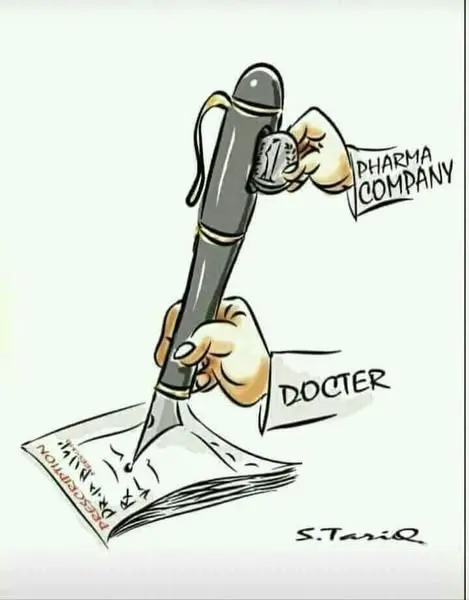
In 2004, the Department of Justice reached a settlement with Warner-Lambert and Pfizer over the marketing of gabapentin under the brand name Neurontin. The settlement was $430 million. Warner-Lambert pleaded guilty to two felony counts of misbranding drugs under the Federal Food, Drug, and Cosmetic Act. (Franklin v. Parke-Davis, DOJ, 2004)
What were they guilty of?
Marketing gabapentin aggressively to physicians for conditions the FDA had never approved it for. Neuropathic pain. Bipolar disorder. Migraines. Off-label use accounting for over 90 percent of the drug's billions in annual sales by the early 2000s, according to the whistleblower's own testimony.
How did they do it?
Internal documents released through litigation showed what happened. Parke-Davis hired writers to produce research supporting off-label uses. Studies with results that were not favorable were suppressed. One internal memo explained that an unfavorable study was held because employees should, in the memo's own words, "take care not to publish anything that damages Neurontin's marketing success." (Vice.com, 2024, citing NEJM litigation documents)
A 2009 analysis in the New England Journal of Medicine compared internal company documents against what was actually published. Researchers found that 20 clinical trials were run for off-label indications. Twelve were published. The published ones disproportionately showed positive results. The ones showing no effect were either delayed, unpublished, or had their primary outcomes changed before publication to make the results look significant. (NEJM, 2009)
They were not running science. They were running a marketing operation that used science as the vehicle.
And here is the part that matters for every patient currently sitting on gabapentin for their neuropathy.
The FDA approved gabapentin to control seizures in people with epilepsy.
That is the approval. That is what the evidence actually supported when it went through the regulatory process.
Not neuropathy.
Not nerve pain.
Not the burning and zapping and pins-and-needles that three million diabetics in this country are trying to manage every night.
The drug is in the neuropathy standard of care because a pharmaceutical company spent hundreds of millions of dollars seeding that standard of care into the medical literature and into medical education before anyone could pull it back. The $430 million settlement came after the culture had already been built. By 2004, gabapentin was embedded. By 2024, a report found that prescriptions had nearly tripled between 2010 and that year. (Annals of Internal Medicine, cited in multiple sources)
The fine was not a consequence. It was a cost of doing business.
And I was part of the system that kept writing the prescriptions.
When I understood that, I went back to the biology.
Because if gabapentin was not the answer, I needed to understand what the actual question was.
Here is what happens inside a nerve fiber when someone has diabetic peripheral neuropathy.
Elevated blood sugar over years damages the tiny blood vessels that supply peripheral nerves with oxygen and nutrients. Those vessels narrow. Blood flow becomes restricted. The nerve cells begin to starve.
And when nerve cells begin to break down under that starvation, they release something the research literature calls reactive oxygen species. ROS. Unstable molecules that tear through nerve tissue. Aggressively and from multiple directions at once.
Each nerve fiber has a fatty outer membrane and a watery interior. The ROS attack both simultaneously. They work through the fatty membrane from the outside. They work through the watery interior from within. The nerve fiber is being destroyed on two fronts at the same time.
This is the mechanism. Not the pain signal. The actual cellular fire.
Gabapentin does not go anywhere near this process.
Gabapentin works in the brain. It intercepts the pain signal at the level of the central nervous system. It reduces how loudly your brain registers what the damaged nerve is transmitting. The fire keeps burning. The destruction of the nerve fiber keeps going. The volume on the alarm gets turned down.
That is why doses climb. That is why patients on gabapentin for three years are still at three AM with feet that feel like they are pressed against a heating coil. That is why Carol's numbness had climbed past her ankles. The medication was answering the alarm. Not putting out the fire.
Once I understood what the actual mechanism was, I needed to understand what could actually reach it.
The ROS problem has a specific structural challenge that most people are never told about.
Most antioxidant compounds only work in one environment. Vitamin C is water soluble. It can operate in the watery spaces inside and between cells. It cannot cross a fatty cell membrane. Vitamin E is fat soluble. It operates in fatty environments like the outer membrane of the nerve cell. It cannot function in the watery interior.
A peripheral nerve cell has both environments simultaneously. The fatty outer membrane and the watery interior fiber.
If what you take only operates in one of those environments, the ROS on the other side continue unchecked. You are only fighting the fire on one wall while it spreads freely through the other.
I kept reading.
And I found a compound that appeared consistently in the research on diabetic nerve damage.
Alpha-lipoic acid. Specifically the R form. R-alpha-lipoic acid.
R-ALA is both water soluble and fat soluble at the same time. It is one of the only compounds that can cross a fatty cell membrane and then operate inside the watery environment of the cell interior simultaneously. It does not pick one environment. It works in both. Against ROS coming from both directions at once.
That is not marketing language. That is physical chemistry. The dual solubility is a documented property that has been studied in university research settings for decades.
But there is more to what R-ALA does in the nerve cell.
When most antioxidant compounds neutralize a free radical, the compound is depleted. It is used up. You would need a continuous incoming supply to maintain the effect.
R-ALA does something different. It reactivates vitamin C, vitamin E, and glutathione after they have been used doing their job. It cycles the entire antioxidant defense system rather than just adding to it. These other compounds become depleted and essentially wasted without R-ALA to restore them. R-ALA keeps the whole ROS-fighting system functional.
It also directly increases the cell's own production of glutathione. Glutathione is the primary antioxidant that the body produces internally. Some researchers call it the master antioxidant of the cell. R-ALA raises production at the source.
This compound has been a prescribed medication in Germany for decades. Not a supplement curiosity. An actual prescription, used by neurologists there for diabetic nerve damage, with clinical data going back to the 1960s.
Why I had not been reaching for this instead is a question I am still sitting with.
When I understood what R-ALA was doing at the cellular level, I looked at what I had been recommending and why those attempts often did not produce results.
The answer mattered.
Most alpha-lipoic acid sold in pharmacies is a racemic mixture. It contains both the R form and the S form. The S form is synthetic. It does not perform the same biological function as the R form. Worse, some research suggests the S form can actually compete with the R form for absorption, reducing how much of the active compound gets to the nerve tissue.
And most of it is delivered as a powder capsule.
Here is why that matters. R-ALA absorbs best in the presence of fats. Taken as a dry powder, absorption is inconsistent and often poor. The compound you are counting on to reach your nerve tissue may not be making it there in meaningful amounts.
The form matters. The delivery matters. And almost nobody talks about either.
I came across a product called Vesterial. It uses pure R-alpha-lipoic acid. No racemic blend. No synthetic S form. Just the form that the research on nerve damage actually studied.
It is delivered in a softgel with coconut oil. Not a powder. The fat-based delivery is designed specifically to improve how well the R-ALA gets absorbed and how consistently it reaches the tissue that needs it.
I began recommending it to patients who had stopped responding to what they were currently taking. Patients who had been through the standard options and were still getting worse.
One of them, a retired accountant named Bernard, came back after eight weeks. He said the burning at night had become manageable enough that he was sleeping through until five in the morning instead of waking at midnight. First time in two years.
Another patient, a woman in her mid-sixties who had been on gabapentin for four years and was still experiencing regular burning episodes, came back and said she could feel temperature in her feet again for the first time in longer than she could place.
These were not dramatic overnight recoveries. Nerve tissue does not recover overnight. But they were measurable, real changes in the right direction. In patients where nothing else had moved.
I am not speaking against the entire field of neuropathic pain management. There is a place for careful symptom management while we understand what is driving progression.
But I think people sitting on gabapentin deserve to understand what it is actually doing and what it is not designed to do. They deserve to understand the history of how that drug got into the standard of care. And they deserve to know that there is research, real peer-reviewed research, on the mechanism that is actually destroying their nerve tissue and on a compound that can work in the cellular environment where that destruction is happening.
Gabapentin was never designed to reach the fire.
It was designed to quiet the alarm.
And for too long, we told patients the alarm quieting was the same as the fire going out.
If you have been on gabapentin for diabetic neuropathy and are still getting worse, or have felt the cognitive fog or the weight gain or the dependence on a dose that stops working, you are not imagining that something about the picture does not add up.
I am sharing this link for others who want to look into R-ALA and the delivery format I have been recommending to patients. Not as a sales pitch. As the information I wish I had been providing at appointments for years.
https://vesterial.com/products/r-alpha-lipoic-acid-softgel-extracts