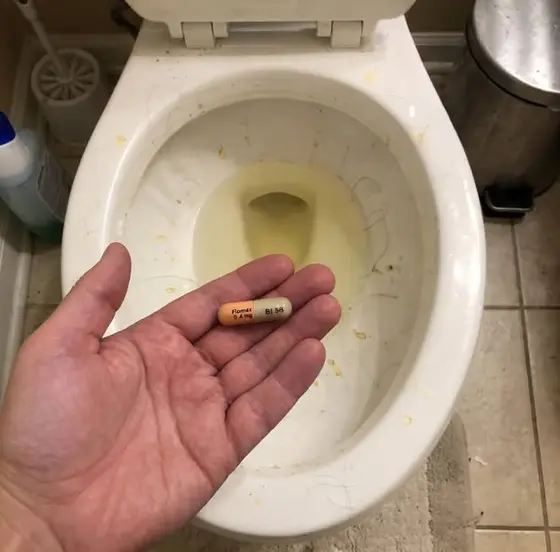
If you are waking up two, three, four times a night to use the bathroom and your doctor told you it is "just your prostate" and put you on saw palmetto or Tamsulosin, those symptoms that are still there every morning are not your prostate anymore. That is your bladder control system failing. And nobody is treating it. I am Dr. Erik Lindqvist. I have been a urologist for 22 years. I specialise in the place where prostate health meets bladder function meets the thing no man over 50 wants to talk about at dinner. I have sat across from men who have not slept through the night in four years. I have watched a 63-year-old man go quiet when he told me he left his grandson's football match at the 70th minute because he could not hold it. I have had a 58-year-old break down in my office because he thought the constant urgency and the feeling of never being empty meant something was seriously wrong. So when a patient walked in three months ago, 61 years old, getting up four times a night despite two years on Tamsulosin, going to the toilet eleven times a day, urgency so bad he had mapped every toilet on every route he drove, feeling of never being finished so persistent he had started using the cubicle instead of the urinal because he was embarrassed about how long he stood there, and his previous doctor had him on saw palmetto and Tamsulosin and told him to "give it time", I looked at his chart. He had been giving it time for three years. His flow had improved slightly. His prostate was responding to treatment. But his nighttime trips had gotten worse. His daytime urgency had gotten worse. His frequency had climbed from eight times a day to eleven. And the feeling of never being finished had not changed once in three years. Every single one of those symptoms had the same root that nobody had addressed. Let me explain what is actually happening inside your body right now, because what your doctor calls "just your prostate" has a mechanism that has nothing to do with the prostate. And that mechanism has a solution. Your prostate sits directly below your bladder. It wraps around the urethra, the tube that carries urine out of your body. When the prostate enlarges, it squeezes that tube. Flow slows down. Your doctor sees this, prescribes something that shrinks the prostate or relaxes the muscle around it, and flow improves. That is system one. The prostate. And prostate treatments handle it. But here is the part your doctor is not connecting for you. Directly above the prostate sits the bladder. The bladder wall contains a smooth muscle called the detrusor. This muscle does something your prostate has nothing to do with. It determines whether you hold urine or release it. When the detrusor is healthy, it stays relaxed while the bladder fills. It contracts only when you decide it is time to go. It contracts fully so the bladder empties completely. Then it relaxes again. You hold through the night. You go five or six times a day. You finish and you are done. When the detrusor weakens, and after 50 it does, everything changes. The muscle loses tone. It can no longer hold for extended periods. It starts spasming involuntarily, contracting when you did not tell it to. That is what drags you out of bed at 1am, 3am, and half four. That is what makes you feel like you are never finished, because the muscle is too weak to contract fully and empty the bladder. There is always something left. And the nerve signalling embedded in the bladder wall becomes increasingly sensitive. Chronic low-grade inflammation irritates the nerve endings. They start firing on their own. Sending urgent signals when the bladder is barely a quarter full. That is the sudden urgency. That wave of "I have to go RIGHT NOW" even though you went twenty minutes ago. It is not prostate size pressing on anything. It is your bladder sending emergency signals when there is no emergency. Your doctor calls this overactive bladder or attributes it to BPH. He adjusts your prostate medication. But the prostate medication does not touch the detrusor muscle. Does not calm the misfiring signals. Does not address the bladder wall inflammation that is driving the entire process. It temporarily relaxes the prostate squeeze for 10 to 12 hours while the bladder control system deteriorates month after month underneath. The word "benign" means it is not cancer. It does not mean it is not destroying your quality of life. Now here is the part your doctor is not connecting for you. The detrusor muscle requires specific nutrients to maintain its tone and function. Not prostate nutrients. Not saw palmetto. Not zinc and pygeum. Bladder-specific nutrients that support smooth muscle integrity, calm overactive nerve signalling, and reduce the chronic inflammation in the bladder wall. When those nutrients are depleted, and in men over 50 they almost always are, the detrusor deteriorates year after year. The spasms increase. The signals get louder. The nighttime trips climb. The daytime urgency intensifies. The feeling of never being finished gets worse. And every prostate treatment your doctor prescribes is working on a completely different system while this happens. Your saw palmetto is treating the gland. The muscle inside the bladder wall is starving. Your Tamsulosin is relaxing the prostate. The nerve signals in the bladder wall are screaming. Your beta-sitosterol is reducing prostate inflammation. The bladder wall inflammation is progressing unchecked. Same body. Two systems. One being treated. One being ignored. Now here is what stopped me in my tracks three months ago. That patient I mentioned, the one with the nighttime trips, the constant urgency, the eleven times a day, the feeling of never being finished, he came back after twelve weeks. His nighttime trips had gone from four to zero most nights. Zero. His daytime trips had dropped from eleven to five. His urgency had softened to the point where he could feel the signal but hold it and walk to the toilet normally instead of rushing. The feeling of never being finished had lifted. He went to the toilet and he was done. Actually done. No pressure ten minutes later. No nagging sensation. His wife told me he was sleeping through the night for the first time in over three years. She said she was sleeping through the night for the first time in over three years. I looked at his chart. His prostate treatment had not changed. Same Tamsulosin. Same dose. Nothing different. I looked at him. "What changed?" He reached into his bag and set a bottle on my desk. FYNE Arctic Bladder Control. I picked it up the way I pick up anything a patient brings me, with clinical scepticism and professional courtesy. Then I went home and read for four hours. Here is what the research says. And here is why I am now angry that I did not know this sooner. Crataeva Nurvala. A botanical compound that has been studied specifically for its direct effect on the detrusor muscle. Not the prostate. The bladder wall smooth muscle. Clinical research has documented its role in supporting bladder muscle tone, reducing involuntary contractions, and restoring the normal fill and empty cycle. This is the compound that no prostate supplement on the market contains. Because it is not a prostate ingredient. It is a bladder ingredient. And the entire supplement industry is built around the prostate. Lindera Aggregata. Studied for its effect on overactive bladder signalling. The nerve pathway between bladder and brain that fires too early, too often, too loudly. It calms the misfiring at its source. Not by blocking signals throughout the entire body the way pharmaceutical anticholinergics do, with their dry mouth and constipation and cognitive fog. By calming the specific pathway that is causing the false alarms. Pumpkin Seed Extract. Clinical evidence supporting bladder smooth muscle tone and lower urinary tract function. Providing the nutrient substrate the detrusor muscle needs to maintain proper contractile ability. The building blocks the muscle has been starving for. Magnesium. Inhibits calcium channels in smooth muscle, reducing detrusor excitability. Literally calms the muscle that contracts when it should not. Magnesium deficiency is extremely common in men over 50 and is almost never evaluated in a standard prostate consultation. Vitamin D3. Research links deficiency to increased urinary frequency and urgency. Supports bladder tissue health at the cellular level. Most men over 50 in the UK are deficient without knowing it. Five compounds targeting the three root causes of persistent bladder symptoms. The muscle weakness. The signal misfiring. The chronic bladder wall inflammation. None of these are in any prostate supplement. Because prostate supplements are designed for the prostate. The bladder control system has been invisible to the entire treatment chain. And here is where most men get this wrong. Here is why you tried supplements before and nothing changed. You were not taking the wrong supplement. You were taking the right idea aimed at the wrong system. Every product you tried contained prostate ingredients. Saw palmetto. Beta-sitosterol. Zinc. Pygeum. Stinging nettle. Lycopene. They all target the prostate gland. They shrink it. They relax it. They reduce prostate inflammation. They improve flow. And your flow may have improved. Slightly. But the nighttime trips did not stop. The urgency did not stop. The ten times a day did not stop. The feeling of never being finished did not stop. Because those symptoms come from the bladder control system. And not one product you tried contained a single ingredient for the detrusor muscle or the bladder signalling pathway. You were treating one system and expecting symptoms from a completely different system to improve. It is like taking paracetamol for a broken arm. The paracetamol is not a bad product. It is just not treating the fracture. Here are the three things that have to be right for bladder control to actually improve. First, the detrusor muscle needs direct support. The smooth muscle inside the bladder wall has been weakening for years. No amount of prostate treatment will restore its tone. It needs Crataeva Nurvala, the one compound with clinical evidence for detrusor muscle support that the prostate industry has never included because it has nothing to do with the prostate. Second, the overactive signalling needs to be calmed at its source. The nerve endings in the bladder wall have been misfiring for years. Blocking signals throughout the body with anticholinergics causes devastating side effects. The signals need to be calmed at the specific bladder pathway. That requires Lindera Aggregata. Third, the bladder tissue needs its nutrient building blocks restored. The detrusor muscle cannot maintain tone without Pumpkin Seed Extract, Magnesium, and Vitamin D3. These are the substrates that smooth muscle tissue requires for proper contractile function. Without them, you are asking a malnourished muscle to hold urine through an eight-hour night. Your prostate supplements failed all three requirements. Not because they are bad products. Because they were never designed for the bladder. FYNE Arctic Bladder Control addresses all three. Crataeva Nurvala for the detrusor muscle. Lindera Aggregata for the signalling. Pumpkin Seed Extract for smooth muscle tone. Magnesium for spasm reduction. Vitamin D3 for tissue health. One formula. Three root causes. The bladder control system that every prostate treatment on the market ignores. I started taking it myself. Week 1. I slept through from 11pm to 5am. I had been waking twice a night for two years. I told myself it was coffee, stress, age. It was my bladder. By day five I slept six and a half hours without waking. I almost did not believe it. Week 2. The urgency started softening. The signal was still there but it was not a panic anymore. I could feel the need to go and hold it. Actually hold it. Walk to the toilet instead of rushing. That had not happened in over a year. Week 4. My daytime trips dropped from nine to six. The feeling of never being finished, the one I had been unconsciously living with for years, started to lift. I went to the toilet and I was done. I sat down afterwards and did not think about it ten minutes later. I had not realised how much I had adapted to that constant background pressure until it went away. Week 8. I drove to a conference. Three hours. Did not plan toilet stops. Did not think about it. Just drove. Sat through the afternoon session. Three hours. Did not get up once. I sat in my office that evening as a urologist with 22 years of practice behind me, and I understood why that patient had smiled when he told me what he had changed. That 61-year-old man. He came back at six months. Nighttime trips gone. Sleeping through. Daytime trips down to five. Urgency manageable. Feeling of never being finished gone completely. He drove to his son's place, an hour and twenty minutes, without stopping. He went to the football for the first time in over a year. Both halves. Still in his seat at the final whistle. He booked theatre tickets. Centre row. He told me his wife looked at him the morning after his first full night of sleep and her eyes were wet. Not because of him. Because she had slept through too. For the first time in three years. One root cause addressed. Every symptom improved. Because the bladder control system was finally getting what it had been starving for. I have now mentioned FYNE to twenty three patients. The pattern is the same every time. Sleep improves within the first week. Most men stop waking more than once by day five to seven. Urgency softens within two to three weeks. The panic signal becomes a manageable signal you can hold. Daytime trips reduce within three to four weeks. From ten or eleven down to five or six. The feeling of never being finished starts lifting within two to four weeks. By six to eight weeks, most men report sleeping through the night, going five or six times during the day, and no longer planning every journey around the nearest toilet. One patient, a 67-year-old who had been on maximum-dose Flomax for four years, getting up five times a night, who had been told by his previous urologist that surgery was the next step, came back after 90 days. His nighttime trips had dropped to zero. His urgency was manageable. His daytime trips were down to five. His urologist postponed the surgical consultation. He told me. "I got my nights back. And my wife got hers." Another patient, 58, had spent over three hundred pounds on prostate supplements over three years. Saw palmetto, beta-sitosterol, zinc formulas, a premium prostate blend. Still getting up three times a night. Still going ten times a day. Twelve weeks on FYNE. Sleeping through. Six trips during the day. Drove to his mate's place in Devon, three hours each way, without stopping. He told me. "Three hundred pounds on prostate pills that treated the wrong system. I wish someone had told me three years ago." Here is what I need you to understand about why this works when other things have not. Saw palmetto shrinks the prostate. It improves flow. It does not touch the detrusor muscle. It does not calm the bladder signalling. It does not address why you get up at night. Tamsulosin relaxes the prostate muscle. It eases the squeeze on the urethra. It does not strengthen the bladder wall. It does not reduce involuntary spasms. It does not address why you go ten times a day. Beta-sitosterol reduces prostate inflammation. It does not reduce bladder wall inflammation. It does not support the nerve pathway that is misfiring. None of these address the bladder. They manage the prostate. FYNE goes to the bladder. Crataeva Nurvala directly supports the detrusor muscle. Lindera Aggregata calms the overactive signalling. Pumpkin Seed Extract provides the nutrient substrate. Magnesium reduces involuntary spasms. Vitamin D3 supports tissue health. The bladder control system gets what it has been starving for. The muscle strengthens. The signals calibrate. The spasms reduce. The nighttime trips stop. The urgency softens. The feeling of never being finished lifts. Your prostate treatments manage the gland. This restores the bladder. Both together is the complete answer most men have never been given. If you are dealing with any of this. Waking up two, three, four times a night despite taking prostate supplements or prescriptions. Going to the toilet ten or twelve times a day and producing almost nothing each time. That urgency that hits out of nowhere and gives you no time. The feeling of never being fully empty that sits there all day. Standing at the urinal long after everyone else has left. Mapping every toilet on every route. Booking aisle seats. Leaving matches early. Avoiding long drives. Your wife waking up every time you get out of bed. The exhaustion from never sleeping through. The quiet shame you carry every single day. And your doctor keeps adjusting your prostate medication while none of it gets better. Try FYNE Arctic Bladder Control. Risk free. Give it 6 to 12 weeks. That is the window the detrusor muscle needs to rebuild tone and the signalling needs to recalibrate. Track your sleep. Note how many times you wake up. Pay attention to the urgency. Count your daytime trips. Notice when the feeling of never being finished starts to lift. If your wife pauses at breakfast one morning and says "I did not hear you get up last night," you will understand why I now have this conversation with every patient who walks into my office. The symptoms were being managed. On the prostate. The bladder was never addressed. You know now that it can be. FYNE Arctic Bladder Control. One capsule in the morning. One in the evening. Alongside whatever you are already taking. You do not stop anything. You treat the system that was always missing. Right now FYNE is running a buy two get one free promotion. Two bottles purchased, one bottle free. A full three-month supply. That is the timeframe the detrusor muscle needs to fully rebuild. 90-day money-back guarantee. Use every capsule. If your nighttime trips do not reduce, if the urgency does not soften, if the daytime trips do not drop, if you are still mapping toilets and booking aisle seats and leaving matches early, send back the bottles and get a full refund. No questions asked. I have never had a pharmaceutical company offer that. I have never seen a surgical procedure come with a money-back guarantee. Your symptoms right now are your warning system. The nighttime trips climbing. The urgency intensifying. The daytime trips increasing. The world shrinking. Every month you spend treating only your prostate is a month the bladder control system deteriorates further. You do not get a warning before the point where surgery becomes the only conversation. Your symptoms right now are the warning. Use them. Click below and get FYNE Arctic Bladder Control while they still have stock. — Dr. Erik Lindqvist Certified Urologist, 22 Years in Practice P.S. Give it 6 to 12 weeks. See the difference for yourself. You have nothing to lose. The upside is saving yourself from a surgical trajectory and finally sleeping through the night. P.P.S. You are not too late yet. You are still getting up at night, not being catheterised. Your bladder tissue has not completely deteriorated. Start supporting the detrusor muscle now, before the prostate medication stops working entirely, before the bladder muscle atrophies beyond recovery, and before surgery goes from being an option to being the only option left.
Dr. Erik Lindqvist Facebook and Instagram ad
Dr. Erik Lindqvist ran this carousel ad since Jun 26, 2026, 134 days so far.
Ad copy
I have performed over 2,000 prostate procedures in 22 years as a urologist. And when a man walks into my office already on his second or third dose increase of Tamsulosin, I already know exactly where he is heading. 18 to 24 months before he ends up in A&E. Emergency catheterisation. A tube pushed through his urethra. A bag strapped to his leg. Then surgery. And his life? Already shrunk to the distance between him and the nearest toilet. I am Dr. Erik Lindqvist. Certified urologist. 22 years in practice. I still perform TURP procedures, but only when it is truly necessary. Kidney damage. Complete urinary blockage. Men in their 80s whose bladders have been deteriorating for decades unchecked. What I see every day? Men in their 60s being sent toward surgery who should never have gotten there. Men whose lives ended socially years before the surgical consultation even happened. And I was part of the system sending them. I have been prescribing Tamsulosin for 22 years. I have seen thousands of men start it. Thousands who felt some initial relief in their flow and thought their problem was being handled. And I have seen what happens 3, 4, 5 years later when they come back. The 63-year-old who took Tamsulosin faithfully for three years. Never missed a dose. Did everything his urologist told him. Ended up in A&E at 3am with 900 millilitres of urine trapped in his bladder that would not come out. A catheter pushed through his urethra. His wife crying in the corner of the room. He had not slept through the night in over four years. He had not sat through a film in over two years. He knew where every toilet was between his house and his son's place. He had mapped every service station on the M1. His prostate had been treated the entire time. But his bladder control system had been deteriorating underneath. The detrusor muscle weakening. The signals misfiring. Nobody monitoring it. Nobody treating it. The 67-year-old. Six years on Flomax. "Just managing it, Doc." Getting up four times a night despite maximum dose. Going to the toilet twelve times a day. Left his grandson's football match at the 70th minute because he could not hold it. Stopped going to the pub with his mates because he was embarrassed about getting up every fifteen minutes. Then the maximum dose stopped working entirely. Ultrasound showed a massively enlarged prostate. But the nighttime trips had nothing to do with prostate size anymore. His bladder muscle had atrophied from years of untreated deterioration. Surgery was the only conversation left. The 71-year-old. His urologist actually laughed when he mentioned trying something natural. Was getting up five times every night despite maximum-dose Tamsulosin. Flow rate was catastrophic. Could not drive more than twenty minutes without stopping. Had not booked a holiday in three years because he could not handle the journey to the airport. I see these men in follow-up. They are grateful. They do not complain. But I know what they lost. They had years to reverse this. Years to address what was actually happening inside their bladder wall. Years to save themselves from a surgery that left a significant percentage permanently incontinent and most of them with complications they were never warned about. Their nighttime trips and urgency and frequency were giving them a warning the entire time. Tamsulosin just turned down the volume on one symptom while the real problem kept deteriorating underneath. When my own symptoms started at 54, I knew something patients do not. Waking up three times a night. That stop-start stream. The constant feeling of never fully emptying. The urgency that hit out of nowhere in the car, at the shops, in the middle of a conversation. Going to the toilet nine or ten times a day and producing almost nothing each time. My colleague looked at my symptoms and said what urologists say to every patient. "Standard protocol. Start with Tamsulosin 0.4mg. Should help with the flow." I knew it would help the flow. That was not the point. I am a urologist. I started researching what was actually happening inside my bladder wall. Not my prostate. My bladder. Because I know what persistent urinary symptoms actually are. And I knew Tamsulosin was not going to fix them. Because Tamsulosin does not treat the bladder. I spent months going through the research. Journal after journal. Study after study. What I found made me furious that I had been prescribing prostate treatments for two decades without addressing any of it. Here is what urologists do not tell you, because we were never trained to. Your nighttime trips are not caused by your prostate. Your urgency is not caused by your prostate. Your ten times a day is not caused by your prostate. Your feeling of never being finished is not caused by your prostate. They are caused by a completely separate system that every prostate treatment on the market ignores. The first cause is detrusor muscle deterioration. After 50, the smooth muscle inside your bladder wall begins to weaken. It loses tone. It loses the ability to hold urine for extended periods. It starts spasming involuntarily, contracting when you did not tell it to. That is what drags you out of bed at 1am, 3am, half four. That is what makes you feel like you are never finished. The muscle cannot contract fully to empty the bladder, so there is always something left. The second cause is signalling dysfunction. The nerve endings embedded in the bladder wall become increasingly sensitive with age. Chronic low-grade inflammation irritates them. They start firing on their own. Randomly. Without your permission. That is the sudden urgency. The wave of "I have to go RIGHT NOW" even when your bladder is barely a quarter full. It is not weakness. It is involuntary misfiring. Your bladder is sending emergency signals when there is no emergency. The third cause is chronic bladder wall inflammation. This inflammatory process keeps the detrusor muscle in a state of permanent irritation. Year after year the muscle weakens further, the signals get louder, and the bladder's ability to hold and empty properly degrades. The tissue itself deteriorates. Not the prostate. The bladder wall. Tamsulosin addresses none of these. Zero. It relaxes the muscles around your prostate for 10 to 12 hours so you can urinate more easily. Then it wears off. The detrusor muscle is still weakening. The signals are still misfiring. The inflammation is still degrading your bladder wall tissue. Your prostate gets treated and your bladder keeps deteriorating while you feel just enough urinary relief to think you are being handled. That is not treatment. That is a business model. November 3rd. 1.14 AM. I was reviewing urology research after a late shift. My own symptoms were getting harder to ignore. Four trips to the bathroom the night before. Nine trips during the day. The urgency was getting worse, not better. I was exhausted and getting angry about it. I was going through studies on detrusor muscle function and bladder wall pathophysiology. Not looking for anything specific. Just determined to find something that made sense. Then I found it. A body of clinical research on Crataeva Nurvala and its direct effect on the detrusor muscle. Not prostate tissue. Bladder wall smooth muscle. The actual muscle that determines whether you hold or go. Crataeva Nurvala had been studied specifically for its role in supporting detrusor muscle tone, reducing involuntary bladder contractions, and restoring normal fill and empty cycles. Clinical evidence documented improvements in bladder capacity, reductions in urgency, and reductions in nighttime frequency. The exact mechanism for the symptoms every prostate treatment ignores. I sat there at 1.14 AM looking at what I had been missing for 22 years of practice. But it was not just Crataeva Nurvala. Lindera Aggregata had been documented for calming the overactive signalling pathway between bladder and brain. The signals that fire too early, too often, too loudly. The ones that tell you it is urgent when your bladder is barely a quarter full. Not by blocking signals throughout the entire body the way pharmaceutical anticholinergics do. By calming the specific bladder pathway that is misfiring. Pumpkin Seed Extract had clinical evidence supporting bladder smooth muscle tone and overall lower urinary tract function. Providing the nutrient substrate the detrusor muscle needs to maintain proper contractile ability. Magnesium had documented effects on smooth muscle excitability. Inhibiting calcium channels in the detrusor, reducing involuntary spasms. The mineral that literally calms the muscle that contracts when it should not. And magnesium deficiency is extremely common in men over fifty. Vitamin D3 had research linking deficiency to increased urinary frequency and urgency. Supporting bladder tissue health at the cellular level. Most men over fifty in the UK are deficient. Five compounds. Targeting all three root causes of persistent bladder symptoms. The muscle weakness. The signal misfiring. The chronic inflammation. I had never prescribed any of them for bladder symptoms. Not once in 22 years. At 1.31 AM I searched for a formula combining all five at clinical doses. Not a prostate supplement with pumpkin seed sprinkled in as a secondary ingredient. A bladder-specific formula designed for the detrusor muscle and the signalling pathway. I found FYNE Arctic Bladder Control. Crataeva Nurvala for direct detrusor muscle support. Lindera Aggregata for overactive signalling. Pumpkin Seed Extract for bladder smooth muscle tone. Magnesium for spasm reduction. Vitamin D3 for tissue health. Not a prostate formula with a new label. A bladder control formula targeting the system every prostate treatment ignores. Made by a small Scandinavian manufacturer. Not sold in shops. I ordered it at 1.43 AM. I began taking FYNE November 4th. One capsule in the morning. One in the evening. Alongside my existing awareness of my prostate health but without starting the Tamsulosin my colleague had recommended. Day 10. I woke up at 5.47 AM. Not because I needed to urinate. Because sunlight was coming through the bedroom window. I lay there for a moment just processing it. I had slept almost six hours straight for the first time in years. Week 3. Standing over the toilet on a Saturday morning. What came out surprised me. A strong, steady stream. No hesitation. No stopping and starting. No pushing. I stood there genuinely amazed. I had forgotten what normal urination felt like. Week 4. I drove to a conference. Two and a half hours. Did not stop. Did not think about stopping. Did not check the route for service stations before I left. I sat through the entire afternoon session. Three hours. Did not get up once. Did not sit on the aisle. Month 2. I tracked my own bladder diary. Nighttime trips down from three or four to zero most nights. Daytime trips down from nine or ten to five. Urgency reduced from constant panic to a manageable signal I could hold and respond to at my own pace. The feeling of never being finished had gone. I went to the toilet and I was done. My colleague looked at me and said. "Erik, what are you doing? You look rested for the first time in two years." "I stopped thinking about the prostate," I told him. "And I started treating the bladder." I started recommending FYNE to patients in my practice who were heading toward surgery. Men whose daily lives had already shrunk to the distance between them and the nearest toilet. Graham. 63. Had been on Tamsulosin for three years. Flow had improved. Still getting up four times a night. Still going eleven times a day. Still mapping every toilet. His GP had referred him for a specialist consultation about surgical options. His wife had not slept through the night in over three years. I told him about the two-system problem. He started FYNE alongside his Tamsulosin. Two weeks, nothing notable. Week 3, slept from 11pm to 4.15am without getting up. Week 4, drove to his daughter's house without stopping. By week 6 his nighttime trips were down to zero most nights and his daytime trips had dropped from eleven to five. His wife told me at the follow-up that she was sleeping through the night for the first time since she could remember. He called and cancelled his surgical consultation. Richard. 67. Six years on Flomax. Maximum dose. Still getting up four to five times a night. Still going twelve times a day. Had stopped going to the pub. Had stopped going to the football. Had not booked a holiday in three years. Six weeks on FYNE alongside his Flomax. Nighttime trips down to one. Sometimes zero. Daytime trips down to five. He went to a match. Both halves. Sat through the whole thing. He came back to my clinic and said "Doctor, I went to my grandson's match last Saturday and I did not leave early. I did not leave at all." Malcolm. 71. His previous urologist had laughed when he mentioned natural supplements. Maximum-dose Tamsulosin. Five times a night. Could not drive more than twenty minutes. Had accepted this was just his life now. Eight weeks on FYNE. Getting up once most nights. Sometimes sleeping through completely. Drove two hours to visit his brother without stopping. He told me quietly in the consultation room that he had booked a holiday. First one in three years. A coach trip to Scotland with his wife. He had not been able to consider a coach trip in over four years. In 22 years I had never seen results like that without surgical intervention. I had never seen nighttime trips reduce from four or five to zero in men who had been symptomatic for over five years. I am not telling you this because I am against Tamsulosin. It manages flow. It gives temporary urinary relief. It works exactly as designed on the prostate. But it does not strengthen the detrusor muscle. It does not calm the overactive bladder signalling. It does not reduce the chronic inflammation in the bladder wall. It does not restore bladder tissue health. It does not give the bladder muscle the nutrients it needs to hold through the night. It temporarily relaxes the prostate squeeze for 10 to 12 hours while the bladder control system keeps deteriorating underneath. And I see what happens to the men who stay on it long enough without treating their bladder. A significant proportion of men on Tamsulosin for more than five years need surgery anyway. After years of prescriptions. Side effects. Dose increases. Surgery anyway. With complication rates that include permanent incontinence, retrograde ejaculation, and the possibility of needing a second procedure within ten years. Your symptoms right now. The nighttime trips. The urgency. The ten times a day. The feeling of never being finished. The toilet mapping. The aisle seats. The excuses. The shrinking world. They are your warning system. And you have two choices. Keep masking the flow symptom with a prostate pill while your bladder control system keeps deteriorating month after month. Or start treating the detrusor muscle and the bladder signalling pathway directly while there is still time. I think about what I almost did. Not just accepting a Tamsulosin prescription. That is not the point. I almost spent years managing my flow while my bladder wall weakened silently and my detrusor muscle deteriorated toward the point of no return. I almost became the patient I was scheduling for surgery, wishing someone had told him earlier that there was a second system nobody was treating. Because once you reach acute urinary retention, once the catheter goes in, once surgery becomes the only conversation, the risks are real and they are permanent. Permanent incontinence in a significant percentage. Complications that change your quality of life forever. And a chance of needing a second surgery within ten years. Men who go through it tell me the same thing afterwards. "I wish someone had told me what was actually happening inside my bladder five years ago." You do not get a warning before that point. Your symptoms right now are the warning. Use them. FYNE Arctic Bladder Control. One capsule in the morning. One in the evening. Alongside whatever you are already taking. You do not stop anything. You treat the system that was always being ignored. Crataeva Nurvala for the detrusor muscle. Lindera Aggregata for the overactive signalling. Pumpkin Seed Extract for bladder smooth muscle tone. Magnesium for spasm reduction. Vitamin D3 for tissue health. Five compounds. Three root causes. The bladder control system that every prostate treatment on the market ignores. Right now FYNE is running a buy two get one free promotion. Two bottles purchased, one bottle free. A full three-month supply. That is the timeframe the detrusor muscle needs to fully rebuild its tone. 90-day money-back guarantee. Use every capsule. If your nighttime trips do not reduce, if the urgency does not soften, if the daytime trips do not drop, if you are still mapping toilets and booking aisle seats, send back the bottles and get a full refund. No questions asked. I have never had a pharmaceutical company offer that. I have never seen a surgical procedure come with a money-back guarantee. And I have never seen a treatment that addresses the bladder control system the way this does. That is how confident I am in what happens when you finally treat the detrusor muscle and the bladder signalling pathway directly. Save your bladder now, while you still can. FYNE Arctic Bladder Control. Click the link below. Order tonight. Take your first capsule tomorrow morning and your second in the evening. Your bladder has been waiting years for someone to treat it. — Dr. Erik Lindqvist Certified Urologist, 22 Years in Practice P.S. Give it 6 to 12 weeks. See the difference for yourself. You have nothing to lose and everything to gain. The upside is saving yourself from a surgical trajectory that permanently changes your quality of life, and finally sleeping through the night. P.P.S. You are not too late yet. You are still urinating, even with a weak stream. You are still getting up at night, not being catheterised. That means your bladder tissue has not completely deteriorated. Start treating the detrusor muscle now, before the Tamsulosin stops working entirely, before your bladder muscle atrophies beyond recovery, and before surgery goes from being an option to being the only option left.
Placements and targeting
More ads from Dr. Erik Lindqvist
If you are waking up two, three, four times a night to use the bathroom and your doctor told you it is "just your prostate" and put you on saw palmetto or Tamsulosin, those symptoms that are still there every morning are not your prostate anymore. That is your bladder control system failing. And nobody is treating it. I am Dr. Erik Lindqvist. I have been a urologist for 22 years. I specialise in the place where prostate health meets bladder function meets the thing no man over 50 wants to talk about at dinner. I have sat across from men who have not slept through the night in four years. I have watched a 63-year-old man go quiet when he told me he left his grandson's football match at the 70th minute because he could not hold it. I have had a 58-year-old break down in my office because he thought the constant urgency and the feeling of never being empty meant something was seriously wrong. So when a patient walked in three months ago, 61 years old, getting up four times a night despite two years on Tamsulosin, going to the toilet eleven times a day, urgency so bad he had mapped every toilet on every route he drove, feeling of never being finished so persistent he had started using the cubicle instead of the urinal because he was embarrassed about how long he stood there, and his previous doctor had him on saw palmetto and Tamsulosin and told him to "give it time", I looked at his chart. He had been giving it time for three years. His flow had improved slightly. His prostate was responding to treatment. But his nighttime trips had gotten worse. His daytime urgency had gotten worse. His frequency had climbed from eight times a day to eleven. And the feeling of never being finished had not changed once in three years. Every single one of those symptoms had the same root that nobody had addressed. Let me explain what is actually happening inside your body right now, because what your doctor calls "just your prostate" has a mechanism that has nothing to do with the prostate. And that mechanism has a solution. Your prostate sits directly below your bladder. It wraps around the urethra, the tube that carries urine out of your body. When the prostate enlarges, it squeezes that tube. Flow slows down. Your doctor sees this, prescribes something that shrinks the prostate or relaxes the muscle around it, and flow improves. That is system one. The prostate. And prostate treatments handle it. But here is the part your doctor is not connecting for you. Directly above the prostate sits the bladder. The bladder wall contains a smooth muscle called the detrusor. This muscle does something your prostate has nothing to do with. It determines whether you hold urine or release it. When the detrusor is healthy, it stays relaxed while the bladder fills. It contracts only when you decide it is time to go. It contracts fully so the bladder empties completely. Then it relaxes again. You hold through the night. You go five or six times a day. You finish and you are done. When the detrusor weakens, and after 50 it does, everything changes. The muscle loses tone. It can no longer hold for extended periods. It starts spasming involuntarily, contracting when you did not tell it to. That is what drags you out of bed at 1am, 3am, and half four. That is what makes you feel like you are never finished, because the muscle is too weak to contract fully and empty the bladder. There is always something left. And the nerve signalling embedded in the bladder wall becomes increasingly sensitive. Chronic low-grade inflammation irritates the nerve endings. They start firing on their own. Sending urgent signals when the bladder is barely a quarter full. That is the sudden urgency. That wave of "I have to go RIGHT NOW" even though you went twenty minutes ago. It is not prostate size pressing on anything. It is your bladder sending emergency signals when there is no emergency. Your doctor calls this overactive bladder or attributes it to BPH. He adjusts your prostate medication. But the prostate medication does not touch the detrusor muscle. Does not calm the misfiring signals. Does not address the bladder wall inflammation that is driving the entire process. It temporarily relaxes the prostate squeeze for 10 to 12 hours while the bladder control system deteriorates month after month underneath. The word "benign" means it is not cancer. It does not mean it is not destroying your quality of life. Now here is the part your doctor is not connecting for you. The detrusor muscle requires specific nutrients to maintain its tone and function. Not prostate nutrients. Not saw palmetto. Not zinc and pygeum. Bladder-specific nutrients that support smooth muscle integrity, calm overactive nerve signalling, and reduce the chronic inflammation in the bladder wall. When those nutrients are depleted, and in men over 50 they almost always are, the detrusor deteriorates year after year. The spasms increase. The signals get louder. The nighttime trips climb. The daytime urgency intensifies. The feeling of never being finished gets worse. And every prostate treatment your doctor prescribes is working on a completely different system while this happens. Your saw palmetto is treating the gland. The muscle inside the bladder wall is starving. Your Tamsulosin is relaxing the prostate. The nerve signals in the bladder wall are screaming. Your beta-sitosterol is reducing prostate inflammation. The bladder wall inflammation is progressing unchecked. Same body. Two systems. One being treated. One being ignored. Now here is what stopped me in my tracks three months ago. That patient I mentioned, the one with the nighttime trips, the constant urgency, the eleven times a day, the feeling of never being finished, he came back after twelve weeks. His nighttime trips had gone from four to zero most nights. Zero. His daytime trips had dropped from eleven to five. His urgency had softened to the point where he could feel the signal but hold it and walk to the toilet normally instead of rushing. The feeling of never being finished had lifted. He went to the toilet and he was done. Actually done. No pressure ten minutes later. No nagging sensation. His wife told me he was sleeping through the night for the first time in over three years. She said she was sleeping through the night for the first time in over three years. I looked at his chart. His prostate treatment had not changed. Same Tamsulosin. Same dose. Nothing different. I looked at him. "What changed?" He reached into his bag and set a bottle on my desk. FYNE Arctic Bladder Control. I picked it up the way I pick up anything a patient brings me, with clinical scepticism and professional courtesy. Then I went home and read for four hours. Here is what the research says. And here is why I am now angry that I did not know this sooner. Crataeva Nurvala. A botanical compound that has been studied specifically for its direct effect on the detrusor muscle. Not the prostate. The bladder wall smooth muscle. Clinical research has documented its role in supporting bladder muscle tone, reducing involuntary contractions, and restoring the normal fill and empty cycle. This is the compound that no prostate supplement on the market contains. Because it is not a prostate ingredient. It is a bladder ingredient. And the entire supplement industry is built around the prostate. Lindera Aggregata. Studied for its effect on overactive bladder signalling. The nerve pathway between bladder and brain that fires too early, too often, too loudly. It calms the misfiring at its source. Not by blocking signals throughout the entire body the way pharmaceutical anticholinergics do, with their dry mouth and constipation and cognitive fog. By calming the specific pathway that is causing the false alarms. Pumpkin Seed Extract. Clinical evidence supporting bladder smooth muscle tone and lower urinary tract function. Providing the nutrient substrate the detrusor muscle needs to maintain proper contractile ability. The building blocks the muscle has been starving for. Magnesium. Inhibits calcium channels in smooth muscle, reducing detrusor excitability. Literally calms the muscle that contracts when it should not. Magnesium deficiency is extremely common in men over 50 and is almost never evaluated in a standard prostate consultation. Vitamin D3. Research links deficiency to increased urinary frequency and urgency. Supports bladder tissue health at the cellular level. Most men over 50 in the UK are deficient without knowing it. Five compounds targeting the three root causes of persistent bladder symptoms. The muscle weakness. The signal misfiring. The chronic bladder wall inflammation. None of these are in any prostate supplement. Because prostate supplements are designed for the prostate. The bladder control system has been invisible to the entire treatment chain. And here is where most men get this wrong. Here is why you tried supplements before and nothing changed. You were not taking the wrong supplement. You were taking the right idea aimed at the wrong system. Every product you tried contained prostate ingredients. Saw palmetto. Beta-sitosterol. Zinc. Pygeum. Stinging nettle. Lycopene. They all target the prostate gland. They shrink it. They relax it. They reduce prostate inflammation. They improve flow. And your flow may have improved. Slightly. But the nighttime trips did not stop. The urgency did not stop. The ten times a day did not stop. The feeling of never being finished did not stop. Because those symptoms come from the bladder control system. And not one product you tried contained a single ingredient for the detrusor muscle or the bladder signalling pathway. You were treating one system and expecting symptoms from a completely different system to improve. It is like taking paracetamol for a broken arm. The paracetamol is not a bad product. It is just not treating the fracture. Here are the three things that have to be right for bladder control to actually improve. First, the detrusor muscle needs direct support. The smooth muscle inside the bladder wall has been weakening for years. No amount of prostate treatment will restore its tone. It needs Crataeva Nurvala, the one compound with clinical evidence for detrusor muscle support that the prostate industry has never included because it has nothing to do with the prostate. Second, the overactive signalling needs to be calmed at its source. The nerve endings in the bladder wall have been misfiring for years. Blocking signals throughout the body with anticholinergics causes devastating side effects. The signals need to be calmed at the specific bladder pathway. That requires Lindera Aggregata. Third, the bladder tissue needs its nutrient building blocks restored. The detrusor muscle cannot maintain tone without Pumpkin Seed Extract, Magnesium, and Vitamin D3. These are the substrates that smooth muscle tissue requires for proper contractile function. Without them, you are asking a malnourished muscle to hold urine through an eight-hour night. Your prostate supplements failed all three requirements. Not because they are bad products. Because they were never designed for the bladder. FYNE Arctic Bladder Control addresses all three. Crataeva Nurvala for the detrusor muscle. Lindera Aggregata for the signalling. Pumpkin Seed Extract for smooth muscle tone. Magnesium for spasm reduction. Vitamin D3 for tissue health. One formula. Three root causes. The bladder control system that every prostate treatment on the market ignores. I started taking it myself. Week 1. I slept through from 11pm to 5am. I had been waking twice a night for two years. I told myself it was coffee, stress, age. It was my bladder. By day five I slept six and a half hours without waking. I almost did not believe it. Week 2. The urgency started softening. The signal was still there but it was not a panic anymore. I could feel the need to go and hold it. Actually hold it. Walk to the toilet instead of rushing. That had not happened in over a year. Week 4. My daytime trips dropped from nine to six. The feeling of never being finished, the one I had been unconsciously living with for years, started to lift. I went to the toilet and I was done. I sat down afterwards and did not think about it ten minutes later. I had not realised how much I had adapted to that constant background pressure until it went away. Week 8. I drove to a conference. Three hours. Did not plan toilet stops. Did not think about it. Just drove. Sat through the afternoon session. Three hours. Did not get up once. I sat in my office that evening as a urologist with 22 years of practice behind me, and I understood why that patient had smiled when he told me what he had changed. That 61-year-old man. He came back at six months. Nighttime trips gone. Sleeping through. Daytime trips down to five. Urgency manageable. Feeling of never being finished gone completely. He drove to his son's place, an hour and twenty minutes, without stopping. He went to the football for the first time in over a year. Both halves. Still in his seat at the final whistle. He booked theatre tickets. Centre row. He told me his wife looked at him the morning after his first full night of sleep and her eyes were wet. Not because of him. Because she had slept through too. For the first time in three years. One root cause addressed. Every symptom improved. Because the bladder control system was finally getting what it had been starving for. I have now mentioned FYNE to twenty three patients. The pattern is the same every time. Sleep improves within the first week. Most men stop waking more than once by day five to seven. Urgency softens within two to three weeks. The panic signal becomes a manageable signal you can hold. Daytime trips reduce within three to four weeks. From ten or eleven down to five or six. The feeling of never being finished starts lifting within two to four weeks. By six to eight weeks, most men report sleeping through the night, going five or six times during the day, and no longer planning every journey around the nearest toilet. One patient, a 67-year-old who had been on maximum-dose Flomax for four years, getting up five times a night, who had been told by his previous urologist that surgery was the next step, came back after 90 days. His nighttime trips had dropped to zero. His urgency was manageable. His daytime trips were down to five. His urologist postponed the surgical consultation. He told me. "I got my nights back. And my wife got hers." Another patient, 58, had spent over three hundred pounds on prostate supplements over three years. Saw palmetto, beta-sitosterol, zinc formulas, a premium prostate blend. Still getting up three times a night. Still going ten times a day. Twelve weeks on FYNE. Sleeping through. Six trips during the day. Drove to his mate's place in Devon, three hours each way, without stopping. He told me. "Three hundred pounds on prostate pills that treated the wrong system. I wish someone had told me three years ago." Here is what I need you to understand about why this works when other things have not. Saw palmetto shrinks the prostate. It improves flow. It does not touch the detrusor muscle. It does not calm the bladder signalling. It does not address why you get up at night. Tamsulosin relaxes the prostate muscle. It eases the squeeze on the urethra. It does not strengthen the bladder wall. It does not reduce involuntary spasms. It does not address why you go ten times a day. Beta-sitosterol reduces prostate inflammation. It does not reduce bladder wall inflammation. It does not support the nerve pathway that is misfiring. None of these address the bladder. They manage the prostate. FYNE goes to the bladder. Crataeva Nurvala directly supports the detrusor muscle. Lindera Aggregata calms the overactive signalling. Pumpkin Seed Extract provides the nutrient substrate. Magnesium reduces involuntary spasms. Vitamin D3 supports tissue health. The bladder control system gets what it has been starving for. The muscle strengthens. The signals calibrate. The spasms reduce. The nighttime trips stop. The urgency softens. The feeling of never being finished lifts. Your prostate treatments manage the gland. This restores the bladder. Both together is the complete answer most men have never been given. If you are dealing with any of this. Waking up two, three, four times a night despite taking prostate supplements or prescriptions. Going to the toilet ten or twelve times a day and producing almost nothing each time. That urgency that hits out of nowhere and gives you no time. The feeling of never being fully empty that sits there all day. Standing at the urinal long after everyone else has left. Mapping every toilet on every route. Booking aisle seats. Leaving matches early. Avoiding long drives. Your wife waking up every time you get out of bed. The exhaustion from never sleeping through. The quiet shame you carry every single day. And your doctor keeps adjusting your prostate medication while none of it gets better. Try FYNE Arctic Bladder Control. Risk free. Give it 6 to 12 weeks. That is the window the detrusor muscle needs to rebuild tone and the signalling needs to recalibrate. Track your sleep. Note how many times you wake up. Pay attention to the urgency. Count your daytime trips. Notice when the feeling of never being finished starts to lift. If your wife pauses at breakfast one morning and says "I did not hear you get up last night," you will understand why I now have this conversation with every patient who walks into my office. The symptoms were being managed. On the prostate. The bladder was never addressed. You know now that it can be. FYNE Arctic Bladder Control. One capsule in the morning. One in the evening. Alongside whatever you are already taking. You do not stop anything. You treat the system that was always missing. Right now FYNE is running a buy two get one free promotion. Two bottles purchased, one bottle free. A full three-month supply. That is the timeframe the detrusor muscle needs to fully rebuild. 90-day money-back guarantee. Use every capsule. If your nighttime trips do not reduce, if the urgency does not soften, if the daytime trips do not drop, if you are still mapping toilets and booking aisle seats and leaving matches early, send back the bottles and get a full refund. No questions asked. I have never had a pharmaceutical company offer that. I have never seen a surgical procedure come with a money-back guarantee. Your symptoms right now are your warning system. The nighttime trips climbing. The urgency intensifying. The daytime trips increasing. The world shrinking. Every month you spend treating only your prostate is a month the bladder control system deteriorates further. You do not get a warning before the point where surgery becomes the only conversation. Your symptoms right now are the warning. Use them. Click below and get FYNE Arctic Bladder Control while they still have stock. — Dr. Erik Lindqvist Certified Urologist, 22 Years in Practice P.S. Give it 6 to 12 weeks. See the difference for yourself. You have nothing to lose. The upside is saving yourself from a surgical trajectory and finally sleeping through the night. P.P.S. You are not too late yet. You are still getting up at night, not being catheterised. Your bladder tissue has not completely deteriorated. Start supporting the detrusor muscle now, before the prostate medication stops working entirely, before the bladder muscle atrophies beyond recovery, and before surgery goes from being an option to being the only option left.
I am a urologist, and last week a patient of mine told me something I had never heard in 22 years of practice. Not that he was giving up on his follow-up appointments. Not that he wanted to stop his prostate medication. He told me he was thinking about cancelling his next urology referral. Because he did not need it anymore. I have been treating urinary disorders in men for 22 years. I have seen every stage of bladder decline, every urgency pattern, every trajectory from mild symptoms to surgical consultation. I can tell within thirty seconds of looking at someone's clinical picture where they are headed. Last week I could not. A man came in for his follow-up expecting the usual. Nighttime trips for over five years. Three or four times a night. Daytime urgency that had him mapping every toilet on every route he drove. He had tried saw palmetto, Tamsulosin, beta-sitosterol, a premium prostate formula. He had that look I know well. Exhausted, frustrated, resigned. Except he did not. I opened his bladder diary and functional assessments. I stopped. The number of nighttime episodes had dropped from four to zero most nights. Daytime frequency had gone from ten or eleven trips to five. The urgency scores had improved in a way I had not seen in years. And his face, that tense, worn expression he had carried since I first met him, was gone. I looked up. "What have you changed?" "Nothing crazy. Just something my brother told me about." I did not believe him. "New medication? Did you restart physiotherapy? Did another specialist see you?" "Nothing like that. Just one thing I have been taking for three months." I compared his data with the previous year. His functional picture had improved as if three years had passed, in the right direction, not the wrong one. I sat back. "I have to be honest with you. I cannot explain what I am seeing." He looked confused. "But my problem..." "Your problem is responding in a way I have never seen respond to any prostate treatment." Long pause. "So what do I do now?" "Keep doing whatever you are doing. Because it is working better than anything I was about to prescribe." He walked out. And I spent the rest of the week wondering what he knew that I did not. Here is what bothers me. I have been in urology my whole adult life. I know every therapy, every drug, every protocol that is supposed to work for men with urinary symptoms. And I see the same thing every single day in my clinic. Men in their 50s and 60s with progressively deteriorating bladder control despite prostate treatment. That urge that arrives without warning. You are driving, you are at the shops, you are watching the match, and suddenly you have thirty seconds to find a toilet or something embarrassing happens. Every day like that. The nighttime trips that no amount of saw palmetto can stop. Getting up at 1am. Again at 3. Again at half four. Every single night. The feeling of never being finished. You go. You stand there. You produce almost nothing. You sit down. Ten minutes later you need to go again. The constant background pressure that sits there all day. A nagging sensation that something needs to come out but never fully does. Planning every outing around toilets. Identifying the bathrooms as soon as you walk somewhere. Knowing which petrol stations have clean ones on every route you drive. Declining invitations because you cannot guarantee access. Stopping doing the things you used to love. The football. The cinema. The long drives. The theatre. And the worst part? Doctors say it is normal. "It is your prostate." "It happens with age." "Try saw palmetto." "Give the Tamsulosin more time." Prostate medications get prescribed that improve flow but leave every other symptom untouched. Or men get sent home with a prescription adjustment for a drug that was already doing its job on the prostate while the actual symptoms continue. That is what I see all day. Men losing their freedom despite doing everything right and receiving nothing but dose adjustments in response. And I help them. Temporarily. I optimise the prescription, adjust the dosage, refer them to a specialist. They come back three months later still getting up at night, still going ten times a day, still avoiding long journeys. The prostate assessment looks stable. They still feel like prisoners. Because prostate therapy manages one system. It does not address why the bladder itself cannot hold or empty properly. The progressive weakening of the detrusor muscle inside the bladder wall. The chronic misfiring of the signalling pathway between bladder and brain. The tissue-level deterioration that no prostate treatment, no matter how precise, can compensate for. I had suspected this for years. But I had never seen someone who had actually found a way to reverse course. Until last week. I called him that evening. "I know this is unusual. But I cannot stop thinking about what you showed me. What exactly are you taking?" He did not hesitate. "Something that supports the bladder tissue from the inside, not just the prostate." We talked for forty minutes. He told me about years of attempts. He tried saw palmetto. Two different brands over eighteen months. His flow improved marginally. His nighttime trips did not change. His daytime urgency did not change. He tried Tamsulosin. GP prescribed. Flow improved more noticeably. Everything else stayed exactly the same. Three times a night. Ten times a day. Constant urgency. Never feeling finished. Plus the side effects. Dizziness. Fatigue. Something private he did not want to discuss. He tried beta-sitosterol for eight months. Same result. Marginal improvement at best. He tried a premium prostate formula. Forty five pounds a month. Saw palmetto, zinc, pygeum, stinging nettle, lycopene, pumpkin seed. Five months. Did nothing beyond what the saw palmetto had already done. "Expensive urine," he called it. He was about to accept that this was just his life now. Surviving. Not living. A smaller version of the man he used to be. But three months ago, something changed. He told me he had started researching not treatments, but mechanisms. Why the bladder loses control even when the prostate is being treated. Why prostate supplements work on flow but not on frequency, urgency, or the feeling of never being done. He had discovered something that made everything click. He had learned that when you have nighttime trips and urgency despite treating your prostate, the problem is often not the prostate at all. It is the bladder tissue itself. It is the detrusor muscle, the smooth muscle inside the bladder wall, that has weakened and lost its ability to hold and release on command. It is the signalling pathway between bladder and brain that has become hypersensitive, firing urgent signals when the bladder is barely a quarter full. It is chronic low-grade inflammation keeping the bladder wall in a state of permanent irritation. And here is the part that stopped me cold. For decades, urological research has documented the role of the detrusor muscle in bladder control independent of prostate function. The relationship between detrusor weakness and urinary frequency is well established. The connection between bladder wall inflammation and overactive signalling is published and replicated. But the clinical protocol for men with urinary symptoms does not separate prostate symptoms from bladder symptoms. The prostate is assessed. The prostate is treated. The bladder control system is ignored. Decades of treating the gland while ignoring the muscle inside the bladder wall that actually determines whether you hold or go. The bladder is not just a bag attached to the prostate. It is an organ with its own muscular wall, its own nerve network, and its own requirements for maintaining function. When the detrusor muscle is strong and the signalling is calibrated, three things happen. You hold through the night. You go when you decide to go. And you finish completely. In men with persistent urinary symptoms despite prostate treatment, that structure is progressively degrading. The detrusor muscle weakens with age and loses its ability to contract fully. That is why the bladder never fully empties. That is why you go and ten minutes later you need to go again. The nerve endings in the bladder wall become increasingly sensitive to irritation. They start firing on their own. That is the sudden urgency. The wave of "I have to go RIGHT NOW" even when your bladder is barely a quarter full. The signalling pathway between bladder and brain becomes scrambled. It sends urgent messages too early, too often, too loudly. That is the ten times a day. That is the 3am wake-up. The result? Your bladder is in a state of permanent alarm. It is trying to function normally, but the muscle is too weak and the signals are too loud. The "full" signal arrives too early. The muscle contracts when it should not. The bladder cannot hold because the tissue itself is compromised. Urodynamic tests measure prostate size and flow rate. But the problem is not there. It is in the bladder wall. In the detrusor muscle. In the signalling pathway that is never evaluated in standard prostate visits. That is why you take saw palmetto correctly and still get up three times a night. That is why Tamsulosin improves your flow but changes nothing about the urgency. The prostate improves. But the bladder tissue remains compromised. The urgency signal remains distorted. "That is what I understood," he told me. "I did not have a prostate problem anymore. I had a bladder whose internal muscle could no longer do its job." "So what did you do?" I asked. "I stopped treating only the prostate and started supporting the bladder tissue." He told me he needed to give the detrusor muscle and the signalling pathway the support to recover from within. Because without that support, no prostate treatment can compensate for the structural deficit. You cannot reduce nighttime trips if the detrusor muscle is spasming involuntarily every two hours. You cannot eliminate daytime urgency if the nerve endings are constantly misfiring. You cannot feel finished at the toilet if the muscle is too weak to contract fully and empty the bladder. You have to restore the bladder from the inside. But here is the part that surprised me. He was not taking a shelf full of supplements. He was taking one formula that addressed every aspect of bladder deterioration. Crataeva Nurvala. The most significant compound I have encountered for detrusor muscle support. It does not work as a prostate treatment. It interacts directly with the smooth muscle of the bladder wall, supporting its ability to hold urine when it should and contract fully when it is time to empty. Clinical studies have documented its role in bladder muscle tone restoration. Lindera Aggregata. This calms the overactive signalling between bladder and brain. The signals that fire at forty percent capacity and tell you it is urgent when it is not. It addresses the misfiring at its source. It does not block signals throughout your entire body the way pharmaceutical anticholinergics do. It calms the specific pathway that is causing the false alarms. The pathway your prostate treatment never touches. Pumpkin Seed Extract. The nutrient substrate your bladder smooth muscle has been starving for. It provides the essential fatty acids and micronutrients that the detrusor muscle requires to maintain proper tone and function. Research supports its role in lower urinary tract health in men. Magnesium. The detrusor regulator. Magnesium inhibits calcium channels in smooth muscle, reducing detrusor excitability. It literally calms the muscle that contracts when it should not. Magnesium deficiency is extremely common in men over fifty and is almost never evaluated. Vitamin D3. The tissue health compound. Supports bladder tissue integrity at the cellular level. Research links vitamin D deficiency to increased urinary frequency and urgency. Most men over fifty in the UK are deficient without knowing it. All of it built around restoring the bladder tissue first, then letting the bladder function the way it should. "Most prostate supplements give you saw palmetto and some generic herbs," he said. "But they never address why the bladder wall cannot use that support in the first place." "The tissue is compromised. The muscle is weak. The signals are misfiring. Nothing that treats the prostate reaches any of that." That is the part no one talks about. He explained that in persistent urinary symptoms, the detrusor muscle undergoes progressive deterioration. Chronic low-grade inflammation initially increases nerve sensitivity trying to compensate for muscle weakness. But over time, the constant misfiring further weakens the tissue structure. The muscle becomes less responsive. Less capable of holding. Less capable of emptying fully. It stops effectively controlling the fill and release cycle. Prostate medications mask the flow symptom. But the muscle generating the urgency and the frequency? Nobody addresses it. "You can take saw palmetto every day, try every prostate formula on the market, take Tamsulosin for years," he said. "But without bladder tissue restoration, your detrusor muscle stays in a state of chronic weakness." "No signal modulation. No muscle repair. No real restoration." "I learned that the hard way." "I was doing everything right on the surface," he told me. "Saw palmetto every morning. Tamsulosin every evening. Beta-sitosterol for eight months. Premium formula for five months. The whole protocol." "And the nighttime trips would reduce for a week then come back." "The urgency would ease slightly then return worse than before." "Sleep continued to be shattered." "My GP kept saying that my prostate was responding well to treatment." "What changed?" I asked. "I stopped chasing the prostate and started repairing the bladder tissue that was actually causing my symptoms." He told me most prostate supplements focus on the gland while completely ignoring the bladder muscle and signalling pathway that determine whether you hold or go. "The formula I found contains Crataeva Nurvala, Lindera Aggregata, Pumpkin Seed Extract, Magnesium, and Vitamin D3," he said. "Not prostate herbs. Compounds that specifically target the deterioration of the bladder tissue." "That is when everything clicked." "Once my bladder tissue started recovering, my bladder stopped being in permanent alarm." "The constant background pressure started to ease." "The exhaustion from broken sleep lifted." "My body started responding in a way I had never seen despite years of prostate treatment." "And that is what changed everything?" I asked. "That is what let my bladder actually recover," he said. "For the first time in five years." I did not even ask the brand name at first. I figured I would research it myself. Then he said, "I know you are going to look it up, so I will just tell you. It is called FYNE Arctic Bladder Control." I had heard of detrusor muscle support in the context of specialist urology. Never in a formula targeting the persistent symptoms men experience despite prostate treatment. He told me the label. Crataeva Nurvala. For detrusor muscle support and restoration of bladder hold and empty function. Lindera Aggregata. For calming overactive bladder signalling and reducing involuntary urgency. Pumpkin Seed Extract. For bladder smooth muscle tone and urinary system support. Magnesium. For detrusor excitability modulation and reduction of involuntary spasms. Vitamin D3. For bladder tissue health at the cellular level. I looked at that list as a urologist who knows what happens to the bladder wall in persistent urinary symptoms. The ingredient selection addressed the actual mechanism. Not the prostate symptom. The bladder environment in which the symptom originates. "How long did it take to work?" "The first two weeks, honestly, almost nothing. I was almost convincing myself it was another waste of money. By week three, I slept from 11pm to 4am without getting up. For the first time in over three years. By week four, I drove to my son's place. Forty five minutes. Did not stop. Did not think about stopping. Did not check the route for service stations before I left. By week six, I sat through a film with my wife. The whole thing. Did not sit on the aisle. Did not get up once. I almost did not believe it. By week eight, I went to the football. First match in over a year. Both halves. Still in my seat at the final whistle. By month three, I booked theatre tickets. Centre row. Not the aisle. Centre row. My wife looked at me when I showed her the tickets and her eyes went wet. She knew what it meant. My daytime trips dropped from ten to five. The urgency softened to the point where I could feel the signal but hold it. Actually hold it. Walk to the toilet instead of rushing. Finish and be done. The feeling of never being empty lifted. I went to the toilet and I was finished. Actually finished. No pressure ten minutes later. No nagging sensation. Done." He showed me his bladder diary from the past three months. Three months ago. Four nighttime trips. Ten daytime trips. Urgency waking him every two hours. Social activities avoided for over a year. Last week. The numbers I had seen in my clinic. Zero nighttime trips most nights. Five daytime trips. Manageable urgency. Everything moving in the right direction. "I almost did not try it," he said. "Because I thought I had tried everything." "But I had not tried everything. I had tried one system five times. The prostate. I had never tried treating my bladder." "That is exactly why it works. It does not try to treat the prostate better. It treats the system the prostate treatments were never designed to reach." I ordered FYNE that night. Not for a patient. For myself. I am 58 years old and I have had increasing nighttime urgency for three years. I get up twice most nights. Sometimes three times. I take the supplements I know the research supports. My parameters are stable. Better than average for my age. But I had the nighttime trips. The 2am wake-ups. The quiet planning of every journey. That subtle avoidance of situations I would have faced without a second thought ten years ago. I was managing. Not improving. One capsule in the morning. One in the evening. Alongside everything else I was already taking. Week one. I slept five consecutive hours. Unusual for me, but I did not think much of it. Week three. Nighttime trips became one interruption instead of two or three. Week five. I woke up rested for the first time in years. Not dragging myself out of bed. Actually rested. Week eight. I drove to a conference three hours away. Did not plan toilet stops. Did not think about it. Just drove. Week ten. A colleague at the hospital asked what I had changed. She said I looked different. Less tired. More present. She did not ask about my bladder. She said "you look like you got five years younger. What are you doing?" She was right. My bladder had reclaimed something I did not know I had lost. That predictability. That quiet freedom. That ability to be somewhere without already knowing where the nearest toilet is. Not from a therapy change. Not from more intensive treatment. From finally supporting the bladder tissue so the detrusor muscle could do what it was built to do. If you are getting up two or three times every night and you have not slept properly in years. If you go to the toilet ten times a day and produce almost nothing each time. If you stand at the urinal long after everyone else has left. If you plan every outing around available toilets. If you have stopped going to the football, the cinema, the theatre, long drives. If you have been taking prostate supplements or prescriptions for months or years and nothing has fully worked. If your doctor says your prostate is responding well but you know something is still wrong. It is not the prostate's fault. It is not your fault. It is that the bladder tissue, the detrusor muscle and the signalling pathway, can no longer do their part without support. Your bladder did not stop working because of age. The prostate treatment did not fail. The muscle and the signals your bladder depends on to hold, to empty, to stay calm, have deteriorated over time. You cannot fix this with more saw palmetto. Saw palmetto treats the prostate. The bladder muscle needs different support entirely. You cannot fix it with a higher dose of Tamsulosin. Tamsulosin relaxes the prostate. If the detrusor muscle is spasming, the source of the problem remains. You cannot fix it by drinking less water. You reduce the volume. You do not repair the muscle that cannot hold it. You need to restore the bladder tissue from the inside. You need Crataeva Nurvala to support the detrusor muscle that has been weakening for years. Lindera Aggregata to calm the overactive signalling that fires too early and too often. Pumpkin Seed Extract to provide the nutrient substrate your bladder smooth muscle has been starving for. Magnesium to silence the involuntary spasms that wake you at night. Vitamin D3 to support bladder tissue health at the cellular level. All of it together. Targeting the actual mechanism. Most prostate supplements focus on the gland while ignoring the muscle and the signals that determine whether you hold or go. And if your detrusor muscle is deteriorated, no prostate treatment, no prescription, no lifestyle change will resolve the structural weakness generating the problem. That is why restoring the bladder tissue is the unlock. Then the signals can normalise. Then the muscle can do its job. Then your body can finally respond. Your doctor addressed the prostate. This restores the bladder tissue generating the symptoms. I am a urologist. I have been doing this for 22 years. I prescribe prostate treatments and medications that manage the gland and improve flow. But I cannot restore the detrusor muscle from the outside. That has to come from within. This is what is working for me, and for the patient who told me he was finally going back to living instead of surviving. FYNE Arctic Bladder Control. Crataeva Nurvala. Lindera Aggregata. Pumpkin Seed Extract. Magnesium. Vitamin D3. One capsule in the morning. One in the evening. Alongside whatever you are already taking. Right now FYNE is running a buy two get one free promotion. Two bottles purchased, one bottle free. A full three-month supply. That is the timeframe I recommend for the detrusor muscle to fully rebuild its tone. 90-day money-back guarantee. Use every capsule. If your nighttime trips do not reduce, if the daytime urgency does not soften, if you do not feel the difference, full refund. No questions asked. They have nothing to hide. Because your GP is not going to investigate your bladder muscle. He is going to keep treating your prostate and adjusting the dose while the bladder deteriorates undisturbed. You have to fix this yourself. It takes 6 to 12 weeks to see real, lasting changes. I spent years helping men manage their prostate. Three months ago, I started restoring my own bladder tissue from the inside. I felt the difference first at night, when I stopped waking up. Then during the day, when I stopped planning. Not because I changed my therapy. Because my bladder finally had the muscle tone and the signal calibration to function the way it should. That is all. — Dr. Erik Lindqvist Certified Urologist
Similar health and supplements ads
NO GYM, NO STRESS JUST DANCING! BOOST YOUR MOOD QUICKLY BURN CALORIES Take a quiz and get your dance plan in DanceFitMe
Keep exploring
Find more ads like this
Search millions of real ads by keyword, niche and format, and save the winners to your swipe file.
