BREAKING: A retired schoolteacher is warning every rescue owner what to do the moment their rescue turns reactive on walks. I'm Maggie. I'm 72 old, and I'm a retired schoolteacher. I'm writing this for every rescue parent living with a dog that barks and lunges on every walk. Because I don't want anyone else to wait a year like I did. I live in a quiet neighborhood outside Charlotte. My husband Richard passed four years ago, and Biscuit — my beagle mix, six years old — has been with me for the last three years. I adopted him from a shelter an hour from my house. They told me he was quiet and gentle — and at the shelter, curled up in the back of his kennel, that's exactly what he was. I'd lived alone too long. He was supposed to be my company. And he is. At home, he's the gentlest dog. He sleeps on the rug at my feet while I read. He follows me from room to room. He puts his head on my knee when I'm having a hard afternoon. I love him. But on walks, he was like another dog. I want to be clear about what I mean. I don't mean Biscuit got excited on walks. I mean the second another dog appeared anywhere on our street, Biscuit went vertical at the end of the leash. Barking. Lunging. Pulling so hard I had to plant my feet just to stay upright. It didn't matter if the other dog was twenty feet away or two hundred. The moment he saw it, he was gone. And it wasn't just other dogs. A bicycle going past. The mailman walking up someone's driveway. A jogger crossing the street. Anyone, anything that moved — and Biscuit lost it. The first time he pulled me hard enough that I almost fell, I knew I couldn't keep walking him like that. So I started trying everything I could think of. I found a trainer. We did a six-week group class and then private sessions in the park when I told her about Biscuit's reactivity on walks. And Biscuit learned. He could do everything she asked in class. But the moment we got back on a normal walk and another dog appeared, none of it mattered. I tried a no-pull harness. The reviews said it would change everything. It made the pulling worse on the days Biscuit really lost it — he'd lunge, the harness would turn him, and he'd choke himself trying to keep going. I tried calming chews from the pet store. They all had melatonin in them. Biscuit slept hard in the afternoons and barked at the same neighbor's dog the next morning anyway. I tried high-value treats. Switching routes. Walking at different times. Nothing worked. The only thing I didn't really want to try was the medication our vet eventually suggested. She said something called fluoxetine could help. I asked a friend whose poodle was on it. She told me her dog was quieter but also flatter. Slept more. Stopped getting excited when she came home from the grocery store. I couldn't make that trade. I left the vet's office with the prescription in my purse and threw it in the kitchen drawer when I got home. After a year of trying everything, I'd stopped walking Biscuit further than the end of my own driveway. I was telling myself I was being safe. I was actually giving up on him in slow motion. Then one Sunday afternoon, my friend Eleanor stopped by. We hadn't seen each other in almost two years — she'd moved an hour out of town to be closer to her daughter and grandkids. Eleanor is my age, also widowed, also lives alone — she has two rescue dogs of her own. We were sitting on my porch when one of my neighbors walked their dog past my house. Biscuit, who'd been asleep at my feet, went off through the screen door. Barking. Throwing himself against the door. I had to pull him by his collar into the kitchen and shut him in. When I came back out, Eleanor said: "How long has this been going on?" I told her about a year. She said: "Maggie. Sit down. I had a rescue who was exactly like this. Cleo. I almost gave her back to the rescue. Let me tell you what finally worked — because I really wish someone had told me earlier." She told me she'd started fostering reactive dogs at her local rescue group when she moved there. Then she explained what was actually happening — and why every solution I'd tried had missed it. A lot of rescues are wired this way — calm and gentle at home, but their nervous system runs cortisol — the stress hormone — too high. Months in a shelter, whatever came before it, leaves the system stuck like that. When they're at home in a quiet place, the cortisol stays just below the line where their behavior changes. But the moment they're out on a walk, even something small — another dog, a bicycle, a kid on a scooter — pushes the system over. There's nowhere for it to go but straight up. The dog doesn't choose to bark or lunge. The cortisol takes over and the thinking part of the brain shuts down. That's why no training, no melatonin chews, no harness, no calming spray can work. They're all aimed at the barking and the lunging. None of them are aimed at the cortisol underneath it. I sat on my porch and felt something I hadn't let myself feel for a long time. It wasn't relief exactly. It was permission. Permission to stop blaming myself. Permission to stop blaming Biscuit. He wasn't a bad dog. I wasn't a bad owner. He had a real biological state, and nobody had bothered to tell me about it. Then Eleanor told me what had finally helped Cleo. A calming chew called Doglette. She said two things about it that made me pay attention. First, no melatonin in it — nothing in the formula whose job was just to make Biscuit drowsy. Second, the whole product was built around lowering cortisol — actually working with the dog's biology to bring the baseline back down. Not knocking the dog out. Not changing the dog's personality. Cleo was still Cleo, she said — opinionated, food-driven, very much a beagle — she just wasn't living at red alert anymore. The barking and lunging on walks shrank because the system underneath finally came down. She also told me to be patient. Natural solutions need time. Anything that promised an overnight fix was just sedation. That evening I went on the Doglette site. I read the ingredients carefully. The formula held up. The reviews sounded like Eleanor — people who had been living inside the same house I was living in. And there was a 60-day money-back guarantee. So I ordered it. The first week and a half, just as Eleanor said, nothing changed. Biscuit barked and lunged at every dog on every walk. I gave him his chews every morning at breakfast. Around day thirteen, I was walking Biscuit down our street when a neighbor's golden retriever came around the corner about thirty feet ahead. I braced for it. I planted my feet. Biscuit looked at the dog. He let out one short bark — and then he stopped. He looked back at me. I'd never seen that before. I stood on the sidewalk afterward and cried, because I hadn't dared to believe it might work, and because I'd already been telling myself I'd give him a few more months and then I'd have to make a decision. Over the next few weeks, the explosions got shorter. The recovery got faster. The neighbor's golden retriever stopped being a guaranteed event. The kid on the scooter stopped being one too. By around week five, Biscuit and I walked all the way around our block twice in one afternoon, past two other dogs and a mailman, and Biscuit barked once, calmed down on his own, and we kept going. That was almost a year ago. Biscuit still has opinions. He's a beagle. He notices things. He sometimes still gives a short bark at a dog across the street, and that's all. He doesn't lunge anymore. He doesn't pull me anymore. I haven't been dragged off a curb in months. I walk all the way around my block now without bracing for it. I'm writing this because for almost a year I had quietly accepted that this was just my life now. That I'd brought home a rescue I couldn't actually handle. That my own street wasn't safe for me anymore. That nothing was ever going to change, because I'd tried everything I knew to try, and nothing had worked. But I hadn't tried everything. I'd just never tried the one thing aimed at what was actually wrong. If your dog sounds anything like Biscuit did — barking and lunging on every walk, and nothing you've tried touching it — please don't take a year to find what I'm telling you now. The problem isn't your dog. The problem is a cortisol level nobody told you about, and that nothing you've tried has been aimed at. Treat the thing underneath the lunging. Everything else gets a chance. This is what helped Biscuit: 👉 https://doglette.com/pages/calming-treats?_ab=0&key=1779295866685 — Maggie P.S. Don't expect day one to look different. Mine didn't. The two-week mark was when Biscuit first walked past another dog without exploding, and around week five was when the lunging on walks really started to fade. Doglette has a 60-day money-back guarantee — that's a big part of why I finally ordered. If it hadn't worked, I'd have sent it back. It didn't come to that. 👉 https://doglette.com/pages/calming-treats?_ab=0&key=1779295866685
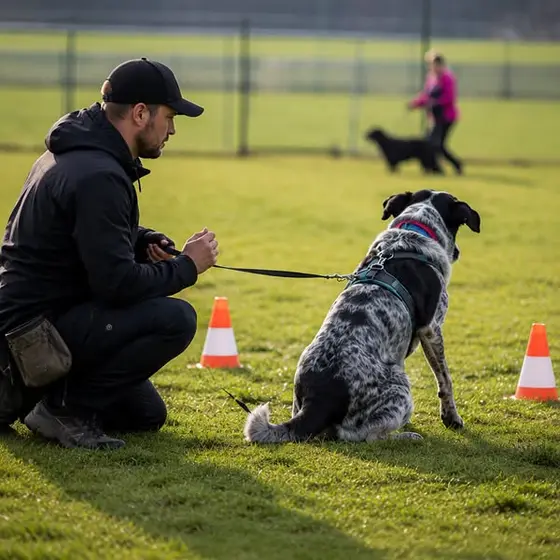
Doglette Facebook and Instagram ad
Doglette ran this image ad since Jun 18, 2026, 142 days so far, targeting United Kingdom.
Ad copy
BREAKING: This trainer reveals the #1 mistake rescue owners make when their dog turns reactive on walks. My name is Mark. I've been a dog trainer for 18 years, and the last decade I've specialized in rescue dogs — and why so many of them turn reactive on walks. I'm writing this for every rescue owner whose dog barks and lunges at everything and walking them is a nightmare. Because I think you're an amazing person for rescuing a dog who needed it, and I want to tell you the truth most trainers won't — what's actually causing it, why nothing you've tried so fat has worked, and what finally will. Every week a new family comes to me with the same story. They rescued a dog from a shelter. The first couple of weeks at home they were sweet, quiet, and gentle. And then suddenly every walk turned into a nightmare. Barking at every dog. Lunging at every jogger. Pulling so hard they can barely hold them. They've already tried a few things on their own — pet store calming chews with melatonin, a ThunderShirt, a no-pull harness but nothing worked. So a trainer feels like the obvious next move. But it isn't. Let me explain. When a rescue dog barks and lunges on every walk, it looks like a behavioral problem. So everyone treats it like one. But it isn't. The barking is just a symptom. The real cause is biological — and biology can't be trained out. That's the #1 mistake rescue owners make. Some dogs — especially rescues who spent months or years in a kennel — end up with their nervous system running on cortisol — the stress hormone, at chronically elevated levels. Cortisol is the chemical that prepares the body for danger. It's supposed to spike only when there's a real threat — something actually trying to hurt them. But in many rescues, cortisol is already high all the time, even when nothing is happening. Their body is permanently bracing for a threat that isn't there. So the moment a trigger shows up — another dog, a jogger, a kid on a bike — the brain reads it as a threat and the dog loses it. They don't choose to bark. The cortisol takes over and the thinking part of their brain shuts down. That's why no amount of training reaches it. You can't train a dog out of a biological state. The dog you're trying to teach isn't really there in those moments. And that's why everything you've tried so far has failed too. The pet store melatonin calming chews don't bring cortisol down — they just knock the dog out. The ThunderShirt, the harness, the diffuser — they might take the edge off, but they don't reach what's really driving it. Every single one of them goes after the barking. Not one of them goes after the cortisol underneath. The barking is the symptom. The cortisol is the cause. And until you bring the cortisol down, the barking will keep happening — no matter what you try. Most trainers won't tell you this. I get it. Telling owners that training won't fix their dog means losing the client. So they don't say it. They book six more sessions and hope the owner gives up before they figure it out themselves. I'd rather lose the client than not being honest to them. When a rescue owner shows up at my door with a reactive dog, I tell them what I just told you. Some of them ask right away if there's anything that actually targets the cortisol — and cancel the rest of the sessions on the spot. I'd rather they walk out and find something that works than pay me for months of training that can't reach the real problem. So what actually works? A few years ago I started telling rescue owners about one specific product. It's called Doglette. A natural solution — melatonin-free calming chews — built specifically for reactive dogs whose systems are stuck on high alert. What makes Doglette different is simple. No melatonin. Nothing whose job is to just sedate the dog. The whole formula is built to bring the cortisol down. It works with the dog's biology and pull the baseline back to where it's supposed to be. The dog stays themselves — same personality, same goofiness, same energy. They just aren't running on high alert anymore. The lunging stops. The barking thins out. The dog can finally walk. It's the solution that targets the cause, not just masks the symptom. The owners who tried it come back to thank me. Some of them even bring me gifts. They tell me they finally got the dog they thought they were adopting. If anything I've described fits your rescue — the meltdowns on every walk that nobody warned you about — this is what I'd recommend you trying. But go in patient. Cortisol that's been building up for months or years doesn't come down overnight. And anything that promises that is just a sedation. That's not what you want. The first week or two you probably won't see much. Most rescue dogs start showing the first real shift around the two-week mark. By around week five, the reactivity is mostly gone. Just treat your dog with 1 to 5 chews a day depending on their size. That's it. No training drills. No daily fight on the sidewalk. This is what I'd recommend if you want to stop fighting the symptom and start treating the cause — so you can finally walk your dog the way you imagined when you brought them home. 👉 https://doglette.com/pages/calming-treats?_ab=0&key=1779295866685 — Mark P.S. I know you've probably been let down before. That's why Doglette comes with a 60-day money-back guarantee — plenty of time to see if it's working for your dog. But please don't waste another year fighting the symptom. Treat the cause. The barking will follow. 👉 https://doglette.com/pages/calming-treats?_ab=0&key=1779295866685
Placements and targeting
More ads from Doglette
A barking dog that lunges on every walk is exhausting. I lived in it for almost a year. And the real reason is something nobody talks about — and once you understand it, the rest gets easy. I'm Maggie. I'm 72 old, and I'm a retired schoolteacher. I'm writing this for every rescue parent living with a dog that barks and lunges on every walk. Because I don't want anyone else to wait a year like I did. I live in a quiet neighborhood outside Charlotte. My husband Richard passed four years ago, and Biscuit — my beagle mix, six years old — has been with me for the last three years. I adopted him from a shelter an hour from my house. They told me he was quiet and gentle — and at the shelter, curled up in the back of his kennel, that's exactly what he was. I'd lived alone too long. He was supposed to be my company. And he is. At home, he's the gentlest dog. He sleeps on the rug at my feet while I read. He follows me from room to room. He puts his head on my knee when I'm having a hard afternoon. I love him. But on walks, he was like another dog. I want to be clear about what I mean. I don't mean Biscuit got excited on walks. I mean the second another dog appeared anywhere on our street, Biscuit went vertical at the end of the leash. Barking. Lunging. Pulling so hard I had to plant my feet just to stay upright. It didn't matter if the other dog was twenty feet away or two hundred. The moment he saw it, he was gone. And it wasn't just other dogs. A bicycle going past. The mailman walking up someone's driveway. A jogger crossing the street. Anyone, anything that moved — and Biscuit lost it. The first time he pulled me hard enough that I almost fell, I knew I couldn't keep walking him like that. So I started trying everything I could think of. I found a trainer. We did a six-week group class and then private sessions in the park when I told her about Biscuit's reactivity on walks. And Biscuit learned. He could do everything she asked in class. But the moment we got back on a normal walk and another dog appeared, none of it mattered. I tried a no-pull harness. The reviews said it would change everything. It made the pulling worse on the days Biscuit really lost it — he'd lunge, the harness would turn him, and he'd choke himself trying to keep going. I tried calming chews from the pet store. They all had melatonin in them. Biscuit slept hard in the afternoons and barked at the same neighbor's dog the next morning anyway. I tried high-value treats. Switching routes. Walking at different times. Nothing worked. The only thing I didn't really want to try was the medication our vet eventually suggested. She said something called fluoxetine could help. I asked a friend whose poodle was on it. She told me her dog was quieter but also flatter. Slept more. Stopped getting excited when she came home from the grocery store. I couldn't make that trade. I left the vet's office with the prescription in my purse and threw it in the kitchen drawer when I got home. After a year of trying everything, I'd stopped walking Biscuit further than the end of my own driveway. I was telling myself I was being safe. I was actually giving up on him in slow motion. Then one Sunday afternoon, my friend Eleanor stopped by. We hadn't seen each other in almost two years — she'd moved an hour out of town to be closer to her daughter and grandkids. Eleanor is my age, also widowed, also lives alone — she has two rescue dogs of her own. We were sitting on my porch when one of my neighbors walked their dog past my house. Biscuit, who'd been asleep at my feet, went off through the screen door. Barking. Throwing himself against the door. I had to pull him by his collar into the kitchen and shut him in. When I came back out, Eleanor said: "How long has this been going on?" I told her about a year. She said: "Maggie. Sit down. I had a rescue who was exactly like this. Cleo. I almost gave her back to the rescue. Let me tell you what finally worked — because I really wish someone had told me earlier." She told me she'd started fostering reactive dogs at her local rescue group when she moved there. Then she explained what was actually happening — and why every solution I'd tried had missed it. A lot of rescues are wired this way — calm and gentle at home, but their nervous system runs cortisol — the stress hormone — too high. Months in a shelter, whatever came before it, leaves the system stuck like that. When they're at home in a quiet place, the cortisol stays just below the line where their behavior changes. But the moment they're out on a walk, even something small — another dog, a bicycle, a kid on a scooter — pushes the system over. There's nowhere for it to go but straight up. The dog doesn't choose to bark or lunge. The cortisol takes over and the thinking part of the brain shuts down. That's why no training, no melatonin chews, no harness, no calming spray can work. They're all aimed at the barking and the lunging. None of them are aimed at the cortisol underneath it. I sat on my porch and felt something I hadn't let myself feel for a long time. It wasn't relief exactly. It was permission. Permission to stop blaming myself. Permission to stop blaming Biscuit. He wasn't a bad dog. I wasn't a bad owner. He had a real biological state, and nobody had bothered to tell me about it. Then Eleanor told me what had finally helped Cleo. A calming chew called Doglette. She said two things about it that made me pay attention. First, no melatonin in it — nothing in the formula whose job was just to make Biscuit drowsy. Second, the whole product was built around lowering cortisol — actually working with the dog's biology to bring the baseline back down. Not knocking the dog out. Not changing the dog's personality. Cleo was still Cleo, she said — opinionated, food-driven, very much a beagle — she just wasn't living at red alert anymore. The barking and lunging on walks shrank because the system underneath finally came down. She also told me to be patient. Natural solutions need time. Anything that promised an overnight fix was just sedation. That evening I went on the Doglette site. I read the ingredients carefully. The formula held up. The reviews sounded like Eleanor — people who had been living inside the same house I was living in. And there was a 60-day money-back guarantee. So I ordered it. The first week and a half, just as Eleanor said, nothing changed. Biscuit barked and lunged at every dog on every walk. I gave him his chews every morning at breakfast. Around day thirteen, I was walking Biscuit down our street when a neighbor's golden retriever came around the corner about thirty feet ahead. I braced for it. I planted my feet. Biscuit looked at the dog. He let out one short bark — and then he stopped. He looked back at me. I'd never seen that before. I stood on the sidewalk afterward and cried, because I hadn't dared to believe it might work, and because I'd already been telling myself I'd give him a few more months and then I'd have to make a decision. Over the next few weeks, the explosions got shorter. The recovery got faster. The neighbor's golden retriever stopped being a guaranteed event. The kid on the scooter stopped being one too. By around week five, Biscuit and I walked all the way around our block twice in one afternoon, past two other dogs and a mailman, and Biscuit barked once, calmed down on his own, and we kept going. That was almost a year ago. Biscuit still has opinions. He's a beagle. He notices things. He sometimes still gives a short bark at a dog across the street, and that's all. He doesn't lunge anymore. He doesn't pull me anymore. I haven't been dragged off a curb in months. I walk all the way around my block now without bracing for it. I'm writing this because for almost a year I had quietly accepted that this was just my life now. That I'd brought home a rescue I couldn't actually handle. That my own street wasn't safe for me anymore. That nothing was ever going to change, because I'd tried everything I knew to try, and nothing had worked. But I hadn't tried everything. I'd just never tried the one thing aimed at what was actually wrong. If your dog sounds anything like Biscuit did — barking and lunging on every walk, and nothing you've tried touching it — please don't take a year to find what I'm telling you now. The problem isn't your dog. The problem is a cortisol level nobody told you about, and that nothing you've tried has been aimed at. Treat the thing underneath the lunging. Everything else gets a chance. This is what helped Biscuit: 👉 https://doglette.com/pages/calming-treats?_ab=0&key=1779295866685 — Maggie P.S. Don't expect day one to look different. Mine didn't. The two-week mark was when Biscuit first walked past another dog without exploding, and around week five was when the lunging on walks really started to fade. Doglette has a 60-day money-back guarantee — that's a big part of why I finally ordered. If it hadn't worked, I'd have sent it back. It didn't come to that. 👉 https://doglette.com/pages/calming-treats?_ab=0&key=1779295866685
I was three months from giving my rescue back to the shelter. Now I tell every owner of a reactive rescue the same thing I wish someone had told me a year ago. I'm Maggie. I'm 72 old, and I'm a retired schoolteacher. I'm writing this for every rescue parent living with a dog that barks and lunges on every walk. Because I don't want anyone else to wait a year like I did. I live in a quiet neighborhood outside Charlotte. My husband Richard passed four years ago, and Biscuit — my beagle mix, six years old — has been with me for the last three years. I adopted him from a shelter an hour from my house. They told me he was quiet and gentle — and at the shelter, curled up in the back of his kennel, that's exactly what he was. I'd lived alone too long. He was supposed to be my company. And he is. At home, he's the gentlest dog. He sleeps on the rug at my feet while I read. He follows me from room to room. He puts his head on my knee when I'm having a hard afternoon. I love him. But on walks, he was like another dog. I want to be clear about what I mean. I don't mean Biscuit got excited on walks. I mean the second another dog appeared anywhere on our street, Biscuit went vertical at the end of the leash. Barking. Lunging. Pulling so hard I had to plant my feet just to stay upright. It didn't matter if the other dog was twenty feet away or two hundred. The moment he saw it, he was gone. And it wasn't just other dogs. A bicycle going past. The mailman walking up someone's driveway. A jogger crossing the street. Anyone, anything that moved — and Biscuit lost it. The first time he pulled me hard enough that I almost fell, I knew I couldn't keep walking him like that. So I started trying everything I could think of. I found a trainer. We did a six-week group class and then private sessions in the park when I told her about Biscuit's reactivity on walks. And Biscuit learned. He could do everything she asked in class. But the moment we got back on a normal walk and another dog appeared, none of it mattered. I tried a no-pull harness. The reviews said it would change everything. It made the pulling worse on the days Biscuit really lost it — he'd lunge, the harness would turn him, and he'd choke himself trying to keep going. I tried calming chews from the pet store. They all had melatonin in them. Biscuit slept hard in the afternoons and barked at the same neighbor's dog the next morning anyway. I tried high-value treats. Switching routes. Walking at different times. Nothing worked. The only thing I didn't really want to try was the medication our vet eventually suggested. She said something called fluoxetine could help. I asked a friend whose poodle was on it. She told me her dog was quieter but also flatter. Slept more. Stopped getting excited when she came home from the grocery store. I couldn't make that trade. I left the vet's office with the prescription in my purse and threw it in the kitchen drawer when I got home. After a year of trying everything, I'd stopped walking Biscuit further than the end of my own driveway. I was telling myself I was being safe. I was actually giving up on him in slow motion. Then one Sunday afternoon, my friend Eleanor stopped by. We hadn't seen each other in almost two years — she'd moved an hour out of town to be closer to her daughter and grandkids. Eleanor is my age, also widowed, also lives alone — she has two rescue dogs of her own. We were sitting on my porch when one of my neighbors walked their dog past my house. Biscuit, who'd been asleep at my feet, went off through the screen door. Barking. Throwing himself against the door. I had to pull him by his collar into the kitchen and shut him in. When I came back out, Eleanor said: "How long has this been going on?" I told her about a year. She said: "Maggie. Sit down. I had a rescue who was exactly like this. Cleo. I almost gave her back to the rescue. Let me tell you what finally worked — because I really wish someone had told me earlier." She told me she'd started fostering reactive dogs at her local rescue group when she moved there. Then she explained what was actually happening — and why every solution I'd tried had missed it. A lot of rescues are wired this way — calm and gentle at home, but their nervous system runs cortisol — the stress hormone — too high. Months in a shelter, whatever came before it, leaves the system stuck like that. When they're at home in a quiet place, the cortisol stays just below the line where their behavior changes. But the moment they're out on a walk, even something small — another dog, a bicycle, a kid on a scooter — pushes the system over. There's nowhere for it to go but straight up. The dog doesn't choose to bark or lunge. The cortisol takes over and the thinking part of the brain shuts down. That's why no training, no melatonin chews, no harness, no calming spray can work. They're all aimed at the barking and the lunging. None of them are aimed at the cortisol underneath it. I sat on my porch and felt something I hadn't let myself feel for a long time. It wasn't relief exactly. It was permission. Permission to stop blaming myself. Permission to stop blaming Biscuit. He wasn't a bad dog. I wasn't a bad owner. He had a real biological state, and nobody had bothered to tell me about it. Then Eleanor told me what had finally helped Cleo. A calming chew called Doglette. She said two things about it that made me pay attention. First, no melatonin in it — nothing in the formula whose job was just to make Biscuit drowsy. Second, the whole product was built around lowering cortisol — actually working with the dog's biology to bring the baseline back down. Not knocking the dog out. Not changing the dog's personality. Cleo was still Cleo, she said — opinionated, food-driven, very much a beagle — she just wasn't living at red alert anymore. The barking and lunging on walks shrank because the system underneath finally came down. She also told me to be patient. Natural solutions need time. Anything that promised an overnight fix was just sedation. That evening I went on the Doglette site. I read the ingredients carefully. The formula held up. The reviews sounded like Eleanor — people who had been living inside the same house I was living in. And there was a 60-day money-back guarantee. So I ordered it. The first week and a half, just as Eleanor said, nothing changed. Biscuit barked and lunged at every dog on every walk. I gave him his chews every morning at breakfast. Around day thirteen, I was walking Biscuit down our street when a neighbor's golden retriever came around the corner about thirty feet ahead. I braced for it. I planted my feet. Biscuit looked at the dog. He let out one short bark — and then he stopped. He looked back at me. I'd never seen that before. I stood on the sidewalk afterward and cried, because I hadn't dared to believe it might work, and because I'd already been telling myself I'd give him a few more months and then I'd have to make a decision. Over the next few weeks, the explosions got shorter. The recovery got faster. The neighbor's golden retriever stopped being a guaranteed event. The kid on the scooter stopped being one too. By around week five, Biscuit and I walked all the way around our block twice in one afternoon, past two other dogs and a mailman, and Biscuit barked once, calmed down on his own, and we kept going. That was almost a year ago. Biscuit still has opinions. He's a beagle. He notices things. He sometimes still gives a short bark at a dog across the street, and that's all. He doesn't lunge anymore. He doesn't pull me anymore. I haven't been dragged off a curb in months. I walk all the way around my block now without bracing for it. I'm writing this because for almost a year I had quietly accepted that this was just my life now. That I'd brought home a rescue I couldn't actually handle. That my own street wasn't safe for me anymore. That nothing was ever going to change, because I'd tried everything I knew to try, and nothing had worked. But I hadn't tried everything. I'd just never tried the one thing aimed at what was actually wrong. If your dog sounds anything like Biscuit did — barking and lunging on every walk, and nothing you've tried touching it — please don't take a year to find what I'm telling you now. The problem isn't your dog. The problem is a cortisol level nobody told you about, and that nothing you've tried has been aimed at. Treat the thing underneath the lunging. Everything else gets a chance. This is what helped Biscuit: 👉 https://doglette.com/pages/calming-treats?_ab=0&key=1779295866685 — Maggie P.S. Don't expect day one to look different. Mine didn't. The two-week mark was when Biscuit first walked past another dog without exploding, and around week five was when the lunging on walks really started to fade. Doglette has a 60-day money-back guarantee — that's a big part of why I finally ordered. If it hadn't worked, I'd have sent it back. It didn't come to that. 👉 https://doglette.com/pages/calming-treats?_ab=0&key=1779295866685
A barking dog that lunges on every walk is exhausting. I lived in it for almost a year. And the real reason is something nobody talks about — and once you understand it, the rest gets easy. I'm Maggie. I'm 72 old, and I'm a retired schoolteacher. I'm writing this for every rescue parent living with a dog that barks and lunges on every walk. Because I don't want anyone else to wait a year like I did. I live in a quiet neighborhood outside Charlotte. My husband Richard passed four years ago, and Biscuit — my beagle mix, six years old — has been with me for the last three years. I adopted him from a shelter an hour from my house. They told me he was quiet and gentle — and at the shelter, curled up in the back of his kennel, that's exactly what he was. I'd lived alone too long. He was supposed to be my company. And he is. At home, he's the gentlest dog. He sleeps on the rug at my feet while I read. He follows me from room to room. He puts his head on my knee when I'm having a hard afternoon. I love him. But on walks, he was like another dog. I want to be clear about what I mean. I don't mean Biscuit got excited on walks. I mean the second another dog appeared anywhere on our street, Biscuit went vertical at the end of the leash. Barking. Lunging. Pulling so hard I had to plant my feet just to stay upright. It didn't matter if the other dog was twenty feet away or two hundred. The moment he saw it, he was gone. And it wasn't just other dogs. A bicycle going past. The mailman walking up someone's driveway. A jogger crossing the street. Anyone, anything that moved — and Biscuit lost it. The first time he pulled me hard enough that I almost fell, I knew I couldn't keep walking him like that. So I started trying everything I could think of. I found a trainer. We did a six-week group class and then private sessions in the park when I told her about Biscuit's reactivity on walks. And Biscuit learned. He could do everything she asked in class. But the moment we got back on a normal walk and another dog appeared, none of it mattered. I tried a no-pull harness. The reviews said it would change everything. It made the pulling worse on the days Biscuit really lost it — he'd lunge, the harness would turn him, and he'd choke himself trying to keep going. I tried calming chews from the pet store. They all had melatonin in them. Biscuit slept hard in the afternoons and barked at the same neighbor's dog the next morning anyway. I tried high-value treats. Switching routes. Walking at different times. Nothing worked. The only thing I didn't really want to try was the medication our vet eventually suggested. She said something called fluoxetine could help. I asked a friend whose poodle was on it. She told me her dog was quieter but also flatter. Slept more. Stopped getting excited when she came home from the grocery store. I couldn't make that trade. I left the vet's office with the prescription in my purse and threw it in the kitchen drawer when I got home. After a year of trying everything, I'd stopped walking Biscuit further than the end of my own driveway. I was telling myself I was being safe. I was actually giving up on him in slow motion. Then one Sunday afternoon, my friend Eleanor stopped by. We hadn't seen each other in almost two years — she'd moved an hour out of town to be closer to her daughter and grandkids. Eleanor is my age, also widowed, also lives alone — she has two rescue dogs of her own. We were sitting on my porch when one of my neighbors walked their dog past my house. Biscuit, who'd been asleep at my feet, went off through the screen door. Barking. Throwing himself against the door. I had to pull him by his collar into the kitchen and shut him in. When I came back out, Eleanor said: "How long has this been going on?" I told her about a year. She said: "Maggie. Sit down. I had a rescue who was exactly like this. Cleo. I almost gave her back to the rescue. Let me tell you what finally worked — because I really wish someone had told me earlier." She told me she'd started fostering reactive dogs at her local rescue group when she moved there. Then she explained what was actually happening — and why every solution I'd tried had missed it. A lot of rescues are wired this way — calm and gentle at home, but their nervous system runs cortisol — the stress hormone — too high. Months in a shelter, whatever came before it, leaves the system stuck like that. When they're at home in a quiet place, the cortisol stays just below the line where their behavior changes. But the moment they're out on a walk, even something small — another dog, a bicycle, a kid on a scooter — pushes the system over. There's nowhere for it to go but straight up. The dog doesn't choose to bark or lunge. The cortisol takes over and the thinking part of the brain shuts down. That's why no training, no melatonin chews, no harness, no calming spray can work. They're all aimed at the barking and the lunging. None of them are aimed at the cortisol underneath it. I sat on my porch and felt something I hadn't let myself feel for a long time. It wasn't relief exactly. It was permission. Permission to stop blaming myself. Permission to stop blaming Biscuit. He wasn't a bad dog. I wasn't a bad owner. He had a real biological state, and nobody had bothered to tell me about it. Then Eleanor told me what had finally helped Cleo. A calming chew called Doglette. She said two things about it that made me pay attention. First, no melatonin in it — nothing in the formula whose job was just to make Biscuit drowsy. Second, the whole product was built around lowering cortisol — actually working with the dog's biology to bring the baseline back down. Not knocking the dog out. Not changing the dog's personality. Cleo was still Cleo, she said — opinionated, food-driven, very much a beagle — she just wasn't living at red alert anymore. The barking and lunging on walks shrank because the system underneath finally came down. She also told me to be patient. Natural solutions need time. Anything that promised an overnight fix was just sedation. That evening I went on the Doglette site. I read the ingredients carefully. The formula held up. The reviews sounded like Eleanor — people who had been living inside the same house I was living in. And there was a 60-day money-back guarantee. So I ordered it. The first week and a half, just as Eleanor said, nothing changed. Biscuit barked and lunged at every dog on every walk. I gave him his chews every morning at breakfast. Around day thirteen, I was walking Biscuit down our street when a neighbor's golden retriever came around the corner about thirty feet ahead. I braced for it. I planted my feet. Biscuit looked at the dog. He let out one short bark — and then he stopped. He looked back at me. I'd never seen that before. I stood on the sidewalk afterward and cried, because I hadn't dared to believe it might work, and because I'd already been telling myself I'd give him a few more months and then I'd have to make a decision. Over the next few weeks, the explosions got shorter. The recovery got faster. The neighbor's golden retriever stopped being a guaranteed event. The kid on the scooter stopped being one too. By around week five, Biscuit and I walked all the way around our block twice in one afternoon, past two other dogs and a mailman, and Biscuit barked once, calmed down on his own, and we kept going. That was almost a year ago. Biscuit still has opinions. He's a beagle. He notices things. He sometimes still gives a short bark at a dog across the street, and that's all. He doesn't lunge anymore. He doesn't pull me anymore. I haven't been dragged off a curb in months. I walk all the way around my block now without bracing for it. I'm writing this because for almost a year I had quietly accepted that this was just my life now. That I'd brought home a rescue I couldn't actually handle. That my own street wasn't safe for me anymore. That nothing was ever going to change, because I'd tried everything I knew to try, and nothing had worked. But I hadn't tried everything. I'd just never tried the one thing aimed at what was actually wrong. If your dog sounds anything like Biscuit did — barking and lunging on every walk, and nothing you've tried touching it — please don't take a year to find what I'm telling you now. The problem isn't your dog. The problem is a cortisol level nobody told you about, and that nothing you've tried has been aimed at. Treat the thing underneath the lunging. Everything else gets a chance. This is what helped Biscuit: 👉 https://doglette.com/pages/calming-treats?_ab=0&key=1779295866685 — Maggie P.S. Don't expect day one to look different. Mine didn't. The two-week mark was when Biscuit first walked past another dog without exploding, and around week five was when the lunging on walks really started to fade. Doglette has a 60-day money-back guarantee — that's a big part of why I finally ordered. If it hadn't worked, I'd have sent it back. It didn't come to that. 👉 https://doglette.com/pages/calming-treats?_ab=0&key=1779295866685
Similar shoes and sneakers ads
Crafted from high-quality polished leather. Designed for comfort where it matters most. A flexible low-cut profile, soft padded collar, cushioned insole, and supportive dual-density sole work together to keep every step comfortable, all day long.
Keep exploring
Find more ads like this
Search millions of real ads by keyword, niche and format, and save the winners to your swipe file.
