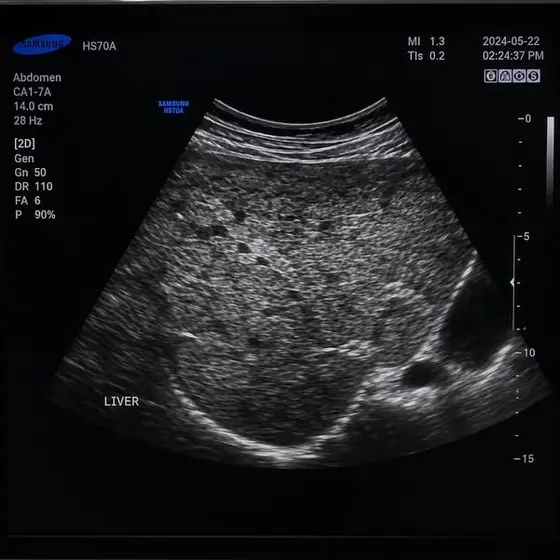
Bruce Wilson Inactive
Bruce Wilson Facebook ad creative
tryrevived.com
Read if you have fatty liver
See details

Bruce Wilson Facebook and Instagram ad

Bruce Wilson ran this image ad since Jun 26, 2026, 134 days so far, targeting Ireland.

First seen
Jun 26, 2026
Running for
134 days
Format
Image
Call to action
See details
Niche
Health and supplements
Countries
1 targeted
Page likes
2

Ad copy

My ALT Was 71. My AST Was 64. My Doctor Said "Fatty Liver, Lose Some Weight, Come Back in Six Months." I Spent the Next Three Months Finding Out What He Should Have Told Me. I still have the printout. ALT, 71. AST, 64. GGT flagged high. Little red markers next to each one, the way the lab software flags anything outside the normal range, so that even before anyone explained a thing to me I knew, sitting in my truck in the parking lot reading it on my phone, that something inside me was not right. I am fifty-three. I had gone in for a routine physical feeling more or less fine, a little tired maybe, a little heavier around the middle than I wanted to be, nothing I would have called a problem. And I drove home with three red flags on a liver panel and a knot in my stomach that did not loosen for weeks. When I went back in to discuss it, the appointment lasted maybe eight minutes. The doctor was not unkind. He told me I had fatty liver, that it was extremely common, that the elevated enzymes meant my liver was under some strain, and that the answer was to lose some weight, cut back on alcohol, and come back in six months to recheck the numbers. I asked him what was actually causing it. He said weight and diet, mostly. I asked if there was anything I could take. He said not really, that it came down to lifestyle. And that was it. I walked out with a printout, a follow-up card, and the distinct and lonely feeling that I had just been handed a problem and sent home to solve it by myself with nothing but willpower. I want to tell you what I found over the next three months, because I refused to accept that for something this serious the entire answer was eat less and wait, and what I learned changed not just my numbers but my understanding of my own body. If you are sitting where I was sitting — with your own red flags on your own printout and your own eight-minute brush-off — I think it might do the same for you. The first few weeks I did exactly what I was told, and I did it well, because I am the kind of man who follows instructions when I am frightened. I cut my portions. I gave up the beer I had with dinner most nights. I started walking in the evenings. And I want to be fair: those things matter, and I am not here to tell you to skip them. But two things gnawed at me. The first was that I felt no different — still tired, still heavy, still foggy in the afternoons in a way I had started to notice now that I was paying attention. The second was that nobody had actually explained to me what was happening inside my body. I had a label, fatty liver, and a set of instructions, but I had no understanding. And I have never been able to act on something I do not understand. So I started reading. I did not read supplement advertisements. I read actual material about how the liver works and why it fails, not a sales pitch. And the deeper I went, the more I realized how much my doctor had compressed out of that eight-minute appointment. I learned that the liver is the hardest-working organ in the body, the filter that everything I eat, drink, and absorb has to pass through to be broken down and cleared, working without rest every second of my life. I learned that doing that work generates a constant internal chemical stress that, if left unchecked, damages the liver's own cells — and that this damage is part of what those elevated enzymes on my printout were actually signaling. The enzymes were not the fire. They were the smoke. They were my liver cells leaking their contents into my blood because they were under strain. And then I learned the thing that changed everything, the thing I am still slightly angry was never mentioned to me. The liver protects itself from that chemical stress using a single antioxidant molecule it produces internally and relies on above all others. When that defense is strong, the liver can carry an enormous load and stay healthy. When it runs low, the cells start taking damage. And — this was the part that made me sit up — the body's production of that molecule declines steadily with age. By fifty-three, I was making far less of my liver's primary defense than I had at thirty, at exactly the point in my life when decades of accumulated wear meant my liver needed it most. The molecule, I learned, is called glutathione. And the strange thing, the thing that made me feel like the answer had been hiding in plain sight, was that I had actually already encountered it without knowing. In my reading I kept running across a supplement called NAC being recommended for liver support, and when I looked into why, I discovered that NAC is simply the raw material the body uses to manufacture glutathione. So the medical world clearly already knew glutathione mattered for the liver — it was recommending the ingredient to make it. It had just never been explained to me that this was the point, or that there might be a more direct way to get there. But here was the flaw in the NAC approach, and it was the flaw that applied directly to me. Handing my body the raw material only helps if my body can still efficiently turn that raw material into glutathione. But at fifty-three, supplying my body with the ingredient and trusting it to build the finished molecule was a far less certain proposition than it would have been at thirty. The obvious question formed in my mind, the same one you are probably forming now: if glutathione is what my liver runs on, and my body is making less of it and converting it less reliably, why not just take glutathione directly? So I tried to. And I made the mistake that I now know wastes most people's time and money. I went out and bought a bottle of glutathione, an ordinary one, the first one I found. I took it for a few weeks and felt absolutely nothing. And I very nearly concluded, the way most people do, that glutathione was just another supplement that did not work — until I kept reading and found out why I had felt nothing. Glutathione is an extremely fragile molecule, and when you swallow it in ordinary form, your stomach acid destroys nearly all of it before it can reach your bloodstream. This has been studied over and over, and the finding is always the same: standard glutathione capsules barely raise your levels at all. I had not tested glutathione. I had taken a form of it that my body couldn't actually do anything with. That is when I learned about the one form that actually survives the journey to the liver, the form that changed my whole experiment. It is called liposomal glutathione. The fragile molecule is wrapped inside a microscopic protective barrier made of the same material as my own cell membranes, and my stomach treats it as ordinary food and lets it pass through the stomach acid intact. The glutathione then rides safely through the stomach, into the bloodstream, and reaches the liver. The difference between the ordinary glutathione I had wasted weeks on and the liposomal form was not quality or strength. It was the difference between a molecule destroyed at the door and one that actually gets inside. I cannot tell you how frustrated I was to learn that the only reason my first attempt failed was that nobody, at any point, had told me the form was the entire thing that mattered. So I switched to a liposomal form and kept it up, alongside the weight loss and the dietary changes I had never stopped, because I was not about to abandon those. And I want to be honest with you about what happened, because I have read enough overblown marketing junk to last a lifetime and I refuse to add another. Nothing happened overnight. But over the following weeks, the heavy, foggy, perpetually-tired feeling I had come to think of as just being fifty-three began, quietly, to lift. My energy steadied. The afternoon fog that I had only recently started noticing thinned out. I began to feel, in a way that crept up on me rather than arriving all at once, like my body was running cleaner than it had in years. I had spent so long feeling vaguely unwell that I had forgotten there was another way to feel. My wife noticed before I said anything to her about any of it. She told me one evening that the color had come back to my face, that I did not look so gray and worn down, that I seemed like myself again. I had not told her what I was doing. She just saw it. I am not going to tell you that a capsule cured my fatty liver, because that would be a lie, and I have no interest in becoming the kind of overpromising voice that frustrated me so much during my own search. There is no cure in a bottle, and I kept every one of my follow-up appointments, and I monitored my numbers far more closely than my doctor would have pushed me to — because if there is one thing my own story taught me, it is that you have to be the one driving your own care. What the glutathione did was not magic. It restored the primary antioxidant defense my liver had been running short of for years, in a form that could actually reach it. That is the molecule's genuine role in the body, the same role that had the medical world recommending NAC to support it in the first place. The only thing I worked out, three months late and entirely on my own, was that delivering the finished molecule directly, in a form that survives the stomach, is a more direct way to support that defense than handing an aging body a raw material it can no longer reliably use. The form I settled on, after all that searching, is made by a small company called Revived. It is true liposomal glutathione, encapsulated to survive the stomach and reach the bloodstream. Each serving is five hundred milligrams, a real dose rather than a sprinkle. It is made in the United States under strict standards and third-party lab tested, which I cared about a great deal by that point, because after wasting weeks on a useless bottle I wanted proof that what was inside the capsule was actually intact, active glutathione and not degraded powder. There are no fillers. Two capsules each morning with water. That is the regimen I have kept ever since. If you are where I was three months ago — staring at your own printout, your own red-flagged ALT and AST, your own eight-minute appointment and your own lonely instruction to lose weight and come back — I want to save you the three months it took me to find this out. Reduce the burden on your liver, yes; the weight and the alcohol advice is real and worth following. But do the other thing too, the thing nobody told either of us: restore the defense your liver has been losing to the years, directly, in the form that actually reaches it. You do not have to spend the next six months simply waiting to find out whether you got worse. I did not, and I am glad beyond words that I refused to. Revived offers a ninety-day money-back guarantee, which is exactly the window I would have wanted when I started, because none of this happens in a day and you deserve the time to feel whether it is working. Give it the full ninety days. If you feel no genuine difference in how you feel and how your numbers look, you send the bottle back and you are out nothing. That is a far better deal than the one I was handed across a desk, which was a printout, a follow-up card, and the feeling that I was on my own. 👉 tryrevived.com/products/liposomal-glutathione P.S. If you have already tried glutathione and felt nothing, please do not make the mistake I almost made and write it off. I felt nothing too — because I had bought the ordinary form, the kind destroyed in the stomach before it can reach you. That experience is not proof that glutathione does not work. It is proof that the form does not survive, which is the single most common reason people give up, and the precise problem the liposomal version was built to solve. P.P.S. After everything, I no longer believe my doctor was hiding anything from me. The reason he compressed it all into eight minutes and a recheck date is structural, not sinister. There is no prescription to write for glutathione, no representative promoting it to him, no billing code that pays for the twenty minutes it would have taken to explain to me what I eventually spent three months teaching myself. So the appointment defaulted to lose weight and recheck in six months, and everything I have just told you went unsaid. It was never hidden. It was simply never said. I had to find it on my own. You did not — because I just told you. 👉 tryrevived.com/products/liposomal-glutathione

Placements and targeting

FacebookInstagramAudience NetworkMessengerThreads🇮🇪 Ireland

More ads from Bruce Wilson

Full Bruce Wilson profile
Bruce Wilson
Bruce Wilson
+1
Inactive134 days
tryrevived.com
Read if you have fatty liver
See details

My ALT Was 71. My AST Was 64. My Doctor Said "Fatty Liver, Lose Some Weight, Come Back in Six Months." I Spent the Next Three Months Finding Out What He Should Have Told Me. I still have the printout. ALT, 71. AST, 64. GGT flagged high. Little red markers next to each one, the way the lab software flags anything outside the normal range, so that even before anyone explained a thing to me I knew, sitting in my truck in the parking lot reading it on my phone, that something inside me was not right. I am fifty-three. I had gone in for a routine physical feeling more or less fine, a little tired maybe, a little heavier around the middle than I wanted to be, nothing I would have called a problem. And I drove home with three red flags on a liver panel and a knot in my stomach that did not loosen for weeks. When I went back in to discuss it, the appointment lasted maybe eight minutes. The doctor was not unkind. He told me I had fatty liver, that it was extremely common, that the elevated enzymes meant my liver was under some strain, and that the answer was to lose some weight, cut back on alcohol, and come back in six months to recheck the numbers. I asked him what was actually causing it. He said weight and diet, mostly. I asked if there was anything I could take. He said not really, that it came down to lifestyle. And that was it. I walked out with a printout, a follow-up card, and the distinct and lonely feeling that I had just been handed a problem and sent home to solve it by myself with nothing but willpower. I want to tell you what I found over the next three months, because I refused to accept that for something this serious the entire answer was eat less and wait, and what I learned changed not just my numbers but my understanding of my own body. If you are sitting where I was sitting — with your own red flags on your own printout and your own eight-minute brush-off — I think it might do the same for you. The first few weeks I did exactly what I was told, and I did it well, because I am the kind of man who follows instructions when I am frightened. I cut my portions. I gave up the beer I had with dinner most nights. I started walking in the evenings. And I want to be fair: those things matter, and I am not here to tell you to skip them. But two things gnawed at me. The first was that I felt no different — still tired, still heavy, still foggy in the afternoons in a way I had started to notice now that I was paying attention. The second was that nobody had actually explained to me what was happening inside my body. I had a label, fatty liver, and a set of instructions, but I had no understanding. And I have never been able to act on something I do not understand. So I started reading. I did not read supplement advertisements. I read actual material about how the liver works and why it fails, not a sales pitch. And the deeper I went, the more I realized how much my doctor had compressed out of that eight-minute appointment. I learned that the liver is the hardest-working organ in the body, the filter that everything I eat, drink, and absorb has to pass through to be broken down and cleared, working without rest every second of my life. I learned that doing that work generates a constant internal chemical stress that, if left unchecked, damages the liver's own cells — and that this damage is part of what those elevated enzymes on my printout were actually signaling. The enzymes were not the fire. They were the smoke. They were my liver cells leaking their contents into my blood because they were under strain. And then I learned the thing that changed everything, the thing I am still slightly angry was never mentioned to me. The liver protects itself from that chemical stress using a single antioxidant molecule it produces internally and relies on above all others. When that defense is strong, the liver can carry an enormous load and stay healthy. When it runs low, the cells start taking damage. And — this was the part that made me sit up — the body's production of that molecule declines steadily with age. By fifty-three, I was making far less of my liver's primary defense than I had at thirty, at exactly the point in my life when decades of accumulated wear meant my liver needed it most. The molecule, I learned, is called glutathione. And the strange thing, the thing that made me feel like the answer had been hiding in plain sight, was that I had actually already encountered it without knowing. In my reading I kept running across a supplement called NAC being recommended for liver support, and when I looked into why, I discovered that NAC is simply the raw material the body uses to manufacture glutathione. So the medical world clearly already knew glutathione mattered for the liver — it was recommending the ingredient to make it. It had just never been explained to me that this was the point, or that there might be a more direct way to get there. But here was the flaw in the NAC approach, and it was the flaw that applied directly to me. Handing my body the raw material only helps if my body can still efficiently turn that raw material into glutathione. But at fifty-three, supplying my body with the ingredient and trusting it to build the finished molecule was a far less certain proposition than it would have been at thirty. The obvious question formed in my mind, the same one you are probably forming now: if glutathione is what my liver runs on, and my body is making less of it and converting it less reliably, why not just take glutathione directly? So I tried to. And I made the mistake that I now know wastes most people's time and money. I went out and bought a bottle of glutathione, an ordinary one, the first one I found. I took it for a few weeks and felt absolutely nothing. And I very nearly concluded, the way most people do, that glutathione was just another supplement that did not work — until I kept reading and found out why I had felt nothing. Glutathione is an extremely fragile molecule, and when you swallow it in ordinary form, your stomach acid destroys nearly all of it before it can reach your bloodstream. This has been studied over and over, and the finding is always the same: standard glutathione capsules barely raise your levels at all. I had not tested glutathione. I had taken a form of it that my body couldn't actually do anything with. That is when I learned about the one form that actually survives the journey to the liver, the form that changed my whole experiment. It is called liposomal glutathione. The fragile molecule is wrapped inside a microscopic protective barrier made of the same material as my own cell membranes, and my stomach treats it as ordinary food and lets it pass through the stomach acid intact. The glutathione then rides safely through the stomach, into the bloodstream, and reaches the liver. The difference between the ordinary glutathione I had wasted weeks on and the liposomal form was not quality or strength. It was the difference between a molecule destroyed at the door and one that actually gets inside. I cannot tell you how frustrated I was to learn that the only reason my first attempt failed was that nobody, at any point, had told me the form was the entire thing that mattered. So I switched to a liposomal form and kept it up, alongside the weight loss and the dietary changes I had never stopped, because I was not about to abandon those. And I want to be honest with you about what happened, because I have read enough overblown marketing junk to last a lifetime and I refuse to add another. Nothing happened overnight. But over the following weeks, the heavy, foggy, perpetually-tired feeling I had come to think of as just being fifty-three began, quietly, to lift. My energy steadied. The afternoon fog that I had only recently started noticing thinned out. I began to feel, in a way that crept up on me rather than arriving all at once, like my body was running cleaner than it had in years. I had spent so long feeling vaguely unwell that I had forgotten there was another way to feel. My wife noticed before I said anything to her about any of it. She told me one evening that the color had come back to my face, that I did not look so gray and worn down, that I seemed like myself again. I had not told her what I was doing. She just saw it. I am not going to tell you that a capsule cured my fatty liver, because that would be a lie, and I have no interest in becoming the kind of overpromising voice that frustrated me so much during my own search. There is no cure in a bottle, and I kept every one of my follow-up appointments, and I monitored my numbers far more closely than my doctor would have pushed me to — because if there is one thing my own story taught me, it is that you have to be the one driving your own care. What the glutathione did was not magic. It restored the primary antioxidant defense my liver had been running short of for years, in a form that could actually reach it. That is the molecule's genuine role in the body, the same role that had the medical world recommending NAC to support it in the first place. The only thing I worked out, three months late and entirely on my own, was that delivering the finished molecule directly, in a form that survives the stomach, is a more direct way to support that defense than handing an aging body a raw material it can no longer reliably use. The form I settled on, after all that searching, is made by a small company called Revived. It is true liposomal glutathione, encapsulated to survive the stomach and reach the bloodstream. Each serving is five hundred milligrams, a real dose rather than a sprinkle. It is made in the United States under strict standards and third-party lab tested, which I cared about a great deal by that point, because after wasting weeks on a useless bottle I wanted proof that what was inside the capsule was actually intact, active glutathione and not degraded powder. There are no fillers. Two capsules each morning with water. That is the regimen I have kept ever since. If you are where I was three months ago — staring at your own printout, your own red-flagged ALT and AST, your own eight-minute appointment and your own lonely instruction to lose weight and come back — I want to save you the three months it took me to find this out. Reduce the burden on your liver, yes; the weight and the alcohol advice is real and worth following. But do the other thing too, the thing nobody told either of us: restore the defense your liver has been losing to the years, directly, in the form that actually reaches it. You do not have to spend the next six months simply waiting to find out whether you got worse. I did not, and I am glad beyond words that I refused to. Revived offers a ninety-day money-back guarantee, which is exactly the window I would have wanted when I started, because none of this happens in a day and you deserve the time to feel whether it is working. Give it the full ninety days. If you feel no genuine difference in how you feel and how your numbers look, you send the bottle back and you are out nothing. That is a far better deal than the one I was handed across a desk, which was a printout, a follow-up card, and the feeling that I was on my own. 👉 tryrevived.com/products/liposomal-glutathione P.S. If you have already tried glutathione and felt nothing, please do not make the mistake I almost made and write it off. I felt nothing too — because I had bought the ordinary form, the kind destroyed in the stomach before it can reach you. That experience is not proof that glutathione does not work. It is proof that the form does not survive, which is the single most common reason people give up, and the precise problem the liposomal version was built to solve. P.P.S. After everything, I no longer believe my doctor was hiding anything from me. The reason he compressed it all into eight minutes and a recheck date is structural, not sinister. There is no prescription to write for glutathione, no representative promoting it to him, no billing code that pays for the twenty minutes it would have taken to explain to me what I eventually spent three months teaching myself. So the appointment defaulted to lose weight and recheck in six months, and everything I have just told you went unsaid. It was never hidden. It was simply never said. I had to find it on my own. You did not — because I just told you. 👉 tryrevived.com/products/liposomal-glutathione

Bruce Wilson
Bruce Wilson
+1
Inactive134 days
tryrevived.com
Read if you have fatty liver
See details

My daughter spent four months researching my fatty liver after I told her I'd "accepted" there was nothing to be done. I'm sixty-four. Retired, thirty years as a machinist, most of it on my feet on a shop floor. I always figured my body would give out somewhere obvious — the knees, the back, the hands. I never once thought about my liver until a routine blood test came back with the enzymes flagged and a doctor told me I had a fatty liver. He was not unkind about it. He told me it was very common, that I should lose some weight, cut back on the beer, and come back in six months so they could check the numbers again. I asked if there was anything I could take for it. He said not really, that it came down to diet and weight. And that was the whole conversation. I walked out with a printout and a follow-up card and a feeling I could not name, which I now understand was the feeling of being handed a problem and sent home to solve it alone. So I did what I was told. I lost some weight. I gave up the beer. And I still felt heavy, tired, foggy, and worn down in a way that the diet never touched. After about two years of that, I stopped expecting it to get better. I told myself this was just sixty-four. This was just how it was going to be from here. Last Thanksgiving, my daughter Rachel asked me how I was feeling, and I gave her the answer I'd been giving everyone. I said I was fine. It was just part of getting older now. She looked at me the way she used to look at me when I'd come home from a double shift and swear I wasn't tired. She told me it wasn't fine. She pointed out that I fell asleep in my chair by eight every night. That I'd stopped going out to the garage to work on the truck, the thing I loved most. That I turned down every invitation because I never had the energy. That wasn't fine, she said. That was me giving up. I told her the doctor said there was nothing to be done. Lose weight and wait. That was the medicine. And she said something that stuck with me for months. She said the doctor told me there was no pill for the fat on my liver. But what if the fat was never really the problem? What if something else was going on underneath it that nobody had bothered to look at? I didn't know what she meant. She left it there. But Rachel is not the kind of person who lets a thread go once she's pulled on it. She does research for a living — not medicine, she works in environmental science at the state university, but she knows how to read a study and follow a trail most people would never find. And she had decided, sitting at that Thanksgiving table watching her father fall asleep at eight o'clock, that she was not going to accept what I had accepted. She spent four months on it. Four months of reading papers, watching lectures, going down rabbit holes at one in the morning while the rest of us slept. She called me in the spring and told me she needed me to understand something, and that it was not about the fat and it was not about my weight. I told her I wasn't interested in another miracle supplement. I'd tried them. Milk thistle, the one everybody points you to for your liver — months of it, nothing. A bottle of something called NAC that an article swore by. Then glutathione itself, when I read that was supposed to be the important one. I took it for weeks and felt absolutely nothing. I'd spent a fair bit of money on bottles that did nothing at all, and I told her I was done chasing it. She said this was different, because it wasn't about adding another thing to the pile. It was about understanding why everything on the pile had failed. And then she explained the thing that no doctor, in two years, had ever taken the time to explain to me. She told me the liver is the hardest-working organ in the body. It's the filter that everything you eat and drink and breathe has to pass through to be broken down and cleared out, and it does that work without rest, every second of your life. And the act of doing that filtering creates a constant chemical stress inside the liver — a kind of wear produced by the work itself — that, left unchecked, damages the liver's own cells. Those damaged, leaking cells, she said, are part of what makes the enzymes show up high on a blood test. The high enzymes weren't the disease. They were the smoke coming off a fire underneath. But the liver has always had a defense against that chemical stress. It makes, inside itself, a single antioxidant molecule it relies on above all others to absorb the stress and protect its cells while they work. When that defense is strong, the liver carries an enormous load and stays healthy for decades. When it runs low, the work goes on but the protection fails, and the cells start taking damage. And here was the part that made me sit up, she said. Your body makes plenty of that defense when you're young, which is exactly why young livers tolerate so much. But your production of it falls steadily as you age. By my sixties, I was making far less of my liver's primary defense than I had at thirty — at exactly the point in life when decades of wear meant my liver needed it most. The defense was draining away right when the demand was highest. That, she told me, was the fire under the smoke. Not the fat. The fat was a symptom. The failing defense was the cause nobody had looked at. The molecule, she said, is called glutathione. And it turns out the medical world already half-knows it matters, because that NAC I'd wasted money on is nothing more than the raw material the body uses to try to manufacture glutathione. The trouble is that handing an aging body the raw material only works if the body can still efficiently build the finished molecule from it — and that's exactly the ability that fades with the years. So I asked her the obvious question. If glutathione is the thing my liver actually runs on, and I'm making less of it, why did the glutathione I bought do nothing? And this was the part she'd spent the four months running down. She told me glutathione is an extremely fragile molecule, and that when you swallow it in an ordinary capsule, your stomach acid destroys nearly all of it before it ever reaches your bloodstream, let alone your liver. It's been studied over and over, she said, and the result never changes — ordinary glutathione barely raises your levels at all. I hadn't tested glutathione. I'd swallowed a molecule that was being destroyed at the door before it could do a single thing. It never even arrived. There was only one form, she told me, that actually survives the trip. It's called liposomal glutathione. The fragile molecule is wrapped inside a microscopic protective shell made of the same material your own cells are built from, and your stomach treats that shell as ordinary food and lets it pass through intact. The glutathione rides safely through the acid, into the bloodstream, and reaches the liver. The difference between the ordinary kind I'd wasted weeks on and the liposomal kind wasn't strength or quality, she said. It was the difference between a delivery destroyed on the doorstep and one that actually gets inside the house. Everything clicked when she said it. Every failed bottle. Every shrug from a doctor. Every article that told me to take something that was being torn apart in my stomach before it could reach the organ that needed it. They had all been aiming at the wrong target, or aiming at the right one with something that never arrived. I told her it sounded almost too simple. And she said, Dad, you let a doctor tell you to lose weight and wait, and you accepted it for two years. Just try this. If it does nothing, you've lost a little time. If it's real, you get your life back. So I tried it. She'd found a liposomal glutathione from a small company called Revived, and I started taking it every morning, alongside the weight I'd kept off and the diet I never abandoned, because I wasn't about to undo the work I'd already done. This wasn't instead of any of that. It was the piece that had been missing underneath all of it. I want to be honest about how it went, because I've been lied to by enough bottles to have no patience for anyone overselling. Nothing happened overnight. But here is what happened over the weeks that followed, and I'm telling it the way I lived it, not the way a label would promise it. The first thing was the sleep. Somewhere in the second week, I slept through the night and woke up without that wrung-out, heavy feeling I'd carried so long I'd stopped noticing it. Just once that week. But I noticed. By the third week, I got to the middle of the afternoon and realized I hadn't gone looking for the chair. The fog hadn't rolled in the way it always did. I was still there, still clear, at three in the afternoon. By the second month, my wife told me, without my having said a word to her about any of this, that the color had come back to my face. She said I didn't look gray and worn down anymore. She said I looked like myself. And then one evening she came out to the garage and found me there, under the hood of the truck, doing the thing I'd given up a year before because I never had the energy for it. She didn't say anything. She just stood in the doorway and looked at me, and I had to keep my head down under that hood a little longer than I needed to, because I didn't entirely trust my own face right then. I'm not going to tell you a capsule cured my fatty liver, because that would be a lie, and after everything I went through chasing false promises I refuse to become one. There is no cure in a bottle. I kept every one of my follow-up appointments, and I monitor things far more closely now than my doctor would have pushed me to, because if my daughter taught me anything it's that you have to be the one driving your own care. What the glutathione did was not magic. It restored the primary antioxidant defense my liver had been short of for years, in a form that could finally reach it — the support that the weight loss and the diet, real and worthwhile as they were, had never once addressed. That is the molecule's genuine job in the body. The only thing my daughter worked out, in four months of refusing to accept what I'd accepted, was that you have to deliver it in a form that actually survives the stomach, or it never gets there at all. The one she found, and the one I take every morning now, is made by a small company called Revived. It's true liposomal glutathione, wrapped to survive the stomach and actually reach the liver. Five hundred milligrams per serving, a real dose and not a sprinkle. Made in the USA under strict standards. Third-party lab tested, which mattered to me a great deal after wasting money on bottles that did nothing, because the testing proves that what's inside the capsule is actually intact, active glutathione and not degraded powder. No fillers. Two capsules each morning with water. It comes with a ninety-day money-back guarantee, which is the fair way to try it, because none of this happened for me in a day. Give it the full ninety days alongside the real work of taking the load off your liver. If you feel no difference in how you feel and how you live, you send the bottle back and you're out nothing. That's a better deal than the one I was handed across a desk, which was a printout and a follow-up card and the feeling that I was on my own. If you're reading this, I suspect you see some version of yourself in it. You got the fatty liver diagnosis and the lose-weight-and-wait speech. You've half-accepted that this is just how it's going to be now. Maybe you've already tried the milk thistle and the rest and watched them do nothing. Maybe somebody who loves you has started looking at you the way my daughter looked at me across that Thanksgiving table. I accepted it for two years because nobody told me there was anything underneath the fat worth looking at. There was. My liver's own defense had been quietly running dry, and the one thing that could restore it had never reached me because I'd been taking the form that gets destroyed before it arrives. My daughter refused to accept what I'd accepted, and she turned out to be right. I can hear my grandkids over the dinner table again. I can work on the truck again. I'm not asleep in the chair at eight o'clock anymore. I care a great deal about that, and I'd like you to have the chance at it too. 👉 tryrevived.com/products/liposomal-glutathione P.S. If you've already tried glutathione and felt nothing, please don't make the mistake I almost made and write it off. I felt nothing too — because I'd bought the ordinary form, the kind destroyed in the stomach before it can reach you. That's not proof glutathione doesn't work. It's proof the form doesn't survive, which is the single most common reason people give up, and the exact problem the liposomal version was built to solve. P.P.S. My old shop foreman, Dale, sixty-seven, got the same fatty liver speech a couple of years back and accepted it the same way I did. I told him what my daughter found and gave him a bottle. He called me a few weeks later and said he'd taken his grandson fishing for the first time in two years, and stayed out the whole afternoon, and wasn't wiped out after. He didn't say much else. He didn't have to. I knew exactly what he meant. — Bruce 👉 tryrevived.com/products/liposomal-glutathione

Bruce Wilson
Bruce Wilson
+1
Inactive134 days
tryrevived.com
Read if you have fatty liver
Learn more

My liver panel came back last month with three numbers flagged in red. My ALT was 71. My AST was 64. My GGT was high enough that the lab put a little warning marker next to it. My doctor looked at the results and said I had fatty liver, and that my liver was under strain. Then she said something I will never forgive her for. "There's not much we can do about it right now. Lose a bit of weight, cut back on the wine, and we'll monitor you. Come back in six months." Monitor me. Doing what. Watching it happen. I walked out of that office and sat in my car for forty minutes. Not crying. Thinking. Because I had already watched this movie once. I watched it take my father over the course of three years. And I was not going to sit in a doctor's office every six months being "monitored" while the same thing happened to me. But I need to tell you what I watched first. Because if your mother or your father had trouble with their liver, you already know parts of this story. And the parts you don't know are the parts that are going to make you furious. My father was not a drinker. I need to say that first, because it is the thing everyone assumes the moment they hear the word. He had a beer with dinner like a lot of men his age, and he carried some extra weight around the middle the way a lot of men do after fifty, and that was the whole of it. He was a hard worker, a careful man, the kind who paid his bills the day they arrived. And for thirty years his body quietly stored fat in and around his liver while every doctor he ever saw told him his health was unremarkable. The first sign was so small that none of us thought a thing of it. He got tired. Not dramatically. He just stopped doing things in the evenings, started falling asleep in his chair after dinner, stopped going out to the garage to tinker the way he always had. We said he was getting older. He said he was getting older. We all agreed he was getting older. Nobody was agreeing two years later. Because then his bloodwork started coming back wrong, the same way mine just did. Elevated enzymes. And his doctor told him the same thing mine told me. Lose some weight. Cut back. We'll keep an eye on it. Come back in six months. So he did. He kept coming back every six months, like a good patient, while the numbers crept the wrong way and nobody did anything except write them down. I want to tell you what "monitoring" actually looked like for my father, because I think you need to hear where this road goes when nobody steps in to change its direction. It looked like three years of watching a strong man fade. The tiredness became exhaustion. He could not get through a day without lying down. His skin took on a yellowish, grayish cast that I told myself I was imagining. His stomach swelled in a way that had nothing to do with what he ate, and one day his ankles were so swollen he could not get his shoes on. He grew confused in the evenings, repeating himself, losing the thread of simple conversations, because as I would learn much later, a liver that can no longer clean the blood properly starts to affect the brain. Every step of that decline, he was a patient in the system. Monitored. Measured. His numbers recorded faithfully in a chart at every appointment. And at no point in three years did a single doctor sit him down and say, perhaps we should look at why your liver is failing, instead of simply watching it fail and noting the speed. The last year was the hardest, and I will not put all of it here. He died in a hospital bed with tubes in him, a man who had never spent a night in a hospital in his life until the end. He was sixty-six. I was forty-nine when he died. And I carried two things out of that experience. The first was grief I could not talk about for the better part of a year. The second was a quiet, constant fear. Because I knew that whatever took his liver was sitting in my body too. The same blood. The same build. The same beer with dinner and the same weight around the middle. That fear is the reason I did not skip my physical last month, the way I had skipped the three before it. I needed to know. And the printout confirmed what I think I already felt in my bones. ALT 71. AST 64. GGT flagged. The early markers of the exact thing that destroyed my father, showing up on my own bloodwork, at fifty-three. And my doctor's response was that we would monitor it. Let me tell you what monitoring did for my father. It looked like three years of watching him disappear while doctors took notes and rechecked numbers and changed nothing. I was not going to be monitored. I was going to do something. So first I did exactly what they told me, and I did it properly, because I am the kind of person who follows the instructions when I am frightened. I cut my portions hard. I gave up alcohol completely, not just cut back. I walked every evening. I lost weight. I did everything on the list, to the letter, for three months. And I still woke up exhausted after a full night's sleep. I was still foggy by the middle of the afternoon. I still felt heavy and unwell in a way I could not put my finger on. I was doing every single thing my father had been told to do, and I was getting exactly the result he got. That is when I got angry. Because nobody, not one doctor in three years of my father's decline and not one in my own, ever said maybe we should look at why the liver is failing, instead of just telling us to lose weight and wait. Why was it failing? I needed to know. Not the answer they give you to end the appointment. The real one. So I went looking. And what I found is so simple that it made me even angrier that nobody ever told my father. Your liver is the hardest-working organ in your body. It is the filter that everything you eat, drink, and absorb has to pass through to be broken down and cleared out, and it does that work without rest, every second, your entire life. And the act of doing that filtering creates a constant chemical stress inside the liver — a kind of internal wear produced by the work itself. Left unchecked, that stress damages the liver's own cells. But your liver has always had a defense against it. It produces, inside itself, a single antioxidant molecule that it relies on more than any other to absorb that stress and protect its cells while they work. When that defense is strong, your liver can carry an enormous load and stay healthy for decades. When that defense runs low, the work continues but the protection fails, and the cells begin to take damage. That damage is part of what shows up as elevated enzymes on a blood test. The red flags on my printout were my liver cells, leaking, because they were no longer being protected. This is not simply "you ate too much." This is a biological breakdown of the liver's own defense. And it has a specific cause. The defense molecule is called glutathione. And here is the part that nobody explains. Your body produces glutathione on its own, and produces plenty of it when you are young, which is exactly why young livers tolerate so much and bounce back so easily. But your production of it declines steadily as you age, falling year after year, so that by the time most people reach their fifties and sixties — exactly the decades when liver trouble surfaces — they are making a fraction of the glutathione they made at thirty. You arrive at the precise moment your liver needs its defense the most, and that is the precise moment your body has become worst at supplying it. The demand climbs for decades while the defense quietly drains away. And here is the part that made me furious when I found it, because it means the medical world has known glutathione matters for the liver the whole time. If you have ever read anything about supporting your liver, you have probably seen a supplement called NAC recommended. It is suggested constantly, even used in hospitals. And the only reason NAC helps is that it is the raw material your body uses to manufacture glutathione. So mainstream medicine already quietly agrees that glutathione is central to protecting the liver. It just approaches it sideways, by handing you the ingredient and trusting your aging body to build the finished molecule — at exactly the age when your body has grown least able to do that building. Which raises the obvious question. If glutathione is what the liver runs on, and my body is making less of it, why not just take glutathione directly? So I tried. And I nearly made the mistake that wastes most people's time and money. I bought an ordinary bottle of glutathione, the first one I found, and I took it for a few weeks and felt absolutely nothing. And I almost concluded, the way most people do, that glutathione was just one more thing that did not work — until I kept reading and found out why I had felt nothing. Glutathione is a fragile molecule. When you swallow it in an ordinary capsule, your stomach acid destroys almost all of it before it ever reaches your bloodstream, let alone your liver. This has been studied over and over, and the result is always the same. Standard glutathione pills barely raise your levels at all. I had not tested glutathione. I had tested a bottle of something that was being destroyed in my stomach before it could do a single thing. The molecule never even arrived. There is exactly one form that survives the trip, and it is called liposomal glutathione. The fragile molecule is wrapped inside a microscopic protective layer made of the same material your own cells are built from, and your stomach treats that layer like ordinary food and lets it pass through intact. The glutathione rides safely through the stomach, into the bloodstream, and reaches the liver. The difference between the ordinary form I wasted weeks on and the liposomal form is not strength or quality. It is the difference between a molecule destroyed at the door and one that actually gets inside. And nobody, at any point, had ever told me that the form was the entire thing that mattered. I found a liposomal form, and I kept taking it every morning alongside the weight loss and the diet I never stopped, because I was not about to abandon those. And here is what happened. I wrote it down as it happened, the way you write things down when you are afraid to trust your own hope. Week 1. Nothing I could point to. I did not expect anything. I almost stopped. Week 2. I slept through the night and woke up without that wrung-out, hit-by-a-truck feeling I had carried for so long I had forgotten it was not normal. Just once that week. But once was more than the three months of doing everything right had given me. Week 3. I got to the middle of the afternoon and realized the fog had not rolled in. I was still clear. I had to stop and actually notice it, because I had stopped expecting to feel clear at three in the afternoon. Week 4. The morning exhaustion, the kind that used to take two coffees and an hour to shake, was simply gone. I woke up and my head was on. Week 6. My wife told me, without my having said a word to her about any of this, that my color had come back. That I did not look gray anymore. She said I looked like myself. I had to turn away from her, because I was not ready to explain why my eyes had filled. Week 8. My daughter called me, and partway through the conversation she said something that stopped me cold. She said, Dad, you remember last year, when I had that talk with my brother? About you? About whether we needed to start thinking ahead? I had not known about that conversation. My children had a phone call about me. The same phone call I once had about my father. And then she said, I just want you to know, we are not having that conversation anymore. Week 12. I feel clear. My energy holds through the day. I am not gray. I do not feel heavy and unwell in that constant, low way I had stopped even noticing. I want to be honest with you, the way nobody was honest with my father, because I have read enough overblown supplement stories to last a lifetime and I refuse to become one. This is not a cure. Glutathione does not cure fatty liver disease, and I will never tell you it does, and anyone who tells you a supplement cures liver disease is lying to you. I kept every one of my follow-up appointments. I monitor my numbers far more closely than my doctor would push me to, because if my father's story taught me anything, it is that you have to be the one driving your own care. What the glutathione did was not magic. It restored the primary antioxidant defense my liver had been running short of for years, in the one form that could actually reach it. That is the molecule's real and documented job in the body — the same job that has the medical world recommending NAC to support it. The only thing I worked out, three months late and entirely on my own, is that giving the liver the finished molecule directly, in a form that survives the stomach, is a more direct way to support that defense than handing an aging body a raw material it can no longer reliably use. ================= The product I found was a liposomal glutathione made by a small company called Revived. 👉 tryrevived.com/products/liposomal-glutathione When it arrived I checked the label before I even opened it. True liposomal glutathione, the kind wrapped to survive the stomach. Five hundred milligrams per serving, a real dose. Made in the USA. Third-party lab tested for purity, which mattered to me a great deal after wasting weeks on a useless bottle, because I wanted proof that what was inside was actually intact, active glutathione and not degraded powder. No fillers. Two capsules every morning. I almost did not try it. I had already wasted money on a bottle that did nothing. But they offer a 90-day guarantee, a full refund if nothing changes. So I thought, what do I have to lose except the fog and the heaviness. Here is what I learned that my father never got the chance to learn. Being handed a diagnosis and a six-month recheck is not a treatment. It is a holding pattern. And while you hold, your liver keeps working without the defense it has been quietly losing to the years. There has always been something you could do in that window. Nobody told my father there was. I am telling you there is. But I need you to understand something. The longer you wait, the more the strain builds. A flagged number that gets ignored becomes a worse number. A worse number becomes a conversation your children have about you without you in the room. That conversation becomes a hospital bed. Right now, today, if you have your own flagged liver panel and your own six-month recheck and your own hollow feeling walking out of that office, you can still do something about it. Six months from now the window is narrower. A year from now, narrower still. My father waited three years because nobody told him there was another option. I am telling you now. You have an option. Two capsules every morning. A 90-day guarantee, a full refund if you feel nothing. That is more than any doctor or pharmaceutical company ever offered my father across three years of monitoring him into a hospital bed. Because the system is not coming to save you. It will monitor you. It will tell you to lose weight and come back in six months. And it will keep careful notes the entire way down. You have to take this into your own hands. 👉 tryrevived.com/products/liposomal-glutathione P.S. I wrote this because I needed someone to have written it for my father. Nobody did. So I am writing it for you. Send it to your brother. Send it to the friend whose father had liver trouble. Send it to anyone you know who got a flagged liver panel and was told to simply lose weight and wait. The role glutathione plays in protecting the liver is not a secret. It is the reason doctors already recommend NAC. It should not take watching a parent die to find it out. P.P.S. I do not care whether you buy this brand or another one. As long as it is liposomal, not ordinary glutathione that gets destroyed in your stomach. As long as the dose is real and it is third-party tested so you know the fragile molecule inside is actually intact. The brand does not matter. Starting matters. Because every month you spend simply being monitored is a month closer to the conversation your children will have about you without you. My father never got to interrupt that conversation. I did. I want you to get to as well. 👉 tryrevived.com/products/liposomal-glutathione

See all 6 ads

Create a free account to unlock every creative, video and landing page.

Sign up free

Similar health and supplements ads

28-Day Fun Weight Loss Challenge
+2
Inactive1 day
easy-quiz.dancefit.me
7 MIN HOME DANCE PLAN FOR BEGINNERS
Learn more

NO GYM, NO STRESS JUST DANCING! BOOST YOUR MOOD QUICKLY BURN CALORIES Take a quiz and get your dance plan in DanceFitMe

28-Day Fun Weight Loss Challenge
+2
Inactive7 days
easy-quiz.dancefit.me
7 MIN HOME DANCE PLAN FOR BEGINNERS
Learn more

NO GYM, NO STRESS JUST DANCING! BOOST YOUR MOOD QUICKLY BURN CALORIES Take a quiz and get your dance plan in DanceFitMe

28-Day Fun Weight Loss Challenge
+2
Inactive8 days
easy-quiz.dancefit.me
7 MIN HOME DANCE PLAN FOR BEGINNERS
Learn more

NO GYM, NO STRESS JUST DANCING! BOOST YOUR MOOD QUICKLY BURN CALORIES Take a quiz and get your dance plan in DanceFitMe

28-Day Fun Weight Loss Challenge
+2
Inactive4 days
easy-quiz.dancefit.me
7 MIN HOME DANCE PLAN FOR BEGINNERS
Learn more

NO GYM, NO STRESS JUST DANCING! BOOST YOUR MOOD QUICKLY BURN CALORIES Take a quiz and get your dance plan in DanceFitMe

See all ads

Create a free account to unlock every creative, video and landing page.

Sign up free

Keep exploring

Free plan, no card needed

Find more ads like this

Search millions of real ads by keyword, niche and format, and save the winners to your swipe file.

Start free