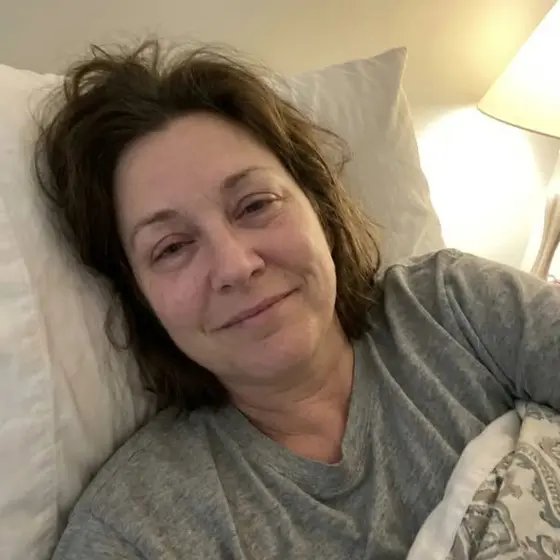
I found the ice cream on the counter this morning. Not in the freezer. On the counter, lid off, soft enough that it had pooled a little at the bottom of the carton. I don't remember leaving it there. I remember eating it last night on the couch. I do not remember standing up, walking to the kitchen, and not putting it away. There is a gap where that memory should be, and nothing else lives in that gap. Just absence. For a long time I told myself it was tiredness, then it was stress, then it was just one of those weeks. It wasn't until I read about what estrogen actually does to nerve repair in the brain that I understood why the gaps kept showing up no matter how much sleep I got, how clean I ate, how hard I tried to pay attention. The worst part is not the gap itself. It is what you do after you find it. The quiet little audits you never planned on running. Standing in the kitchen replaying last night, trying to find the missing minute. Checking the freezer for other things that might not be where they should be. Wondering if this is the first time or just the first time you noticed. Asking yourself, gently, almost afraid of the answer: is this more often than it used to be? That is how it takes hold in private. Not with one dramatic moment in a meeting. With a hundred small audits you keep pretending are nothing. And once you start running those audits, every ordinary day starts to feel like evidence. A word that goes missing mid-sentence. A parking lot you sit in for a second too long, not sure if you've already been inside. An email you reread three times because you don't trust what you wrote the first time. A name that used to come instantly and now takes a beat too long. None of these moments are loud enough to explain to your husband, or your team, or your sister. But they are loud enough to keep you up at 2am, running the same question you have never said out loud to anyone. Is this just perimenopause, or is this the beginning of something I will not be able to come back from. You already know the word for that fear. You have just never let yourself finish the sentence. That is why this kind of fog gets inside your head before it ever shows up in a conversation with anyone else. You are not only losing words and minutes. You are losing trust in your own mind. Did I really used to be sharper than this? Was that gap longer than the one last week? Am I noticing more because it's getting worse, or because I'm watching so closely now? And when you live in that loop long enough, you start becoming your own evidence collector. You keep a note in your phone of the words you've lost. You replay conversations to check if you said something strange. You hold your breath a little in meetings, waiting to see if the word will come. You tell yourself you're being rational. Underneath that is fear. The fear that the gaps are real. The fear that they are getting more frequent. The fear that the woman who used to remember everything is not coming back. That is the part most solutions never speak to. They jump straight to focus and clarity and mental sharpness. But the woman running the audits does not need another vague promise. She needs to know why the same fixes kept letting her down. Magnesium helped her sleep, but the gaps stayed, because sleep was never the thing that was broken. Ashwagandha took the edge off for two weeks, then did nothing. The lion's mane capsules she tried felt like taking nothing at all, and there was a reason for that. Most of them are grown on a bag of rice, not on the part of the mushroom where the active compounds actually live, and dosed too low to matter even if they were. And creatine, the one thing that actually seemed to help her remember short term things, never touched the deeper fog, the rage, the 3am wake ups, the bone deep tired that sleep doesn't fix, because creatine was never built to reach those. That is not a small disappointment. That is the reason a lot of women stop trusting supplements altogether and start quietly believing this is just what 45 feels like now. Which is why what's actually happening deserves a different explanation than "you're just getting older." It starts with estrogen, but it doesn't end there. Estrogen is one of the primary drivers of something called Nerve Growth Factor, NGF for short, the protein your brain uses to repair and maintain the neurons that store and retrieve memory. When estrogen drops in perimenopause, NGF drops with it. A neuroscientist at Weill Cornell has used brain imaging to show that glucose metabolism in the brain literally decreases during this transition. The fog is not a feeling. It shows up on a scan. And NGF collapse is only one piece. The same hormonal shift disrupts cortisol regulation, which is the 3am wake ups and the rage you don't recognize. It disrupts the gut brain signal, which is the flatness, the not caring, the motivation that used to be there and now isn't. And it disrupts cellular energy production, which is a different kind of tired than the fog. The fog is not being able to find the word. The exhaustion is not having the energy to look for it in the first place. They are not the same problem, and they do not always show up together, but perimenopause can trigger both at once. Four mechanisms. One cause. Firing at the same time. That is why a single ingredient fix never held. Magnesium can calm one piece. Creatine can support another. But nothing she tried was built to reach all four, because almost nothing on the market is built to. In 1991, a Japanese mycologist isolated compounds from lion's mane mushroom, the fruiting body specifically, not the cheaper mycelium on grain filler most products use, that directly stimulate NGF production in the human brain. It is still the only naturally occurring compound shown to do this. That solves mechanism one, and it solves it differently than the capsules that already let her down, because this is the part of the mushroom, and the dose, that those products never actually contained. Reishi, used by emperors for over two thousand years before anyone understood why, is shown to support the cortisol and HPA axis regulation behind the 3am wake ups and the rage. That solves mechanism two. Turkey tail, maitake, and shiitake support the gut brain signaling that perimenopause flattens, the motivation, the focus, the will to care about the things you used to care about. Okinawan women eat these same mushrooms daily, as part of an ordinary meal, not a supplement. They report a fraction of the cognitive and mood symptoms American women describe. That is not a coincidence either. That solves mechanism three. Cordyceps, used by Tibetan herders for restoring stamina since the 1400s, supports the cellular energy production behind the exhaustion sleep cannot touch. That solves mechanism four. That is not a coincidence. That is ancient observation catching up to modern biology, mushroom by mushroom, mechanism by mechanism. That is where Hericium comes in. It was built for the exact kind of woman who has already done the work. The one who does not need a single ingredient repeated in ten different bottles. The one who is done with capsules that felt like nothing and powders that settled at the bottom of the cup. The one who wants a formula built around what is actually happening to her brain, not a label that says "clarity" and hopes she doesn't ask why. Ten mushrooms. Four mechanisms, fully covered, plus six more for cellular resilience and immune support. Fruiting body only. The dose stated plainly on the label. Nothing hidden behind a proprietary blend. The point is not to pretend the fear is irrational. The point is to give the fear a cause. When you know what is actually driving the fog, the whole experience changes. The gap in the morning gets less frightening. The word you lost mid-sentence stops feeling like the beginning of something worse. The audits get quieter, because you are no longer collecting evidence against yourself. You are addressing a mechanism with a name. If you have stood in your kitchen trying to find a missing piece of last night, this is for you. If you have kept a private list of the words you've lost because saying it out loud felt like admitting something you weren't ready to admit, this is for you. If you are tired of supplements that ask for your patience and never earn your trust, this is for you. There is a reason this happens quietly, to women who have never lost anything else in their lives. And there is a reason the right formula, built for what is actually happening, changes what happens next. Read the rest of the story below before you run another audit tonight. Tap below. See why the fog lifts when the mechanism is finally addressed.

Bratt Health Daily Facebook and Instagram ad
Bratt Health Daily ran this carousel ad since Jun 21, 2026, 1 days so far, targeting United Kingdom.
Ad copy
This is what 3am looks like from the inside, and if you recognize it, you already know the specific loneliness of being the only person awake in a house where everyone else is sleeping fine. For almost two years I told myself it was stress. Then too much coffee. Then stress again. It wasn't until a doctor explained what actually happens to a woman's cortisol rhythm in her forties that I understood why I kept snapping awake at the same time every night, no matter what I did. The worst part is not the waking up. It is what my brain does once I'm awake. Because during the day, when I actually need it, my mind is somewhere else. I lose the word mid-sentence. I open my laptop and forget why. I read the same email three times before I trust myself to send it. But at 3am, in the dark, it switches on. Suddenly it is sharp. Suddenly it has opinions. It wants to replay a conversation from four years ago. It wants to run the worst-case version of tomorrow. It wants to catalogue every loose end in my life and inspect each one slowly, while the clock moves and the house stays silent and my heart goes faster than it has any reason to. That is the cruelty of it. The clarity I beg for at 2pm shows up at 3am and uses itself against me. And nobody warns you about that part. They warn you about hot flashes. They warn you about periods getting strange. Nobody tells you that you will lie flat in the dark, wired and exhausted at the same time, doing involuntary mental work that serves no purpose, while the person next to you sleeps like it's nothing. You start to keep score without meaning to. How many times you woke up last night. Whether you got to sleep before midnight. How many hours you can still salvage if you fall asleep right now. What tomorrow is going to cost you if you don't. That is how this takes hold. Not with one dramatic night. With a hundred quiet 3am inventories you keep telling yourself are just a bad week. And once you are awake in that loop long enough, the fear creeps in underneath the tiredness. Not loud. Just there. The fear that the wired nights and the foggy days are connected somehow. The fear that it is getting worse. The quiet 2am one you would never say out loud, the one where the forgotten words start to feel like something with a worse name than tired. The fear that this is just who you are now, and the sharp, steady woman who used to sleep through anything and think clearly all day is not coming back. That is the part most solutions never speak to. They hand you something for sleep and stop there. Melatonin to knock you out. Magnesium for the wind-down. A new evening routine, a darker room, no screens after nine. And some of it helps you fall asleep. None of it stops the 3am wake-up. Because the wake-up was never really a sleep problem. Here is what that doctor explained to me, and what no one had ever bothered to say out loud. When estrogen starts to drop in your forties, it doesn't just mess with your periods. It pulls the regulator off your stress system. The same hormone that was keeping your cortisol on a normal daily rhythm stops doing its job. So instead of cortisol falling at night the way it should, it spikes. At 3am. On a schedule. That is the racing heart. That is the wired-and-tired. It is not anxiety about your life. It is a stress hormone firing at the wrong time of day because the system that used to regulate it went quiet. And here is the part that stopped me cold. The same drop that scrambles your cortisol at night is doing something to your brain during the day. Estrogen is one of the things that tells your brain to keep repairing itself. To keep its neurons maintained, connected, sharp. When it falls, that repair signal falls with it. That is the fog. That is the lost word. A neuroscientist at Weill Cornell has actually imaged this, the slowdown shows up on a brain scan. It is not in your head, or rather it is, but not the way they made you feel. Two symptoms that feel like opposites. Wired at night, foggy by day. One cause. That was the thing I could never get anyone to explain. I had been treating them as two separate failures, buying one thing for sleep and another for focus, and getting nowhere, because nothing I was taking addressed the system underneath both of them. It turns out there are four of those disruptions, not one. The cortisol rhythm at night. The repair signal in the brain. The gut signaling that flattens your mood and your motivation. The cellular energy that leaves you feeling a hundred years old by 2pm no matter how you slept. Four downstream effects of the same hormonal drop, all firing at once. Which is exactly why everything I had tried only ever worked halfway. Each thing was aimed at one piece. None were built for the whole system. That is the reason I ended up looking at mushrooms, of all things, and the reason I almost didn't. I had tried a lion's mane capsule a year earlier and felt nothing. What I didn't know is that most are grown on grain and barely contain the active part. The compound your brain actually responds to was first isolated by a Japanese scientist in 1991, and it lives in the fruiting body, not the filler. The capsule I'd quit on never really had it. And these are not new. Japanese monks brewed lion's mane before meditation for a thousand years. Okinawan women, who eat these mushrooms nearly every day, move through this same stretch of life with a fraction of the fog and the sleepless nights we treat as normal. The science is recent. The mushrooms are ancient. We were just the first generation handed a prescription instead. But it was never going to be one mushroom anyway. One mushroom is one mechanism, and I had four. That is what made this particular formula make sense to me when nothing else had. Ten mushrooms, not one. Lion's mane fruiting body for the repair signal. Reishi for the cortisol rhythm, the one that decides whether 3am is peaceful or not, and it works by helping the system regulate itself rather than knocking you out, which mattered to me, because I did not want to be sedated. I wanted my nights to stop malfunctioning. Cordyceps for the energy caffeine was faking. The rest for the gut and the groundwork underneath all of it. Two gummies in the morning, which after years of capsules I forgot to take and powders that settled at the bottom of the cup, was the first version of this I actually stuck with. I will be honest about the timeline, because I was sick of being promised overnight miracles. The first week, not much. Some mornings that felt slightly less like wading. It was somewhere in the second and third week that I noticed what was missing more than what was there. I had stopped doing the 3am inventory. I was still waking sometimes, but the heart-racing, the cataloguing, the worst-case reel, it just wasn't running. I'd wake, and then go back to sleep like a person. The 2pm crash got quieter. I stopped reaching for the third coffee out of desperation. And one afternoon I was in a meeting and the word was just there when I reached for it. I didn't notice until later, which is the whole point. I wasn't monitoring anymore. If you are already taking creatine, keep it. It does something real for short-term recall. But it was never built to touch a 3am cortisol spike, and never going to reach the repair signal underneath the fog. This is the part underneath the part creatine works on. I am not going to tell you this is a cure for anything, because it isn't, and you have been lied to enough. What I will tell you is that it is the first thing I have tried that was built for the whole system instead of one corner of it, made the way these mushrooms are supposed to be made, with the testing posted so you can actually check. So if you are lying awake tonight doing the inventory, wired and exhausted and the only one in the house still awake, there is a reason the same brain that abandons you at 2pm ambushes you at 3am. It is one system. And for the first time there is something built for the whole of it. See the formula, the ten mushrooms, and why each one is in there. Tap below. P.S. If the only thing that ever helped your sleep was something that knocked you out, this is a different idea entirely. Reishi is not a sedative. It supports the system that decides when cortisol rises and falls, so the goal is not to be drugged unconscious, it is for 3am to stop being a scheduled event. P.S. Two opposite-feeling problems, wired nights and foggy days, are not two problems to solve separately. They are one system to support. That is why one thing for sleep and another for focus kept leaving you halfway. This was built for the whole of it. P.S. It comes with a 90-day guarantee, no questions asked. Most women feel the first shift somewhere in week two or three, so there is real room to find out whether this is the thing without betting anything to do it.
Placements and targeting
More ads from Bratt Health Daily
This is what 3am looks like from the inside, and if you recognize it, you already know the specific loneliness of being the only person awake in a house where everyone else is sleeping fine. For almost two years I told myself it was stress. Then too much coffee. Then stress again. It wasn't until a doctor explained what actually happens to a woman's cortisol rhythm in her forties that I understood why I kept snapping awake at the same time every night, no matter what I did. The worst part is not the waking up. It is what my brain does once I'm awake. Because during the day, when I actually need it, my mind is somewhere else. I lose the word mid-sentence. I open my laptop and forget why. I read the same email three times before I trust myself to send it. But at 3am, in the dark, it switches on. Suddenly it is sharp. Suddenly it has opinions. It wants to replay a conversation from four years ago. It wants to run the worst-case version of tomorrow. It wants to catalogue every loose end in my life and inspect each one slowly, while the clock moves and the house stays silent and my heart goes faster than it has any reason to. That is the cruelty of it. The clarity I beg for at 2pm shows up at 3am and uses itself against me. And nobody warns you about that part. They warn you about hot flashes. They warn you about periods getting strange. Nobody tells you that you will lie flat in the dark, wired and exhausted at the same time, doing involuntary mental work that serves no purpose, while the person next to you sleeps like it's nothing. You start to keep score without meaning to. How many times you woke up last night. Whether you got to sleep before midnight. How many hours you can still salvage if you fall asleep right now. What tomorrow is going to cost you if you don't. That is how this takes hold. Not with one dramatic night. With a hundred quiet 3am inventories you keep telling yourself are just a bad week. And once you are awake in that loop long enough, the fear creeps in underneath the tiredness. Not loud. Just there. The fear that the wired nights and the foggy days are connected somehow. The fear that it is getting worse. The quiet 2am one you would never say out loud, the one where the forgotten words start to feel like something with a worse name than tired. The fear that this is just who you are now, and the sharp, steady woman who used to sleep through anything and think clearly all day is not coming back. That is the part most solutions never speak to. They hand you something for sleep and stop there. Melatonin to knock you out. Magnesium for the wind-down. A new evening routine, a darker room, no screens after nine. And some of it helps you fall asleep. None of it stops the 3am wake-up. Because the wake-up was never really a sleep problem. Here is what that doctor explained to me, and what no one had ever bothered to say out loud. When estrogen starts to drop in your forties, it doesn't just mess with your periods. It pulls the regulator off your stress system. The same hormone that was keeping your cortisol on a normal daily rhythm stops doing its job. So instead of cortisol falling at night the way it should, it spikes. At 3am. On a schedule. That is the racing heart. That is the wired-and-tired. It is not anxiety about your life. It is a stress hormone firing at the wrong time of day because the system that used to regulate it went quiet. And here is the part that stopped me cold. The same drop that scrambles your cortisol at night is doing something to your brain during the day. Estrogen is one of the things that tells your brain to keep repairing itself. To keep its neurons maintained, connected, sharp. When it falls, that repair signal falls with it. That is the fog. That is the lost word. A neuroscientist at Weill Cornell has actually imaged this, the slowdown shows up on a brain scan. It is not in your head, or rather it is, but not the way they made you feel. Two symptoms that feel like opposites. Wired at night, foggy by day. One cause. That was the thing I could never get anyone to explain. I had been treating them as two separate failures, buying one thing for sleep and another for focus, and getting nowhere, because nothing I was taking addressed the system underneath both of them. It turns out there are four of those disruptions, not one. The cortisol rhythm at night. The repair signal in the brain. The gut signaling that flattens your mood and your motivation. The cellular energy that leaves you feeling a hundred years old by 2pm no matter how you slept. Four downstream effects of the same hormonal drop, all firing at once. Which is exactly why everything I had tried only ever worked halfway. Each thing was aimed at one piece. None were built for the whole system. That is the reason I ended up looking at mushrooms, of all things, and the reason I almost didn't. I had tried a lion's mane capsule a year earlier and felt nothing. What I didn't know is that most are grown on grain and barely contain the active part. The compound your brain actually responds to was first isolated by a Japanese scientist in 1991, and it lives in the fruiting body, not the filler. The capsule I'd quit on never really had it. And these are not new. Japanese monks brewed lion's mane before meditation for a thousand years. Okinawan women, who eat these mushrooms nearly every day, move through this same stretch of life with a fraction of the fog and the sleepless nights we treat as normal. The science is recent. The mushrooms are ancient. We were just the first generation handed a prescription instead. But it was never going to be one mushroom anyway. One mushroom is one mechanism, and I had four. That is what made this particular formula make sense to me when nothing else had. Ten mushrooms, not one. Lion's mane fruiting body for the repair signal. Reishi for the cortisol rhythm, the one that decides whether 3am is peaceful or not, and it works by helping the system regulate itself rather than knocking you out, which mattered to me, because I did not want to be sedated. I wanted my nights to stop malfunctioning. Cordyceps for the energy caffeine was faking. The rest for the gut and the groundwork underneath all of it. Two gummies in the morning, which after years of capsules I forgot to take and powders that settled at the bottom of the cup, was the first version of this I actually stuck with. I will be honest about the timeline, because I was sick of being promised overnight miracles. The first week, not much. Some mornings that felt slightly less like wading. It was somewhere in the second and third week that I noticed what was missing more than what was there. I had stopped doing the 3am inventory. I was still waking sometimes, but the heart-racing, the cataloguing, the worst-case reel, it just wasn't running. I'd wake, and then go back to sleep like a person. The 2pm crash got quieter. I stopped reaching for the third coffee out of desperation. And one afternoon I was in a meeting and the word was just there when I reached for it. I didn't notice until later, which is the whole point. I wasn't monitoring anymore. If you are already taking creatine, keep it. It does something real for short-term recall. But it was never built to touch a 3am cortisol spike, and never going to reach the repair signal underneath the fog. This is the part underneath the part creatine works on. I am not going to tell you this is a cure for anything, because it isn't, and you have been lied to enough. What I will tell you is that it is the first thing I have tried that was built for the whole system instead of one corner of it, made the way these mushrooms are supposed to be made, with the testing posted so you can actually check. So if you are lying awake tonight doing the inventory, wired and exhausted and the only one in the house still awake, there is a reason the same brain that abandons you at 2pm ambushes you at 3am. It is one system. And for the first time there is something built for the whole of it. See the formula, the ten mushrooms, and why each one is in there. Tap below. P.S. If the only thing that ever helped your sleep was something that knocked you out, this is a different idea entirely. Reishi is not a sedative. It supports the system that decides when cortisol rises and falls, so the goal is not to be drugged unconscious, it is for 3am to stop being a scheduled event. P.S. Two opposite-feeling problems, wired nights and foggy days, are not two problems to solve separately. They are one system to support. That is why one thing for sleep and another for focus kept leaving you halfway. This was built for the whole of it. P.S. It comes with a 90-day guarantee, no questions asked. Most women feel the first shift somewhere in week two or three, so there is real room to find out whether this is the thing without betting anything to do it.
I found the ice cream on the counter this morning. Not in the freezer. On the counter, lid off, soft enough that it had pooled a little at the bottom of the carton. I don't remember leaving it there. I remember eating it last night on the couch. I do not remember standing up, walking to the kitchen, and not putting it away. There is a gap where that memory should be, and nothing else lives in that gap. Just absence. For a long time I told myself it was tiredness, then it was stress, then it was just one of those weeks. It wasn't until I read about what estrogen actually does to nerve repair in the brain that I understood why the gaps kept showing up no matter how much sleep I got, how clean I ate, how hard I tried to pay attention. The worst part is not the gap itself. It is what you do after you find it. The quiet little audits you never planned on running. Standing in the kitchen replaying last night, trying to find the missing minute. Checking the freezer for other things that might not be where they should be. Wondering if this is the first time or just the first time you noticed. Asking yourself, gently, almost afraid of the answer: is this more often than it used to be? That is how it takes hold in private. Not with one dramatic moment in a meeting. With a hundred small audits you keep pretending are nothing. And once you start running those audits, every ordinary day starts to feel like evidence. A word that goes missing mid-sentence. A parking lot you sit in for a second too long, not sure if you've already been inside. An email you reread three times because you don't trust what you wrote the first time. A name that used to come instantly and now takes a beat too long. None of these moments are loud enough to explain to your husband, or your team, or your sister. But they are loud enough to keep you up at 2am, running the same question you have never said out loud to anyone. Is this just perimenopause, or is this the beginning of something I will not be able to come back from. You already know the word for that fear. You have just never let yourself finish the sentence. That is why this kind of fog gets inside your head before it ever shows up in a conversation with anyone else. You are not only losing words and minutes. You are losing trust in your own mind. Did I really used to be sharper than this? Was that gap longer than the one last week? Am I noticing more because it's getting worse, or because I'm watching so closely now? And when you live in that loop long enough, you start becoming your own evidence collector. You keep a note in your phone of the words you've lost. You replay conversations to check if you said something strange. You hold your breath a little in meetings, waiting to see if the word will come. You tell yourself you're being rational. Underneath that is fear. The fear that the gaps are real. The fear that they are getting more frequent. The fear that the woman who used to remember everything is not coming back. That is the part most solutions never speak to. They jump straight to focus and clarity and mental sharpness. But the woman running the audits does not need another vague promise. She needs to know why the same fixes kept letting her down. Magnesium helped her sleep, but the gaps stayed, because sleep was never the thing that was broken. Ashwagandha took the edge off for two weeks, then did nothing. The lion's mane capsules she tried felt like taking nothing at all, and there was a reason for that. Most of them are grown on a bag of rice, not on the part of the mushroom where the active compounds actually live, and dosed too low to matter even if they were. And creatine, the one thing that actually seemed to help her remember short term things, never touched the deeper fog, the rage, the 3am wake ups, the bone deep tired that sleep doesn't fix, because creatine was never built to reach those. That is not a small disappointment. That is the reason a lot of women stop trusting supplements altogether and start quietly believing this is just what 45 feels like now. Which is why what's actually happening deserves a different explanation than "you're just getting older." It starts with estrogen, but it doesn't end there. Estrogen is one of the primary drivers of something called Nerve Growth Factor, NGF for short, the protein your brain uses to repair and maintain the neurons that store and retrieve memory. When estrogen drops in perimenopause, NGF drops with it. A neuroscientist at Weill Cornell has used brain imaging to show that glucose metabolism in the brain literally decreases during this transition. The fog is not a feeling. It shows up on a scan. And NGF collapse is only one piece. The same hormonal shift disrupts cortisol regulation, which is the 3am wake ups and the rage you don't recognize. It disrupts the gut brain signal, which is the flatness, the not caring, the motivation that used to be there and now isn't. And it disrupts cellular energy production, which is a different kind of tired than the fog. The fog is not being able to find the word. The exhaustion is not having the energy to look for it in the first place. They are not the same problem, and they do not always show up together, but perimenopause can trigger both at once. Four mechanisms. One cause. Firing at the same time. That is why a single ingredient fix never held. Magnesium can calm one piece. Creatine can support another. But nothing she tried was built to reach all four, because almost nothing on the market is built to. In 1991, a Japanese mycologist isolated compounds from lion's mane mushroom, the fruiting body specifically, not the cheaper mycelium on grain filler most products use, that directly stimulate NGF production in the human brain. It is still the only naturally occurring compound shown to do this. That solves mechanism one, and it solves it differently than the capsules that already let her down, because this is the part of the mushroom, and the dose, that those products never actually contained. Reishi, used by emperors for over two thousand years before anyone understood why, is shown to support the cortisol and HPA axis regulation behind the 3am wake ups and the rage. That solves mechanism two. Turkey tail, maitake, and shiitake support the gut brain signaling that perimenopause flattens, the motivation, the focus, the will to care about the things you used to care about. Okinawan women eat these same mushrooms daily, as part of an ordinary meal, not a supplement. They report a fraction of the cognitive and mood symptoms American women describe. That is not a coincidence either. That solves mechanism three. Cordyceps, used by Tibetan herders for restoring stamina since the 1400s, supports the cellular energy production behind the exhaustion sleep cannot touch. That solves mechanism four. That is not a coincidence. That is ancient observation catching up to modern biology, mushroom by mushroom, mechanism by mechanism. That is where Hericium comes in. It was built for the exact kind of woman who has already done the work. The one who does not need a single ingredient repeated in ten different bottles. The one who is done with capsules that felt like nothing and powders that settled at the bottom of the cup. The one who wants a formula built around what is actually happening to her brain, not a label that says "clarity" and hopes she doesn't ask why. Ten mushrooms. Four mechanisms, fully covered, plus six more for cellular resilience and immune support. Fruiting body only. The dose stated plainly on the label. Nothing hidden behind a proprietary blend. The point is not to pretend the fear is irrational. The point is to give the fear a cause. When you know what is actually driving the fog, the whole experience changes. The gap in the morning gets less frightening. The word you lost mid-sentence stops feeling like the beginning of something worse. The audits get quieter, because you are no longer collecting evidence against yourself. You are addressing a mechanism with a name. If you have stood in your kitchen trying to find a missing piece of last night, this is for you. If you have kept a private list of the words you've lost because saying it out loud felt like admitting something you weren't ready to admit, this is for you. If you are tired of supplements that ask for your patience and never earn your trust, this is for you. There is a reason this happens quietly, to women who have never lost anything else in their lives. And there is a reason the right formula, built for what is actually happening, changes what happens next. Read the rest of the story below before you run another audit tonight. Tap below. See why the fog lifts when the mechanism is finally addressed.
Similar health and supplements ads
NO GYM, NO STRESS JUST DANCING! BOOST YOUR MOOD QUICKLY BURN CALORIES Take a quiz and get your dance plan in DanceFitMe
Keep exploring
Find more ads like this
Search millions of real ads by keyword, niche and format, and save the winners to your swipe file.