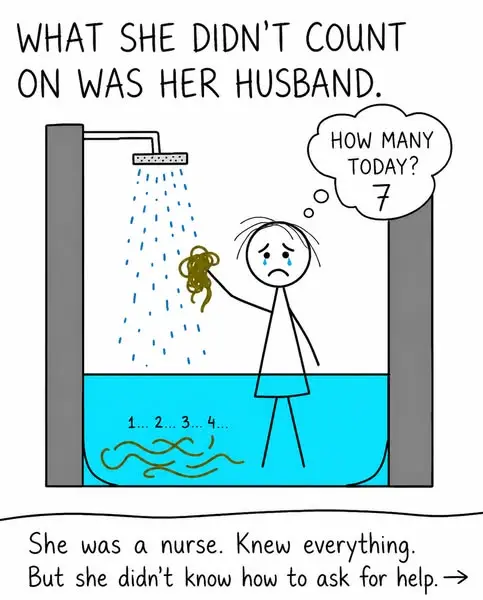
**I treated thyroid conditions for fifteen years… but I was unknowingly sabotaging myself at breakfast.** Three weeks ago, a patient asked me a question I couldn't answer. And I've been a physician for fifteen years. She asked me why her TPO antibodies had dropped by nearly half — without me changing anything in her treatment. I hadn't adjusted her dosage. I hadn't referred her to a new specialist. I hadn't recommended a single supplement. She walked back into her follow-up appointment with her lab results in hand and the look of someone who knows something you don't. She was right. --- **WHAT NOBODY TEACHES YOU IN MEDICAL SCHOOL** My name is Veronica. I'm 44 years old, a board-certified internist, and I've been practicing in Chicago for over a decade. I see a lot of women with hypothyroidism, Hashimoto's thyroiditis, nodules, lab numbers that look "fine" but bodies that aren't responding. I walk them through it, adjust their dosages, order their labs, interpret the values. I do what I was trained to do. I also have hypothyroidism. Diagnosed eight years ago. For all that time, I told myself the fatigue that no amount of sleep could fix was just the stress of running a busy practice. The weight I kept gaining without eating differently was just age and a desk job. The brain fog — that feeling of walking down the hospital hallway having completely lost the thread of a thought somewhere between the waiting room and my desk — was just the pace of the work. I gave everything a stress label and kept moving. I never once connected my symptoms to what I was eating. Not once. In fifteen years of practicing medicine, it never crossed my mind. --- **THE DAY A PATIENT GAVE ME A LESSON** Rosario is 51 years old, lives on the north side of Chicago, and came to my office two years ago with a Hashimoto's diagnosis that had wrecked her quality of life. TPO antibodies through the roof, exhaustion that kept her from getting through the day, hair loss she described as: *"You grab the brush and you want to cry."* We managed her medication as well as we could. Three weeks ago, she came in for a follow-up. The labs left me standing at my desk with nothing to say. Her TPO antibodies had dropped by more than half. Her free T3 had improved. She said she felt different. More energy. Less bloating. The hair loss had slowed down. My first thought was that the lab had made an error. My second thought was that I hadn't done anything differently. I asked her what had changed. She paused for a second — the way someone does when they know their answer is going to surprise you — and pulled out her phone. She showed me a digital recipe guide. Sixty recipes designed specifically for thyroid health. She had been cooking from it for two months. Nothing else. Nothing new in the treatment plan. Just that. I wrote the name down in my notebook. That night, at home, I looked it up. --- **THE BREAKING POINT** I bought it for my patients. I genuinely did. I told myself I was looking for another tool to recommend, that I wanted to check the rationale, that it was informal clinical research. It was eleven-thirty at night. I was in the kitchen with my coffee gone cold and my phone screen lighting up the dark. My husband was already asleep. The house was quiet. I started reading the introduction. Ten minutes in, I had to set my phone down on the counter and stare at the wall. Because the woman they described in the opening pages — the one who barely functions until noon, who gains weight without understanding why, who lives with her head wrapped in cotton, who has normalized feeling awful because she can't even remember what feeling good is like — was me. That was me. Fifteen years treating other women with hypothyroidism. And the whole time I was unknowingly sabotaging myself in my own kitchen. Every meal I chose without thinking. Every ingredient that was interfering with absorption or thyroid function, and there I was eating breakfast every morning convinced I was doing everything right because "I was taking what I was supposed to take." That night I cried. I don't know for how long. I cried quietly so I wouldn't wake anyone up, and I kept thinking about all the patients who had sat across from me over the years — patients I had told that medication was enough. That diet was "a general thing, about healthy habits overall." That there was nothing specific they needed to change. I was taught organs. Pharmaceuticals. Protocols. Nobody taught me how to feed a sick thyroid. --- **WHAT MEDICAL SCHOOL CHOSE NOT TO TEACH US** That's where the real epiphany was. Not in Rosario's results. In understanding why those results had caught me completely off guard. For years, I was taught that thyroid disease is treated with medication. Period. Nutrition shows up in medical school as a generic elective — broad strokes, general healthy lifestyle recommendations, nothing specific about how certain nutrients activate or block thyroid function. Nothing about which foods interfere with medication absorption. Nothing about selenium, zinc, iodine in the right amounts for each clinical picture. Nothing about the relationship between Hashimoto's and gluten. Nothing. And that's not an oversight. It's a system designed to keep patients dependent. The money isn't in teaching a patient how to eat for her thyroid. The money is in having her come back to the office every three months to adjust her dosage because she never quite stabilizes. The industry that profits from chronic dependence has zero incentive to let a physician like me tell her patients there's something else they can do — starting in their own kitchen. I learned that from a 51-year-old patient with a phone in her hand. My own training had kept it from me for fifteen years. --- **WHAT I FOUND INSIDE** The recipe guide has sixty complete recipes: breakfasts, lunches, dinners, and desserts, organized by thyroid condition. Hypothyroidism, hyperthyroidism, Hashimoto's. Each recipe built around specific ingredients that support thyroid function instead of working against it. Combinations that make biochemical sense. Oatmeal with pumpkin seeds for breakfast. Lentil soup with turmeric. Desserts for hyperthyroidism that don't compromise the condition. A guide to what to eat and what to avoid. A weekly grocery list. All with ingredients you can find at any regular grocery store — nothing exotic, nothing expensive. What hit me hardest was realizing how many things I ate regularly were on the interference list. I had been eating them for years without knowing. The first week I followed the recipes, I slept differently. I don't know how else to put it. I slept, and the next morning my body didn't feel like it was made of lead. By week three, the brain fog had cleared to a level I hadn't experienced in years. I could finish a thought. I could write up patient notes without losing the thread. By six weeks, my own labs showed changes. My free T3 improved. I told my endocrinologist — who has known me for years — and she literally asked me: *"What did you do? Did something change?"* I explained. She went quiet for a moment and said, *"More colleagues need to start looking into this."* She was right. --- **WHAT I STARTED DOING WITH MY PATIENTS** Today I recommend this recipe guide to every patient with a thyroid diagnosis who walks into my office. Not as a replacement for treatment. Alongside it. As the tool conventional medicine never gave us. I've had patients come back for follow-ups with improvements I wouldn't have been able to explain before. Now I can explain them. One of my patients, Grace, 58 years old from the suburbs of Chicago, messaged me a month into it: *"Veronica, I lost seven pounds without going on a diet. Just by changing what I eat with the recipes. But more than that — I feel light for the first time in years."* Another, Marcela, 47, also from the city: *"I thought this was going to be just another thing that didn't work. I was so tired of trying things. But this was different because it's not a supplement or a promise. It's food. Real food I can actually cook."* And Alexandra, 39: *"My TPO antibodies came down in my last round of labs. My doctor couldn't believe it. I could. Because I know exactly what I did differently."* --- **HERE'S WHAT I WANT TO TELL YOU** The *Delicious Cooking for Thyroid Health* recipe guide is available today for $27. You get 60 complete recipes, a food guide, a weekly grocery list, and lifetime access from your phone or computer. Backed by a full 60-day money-back guarantee: if you try it and notice no difference, you get a full refund. Compared to what an out-of-pocket endocrinologist visit costs in most U.S. cities, or the supplements most women buy month after month without knowing if they're actually doing anything, $27 is what many people spend on a single lunch — for something that doesn't change a thing. Every day you spend eating without understanding what your plate is doing to your thyroid is another day of accumulated interference — interference that's working against you while you believe you're doing everything right. Every month with elevated antibodies is inflammation quietly working against you. How many more rounds of labs are you going to look at wondering why the numbers never fully stabilize? I waited fifteen years. I treated hundreds of patients without giving them this information. Don't do the same thing to your own body. Click the button below to get your recipe guide now. --- *P.S. — The patient who changed everything for me, Rosario, called last week. She told me her hair is growing back. She said it through tears. So did I. Some things we learn late. What matters is that we learn them.* *— Veronica, the physician who spent fifteen years not realizing that the kitchen is part of the cure.*

Active Kitchen Facebook and Instagram ad
Active Kitchen ran this image ad since Jun 26, 2026, 134 days so far, targeting Worldwide, Africa, Asia.
Ad copy
**I treated thyroid conditions for fifteen years… but I was unknowingly sabotaging myself at breakfast.** Three weeks ago, a patient asked me a question I couldn't answer. And I've been a physician for fifteen years. She asked me why her TPO antibodies had dropped by nearly half — without me changing anything in her treatment. I hadn't adjusted her dosage. I hadn't referred her to a new specialist. I hadn't recommended a single supplement. She walked back into her follow-up appointment with her lab results in hand and the look of someone who knows something you don't. She was right. --- **WHAT NOBODY TEACHES YOU IN MEDICAL SCHOOL** My name is Veronica. I'm 44 years old, a board-certified internist, and I've been practicing in Chicago for over a decade. I see a lot of women with hypothyroidism, Hashimoto's thyroiditis, nodules, lab numbers that look "fine" but bodies that aren't responding. I walk them through it, adjust their dosages, order their labs, interpret the values. I do what I was trained to do. I also have hypothyroidism. Diagnosed eight years ago. For all that time, I told myself the fatigue that no amount of sleep could fix was just the stress of running a busy practice. The weight I kept gaining without eating differently was just age and a desk job. The brain fog — that feeling of walking down the hospital hallway having completely lost the thread of a thought somewhere between the waiting room and my desk — was just the pace of the work. I gave everything a stress label and kept moving. I never once connected my symptoms to what I was eating. Not once. In fifteen years of practicing medicine, it never crossed my mind. --- **THE DAY A PATIENT GAVE ME A LESSON** Rosario is 51 years old, lives on the north side of Chicago, and came to my office two years ago with a Hashimoto's diagnosis that had wrecked her quality of life. TPO antibodies through the roof, exhaustion that kept her from getting through the day, hair loss she described as: *"You grab the brush and you want to cry."* We managed her medication as well as we could. Three weeks ago, she came in for a follow-up. The labs left me standing at my desk with nothing to say. Her TPO antibodies had dropped by more than half. Her free T3 had improved. She said she felt different. More energy. Less bloating. The hair loss had slowed down. My first thought was that the lab had made an error. My second thought was that I hadn't done anything differently. I asked her what had changed. She paused for a second — the way someone does when they know their answer is going to surprise you — and pulled out her phone. She showed me a digital recipe guide. Sixty recipes designed specifically for thyroid health. She had been cooking from it for two months. Nothing else. Nothing new in the treatment plan. Just that. I wrote the name down in my notebook. That night, at home, I looked it up. --- **THE BREAKING POINT** I bought it for my patients. I genuinely did. I told myself I was looking for another tool to recommend, that I wanted to check the rationale, that it was informal clinical research. It was eleven-thirty at night. I was in the kitchen with my coffee gone cold and my phone screen lighting up the dark. My husband was already asleep. The house was quiet. I started reading the introduction. Ten minutes in, I had to set my phone down on the counter and stare at the wall. Because the woman they described in the opening pages — the one who barely functions until noon, who gains weight without understanding why, who lives with her head wrapped in cotton, who has normalized feeling awful because she can't even remember what feeling good is like — was me. That was me. Fifteen years treating other women with hypothyroidism. And the whole time I was unknowingly sabotaging myself in my own kitchen. Every meal I chose without thinking. Every ingredient that was interfering with absorption or thyroid function, and there I was eating breakfast every morning convinced I was doing everything right because "I was taking what I was supposed to take." That night I cried. I don't know for how long. I cried quietly so I wouldn't wake anyone up, and I kept thinking about all the patients who had sat across from me over the years — patients I had told that medication was enough. That diet was "a general thing, about healthy habits overall." That there was nothing specific they needed to change. I was taught organs. Pharmaceuticals. Protocols. Nobody taught me how to feed a sick thyroid. --- **WHAT MEDICAL SCHOOL CHOSE NOT TO TEACH US** That's where the real epiphany was. Not in Rosario's results. In understanding why those results had caught me completely off guard. For years, I was taught that thyroid disease is treated with medication. Period. Nutrition shows up in medical school as a generic elective — broad strokes, general healthy lifestyle recommendations, nothing specific about how certain nutrients activate or block thyroid function. Nothing about which foods interfere with medication absorption. Nothing about selenium, zinc, iodine in the right amounts for each clinical picture. Nothing about the relationship between Hashimoto's and gluten. Nothing. And that's not an oversight. It's a system designed to keep patients dependent. The money isn't in teaching a patient how to eat for her thyroid. The money is in having her come back to the office every three months to adjust her dosage because she never quite stabilizes. The industry that profits from chronic dependence has zero incentive to let a physician like me tell her patients there's something else they can do — starting in their own kitchen. I learned that from a 51-year-old patient with a phone in her hand. My own training had kept it from me for fifteen years. --- **WHAT I FOUND INSIDE** The recipe guide has sixty complete recipes: breakfasts, lunches, dinners, and desserts, organized by thyroid condition. Hypothyroidism, hyperthyroidism, Hashimoto's. Each recipe built around specific ingredients that support thyroid function instead of working against it. Combinations that make biochemical sense. Oatmeal with pumpkin seeds for breakfast. Lentil soup with turmeric. Desserts for hyperthyroidism that don't compromise the condition. A guide to what to eat and what to avoid. A weekly grocery list. All with ingredients you can find at any regular grocery store — nothing exotic, nothing expensive. What hit me hardest was realizing how many things I ate regularly were on the interference list. I had been eating them for years without knowing. The first week I followed the recipes, I slept differently. I don't know how else to put it. I slept, and the next morning my body didn't feel like it was made of lead. By week three, the brain fog had cleared to a level I hadn't experienced in years. I could finish a thought. I could write up patient notes without losing the thread. By six weeks, my own labs showed changes. My free T3 improved. I told my endocrinologist — who has known me for years — and she literally asked me: *"What did you do? Did something change?"* I explained. She went quiet for a moment and said, *"More colleagues need to start looking into this."* She was right. --- **WHAT I STARTED DOING WITH MY PATIENTS** Today I recommend this recipe guide to every patient with a thyroid diagnosis who walks into my office. Not as a replacement for treatment. Alongside it. As the tool conventional medicine never gave us. I've had patients come back for follow-ups with improvements I wouldn't have been able to explain before. Now I can explain them. One of my patients, Grace, 58 years old from the suburbs of Chicago, messaged me a month into it: *"Veronica, I lost seven pounds without going on a diet. Just by changing what I eat with the recipes. But more than that — I feel light for the first time in years."* Another, Marcela, 47, also from the city: *"I thought this was going to be just another thing that didn't work. I was so tired of trying things. But this was different because it's not a supplement or a promise. It's food. Real food I can actually cook."* And Alexandra, 39: *"My TPO antibodies came down in my last round of labs. My doctor couldn't believe it. I could. Because I know exactly what I did differently."* --- **HERE'S WHAT I WANT TO TELL YOU** The *Delicious Cooking for Thyroid Health* recipe guide is available today for $27. You get 60 complete recipes, a food guide, a weekly grocery list, and lifetime access from your phone or computer. Backed by a full 60-day money-back guarantee: if you try it and notice no difference, you get a full refund. Compared to what an out-of-pocket endocrinologist visit costs in most U.S. cities, or the supplements most women buy month after month without knowing if they're actually doing anything, $27 is what many people spend on a single lunch — for something that doesn't change a thing. Every day you spend eating without understanding what your plate is doing to your thyroid is another day of accumulated interference — interference that's working against you while you believe you're doing everything right. Every month with elevated antibodies is inflammation quietly working against you. How many more rounds of labs are you going to look at wondering why the numbers never fully stabilize? I waited fifteen years. I treated hundreds of patients without giving them this information. Don't do the same thing to your own body. Click the button below to get your recipe guide now. --- *P.S. — The patient who changed everything for me, Rosario, called last week. She told me her hair is growing back. She said it through tears. So did I. Some things we learn late. What matters is that we learn them.* *— Veronica, the physician who spent fifteen years not realizing that the kitchen is part of the cure.*
Placements and targeting
More ads from Active Kitchen
**I treated thyroid conditions for fifteen years… but I was unknowingly sabotaging myself at breakfast.** Three weeks ago, a patient asked me a question I couldn't answer. And I've been a physician for fifteen years. She asked me why her TPO antibodies had dropped by nearly half — without me changing anything in her treatment. I hadn't adjusted her dosage. I hadn't referred her to a new specialist. I hadn't recommended a single supplement. She walked back into her follow-up appointment with her lab results in hand and the look of someone who knows something you don't. She was right. --- **WHAT NOBODY TEACHES YOU IN MEDICAL SCHOOL** My name is Veronica. I'm 44 years old, a board-certified internist, and I've been practicing in Chicago for over a decade. I see a lot of women with hypothyroidism, Hashimoto's thyroiditis, nodules, lab numbers that look "fine" but bodies that aren't responding. I walk them through it, adjust their dosages, order their labs, interpret the values. I do what I was trained to do. I also have hypothyroidism. Diagnosed eight years ago. For all that time, I told myself the fatigue that no amount of sleep could fix was just the stress of running a busy practice. The weight I kept gaining without eating differently was just age and a desk job. The brain fog — that feeling of walking down the hospital hallway having completely lost the thread of a thought somewhere between the waiting room and my desk — was just the pace of the work. I gave everything a stress label and kept moving. I never once connected my symptoms to what I was eating. Not once. In fifteen years of practicing medicine, it never crossed my mind. --- **THE DAY A PATIENT GAVE ME A LESSON** Rosario is 51 years old, lives on the north side of Chicago, and came to my office two years ago with a Hashimoto's diagnosis that had wrecked her quality of life. TPO antibodies through the roof, exhaustion that kept her from getting through the day, hair loss she described as: *"You grab the brush and you want to cry."* We managed her medication as well as we could. Three weeks ago, she came in for a follow-up. The labs left me standing at my desk with nothing to say. Her TPO antibodies had dropped by more than half. Her free T3 had improved. She said she felt different. More energy. Less bloating. The hair loss had slowed down. My first thought was that the lab had made an error. My second thought was that I hadn't done anything differently. I asked her what had changed. She paused for a second — the way someone does when they know their answer is going to surprise you — and pulled out her phone. She showed me a digital recipe guide. Sixty recipes designed specifically for thyroid health. She had been cooking from it for two months. Nothing else. Nothing new in the treatment plan. Just that. I wrote the name down in my notebook. That night, at home, I looked it up. --- **THE BREAKING POINT** I bought it for my patients. I genuinely did. I told myself I was looking for another tool to recommend, that I wanted to check the rationale, that it was informal clinical research. It was eleven-thirty at night. I was in the kitchen with my coffee gone cold and my phone screen lighting up the dark. My husband was already asleep. The house was quiet. I started reading the introduction. Ten minutes in, I had to set my phone down on the counter and stare at the wall. Because the woman they described in the opening pages — the one who barely functions until noon, who gains weight without understanding why, who lives with her head wrapped in cotton, who has normalized feeling awful because she can't even remember what feeling good is like — was me. That was me. Fifteen years treating other women with hypothyroidism. And the whole time I was unknowingly sabotaging myself in my own kitchen. Every meal I chose without thinking. Every ingredient that was interfering with absorption or thyroid function, and there I was eating breakfast every morning convinced I was doing everything right because "I was taking what I was supposed to take." That night I cried. I don't know for how long. I cried quietly so I wouldn't wake anyone up, and I kept thinking about all the patients who had sat across from me over the years — patients I had told that medication was enough. That diet was "a general thing, about healthy habits overall." That there was nothing specific they needed to change. I was taught organs. Pharmaceuticals. Protocols. Nobody taught me how to feed a sick thyroid. --- **WHAT MEDICAL SCHOOL CHOSE NOT TO TEACH US** That's where the real epiphany was. Not in Rosario's results. In understanding why those results had caught me completely off guard. For years, I was taught that thyroid disease is treated with medication. Period. Nutrition shows up in medical school as a generic elective — broad strokes, general healthy lifestyle recommendations, nothing specific about how certain nutrients activate or block thyroid function. Nothing about which foods interfere with medication absorption. Nothing about selenium, zinc, iodine in the right amounts for each clinical picture. Nothing about the relationship between Hashimoto's and gluten. Nothing. And that's not an oversight. It's a system designed to keep patients dependent. The money isn't in teaching a patient how to eat for her thyroid. The money is in having her come back to the office every three months to adjust her dosage because she never quite stabilizes. The industry that profits from chronic dependence has zero incentive to let a physician like me tell her patients there's something else they can do — starting in their own kitchen. I learned that from a 51-year-old patient with a phone in her hand. My own training had kept it from me for fifteen years. --- **WHAT I FOUND INSIDE** The recipe guide has sixty complete recipes: breakfasts, lunches, dinners, and desserts, organized by thyroid condition. Hypothyroidism, hyperthyroidism, Hashimoto's. Each recipe built around specific ingredients that support thyroid function instead of working against it. Combinations that make biochemical sense. Oatmeal with pumpkin seeds for breakfast. Lentil soup with turmeric. Desserts for hyperthyroidism that don't compromise the condition. A guide to what to eat and what to avoid. A weekly grocery list. All with ingredients you can find at any regular grocery store — nothing exotic, nothing expensive. What hit me hardest was realizing how many things I ate regularly were on the interference list. I had been eating them for years without knowing. The first week I followed the recipes, I slept differently. I don't know how else to put it. I slept, and the next morning my body didn't feel like it was made of lead. By week three, the brain fog had cleared to a level I hadn't experienced in years. I could finish a thought. I could write up patient notes without losing the thread. By six weeks, my own labs showed changes. My free T3 improved. I told my endocrinologist — who has known me for years — and she literally asked me: *"What did you do? Did something change?"* I explained. She went quiet for a moment and said, *"More colleagues need to start looking into this."* She was right. --- **WHAT I STARTED DOING WITH MY PATIENTS** Today I recommend this recipe guide to every patient with a thyroid diagnosis who walks into my office. Not as a replacement for treatment. Alongside it. As the tool conventional medicine never gave us. I've had patients come back for follow-ups with improvements I wouldn't have been able to explain before. Now I can explain them. One of my patients, Grace, 58 years old from the suburbs of Chicago, messaged me a month into it: *"Veronica, I lost seven pounds without going on a diet. Just by changing what I eat with the recipes. But more than that — I feel light for the first time in years."* Another, Marcela, 47, also from the city: *"I thought this was going to be just another thing that didn't work. I was so tired of trying things. But this was different because it's not a supplement or a promise. It's food. Real food I can actually cook."* And Alexandra, 39: *"My TPO antibodies came down in my last round of labs. My doctor couldn't believe it. I could. Because I know exactly what I did differently."* --- **HERE'S WHAT I WANT TO TELL YOU** The *Delicious Cooking for Thyroid Health* recipe guide is available today for $27. You get 60 complete recipes, a food guide, a weekly grocery list, and lifetime access from your phone or computer. Backed by a full 60-day money-back guarantee: if you try it and notice no difference, you get a full refund. Compared to what an out-of-pocket endocrinologist visit costs in most U.S. cities, or the supplements most women buy month after month without knowing if they're actually doing anything, $27 is what many people spend on a single lunch — for something that doesn't change a thing. Every day you spend eating without understanding what your plate is doing to your thyroid is another day of accumulated interference — interference that's working against you while you believe you're doing everything right. Every month with elevated antibodies is inflammation quietly working against you. How many more rounds of labs are you going to look at wondering why the numbers never fully stabilize? I waited fifteen years. I treated hundreds of patients without giving them this information. Don't do the same thing to your own body. Click the button below to get your recipe guide now. --- *P.S. — The patient who changed everything for me, Rosario, called last week. She told me her hair is growing back. She said it through tears. So did I. Some things we learn late. What matters is that we learn them.* *— Veronica, the physician who spent fifteen years not realizing that the kitchen is part of the cure.*
Similar haircare ads
💆♀️✨ Tired of dry, frizzy hair and an itchy stressed scalp? This Electric Spray Air Cushion Massage Comb combines gentle scalp massage with ultra-fine mist hydration to help leave your hair smoother, shinier, and easier to manage every day ✅ Ultra-fine spray helps hydrate dry hair & scalp ✅ Gentle air cushion massage helps reduce pulling & breakage ✅ Helps smooth frizz and reduce static flyaways ✅ Comfortable ergonomic design for daily use ✅ Perfect for straight, curly, thick, or damaged hair Upgrade your hair care routine with salon-style scalp care anytime, anywhere. 💖
✈️🧴 4 Produkte – nur 1 Flasche! Mit dem 4-in-1 auslaufsicheren, drehbaren Reisedispenser nimmst du deine wichtigsten Pflegeprodukte überallhin mit – ganz ohne Chaos im Koffer. 🧴 Shampoo 🧼 Duschgel 🧴 Lotion 🧴 Gesichtspflege Einfach drehen und drücken – schon bekommst du genau das Produkt, das du brauchst 🔄 🌍 Perfekt für Reisen, Fitnessstudio oder Camping 🎒 Spart Platz im Koffer oder Rucksack 💧 Auslaufsicheres Design schützt dein Gepäck ♻️ Wiederbefüllbar und langlebig ✨ Nie wieder mehrere kleine Flaschen mitnehmen! 🔥 Der perfekte Reisebegleiter für unterwegs.
L’estate è arrivata! ☀️ Ma avete pensato a come proteggere il vostro pet da parassiti, insetti, calore e sporco durante le vostre avventure?⛰️ Noi di Be Love abbiamo creato il compagno di viaggio ideale: il nostro Summer Kit, studiato nei minimi dettagli per una protezione e cura a 365 gradi. 🐾✨ Ecco cosa abbiamo inserito per voi nel kit: 🛡️ Be Free Shampoo (250 ml): l’alleato contro parassiti, pulci e zecche. Una barriera naturale ed efficace grazie a Tea Tree Oil, Olio di Neem e Clorexidina. 🦟 Be Neem Spray: la nostra lozione idroalcolica a base di olio di Neem, Citronella e oli essenziali per tenere alla larga insetti fastidiosi in modo delicato. 🐾 Be Paw Crema: una formula ricchissima ed emolliente per proteggere i polpastrelli da asfalto rovente, sabbia, sale e sporco, prevenendo screpolature e callosità. 🪮 Be Brush: l’indispensabile spazzola cardatore (con pettinino per la pulizia incluso) per eliminare nodi e polvere dopo le passeggiate. 🎁 IL NOSTRO REGALO PER VOI: Con l’acquisto del Summer Kit, lo Zaino firmato Be Love è in OMAGGIO! Pratico, leggero e perfetto per contenere tutto il necessario del tuo peloso. Non rinunciare alla sua sicurezza. Scegli formule naturali e protettive💙 👉🏼Scopri tutti i nostri prodotti sul nostro sito www.belove.land #belove #kitestivo #estateconcani #prodottiperanimali
Keep exploring
Find more ads like this
Search millions of real ads by keyword, niche and format, and save the winners to your swipe file.