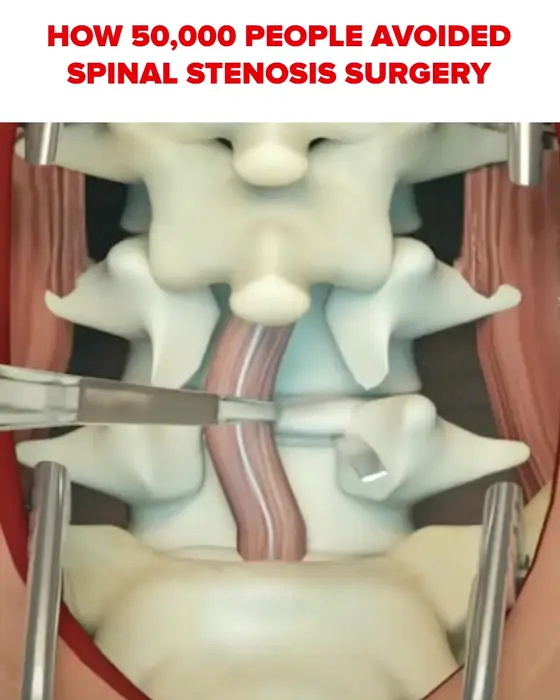
Spinal stenosis that keeps progressing despite every treatment has one consistent pattern that rarely gets explained. When the canal begins to narrow, the nervous system triggers a protective reflex that switches off a deep stabilizing muscle. This muscle sits 30-50mm deep and provides roughly 60% of internal spinal support. Once it shuts down, it doesn't reactivate on its own. Without it working, the vertebrae have nothing holding them apart from the inside. This is why progression continues despite doing everything right. The structure gets addressed while the foundation stays inactive. Learn what controls progression speed 👉 try.relivex.com/lander/m
Active After 60 Facebook and Instagram ad
Active After 60 ran this video ad since Jun 27, 2026, 133 days so far, targeting Ireland, Italy, French Guiana and 26 more countries.
Ad copy
Spinal stenosis isn't really a back issue, it's a muscle issue, and the gap between those two ideas is where most routines fall short. Deep inside the spine sits the multifidus, a stabilizing muscle that wraps around each vertebra. When stenosis develops, the nervous system shuts that muscle down completely. It's a protective reflex, and once offline, it does not switch back on by itself. That silent shutdown is the real reason the burning down the leg keeps sharpening and the standing window keeps shrinking. Chiropractors can't reach it. Most surface electrical units stop at 2 to 4 millimeters below the skin. The muscle sits 30 to 50 millimeters deep. A newer at-home routine is built around reaching exactly that depth. Find out how it works 👉 try.relivex.com/lander
Placements and targeting
More ads from Active After 60
Watching a parent lose independence to spinal stenosis, and then feeling the same pattern start in your own body, is one of the loneliest experiences. The walking distance shrinks. The legs get heavier. The fear of what's coming grows louder. Many people try everything: therapy, injections, surface devices that tingle but don't reach deep enough. And nothing seems to slow the decline. What's often missing from the conversation is the role of deep stabilizing muscles that shut down automatically when chronic compression begins. Without them, the spine loses its foundation. The nerves get compressed harder with every passing month. These muscles can't be reached with standard approaches. They sit too deep. But new technology is making it possible to reactivate them directly — bypassing the nervous system entirely. For many people, it's the difference between where they were heading and where they are now. 👉 try.relivex.com/lander
Keep exploring
Find more ads like this
Search millions of real ads by keyword, niche and format, and save the winners to your swipe file.
